Episode 2 - Navigating Real Estate Investing and Networking with Alex Bekeza
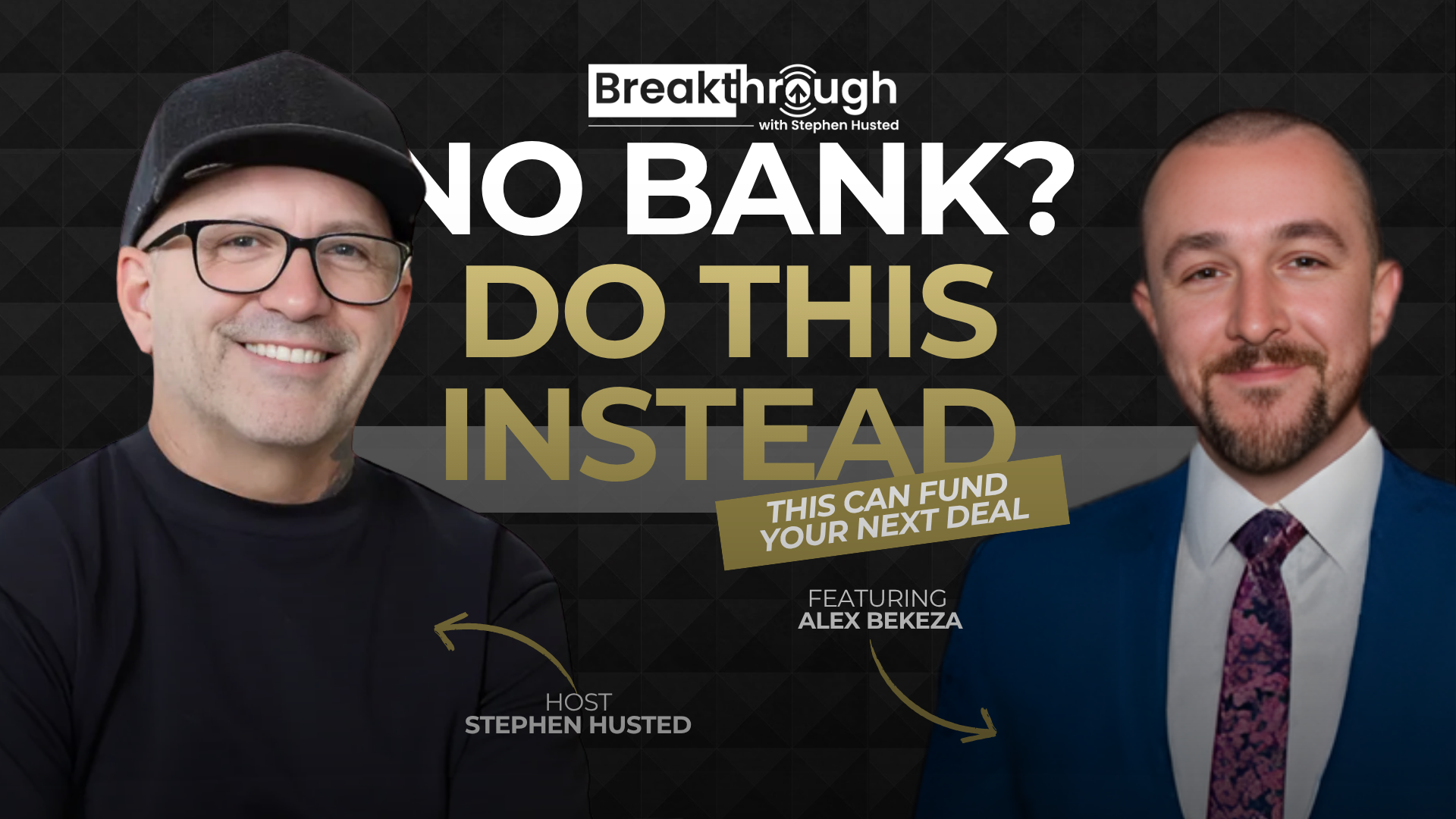
Welcome to another exciting episode! Today, we delve into the world of real estate investment, uncovering two key factors that can greatly impact your success. First, we explore the process of securing tenants, thanks to the expertise of real estate agents. Then, we shift our focus to the invaluable role of building strong private money relationships, as we share an inspiring story of how one investor leveraged an existing track record to secure 100% private funding. Join us as we explore these crucial aspects and unveil the strategies behind cultivating fruitful partnerships and navigating the ever-evolving landscape of real estate investment.
Takeaway 1: Impact of changing market conditions The challenging impact of rapidly doubling rates on professionals in the loan and real estate industries causes a decline in business volume and job opportunities.
Takeaway 2: Adaptive strategies for investors It's important to be conservative and adjust strategies in response to market changes. Investors are advised to be cautious and consider factors such as lower expectations for after-repair value (ARV), renovation budgets, and rental income. The focus is on managing properties with the expectation of stabilizing markets and future opportunities for refinancing at lower rates.
Takeaway 3: Long-Term Wealth Building The author aims to impress their private money lender by paying off the loan early and demonstrating successful property transformations. They see this as an opportunity to foster a long-term wealth-building strategy for both parties involved.
TRANSCRIPT
∎ Podcast Intro:
[Stephen Husted] (0:00 - 1:49)
Welcome to The Breakthrough with Stephen Husted, the show that takes you behind the scenes with successful entrepreneurs, real estate investors, and other movers and shakers in the business world. In each episode, we'll sit down with our guests to explore their personal and professional journeys, including the challenges they faced, the breakthrough moments that propelled them to success, and the strategies and the tactics they used to get there. Get inspired by new ideas and strategies and get to know our guests on a deeper level.
Join us for candid conversations, powerful insights, and plenty of breakthrough moments. Please help us grow by subscribing and sharing the podcast, and welcome to the show.
∎ Guest Introduction:
So without further ado, let's get in today's guest. Joining us is Alex Piqueza, who's currently the most reviewed DSCR lender on BiggerPockets. He specializes in loan programs that are custom tailored for real estate investors. Our DSCR Burr Loan Specialist is in the house, ladies and gentlemen.
We're excited to dive into his story and learn from his wisdom. Let's get started with The Breakthrough.
∎ Podcast Proper:
I appreciate you jumping on. I know that we've known each other for a while here, and I definitely want to get some some good nuggets from you as far as what's been going on in your life as far as work, and what have you been doing with your portfolio right now? What have you been seeing out in the market? Because we've kind of gone through a lot of different changes in the last, I would say, year and a half, two years, obviously.
So I'm going to say that I've noticed a lot of different changes, but I like to get more of the perspective coming from you with all the investors that you've been working with, what you've been doing with your portfolio, and what you've been seeing in your business. So why don't you jump in and give us a little bit?
[Alex Bekeza] (1:51 - 3:41)
Yeah, I guess I'll start with the work side. I mean, there's no way to sugarcoat it. Rates doubling in less than 12 months was sure to rock the industry.
I mean, it was basically like a game of musical chairs, and then the music really turned off fairly quickly. It's been a savage time to be a loan officer, a real estate agent, and any of those other kind of tertiary vendors like title companies, appraisers, whose volume went from, oh my God, I have way more jobs and opportunities and leads than I can possibly accommodate, to like, holy cow, where'd everybody go? We've seen some really notable players in the private lending space go under.
Big companies like Civic Financial are kind of on the brink. They stopped funding for a few months. They let go of a legendary CEO, Bill Tesser.
And that's just one of many shakeups. You have companies like Finance of America Commercial getting bought by Rock360 and basically cleaning house. So on the work side, it's been a very difficult time to navigate the rate environment and manage expectations with the borrowers.
But now more than ever, people really appreciate a broker who's really in the thick of it like me and kind of in talks with people on the back end every day just to be their guy in terms of like, what am I hearing? This reminds me a lot of when COVID hit and the banks shut down and there was nothing I could do to earn a buck in terms of closing loans for a little while. You remember all the banks were closed.
The reason I was busier than anyone when things reopened was because I spent those down months on the phone all day talking to investors, just keeping them informed, keeping them informed of what I was hearing on the back end. And honestly, relatively speaking, I feel pretty blessed because naturally working with investors only, they always have to move stuff around. So even when rates are tough, I always have clients that need to get out of notes, have to pull cash out from one property to put it into another and things like that.
[Stephen Husted] (3:41 - 4:06)
Yeah. So what were the biggest changes that you saw? Let's break down that.
Let's start back and let's say the glory days of 2021, I would say would be the year, right? 2020 March was when COVID happened. So we had a few months of just downtime and then things started cranking, I would say around May, June, right?
That's when things started getting going and opportunities happened.
[Alex Bekeza] (4:07 - 5:00)
Yeah. My memory is right. I want to say that's actually when it was kind of shutting down and then it was like late summer, like August when things started kind of popping back up.
But needless to say, there was an enormous amount of just normal pent-up demand, but that pent-up demand met with how good pricing was when things opened up. I mean, when rates were in the... We were closing VSDR loans in the threes and fours, that allowed a lot of markets to be good candidates for VSDR loans that typically weren't with normal market rates, right?
All of a sudden, you can cashflow a deal in Long Beach, California at max leverage or some of these other markets that are maybe more difficult to cashflow. And now we're facing those challenges a little bit more with rates in the sevens for the most part today. Not every market is going to be ideal for a high leverage DSCR loans because it's going to be hard to get it to cashflow.
[Stephen Husted] (5:00 - 5:15)
Yeah. So what are the investors that you're working with right now? What are their strategies?
What are they doing to adjust with the way the market is right now? Are they just finding deeper discounts on properties? What are they factoring in now on their deals?
[Alex Bekeza] (5:16 - 6:12)
Yeah. I cast such a wide net on bigger pockets. I mean, very few people's pipeline looks as diverse as mine in the sense that I'll be working on a bird deal in Memphis, Tennessee, and I'll be working on a fix and flip in Oakland at the same time.
And so naturally, I see a lot of different things. But the one thing that I think is consistent among all the active investors I work with is being more conservative. You got to haircut your expectations for ARV in this market.
It can only help you. You got to haircut your expectations in terms of rental budget. You have to haircut your expectations in terms of what you're going to lease the place for.
And as long as you do that among all the important variables on your deal, you'll likely be okay on the back end. I also see quite a few people getting greedy when others are fearful right now. I think that the writing is on the wall that things are going to stabilize at some point.
Even though rates doubled in less than a year and the Fed did everything they could to crush demand, there's still no inventory.
[Stephen Husted] (6:13 - 6:22)
But the big bulk of investors that are taking on these higher rates, they have a strategy on how they're going to take care of that down the road anyways, for the most part.
[Alex Bekeza] (6:23 - 6:38)
Right. I think they're just mainly worried about making sure that they can debt service the property now with the understanding that there's likely a much more opportune time to refinance it to a lower rate at some point in the next few years. It might be sooner than we think.
[Stephen Husted] (6:40 - 7:37)
From my experience, we went through a couple deals together that didn't end the way that I wanted to. And it was just more of just getting caught in the market. But you're right, in 2021, late summer 2020, everything was cash flowing, like double the type of cash flow because the rates were so low.
And if you took too long on a project, you were getting saved by the appreciation factor of it. So everything was kind of working in your favor. The rents were high.
Everything was great. And then when it came to a screeching halt in 2022, late summer or beginning of summer, that's when things started kind of really shifting. And I look back, I'm just glad there was only a couple of projects that we had to make some big adjustments to and really had to think through what we're going to do with them.
I'm just kind of glad it wasn't more at that time.
[Alex Bekeza] (7:37 - 8:34)
Yeah. I mean, put it this way. You are definitely not alone.
I was in that boat. I was someone who was making an incredible pace of commissions, relatively speaking for myself, all of 2021. And then as a lot of people slowed down in 2022, I actually had a bigger 2022 than 2021.
So I just felt like this was never going to end. And the moment I scrounged up enough for a down payment, I was going into another bird deal. And so when things really started to taper off for me, it was November, December, didn't really pick back up again until late January, early February.
But I was in the middle of two pretty heavy bird deals and allowed my personal expenses to climb alongside those commissions. So I really rapidly had to trim fat in my life. And ultimately, the pain that the market has served up in the last couple of months has honestly just made me leaner and meaner.
It made me cut a lot of unnecessary spending out of my life and give some good perspective.
[Stephen Husted] (8:35 - 9:39)
That's just the key to it. You have to just reevaluate where you're at and just put a new strategy in place to combat the new market that's going on, whether it's the rates or how you're purchasing or how you're looking at a deal. You could be a little bit more relaxed.
But you know what's interesting? Since we're both in the Missouri market and I'm looking over and trying to get some multis out in that Tower Grove area, these properties are going quick. These investors are jumping right in and definitely buying over list and it's super competitive.
And I'm still trying to understand, is this a bunch of FOMO going on? Are these new investors that are just getting into the game because they're hearing about different new strategies and they're willing to overpay because we've tried to underwrite a couple of deals and it didn't make sense at all. And I just had to hold back off.
I've already went through my little cycle of issues. I don't want to repeat that, but are you seeing that out there? Do you have a lot of investors that are investing out in Missouri?
[Alex Bekeza] (9:40 - 10:29)
I do. Specifically, I have a lot of people like you and I who live in California or maybe on the East Coast who invest in Missouri. I have a lot of Bay Area and SoCal investors that invest in Kansas City and St. Louis. I know you're primarily in Kansas City so far. I'm in St. Louis. But yeah, I am seeing that.
Honestly, I had to form a little bit of triage on my portfolio when things started getting hairy. I didn't exactly know what was going on. And I had one duplex that I felt like I could sell at a price that met the 1% rule for an investor.
And it would make me feel a lot more comfortable heading into this environment that I was really unsure about. And I got an all-cash offer with no contingencies and a few business days. Closed easy peasy.
And I was scared. I was like, oh, I don't want to list a property right now. It's a duplex.
So it's only going to be investors. They're going to come try to chop me down. But no, it was a pretty competitive environment.
[Stephen Husted] (10:30 - 11:06)
We thought about doing that too, but we haven't done that with any of our properties because we have prepays on these loans. So we're kind of like, okay, we're just going to have to... I think we have a few properties that are just break-even.
Maybe we're just with the tenant in place, we're servicing all the debt, anything we have for our property manager, any type of fees, anything that is on that property, we're getting it covered, but there is no cashflow on it. But we're okay with that. We're kind of like, okay, we'll just sit still until down the road here and reevaluate, do a refinance, move out of it.
[Alex Bekeza] (11:06 - 11:47)
Yeah. In terms of things I'm doing differently in my portfolio, I kind of only talked about the work side. On the portfolio side, the main thing that stands out to me is how we're securing tenants.
I fell in love with South City, St. Louis for the cashflow. It just felt like every single deal I underwrote had a DSCR above anywhere I was seeing, above two in many cases. But I think this is a familiar story to a lot of much more seasoned investors who've been doing this much longer than me is that it's pretty typical for those C-class, 120-year-old buildings.
I've done some pretty good brood deals, but one thing that would have made them all better and what we're dead set on doing from here on out is only renting to people on housing assistance in a couple of those zip codes.
[Stephen Husted] (11:47 - 11:48)
Oh, okay.
[Alex Bekeza] (11:48 - 12:33)
Yeah. I used to have a lot of apprehension to Section 8 for I think all the same reasons other people do in terms of stereotypes. But what I found is in general, those people really don't want to lose that housing voucher.
It's extremely important to them so they really don't cause trouble. The rent is often at least at market, sometimes I think slightly above. Right now, my Section 8 tenant is my highest paying tenant, one of the most recent Section 8 tenants we got.
And then the oversight. So Section 8 has pretty strict standards for the condition of the units. And I found that this is a cool way for an investor so many hundreds of miles away to have a third party laying a few extra eyes on your property manager.
Not that you don't trust your property manager, but this literally forces them to show up at your property a couple of times a year, which I like.
[Stephen Husted] (12:33 - 12:46)
Right. To make sure everything is in order, right? They want the property to be in a certain, it's got to have the right condition, all the components.
Yeah. And so do you. So that's a great way to understand that too.
[Alex Bekeza] (12:47 - 12:52)
Yeah. That's one thing I really love about it. And then ultimately the only thing that really burned me was delinquency.
So this annihilates that.
[Stephen Husted] (12:52 - 13:08)
That's true. Yeah. And they don't want to lose that voucher.
That's a big key to the component. So what's the process for, tell me the process of getting a Section 8 tenant secured. Is it longer than let's say getting a normal tenant in place?
[Alex Bekeza] (13:09 - 13:37)
You know what? I really wish I had more of it. An expert answer for you, but this is one of those fields where I actually really delegate the work.
In my experience, it seemed to not take much longer than securing a normal tenant. It was fairly quick, the last two that we got. But ultimately I have a real estate agent who secures all my tenants for me.
So he keeps me informed, but maybe only as much as I'm inquiring about. And I haven't gone too much into the specifics of how he gets a housing assistance tenant versus a regular market tenant.
[Stephen Husted] (13:38 - 13:39)
That's what he's getting paid for.
[Alex Bekeza] (13:40 - 15:30)
Yeah. I would imagine that my goal is to get to a point where those local Section 8 offices know us, love working with us, and we have a constant flow of helping them and then helping us. That's what I want to get to.
And I had a lot of reflecting to do recently on, man, the cash flow on some of these rentals really becomes non-existent when you factor in all the delinquency, and which I'm trying to annihilate via Section 8. And then CapEx issues that come up with these old buildings. But I've realized that if there's any market where I'm going to be able to continue to develop strong private money relationships, it's going to be in the one that I already built a track record.
So moving forward, I'm really excited about expanding on securing private money. My most recent deal, I did fund with 100% private money. It was a client of mine who I had done, I think I've done at least a dozen refi's for him.
The guy owns several dozen houses in California. He's kind of like you. We've talked on the phone fairly frequently for the last four or five years.
So he's gotten to know me a bit. And he's seen me go from that first duplex all the way till now. And he told me one day, Alex, I have $150,000 in my self-directed retirement account.
Can you lend it out for me? I can't find any rentals to pencil right now. Well, I can't really lend it out for you just because that's too small of an amount.
It'd be so hard to custom tailor it to the perfect borrower for you. And it's not really worth all the effort. But I'll happily borrow that from you and pay you a really handsome interest rate.
And I almost said it jokingly, but I wasn't because I did have a deal I wanted to go after in between two duplexes that I already owned. And yeah, I'm just very, very thankful for that guy for having that faith in me and putting it together. And my hope is that in a few months, we'll be really impressing him by paying him off early and showing him some amazing before and after photos, and then be having him roll it right into another deal.
[Stephen Husted] (15:31 - 16:05)
Right. Yeah. Securing that relationship and moving it forward is such a big key to investing.
I think people that come that are new to investing, they just don't understand there's so many different strategies to get into buying investment properties. And they just don't know until they start getting into it. What happened to you, the opportunity came up, you went back to it, and then there you go.
Now you're in a deal with money that you didn't even have. And now you're getting ready to exit it and possibly will be borrowing this money again, which is phenomenal.
[Alex Bekeza] (16:05 - 16:34)
I'm hoping it's just a repeated thing that I'm helping him compound into a great long-term wealth building strategy for himself. I think I'm getting him a higher return than he is going to get in most other places and making it really easy to make lots of money. And also, I think there's something kind of cool from, he hasn't said this, but I think from his perspective, he feels like he's putting the younger guy on, he can relate to when he was in my shoes.
And I think it probably makes him feel good, not just a handsome check every month.
[Stephen Husted] (16:35 - 16:36)
Right. How did you structure it?
[Alex Bekeza] (16:38 - 18:00)
I'm going to get beat up because there's going to be people like Soli, who's the master of private money negotiations, who does way better than I did on this one. But I was so excited about the opportunity and so wanting to make it a no-brainer for him that we actually did 12%, 12-month I.O. This was an interesting one because I also felt like I needed to do that because it was such a relatively small loan amount. For $110,000, I wanted to make it well worth his time.
But this was an interesting one and very unique because it was actually a property that was being sold via HUBZoo at auction. And you cannot finance deals at auction, right? You have to show the funds in your account that you're going to close on.
Well, my private money lender was so flexible and willing to work with me that he actually closed on the property at auction and then immediately quick claimed title to me with a seller financed private money loan. Here's the cool part. We bought the property for $85,000, but his loan amount was $110,000.
So he literally wired me the $20,000 difference at closing. Wow. Yeah, so I didn't have to deal with a draw system or anything like that.
I just got to go to town. The tough part on this deal was that it was much, much harder to get the occupant out of the property than I anticipated. So I did have to pay that 12% interest for four months before we could even break ground because she had really exhausted the legal system.
[Stephen Husted] (18:01 - 18:04)
How was that part? Did you have to get an attorney in the mix?
[Alex Bekeza] (18:05 - 20:58)
Yeah, really tough because like I said, I own the properties on both sides of this one, two new places on each side of this single family house. And when I was there a year or two ago visiting the rehab on one of them, she was outside smoking cigarettes and drinking coffee. So I just tried to chop it up with her.
She really wasn't very friendly, kind of gave me the shakedown. Who are you? I'm your new neighbor.
I just bought the house next door. What are you going to do with it? Oh, we're going to fix it up real nice and rent it out to some folks.
Who are you going to rent it to? We're going to screen the tenants. I promise no troublemakers going in here next door.
We don't want that. I know you don't want that. And the biggest mistake I made was not giving her my contact information.
We would have avoided the option. She would have gotten a way better deal. I would have gotten a way better deal.
And it would have been way less stress and acrimony for her. But that goes back to what you're saying. All these opportunities that you get when you just have conversations, you got to recognize them when they're there.
And it would have been no sweat to give her my contact info, but I just didn't think to do it. And I had to hop in the Uber and never saw her again until I saw this thing a year later on HUBZoo. So the point is she had lived there for 13 years, kind of a bit of a hoarder, and had fallen way behind, obviously, on the mortgage payment and utilities and everything.
There was years worth of utility liens on this property. So we closed on it. We gave her the legal notice on day one.
Hey, this property was sold. You do have to be out by this day. But we would love to discuss another arrangement with you to be out sooner.
Please give us a call. The idea was we were going to do cash for keys. Have her out in two weeks.
And honestly, it just would have made me feel better to know like, hey, we're going to hit this lady with a couple of grand that she probably has never seen in her checking account before. And she'll feel great about this. And she'll be out of there quick.
But unfortunately, wasn't willing to play ball. She would never communicate with us. We would go down and knock on the door, and she would pretend not to be home.
So after multiple court dates and going through all that ringer, we finally did get a sheriff eviction. And of course, even though she had every notice possible in the world, she played dumb on that day, was not ready to move out. So we showed a little bit, even though technically at that point, we're four months in, two court dates, she lost by the judge's decision.
We showed some good faith and said, all right, we're going to give you like two more days to get out of here. But in two more days, we're going to come and take the doors off the building. And so we did that.
We brought in a 40 yard dumpster for her to use if she'd like. But we're going to start cleaning it out alongside you. And so it was thousands of pounds of belongings.
I mean, I think she barely took more than the shirt on her back. It looked like someone went to the grocery store. But yeah, so we just finished the clean out demo, which is a lot more than I expected.
Now we're starting to paint and get moving on it finally.
[Stephen Husted] (20:58 - 21:11)
Yeah. Those evictions, they're just tough in general. You want to show some empathy on their situation, but some will just, they'll game the system in any which way they possibly can too.
[Alex Bekeza] (21:12 - 21:24)
At the end of the day, you could show a lot of mercy, but this woman hadn't paid her $400 mortgage payment and died no sound long. And meanwhile, I'm paying $1,100 a month to a lender to put this property.
[Stephen Husted] (21:25 - 21:30)
Yeah. So what's the deal on the Fannie Freddie 12 month season scenario?
[Alex Bekeza] (21:31 - 22:37)
Just the good news I needed. For me personally, I kind of stay out of the A paper game for the most part. Our company is fully NMLS licensed and we have guys in the office that do Fannie and Freddie in a few different states.
But I've always just stuck to my main focus, which is non-QM. And under that, I kind of have hard money and DSCR. So for the DSCR side of things, I've always been known as a, and I was the bird guy, the bird lender, birdstrategyfunding.com.
Part of the bird strategy is people are looking to scale their portfolio, do multiple deals a year. And a big part of that is finding a lender that will cash your deal out with a short season requirement. So we still offer 90 days of title seasoning.
We will use the new appraised value for cash out as soon as you own the property for only three months. As of April 1st, Fannie and Freddie are going to require 12 months. Although there are some carve outs if you borrow cash and yada, yada, but vast majority of situations will not qualify for that.
They're going to need to look to either a DSCR loan or some sort of local bank that will offer a shorter season period that holds a loan on their books.
[Stephen Husted] (22:38 - 22:40)
Okay. They're always changing things.
[Alex Bekeza] (22:41 - 23:00)
Yeah. This one though, I love it because I'm going to end up getting a ton of super qualified borrowers who normally would have gone APAPER, but are going to have to go this direction just for seasoning sake. And the beautiful part is people really don't consider how close Fannie Freddie investment pricing and DSCR pricing is right now.
[Stephen Husted] (23:00 - 23:05)
Yeah. Let's talk about the DSCR loans. Are you doing a lot of those at this point?
[Alex Bekeza] (23:05 - 23:31)
It makes up about 90% of what I do. The other 10% is purchase and rehab. I do a fair amount of those like fix and flip loans, 85 or 90% of your purchase, 100% of your rehab.
But really being so known for that 90-day title seasoning, I just get a ton of clients who use private money on a purchase, do a quick cosmetic flip, get it rented out, and they're ready to use that new appraised value sooner than six months, sooner than a year for sure.
[Stephen Husted] (23:32 - 23:39)
Yeah. And the DSCRs are so easy to get done. I mean, for the most part, their numbers make sense.
It's good.
[Alex Bekeza] (23:39 - 24:15)
Yeah. And that's why I love them as a loan officer because it really allows investors to scale a portfolio. It allows me to scale a pipeline because I'm going to end up naturally dealing with clients who are doing more than one deal a year, who are looking to surpass the limitations put on them by Fannie and Freddie.
Fannie and Freddie are going to cap you at 10 finance properties. DSCR loans have no cap. Not only do they have no cap, most of them are not looking at your other properties, not doing any kind of global cashflow assessment.
They're not even requiring your reserves to match your portfolio. They're really looking at reserves on a property by property basis, right?
[Stephen Husted] (24:15 - 24:19)
Yeah. So break it down. What are they looking for when they see a deal?
[Alex Bekeza] (24:20 - 25:29)
I am a broker. So when I answer these questions, I'm kind of answering them on behalf of a handful of lenders who all have a slightly different answer. But I would say that a conservative way to answer that would be most lenders want to see one positive cashflow.
So we have programs that'll allow down to a 1.0, some that want to see a 1.15, 1.2, some that allow even negative debt coverage to a certain threshold. And just figured, like you'd assume, the better the DSCR, likely the better terms I can get you. Most lenders right now have those priced somewhere in the sevens.
I shouldn't even say most lenders. If you call around, you'll find plenty of quotes in the high eights and nines still. But the best DSCR programs today are fairly in line with Fannie and Freddie's investment pricing, maybe a few basis points higher, which you'd expect.
In terms of reserves, most common requirements I'm seeing right now are either six or nine months of PITI, plus 1% of any outstanding mortgage balances, which report to your credit. However, one cool thing right now is that we do have products that allow you to use cashed out proceeds from the deal as reserves. Oh, cool.
[Stephen Husted] (25:30 - 25:37)
Yeah. That's awesome. So many different strategies.
It's great. Where did I meet you in the beginning?
[Alex Bekeza] (25:37 - 25:40)
I want to say via Brian Glasser. Yeah.
[Stephen Husted] (25:41 - 25:44)
And then we went out to BiggerPockets.
[Alex Bekeza] (25:44 - 26:01)
Yeah. When I say Brian Glasser, Brian's a BiggerPockets connection for me. So either directly or indirectly, you and I definitely connected through BiggerPockets.
We did a bunch of purchases and a bunch of refis for your bird deals in Kansas City, plenty of wins and trials and tribulations along the way over the years.
[Stephen Husted] (26:01 - 26:06)
Oh, man. Oh, yeah, definitely. Yeah.
And then we went out to the conference. We went to BP Con.
[Alex Bekeza] (26:07 - 26:17)
How cool was that, man? BP Con is so cool. I was in New Orleans.
I was in San Diego. Obviously, it's practically my backyard. And I'll definitely be in Orlando this year.
[Stephen Husted] (26:17 - 26:18)
Definitely.
[Alex Bekeza] (26:18 - 26:50)
But I love it so much because I'm one of those guys that's living and breathing BiggerPockets, connecting with the vast majority of my clients through that channel. And I have a bunch of people like you who I've done half a dozen, a dozen or more deals for. I feel like I talk to them on a weekly basis at least.
I feel like I know them very well, but very rarely would I ever get a chance to meet them in person. And BP Con is that one time where you do it all at once and you have to actually meet all these people face-to-face that you feel like you know so well, that you've been doing deals together from hundreds of miles away.
[Stephen Husted] (26:50 - 27:31)
Yeah, that was cool. I mean, when you invited me to go and do that private boat party, and I had no plans of going out to BP Con. And then I was like, you know what, I'm going to go out.
And I just changed my mind, stayed at some really bad hotel and went out to BP Con. And it was great. Like you said, you get to meet everybody in person.
And then it's really cool too. Yes, you can go to all these breakout sessions and just the whole thing at the conference. But when you go and walk to a restaurant and you just meet people next to you, you hear all these cool stories and all these different strategies.
It's such a great networking event. It's worth every penny.
[Alex Bekeza] (27:31 - 28:28)
There was a lot of great speakers, but you're right. I think most of the value happened in the hallway at the Starbucks downstairs or at the after parties or whatever. And those connections are hard to match.
I honestly don't think anyone will ever forget that boat party. Yeah, the boat party was great. I had a couple of clients who were very, very active on social media and BiggerPockets, Rich Summers and Sully Cayetano.
You guys all know where his lattes and leases. They had both inquired to me, hey Alex, I'm brainstorming ideas to make a big splash for our brand around BP Con. And it was one of those moments where I realized, wow, I can't believe these two people don't know each other.
They're so well-suited to know each other. And connecting those dots, Sully asked if I knew anyone that could get us a boat. I said, I know the perfect person, Rich Summers.
And next thing you know, we were having a great time with a private saxophonist and hanging out with Tony Robinson and all the BP cast, Sarah Weaver.
[Stephen Husted] (28:29 - 29:24)
It was great. That was a great boat party for sure. And it was interesting too.
I had met this lady at the hotel and it was their first BiggerPockets conference and she hasn't bought any properties yet. And she's just fired up and she's talking to everybody. And she just asked me, what would you do?
This is my first conference. I want to buy a property. I'm like, you're in the right place.
Take all this information in, go back home and make sure you build yourself a little network and start going to a mastermind, get in some meetups and you'll find your path, but pick one path. Pick one path because you can get really overwhelmed when you go to BiggerPockets conferences. Everybody's doing different strategies and you got to find what speaks to you and then just deep dive it.
[Alex Bekeza] (29:25 - 30:38)
You got to hyper-specialize in the end. In my opinion, if you're going to be successful, for me, that came in two forms. On the investing side, if you look at my portfolio, it's all nearly identical properties within a half a mile of one another.
I'm kind of repeating a very similar process over and over and you get better and better and better at that process each rep you take. And on the lending side, I did that by specializing in specific loan types and having the courage to say no to a lot of deals because I just don't want to get outside of my absolute wheelhouse that I know I can just annihilate. And then just partner with people within my own company who specialize in other things.
So people will come to me with a scenario that's not my cup of tea, but guess what? I have literally somebody I would trust with my own situation if I was in your shoes. We'll think about our team.
We have a couple of guys like me who really just live and breathe that investor side of thing. They're active investors themselves like me too. We love DSCR, hard money, small balance, commercial, stuff like that.
And then we have some other people who are really great at that A paper side of things, right? We have people in the office working on VA loans, FHA loans, and the desk next to them is doing a Freddie Mac apartment loan on a 90 unit in Louisiana.
[Stephen Husted] (30:39 - 30:40)
For Nathan.
[Alex Bekeza] (30:40 - 30:41)
Oh, Nathan Malazzo, yeah.
[Stephen Husted] (30:41 - 30:42)
He's crazy.
[Alex Bekeza] (30:43 - 31:02)
Back to BP Con, I was so excited to... When I thought about the few extra tickets I had for the boat, I thought, man, who are a couple of my clients who haven't, who weren't planning to go to BP Con, but would get so much out of this if I drag them there. And you were one of them.
So what do you think was your biggest takeaway from BP Con?
[Stephen Husted] (31:03 - 32:32)
The boat party. The boat party connected me to all types of people, Robert, Jess, Sarah. Gosh, I met Tony and his wife.
That whole thing was great. Meaning all of them. I mean, just out of conversations with everybody.
And I think that, and then just leaving and then connecting with them at the conference and then going to dinners. Like the dinners and lunches was where everything was just, you had an hour sitting down by somebody who you don't know that lives somewhere else. And it was just a lot of back and forth and just, you get super inspired.
And I think that's one big thing about BP Con is it's not, there's no fluff and here's the difference. Back in the day, you would go to a, some type of, you know, guru type real estate seminar and you'd go hear one person speak and he would speak and hype up this crowd. And then when you're done, you would walk out into the hall and you would buy a CD.
That was the deal. Okay. And then either you're going to go make it or you're not going to make it.
There was no connections online. You're on your own. And now we can connect through social media.
We can go to a podcast at, you know, bigger pockets, and then we can end up at BP Con and get even more value right there. So it's like a triple whammy of information. And then at that point, it's up to you to kind of figure out your, your direction.
Yeah.
[Alex Bekeza] (32:32 - 33:13)
The buzz at that event is just unlike anything I've personally experienced. I think it's funny because a lot of us, maybe you feel like this sometimes too, you know, we're, we're so hyper fixated on real estate and financial freedom, scaling a portfolio, biggerpockets.com. And oftentimes in our immediate circle, maybe in our household or our family, we're not surrounded by people who have those same, you know, addictions or like, interest.
And so you can get bottled up with all this information and then you go to BP Con and it's thousands of people who have the same exact, you know, goals and desires and energy that you do. So it's really hard not to walk out, kind of picking up on that.
[Stephen Husted] (33:14 - 33:58)
Yeah. Totally. I don't know if you were with me.
We had, I don't know if you were, I can't recall who was with me, but we were eating lunch outside at the conference at the hotel. And this older lady sat next to me and, you know, we're just, you go to the tables and you're just meeting new people. So I was like, Oh, where do you live?
You know, what do you do? And I just remember her talking and she just had this massive portfolio and just the way she was talking about it. Well, I do this and I do a little of this.
And I'm just like, Oh my gosh. You just never know, you know, what people are doing and how big they are and what they're doing. They're just so low key.
I mean, this lady was just, I think you were there, honestly, from what I remember. But yeah, it's insane.
[Alex Bekeza] (33:59 - 34:17)
I thought I was really taken aback by how humble a lot of the people I met were, who to me seemed a little bit larger than life, you know, because you see them on Instagram or you see them on the BiggerPockets podcast or whatever. But I would say pretty much unanimously, everyone was so open and friendly and there for the same reasons you were, you know.
[Stephen Husted] (34:17 - 34:37)
It was different back in the day, Alex, honestly. I would say around, well, no, 2005, they didn't have it. There was no BP con back in 2005.
Like I said, you go to a conference and it would be one guy teaching how to, you know, flip a house. But at the end, you're spending $10,000 for a CD program to learn how to do that. That was it.
[Alex Bekeza] (34:38 - 35:18)
You know, BiggerPockets, I think has changed a lot of people's lives, but I definitely feel like for myself, I can't say that I would have as much like financial security and upside for my children as I do now, thanks to BiggerPockets. And I don't expect these people to realize how much it meant to me, but, you know, I had spent a few years starting from absolutely nothing, not even knowing what LTV was or what DSCR meant or anything like that. It was only a few years later that and a few hundred BiggerPockets podcast episodes later that I am in New Orleans having a beer with Scott Trench.
And it was like, you know, a really surreal moment to take that whole journey.
[Stephen Husted] (35:20 - 35:22)
And that's why we keep going back.
[Alex Bekeza] (35:23 - 35:23)
Yeah.
[Stephen Husted] (35:23 - 35:58)
Yeah. Yeah. Cool.
Well, hey, I appreciate you jumping on today. This will just be one of many, once the whole podcast is in the real form where it's going to be a little bit more structured, I'm definitely going to bring you back. I said the same thing to Nathan, all my guests, but I know one thing I'm going to be asking every guest at the end, and I want to do that with you today as well, is, you know, the name of the podcast is the Breakthrough Podcast with Stephen Husted.
And I want to know, I want you to give me one of your breakthrough moments that you've gone through over the years, something that really stands out.
[Alex Bekeza] (35:58 - 38:50)
I mean, I think my breakthrough moment was my first real estate deal on the investing side. I had already done many, many loans as a new loan officer. And so the lead up to this is mainly through BiggerPockets and by virtue of going to local meetups and stuff, I just happened to develop a large concentration of clients invested in South City, St. Louis, Missouri. By coincidence, they were some of my most active clients. So I found myself holding dozens of appraisals and basically two zip codes. And having met a lot of real estate agents, my clients, contractors, property managers, through email chains and things like that, I said, wow, you know, I had analysis paralysis for a while here on how I want to break into investing.
I have a little around a hundred grand and I had a deal falling in my lap and it was time to, you know, put up or shut up kind of thing, right? So COVID hit and one of my clients, who's an awesome guy and I'm still really good friends with him, got royally screwed by COVID. He worked for a television agency and you might recall all the shows in Hollywood got canceled right when COVID popped off.
They weren't doing anything. So his income vanished. He was in the middle of several flips and burrs in St. Louis. One of them I was a loan officer on and the note had ballooned on that hard money loan. He got an extension, but it was that dark hour where nobody was lending. So he had no way to refi out.
Buyers had no way to finance purchase and the time was up, right? But I knew that he had done a really good job on the property and had at least, right? And so I worked up the courage to say, hey man, do not take this the wrong way.
My relationship with you actually is much more important than this deal, but I couldn't help, but make sure I let you know that if you got into the 11th hour and you did not have a better option that I would pay you all cash what you owe the lender just so that you can walk away and avoid foreclosure and continue scaling your portfolio without that on your record. He sat on it for a few days and then called me back and said, I always have a really hard decision to make, but it's also pretty cool to see you walk with your first deal. So then I was super excited, but super nervous at the same time.
I mean, mind you, this is like in the height of COVID hysteria where no one knew if the world was ending or what was going on. But long story short, I bought this property for 89,000 cash, already leased for, I believe at the time, 1,300. And I had to sit on it just for a couple of months, I believe 90 days.
And then around that time, the bank started opening up and still had the 90 day seasoning product. So I was able to refinance and get something like $86,000 loan. So I left almost nothing in that deal.
And it's actually surprisingly appreciated a little bit too. So that's, yeah, that was my big breakthrough. That's your breakthrough?
Yeah.
[Stephen Husted] (38:54 - 39:02)
Well, it's one of many that are going to come down the road just by the way that, you know, who you surround yourself with and what you've been doing. So it's awesome to keep it up.
[Alex Bekeza] (39:02 - 39:27)
Yeah, exactly. I mean, naturally I'm on the phone with possibly distressed homeowners all the time, right? A lot of times people reach out to me because they have a flip that's not selling, or all of a sudden the rental's not working out for them.
They're looking at pulling cash out. You realize that it's not going to work and, you know, then I'm presented with an opportunity. But that's the only time that's ever really happened that I bought one from a client.
Other than that, they've all been looking at a list or auction.
[Stephen Husted] (39:27 - 39:31)
Yeah. Great. Well, awesome.
It's been good. Appreciate your time.
[Alex Bekeza] (39:32 - 39:35)
Oh, likewise. Likewise, man. I really appreciate it.
Hopefully we can do this again.
[Stephen Husted] (39:35 - 40:05)
Yeah.
∎ Podcast Outro:
Thank you for tuning into our show, where we hope you found inspiration and gained valuable insights. If you enjoyed this conversation and want to stay updated on our latest episodes, be sure to subscribe to our podcast and share it with others who might benefit from it.
We appreciate your support and look forward to bringing you more candid conversations and breakthrough moments in the future. Until next time, take care and keep exploring new ideas and strategies.