Episode 45 - Curating Homes, Not just Houses - The Creative Lens of Coco Silver
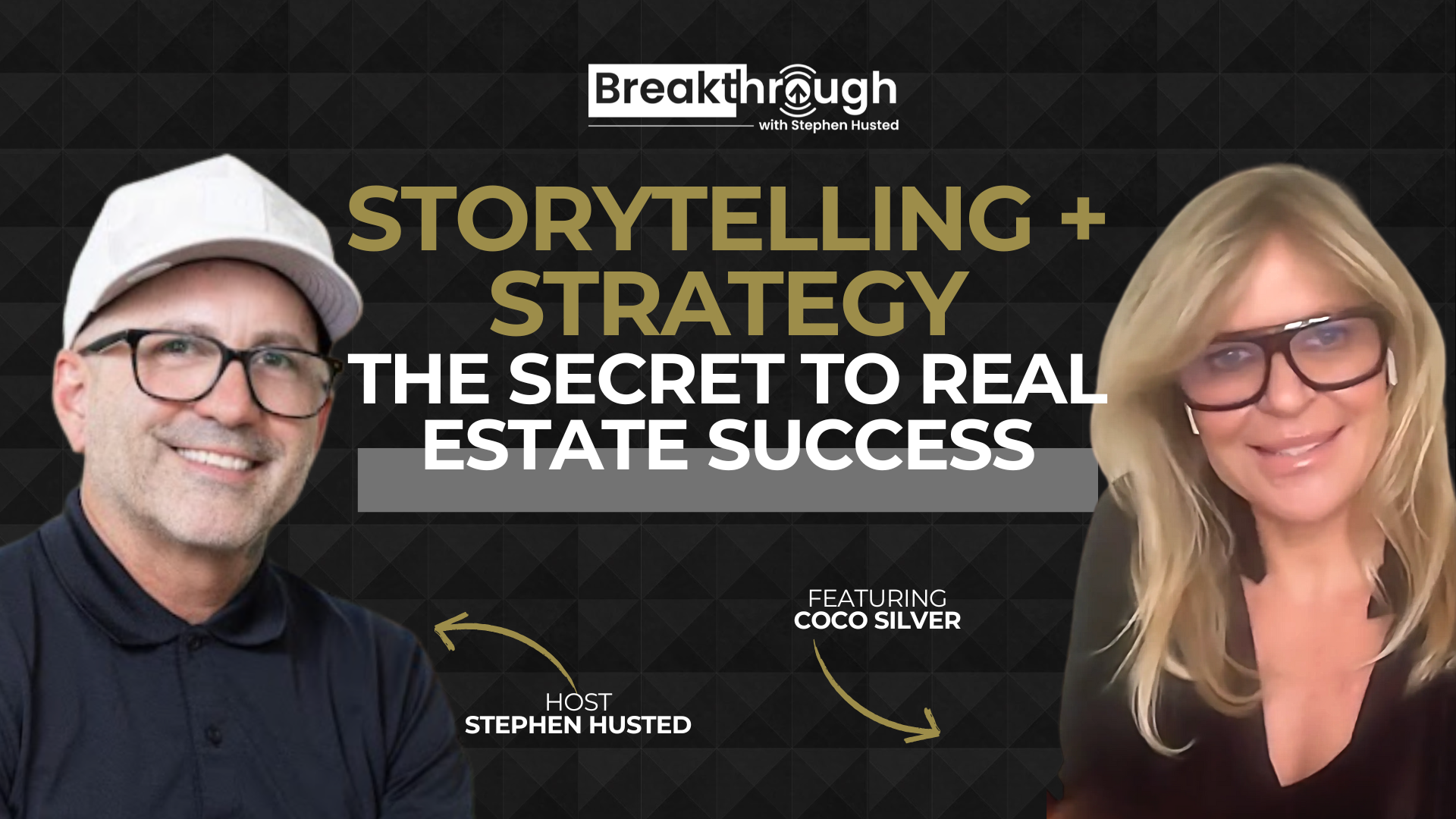
What happens when creativity and hustle meet in the world of real estate and staging?
In today’s episode, Stephen Husted sits down with the incredible Coco Silver for a long-overdue conversation. Coco, the heart behind Coco Home, shares her journey from stay-at-home mom to one of the most sought-after stagers in the Bay Area. From hauling furniture in her dad’s truck to owning a nearly 9,000-square-foot warehouse, Coco’s story is all about creativity, resilience, and pure love for design.
Stephen and Coco talked about:
00:00 – Introduction
05:40 – How the real estate market shift affected staging strategies
08:07 – How Coco creatively pivoted during seasons of low inventory
10:02 – Managing a 9,000 sq ft warehouse and $60K monthly overhead
13:52 – Storytelling through staging — the arch, the rose bush, and the emotional layers of design
25:12 – Coco’s origin story: How she started staging without formal training
31:44 – How she refreshes staging inventory without constantly overspending
45:34 – What Coco would do if she ever left the staging world — still creative and community-driven
49:03 – How creatives have to develop business skills to succeed
TRANSCRIPT
∎ Teaser / Highlighted Clip
[COCO SILVER] (0:00 - 0:33)
We are storytellers, that's what we're doing, right? And it's such an honor and a privilege to be in those moments where people are making such huge next chapter changes. And if you can dive into that, there's so much joy in this business, right?
If you don't dive into that, you are not going to like where you are, because it's a really hard business. So I think I've always in staging, I hang on to those moments, right? Where you get to be part and tell someone's such a handoff and it's such a huge amount of trust, a huge amount of trust.
∎ Podcast Intro:
[Stephen Husted] (0:59 - 2:18)
Brace yourself for a wild ride into the unexpected. This ain't your typical success show. I'm here talking to real folks who've been through it all, skipping the fancy business talk for authentic stories. We're diving into childhood dreams, teenage escapades and everything in between. No scripts, just the stories that truly mold success. Each episode takes you on a journey through those breakthrough moments that paved their way. No fluff, just genuine stories.
So whether you're chasing dreams or just love a good story, buckle up for wisdom, laughs, and the unexpected. This is the Breakthrough Podcast, where success is a journey, not just some fancy destination. Don't miss out.
Hit the subscribe button now and join our Breakthrough crew. I got some incredible stories to share and you won't want to miss a single one.
∎ Guest Introduction:
This episode has the answer. I'm sitting down with Coco Silver, the mastermind behind Coco Home, a top tier staging and design company that's changing the way homes sell. With an insane eye for detail and a relentless drive, she's elevating real estate one space at a time. We're talking about how she built her business from the ground up, literally starting with furniture from her own home to running a full-scale operation with a massive warehouse and a style that's in high demand.
We also get into the challenges of staging in today's market, how she balances creativity with business, and what makes a house feel like home. If you're into real estate design or you just love a good entrepreneur journey, you won't want to miss this one. Tune in now.
∎ Podcast Proper:
All right. It's been a long time coming.
[COCO SILVER] (2:18 - 2:21)
It's been a long time coming. We have a lot to talk about.
[Stephen Husted] (2:21 - 2:26)
We definitely do. And I'm glad that you're going on your first podcast with me.
[COCO SILVER] (2:26 - 2:28)
I am too. Thanks for having me.
[Stephen Husted] (2:28 - 2:34)
Yeah. I know that you reached out, I think, was it because I posted Joey's? And you're like, what's up?
What are you getting me on?
[COCO SILVER] (2:34 - 2:38)
Well, I mean, if Joey's here, I want to be here. I want to be everywhere Joey is.
[Stephen Husted] (2:38 - 2:39)
Yeah. Joey's cool.
[COCO SILVER] (2:39 - 2:40)
He's the cool kid.
[Stephen Husted] (2:40 - 2:43)
Yeah, he definitely is. I like him a lot.
[COCO SILVER] (2:43 - 2:57)
I like him so much. I think he's one, I don't know of the few, I would speak the same of you in this industry that is in it for many different reasons. And it's so cool to be able to work with people like you and like Joey.
[Stephen Husted] (2:57 - 3:42)
I brought him over to Glenuna to help with pricing on it because once I got done, I was just going, okay, this one's so unique. Where am I to go? So I talked to Joey, Sarah Greenwood, a couple other people.
But then Joey and I walked through the house and we're out front. And then we just had this like 30-minute conversation. And I'm like, let me get you on my podcast.
You have some cool stories and you got a lot of cool history about Willow Glen. And he was telling me stories about his dad growing up and them investing. And I said, look, we talked for 30 minutes
We should have been on a podcast. Yeah. Joey, he's a good guy.
How many agents do you work with typically on a yearly basis? Is it almost like a clientele base in a lot of ways?
[COCO SILVER] (3:42 - 4:07)
Yeah, I would say it's clientele base. I would say probably 45 of our top tier regular producers and then maybe 15 to 20 new that are cycling in that maybe we haven't worked with before, or maybe a one-off or something. But I would say probably 45 regular agents that are producing regularly.
[Stephen Husted] (4:07 - 4:16)
What have you seen right now as far as the market's concerned and how you stage? Are you doing anything differently as far as how you stage houses at the moment?
[COCO SILVER] (4:17 - 5:25)
Yes, always. I think that's the only way you can stay in this game is if you're constantly adjusting and pivoting and really listening to what the market has to say. The last two years, what I found is if there's 50% less inventory, that means there's 50% less houses for us to stage.
So we really had to pivot and find the areas that were still listing homes, and they weren't necessarily maybe Atherton or Menlo Park or Palo Alto. So we went back down to San Jose, Willow Glen, Santa Clara, where we still saw activities so we could get back into those areas and stay busy. I think our buyer pool and the demographic in this area has changed so much over the last few years.
The things that I used to just base and kind of wash, rinse, and repeat of what we new buyers were looking for has really changed. So all of my tricks that I used to use and base staging and design on, we really dug deep and figured out what our buyer's looking for, what's important. So that pivot is constant.
If you can't pivot in this, you are out so fast.
[Stephen Husted] (5:25 - 5:40)
Yeah, and the market, you're almost in the same category as the agent. Like inventory shrinks, it's like the business of the agent shrinks, and the business of the stager shrinks, and the painter, everybody kind of dwindles down.
[COCO SILVER] (5:40 - 6:18)
The trickle down is huge, right? And this particular moment has lasted longer than perhaps other seasons of low inventory or interest rates, but we're in this like two full years now. And when you see the trickle down, especially to the staging industry, our overhead to be in this industry and to support this industry is huge, right?
So even to ride out just seasonally for our industry to stay alive and to keep producing, but then to have all of the such low inventory, we really had to like tighten our belts and get really scrappy.
[Stephen Husted] (6:18 - 6:24)
How do you do that? So, I mean, I know you have that warehouse, right? Is it off 101?
Yes.
[COCO SILVER] (6:25 - 6:51)
Yeah, we're right off 101 San Tomas. And if you're driving, you'll see a big cocoa home sign in the sky, which is like my favorite thing ever to drive by and see that. That's good.
So we are in a just shy of 9,000 square foot warehouse and our overhead monthly, just to keep our lights on and to keep our core full-time group is about 60K a month. So that's a lot.
[Stephen Husted] (6:52 - 7:14)
Wow. Is that what most stagers are doing or is it just different scales? I remember another lady that I was working with, she was like in a warehouse that was like a co-op and everybody had their own little warehouse space inside of it.
This is completely your own warehouse. Wow. I didn't realize there was that much overhead.
That's crazy.
[COCO SILVER] (7:15 - 7:20)
It's crazy. So that's a lot of stages to keep us all. Definitely.
[Stephen Husted] (7:21 - 7:30)
And so then how do you prep? Are you always planning for the slower months too, right? November through January?
[COCO SILVER] (7:30 - 8:04)
I would say, yes, it's usually, although the last couple of years, we saw that slow season happen even earlier than it had historically before. So I would say October, we start feeling a little something where before I would work often, we would keep pretty busy until, and we'd have those little Christmas trickle ends, but I would say October through January, like mid-February and then it's like game on. So now we're in the game on season where we can hardly even drink water regularly.
We are on the move.
[Stephen Husted] (8:05 - 8:08)
Well, I'm glad I was part of your November in 2024.
[COCO SILVER] (8:09 - 8:19)
I think your project might be my favorite of 2024. Really? That house was so, so cool.
[Stephen Husted] (8:19 - 8:26)
That's really cool. I mean, that's great to hear from you too, because you're around, you're seeing a ton of houses at all different price points as well.
[COCO SILVER] (8:27 - 9:12)
At all different price points. I think what I loved about, well, you have such great style, right? So when I get to work and be in a house that I would be like, there's nothing I would change here.
That's rare, right? Because I'm like, exactly what I like, exactly how I live. And there was just nothing I would change in that house.
I thought it was just such a special cohesive, like everything spoke to each other, which is really hard to find in new construction right now. There's a lot of disconnect, right? Because it's not necessarily a designer or an architect.
So you end up with really good product, but there's just disconnect. And yours just told such a beautiful story from the arch all the way through and then kept picking that up. And it was just such a cool little moment.
It had such good energy. It just felt like such a good flow.
[Stephen Husted] (9:12 - 12:04)
It did. It did. And you know what
Honestly, if I look back on that project, they don't all go that way. Honestly, they just don't. And I think a little bit was what you said, the story behind the house, I think really was captured throughout the backstory of the grandparents owning it and the mother and then the mother passing, the daughter getting it, the daughter becoming involved, the daughter watching 12 months of construction on her child at home.
And then having to go through all those moments, watching her like, oh my God, the walls are taken down. And just seeing it all come together and then trying to capture bits and pieces of history. The arch was behind the walls.
We were going to do the arch, but then when we started doing demo, we actually found an arch. We're like, we have to do an arch. There was an arch here.
So let's do some arches. And then Karen, we would do something, a wall would go up and then she would go into a story of, you know, being a teenager with her friend and the walls, being able to like skim up the walls and climb them. And so she just told all these stories as I was going through.
But the interesting one was, you know, we pretty much redid all the landscaping. But on the side of the house, when we did the addition, there was a bunch of rose bushes and they all got taken out and put the house on the market. We're getting ready to close.
And I go to the house and I'm just making sure there's no weeds. I just, I like to take care. I'm always at my projects.
If it's local, I'm always there. And I looked. You're really always there.
Yeah, I am. I really am. I'm so crazy.
And I think in my head, I'm like, oh my gosh, I want to say that I'm not making good use of my time, but I really am because I'm just learning and paying attention to stuff. But I looked down the driveway and I see this like branch coming out by the plants. I'm like, what is that?
I didn't plant that. So then I go up and I walk up and it's the rose bush, her rose bush coming through, you know, and the flowers getting ready to bloom. And I took a photo and I sent it to Karen and she obviously started, you know, bawling.
And I just left it there. I just like walked away. And that was the end of the project.
That's the I love that. Let me ask you a question. When you stage your project, is it the same creativity as you would, let's say, getting your hair done or, you know, me doing a construction project?
I don't like everything. Like I try to put it all together the best I can. It doesn't mean at the end of it, I'm completely happy with everything.
Like my Cambrian project, there's things I don't like, but I can't change. It's not in the budget. But do you go through that when you stage?
Like, do you like go through it and go like, I love this one more than I did this one. And sometimes it's just, you know, there's outside forces that don't make it come together the way you'd like. It still probably looks amazing.
But do you go through that as a creative?
[COCO SILVER] (12:04 - 13:08)
Oh, yeah, absolutely. There's so many variables, right? Like, yes, you could walk into your project and love everything about it.
It just had character, it had charm, it had texture, it had all the things we would love to work with, right? The lighting. And then we'll do a really dark, dingy, sad condo somewhere, right?
Where I could never imagine like, living there or wanting, you know, I really like I'm like, Oh, I just don't get it. I don't get what the vibe is here. And then we do new construction.
That's a hot mess. There's so much new construction out there where you're just like, eek. So from that, I try to pick if it's something that's just really aesthetically challenging, we go for like a vignette, right?
We're just like, where could we get just a good shot? Where could we layer? Where could we bring in size and scale and texture and just go for like the vignette shot?
Because there's certain things you just can't stage, right? Like, we're good, but we're not that good. And then there's some that we just completely nail it.
And then there's sometimes we fall a little short where you're just like, this just didn't come together.
[Stephen Husted] (13:10 - 13:17)
But that's only in your head. I mean, well, it's between the team. Right.
And that's a creative thing right there.
[COCO SILVER] (13:18 - 13:20)
We're our biggest critics.
[Stephen Husted] (13:20 - 13:21)
Yes, absolutely.
[COCO SILVER] (13:21 - 14:01)
And then I think sometimes things will be like money and it just depends who's shooting it, right? The photos could completely miss everything we tried to capture because we come in as stagers, as designers, but really this is real estate. So it's going to be shot like real estate.
It's going to be marketed like real estate. It just is real estate at the end of the day. So there's sometimes we're like, oh man, they missed like all this stuff, these moments, but that's just not what they needed.
It's just what we love to do. So yeah, there's a lot of homes that are just not great and we do the best we can. And then there's some, we just walk away and we're like, wouldn't change a thing.
It was just perfection.
[Stephen Husted] (14:01 - 14:41)
And that was that decision to bring you in on Glenn in a two was a big deal. And I knew when I got done with the project, I knew exactly what was going to speak to that property and how it was going to get put out there to the world. And I knew the minute that I did the first open house that, you know, people were coming through just like, it was like, everything was in awe, but they were very, and then the staging too was really speaking and it gave people.
And another thing was it wasn't overly staged. That was a big key to it all. I think I even asked you about one of the bathrooms.
I was like, Oh, did you put any hand towels in here? And you're like, it doesn't need it. Leave it alone.
[COCO SILVER] (14:42 - 14:50)
That bathroom was perfection. Perfection. So no, did you need a staging towel hanging off that gorgeous sink?
No way.
[Stephen Husted] (14:51 - 14:51)
Right.
[COCO SILVER] (14:51 - 17:14)
Like it was just perfection. So, and then I always look at those moments where really what's the shot and what's that going to look like coming back. Right.
And sometimes staging just doesn't help. Like you're just confusing this whole moment, right. By putting extra things there, just let it speak.
And that bathroom was just a work of art. I think that's one of my favorite powder rooms ever. Just everything.
It was just the detail. I think what the coolest thing about that house was all the texture. You just had so many different elements and texture and it just kept reading so well.
I think the other thing which was so incredible about that was your walls were so beautiful, so quality. Your floors were so beautiful. Like we see a lot of really flat floors, right.
That are just reading cold and it's hard to like make them speak and like have some life there. And that floor plan wasn't necessarily easy. Right.
Like that was a hard moment to make in the narrow, long living room. And then the dining kitchen area was difficult too. And I think what it came down to in that house was A, you had to have pieces that were going to fit the quality of your design eye.
Right. And that was the first thing I thought when I walked through there is anything that comes in here is going to have to be marrying this design. Right.
Otherwise it would just be so lost. And the second thing was size and scale in those difficult spaces. Like we had to lay on that even though it was long and narrow that you were going to have 15 people over for a dinner party and lounging in the living room and room to walk out and see the absolute money shot of those doors and the backyard.
Right. And if we would have squeezed or overstaged too many moments, we would have missed all of those great shots and then just the feel to walk through it. So I think it's so easy to overstage homes.
There's so many things that are just not necessary console tables and weird end tables and just too many things. I think we're seeing way too many like lamps and lights. We already have great lighting coming through and new construction.
Right. So it is just that moment of really how is someone going to live here and what is necessary. And then we're just like the icing on the cake.
Right. We're just there to just showcase your work. So that's what that project was.
[Stephen Husted] (17:14 - 18:21)
Yeah. And that table where you ended up landing on that, where the table went was, yeah, I couldn't figure it out. And there was some hard decisions there with the architect.
He thought that with the kitchen where it was at, it was going to have enough width, but I couldn't go any wider with the back of the house because of the garage, detached garage and the driveway. And so I wanted that kitchen in the back of the house. I thought it was the most important thing to do on an old bungalow is to be able to access the backyard and to bring that outdoor space indoors.
I mean, that's really what I was trying to go for. And I remember telling him and I forgot about this, but he says, I don't know about the dining table. I'm like, they're going to figure it out.
They're going to figure it out. It's going somewhere. They'll figure it out.
They're going to have this huge Island. They can have a table on the deck. You know, they can open up these doors.
I didn't think that the table would go with where you put it, but that table like anchored that whole room. It was like the perfect being round. And then with the arch, it really, I never would've thought of that because I kept thinking about a square and then you come with a round, but the round softens the whole thing.
[COCO SILVER] (18:21 - 18:32)
And it did soften it. But it had to be that table. It couldn't just be a round table with a glass top or it had to be exactly that table.
[Stephen Husted] (18:33 - 18:34)
Wasn't that your personal table?
[COCO SILVER] (18:35 - 18:52)
I bought that for my house actually, because it's an incredibly heavy piece to drag around because that whole huge block of marble. And it was a little too big for my kitchen. So then it ended up in inventory.
But then after I saw it there, I'm like, I want it back. I'm going to figure it out.
[Stephen Husted] (18:52 - 18:53)
Yeah. You got re-inspired by it.
[COCO SILVER] (18:54 - 19:04)
Yeah. Yeah. It didn't come home.
It actually, let's see, it's in a beautiful stage right now where it was the same thing where it just grounded this moment of space. And yeah, that's a pretty piece.
[Stephen Husted] (19:05 - 19:10)
Yeah. I like it a lot. How'd you end up becoming a stager?
What were you doing prior to? I'm curious about that.
[COCO SILVER] (19:11 - 22:34)
Prior to staging, I was a stay-at-home mom. I have no formal background in design or staging. I always actually very much, I grew up, my mom was like Pinterest before Pinterest.
So she would be in the middle of the night, we would hear all the furniture being changed around and we'd wake up to a completely different living room. She would make our furniture out of cement cylinder blocks and futon cushions she picked up at an estate sale. She was just creating all of this stuff way before it was cool to ever create your own furniture.
And so I grew up just constantly just watching her change everything all the time. And then I totally was like that once I was on my own too, constantly just changing furniture around. And then how I actually first started staging, which I think was just not too long before I met you, I inherited my 95 year old grandpa after my grandmother died.
And I had a toddler and my grandpa and a senior in high school. And with that, I inherited his really cool furniture. So I had this house full of almost two homes of furniture.
And I started, I was home with my grandpa. I was home with a toddler, which was very much the same schedule. And it was just a really cool, cute time in my life.
And I started reupholstering some of his pieces. And then I started painting some of his really cool pieces. And then my oldest son went to school with Will Fisher Colbrey and his dad is Eric Fisher Colbrey, who is one of the biggest producers in Mountain View, Los Altos area.
And I said, Hey, can I stage a house for you? I was just looking at like real estate and staging. I'm like, who lives like this?
Like you walk in and everything's palm trees or everything's turquoise. And you're like, this just doesn't, it doesn't read like a lifestyle or a story. It was just odd.
So he's like, yeah, why don't you try one? So I tried his listing in Palo Alto. It took me two weeks in my dad's truck and trailer.
And I just carded all these pieces from my house. And the response was huge because it looked like someone really lived there. Like it was just a really cool.
And I look at those photos now and I'm like, Whoa, I've come a long way. And are they cool? They're, they're cute.
Like, I mean, it's very, like we painted a crib, a baby's crib, like this coral color and just like all of this stuff you wouldn't normally see. And then I sold pieces from that stage, which was really unusual. Like people wanted to buy pieces from that project.
So then we, they were showcased, they were showcased and it was different. It was just something you wouldn't normally see. So I started out of my house, like in one room and then it became my garage and then it became a storage shed.
And then I started renting U-Haul trucks. And then I'd get a stage, I'd bill for the stage and I would take that check and I would go buy the inventory for that stage. So I figured out when I first started, it was white sofas from Ikea and jute rugs and clearance racks at Pottery Barn.
And we just kept putting these cool things together. It was art off my parents' walls. It was off my walls, my friends' walls.
Like I would borrow, big borrow and steal anything I could get my hands on to do projects. And my goal was to do one a month. And the first year I did it and I had just people just liked it.
It was different. It was new. It was cool.
And then I went into storage sheds and then I got into my first warehouse and my second warehouse and now we're in our third.
[Stephen Husted] (22:35 - 22:46)
Yeah, you definitely came onto the scene. And like, and then you'd noticed that the lot of the agents that really had cool style went, gravitated, like this, like, right away, something new. Yeah.
Like, yes, here's the new stuff.
[COCO SILVER] (22:46 - 24:15)
This is what, you know, this is, which I don't think that at the time there was really hip or cool lifestyle design and staging at all. It was very formal and it was the same, it was the same formal and the same. And so I did get all the cool guys.
You're right. So anyone with style. And in fact, I think, how did we meet?
We met through, was it Mike or Michael Pirelli and James and Willow Glenn? I'm trying to think how we connected at first. I don't know how I don't recall, but yeah, it was like all the agents that had, yeah, cool hip style that wanted to see something different in their listings.
And then I became so obsessed with the feedback, right? So tell me, was the buyer who we thought the buyer was? Is this a story we told?
Is this where the baby's going to sleep? And we just continued to nail it, right? It was exactly who we thought.
And we do our little research in the neighborhood where the kid's going to dance, where are they going to grocery shop? Where are they having pizza on Friday night? And I would dive so deep into telling that story.
And there was such an emotional connection to that project. Now that was the response 15 years ago, right? All of those things have changed so much as our area and neighborhoods have changed, but that was a fun way to start.
If they're first-time buyers, they're so excited about a laundry room or a mud room. So it really curate this moment, right? Because that was the moment that spoke to them.
That was the part I loved so much about it.
[Stephen Husted] (24:15 - 24:44)
How do you balance new inventory in with not blowing your budget when things are tight? How do you keep pieces fresh? How do you do that?
Are you so good now at that point that you can find good deals? Because it's creative stuff. You can find cool things anywhere if you know what you're looking at and how you're going to present it.
Or do you have more of a strict kind of look when you're picking out pieces? How do you approach that?
[COCO SILVER] (24:44 - 27:18)
Such a huge learning curve and it's evolved so much over the years. In the beginning, I was so such a collector and really spent so much time just unique pieces and garage sailing and estate sales and flea market and traveling to all these cool places and just grabbing things that were so important to build and build. And then as I got bigger and had to scale, you can't exactly spend that much time on that piece of it, right?
You have to just kind of scale and figure out what really, really matters in a stage. I bought a lot in the beginning, things we loved and that were on point for that moment. And then as I got better at buying, I figured out some really classic pieces, right?
That were going to work for years to come and how to refresh that inventory and make it new and current without constantly buying. Because really it turns into this huge cycle of everything you make, then you buy, right? And you have to get to a place where you can stop buying like that, right?
So how I do that finally about maybe four or five years ago, once you start also buying trade, that's a game changer. So once I really was, so we're wholesale, right? So all of our pieces come from trade and wholesale.
So we're able to go to shows. I do so well live at a show much more than online and really look at pieces and will it work in a condo? Will it work in a new construction?
Will it work in a bungalow? I need that piece to work everywhere, right? So it was kind of like building a closet, I guess, the key classic pieces that you're going to carry forever, right?
And then you can go to target and maybe get a cute accessory or so, but that target piece works because you have your Louis Vuitton bag or you have, you know, your really iconic piece, classic piece that will carry that. So how we refresh now is we actually don't often have to refresh our inventory. We'll do an art buy once a year.
I think art changes everything. We have an artist come in now to the warehouse who repaints our big canvases and gives it like a fresh look. We'll do big pillow pools, but the core pieces, our beds, our tables, our dining, our exterior patio, that's not often re-bought.
We have like a good foundation, but we do a lot of production days in our warehouse where we'll repaint, refinish, refurbish, repair, reupholster so that we can keep things looking fresh.
[Stephen Husted] (27:19 - 27:30)
You revive the pieces that were working prior. Yeah. Do sellers, when it's all said and done, do you do outside jobs besides staging?
I would imagine you get people, do you?
[COCO SILVER] (27:30 - 28:56)
We do. I would say almost probably three out of five stages we have interest in either us designing their home or buying pieces from our stage, which is huge that you don't really hear that a whole lot when I ask around, like, what's the big deal for staging to speak to people and really want that to be in their forever home? What I found is it's completely two different arms.
That's interior design and staging is staging. Staging is an illusion, right? It's beautiful, it's gorgeous, but it's not necessarily furniture you'd want to live on.
Staging is instant gratification and I'm there to serve a purpose and I don't have to really have any feedback at all, right? It's there just to serve the purpose. Interior design, is it comfortable?
Is it living up to the pets and the kids and the quality? It's a whole different arm that I haven't quite perfected how to be able to do both over the years. We'll dabble in it.
That's something we do in the off season. If someone calls throughout the year, we are only able to take those projects on in the winter. Every winter we probably do five or six stylings for people's houses.
What I found was so hard with that though is my warehouse is my closet, right? It's so easy to go get dressed in your closet, but it's really hard to go rebuy and put all of that together. That's the magic, I think, of Coco Home is all of these years of collecting and then you bring it together and you get our look.
To go and completely recreate that look is harder than it looks.
[Stephen Husted] (28:57 - 29:23)
You're creating a whole nother system in itself. I've had homeowners come over to projects and say, hey, can you come? Would you design out my kitchen?
Can I hire you to do my bathroom? At first, I'm like, that sounds interesting. I'm like, yeah, but it's different because I know how I am on my own.
Now I'm going to have to deal with a homeowner with opinions. My opinions are my opinions. Yes, it's so true.
[COCO SILVER] (29:24 - 29:54)
What I found in that was anyone asking a stager to do an interior design job usually doesn't want to spend the money on an interior designer, right? It turns into where do you monetize in that and also so much unbillable time, right? Because you're on that project a long time.
Absolutely. I don't know how to bill for that. I find I do so well in my lane.
Once in a while, we can have fun with that, but I do much better just staging.
[Stephen Husted] (29:55 - 31:22)
It's interesting you bring that up. My designer slash business partner now, I have a listing coming over at Cahill Past Client. It's an investment property.
We're selling it and they want to go buy another investment property, but this time around they want me to manage the whole build out, point A to B, then sell it, bring in my team, my designer and everything like that, and how much I'm going to charge them for that time. I discussed this because this is going to be somewhat of a new model. I really didn't know where to price.
I asked my designer, she's like, well, how many hours are you going to be spending on this? She's like, I see what you do on your projects here. You spend a lot of time.
You maybe make a much bigger commission check and it all pays out. Sometimes I'm an equity partner in some of these projects. It's true.
I'm trying to find that balance that it makes sense for everybody, ideally. I asked her, I'm like, look, I want to hire you to be the designer. She's like, well, what are we putting together?
I'm like, we're putting together a package. They're investors. I've hired her to do my design work on some of my projects in Seattle.
She's like, well, you're different because you just say, I need X, Y, and Z done, and then you leave me alone because you're doing the bigger picture stuff. You're not going to sit here and debate me on door hardware.
[COCO SILVER] (31:23 - 31:50)
Which is so cool what we do. We're able to create a look, execute for the purpose of selling a home. It's not that whole.
We have people all the time say we love such and such and we want our house to look just like that. Okay, well, let us send over a look book. It'll look just like, can we see a couple other sofas?
We don't know if we like that chair. I'm like, but you said just like that. That's the point where you're just like, it's a different animal, I think.
[Stephen Husted] (31:51 - 32:27)
Creativity is very subjective. Remember when you were telling me, don't go inside. And I'm like, look, I have bigger things to do than manage Coco on staging.
I think I asked you one question and that was about the powder room. And I was only doing it because I didn't know if it just, you forgot or something. And you're like, no, it's perfectly fine.
But I had so many people through projects question things, whether it's my contractors out of state, like, oh, I don't know the yellow door with this. I just don't know. I'm like, put it together.
Just put it together. Just do it.
[COCO SILVER] (32:27 - 32:28)
Okay.
[Stephen Husted] (32:28 - 32:51)
And then it's all done. And they're like, wow, this is the best looking house on the street. And then it rents, you know, day one.
And it's like, okay. You know, it paints very subjective. You know, I had people questioning like, oh, they have all the walls look white.
They're like, no, it's actually seven colors of off white of a cream. You know, it's not pure white. There's a difference.
[COCO SILVER] (32:52 - 32:52)
Yeah.
[Stephen Husted] (32:52 - 32:52)
Yeah.
[COCO SILVER] (32:53 - 33:49)
So it's so true. And it is so subjective in the beginning. My feelings would get so hurt, right?
If someone didn't like something or complain about something. And then over the years, I guess, confidence just came with that where I'm like, I know I can nail this for you. I knew I could absolutely nail your house.
Right. And I was like, I knew exactly what you wanted. I just knew that we could nail that for you.
But we're so aligned in style and quality and vision and storytelling. Right. And I think when you see something, when people come and see the mess of staging, it's a mess until it's not.
It really is. And if you leave something unfinished, I always get nervous. Like if we have two days, and I wanted two days with your project, right?
Because if I give them that moment of unfinished to go in there and be like, we think we're not sure. And I'm like, just wait till it's all done. And that magic moment, because otherwise, we're going to pick it all apart till we get there.
So yeah.
[Stephen Husted] (33:49 - 34:42)
And you did. I remember you had a floor lamp. You had a floor lamp there.
And then you took it out. And I remember going, and I remember sitting there because I sat on that couch. I spent so much time in that living room on that couch.
I really liked that couch by the way. That one was actually really comfortable. I'd sit in the couch, sat in that chair.
And I remember going, why did she take that lamp out? Was it blocking the painting? Or how you left one wall negative.
And I remember a couple of people going, oh, there should've been some art there. I'm like, no, no, that didn't need art there. It needed it right there.
Because the art, how I interpreted it, and this just is me, I felt like the art would have taken away with the visual coming from the front door, looking at the arts, going to the backyard. That was my own thinking. Maybe it wasn't yours, but that's how I felt.
[COCO SILVER] (34:42 - 36:28)
That was exactly how I approached that. So there's two things when we're placing art. First, I think about how we all live.
And in a home, you are not going to see art on every single wall. That's just not how we live. We have our favorite pieces and we showcase them.
I have one or two pieces of art in my entire house because I have to love something if it's going to come into my house. So in staging, when there's every single wall has something on it, that's not how people live. And then you're also distracting from those few money pieces you brought in.
I think in the living room, the lamp decision was Tina needs no lamp next to her. It's Tina Turner up on that wall. Are we going to take away from the most epic Getty image of Tina Turner with one of my staging lamps?
No, right? I was like, that needs nothing. And the art placement in the dining was exactly that.
If we walk in, what are we competing with? I wanted to have that so open and so showcased. And just all I wanted to see was through, I wanted to see your island.
I was like, don't let anything take away from that. I wanted my eye to go there and straight to the backyard. And then I also look at it where the photographer is going to come in, right?
And if we're working with someone that we work with frequently, they now know us and they know, like, don't get that shot of the empty wall. That's not the shot we want, right? If it's something that's obvious, right?
Because you can't put art on every single wall. I'm like, get it here, get this incredible shot. Yours intentionally was, I just wanted to see it right through.
And I didn't want to compete with anything that was going on there. So it is well-placed. And I think it just, then in the end, it read exactly what we wanted to do there.
It didn't look like there was a hole somewhere.
[Stephen Husted] (36:29 - 36:35)
I agree. If you had a different career right now, what do you think you'd be doing? Oh, good question.
[COCO SILVER] (36:35 - 37:51)
And I've thought about this actually quite a bit as of late, as I've been doing this now for so long. And you start to think a little bit about an exit plan, right? Which is what every successful company needs to eventually think about.
I thought recently, I'm like, what would I really, really do? And it's interesting because I've never, when you're staging, that's your lane, but I work right in real estate, right? And then over the years, you're like, am I on the wrong side of this deal?
Maybe I should just be the agent. And maybe I would do that. Maybe I would actually sell real estate.
But I also have watched all of my incredible friends and partners. That's a 10 year plan, right? To be established in real estate and sell real estate.
I think I would do something with women and something with space, transitional space, maybe for women, which we've dabbled in before and some shelters and, or yeah, in a transitional space, trying to move into something and don't know where to start. And I'm like, give me a can of paint and a light fixture. And you feel completely different about your life, if you're in something that feels good to you.
And I love the concept of that being attainable to more women. So that's probably what I would do. Yeah.
[Stephen Husted] (37:51 - 37:57)
I like that. And you're staying in the creative lane too, which is such a big deal. Yeah.
[COCO SILVER] (37:57 - 38:00)
That's my, to the core is where I operate.
[Stephen Husted] (38:00 - 38:30)
For my new business partner, she is a real designer. She's a paint expert. And I just sit in the background and go, I'm just the wannabe designer here.
I don't know. I just, I choose things and I try to go, I do it the best I possibly can. But it's funny because when we're all creative people, we're all on one side of things.
Then it comes to like, you have to layer in business and different things that sometimes come a little bit harder for us. We like to just create. Yeah.
[COCO SILVER] (38:30 - 38:51)
I think the hardest thing about, and so many times where I really crashed and burned, right? Creating Cocoa Home is figuring out how to do what I love, but then be disciplined enough to really tap into the business side. Because that's not the part that I love.
But if you don't have that, you can't do the other.
[Stephen Husted] (38:51 - 41:01)
It's true. When I started off as a hairdresser, I definitely was not a businessman whatsoever. I was an artist.
I made good money and I did art. And then I DJed and it was all art. It was not a business.
To me, I didn't treat it like a business. It was more, I just, Hey, this is cool. I have conversations with people and I make them look great.
Or I go play music and make them feel good. Done. And I get paid.
Great. Real estate, then when I got into real estate, I'm like, Oh no, now I have to learn how to be a businessman. And then becoming a real estate investor, then it went to a whole nother level.
And then it was like, no, now I'm becoming a CEO and I'm scaling a team. So I'm learning all these other skills in itself. But then it came all back to me in a way that I can't be them all.
All our projects in the Midwest, I designed every single one of them. I picked the colors, I picked the tile, the door, all of it. And that's a lot of work.
And it's interesting that it's come down to this point where years into it, I became friends with the designer that worked alongside me. One of them for the Glenuna. She became my business partner out in Seattle.
And this last one, they're like, okay, we need door handles, fixtures, this, the paint color. And I just text her, I'm hiring you for a project. It's for this one.
Go. I have not even, things are just showing up. She's like, here's the color.
I gave her a couple of examples of what I liked, but she painted it. I'm like, oh, that's great. That would have taken me a few hours to figure it out, the paint part.
And paint, I never have gotten, I think I'm good at picking colors, but there's so many different things compared to hair color, the undertones, and what rooms they're in and how much natural light, how's this light going to sit on an exterior. And I've learned that from my friend, being around her now. So I'll give her a broad example of what I like.
Like recently it's like, I like mushroom tones. I don't want white. I don't want gray.
I want something that's kind of in the middle, a little bit of warmth, a little bit, you know, and she's like, cool. And she'll do it. And I'm like, all right.
[COCO SILVER] (41:01 - 41:44)
Paint is funny. Like I, that's so tough for me, paint. Like I know what looks good and I know exactly when it doesn't work.
That is a whole, that's another animal, right? To really, really see color and no color. We just did something recently that's like our wash, rinse and repeat, simply white.
It just works everywhere. And we walked into stage and we're like, who made the mistake? And it just read so blue.
It was just a, just this. And you just don't know, right? Like if you don't really understand what's coming from outside in and what's reflecting.
And I was like, I'm so careful with that on projects now, if I don't feel like my, you know, one of my 10 favorites is going to work. I'm like, we need to source this out.
[Stephen Husted] (41:44 - 42:21)
Definitely. We were making a decision on, on a project and it was the trim color and everybody was busy. I'm like, just do the damn white.
And she's like, no. And then she did the trim color. And I went, Oh, okay.
Would the general public understand what they're seeing? Maybe, maybe not. But she always brings up a really good point that people, when they go through houses, they look at things.
They typically don't know what makes them feel good. They just feel good. That was a very, that was a really, really, really, really good statement.
[COCO SILVER] (42:22 - 43:00)
I think that's brilliant. I find when someone calls and doesn't like a stage, right? Maybe the seller just isn't feeling it or that's such an emotional moment.
And it's usually about a million other things. It has nothing to do with that. The questions that I ask when you walk through, what is it that isn't feeling good?
Like, let's break it down. Right. But when it does work, you're so right.
People don't know why it feels so good, but it just does. I think that was your project. It just felt so good.
And it was all of that subtle design, right? That was layered in there. That just felt so good.
[Stephen Husted] (43:00 - 43:56)
And so many different things were second guessed in a lot of different ways because, you know, like the flooring, I picked out the flooring and then the paint colors came and then she brought over the squares and I'm picking out paint colors with her. And she's kind of like, what do you think about this? And like, where's the tile?
And I'm like looking at her and going, I think I like that. What do you like? What do you like?
Right. And then I put the floor out on, you know, onto Instagram and I get comments like, ooh, it's so cold or it's this or what? Like, you know, that's okay.
It's funny. I'm really used to that being a hairdresser for so long. I'm used to that.
You could do someone's hair and they could be very open and they want to change and you give them a change and then they're like, oh God, you changed me. I'm freaking out. I don't know
I don't know if I like this. Like, well, it's different. It takes time.
You have to sit in it for a minute. You'll know something when it's bad, but change is typically always a good thing, but you'll know when it's bad.
[COCO SILVER] (43:57 - 44:52)
Yeah, very true. I told you I did hair right before I did staging. Oh, so that was years ago.
And I, well, I did hair for a hot minute. I went to school and I had this incredible internship with Yosh, which was like the biggest place you could in Palo Alto. So actually it was right as Yosh closed and all of the stylists then moved to a salon in Los Altos.
And so I interned with all of his stylists that had worked for him many, many years. And when I finally got to the floor, that pressure of someone not liking something I did, and I wasn't perfect at it. If it wasn't perfect, I could not handle it.
It was just insane to me how hard that was for me. And I knew it wasn't perfect because I have the eye and then it would just bug me to the point where I just was like, this is not for me, not for me.
[Stephen Husted] (44:52 - 44:54)
You have to have a thick skin.
[COCO SILVER] (44:54 - 45:00)
Thick skin, thick skin. And at the time in my life, I just did not have that at all.
[Stephen Husted] (45:00 - 45:40)
Yeah. And it's very similar. It's funny.
I correlated a lot of things from hair into real estate and personalities, expectations and setting those, you know, with staging, even staging or painting. Oh, you did this. Oh, the house looks plain now.
It's not your house anymore. This is not your house. This is, we're marketing this to the masses where we want somebody else to form their own experience and their own kind of, you know, what they're taking from that home when they walk through.
Not yours. The staging furniture, it's not yours. You're not living in here.
We're doing this for a reason. And you have to kind of set that, you know, because sometimes I've only had a few because I usually talk them through it right in the beginning.
[COCO SILVER] (45:41 - 46:24)
You manage your projects and your sellers very well. You have to have some sort of management of that from the get right again, because it's such an emotional moment and everything is running so high. And those expectations, when an agent has that dialogue and that confidence to do so, that's what sets you apart immediately, right?
Like that's the only type of person I can work with because if it's an open-ended chaotic moment of, we are not managing this client and the expectations and the process, the trickle-down of the nightmare that becomes, right? It's just so much easier to say no before that happens.
[Stephen Husted] (46:25 - 47:04)
Yes, true. With the clients too, you know, sometimes it's, you just, I think over time, you start to learn the writing is going to be on the wall, so to speak, right from the beginning. And I even had to do that.
I'll look back on the Glenn, you know, I had my moments there, because I had more vested interest in it. There was a lot of other things weighing on there, but I knew when I pivoted towards you, I'm like, okay, I know I've solved this. And I knew the minute I walked, when you finished, I'm like, okay, like I had an extra boost of confidence.
And I knew that now like everything was going to work out, you know, from that one. That was a big deal. I love that.
[COCO SILVER] (47:05 - 48:07)
No, I think I love, you know, when price comes up a lot in staging, right? We've talked about this many times. And when I explain our price points, one of the big things is I want to come in there and I want to make you look good, right?
I consider us part of your branding at that moment. And we're not going to leave until it's right. And staging, it's so many variables, right?
It's what's in the warehouse. What are we working with? Are my favorite things there?
They just might not be right. So then I still need to bring this consistent product that I've sold sight unseen, right, but I've sold it. So now I need to bring it.
And so when I, you know, have that response of I walked in and I knew we were done, you made me look great, right? That's our price point. Because that's what we're, you're not going to have to go in and be like, Oh, my goodness, I'm going to put half of this in the closet, it's too much.
And I'm going to restage or I'm going to go so many people share stories, I had to go to Homebook Goods and buy my own pillows to make it happen. Or, right, there's...
[Stephen Husted] (48:07 - 48:09)
Agents have done that.
[COCO SILVER] (48:09 - 48:26)
Yes. Yes. To fix staging.
And I'm like, you're not going to get that with us. You're going to leave or walk in after I leave and say, Okay, she did it. I'm ready to go.
I'm ready to go to work. Because that's when you really go to work, right? So that's part of our price point is like, we're going to nail it for you.
And you're not going to have to worry about it once we leave.
[Stephen Husted] (48:26 - 48:27)
You're the icing on the cake.
[COCO SILVER] (48:28 - 48:29)
That was a nice cake to work with.
[Stephen Husted] (48:29 - 48:32)
What do you do on your free time? What are you int
[COCO SILVER] (48:32 - 48:59)
Let's see, what am I into? I am a mom. So I have two boys at home, one launched and on his own in LA, but my two at home keep me incredibly busy.
So that is my free time. And I'm super, I'm a homebody. I like to tinker around my house and constantly projects and just entertaining and friends and family and...
[Stephen Husted] (48:59 - 49:02)
What do you tinker on? Art? And do you paint?
Like, what do you do?
[COCO SILVER] (49:02 - 49:31)
I try to paint and that's another, anything I can't be perfect at, right from the get seems to, I get in my own way a little bit at that moment. I love to work in my yard and just clean up and rearrange, try new things just throughout my house. I'm always bringing stuff home, right?
It's like a constant revolving door of furniture and new looks and all the things. And then I do that in all of my friends' houses too. That just carries right on over to anyone else's house.
Show up in their living room, it's all rearranged.
[Stephen Husted] (49:31 - 49:32)
Yes.
[COCO SILVER] (49:32 - 51:27)
I'm like, what are we going to do this weekend? Let's do that. And I like to read and hike.
And I think running Cocoa Home, it's such a physical and mental job all the time, right? It's a big business. And then actually staging and putting things together is physical and mental all the time.
And so when I'm not working, I really take that time just to recharge. Like it's, how do I clear some space and rest so that we can go do it again? There's so many moving parts in that week of staging, right?
Where you're just on and thinking all the time. So when it's over, I'm like, it's over. So yeah, I'm pretty, my free time is pretty quiet, busy and quiet all at the same time.
My kids, I have a freshman in high school, so it's been so fun to watch him this year and to have all of his friends over. We've been hosting some really cool parties in our warehouse. So we had his birthday a couple of years ago and they just loved it.
It's such a vibey space. It's different, right? And then we had a surprise birthday for one of his friends a couple of weeks ago.
And so I had like 15 boys spend the night in the warehouse and we set up the whole industrial house warehouse space with mattresses and sleeping bags. And it was just so cool. And they played music all night.
That's cool. Can't bother anybody out there. Can't, no neighbors are mad at us there.
So that's, we've been doing that actually a lot this year and it's just been such a cool place to be. We've had a lot of agents come into our warehouse lately too, which has been fun to like, you need the visual of what a working warehouse looks like, right? Like this is what we're doing.
This is what we're working with. This is how we walk into this space and we pick our things and what we have is what you're, so you have to trust us. I think the education behind that is so important.
So yeah, that space has become so much of a second home as of late. So it's been really fun to kind of lean into it.
[Stephen Husted] (51:27 - 57:09)
It would have been a future project for you, but I'll tell you the story. So there, there was this house over in Shasta Hanchard area, old Victorian built in 1900s, and it was on the same street as the old salon on Hester and Alameda, the old bank of Italy. And this house, was pretty much the only house in that area that like sits on raw land.
And it was this old lady lived in it, really cool house. It was a Victorian, but it wasn't super Victorian. Like let's say the painted ladies, just give an example, but it was just raw land around her.
So you would know when you see the house, like you could picture it back in the 1900s. And anyways, the lady passed away and they sold the lot to the right. And then they put the house on the market.
It was on the market for $1,380,000. And it was a three bedroom, one bath, 1400 square feet with a basement, five and a half feet tall basement, perfect basement. I mean, you could build it out.
And then to the left, you had another lot. And I've been tied up in my projects in Seattle. Didn't think I could take it on.
So I threw it over to a client of mine, a new investor, and we went and looked at it. I walked through it and I was like, immediately it was like 12 feet ceilings and just the woodwork. And I just started getting like really attached to it.
And then he looked at it and he's like, this is a big project. And I'm like, yeah, you could build the house left. We can build an ADU here.
You can build out the basement. And he's like, I don't know, there's a lot of work and he works in tech. So I told him, well, let's partner up on it.
Then I can manage the whole thing. We can do this. And I'm like, now I'm a part of it.
This house, it was just speaking to me. And at the last minute they decided it was just too much work. So the following morning I'm at another project and I'm talking to my business partner and I brought it up and he's like, it's over by the old five-color cowboy.
I'm like, yes. He's like, well, what is it? And so I tell him the thing.
He's like, let's go after it. I'm like, okay. So in two hours, we got pre-approved, proof of funds, went and looked at the property, we did all the documents, signed disclosures, got the offer in.
I even used Alex from Rainmaker to write the offer because the listing agent was a Los Altos agent. So I'm doing everything to try to get this one. 13 offers, super competitive.
We wrote at $1,730,000 and then offers were due at noon. About four agents called Alex, called the top three and said, hey, I'm giving you a chance to improve your offer. So we improved, we went up to $1,810,000, some other terms, six o'clock comes around and Alex is in Mexico City.
He's doing all this on the plane, like a rockstar. He was just, I can't believe everything he was doing for me. And I'm on the other side just, I've already designed the whole damn house.
It's done. I know exactly where the island's going. I'm doing this.
So I'm trying to tell him, you need to talk to the listing agent and let her know that I worked on that. I drove by the house for 20 years. My office is three blocks away.
I'm going to move into the main house, which I was going to. I was going to move into the house and build, develop the whole thing around me. And around seven o'clock, he's like, hey, you're competing with the neighbor.
So the neighbor knew the lady, helped the lady out over the years and he got it or she got, I don't even know. But I was pretty bummed out on this one. Obviously the offers were due last Wednesday and I just knew, I just was so wrapped up and I was so wrapped up on this one.
It was so obsessed on this project. The strange part was I had my investor hat on, but I also had my emotional hat on too, which don't go together. They don't go together.
They shouldn't go together. But because I was going to move into it, I had all these other plans and this vision and I was going to sell one of the ADUs to a close friend. The next house next door, I was going to go, it was going to be a Victorian, somewhat modern Victorian kind of feel.
It was done. And Alex called me at 930 at night. He's like, dude, I'm so sorry.
You didn't get it. I'm bummed. I feel like I should have told you to write a little higher.
I'm like, it wasn't that. We were competing with a story. The story's going to win.
One of the biggest takeaways I took from that was I really wanted to make a recorded video and tell the seller, the trustee that, hey, I knew the lady that lived there. I used to walk by and see her outside gardening. I drove by that house for 20 years.
It's always caught my attention. I've always looked. I don't even like, Victorians are not my favorite to be really honest.
But this one I did like, and I liked everything else that was going to go along with it. Had a cool water tower in the backyard, tall water tower. And I was going to refinish it.
It was going to look, I was going to keep it going, but I wanted to record a video and I didn't. And I should have, because the story won. Story won and the story wins a lot when it comes, especially a house that's been in a family for a hundred plus years.
They really do want to know, they didn't want no flipper to come in and flip the house, do some cheap, Home Depot flip. They didn't want somebody to tear it down. And I thought I was the one who could, thought I had it.
I didn't get it. It was the one and it just, it would have been such a cool project to work on. It just had everything going.
I brought my contractor there. He's like, dude, this is you, you got to get this one, go get it. It just had everything, but yeah, it happens.
[COCO SILVER] (57:09 - 57:30)
Yeah. When I think about all the shoulda, coulda, wouldas years ago, coming into property so far before anyone was coming into properties. And there was a few where I was like, I could have bought that house.
Yeah. I could have, before any of this happened and we were in this real estate frenzy and I'm like, got to let it go.
[Stephen Husted] (57:30 - 58:20)
Yes. Got to let it go. It was funny when he told me and we got off the phone and I literally went straight to the couch.
I passed out. And then I slept until like 7.30 the following day. And my energy was more calm.
I mean, I, and then I thought about it. I'm like, oh, I was on a good one. Like I was literally so fast.
Yeah. It was crazy. And you know, now when I go on runs or when I'm on my bike, I'm taking addresses down now.
Those houses that keep speaking to me that I know that are at some point going to change hands, but it's just a matter of time. Just going to start marketing to them, you know, and saying, hey, I'd love to, you know, I'd like to revive this home. I don't want to think I need to tell them I'm going to be some crazy flipper that's going to do the cheap job.
And I don't treat projects that way, honestly. Like I try to keep them.
[COCO SILVER] (58:21 - 1:00:15)
No, I love that so much. It's what I'm seeing in neighborhoods that are, we're losing our neighborhoods, right? We're losing our trees.
We're losing the charm, the flipping like culture right now, because we get to see so many, right? Like I see so many as a stager. I'm just like, what are we doing here?
And then I just think about our landfills later. I'm like, this is all going to be in our landfills, right? It's poor quality.
It's so aesthetically unpleasing. And so many of these really beautiful little moments, there's pieces of this we can keep, right? There's pieces of this story we can continue to tell.
And sometimes don't fix what's not broken, right? Like, that's what I see. I'm like, this was such a great house.
And it could have just been these few things, or we don't have to start completely over with all of this really cheap product. And what I think when you see those houses that are cool to you with an eye and a passion, then that means they meant so much to who's there, right? So there is this place like where we could stop maybe a little bit of the bleeding by getting involved a little bit earlier.
So I love you're doing that. Because I see Mountain View, I think it's getting hit so hard. And parts of Los Altos too, where I'm like, there goes the neighborhood because there's these monstrosities being put up.
I think it's so interesting to see these huge houses, right? And you look out the window and it's sod and fence. That's it.
Sod and fence. That's all we're going to see now is sod and fence. Where are trees?
There's no trees anywhere. So yeah, the neighborhoods are looking, they're really losing their little moments. So which is interesting.
I think Willow Glen and parts of San Jose are so protected with such a cooler vibe. We just did something interesting in Japantown last weekend.
[Stephen Husted] (1:00:15 - 1:00:16)
Yeah, I love Japantown.
[COCO SILVER] (1:00:17 - 1:01:04)
Such a cool little minute and this historical home that was just so funky and so vibey and so cool. Where? What street?
Fifth Street. It just went live today. It turned out really pretty.
And there was such a cool story there, right? Where the sellers actually reached out to me. They'd seen lots of our work and she had followed me on Instagram for years and years.
And it was so important to her to tell the story of that home. And she wanted to make sure that the staging could match her vision. So when you land in that place, right, as a designer, and then you have a seller that has done such beautiful historical things in a home, to be able to play in that arena is so nice.
It's a nice change.
[Stephen Husted] (1:01:05 - 1:02:27)
Definitely. And I think that goes with selling real estate too. I mean, I'm not going to say that I'd be lying to people if I said that I liked every house and things like that.
And every house, when I'm done with it, I'll sit in and go, oh, would I like this? They all had their different pros and cons to them, but I don't like them all. I got a project in Seattle right now that's an older home and we redid the kitchen, the floors, paint, we added a powder room, but the two bathrooms were remodeled, but they went super modern, hard lines.
And I'm looking at it and it's really not in the budget the way we're gutting bathrooms, right? So now we're trying to change out showerheads to something more rounded and chrome and doing mixed metals, right? It had five different flooring types throughout.
And I got that all cohesive. And I literally mimicked the kitchen, the Cambrian kitchen. We literally mimicked that and put it in this one.
And then I hired my business partner to do the final touches, like the chandelier and things like that and the hardware to kind of put it together. But the bathrooms are not going to, some people just miss the mark in the beginning and they do things that are kind of an afterthought, especially on an older home. It takes a little bit of planning and effort to nail the time period, but bring it into the future.
[COCO SILVER] (1:02:28 - 1:03:06)
That's so true. And it's heartbreaking to see when you don't land the plane there, right? You have a Home Depot remodel and this gorgeous character, right?
And you're like, just stick with the penny tile people. Let's not try to go outside the box. But I think that's what you're seeing right now, or I'm seeing a lot of is all of the different remodeling services that, I don't know, that are just kind of instant remodels, right?
And seeing those bathrooms and kitchens and homes that just would take a little bit of an eye and it would have been so charming and so spot on, that drives me crazy. I'm like, what it could have been.
[Stephen Husted] (1:03:06 - 1:04:14)
Yeah. But then there's some amazing, but then there's some, and it all comes down to price point, budget, after repair value, where that builder, developer, flipper, wherever they're at, in each project, I couldn't recreate, here's the other thing, I couldn't recreate Glenuna with a house in that area that was on the market. There'd be no margin.
Most developers would have went up on that house. And I didn't because of the neighborhood and because I lived in Willow Glen my whole life. Could have went up, could have went up, I would have made more, but I kept that bungalow style.
So it's hard because you're in some, but you're constrained, but you're not, because I think if you have good eye, you can do a kitchen or a bathroom relatively cheap when it comes to style, if you know what you're looking for. We call it putting the jewelry on, how you put the fixtures and the knobs and you do those types of things, you mix them together and it comes together. But builders and developers, everybody has their strong suit.
You just have to hire a designer that can pull it together. That's kind of a big part of it. So yeah, it's cool.
[COCO SILVER] (1:04:14 - 1:05:19)
I think in real estate, what I noticed, because we do so much of the prep work, where we literally take the keys from the agent, we do the entire construction prep work, manage it, and then hand you the keys back at the end. And I think what I find, of course, there's non-existent budgets to prep real estate, but if you just sprinkle a little style throughout a house, rather than just going so hard one direction, right? And you have that cohesive throughout, okay, it makes sense from my front door on.
That's where I just feel like you're telling a story and then who's going to come in after is going to tell their dream, right? You're setting them up. Yeah, you're setting them and can they live there until they can afford that dream?
And maybe the kitchen is dated, but could it be a few pieces of jewelry to make this all come together with just a few fixtures, a little bit of paint? I think that's just so important because when I walk in a house and it's so like, why'd we go so hard there? And then we didn't sprinkle any of this teeny tiny budget anywhere else.
It's so disconnected, right?
[Stephen Husted] (1:05:20 - 1:05:20)
After that.
[COCO SILVER] (1:05:21 - 1:05:24)
Give them a moment to feel good in their house until they can do what they really want.
[Stephen Husted] (1:05:25 - 1:05:37)
That's perfect. I think that's a good way to end this conversation. I'm glad that you reached out.
I think you were the first person that's reached out and said, I want to be on the podcast. I was like, oh, okay, sure.
[COCO SILVER] (1:05:37 - 1:06:32)
Man, I've watched you and followed all the things you've done and everything you touch is just rad. You show up and you do such cool work and I love how you're so into educating and sharing what you're learning, right? In this industry, people keep what they're doing well very close to their chest.
I've been watching you do this podcast and I'm like, this is awesome. You really are talking about a lot of stuff that people don't really talk about in this industry, right? If we have something we're learning or noticing, yeah, let's have a conversation and figure out how to do what we're doing, which is so hard.
This is the hardest business. I can't think of a harder business to start than a staging business. I'm like, so it's so fun to learn and see maybe there's something else I could do in this industry.
That's what I love about your podcast. You're just always sharing all these really cool nuggets with us.
[Stephen Husted] (1:06:32 - 1:06:55)
Thank you. I think that, especially in real estate, let's talk about 15 years ago, it was too showy for me to deal with. I just couldn't get my head around it at all.
It just rubbed me the wrong way. I just didn't like to market and just be like, I just listed this and I just sold this and look at me and look what I sold it for $200,000 off a list. I just thought it was fake.
[COCO SILVER] (1:06:56 - 1:06:57)
It's cheesy. It is cheesy.
[Stephen Husted] (1:06:57 - 1:09:15)
It's cheesy. I don't want to put it any other way. Then once I started seeing people shooting content and educating and giving, I was like, okay, this is the direction because I think people want to get educated.
They want to get inspired. They want to see that they can go and change their path. Posting about real estate or whatever the case may be, I think it does translate in a lot of other people's life and other things too.
People reach out to me and say, is it hard to start a podcast? Well, kind of in the beginning, you have to put some things together, but then you get it together. Then a year goes by and you've worked on getting better at it.
You look back and you're excited and you're happy and you get some joy. It's a creative thing that you learned this thing and it took you a year. If I could teach a little bit here and there on things and people take it and become an artist or they learn how to cook, I'm cool with that.
That's why when I do listings like my new one in Cambrian, it's an older lady and she follows me on Facebook. She goes to the same church as my mom. She runs in the circle of my mom's friends.
My mom has said for years that she is my biggest fan. She doesn't like or comment on any videos, but she knows every single thing I am doing. Then all of a sudden she called me up and said, I'm moving into assisted living in Morgan Hill and you're the man to sell my house.
I know this and this about you. I've watched you do this and this. I want you to be the one who sells this house.
I go over there, we talk and I told her, I said, well, I only have, I got one term to do this listing agreement. She's like, what is that? I'm like, you have to come on video with me.
She's like, I didn't do my hair today because I brought my equipment too. I just put on there and I just asked her questions. She's like, she's moving.
How's it feel to move right now? What are you going through? She's like, oh my God, I didn't know I had so much stuff.
I found this little vase from my aunt. She starts telling this story about this vase and the vase was some $3 vase from Woolworth. That's what I want to try to capture.
There's always room to improve, but I think people want to hear the behind the scenes of stuff.
[COCO SILVER] (1:09:16 - 1:09:49)
100%. We are storytellers. That's what we're doing.
It's such an honor and a privilege to be in those moments where people are making such huge next chapter changes. If you can dive into that, there's so much joy in this business. If you don't dive into that, you are not going to like where you are because it's a really hard business.
In staging, I hang on to those moments where you get to be part and tell someone's story. It's such a handoff and it's such a huge amount of trust.
[Stephen Husted] (1:09:50 - 1:09:56)
I appreciate you jumping on today. Where can the audience find you?
[COCO SILVER] (1:09:57 - 1:10:07)
You can find us on Instagram. We are lovecocohome and our website lovecocohome.com. We're always updating and keeping it current and fresh.
You can find us at the warehouse, so stop by and say hi.
[Stephen Husted] (1:10:08 - 1:10:17)
Yeah. You got the coolest logo too, by the way. You nailed it on that one.
I spent a lot of money on that one. You're never going to have to change that one, by the way. That's one that doesn't need to be revised.
[COCO SILVER] (1:10:17 - 1:10:20)
No, that was the best money I ever spent in starting my business.
[Stephen Husted] (1:10:20 - 1:10:27)
I agree with you. I 100% will tell you right now, that does not have to change. I appreciate you jumping on.
I'll, of course, be talking to you soon.
[COCO SILVER] (1:10:28 - 1:10:34)
Absolutely. This was so fun. Thanks so much for having me and always helping me level up.
I appreciate you so much.
[Stephen Husted] (1:10:34 - 1:11:08)
No problem. I appreciate you being around. I'll talk to you soon, Coco.
Okay. Take care. Bye.
∎ Podcast Outro:
Thank you for tuning into our show, where we hope you found inspiration and gained valuable insights. If you enjoyed this conversation and want to stay updated on our latest episodes, be sure to subscribe to our podcast and share it with others who might benefit from it. We appreciate your support and look forward to bringing you more candid conversations and breakthrough moments in the future.
Until next time, take care and keep exploring new ideas and strategies.