Episode 47 - No Safety Net, No Plan B: How Connor Jean Flipped His Way to a New Life
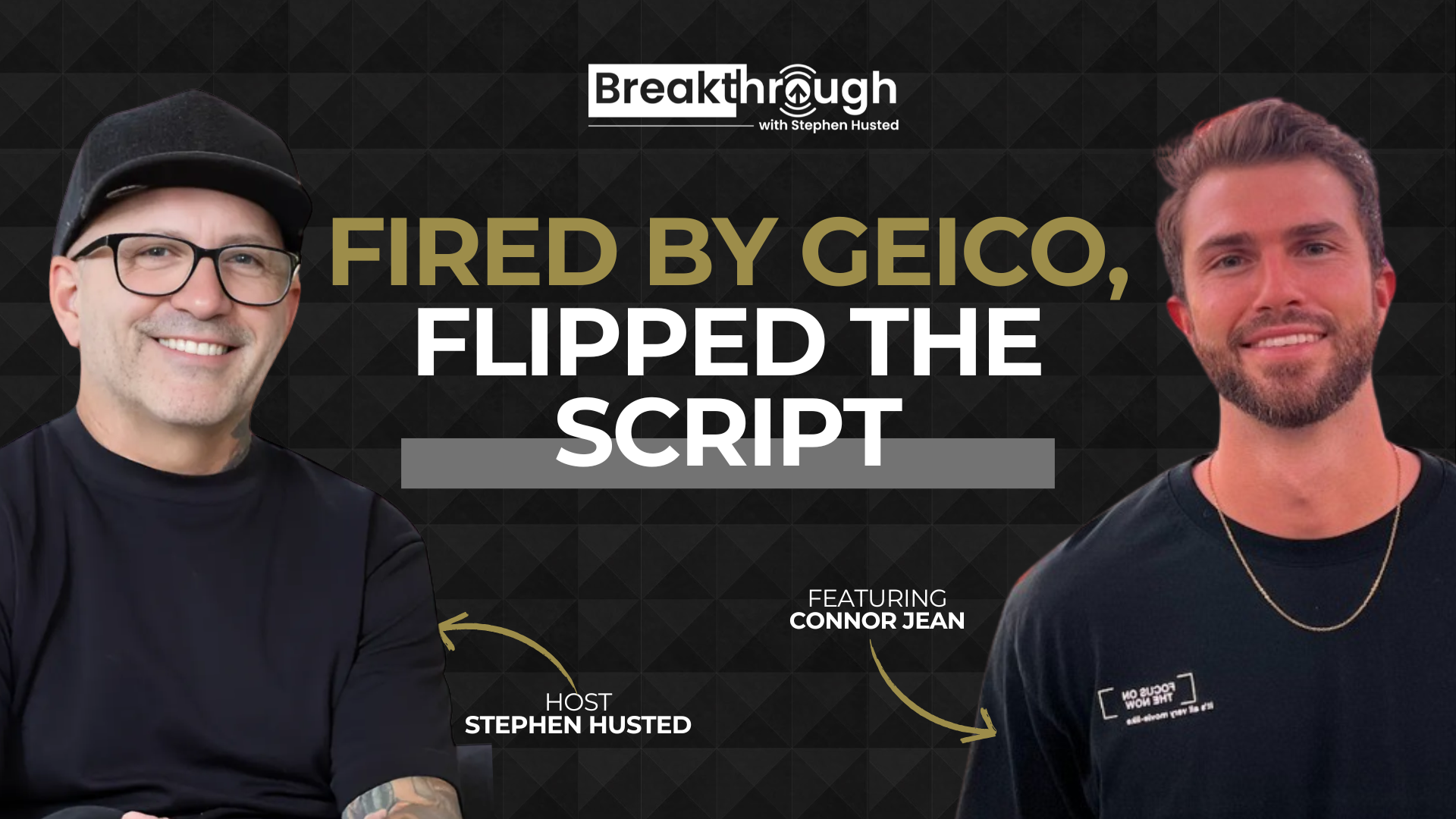
In this episode, Stephen sits down with Connor Jean, a former college basketball player turned NBA trainer turned accidental real estate investor. Connor’s story is one wild pivot after another—from chasing hoops in L.A. to building a $14 million Geico insurance agency from scratch… only to get blindsided and lose it all in a company-wide shutdown. But that setback? It was just the beginning. Connor opens up about how he picked himself up, leaned on grit and curiosity, and found his new lane flipping houses and building a life on his own terms. If you’re into real talk about business, resilience, learning by doing, and building a life by design—this one’s for you.
Connor and Stephen talked about:
00:00 – Introduction and Greetings
04:10 – Basketball Journey and College Life
05:55 – Entrepreneurial Ventures and Social Media Marketing
09:04 – Geico Experience and Business Setbacks
22:54 – Coaching and Mentorship Strategies
27:41 – The Reality of Real Estate Investing
30:38 – The Struggles and Rewards of Content Creation
40:48 – The Power of Social Media in Business
50:44 – Pursuing Autonomy and Passion
TRANSCRIPT
∎ Teaser / Highlighted Clip
[Stephen Husted] (0:00 - 0:17)
I think being an entrepreneur, you have to have a very big level of suffering and problem solving and being very uncomfortable all the time. And the minute you're not uncomfortable, you're really not pushing your business where you're trying to go.
[Connor Jean] (0:17 - 0:18)
A hundred percent.
[Stephen Husted] (0:18 - 0:19)
I mean, right.
[Connor Jean] (0:20 - 0:29)
It definitely resonates. I think it's something interesting that I've been going through personally. And I have a question for you is, what do you think is the reason why you choose to suffer?
∎ Podcast Intro:
[Stephen Husted] (0:29 - 2:10)
Brace yourself for a wild ride into the unexpected. This ain't your typical success show. I'm here talking to real folks who've been through it all, skipping the fancy business talk for authentic stories.
We're diving into childhood dreams, teenage escapades and everything in between. No scripts, just the stories that truly mold success. Each episode takes you on a journey through those breakthrough moments that paved their way.
No fluff, just genuine stories. So whether you're chasing dreams or just love a good story, buckle up for wisdom, laughs and the unexpected. This is The Breakthrough Podcast, where success is a journey, not just some fancy destination.
Don't miss out. Hit the subscribe button now and join our breakthrough crew. I got some incredible stories to share and you won't want to miss a single one.
∎ Guest Introduction:
All right, folks, super excited for this episode. You're about to hear from someone who's taken more pivots than a point guard from playing college ball at Leroy Merrimont, to training NBA players, to launching his own insurance agency, then having the whole thing pulled out from under him. And now he's flipping houses across the country.
Connor Jean is the kind of guy who doesn't just bounce back, he builds back better. We dive into how getting blindsided by Geico led him to finding his way into real estate, how he flipped 10 plus homes in 18 months, and how he's building a life by design. One that lets him slow down, live intentionally, and reconnect with the things that matter.
Connor's got energy, perspective and hustle. I think you're going to really enjoy hearing how he's navigating it all. Let's get into it.
∎ Podcast Proper:
All right, Connor, how are you?
[Connor Jean] (2:10 - 2:14)
I'm doing great. Thank you so much for having me. How are you doing?
[Stephen Husted] (2:14 - 2:21)
I'm doing good. Hopefully, we'll get this through without the power going out and the Wi-Fi going out from where you're at.
[Connor Jean] (2:21 - 2:30)
Fingers crossed. I have a good feeling at this moment now. If it was a few hours earlier, it would be pretty shoddy.
So where are you at right now? Currently, I'm located in Dallas in Texas.
[Stephen Husted] (2:31 - 2:32)
And the weather's been pretty bad
[Connor Jean] (2:33 - 2:59)
Yeah, it's been weird. I'm originally born and raised in Northern California. And then I've lived in Los Angeles for the last eight, nine years.
I know we'll get into that. But I just recently moved here in January. And first week here, it snows.
I didn't even know it snowed in Dallas. It was like 13 degrees. And then next week, it's like 65.
And then it's been 72. And then all of a sudden, flash floods and rainstorms. And we had a tornado warning last night.
So that's basically what happened. So it's just crazy weather here. Welcome to Texas.
Seriously.
[Stephen Husted] (3:01 - 3:03)
Well, California, we just have different things.
[Connor Jean] (3:04 - 3:05)
Fires and earthquakes. That's it.
[Stephen Husted] (3:05 - 3:10)
Fires and earthquakes. We just have whole cities taken down with fires.
[Connor Jean] (3:11 - 3:11)
Yeah.
[Stephen Husted] (3:11 - 3:16)
Are you located in California? I'm in California. Oh, what part?
San Jose. Okay.
[Connor Jean] (3:16 - 3:17)
Yeah, yeah. Familiar.
[Stephen Husted] (3:17 - 3:18)
Yeah. Where were you at?
[Connor Jean] (3:18 - 3:38)
I was originally born and raised in Concord in the East Bay. But I traveled all throughout, obviously, South Bay and even just like the regular Bay Area for basketball. And then I went and played college basketball at Loyola Marymount University.
So that's why I went down to LA. And that's how I found my way down there. And then I loved it.
I fell in love with the area and didn't want to leave. So I stayed there for about eight, nine years.
[Stephen Husted] (3:38 - 3:44)
I've been to that university before. Yeah, back. Yeah, it's really cool.
It's by the ocean, right?
[Connor Jean] (3:44 - 3:51)
Yeah, it's right in the marina there. They call it the bluff of where the church is and everything. You can see the whole marina and ocean.
We're really close to the airport and everything like that.
[Stephen Husted] (3:52 - 4:33)
So I went there late 80s to a bodybuilding camp. It was through this like muscle and fitness magazine. And you went for a week.
And during that week, you got to choose which pro bodybuilders would be there for that week. And then you got to train with them, you know, kick back, you know, eat all these different things. And then at the very end of this, like training camp, they did a bodybuilding competition.
I got photos of it. It's so funny. The photos are hilarious.
I got my hair slicked back and I'm super tan and I'm wearing like hot pink, you know, striped shirts, like total 80s stuff like this.
[Connor Jean] (4:34 - 4:38)
Sounds like a time. Wow. Were you into bodybuilding and everything back then or was it just a thing you did?
[Stephen Husted] (4:39 - 5:02)
For a quick minute. You know, I think I was into it for a couple of years, but I never stopped working out and going to the gym. But I do the whole, went to the camp.
I thought that was really cool. And I think we did the competition. I think it's a third there, too.
Oh, it was so hilarious. But it was just funny seeing that I was like super tan and slicked back, like super slicked back hair. The total 80s look.
[Connor Jean] (5:02 - 5:04)
That is funny. That's so cool.
[Stephen Husted] (5:04 - 5:08)
So what have you been doing now that you're out in Texas and what made you move out to Texas?
[Connor Jean] (5:09 - 7:34)
Yeah. So I think that'd be kind of cool to start. So like a little bit about me.
When I graduated college, very fortunate. Like I said, go to Loyola Marymount, played college basketball there. I actually left L.A. for a year and got my master's at the University of West Georgia in Georgia. So I lived there. I was in an accelerated MBA program and I always knew I wanted to come back to L.A. So I came back to L.A. Worked corporate for like three months and I was just like, I can't do this. This isn't for me.
And so I've always had that entrepreneur type gene and been doing that my whole life. And I actually started a social media marketing agency while I was still getting my master's. And so when I left the corporate world, I was doing that.
Then I also started basketball training business. So I was training kids from like seven all the way up to high school and really wanted to help high school kids go and play college basketball like myself. And within about like two months, two and a half months of doing this on my own and starting my business and figuring this out, I connected with an MBA trainer.
And next, you know, I'm starting to train NBA players. So I was training NBA players like three months in and I trained over like 65 plus NBA players, seven NBA all-stars. And I was like on the court developing relationships, learning skills from this other trainer who I was like the mentee of.
And it just boom, like my business took off. And then I started coaching in a high school down there as well doing player development. All that to say, I really loved what I was doing.
I was creating life by design. It's something I'm doing now and I just loved having control over my time and that full autonomy. However, what I realized was I wasn't really business savvy back then and I wasn't able to make my passion, make this type of lifestyle income that I wanted.
So no matter how good of a trainer I could have been, there was always a cap still trading time for money. That's when I started looking to other avenues of how to make more money. I always wanted to do real estate.
I always wanted to do investing. I've watched every like HGTV show known to man. I was like, I love this stuff.
It's super cool. But living in LA, I was like, you need like at least 300,000, which would be your 20% down plus some money to do construction. I was like, there's no way I can do this.
And so I thought it was a far-fetched dream. And so then I started looking into businesses. Okay, how can I acquire, you know, cash flowing businesses?
So that's another part of like really what I'm interested in now. And that led me to insurance and developing my own insurance book. So when I was in LA, I started actually in insurance as well.
And I was doing that at the same time as doing my basketball business, creating that, you know, kind of another source of income. And that led me to landing my own Geico. So I was actually the owner operator.
[Stephen Husted] (7:34 - 7:35)
I heard this story.
[Connor Jean] (7:35 - 8:22)
This was insane. So it was really cool experience to like have, but then also like what happened, like really screwed me, but it allowed me to get to real estate. So long story, less long here.
I built this book of business from the ground up as the local field representative for Geico in Santa Monica from zero to 14 million in about 14, 15 months. And we were the fastest growing Geico in the country. I was like the top five agent in the country, like top five in like traditional new business.
And I'm thinking like, this is my path to millions. I'm going to make it here we go. And how insurance works is you have those renewals and it rolls over snowballs and it gets so big that you can't stop it if you tried.
And I'm about to enter and get into my third renewal and I get a call from Geico and they fired all 39 agents on a whim, just like that.
[Stephen Husted] (8:23 - 8:24)
What year was that when they fired everybody?
[Connor Jean] (8:25 - 10:29)
That was July of 2022. Not trying to get all into it, but get into it. The pandemic screwed insurance.
So many insurance companies, trillion dollar business, just like overnight was just crushed. People weren't buying new cars as often. People weren't driving as often.
Everyone was remote. And it just like slashed the whole industry like in fourths. And people were just not paying their insurance as much.
And so because of that, they were losing in California. Now, were all agents losing money? No.
Let's say of those 39, probably seven or eight of them were doing really well, myself included. But instead they, so they wouldn't probably get a class action lawsuit. They just did.
Oh, it's a company wide layoff. And they just fired all of us. And the shitty thing with that, excuse my language, but it's they take your book.
So we literally all just spent all this money, built this book. Now they have a $14 million book that they damn near got for like free because I built it. I was over 350k in like debt that I was putting towards this.
And I just now had to just like wrap up shop. And it really put me back. I basically had to file for like business bankruptcy, go through that.
And after about like two months of like kind of sitting there and being like, okay, what am I going to do? That's when I transitioned to real estate. I said, I still have the ambition, the drive to do this.
I now understand business more from a basketball business, running a Geico and everything. And being kind of that, you know, project manager, operation manager, I know I can operate and manage a project. So now I want to do real estate.
And that's actually how I got connected to Antoine. I hit up Antoine. We actually went to LMU together.
That's where I first met him. And I watched him build his entire real estate empire and do 650 flips. So I already had that trust there.
And I just really called him and said, hey, I'm looking for a career change. Like I want to get in real estate. Now's the time.
And he goes, okay, here we go. Let's do this. And he introduced me to Flip System.
And that's how I kind of got into that. And so fast forward that story, we'll dive into more of that later. In the last 18 months, I flipped 10 houses.
I got two rentals that I have now cash flowing in Detroit. It's been a major success where I was able then to leave my nine to five, because I did pick up another job. So I was able to leave nine to five.
And then I moved to Dallas, bought a house. And now I'm doing my first custom flip here in Dallas.
[Stephen Husted] (10:30 - 10:53)
Rocking it. That's great. Do the best we can.
I was having questions. I was like, okay, going through the whole insurance part of it. Because insurance seems very interesting.
Did you sign disclosures with Geico too on this whole business build out and the book of business? Obviously, you knew about that. But for them not holding up their side of the bargain, it seems like there's no compensation.
It's just like, you're done. That was it.
[Connor Jean] (10:53 - 12:00)
It was payouts based off of your performance. And these payouts were insanely small. This is where I'll even say this.
We thought of trying to do a class action lawsuit. Some other people in Oregon, I think, did or whatnot. It became a company-wide thing.
But I don't even know if I'm technically supposed to talk about this. But all that to say, basically, what was really unfortunate, and it felt like it was almost them acting in bad faith, is they knew this all along. They knew the GFR program was going down.
They knew that it was not making them money anymore. They were still adding people in the last four months, six months before firing them. It's not like they just woke up one day and they're like, oh, we're firing everyone.
And so that's where we're like, this kind of rubbed a lot of us the wrong way because they know it's like a $250,000 to $350,000, sometimes $400,000 startup fee investment for your space, your furniture, your employees, your marketing, all that different stuff. It's expensive. And so they really pushed getting these lavish, huge, big spaces that were like $10K, $12K a month to rent.
And you'd lock in leases for five years or 10 years. And I knew a guy that locked in a 10-year lease for a $10,000 a month place for the next 10 years. And he just renewed it in like May.
And we got fired in July.
[Stephen Husted] (12:01 - 12:09)
What was the contract like with GEICO? I mean, did they have a clause that they could just back out of the business deal at any point?
[Connor Jean] (12:09 - 13:04)
It was basically that they were 1099, basically. We don't own the book. They own the book.
We are our own company as a 1099 contractor out using the GEICO name. And they can, for whatever weird reason that they can come up with, basically part ways if they think it's not, I don't know the exact verbiage, if they think it's not working or if it's not profitable, whatever the hell it is. And the other thing is they knew all this
And they have so much money and more lawyers than we can afford. So basically, we all fought back for about two months. All of us held out on signing.
And they literally said, good luck. Take us to court. We don't care.
And it's like us being the little guys, them being the big, like we would have, what, went through hundreds of thousands of dollars in legal fees to maybe get an extra 100 grand or 200 grand or something. It only would have made sense if all of us somehow would have got like millions, right? But, and then basically just scare you away and force you into signing.
[Stephen Husted] (13:04 - 13:17)
And then when they basically let you go, did they like shut down? How did they just shut you down through like email form so you don't have your contact list anymore? And if you contact them, they're going to see you.
Is it how it works?
[Connor Jean] (13:17 - 13:30)
Actually, yeah. Well, technically, I think we had to sign an NDA. That's why I said, I don't know if I should sell this, but they just take your access to everything.
They take your access to everything. They take your email. They take all your contacts.
They take all that. And so you don't really have anything there.
[Stephen Husted] (13:30 - 13:33)
Wow. That was a bad point in business.
[Connor Jean] (13:34 - 14:20)
Yup. And that's where I really like, I was like, okay, though it sucked and it's like you financially are super stressed and whatnot. It's like another learning lesson where you're like, all this taught me how to one, find the right people I want to work with.
I was really quick to hire, quick to fire. I knew how to manage people. I was learning how to work through others.
I was doing a lot of stuff where I'm in office, out of office because I was working on other things. I wasn't always there. So I had my team that had to trust, that had to contact and communicate.
My manager of my office was talking to me directly. My finance person was talking to me. So every day I was getting the numbers sent to me of what was going on, whether I was in the office or not, or working on marketing deals or trying to expand.
So it allowed me to learn literally like project management and learn how to manage others through just that type of setup that I have.
[Stephen Husted] (14:20 - 14:23)
Which goes perfect with real estate and flipping.
[Connor Jean] (14:24 - 14:35)
Exactly. I didn't even know I was learning that right then and there. When I keep having this joke, cause I'm working on this project here in Dallas.
I was like, I've been training for this my whole life and I didn't even realize it.
[Stephen Husted] (14:35 - 14:54)
Yes. Yeah. It's kind of cool how it happens like that.
You know, you take a negative and it goes into a positive. It was almost like you were in a business internship during that time. It cost me as opposed to paying me, but yeah.
Yeah. So you hooked up with Antoine and then walk me through that process with him.
[Connor Jean] (14:54 - 14:54)
Yeah.
[Stephen Husted] (14:54 - 15:05)
Because you didn't just start off with him right away. You had a conversation and then you backed off for a while, right? Because I don't think you had the cash to really get going on it.
You're planting the seed, so to speak.
[Connor Jean] (15:05 - 19:29)
Yeah, precisely. So this has been something I was thinking of for a long time. When I started my basketball business, Antoine was starting his real estate.
And so we stayed in contact for years. I saw him start doing his first flip in like 2015, 2016. And I just was like, okay, cool.
Noted. And then in 2017, I was doing my basketball stuff. He was still rocking in real estate.
And I think like 2019, I was like poking at the idea and I called him and I was like, hey, what would it take to get in real estate? And he basically told me like, dude, just keep focused on basketball. Double down on your business.
Keep doing that. I was like, okay. And then I remember 2020 came around and the pandemic and all that.
And I was kind of bored. So I called him again, thinking of buying a rental. And he like basically talked, he kept talking me out of this.
He literally was trying to be like, you need to be so ready that you want to do this and then like commit. So those were all those conversations. And then when I called him and it was like into September, beginning of October of 2022, I was like, I really want to do this.
What would it take? And he's like, well, I started this mentorship called Flip System. And I said, okay, what does it entail?
And he's like, you know, we meet once a week. We do this, that, and the other. And when I started, Flip System was very different than like how they hold your hand now.
It was very, we call it- In what way? Very like MVP-ish. It was like, here, I'm going to give you a lot of information, but you have to still go do it, right?
So I had to find my deals at the beginning. I had to run my numbers. He taught you all how to do this
I had to find my teams, all those different things. I randomly picked my market. And he just basically was like, hey, I'm going to hold your hand through the deal.
I'm going to, you know, tell you how to do this. I'll check your numbers. I'll teach you like everything I did.
So it was like a course and a curriculum. I went through it in a weekend because I was so ready. Like Friday, Saturday, Sunday, I went through it.
We had our meeting on Tuesday. We had these, you know, Zoom meetings. And I was like, hey, I went through the whole course.
And he kind of like looked at me. He's like, what do you mean you went through the whole course? It was like 35 hours of content.
I was like, yeah, I did it in a weekend. Like I just sat down 2X speed and I went through the whole thing. Like I'm serious.
And he was like, okay. So I was like, well, I actually came to the meeting with like four deals. Can we break these down?
Sorry, this is what I want to do. And he was like, okay. And so that's what that process kind of started.
And then for me, I kind of went through some like family personal things in like December, January, where I was like, okay, I got to take some time. And so it really picked back up for me in March. And in March, that's when I kind of came back to this.
And he's like, I changed this. You now get my teams. My acquisition team's gonna help you find the deals.
Here are all my lenders. He basically gave you everything you're gonna need to do this. So then in like March, he basically, he gave you the whole team, right?
And so now I was just like, there's no way to fail because I know me, I know my ambition. I know my drive. If you're telling me exactly what to do, you're giving me the deal.
You're giving me the lenders. You're showing me the numbers. It's plug and play at this point.
And so I came back in March and- What was the course like, the first one? The course was amazing. It was so in depth.
And he actually changed it where it's not as in depth, meaning like he was breaking down specific markets. Like he'd break down Detroit and Cleveland and Memphis and St. Louis and Kansas City. And he was like, these are the good areas.
These are the bad areas. This is how I look at stuff. This is how I run the numbers.
They still teach that, but it's not like that broken down. So the course was very in depth because the idea I think back then was like, I'm just gonna give you this course and then like, good luck type thing, right? Like keep going.
I'm here for you once a week where we can meet and talk. But he changed it and just made it way more in depth. Where you have your own personal coach.
Again, you get all the teams and the financers and you have this calculator that he gives you access to. They obviously find you the deals. So it just made it way more, I would say like, I don't wanna say easy, but just like less hoops to jump through to where it's almost bulletproof for you to like not fail.
But the course was amazing. I mean, it taught you everything about like how to run numbers, how to look at properties, what are the right areas, how to run renovations, what are renovation costs, how to come up with your guests, what we call it the guesstimate, right? How to communicate some basic stuff, how to communicate with your team on the ground.
What are the values of property managers? How does financing work from hard money lenders to conventional loans? How do DSCRs work?
How to cash out refis work, which obviously the same thing just depends on what you use. Yeah, all that stuff, which I thought was so helpful to understand because I never even leveraged my credit in my life. I never bought a house in my life.
I knew nothing about real estate. Like I live in LA, like everyone rents. It's so damn expensive.
So like it was very helpful for me because I never understood it. And now that I've bought and sold, you know, 12 different houses and now this 113, like it's nothing to me. I'm like, oh, I get this.
I see these contracts all the time. I've read them. I know how financing works on the front end, how DSCRs work on the back end.
It all makes sense now because I've done it. And that's how I even learned. I learned by doing.
[Stephen Husted] (19:30 - 19:45)
Right. And that's definitely how real estate is. You're constantly learning as you go too.
You can do a 20, 30, 40 deals. Antoine will probably say the same thing. He's constantly learning, which I think what makes it really cool.
It keeps you on your toes on a lot of ways.
[Connor Jean] (19:45 - 20:12)
Strategies, right? There's seller financing. There's, you know, a section eight strategy.
If you want to build this, there's then you get into, you know, little still residential, like duplex, triplex, quads, then eventually get into commercial, right? With big multifamilies, 20 units, et cetera. And it just, I think comes down to your goal.
Like, what's your goal? What are you looking for? Is it cashflow?
Is it just to make some extra money on the side? And you're going to find whatever strategy that you need to kind of hit that goal. And it has every possible in real estate.
[Stephen Husted] (20:13 - 20:20)
How much time did you spend with him in the beginning in that first round of the course? It was a Zoom meeting once a week. Did you talk to him one-on-one as well?
[Connor Jean] (20:21 - 20:24)
Yeah. So I had kind of, I was fortunate.
[Stephen Husted] (20:24 - 20:25)
You're a little bit more in there with him.
[Connor Jean] (20:26 - 22:02)
Personally, so sometimes I'd be like, hey, and shoot him a text or whatnot. But he tried to keep it, you know, even for me, like, hey, this is how the program works type thing, which was fine. But yeah, you met once a week on Tuesday for an hour.
He also had 24 seven, like customer support, email access. You had a coach and stuff like that. And then for me, once he gave me the contacts and everything in March of 2023, it was developing those relationships with the team on the ground, right?
My eyes and ears and boots on the ground. It was my contractor. It was my realtor.
Project manager, you know, property management company. Those were the ones I was constantly communicating with, as well as my lenders. I was still trying to figure out the lenders.
He gave you like a list of people he used and we had really good relationships with. At one point there was like 18. And then I kind of figured out these are like the best nine.
Then I kind of found my like top four, like I love. And I'm like, okay, these are my guys. And why did you love them?
How easy they were to work with. And it sounds funny, but it was truly just that. Like how easy they were to work with, whether their site was user-friendly or not, how responsive they were.
Their rates. And then as you build the relationships, they see your track record and they start giving you better rates and better deals. And now it's like, instead of I'm getting charged 3,500 on origination fees, I get charged like a thousand bucks.
I'm like, cool. Instead of only getting, you know, 85%, 90% funded, I'm now getting 100% funded. And so like, those are the things that are cool.
Once you kind of show that track record and grow, the lenders want to keep growing with you. They're like, oh, this is a guy that's serious. These are deals.
Like I'm not going to be wasting my time with a tire kicker when Connor comes to me with a deal and saying, hey, can you, you know, give me a quick conditional term sheet? They know that it's worth their time because there's like a nine out of 10 chance this is going to close.
[Stephen Husted] (22:03 - 23:52)
Yeah. So the reason why I was asking you these questions about his course is I've been investing out in Detroit, Kansas City, and then Tennessee, and now we're in Seattle. And I, all of a sudden, organically started getting people reaching out to me.
Like, hey, I want to invest. And oh, hey, I got an inheritance and I want to put it into some investment properties. Been watching what you're doing.
So then I said, oh, you know, I did want to form partnerships. So it's like, well, I can teach you. We can go through that process.
So I slowly started doing that and rolling it out. And then I realized, okay, I got to put a, you know, a system in place, put some type of course in place. So we did that.
But then it starts to become, you grow and you get more. How much time are you dedicating to everybody? Because I remember in the very beginning when I was doing it on my own, it was just YouTube and learning as I go type thing.
And I wanted to make sure to kind of cut all the friction out for the people and what I've gone through. And so they don't make those mistakes, but then that can be a time suck. And there's a delicate balance on really how far you want to be there for your students.
So it's interesting. I even, I think I brought this up to Antoine too, because I told him like, I'm getting more people right now. And how do I manage that time?
And how much time should I be giving them per week so that they succeed? And right now, like I just onboarded a gentleman who I've known for a very long time. He's getting way more time out of me right now.
Okay, because I'm trying to learn how to systemize the whole scenario so that, you know, if I had 30 people, because that's what I'm afraid of. Like I can go do a webinar and maybe at the end of it, it's something to do with, you know, if you want to join and you want to be mentored, then, you know, it's this. But what if I got 40 people at one time?
Yep. I'm gonna have to figure that out.
[Connor Jean] (23:52 - 26:09)
Food for thought on that, because I have seen what Antoine's done. I've thought of some own things. And I've kind of also, I have helped, I've gotten like four or five of my friends into involved in Flip System and they call me.
And kind of what I see is, right, is everyone just wants that personalized approach, which is really hard. You can't do that for 40 people. But it also, what it seems like is having an exact system where they just feel heard for the concerns they have.
A lot of stuff and calls I get are, hey, I've been submitting offers, nothing's going on, what do I do? And it sounds kind of like an easy thing. You just submit more offers and also you talk to your team on the ground.
Like you should be talking to your team way more and learning how to communicate and project manage that way and develop that relationship with them so that then they start to understand you and trust you that when you're talking about deals and coming up with deals, they know they're not wasting their time, right? Because a realtor help you buy a $75,000 house in Cleveland, you're getting like a thousand bucks. So if they're driving around the freaking city with like a chicken head cut off and they have to do this for a month just to get a thousand dollars, they're like, what the hell, it's not worth it.
But if you develop that relationship, you're like, hey, like I'm planning to eventually be doing like 20 a year where I'm buying, all right? And every deal that they bring you or you bring them, there's like a high possibility of closing if you get it. They're like, okay, I'll do this, right?
So you want to develop that. The second thing is inspections. They're always concerned with inspections or running numbers.
So they always want that personal approach, I feel like. So that's where it's cool to have that coach where it's like, hey, I found a deal, I like it. I just want to check my numbers with you.
So that I've noticed. And then if an inspection report comes back, having time to break it down and what you should look at. All that to say what I think Antoine's done a really good job of as he's grown and he grew with his company and his team, he grew out.
He has amazing people that like, they know their shit. They really know how it works. And he has two webinars a day now, like morning and afternoon.
So like they can come in and do that. And he's not even necessarily has to be there. It's his team, right?
And then he has that structure of when you look at your deal, once the deal makes sense, if you like it, you send it to your coach. You have a quick little 15 minute meeting with your coach on the numbers. Great.
Once your inspection report comes in, you send it to your coach. You have another 30 minute meeting on the inspection report. Good, right?
So it's those places I feel like along the process of buying a house and whatnot, where there's the uncertainty. You come in as the professional, as the expert of giving them that certainty and that safety, like this is a good deal or not.
[Stephen Husted] (26:10 - 26:15)
Yeah, that's interesting. And how much does he charge for his course? Is there different tiers to it?
[Connor Jean] (26:15 - 26:16)
No.
[Stephen Husted] (26:16 - 26:16)
It's just one?
[Connor Jean] (26:17 - 26:30)
Yeah, I think it's eight grand. Well, actually there is different tiers. I think it's eight grand for six months, years, longer.
It just depends on length, right? Your years is a little more. I don't know the exact numbers, but I would say I think it starts around 8,000.
[Stephen Husted] (26:30 - 26:37)
That makes sense. In six months, that's a good cycle for getting up and running, you know, getting financing in place, you know.
[Connor Jean] (26:37 - 27:22)
You could almost do a deal too. You should get pretty close or at least have one going where you should be able to profit and then you make your money back that you invested with a program and make a little profit. And you're like, okay, cool.
I now get it. And then at that point, it's like, do you want to actually do this? Because that's the other thing I've learned too is everyone says they want to do this.
And I know you know exactly what I'm talking about. They're like, I want to do real estate. This looks so cool.
And then they get into it and they're like, the hell is this? This doesn't look like the HGTV shows. This is stressful.
This isn't fun. And then they find out they don't want to do it and that's okay, right? But at least they give it a taste.
And I think that's the other thing too is people are so scared to try. And that's what Antoine's trying to help is allow people to try and see if this is something that you want to do. And hopefully they have a good experience on the first one where they make money.
[Stephen Husted] (27:22 - 28:26)
Well, I think that goes with anything. Trying just in general. Forget about real estate.
Sometimes they're just that mindset, the mindset barriers that are out there. And that's why having a coach can help break through those things. Like they maybe need their hand held.
They get an experience underneath and they can move forward, right? Because now they have that and they have that person to the side, which just seems like every student I've had, that's really what they needed. They just needed those calls where it's like, is this going to be a good deal?
I'm going through this. Is this normal? Yeah, this is normal.
I've had a couple that literally closed escrow and they had a major plumbing issue or this came up or the house got broken into. Heater was stolen. And I was like, yeah, this is part of it.
And I tell them in the very beginning, you're going to go through some of these things and feel like the world is crumbling and you're going to be super stressed out. But over time, you're going to have this issue pop up. And the first thing you're going to think is who's going to take care of it and move on.
[Connor Jean] (28:27 - 29:18)
It's normal. So I talk about this with my brother a lot about your threshold of uncomfortability. So there's this level of being uncomfortable.
And the majority of the time is most people, they don't go out of their comfort zone. So they're constantly just at this homeostasis, just chilling. And so when something pushes them out of their comfort zone, whether it's something financially that they're uncomfortable about or safety or it's just an unknown, some people can't handle it, right?
And what happens is like you're saying is it's a muscle. You work it. And because you experience it so much, you're just like, that's just another thing.
Okay, I just need Tom over here to go and fix that. Or I need to call my insurance rep and be like, hey, I got this broken into or I need to call my homeowners. I got a homeowner's policy.
I need to call that, just so that the HVAC gets fixed or whatnot. You just become a solution oriented. And I kind of used to joke, I call myself a firefighter.
You're just constantly putting out fires. You're just putting out problems all day long. And that's really how it works.
[Stephen Husted] (29:19 - 31:17)
And that really turns into a skill because now I look at the businesses and it's always like, okay, what can be better here? What's going on? Let's fix this.
And I've always been really good at suffering in life. I get what you're saying. In everything.
I'm always suffering in everything. Nothing's ever really been really easy to do. And if I had learning difficulties and just all these different things and I just learned to suffer.
I mean, I'll give you a great example. This is a good one from yesterday. So we have two suites and I had a lady that was next to me and she left.
And so my buddy took over that space and now it's gonna be our new media room. It's gonna be a YouTube room. So we've got this clear board up there.
It's getting done. And so I wanted to shoot a one minute video regarding this deal in Seattle that we finally got the appraisal back on, right? So I'm drawing and I'm drawing and my handwriting is terrible.
I'm like, oh shit. So I'm spending time, you know, we're going from 20 minutes, 30 minutes. I'm going there and tinkering around.
I'm trying to shoot this one minute video. But what I wanna talk about, there's no way I'm gonna fit it into this one minute video. So I kept doing it and doing it.
And I shoot video all the time, but I spent just like one and a half hours on this one minute video that I posted the stories. And at the end of it, I was just like, God, I just wasted so much time just now and the pain and the suffering. And I feel like I just suffered on.
And then I was cracking up that the people would walk down the hallway and I can hear people when they're in their office talking. So they're probably going, God, this dude is just crazy. He's still going at it.
And I, dude, and it's just suffering. I think being an entrepreneur, you have to have a very big level of suffering and problem solving and being very uncomfortable all the time. And the minute you're not uncomfortable, you're really not pushing your business in where you're trying to go.
[Connor Jean] (31:17 - 31:18)
A hundred percent.
[Stephen Husted] (31:18 - 31:19)
I mean, right?
[Connor Jean] (31:20 - 31:29)
It definitely resonates. I think it's something interesting that I've been going through personally. And I have a question for you is, what do you think is the reason why you choose to suffer?
[Stephen Husted] (31:29 - 32:31)
I think because staying just like this is boring and I don't feel alive. I think what happens when things are really hard and I'm going through something really hard and I'm pushing forward and I'm taking two steps back and I'm pushing forward and it's just not, and it's just lingering and it could be something that there could be a problem or something I'm trying to do that takes months to get through. It seems like that, you know, to me.
But then I'm just so obsessed. I just keep grinding at it, grinding at it, come at it with different angles. And then once I get it over the hump, it's like a crazy dopamine hit.
And then I feel accomplished and then it gives me more confidence too because I solved that big problem. Because the big problems, people typically want to run from big problems. The big problems is what you want to run at and try to get through because you're going to get a lot more out of solving big problems and going through big things.
That's what I've noticed. I feel like anytime that I feel like I'm not pushing and I'm not uncomfortable, I am uncomfortable. I get uncomfortable from it.
I hear you. Does that sound weird?
[Connor Jean] (32:32 - 33:46)
I don't think it sounds weird. I understand it. And I think it's probably just innate in you of how you grew up and who knows what it was that drive or ambition that sparked that.
I know for me in my life, a lot of it was sports. Just being heavily in sports and always pushing to try to grow and be better is kind of how I got that. But why I ask, because I think it's funny is like even myself too, like I do the same.
And it's like, why do we choose to quote unquote suffer, right? And there's so many psychological things behind it, whether you're a perfectionist or whether you become addicted to the suffering and you need that whatever external thing to continue to motivate you internally to move forward, whatever it is. But I think I'm working on finding peace in the suffering, kind of like what you're talking about, right?
You get so comfortable being uncomfortable and it just becomes a muscle that you continue to work that it just becomes honestly like peaceful. You're just like, oh, it's just another day. And you're allowing your emotions not to get triggered and allowing the stress not to really stress you out.
And you're just like, it always works out. And so you have a higher threshold of that uncomfortability and you're actually fine. Like you said, the comfort in it.
So if you actually are just staying like this, you're actually more uncomfortable than if you are going like, oh, this is great. And then you're like, oh shit, I can't figure this out. And then you're like, you cross that barrier and it's the life of an entrepreneur.
You know, it's literally a roller coaster.
[Stephen Husted] (33:47 - 35:57)
I think a lot of the comfortableness of suffering I get from cycling and running. I do big endurance racing and mountain biking and that you suffer. If you're out on a hundred mile race at altitude climbing mountains, you are suffering.
You are working through it. It's just you. There's nowhere to hide.
No one's coming to save you. And you're just going through it. And it's interesting because you start off from, this is just for me, you start off with all this adrenaline, you get going through it.
And then you, especially when you go out on the bike for four or five hours and then get up to like eight hours on the bike, you're going through some of the darkest times in your brain. You just, you are. And you spend time suffering.
But then at the end, you cross the finish line and it all goes away. But then that time period translates right into business into like, if I can go do this, I know I can go solve this over here. I can make happen.
I know this is temporary. And that's just something I've learned. And I think the two go together and I'm a fanatic about both of them now.
I have to be. You know, like fitness is... Today I didn't run in the morning.
I had these early meetings and I don't shoot a podcast without doing cardio because I have high level. I am just off the charts. If I run, I get my cardio in the morning.
I'm calm. I'm more present. I can listen to my guests and I can really focus on the podcast because I've gone teens, early twenties, just being so wound up because I didn't have cardio.
I wasn't doing that and was just bouncing off the walls. And this is how I've had to do it to kind of calm me down and so that I can focus and have peace through the day because our entrepreneur, there's not a lot of peace on our days. You can wake up and grab your phone and have 10 messages from your property management about a whole bunch of different issues.
And then this is going on and it's endless. It's really endless. You know, I just turned my phone back on.
I wanted to kind of show you this. So about the video from yesterday, mind you, it was one video and I batch record videos like a bunch, but I get it.
[Connor Jean] (35:58 - 37:45)
Dude, what? It's so funny, but it's fun. It's still fun.
That's the thing that I've started to enjoy too is like, even like you said, okay, it took you an hour and a half. You just spent so much time. I think this might be a total shift on what we were talking about.
But when it comes to content and I started getting really into content myself, I think we, or I'll speak for myself, can sometimes get caught up in the numbers, right? The metrics. And I've reframed that so well for myself recently of you get 300 views on a video or a thousand or a hundred thousand.
Honestly, none of that matters because if let's say you were to just to get 300 views or even a hundred views and like six likes, people like, oh, the video flopped. I was like, no, it didn't. If you were in real life to go to an auditorium and a hundred people showed up for you just to talk about whatever you talked about for a minute.
And six people afterwards came and said how much they liked that to you. You would feel so high. It would be insane.
But just because of we're comparing to others or not going viral, this and that, we see that and we're like, what? So now, I don't know, maybe it's just my delusion. But I love setting my bar so low.
I'm like, if this gets a hundred views, I get five likes, I am hyped. And if it does better, great, you know, but I'm not. And I think that's the thing is you stop posting for the validation or for something to go viral because your video, what you're trying to teach someone or bring to light in 60 seconds, that might help that one person to go get that deal.
Or that might help three people go get that deal or change their life entirely and you never know. And so I've just become way more excited about the stuff I'm posting. And I like it.
I think it's great. I think it's fun. I'm like, damn, I was really good at how creative I was at that and my words and my copy.
Like, ah, this is a great post. And it might flop in some people's minds, but I'm like, that was fucking fire. And I love it.
[Stephen Husted] (37:45 - 40:14)
Yeah, look, if you can wake up every day and be excited about what you're doing for the week, you know, you're on the right path. You know, like the weekend comes and I'm already thinking about the following week, trying to get some downtime to kind of clear the brain. But it's totally true.
You got excited from the process of making that video. I think that's some people don't want to go through that process. You know, they don't get any validation or they're not getting likes and they get in for the wrong reasons.
Yes, that video yesterday did take me that long, but I really was trying to just make it good so that people can understand what I'm talking about. I feel like I'm always trying to make sure that I can communicate better in videos. And it's really hard on a one minute video.
I really wish and I did it for stories. I only did it. I made that video for stories only for that audience that follow me through everything.
It's almost like I just wanted to talk to them because I see them watching all my behind the scenes. So I wanted to put out like, hey, I wanted to give you an update on what we got going on in the first project in Seattle. I finally got the appraisal back.
I'm going to run the number. So I made a visual on a board and had the house there, told them the price. That's what we bought it for.
This was the rehab. This is what it came. We're all in it.
This it appraised for this. We have 150,000 in equity. But now this is where things get interesting.
I didn't get to tell them that, you know, now we have a lot in the backyard where we can build and that's where the magic happens. So now I got to go back and shoot that other part. I'd like to just sit around and talk for, you know, 10 minutes, go live on Instagram.
But then I was thinking about this. I brought this up to a friend. You do an Instagram live.
People are going to come in at different points. You know what I mean? So then they're like, OK, where are we at in this conversation?
You know, it's just interesting little things like that I go through. But like what you said, I love the process of doing all of it, too. I like, yes, it's hard.
And I was literally brain dead after that stupid one minute video. It was like, I don't know. I ended up being too.
And then I get into this weird thing like, oh, I just wasted all this time. You know, time is everything, right? You got to be efficient with your time.
And then I thought about it. I'm like, I have a whole team behind me. Was I wasting my time?
Or did I get this video out to people to help? You know, I think that's the greatest thing about content is like you might get 100 views, but we can talk about the 100 view thing because I'm a realtor here in Silicon Valley. Some of my biggest transactions have come from videos getting 100 views where that turns into a listing that's a $3 million listing.
Simple.
[Connor Jean] (40:14 - 40:15)
That's huge.
[Stephen Husted] (40:15 - 41:56)
Yeah, simple. And I know that everybody wants to talk about you have to have all these views or going viral or wherever the case may be. It only takes a few to kind of either grab traction from that video, want to call you.
It's that simple. It's really that simple. And it's interesting when it happens.
My mom has a lady that they go to church together and she's mentioned this lady for years saying, oh, Patty is your biggest fan on Facebook. She's never commented on the video. She's never liked a video that I know of, but she's never definitely hasn't commented.
About a month ago, she reaches out, says, hey, been following you on Facebook. I know what you do. You're the man to sell my house.
Can you come over? And so I went over there and we talked and it was cool. I told her, I go, hey, so there's going to be some terms to this listing agreement.
She's like, well, what is that? I'm like, you have to go on video and we're going to have to do the journey of you selling your home and going into an assisted living. She's like, but I didn't do my hair today.
And I just put on the and I she let me record, I did a video and she told this really cool story of finding this vase. I asked her, like, how's it been to get ready to move to your assisted living, you know, packing and all that. Oh, it's stressful, but I have so much stuff and I found this really cool little vase that was my aunt.
He told the story and she got all these people responding to her on Facebook. I tagged her on the video and it was cool. You know what I mean?
That interaction beats me posting coming soon, just listed. Any day. It's the human interaction and it got other people to talk about it.
And that's what's cool about social media and shooting content. You know, there's a lot of bad things out there about it, but you know what I mean?
[Connor Jean] (41:57 - 42:00)
But the relatability, the storytelling, that's what people love.
[Stephen Husted] (42:00 - 42:16)
Definitely. I want to hear about your social media marketing journey thing that you went through. I heard that on Antoine's podcast.
I listened to it a little bit, but is that kind of helping you lead into doing content now?
[Connor Jean] (42:16 - 45:11)
So I would say it did in the beginning. So when I got my MBA, I tailored it in social media and internet marketing. That was back in like 2017.
It's changed so much. TikTok wasn't even alive back then, right? Instagram was just popping off.
It helped me with my basketball business. And I think for me, when I started and started posting and posting the right things and understanding split screens and four screens and how to do short content, it helped grow my audience and it was kind of like my online business card that allowed me to be quote unquote validated. You see the following, you see me training the NBA players.
Whenever I'd go reach out to a new client, be like, hey, I want to train you. They're like, oh yeah, well follow me. The second they pull up my Instagram, they're just like, what?
You have 30,000 followers? You have like all that stuff, right? And you've trained this person?
And I'm like, you know, not my clients. I've just been a fly on the wall, guarded him, trained him, sat in on sessions. But yeah, a lot of the stuff they do, that's what I do in my sessions.
So I knew how to use it kind of like you're saying to get my clients for me, for my business, right? Like I, that was what I used it for. And I developed such a love-hate with social media, mainly Instagram, that I stopped in 2019.
I didn't post from 2019 for till like 2023 on that account. And then I actually completely stopped again. And then I just started a whole new account this year.
And I said, I want to just do Connor Jean. Like, what am I? Not Connor the basketball player, Connor the basketball trainer, none of that, just like Connor as his entirety.
And so I think that has allowed me from knowing what I've known, from doing what I've done, from also then seeing my brother and other friends, I've come to content creation with a new lens of sharing a story, being relatable and being vulnerable. And that's it. And I think those are the three qualities that with whatever you do, I don't care about the views, I don't care about any of that.
As long as you do that, you're going to attract the right people and it's going to get you to where you want to go. And so that's kind of how I try to do all of my social media now is that, and I look at it in five pillars, because I think in, I bet you can talk to this too, and it already sounds like it, like you wear a lot of hats. We're all multifaceted beings
So if I just put myself in this little niche, which is why I stopped posting on my basketball page, it was just everything basketball. And I was like, that's so last chapter for me, though I still love it. And that's my passion.
That's something I do. It's not who I am entirely. Like, I like to dance.
I like playing basketball. I like real estate. I'm insanely interested in financial literacy.
I like emotional intelligence, spiritual intelligence, physical, working out, going to the gym. So there's these five pillars that I focus on, which is spiritual, emotional, physical, financial, and romantic relationships. And those are the things I want to talk about, because I think that shows the entirety of a human life experience.
And I, for me and my socials now, and my, you know, content creations around that. And one aspect is financial, which is financial literacy, which is real estate, which is all that stuff. And I do talk about it too, but that's kind of how I've approached social media now is I'm not in a niche anymore.
That's just my idea. And I think, you know, it might flop. It might not.
But I just think there's too many things to kind of pigeonhole yourself into one thing.
[Stephen Husted] (45:12 - 45:59)
And that's really hard because, you know, I've gone to content academies and they're like, you have to niche in. And I remember, number one, niche in. And I met this gentleman and he kind of heard some of my backstory.
Then he came up to me, you know, in the morning at breakfast and was like, you have the whole circle. You have your endurance athlete. You're an ex-drug addict, you know, that got clean for 20 years.
You've got a family now. You're a real estate investor. You're a realtor.
You've got all these different things. You can start having all these talking points, but you have to niche in. You know, I used to be a DJ too.
Like, I just remember hearing him say, oh my God, that sounds so boring. If I finally have to shoot all the same kind of content over and over and be niched into this thing that I'm, but that's not how I live.
[Connor Jean] (45:59 - 46:00)
It's not authentic.
[Stephen Husted] (46:00 - 46:51)
And that's not even how I live. But then the flip side of that is Instagram doesn't like that either. Because once Instagram knows, oh, he's in real estate.
So he's going to post real estate content. Oh, wait a minute. He's telling a story about going to a club and hearing one of his favorite DJs when he was a DJ.
Nope, that's not going to people. That's only going to his, that's only going to a very small select group of his audience that knew him from 1990 to 1997. And then afterwards I was like, and then I'd have people come in.
They're like, well, you know, this doesn't kind of stay with brand. I'm like, really? So my past, my past is not my brand anymore.
Okay. And it's interesting because I just went on, I think at the beginning of January on a webinar and Gary Vee was on there and Gary Vee was like, post it all. Post it all now.
Post it all. Post it all.
[Connor Jean] (46:51 - 47:34)
Because it's kind of like what I was saying. It's about transparency is what great Gary Vee is all about, right? Self-awareness.
But it's about those kind of, again, three things of like you telling your story, your authentic self, right? So storytelling, relatability, and vulnerability of you sharing all that. So you have the vulnerability side of you talking about, you know, being an ex-drug addict and how you change your life around.
You have the other side of probably the mindset of being someone that's super driven and wants to be successful and how you got into real estate and how that led you to that and investing. And then you also have the other mindset of like, hey, this is as an endurance athlete, like you have to have this insane mindset that I also then carry in a business. And so they're going to buy into you.
And you have multiple areas you can kind of go with that. So I don't know. I think post it all.
[Stephen Husted] (47:34 - 47:49)
Yeah, I think so too. It's interesting you bring up, you know, how social media can really, you could be very sure on some type of direction and all of a sudden get spun in another direction real quick by just watching one person's take on something in life. It was, do you know who Rich Roll is?
[Connor Jean] (47:50 - 47:50)
I do.
[Stephen Husted] (47:50 - 49:14)
He's a podcaster. He does a lot. He has a lot of endurance athletes on his podcast.
Really cool guy. He's a alcoholic, you know, endurance. He was a endurance runner.
And he said something about vulnerability, right? This guy jumps into the chat and was like, vulnerability is a form of weakness. And people started kind of commenting on that.
And I think I jumped in and said something too. You know, well, you know, you could be vulnerable and tell your story about, you know, being an ex-drug addict and where you were and where you're now. And that's not a form of weakness.
It's a show of strength. Because you can actually talk about it. And he's like, no, dude, look up the word in the dictionary on what vulnerability means.
And that's not what it is. It's weakness. I mean, like, and this guy has literally made videos and actually did a webinar on the word for that reason.
So you can, that's where social media can get. You can really think you're on the right path and then get start second guessing, second guessing yourself on how you say things. Because now you just bring up the word vulnerable.
I'm like, yep. I think of that guy now because he's like, oh, that's a sign of weakness. Okay.
So what is the other word that you use now? What's another word besides vulnerability? But it's strange, but his whole business, his whole page is on this framework of what he feels is the truth and things, which is fine.
Yeah.
[Connor Jean] (49:14 - 49:17)
And that's all you're doing, right? Is at the end of the day, is you're trying to figure out what's your truth.
[Stephen Husted] (49:17 - 49:24)
And that's a, especially when you start making content, it will start to expose everything. Does that make sense?
[Connor Jean] (49:24 - 49:41)
A hundred percent. And people come out with their Cheeto fingers and saying something. And this is kind of how I take anything is if I'm going to listen to you or your advice, whatever you say, I have to take on your entirety of what your life is.
And I probably a hundred percent positive. I don't want your life. So I really don't care what you say.
[Stephen Husted] (49:41 - 49:52)
Yeah. I agree with you. So now that you're investing and flipping, what else is inspiring you at the moment?
What do you see down in the future? Anything you're gravitating towards?
[Connor Jean] (49:52 - 51:57)
Yeah. So for me, like my motivation and inspiration comes from autonomy, like a life by design. I believe, you know, the one finite resource that we all have, that we all share is time.
And you never get in the back. And I want to be able to feel like a kid constantly where you're able to connect to your inner child, because I constantly will have visions and think back to when I'm like eight, nine, 10, 13, whatever. And it's, you're not worried about anything.
You're just like, can my friend Peter play down the street? Huh? You run over to the house, you knock on the door.
Hi, can Peter play today? You know, like that's what we did. And where you would figure out where everyone's hanging out, you just go and look around the house, see where all the bikes are out front.
That's where we all were. You know, and I know you're gonna, you get this. It's like, I want to do more of that.
I want to enjoy this world and I want to dance through life more and play. Those are the two words I think of. And so everything I'm doing is setting myself up for more autonomy.
Why do I like real estate? Because you can go and you can flip, which is fun. Get some quick little, I call it quick, larger sums of cash, or you can set up a portfolio that's paying you passively.
And that's what I want, is I want to set up a portfolio that's paying me passively. Also one of them by cash flowing businesses. So I have enough cashflow coming up to where I get to pick and choose how I spend my days.
I want slow mornings. I want to focus on my health, my mental health, my physical health. And I want to continue to grow financially.
And I think as you grow with financial literacy, it's not rocket science. It's just taking time and putting in the right efforts. So my inspiration comes from me wanting to continue to live a life by design.
Taking a leap and quitting my nine to five when I wouldn't say I was 100% ready, was something I wanted to do just because I was like, you know what? Talking about being uncomfortable. I'm okay for being uncomfortable for a little bit, knowing that I'm going to flip this house, knowing that it's going to work out, knowing there's going to be a big payday at the end of it.
I'm okay without having some set income every month because also by quitting that, it's allowing me to focus on my deal at my house. And also it's allowing me to spend more time with myself. So a lot of my inspiration comes right now from rediscovering who I am, reconnecting with my childlike nature and just finding more ways to have more autonomy over my days.
[Stephen Husted] (51:57 - 52:22)
Beautiful. I like that. I like that a lot.
Thank you. Yeah. Yeah.
So I think we should end it on that. I think that was a great ending, buddy. I really appreciate it.
Yeah, that was fantastic. I love sometimes when I'll do a podcast and I'm getting inspired as I go along with my guests and for that period of time, it's really cool. So I really appreciate you sharing like that.
It was good. It was a breath of fresh air. Where can the audience find you?
[Connor Jean] (52:23 - 52:51)
Yeah. Well, first, thanks for that. I do receive that and appreciate it.
And yeah, so I'm really big on obviously TikTok and Instagram. Those are kind of my two things. So on TikTok, it's just my first and last name, Connor Gene, two N's O-R.
And then on Instagram, it just has an extra R in there. It's Connor R Gene. And those are my places.
And you'll get all of it. Like I told you, you'll get all five pillars. You'll get some vulnerability or I like to maybe call it authenticity of just my whole life and everything that's going on.
[Stephen Husted] (52:52 - 52:56)
That's great. I appreciate you jumping on. I'm really glad that Antoine connected us.
[Connor Jean] (52:57 - 52:57)
Me too.
[Stephen Husted] (52:57 - 53:19)
You know, because this is full disclosure. Last night, I was talking to my assistant and I was like, who is Connor? Wait, who is Connor?
She's like, oh, Antoine referred. Okay, okay. All right.
So, you know, I was intrigued. Like, how is this podcast going to go? And, you know, what were we going to talk about?
And I thought it was really good. Very informative. And definitely made my day.
Appreciate it.
[Connor Jean] (53:19 - 53:28)
Awesome. Well, thank you, Stephen. Yeah, this is really nice.
I mean, definitely. I'm going to be following on your journey too and seeing how things happen. And yeah, I just see as you continue to post your content.
[Stephen Husted] (53:28 - 53:31)
Definitely, definitely, buddy. All right. Well, you take care.
I'll talk to you soon.
[Connor Jean] (53:32 - 53:32)
All right.
[Stephen Husted] (53:32 - 54:03)
Bye.
∎ Podcast Outro:
Thank you for tuning into our show where we hope you found inspiration and gain valuable insights. If you enjoyed this conversation and want to stay updated on our latest episodes, be sure to subscribe to our podcast and share it with others who might benefit from it.
We appreciate your support and look forward to bringing you more candid conversations and breakthrough moments in the future. Until next time, take care and keep exploring new ideas and strategies.