Episode 7 - Beyond Followers: Redefining Success in Real Estate Content
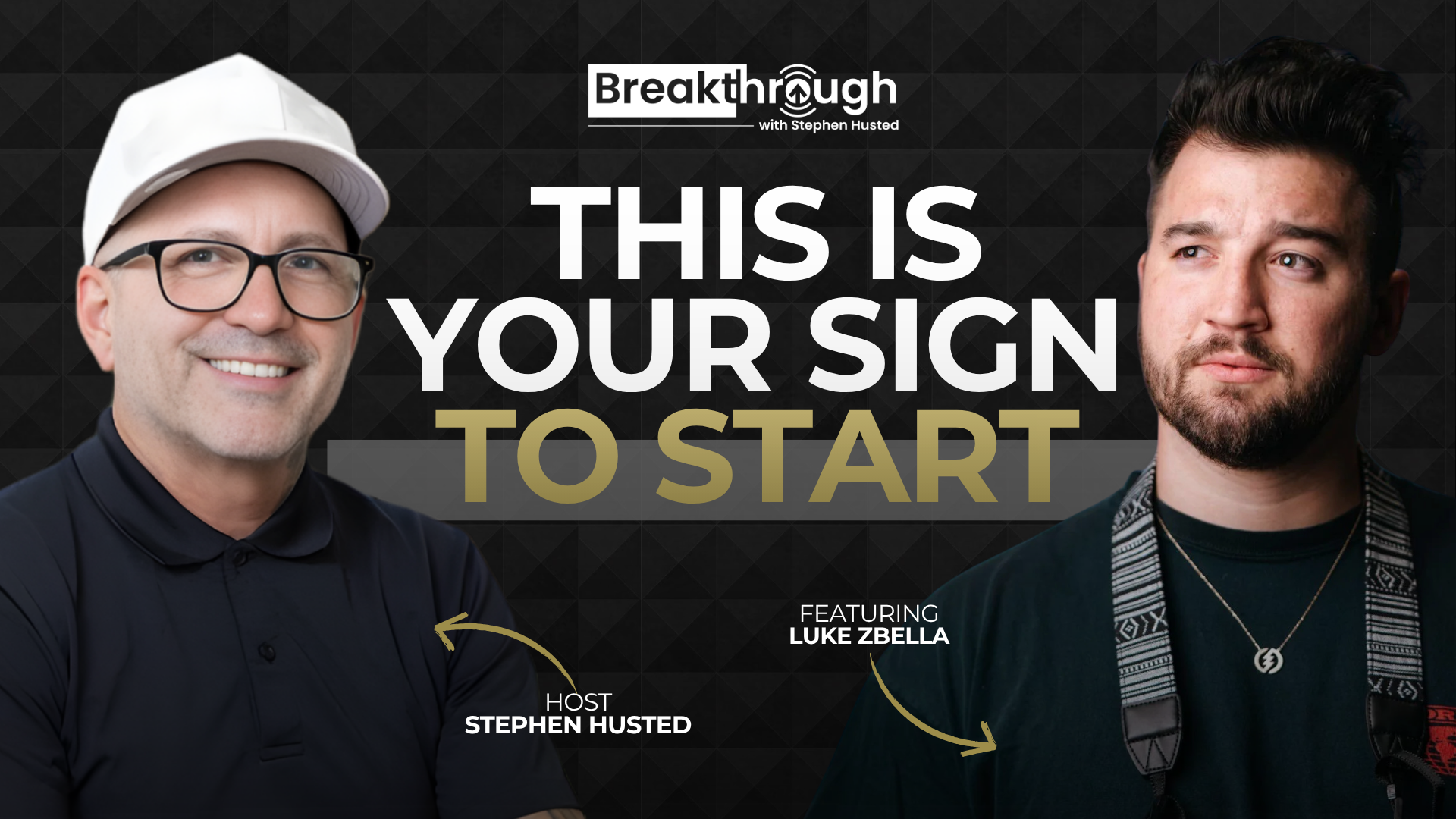
In this episode of The Breakthrough, we have the pleasure of hosting the incredibly talented Luke Zbella, a versatile content creator and videographer. Luke takes us on a journey through his evolution from a passionate videographer to a thriving content creator. We explore how he balances personal and client work while maintaining a dynamic creative process. In this episode, you will learn:
Takeaway 01: Navigating Extroversion and Content Creation Shifting from being a high-energy extrovert to finding a balance between the demands of adulting and content creation.
Takeaway 02: Content Creation as a Fluid Process Evolving from targeted business content to more diverse and engaging topics.
Takeaway 03: Finding Success in Starting Late Luke shares his realization that it's never too late to start, emphasizing that he initially felt behind in the videography field. Yet, by immersing himself and taking action, he transformed into a confident videographer and content creator.
TRANSCRIPT
∎ Teaser / Highlighted Clip
[Luke Zbella] (0:00 - 0:29)
A lot of people, they're not good at being honest with themselves. They don't have like that relationship like with their wife or with somebody who can be really honest with them. So they're not going to being honest with themselves.
They don't have someone who can be honest with them. So they're like completely missing a whole like part of their business or something or part of their skill set because they can't be honest with themselves about like what their flaws are.
∎ Podcast Intro:
[Stephen Husted] (0:30 - 3:06)
Welcome to The Breakthrough with Stephen Husted, the show that takes you behind the scenes with successful entrepreneurs, real estate investors, and other movers and shakers in the business world. In each episode, we'll sit down with our guests to explore their personal and professional journeys, including the challenges they faced, the breakthrough moments that propelled them to success, and the strategies and the tactics they used to get there. Get inspired by new ideas and strategies and get to know our guests on a deeper level.
Join us for candid conversations, powerful insights, and plenty of breakthrough moments. Please help us grow by subscribing and sharing the podcast and welcome to the show.
∎ Guest Introduction:
Welcome back everyone to another episode of The Breakthrough with Stephen Husted. Today, we keep our conversation about the importance of content creation. Our guest, Luke Zabella, a powerhouse videographer, content creator, joins us to share his journey from videography to social media sensation. But here's where it gets controversial.
Luke challenges the idea that it's never too late to dive into a new field. He's redefining success and proving that age is just a number. Plus, he's dropping knowledge bombs on creating niche content and how to make it work for you.
Stay tuned because you won't want to miss Luke's game-changing insights. Let's get this show on the road.
∎ Podcast Proper:
Dude, I've been wanting to bring you on for a while.
And I just want to tell you something about how I've started to choose guests to be on the podcast. And I will tell you, I don't have any rhyme or reason right now on where this podcast is going, to be really honest with you. I pull from people that I follow who inspire me one way or another, and I literally DM them and say, hey, I'd love to have you on the podcast.
So I'm in real estate. I'm a real estate investor. I have short-term rentals, all that good stuff.
But I've noticed that I'm just not going to be stuck in a box. I'm going to interview who I want to interview. If they seem intriguing to me, I want to hear their story.
And I want other people to hear about them too. So that's basically where I started with it. But I didn't realize the amount of work that was going to go into setting up a podcast.
It's crazy. It really is. I appreciate you taking the time to jump on, but you want to give a little bit of background of yourself.
[Luke Zbella] (3:07 - 5:44)
Yes, totally. I'll take you even back a little further. For me, I've always wanted to do something creative.
When I was younger, we would shoot home movies. We made these crazy little home movies on our home cameras. So I always wanted to do movies or acting.
And then I got a little older, and in high school, I started a clothing company. And I would just sell clothes to my buddies, and I would design them and stuff. And then after high school, I got involved with a lot of bands and music stuff.
And then I was promoting music shows and managing a few bands. And then after that, I got my first camera, and I was involved at church. And so I would shoot for the youth group and the worship team.
And I started to learn camera stuff. And then from there, I got a job at a legit video company. And I only worked there for six months because me and the boss of it, we kind of clashed.
So it's actually funny. I got fired from my only legit video job. And then it's just, yeah, it's a funny story.
So I got fired from a video job. And then two to three years later, I'm running a successful video business. And successful is a weird word.
But to me, me, my wife, and my wife's sister all work for me. And so I wouldn't say I'm crazy successful, but just being able to pay me and my wife and her sister month after month, hitting the marks we need. I think that's somewhat successful.
In small wins kind of ways. But yeah. So I got fired from that video company.
I still had my first camera, which was a Sony a6500. Is that a good camera?
[Stephen Husted] (5:45 - 5:51)
Or is it a basic? I don't know a lot about equipment. So tell me if that's a good camera or just a really high-end one.
[Luke Zbella] (5:52 - 6:41)
It's decent. Now my main camera is the Sony a7C. And that one blows my 6500 out of the water.
It's kind of like an older model. It'd be like you having an iPhone 9 or iPhone 10 compared to an iPhone 13 or something. Okay.
All right. That makes sense. But so after...
So I had my first camera, got started at church, went to that video company, didn't work out. From there, I decided to launch in fully freelance. Started with music videos, and then went to weddings, and then finally got involved with business.
And then I went mortgage and real estate and kind of stuck with mortgage and real estate since then.
[Stephen Husted] (6:41 - 7:04)
How did you end up in the... How did you end up mortgage and real estate? Like, how did you get to that part?
Was it... Because I know we... I guess we could tell the backstory.
I met you probably about a year ago at the Neil Academy. You were there helping support him and the people that showed up to be part of the course for that weekend, correct?
[Luke Zbella] (7:05 - 9:08)
Right. Yep. Yeah.
Yeah. So actually through Trevor, he got me into that. So at the time, I was doing music videos, wedding, starting to do some small business stuff.
And then at this time, when I was just doing music videos and weddings, my wife was working at a teacher, as a teacher, supporting me. And so I kind of had this complex of like, I want to be the man supporting my wife. So that was always a goal of mine.
And so I took a part-time job working at a church, being like the church's videographer and all the creative stuff for that church. And then Trevor hit me up, and then he was like, yo, we might need some help with Neil at our mortgage office. And I was like, super down.
Let's figure it out. So yeah. Yeah.
Through those guys, they really hooked me up into the mortgage and real estate industry. And then since I was with them for so long, I learned so much about mortgages and real estate and just the lingo that it involves. So now that's my main niche of clients, just because I learned so much about that.
And I've started to break out a little bit, but it's like, why do I even need to break out? But I have started to break out a little bit. And the main reason I've wanted to start breaking out is because when real estate, when I see a little bit of a real estate tank, then my clients need to start pulling back on how much they're spending on marketing.
So yeah, I've been trying to get back into wedding, get back into small businesses, stuff like that.
[Stephen Husted] (9:09 - 9:13)
I think I saw you, are you doing speaking arrangements too?
[Luke Zbella] (9:14 - 9:27)
Yeah, a little bit. So that's a mortgage company and they asked me to speak for their like summer social media series. So yeah, trying to get out there, do a little bit more of that stuff.
[Stephen Husted] (9:27 - 9:52)
Yeah, that's great. So how is that different from shooting content, being in front of people? Are you a good...
Well, I mean, you got a pretty positive aura around you. I just remember that from being at Neil's thing. I left going, yeah, Luke's cool.
I'm going to follow him.
[Luke Zbella] (9:53 - 9:54)
Right, like homies.
[Stephen Husted] (9:55 - 9:56)
Yeah. Thank you.
[Luke Zbella] (9:56 - 11:03)
Yeah. No, I felt the same about you. So, okay.
Speaking in public, I would feel like a lot of people go the opposite way where I've gotten so used to talking to a camera that when I'm in like talking to 15, 20, 30 people, it's a little nerve wracking. I'm sure a lot of like, you know, maybe the 35 and up generation, they're kind of the opposite where they turn on a camera and they're a little nervous, but talking to 20, 30 people, they're completely fine. So it's kind of an interesting thought.
Like I'm sure people who are even younger than me are going to be even worse because they're growing up so used to the camera and social media and talking to their phone cameras that you're going to put them in front of a crowd of people and they're going to like completely freeze up. So yeah, just that different, it's kind of a different vibe for sure.
[Stephen Husted] (11:04 - 13:15)
Yeah, definitely. This is a pretty funny story, but I was helping this buyer buy a property and he hooked me up on this like weekend investor conference. It was out in Atlanta and it was all about, you know, how to buy stocks and things like that.
This was probably five years ago, five to seven years ago. And I went to it and there was probably 800 people there and they wanted us to get into groups. And we had to choose a company that we're basically going to take this company and pitch it to everybody and this group of investors that put on this conference.
And I gather around these three people and they looked at me and they're like, you're going to be the speaker. You have what it takes. You're going to speak.
I'm like, all right. So we chose this company and you know, they gave us rules. Like I remember we couldn't speak about, we couldn't pitch Facebook.
There were some companies we had to leave out. So anyways, we chose a company. We got all the things together, the pitch and all that good stuff.
And then, you know, it was the following day I wake up and I'm walking down to this conference room and then I'm starting to get nervous as I'm walking in. I'm like, what in the hell did I just sign up for? And I remember just getting in there and spoke, got finished and didn't even realize I had no clue what I even said.
Like that was the crazy part about it. It was like this weird outer body experience. And I did good.
And I kept getting pushed to the next level. And I almost made it to the very final pitch. But I remember the final one that I thought I choked.
I just see everybody staring at me and I'm just like talking and going, I don't know what I'm saying. I'm having an outer body experience. But it was just, yeah, it was scary.
It was really scary. I'm glad I had no prep. And I'm glad I didn't have that much time to think about it.
So I was very happy about that part of it. But it definitely is a kind of a different scenario.
[Luke Zbella] (13:17 - 14:14)
Right. That's funny you say that. I normally prep for like, so I've done like two or three little classes like that.
And I'll prep for them like literally the night before. And that's probably partially just because my schedule is super busy. I wouldn't say I'm a procrastinator, but like, I'll wait till the last second to work on something, you know, because I have other stuff that needs to get done.
So I worked on that presentation like the night before. And you're right, that kind of gave me like less time to like stress about it and be freaked out about it. Right.
Instead of if I was working on that presentation for a whole week, I maybe had would have had a little bit better put together of a presentation. But like my mindset, like, you know, going into it, you know, a little more healthy, was probably a little better for me just working on it the night before.
[Stephen Husted] (14:15 - 14:39)
Well, and that so and there's all these different ways to doing things that work, right, especially with, you know, public speaking, getting in front of camera, there's all these little hacks that have to happen, it seems like, you know, to make it work for you. That's, yeah, it's interesting. You bring it up that way.
Did you download threads yet? I haven't.
[Luke Zbella] (14:39 - 15:08)
I've been seeing it all around. And everyone's talking about it. So I have never been like, so I was into Twitter, back, probably like when I was a teenager, and then kind of got out of the Twitter vibe.
So like, threads might actually be the thing that like gets me back into doing Twitter, because if I'm going to do threads, might as well post exactly what I'm posting on threads onto Twitter as well.
[Stephen Husted] (15:08 - 15:27)
Yes. And you know, another thing I thought about, and you know, I thought about was like Neil, or Gary V, you know, when they take their their Twitter posts, and then post it on Instagram into like a real, you know, you know, what came from, you can tell it's got the colors, it looks like it has the Twitter logo.
[Luke Zbella] (15:28 - 15:28)
Right?
[Stephen Husted] (15:28 - 16:20)
I'm curious to know if, if they're going to have in threads, a way to just post your thread, and then copy that or share it to Instagram stories are real straight over straight over, right? You know, I'm saying because it's all integrated it, by the way, the the signup process for it was reminding me of like, you know, setting up your iPhone, it was like, so smooth. 30 seconds, you're done, it populates your profile for you.
It did everything so quick. I mean, yes, but that's smart. I don't know.
I've never, never really used Twitter. I'm not a very good writer. So I don't know where it is.
But I think in now with this thread scenario, I might give it another try. Maybe play around. Right.
So same.
[Luke Zbella] (16:20 - 16:21)
We'll see. Yeah.
[Stephen Husted] (16:21 - 16:25)
But it's blowing up right now, man. I think it's getting so many downloads. It's insane.
[Luke Zbella] (16:26 - 16:32)
I heard like 5 million in four hours. Yeah, that's nuts.
[Stephen Husted] (16:32 - 16:35)
It's nuts. Gary Vee has like half a million followers.
[Luke Zbella] (16:36 - 16:37)
Already?
[Stephen Husted] (16:37 - 16:47)
Yeah. It's crazy. I just I just went on there and put well, now what?
Oh, exactly.
[Luke Zbella] (16:48 - 17:10)
What am I doing here? So? Right.
So that's that's interesting. Like, it'll probably kind of challenge people like you and me who haven't really like gave given Twitter the time of day to like, it'll challenge us to start working on some more just writing content.
[Stephen Husted] (17:12 - 17:18)
I think so. I mean, now that we have chat and Bard that we can, you know, focus on ideas.
[Luke Zbella] (17:19 - 17:19)
Right.
[Stephen Husted] (17:20 - 18:05)
That's been very helpful for me. I think what happened for me for writing, I've never been a good writer. I'll be the first.
And the problem is, I'll take something that I write and go, I'll pass it to my assistant to say, is this makes sense? Did I write this correctly? Oh, you went your but you didn't do you did the your wrong.
You know what I mean? Like, I'll I'll just do stupid things. And I'm and I'm totally aware of that.
Maybe I just have to get over that. But I think now that we got chat or Bard, I can probably play around quicker and come up with some unique things. But I'm more understanding if the if you can integrate it more with Instagram.
I think that's a that's going to be the powerful thing, too. I don't know if it's going to be that, but we'll see. We'll see.
[Luke Zbella] (18:05 - 18:05)
Right.
[Stephen Husted] (18:05 - 18:07)
It's another thing for us.
[Luke Zbella] (18:08 - 20:47)
Right. Yes, totally. Okay, so two things.
So I totally do what you do with my wife. She works for me. But like, if I'm writing something to a client or an email, I'm always like, can you come check this?
Like, I don't want to come off like as rude or like, you know, like, I want like my point to get across. So she always comes and checks my writing, like, making sure like, I'm a good speller. But like, I always want her to like, Oh, maybe like, say it this way instead of this way.
So yeah, it's nice having like, those team members to help you bounce off stuff. Absolutely. And right.
And that's another like, kind of something I've learned. Like being a business owner is like, like hiring for things that you're bad at. Like, for example, like, I'm not super organized.
My wife is a lot better at that. So hiring her has helped me become more organized. And like, you know, she's a lot better at things that I know, and I've had to learn that I'm not very good at.
And like, so I only have like two employees under me. So but she helps me a lot like with when I'm communicating to my sister in law, our third employee, you know, and it's her sister, but just like, she'll help me communicate like things better than I would have. So, you know, learning your own flaws as a business owner, and then hiring people who can kind of fill in those flaws that you can, and it takes a lot of like, self clarity, like knowing and admitting I am bad at this, I'm not the best at this.
So a lot of people, it's tough for them to do that. I've learned this, you know, within the past couple years in business, like, a lot of people, they're not good at being honest with themselves. So they don't have like that relationship, like with their wife or with somebody who can be really honest with them.
So they're not going to being honest with themselves, they don't have someone who can be honest with them. So they're like completely missing a whole like, part of their business or something or part of their skill set because they can't be honest with themselves about like what their flaws are.
[Stephen Husted] (20:48 - 23:12)
That is that is huge. I think all I want to do is hire for people to do special scenarios for me that I'm not good at. Point blank, point blank, because I just, I just know, I know myself, I know where zones I want to be in.
And I know what happens when I get into different zones. I'm not very happy either. Because I just don't like doing it.
Period. You know, that's really what it comes down to. But it's, you know, it's funny.
The whole, you know, content and editing and all this stuff that has popped up in the last year in my life. It's so intriguing to me, but I know that I need to stay in my own lane. Like if I had to do it all over again, I'd love to be a videographer and editor.
I just love that. I love that process of it. It's so creative.
You know, to me, you know who on a path I'm gonna, I'm gonna send you a gentleman on Instagram. He's a mountain biker, gravel rider, road biker, but he makes these amazing videos about cycling. He brings different, you know, pro racers onto his show.
He's got a big YouTube channel. His name's Brian Safa. And I think that's how you say his name.
Dude, if you just go and watch this guy's videos on what he does and how he's put a creative spin on cycling, it's absolutely amazing. And right now he's at the Tour de France, kind of doing a behind the scenes of the tour, going on the roads, talking about the races, but the way they're, and they're editing each stage at the end of the day. Okay.
And there's three of them and they all go in different locations on this, on this, uh, on the, on the stage. Right. But the way they're editing it, the way they add music, it is something I haven't seen this.
It's crazy. And you can tell because everybody in the comment section is going, this is blowing me away. And so it's that whole creative process.
There's so much creativity to the editing part before dealing with the camera. Like what other kind of creative things did you do? Did you, did you draw re-ended music?
Like you had to do something.
[Luke Zbella] (23:13 - 25:21)
Totally. Yeah. So, um, I would draw a lot.
I would, um, I would kind of do like little fashion designs and I was really into, and I'll probably get into it again eventually, but like I was really into clothes and fashion for a minute there. And, um, I'd love to launch back into that because like, I still kind of have my clothing company, like branding and stuff. Um, but yeah, so I was really into fashion and that, and then when I was younger, um, I would always draw and, uh, I even like would try and write little short stories and, you know, I got really into all the creative stuff pretty young.
Um, and leading me to now, like it was always, so I dropped out of college and I, it was my goal to like make a career for myself just with my creative skills. Um, and I did, it took me a couple of years from when I dropped out, but I, you know, found a small amount of success and, you know, it was just really felt good to me, like finding success in a creative career because that's just what I always wanted. Um, and like you mentioned music, like I was very involved with a lot of music artists for a while and I would make my own music.
None of it was ever good enough to see the light of day. Um, but I was always very into that process as well. Um, so all of that has kind of accumulated into helping me become a better editor, a better content creator.
So it's like, I'm a little newer to creating my own content, you know, maybe a year or so, but I have all this past, you know, stuff, um, that kind of has accumulated and helped me become a good creative and a good content creator and stuff.
[Stephen Husted] (25:22 - 26:56)
Yeah, that's you. That's really interesting. It's funny, you know, here, let me tell you something about what I've been learning right now on podcasts.
It's, this is the craziest thing that's been going on is, you know, you told, you started telling your story about the music part, right. And how that's kind of led you up and then you get into what you're doing right now as a content creator. And it, the same goes for me, you know, I used to be a DJ and, you know, DJs, you're always, you can start with some type of a buildup.
You're, you know, you go to a, depending on what time you play in the club, you know, it's the type of music you're going to play and you want to build it up to that, you know, peak energy at whatever time that is in that club. Right. So it's all about building out a vibe and a set.
And it's almost, you know, now fast forward to now, now the content creating is, is very similar in the same way. Stories is very similar. Like now I got, Hey, I'll start the story with, okay, I'm going to do these two in the morning like this.
And I'm leading up to what I'm going to be doing around four or five, you know, it's just, it's, it's all kind of translated. And so it's all creative, which it comes from the past. I mean, I think that when you're creative, you're creative and that process is hard to break from.
And typically you'll go other directions than most people won't go if they're not a creative background to them, uh, for the most part, you know, I just feel like you're always, you're always searching for something different when you're creating, you know what I mean?
[Luke Zbella] (26:57 - 26:58)
Totally.
[Stephen Husted] (26:58 - 27:05)
Such a big part. You started making content for Instagram only a year ago.
[Luke Zbella] (27:08 - 29:15)
Um, so I was like with Neil and Trevor, I was working for them and for like a long time, I wasn't really making my own content. Um, and I was kind of, you know, here and there, I was doing just some like, kind of just random, like, um, no rhyme or reason to the content I was putting out. And then I was shooting, you know, like talking hedge videos with them for like a year.
And like, I was like, oh, like they have so much more to talk about with like real estate and mortgage. But then I was like, I could just do the same thing and talk about content and video, like, you know, all this stuff. Um, so it was probably a little, it was probably a little over a year ago.
Um, but yeah, that's kind of when I had, um, you know, uh, a breakthrough, um, of where I was like, oh, I could just make my own content and do this the same format I'm doing for all my clients, the talking head videos. Um, and that lowered the bar to entry a lot for me. Cause I was like, you know, I had such a high standard of like, okay, I'm a videographer, I have all this gear, I have a drum, I need to be making very high quality content for my Instagram.
But then I was like, had this, this breakthrough where I was like, I could be making the same stuff I'm making for my clients. I have enough knowledge to talk about it now. Um, so yeah, that was, um, a big breakthrough for me was, um, realizing I could make my own content the same way that I'm making it for clients.
And then, yeah, that just opened the floodgates and I just started being able to make so much more content that way.
[Stephen Husted] (29:16 - 31:02)
Yeah. And you've, and I, I think I had mentioned this before on Instagram, um, you know, content's disposable and you, you can get kind of bored of things really quick. And it, and it might not even break down to the creator itself.
It's just, I think how our brains are wired that, you know, we're just all constantly searching for something else. And I think that the people that I follow that are unique and kind of doing different things that catch me off guard and, and that can just be the topics they talk about, catch me off guard. Really make me resonate and stay like, because I remember you were doing all these cool ones where you were changing colors of a car.
You were going all over the place. And that kept, that really kept my attention. I told you that like, Hey, you're somebody that I actually watch a full video.
And, and that's not against anybody else who I follow that I just, I'm used to what their content is and it's, it's what am I searching for, for that day? You know, what does that dopamine hit look like today? You know, what am I trying to gain out of this?
So yours has really been, it keeps me engaged. You know, I, I follow this gentleman. Yeah.
I mean, seriously, it does. And you, you do a little, uh, let me see, let me know how to figure the way to say this, your content in a way you can, you can definitely learn from what you say without feeling, uh, too threatened by it. Like, I don't know if I can attain this.
Does that make sense? Does that make sense? Like I know, like when you're saying like, Hey, I can apply this, what Luke just said, I can apply this to my, my, my daily life.
Um, so kudos to you on that.
[Luke Zbella] (31:02 - 32:09)
Yeah. I appreciate that. Yeah.
It's always tough finding like the, like the, the low, like going way beginner level and like also trying to help people who already know all this stuff. Like there's the people who are so new at content. There's the people like you, for example, who like you've been doing content for like a year or, you know, however long since you went to Neil's thing.
But it's like, how can you like, for me, how can I create content for complete newbies? And like, so somebody like you is going to be like, Oh, I already know that. And then also make content for the kind of intermediate and expert level.
So trying to balance those two, uh, has been a interesting, and that helps me to come up with more content. And I think I talked about this in a video recently that we talked about this on the podcast. Um, I came up with this thing that I called the content bucket theory.
[Stephen Husted] (32:09 - 32:09)
Yeah.
[Luke Zbella] (32:09 - 33:16)
I just, I was like, I was like, Hey, I'm going to pretend I'm a content scientist and start calling my ideas like theories. Like I, you know, like I invented some eagles. Exactly.
Um, so I was like, okay, I have this thing called the content bucket theory. And it's like, in your mind, just framing different buckets of the people that you're making content for. So for me, I have like one bucket of mine is like my family, you know, what stuff are they going to see?
They they're happy at that. I have a good business, but they don't want to see only business videos. You know, they want to see like some of, you know, me being crazy.
Like they remember me growing up, you know, like, so I'm going to do something like fun, crazy things like for my family. And I'm still going to post that. And it's not going to be like only for my family, but that's just a reminder of like, Oh, like I need to make some different types of content for those different types of people.
[Stephen Husted] (33:17 - 34:04)
Yes. And so, okay. What do you tell?
Because I know what we talked about with Neil and Mo and all them. I mean, everything that they said to me at the academy, I pretty much broke all those rules and went the opposite direction. Honestly.
What do you tell your clients, your real estate, your realtor clients, your loan officers? Are you telling them to follow the same types of paths as like Neil and everybody like, Hey, you need to make content that's got hooks and is in, you know, in what you do as a business owner and then sprinkle in some of your own personal or is that the still the go-to route that you're trying to tell them?
[Luke Zbella] (34:05 - 36:43)
I would say, I always tell them to do a little bit more personal. I remember Neil used to teach like the 80, 20 rule. I'm a little more like go 70, 30, 60, 40, even 50, 50.
And like, I would almost call myself like an anti-niche person. Just because like, if you're going to niche down so hard and only talk about one thing, this was another one of my theories, but it's like, I see so many like pages that they'll get to a hundred K ish, whatever. And then they kind of they're following just kind of freezes like at, you know, once they're to like 50 K or 80 K they're following, like it won't keep going up.
And I think that's because like, they'll find a certain amount of people who want to follow them. And then they keep making the same stuff. And a lot of those people start getting bored.
So then they start unfollowing, but then they're still getting new followers. So they're following, it's kind of just staying the same. And so it's like, I feel like you need to throw in different things, different types of content.
Talk about more of your interests. Like, I don't think you only need to be talking about your niche and like, you know, obviously they say that's, what's going to help you like grow more, grow faster. But it's like, if I don't want to do that, and if that's not like healthy for me to do, then maybe I shouldn't be.
And for me, I've loved, and I've had so much more joy with creating content when I started doing movie reviews. And when I started doing like all these different types of content, then not just talking head content that goes with my niche, so I would say like a little bit less than half of my videos, maybe 40% of my videos are just completely like, this was fun for me to make. It might not give you like a ton of value, but I love doing it.
I hope you get at least some entertainment out of it. Um, so that's been my kind of challenge recently is balancing, you know, I can always provide value, but sometimes I can get a little bored. So then it's like providing entertainment instead of value.
[Stephen Husted] (36:43 - 36:55)
Absolutely. And well, and that, that comes right back to what I said, your content has also kept me engaged enough that I watch it 90% of the time too.
[Luke Zbella] (36:55 - 36:56)
Right.
[Stephen Husted] (36:56 - 39:51)
And, and that really, you know, if I needed to go find quick tips or, you know, market updates, I know who to go to. If I just want to click to their profile and get that for the day, if I'm searching for something, wherever the case may be. But yeah, there's so many different signals on the way you're supposed to be doing this.
Um, you know, I have a hard time. I have a really, really hard time trying to play this game of like, Oh, I got to do a hook and it's got to be compelling and it needs to make people get all. And here's the funny thing.
My last two videos, one was an invest. So I started a new business. I am doing consulting for new investors that want to buy real estate out of state.
They, my clients are mostly in California. They are my past real estate clients as well, but they want to invest. They want to buy investment properties and they got money.
So I'm taking on this whole new consulting thing. So I'm documenting my first three clients that I've been working with and they ask questions. Anyways, I recorded it and that post was basically me saying, well, you know, you're going to, you can get a hard money lender and you know, you can do your, your 20, 25% down and you can get your construction money from the lender.
And this is how we'll work, rinse and repeat, keep doing this. That video did, you know, in this day and age, you know, I think it did like 3000 views where my views before that on some of the other videos are five to 700. But, and then the next video was me talking about Tesla, about they have, you know, teamed up with GM and Ford and their supercharger is going to be, they're all going to be on the same supercharger, right?
That video did the same thing. And then I just laughed. I told my assistant, I go, what?
Just create a list of buzzwords. Tesla, you know, bank, you know, recession, and just make a video if you, but at the end of the day, and I don't know, and I push back on all that because it just, what am I trying to really achieve? Am I trying to, you know, feel vanity from views or am I trying to build a community and take this, you know, down the road into the bigger picture?
And I feel like the bigger picture is really where I want to be at some point. Yeah, it's a weird, it's a weird thing. And I, but I'm totally comfortable in this zone because I've gone through it because I've been, I was a DJ for, you know, 15 years, hairdresser for 40, you know, I know the creative process.
I've been the, and I've played the long game too. So I understand this really well is the fact that I don't really care what's going on right now. As long as I can enjoy it and do cool stuff, I'm going to keep going at it and, you know, move the ball forward.
But I don't think it's not going to box, you know, it's just, it's going to be tough.
[Luke Zbella] (39:52 - 41:45)
Totally. You know? Yeah, dude.
And just trying, I feel like there's, you'll always see a video that's like, here's how I ruined my Instagram following. And it's like, you know, it's always the same, like use a hook post. Some people say seven days a week.
And it's like, this is like full-time jobs, I feel like. And it's like, when we're talking to real estate and mortgage lenders, it's like, those people don't have that much time to be creating like seven high quality reels per week. And like, you know, it's like people like, like, I feel like a lot of times the people who get really into like blowing up in content, like, they were able to like, either, you know, they had a spouse who's kind of supporting them.
So they were only working like half time. And like, they really got into the content. So they were able to make a very high quality reel once a day.
So, you know, I feel like people always, you know, you'll always hear the, oh, you need a hook, you need this, you need a niche down. And sometimes it's like, maybe that's, you know, maybe we should be pitching different, you know, maybe we should have different things for content creators. Like, oh, you know, I only post four times a week.
And that's like, good for me. And you know, it's like, maybe eventually I'll get to seven. But for now, four is good.
And I've started to see some growth and like, you know, so just, I don't know, having a little bit more, you know, it doesn't always be about an open approach, an open approach, right?
[Stephen Husted] (41:46 - 41:47)
I don't think there's a one doesn't.
[Luke Zbella] (41:48 - 42:54)
Right. And it also, it doesn't need to be all about followers. You know, it's like I made a video before that was like, look at there's so many different ways to track whether you're seeing wins with social media.
Like, you might not be gaining a ton of followers or getting a bunch of views, but you could be having more conversations with the people who you work with, or the people who like your referral partners are like, there's so many more different ways. And I feel like it's easy to get lapped on to the, oh, I need more followers. I need more followers.
And like, that's great. And a lot of times that's what I'm more focused on. But like, you know, there needs to be more.
And that's like the obvious, like, oh, followers, it's like the first thing you see, it's like the obvious tell of if you're doing well with social, but like, we need to be communicating like there's so many other different ways to see those small wins on social media and not just views and followers.
[Stephen Husted] (42:54 - 45:41)
Yeah, absolutely. I think that you got to kind of be realistic on your approach, not put too so much pressure on it as well. Because I think the pressure part of it, especially if you're comparing yourself to other creators that you follow, and it's hard to kind of get discouraged.
And you got to just have to stay, you know, stay in your zone and be okay with the, you know, the process of where you're going on your own journey really is the big part of it, which is hard for people. I think that's why some people just don't even don't bother or they start and they stop really quick because they don't, they don't see any type of result from it, whatever that result means. I was out on Fourth of July on a ride and got up to the top of this hill and I noticed this guy and he looked at me and he goes, hey, he calls my name out.
And he was an old friend from high school. And he started following me on Facebook just recently and commented on a post that I did about having a conversation with an old friend. And he jumped in and talked and said some things and saw him there on the hill.
And he's like, hey, I just want to tell you that I really appreciate your content. You know, you have just been doing some really cool stuff and you're an inspiration. And a lot of people are saying that.
And, you know, it's just really good to see you posting and talking about your life and your wins, your losses, and just everything, you know, your biking. It was just, it was so heartfelt. And at that moment, it really doesn't, I guess what my point I'm trying to get to here is your followers don't mean that much, but you'll know when things really matter when people come back to you with a DM or a conversation, maybe in person or on the phone that tells you otherwise, you know, you, you might think you're not growing or doing a good job, but on the flip side, you might be doing an amazing job and helping a lot of people. And it's been those when he was talking to me, I got like goosebumps. And I was at one point, I was like, you know, thank you, you know, thanking him.
And, you know, it also gives me courage to keep going. Like I'm on the right path, you know? Because you just sometimes don't know.
You don't know. That's, that's content for you. You just don't know, you know?
So it's been a very interesting, very interesting journey. So you mentioned, did you, you want to start a podcast at some point?
[Luke Zbella] (45:42 - 45:56)
Yeah, I've thought about it eventually. So how do you, so you do everything, like you don't do any in person, like podcasts, right?
[Stephen Husted] (45:57 - 47:00)
Not, not at the moment. Right. Part of the, so I, you know, at first it was me and a good friend of mine who's a, works in financing.
He set up his, he was going to do in person and I was too, but I was like, wait a minute, everybody who I want on my podcasts are in different locations. And so, you know, I explored, I'm like, okay, I need to find a good platform to run the podcast. So we ended up on Riverside.
Well, no, I take that back. We started with Zoom and the quality's not the same. It's harder to edit, you know, you can't save to the cloud the same way.
It just wasn't, I think it works for what it needs to work for, but I don't think for the podcast scenario. So we ended up on Riverside. And yeah, most of them are been just like what we're doing right now.
Everybody who is all throughout the United States that I DM through Instagram.
[Luke Zbella] (47:01 - 47:02)
Right. Yep.
[Stephen Husted] (47:02 - 47:04)
You know, and I think it's totally fine.
[Luke Zbella] (47:05 - 47:11)
Right. And you just have so much more options for who you can have on the show that way.
[Stephen Husted] (47:12 - 47:39)
Yes, absolutely. I think there's some, you know, like Ryan Pineda. I mean, I think the people that are out in Vegas or LA or San Diego.
Right. It's easier to get their guests and I'm not high level like that. So maybe someday down the road, I'll fly my guest in, but for now it's, this is the process.
Yeah. Are you, are you an extrovert or introvert?
[Luke Zbella] (47:42 - 48:34)
I mean, okay. Yes. Well, so as I've been getting older, I used to think I was fully an extrovert and I don't know if this is just maybe just adulting and like getting tired easier.
Like I feel like I'm kind of getting a lot more in the middle of like both things. So yeah, I don't know if I've been changing like in becoming less of an extrovert or if I'm just getting older and having to be an adult and like getting tired a lot easier, you know? So I'm definitely a lot less of an extrovert than I was in high school and college and kind of all of like the party times.
Oh yeah. Right.
[Stephen Husted] (48:34 - 49:01)
Yeah. You're in the same zone as me. I can do, I can be both, you know, sometimes I just don't, sometimes I just want to be by myself and sometimes I can, you know, chatter away and that's totally fine too.
What would you do with your podcast? So when you bring that up, what intrigues you to do one in the first place? Like what do you, what do you think you want to accomplish from doing a podcast?
[Luke Zbella] (49:02 - 50:24)
Right. I mean the low hanging fruit of how to answer that question is just like doing like the documentation content creation style. Like for example, like I spoke in that class last week and like I did like a hour and a half long class and like that one class I recorded the whole thing.
That's going to create so much extra content for me. Yes. So definitely like number one would just be like the content documentation.
Like you can get so much content out of like, you know, it's just like less work than, than the ideation process and the scripting process. So I love that. I would love to like have a podcast where I just talk to people about like creative stuff and like tell me like what your favorite movies and shows are right now.
Tell me like what creative stuff you're doing in your life. What big projects are you working on? So that would be something that I'd like to get out of it.
Just learning more about people and just having that connection. Love doing that.
[Stephen Husted] (50:25 - 50:29)
Yeah, absolutely. And that is, that's the really cool part about it.
[Luke Zbella] (50:30 - 50:31)
Right.
[Stephen Husted] (50:31 - 50:48)
Podcasting is very similar to being a hairdresser. You know, we're sitting here having a conversation. We're 50 minutes into it.
Okay. So if you were in the salon and I was behind the chair cutting your hair, we could have had this very similar conversation.
[Luke Zbella] (50:48 - 50:49)
Right.
[Stephen Husted] (50:49 - 51:03)
Give or take if you were my client. And so this is very similar to me when I first started doing, when I first had my first guest on the podcast, we started talking. I'm like, wait, this is very much like being a hairdresser.
[Luke Zbella] (51:04 - 51:04)
Right.
[Stephen Husted] (51:04 - 52:04)
You're having a conversation, you know, you can free flow it around. I've noticed these last episode. Well, I've had a, so I had Connor Newell on an episode.
I had Connor Murnane on as well. So very much same zone as you. I've had, I've had an, I had a realtor out in North Carolina who was amazing.
And that was the first agent I had on the podcast. I didn't know how that was going to go. I'm like, okay, what are we going to talk about?
The market. But it's, it's, I feel like every podcast is turned into the creative part of content. Like that's the zone it's gone into.
And I'm like, okay, is that smart? Should I branch? It turns into another second guessing, just like I second guess a lot with shooting content.
So who knows? It doesn't matter. You just, you go with it.
[Luke Zbella] (52:06 - 52:49)
Right. And I've kind of noticed a lot of, not a lot of, but some of your content turns into talking about content. And it's like, that could even be a little like side niche or one of your like buckets.
What I would say is like, okay, you're talking about real estate, short-term rent rentals. And then it's like, maybe one of your little things is talking about content, social media, like what you've learned from that. And you've already, you've started to do that.
But I would say, yeah, like, I don't think you have to shy away from that just because it doesn't fit your broad niche.
[Stephen Husted] (52:50 - 53:45)
I 100% agree with you. I think that some of that content is the content that's actually got me new clients, which is totally the strange part about it. I think I made a post about, you know, starting the podcast and, Hey, I have ADHD, which is very hard to stay focused on somebody for an hour straight, which is a struggle.
So I made a video and I didn't actually, I didn't even want to post this video. It accidentally got posted from my team because I hated it because I hated the way it felt very vulnerable. And, you know, Oh, I got ADHD and I, you know, can't do a podcast, whatever.
And that one, just people were DM me left and right and on all from Facebook to Instagram, because it brought out something that they struggled with and they want to start doing something.
[Luke Zbella] (53:46 - 53:47)
Right.
[Stephen Husted] (53:47 - 54:21)
So that kind of, I was like, okay, cool. And then I noticed like inspirational videos do really good on, on Facebook, on my personal page. But then it's, I'm like, wait a minute.
Am I, you know, inspirational person? Am I, do I work in real estate now? Now who am I?
You start, I had started having this, like, what am I really, what am I trying to do here? Who am I? Because I make one comment and all of a sudden it gravitates and it's almost like you feel like you should be giving something more like that to them because that's what they like.
[Luke Zbella] (54:22 - 54:23)
And right.
[Stephen Husted] (54:23 - 54:30)
You know what I mean? It's like a feeling of what can I do for my audience and how do I help them? Or, you know, what kind of value do I give them?
[Luke Zbella] (54:31 - 54:32)
Right.
[Stephen Husted] (54:32 - 54:46)
Puts a lot of pressure on you, I think in a strange way. I don't know if that makes, I don't even know where I'm going with this, but I'm just saying that it's been, these are just the weird things that have popped up, you know, throughout this, this year process.
[Luke Zbella] (54:48 - 56:02)
Right. And like, so kind of going off on that, like I had a long time where I was like, should I create like a second page that I can like, you know, split up my two different types of content. Like I have my very talking head, business heavy content, heavy content.
And then I have my fun changing the colors of stuff and, you know, like just all the cool, crazy stuff. And I was going to split those into two different ages. And I was like the goal to grow your page, you know, they say to post more.
So it's like, you can niche down and post less, or you can not niche down and be able to post more. So for me, I was like, oh, I'm just going to post everything to my main page, not niche down super hard. Cause my problem was, oh, I couldn't niche down and have two different pages where I'm very neat down.
And then I was like, or I can create more content and put it all on my main page. And then that's when I started finally seeing like some growth in my followers. Again, it's just when I was posting more.
[Stephen Husted] (56:03 - 56:04)
Interesting. Interesting.
[Luke Zbella] (56:05 - 56:05)
Yeah.
[Stephen Husted] (56:05 - 56:17)
Yeah. That's cool. It's awesome.
It's a wild ride. So I got a question for you. I ask every guest, can you give me one of your breakthrough moments that you can recall?
[Luke Zbella] (56:18 - 58:09)
Right. Okay. So I kind of mentioned the little one a little earlier, which was when I realized I could create content the same way I do it for my clients, for myself.
That was a big one. I think one of my biggest breakthroughs though, within me kind of getting into this job of being a videographer and a camera guy and now being a content creator is just like, I thought I was late when I started, like when I got a camera, I was like, so my older brother is a videographer and he had been one for like five years. And when I first got a camera, I was like, I'm so like late to this.
I'm so behind. And then when I started making content, I was like, those people who've been making it for years, I'm so late and so behind, but it's like, just start. And now it's now I'm a full on videographer.
I'm not an expert, but I'm teaching other people what I know. So it's like, I used to think before I started, I thought I was late. I thought I was behind everyone.
And now I'm like, since I started and since I jumped in, now I'm like an expert. You know what I mean? So just like that was a big breakthrough is like, even if you think you're late to something, or you're behind the curve, or you're starting content late, or you're learning a skill late, like me, I thought I was learning the skill of being a videographer so late.
And so just that breakthrough of like, oh, I can still find success. Even if I'm getting into something like late, or what your mindset is of it, you being late to it.
[Stephen Husted] (58:09 - 58:27)
Right, from what you see online, and at the end of the day, you're never too late. You're never too old to do something, right? You know, I think that, you know, I'm 53.
And I hope 55, 60, 65, I'm constantly doing different things and evolving.
[Luke Zbella] (58:28 - 58:28)
Right.
[Stephen Husted] (58:29 - 59:25)
I think that's why when this all came about, it just, you know, it switches unit. And I think when you start shooting content, like we were talking about, you start to create different little scenarios that you have value, that you could teach an audience, or you could teach a group of agents or loan officers or anybody. There's so many different things that come out of doing content and are just being in media in general.
It's pretty wild how they start to pop up. I mean, it could be as simple, you know what, I have a client at the salon. He's got a PhD, works at a tech startup in Santa Clara, super smart guy, super smart.
And he is the chief marketing officer for this company. And he didn't know about Upwork. He didn't know you could outsource an editor overseas for cheaper than a US based editor.
[Luke Zbella] (59:26 - 59:26)
Right.
[Stephen Husted] (59:27 - 1:01:07)
Okay. So I put him in that direction. Six weeks later, he comes in and gets his hair done.
He's like, Oh my gosh, I found some amazing people. Oh my God, they're, she's doing a great job. I send the videos, you know, and just the process.
Yeah, I take, get the videos, put them in a drive, share the folder, you know, make them part of it, connect it that way. They'll do the edits, comes back to the folder, you go to post, you know, the whole thing. Now he's just going crazy.
Got the whole, you know, build out of, you know, his green screens and all the different cool things and how he's going through the light process. But this is, and we're talking to tech startup company, you know, like this is a big thing, but it's kind of cool that the information, I don't know if I, I'm not gonna say I take it for granted, but I do have information from this whole year that I've learned that now I can provide to other people that, you know, they, they just don't know. They don't, they just haven't been down that road yet.
And that part is really cool. You know, I just, it's really rad. I love it.
So. Totally. Well, I'm glad to, I'm glad we, I'm glad we, we got this on, we got on, on today, you know, without missing it and not booking it.
You know, that's good. I was kind of bummed. I was like, oh, he probably got either.
He's still at Lake Davis and forgot or whatever the case may be. I was like, it's all good. I'll get him on there sooner or later.
So I'm glad that we were able to connect and, and, and get on my podcast. I really, I appreciate you, you know, you know, you're somebody who I, I love to engage with and, you know, I hope to, you know, keep engaging with you down the road here. So.
[Luke Zbella] (1:01:07 - 1:01:13)
Yeah. Same to you. I'd love to hop back on and I feel like we could talk for even longer.
[Stephen Husted] (1:01:14 - 1:01:23)
Yeah. Yeah. I know.
It's crazy that I noticed that too. That that's definitely how it is. So hopefully maybe that day when you have yours, we, I get back on, I get on yours.
[Luke Zbella] (1:01:23 - 1:01:23)
Right.
[Stephen Husted] (1:01:24 - 1:01:27)
So where can, where can people find you?
[Luke Zbella] (1:01:29 - 1:01:56)
They can find me on Instagram. It's at Lukey, L-U-K-E-Y underscore Z. So at Lukey Z.
On YouTube, I think you just search Luke Zabella or I think the same thing at Lukey Z because YouTube has ads now. Pretty much everything. I'm, I'm at Lukey underscore Z.
[Stephen Husted] (1:01:57 - 1:02:06)
Okay, cool. We'll put it, we'll get into the show notes as well so that people could go follow you because I think that, yeah, you're, you're definitely somebody.
[Luke Zbella] (1:02:06 - 1:02:18)
We didn't even, we didn't even get into this. I'm kind of working on like a little short film, short film series right now that I'm going to start like promoting. Oh, cool.
[Stephen Husted] (1:02:18 - 1:02:19)
Can you tell me a little bit?
[Luke Zbella] (1:02:19 - 1:03:32)
I'm writing it right now. So, okay, so I, I wanted to make a short film but like, the average person doesn't watch short films. So I think I'm gonna make like a short YouTube like series.
So it'll be like a TV show on YouTube but each episode will only be like three to five minutes. Okay. So it'll be kind of like a little like the barrier for entry of somebody watching it is like, hey, all you have to do is commit to this episode that's five minutes.
You know, you don't have to watch my 30-minute short film because that's kind of the standard in like the movie industry is you make a short film and then potentially that gets seen by people in the industry. But like people who aren't in the industry like don't really watch short films. Okay.
So I was trying to come up with like, how can I create something, you know, that's a script and, you know, like a whole series with acting and all that stuff but make it short, you know, bite size so people will still give it that time.
[Stephen Husted] (1:03:33 - 1:03:37)
That's gonna be cool. All right. I can't wait to see that process unfold.
[Luke Zbella] (1:03:38 - 1:03:40)
Yeah, dude. So I'm excited about that.
[Stephen Husted] (1:03:40 - 1:03:42)
Keep the creative juices going.
[Luke Zbella] (1:03:43 - 1:03:45)
Yes, sir. Definitely. You too.
[Stephen Husted] (1:03:46 - 1:04:04)
Cool. Well, thank you so much, Luke, for jumping on. Of course.
Really appreciate it. Definitely, you know, well, this is not the end of it with you. I'm obviously gonna be engaging with you on Instagram.
So it's all good there. But yeah. All right.
Cool. Well, thanks again. And that's it for today's episode.
[Luke Zbella] (1:04:05 - 1:04:06)
Cool. Thank you, brother.