Episode 81 - Sam Wegert's Co-Living Strategy Is Changing Real Estate
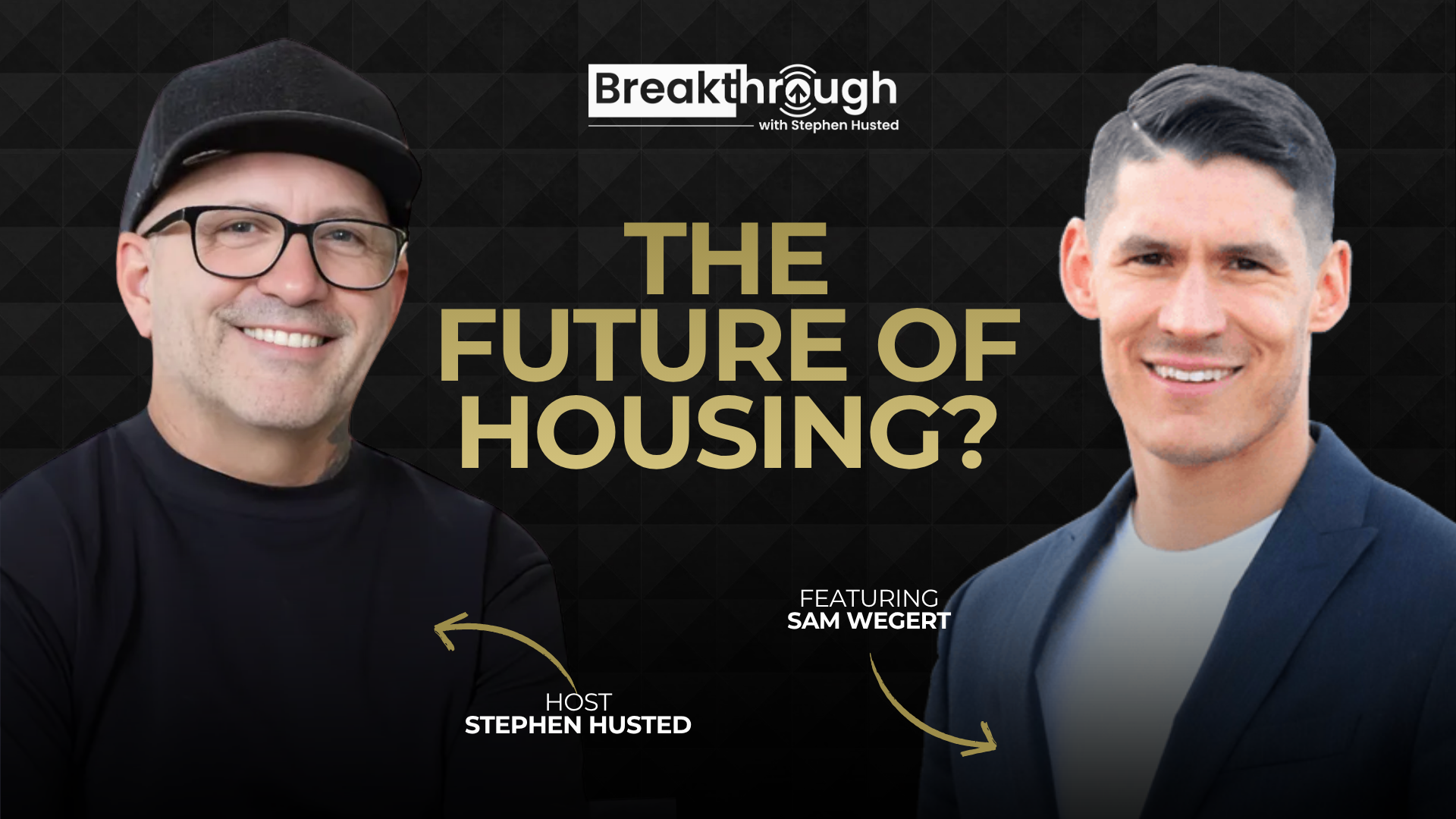
In this episode, I sit down with Sam Wegert to discuss how co-living is changing the way people think about housing, affordability, and community. We also dive into Sam's personal journey through grief, entrepreneurship, burnout, and how those experiences reshaped his definition of success. Whether you're a real estate investor, entrepreneur, or simply curious about where housing is headed, this conversation offers practical insights and a fresh perspective on one of today's biggest challenges. If you enjoyed this episode, I'd really appreciate it if you subscribed, left a review, and shared it with someone who would benefit from the conversation.
Stephen and Sam talked about:
00:00 - Sam opens up about the hardest season of his life
05:10 - Starting over and redefining success
09:50 - Money, validation, and what actually matters
15:20 - Escaping hustle culture and finding balance
20:55 - What is co-living?
22:15 - How co-living solves housing and loneliness
25:15 - Why co-living is growing across America
27:50 - The pros and cons of co-living
33:10 - Sam's buy box for co-living properties
41:00 - The future of housing and real estate investing
TRANSCRIPT
∎ Teaser / Highlighted Clip
00:00 Stephen Husted: At 35, I had just gotten clean and sober. Wow. A couple, three decades of being a drug addict. And interesting enough.
00:09 Sam Wegert: It's beautiful.
00:10 Stephen Husted: Went on a, my girlfriend at the time, who's now my wife, took me on a vacation and we were walking through the airport and I grabbed rich dad, poor dad. Yeah. Didn't know anything of it. Just picked it up. Took it to Kauai. And read it on the beach. And I just remember going,
00:32 Sam Wegert: huh, I get this.
00:34 Stephen Husted: I understand this. And it took me a decade from that point to even get my first investment property.
00:42 Sam Wegert: I think the honest truth is I could just start by saying, you know, I know we all go through seasons in our life. Some seasons feel like highs and some feel like lows. I don't know, the last couple of years it's felt like I've just been, I feel like God and I are in a boxing match and God's just like, boom, it's been right hook after right hook, dude. And mainly personal stuff. It's just like crazy and so I'm handling that.
∎ Podcast Intro:
01:03 Stephen Husted: I'm Stephen Husted and you're listening to The Breakthrough Podcast, a space designed for clarity, curiosity, and the stories that move us. Here, we step away from the noise and into the moments that define us. the early influences, the hidden struggles, and the breakthroughs that reshape our lives. From personal reinvention to building a life through real estate and entrepreneurship, these conversations remind us that success isn't a straight line. It's a series of honest decisions, brave actions, and small shifts that change everything. This is where those stories live. Let's begin.
∎ Guest Introduction:
01:42 Stephen Husted: Today's guest is Sam Weigert, entrepreneur, real estate investor, and one of the leading voices behind the growing co-living movement in the United States. After building a successful chain of martial arts schools, Sam shifted his focus to solving one of the country's biggest challenges, affordable housing. Sam doesn't just teach real estate investing for profit. He's on a mission to create housing that is more affordable, community focused, and financially sustainable for both residents and investors. Through his co-living model, Sam is helping people find connection in a world facing increasing loneliness while giving everyday investors a path toward financial freedom. In this episode, Sam opens up about navigating personal loss, rebuilding through life's toughest seasons, redefining his relationship with success and money, and why community may be the missing piece so many people are searching for. We also dive into the future of co-living. affordable housing, and how creative thinking can help solve problems that seem impossible on the surface. There's a lot to learn from this one. Let's dive in.
∎ Podcast Proper:
02:49 Stephen Husted: Sam, how are you doing, man?
02:52 Sam Wegert: Steven, I'm doing good, man. Thanks for this opportunity. I'm excited to chat with you.
02:56 Stephen Husted: Yeah, I'm definitely excited to chat with you. You're the first one to be. When I just clicked into Riverside, you're there. I'm like, whoa, okay. Usually it's like I'm the first one. I'm tinkering around with the settings.
03:09 Sam Wegert: And then here you are. I'm ready. Let's do it. I'm ready. I was born ready.
03:14 Stephen Husted: Nice. Nice. So, gosh, I got a lot to talk about. I know we can jump into the whole co-living scenario that you're doing, but I know you got a lot of different things going on in your life right now. So what's been going on?
03:28 Sam Wegert: Oh, man, where to start? How long is that going to be? That's right. You got an hour for this? Let's see, man. I think the honest truth is I could just start by saying, you know, I know we all go through seasons in our life. Some seasons feel like highs and some feel like lows. And I don't know, the last couple of years it felt like I've just been, I feel like God and I are in a boxing match and God's just like, boom, it's been right hook after right hook, dude. And mainly personal stuff. It's just like crazy. And so I'm handling that. Everything from...
03:57 Sam Wegert: My sister, who's 36 years old, just randomly passing away. She went to the hospital for a cold. They didn't even admit her because they were like, you're good. And she was like, something's wrong with me. And like 14 hours in the waiting room, they finally sent her home. And she went to the good hospital, which is like an hour and a half away. And, and then she was on life support a couple hours later. She had some infection in her blood and then like, she had passed away. It's like, that was like crazy. I'm very close to my family. I got a big family, eight kids. Like that happened. And my other sister needed brain surgeries. She was suffering from these like grandma seizures every single day.
04:29 Sam Wegert: And then my other sister was 29, got cancer. Wow. And she was pregnant. And then I went through a separation. And so this, this idea of this perfect life, it's really taught me that your life can look super perfect from the outside. pretty good image on the outside. I think if people were to see me, they'd be like, oh, Sam's got his shit together kind of thing. But life can be falling apart.
04:50 Stephen Husted: Yeah, all the time.
04:52 Sam Wegert: Yeah. I lost my voice because I was just yelling yesterday. That's actually how I lost my voice. I was just screaming at the world. True story, actually. I had a crazy thing. I'll share this little anecdote. When I first moved to Charlotte, I was built. I'm in Charlotte right now. I was building this chain of martial arts schools. It was my first business. I built one of the premier chains of martial arts schools across the East Coast. That's what I did from 14 years old to 30.
05:15 Sam Wegert: And there was one season of building that school where I thought I was going to lose everything. I bought these schools. All my staff members quit. I literally spent my life savings buying a few locations, and then they imploded. And I lived across from this golf course, which makes me sound like I was living in an awesome place, but I wasn't. It was like the public golf course where all the airplanes come over. They couldn't do anything else with the land, so they just turned into this golf course.
05:37 Sam Wegert: And I would go over to that golf course every night, and I would just cry and be like, my life is falling apart. What is happening? But it was my place to kind of get. My head's screwed on straight. And I haven't been to this golf course in 12 years. So I fly into Charlotte. I'm in a similar season now. This is like 12 years ago. I'm in a similar season. And something in me was like, go back to the freaking golf course. So last night, for the first time in 12 years, it's dark, obviously. I go walk this golf course. And it was a great perspective because I was like, remember when you thought your life was falling apart and it didn't? You're feeling the same way about your life right now. And I walked the whole thing. I walked nine holes. It was awesome.
06:13 Stephen Husted: it's almost like just a new phase too and it's kind of how you're going to treat that new phase and what you're going to learn from that shift
06:20 Sam Wegert: yeah man it's so true yeah you know i'm in that season right now just adjusting and figuring out what's important to me money was very important to me the first half the first part of my life and i'm like dang i don't know like money doesn't i just thought if i had enough money everybody would love me You know what I'm saying? And then what happens is when you have money, people actually don't love you. They actually attack you. They actually think, you know what I mean? You're like, wait,
06:47 Stephen Husted: it's a trippy world. Did money make you feel better? Obviously probably more secure, but did you think it made you feel better or was it more the external validation that you're going for? For sure external.
06:59 Sam Wegert: I'm in a 5,000 square foot. I'm selling it. I'm in a 5,000 square foot house. I'm on the lake. And if I were to turn my camera, which I can't really do right now, I would show you. I sleep on the floor. I legit sleep on the floor. My bed is right here in my little bonus room. I never leave this room above the garage. And I'm like, why the F do I have this house? I don't even live in this house. I live in one room. Literally one room because I got my fridge here. It's like a little studio apartment above the garage and the rest of the house is just, it's a beautiful house. What am I doing with my life? But that's okay.
07:27 Stephen Husted: But that's kind of the point of everything. You're figuring out as you go along. And the cool thing is there's a problem when You can't make adjustments. You're so rigid. Yeah. You start going through things or you have big life events and then you backtrack and you sit in it for years.
07:45 Sam Wegert: Yeah. We get stuck.
07:47 Stephen Husted: You get stuck. Well, it's okay to have different wants and needs in different directions. How old are you?
07:54 Sam Wegert: 35.
07:56 Stephen Husted: Dude at 35.
07:58 Sam Wegert: Tell me. Talk. I want to know. I want to know. Tell me. There we go. It gets harder?
08:04 Stephen Husted: Is that what you're about to say? Well, I'll just put things in perspective for you. At 35, I had just gotten clean and sober. Wow. A couple, three decades of being a drug addict.
08:16 Sam Wegert: Wow. Lost everything.
08:18 Stephen Husted: Started from scratch.
08:19 Sam Wegert: Wow.
08:20 Stephen Husted: 35. Started from scratch. Nothing. No money. No nothing. Starting from...
08:25 Sam Wegert: Scratch. Wow.
08:26 Stephen Husted: And interesting enough.
08:28 Sam Wegert: It's beautiful.
08:29 Stephen Husted: Went on a, my girlfriend at the time, who's now my wife, took me on a vacation and we were walking through the airport and I grabbed Rich Dad Poor Dad. Yeah. Didn't know anything of it, just picked it up. Just grabbed it because of the title. Took it to Kauai. Yeah. And read it on the beach and I just remember going,
08:50 Sam Wegert: huh, I get this.
08:53 Stephen Husted: I understand this. And it took me a decade from that point to even get my first investment property. A decade of
09:03 Sam Wegert: thinking
09:04 Stephen Husted: about it. I'm feeling really young right now. Huh?
09:07 Sam Wegert: I'm feeling really young right now. Right? So
09:09 Stephen Husted: that's why. Did I just put everything in perspective for you? You're like, shit, okay.
09:16 Sam Wegert: I'm really glad that you showed up for my interview. Thank you. This is amazing. I needed this.
09:22 Stephen Husted: The great reframe podcast
09:24 Sam Wegert: today. That's great, man. Yeah. Beautiful. Beautiful. I've been listening to a lot of Gary V recently. Gary V's got this mindset. He'll people come. I'm so old. He'd be like, dude, you're 50. You're young as fuck. You know what I mean? And that's this whole thing. I've just been trying to like, that's beautiful reframe now.
09:39 Stephen Husted: Yeah. And I think you're going to have, you're going to have a, especially. I can tell by your personality, martial arts. So you're disciplined. Yeah. That is not going away. Yeah. Once you've had it for five, 10 years, you need breaking that. Even if you want to break it, you're not going to break it
09:59 Sam Wegert: because it will break you down if you do break it. Yeah.
10:04 Stephen Husted: so that's going to carry into everything else right so yeah yeah
10:09 Sam Wegert: my my journey in life right now is trying to not be disciplined every moment of every you know what i mean that's i gotta balance I'm chilling out for a day. What? My brain's going crazy. What do you mean you're not going to work out in the morning? What do you mean you're not going to drink your green juice? That's my challenge is going to the other side of the spectrum and playing in that energy a little bit, which I think is good. I want to live a really balanced life. I always think about it as two biceps. I want to be, I don't want one side of my personality or my emotions or my thoughts or whatever to be overly functioning. I want to be balanced in life.
10:41 Stephen Husted: I agree with you. Yeah, and it's hard, especially when you start to hit at a certain level and you're reading books and you're listening to podcasts. It's like you could overthink every situation. And, oh, I want to be better. I want to hack this. I want to be better at this and better at this. And sometimes you have to step back and go, I'm fucking good.
11:01 Stephen Husted: It's good to move the needle, but going overboard sometimes is a detriment as well. And I think that's all. come about from doing media and podcasts and social media. I'll tell you this. It wasn't like that back in 2008. If you wanted to invest or you want to do things, everybody was kind of segregated in their own thing. So you didn't have that pressure because you didn't hear 30 messages before noon of the world around you.
11:35 Sam Wegert: Do you know what I mean? And it's not like you're getting these messages from their reality. And this is what I've learned. And it's even what I've been trying to do with my social media recently is paint a little bit less of a rosy picture.
11:49 Sam Wegert: You're seeing people's highlight reels. Yeah. And so it's, my pastor says it best. He says, the problem with social media is you're comparing your behind the scenes with someone else's highlight reel. And he's like, that's just not a fair comparison. And I love that. These are so true. It's like, I have those 30 messages you just mentioned, but I have them with my most successful friends and they're sharing, they're in Europe or they're traveling or they're doing this, they're doing a million dollar deal or whatever. And it's just, oh my gosh, I've literally done nothing with my life at all. Tony Robbins has always been a big hero of mine.
12:20 Sam Wegert: I kind of started following him when I was really young. And so randomly, he's twice my age, almost twice my age, and I still compare myself to him. It's embarrassing for me to even admit that. I think about him and I'm like, dang, he's in Monaco right now. Prince Albert III invited him to Monaco. I was like, oh my gosh, like, why? Why do I do this to myself? But yeah, man, I'm learning that. I'm learning to create more peace with my thoughts. Yeah. But it's a struggle. I'm not going to lie. It's hard. It's hard.
12:44 Sam Wegert: I think for people who want to, it's hard because the whole reason I started and wanted to be successful was to be accepted and be loved and fit in just to go into what I was saying. That was the whole reason I actually didn't do it for money. I asked ChatGPT the other day. I said, tell me something that you've learned. I journaled a ChatGPT. I've got probably a million freaking entries. Right. And it was like, I said, tell me something about myself that you think I don't know. And it goes, the first thing that stands out to me is you care way less about money than everybody thinks and that you even think. You actually don't care about money. And I was just like, totally right. It resonated with me. I was like, you care about feeling loved, fitting in. You care about the security of it, all these things. That was just an eye-opening moment for me, man, to realize I really want the emotion behind it.
13:28 Sam Wegert: I don't really care about the money as much.
13:31 Stephen Husted: I struggle with that a lot. And matter of fact, I'm going to... a mastermind group in August that my business partner is sending me on. And it's because of this disconnect with money and seeing the outside, like how everybody else projects money and how it, that I don't want to be anything a part of that. It's like, Ooh, I see this. I don't like that. I see this. I don't like that. When it's like, I have this picture painted in my head of really what to me, what wealth looks like. And it's not super fancy. It's more about freedom and time and getting in a sprinter van and going up the coast from California to Oregon to Washington and just being off the grid and trail running and mountain biking and
14:20 Sam Wegert: kayaking. You know what's funny about this conversation, though? My poorest friends. I'm like, my poorest friends. that's what they do. They do. I think I tripped myself out sometime. Like literally my friend who has not had a job in 10 years and has made no money. He's got a sprinter van. He drives all of them down the coast. He bikes, he hikes, he lives in California, he lives in Santa Cruz. And I'm like, what? It's just a trippy thought when you actually think about that because I do this all the time. I'm like, well, when I, then I, when I have this, I will do blank. And then I just sometimes, because I'm a big opposite guy,
14:57 Sam Wegert: I learned from this lady, Byron Katie, this lady, Byron Katie, I don't know if you've ever heard of her. She wrote a book called Loving What Is, and she gives you these questions to ask. Any thought you have in your mind, basically in a nutshell, without me explaining the entire process, she just has you turn it to the opposite. And so over the years that I've done her work, I've learned to just take a thought and then I'll flip it on its head and just be like, well, is the opposite also true? Maybe the opposite is a little bit more true than the other side of it. So I just try to look at like everything on the corner. So I do that.
15:24 Sam Wegert: I was like, well, when I do that, I'm going to travel. I was like, dude, like the people that make no money in your life, that's the life thing. It's just, I don't know. It's just like trippy to me, man. It's trippy. Yeah. And,
15:33 Stephen Husted: but everybody's, so I have a friend that does the same thing. That's all he does. And I'm like, I don't even know how do you make money.
15:38 Sam Wegert: Yeah. But
15:39 Stephen Husted: he doesn't have a girlfriend. He's not married. He doesn't have any kids. it's interesting now because I lost everything in 2008 is now I'm an asset
15:49 Sam Wegert: hoarder. Yes, yes.
15:52 Stephen Husted: And I want to live below my means. And I have this picture in my head of where I want to be, where I actually will pull those triggers. And it's almost like setting a goal where, hey, once I do these things, then I'm going to get this. It's like right now, I'm not buying a brand new gravel bike to go racing. And so it's a hack. I'm going to go, I'm doing this. And when I do that, I'm going to buy the gravel bike. Dude, I can buy a gravel bike anytime, any day. I got six bikes at my house. It's not a big deal.
16:19 Sam Wegert: say, I think you're already in a top echelon, even the fact that you mentioned gravel bike, dude.
16:26 Stephen Husted: When I'm like, am I sure you've been saying this for six months? I go, because I didn't hit that goal yet. So I'm not doing it. Yeah. She's like, okay.
16:34 Sam Wegert: That's some guy being like, man, once I sell the billion-dollar business, I'm going to buy a new Lamborghini. I know, it's all relative, right?
16:40 Stephen Husted: It is. I know.
16:42 Sam Wegert: It's very trippy, man. It's very trippy. I recently moved to Columbia and it's Columbia, but not South Carolina, Columbia, South America. And it was just something my soul needed. I get down there and nobody cares. Nobody really cares how much money I make. Nobody even asks what I do. They may, but then they forget five months. Like this is a pleasantry. Nobody really asks what I do. It's more family oriented. It's more. I'm in kind of a party city. I'm in Medellin, so it's not as family-oriented there unless you get to the outskirts. But people want to have fun.
17:15 Sam Wegert: They want to enjoy life. South Americans know how to have fun, hands down. It's what I've absorbed from their culture. And coming out of hustle culture, now living six months of the year in more of a culture that's designed for pleasure. I'm like, my soul is just rest. There I go.
17:33 Sam Wegert: I land in the airport and I'm just like, man, there's something different about this. So I really tried to find everything we're talking about. I've really tried right now in my life. The word is integration. The word is, I don't want to actually give up hustle culture. There's a piece of my soul that loves that. I love competing. I love all the emotions that come along with America. Yeah, let's go. I got three jobs and I'm trying to compete and I got to get ahead. And I like that to some extent. But I've lived so much of my life that way that I've realized I will burn out. I won't get what I really want. So it's integrating. It's like, okay, I travel here and I live in that environment for six months and I'm back here and now I'm hustling and traveling. It's really cool. And I think more people can do that with their current resources than they thought. I think that's what I want people to know is like, my parents raised eight kids on 45 grand a year. My mom didn't work for money. My dad worked for a nonprofit and like, we had a great, it was a great life. It's like, it's just, it's amazing. Here's a great quote I heard the other day. Most postponements are just simply an excuse for lack of creativity.
18:35 Sam Wegert: And that hit me so hard of like anything you're postponing. Well, I will do that when you actually could have it now, if you were willing to sit down with whatever and be like, how could we have this right now? Yeah. I don't know. That's my thought. Yeah, dude. I got one for sale. I'll sell or finance it to you. I got a nice one. I'm trying to get rid of that thing so bad, dude. It was part of my dream with my wife that we were going to travel around. Yeah.
19:03 Stephen Husted: It's just that decompression of getting off the grid. Especially living in Silicon Valley, it moves fast. It's expensive. You just are, yeah, you are grinding it out. And I just know every time I get in the mountains, it's a whole different ballgame. It's just a complete reset for me. Yeah.
19:20 Sam Wegert: And you're in such a beautiful place for it, man. That's what's like. I know things are expensive in Cali, but you got it all. You got the beach. You got the city. You got the mountains right there.
19:29 Stephen Husted: Absolutely. I've traveled to a lot of states. I go to Seattle a lot. We do a lot of developments out in Seattle. And I love Seattle. But yeah, you can't play around with that weather when it gets bad. In California, I can't even deal when it's overcast. I would never last there ever.
19:48 Sam Wegert: Dude, that's great. All right, would you recommend I move? I'm actually thinking, I want to find my stateside place. I want to find a home. Like, I think it's community. I think it's where I can find a community of people that I love, honestly. But I'm curious what you think about, yeah. A lot of people are moving out of Cali. Especially guys like you, entrepreneurs.
20:05 Stephen Husted: I can't see myself leaving California. Wow. Yeah. There's just too much things to do here. And the weather is amazing. And you deal with everything else, but that's the trade-off. You can move somewhere else and not pay state taxes and not have a mountain site. Right. Or there's this trade-off. I think Seattle would be the only other place I would see myself moving, but I would have to do something where there's a few months out of the year that I live somewhere else to get away from the weather. I like it there too, but I'm there every other month. pretty much there so you're
20:43 Sam Wegert: saying that because of the winter the winters are rough winters are rough oh
20:46 Stephen Husted: i got yeah it's cold and it's dark
20:48 Sam Wegert: yeah for me it's just really
20:51 Stephen Husted: it's a tough one to take in do
20:53 Sam Wegert: you ski no i don't ski i don't snowboard okay
20:56 Stephen Husted: last time i snowboard i broke my wrist and that was that same like okay same
21:01 Sam Wegert: dude last time i snowboarded 23 years ago and i never snowboarded since i went down cut the edge and it's the most common injury right because you're like let me catch myself from falling on my face and
21:12 Stephen Husted: you knew it right away right you're like i broke it yeah yeah
21:16 Sam Wegert: snowmobile comes sticks you in the back takes you up i was just there for one day my friends were sitting in the clubhouse you know like well we're gonna finish out our session for the day we'll take you back and i was like okay so i sat for 10 hours in the freaking It was fine. Yeah. That wrist
21:30 Stephen Husted: injury was a tough one because at that point I was racing mountain bikes and it just had a hard time healing and just the vibration of my wrist being on the handlebar just, it was a tough recovery for that one from what I remember.
21:45 Sam Wegert: Wow. Yeah, man, that's intense. I've got a torn ACL right now from, from martial arts last year. And my first appointment, I finally scheduled and was like, I got to fix this. So I got injuries. Ah, man, it's not fun. I got my first appointment next Monday, which I'm excited about.
22:01 Stephen Husted: ACL?
22:03 Sam Wegert: ACL. Completely. Yeah. Almost completely torn in both meniscuses frayed.
22:07 Stephen Husted: What's the recovery time on that? They say
22:09 Sam Wegert: six. They say it's longer. Depends if they take the tendon they're going to repair it with, if they take it from your patella. You're out for, they say, six to 12 months. It's easier to get a knee replacement surgery. You're up and active faster on a knee replacement surgery than you are on a ACL repair.
22:27 Stephen Husted: I have a friend that I met at a BiggerPockets conference, and I think she had that surgery as well. And she's single. And she started making content
22:37 Sam Wegert: on
22:38 Stephen Husted: her post-recovery. Right. It was fucking hilarious. She blew up on social media.
22:47 Sam Wegert: I got to look her up. She's like, I
22:49 Stephen Husted: got all this free time in my hand. So I'm just going to make content. And it was amazing how many people she found this tribe of all these people like yourself that were getting ready to have the surgery. So she had all these tips and tricks and hacks and showers and just
23:04 Sam Wegert: funny. That's funny. Oh, you have to send her to me because that's going to be me. That's literally going to be. Yeah. Yeah. It's pretty funny. That's awesome. I'm not looking forward to it. It's honestly one of the reasons I push it off. I can still hike, but I was hiking a mountain in Columbia three weeks ago and I slipped and I felt it buckle. And I was like, dang, I got to get this fixed. If I'm going to do some of the extreme stuff, I want to ski. I love, I'm a big skier. I want to ski again. I want to do those things. And I just, I need it. I need it back. I need it back to full stream.
23:34 Stephen Husted: Well, that's good. I mean, because you're. fit, you're going to probably recover faster and that mindset of discipline will really be in your favor too.
23:43 Sam Wegert: Yeah, that's the plan.
23:44 Stephen Husted: We'll see how it goes. So what are you doing business-wise? What's going on with the co-living?
23:49 Sam Wegert: Yeah, I'm all in on co-living, man. There's so many co-living, for anybody who hasn't heard of that, for any listeners who haven't heard of that, it's just taking a home and renting it by the room. It's that simple. It used to be called a rooming house, used to be called a boarding house. The reason I don't call it those things anymore is because the way we're doing it today is totally different. They are professionally managed, professionally designed, professionally furnished. And when you walk in, you'd think it's a five-star Airbnb and that's kind of the vibe we're going for. But they're... homes in B neighborhoods around the United States that are housing six, seven, eight, nine, 10 people versus just a single family.
24:26 Sam Wegert: So they're really adding more density to an area, which is what every city in America is trying to do is bring more density to bring down cost of living. And we're doing that. We're doing that without government subsidies. We're doing that without. any government money really we're just doing that as entrepreneurs solving your creative problems so i recently just did a ted talk about this and they came out and said hey we don't want you to talk about the money because obviously with co-living there's a huge you take a home that would normally rent these are east coast numbers not west coast numbers but you take a home that would normally rent for two grand and you rent it for seven because you're renting it to nine different people that's just the math is insane so it brings kind of some fun cash flow back to real estate again But I say all that to say there's also a huge social benefit.
25:09 Sam Wegert: And then TEDx asked me to just talk only about social. They said, I don't even want you to talk about money here at all. Let's just talk about the social benefits. And so you've got this homelessness issue. You got 750,000 people tonight in America that'll be homeless. And some of that's, there's all kinds of reasons for that. But people are struggling with places to afford housing. You've got loneliness that nobody's really talking about. Back at about 30 years ago, the average house size, here's a fun stat for you. I just researched. About 30 years ago, the average house size was 982 square feet. The average house size today is over 2,700 square feet. 30 years ago, the average household size was like 3.8. The average household today is 2.2. So we've got homes that are three times as big that have about half the number of people in them than they did 30 years ago. Of course we have a housing issue. We have like all this crazy unused space in single family homes and we're not using it wisely. So my model kind of brings that back. And that's what we're trying to do, man. We're trying to solve affordable housing. We're trying to help investors become financially free through co-living. And we're kind of like as a side benefit, we're... Bringing people back into community again. Making that cool again. And it's only not cool, by the way, in the States. Only. Anybody who travels.
26:28 Sam Wegert: You go to Asia, multi-generational houses, three different generations living together, roommates, housemates. Very common. I'm in South America. Everybody lives with somebody. Ain't nobody live alone. Nobody. Literally nobody. Very rare. Europe. I had a guy call me from Berlin when I had my first big podcast on BiggerPockets come out about this model. This was five years ago. He's like, dude, you're talking about this like it's new. It's not new. He's like in Berlin, all millennials live in co-living. There's codes that regulate co-living specific. It's like nobody buys a place here. It's so freaking expensive in Berlin. Nobody has the money for that unless you got old money or something. And I was like, dude, I know, but it's new to the States.
27:08 Stephen Husted: Why do you think it's new? Why do you think it's new to the States? Yeah.
27:14 Sam Wegert: California's got a lot of it though, right?
27:16 Stephen Husted: Well, yeah, I see. More of it. More of it. And I see it in up the peninsula, they're doing like tech houses. Like there's five bedrooms and they all work in tech and they just live together and it's all decorated cool. And they got the outdoor spaces, places so they can work and do their thing. I've been hearing a lot about that. Yeah. Yeah.
27:37 Sam Wegert: Hacker houses, tech houses.
27:40 Stephen Husted: Definitely families, generational that are doing things where they have a single family and they got an ADU or two ADUs. and the whole family's living there that's pretty common now yeah where the parents come over the parents are the ones that stay at home and watch the kids where the husband and wife go to work and work in tech you
27:58 Sam Wegert: see a lot of that but why do you think co-living it's
28:02 Stephen Husted: not the same scenario as it is in europe like why isn't it like that here i
28:07 Sam Wegert: think it will be It will be. A hundred percent. It will be. Yeah. Like right now, the most commonly accepted ways to live if I'm a single person is to go rent a studio apartment. That's kind of like, or a one bedroom or a two bedroom or whatever. But like co-living is slowly on the rise as like an alternative to that. That's about half the price. Literally. and all utilities are included and as these homes get nicer and as people put more amenities in them and it's man i'm just gonna go rent a room in a home that sounds badass why would i rent a studio apartment for double the price when i and i don't want to live alone like i'd rather live with some cool people so i think it's becoming more but it's just we're in the beginning stages this is like airbnb in 2011 2012 this is wait that that works like this is like uber when it first came out man this is wait hold on i'm gonna jump in a stranger's car not get mugged yeah right we'll see about that you're in ground zero where all this stuff started right but actually one of my students runs the largest co-living company in san france i just thought about that he runs vibe v-y v-y-b-e vibe living it's a co-living company in san francisco and they've got rooms in oakland and all in that area but yeah
29:12 Stephen Husted: what's his strategy what are they doing are they do they rent a house out and do it? Or are they buying the property and then building it out and adding rooms? Tell me the process. I guess it depends on the location and the property, correct?
29:25 Sam Wegert: Yeah. The guy in San Fran, he's all arbitrage, which I'm not a big fan of. I'm in this game because I want to own real estate. And I teach this game because I want someone who owns no real estate to get their first property or their second or third. I want people to be real estate owners.
29:38 Sam Wegert: I think those people who don't own stuff are going to be left behind in the next wave of inflation. I agree. So I got to get people in the game, man. I know you're passionate about that too. So we both are on that mission. And I think you get in the game by owning stuff. But he goes to landlords actually that have a large vacancies and just says, I want to split profits with you. I'm going to turn all these into co-living.
29:59 Sam Wegert: We're going to rent by the room instead of my apartment. That's kind of his strategy. He'll do it in single family homes too. He'll take big single family. But it's all arbitrary. He doesn't own any of it. And then he makes the cut. He makes the difference on what. it would normally rent for as an apartment or whatever, and what it would rent for, he makes the majority of that spread, which is pretty significant. It can be big.
30:17 Stephen Husted: Especially in San Francisco, Oakland.
30:20 Sam Wegert: Yeah.
30:21 Stephen Husted: Yeah, $1,500. Especially right now, actually.
30:23 Sam Wegert: Yeah, what's a studio go for there? It's pretty
30:26 Stephen Husted: expensive to live, right? Depends on location, but
30:28 Sam Wegert: you could be easily $3,500. Yeah. Easily. Yeah. So two grand for a room is nothing when you're like, man, I'm going to pay double that, and I'm going to pay utilities, $3,500 plus utilities, right? Yeah.
30:39 Stephen Husted: So you're at $4,000. What is the cons of doing co-living?
30:45 Sam Wegert: From whose perspective? The tenant, the member, or the... I can give you both. Let's go from the owner first. I'd say the biggest one... There's two big ones. One is people's personalities. You're sticking seven people in a home and hoping they get along. So there's every... Use my toothpaste. Peanut butter is the bigger... Yeah, John stole my peanut butter. He ate my peanut butter. Oh, God. So there's a whole bunch of strategies we teach. That's what I teach. It's like, are you labeling things in the fridge? Does everyone have the right counters? Everything gets labeled. That's just a simple strategy.
31:17 Sam Wegert: I've labeled where people park. There's a parking map. So people just don't, you gotta have people walk in and it be a system. We have cameras in the common area now. We used to not do that. The cameras on the outside, cameras on the common area. Certain door locks, so we can kind of know who's coming in and coming, going out. You got to keep it safe for people. You got to keep it clean. So we've got professional cleaners cleaning common areas. Everybody contributes to that in some capacity. And you got to keep it quiet. So you got to have quiet hours. We call them headphones hours. Hey guys, after 10, it's play video games all you want. Just put your Bluetooth headphones on.
31:52 Sam Wegert: I don't care. So you got to have all these little strategies to setting it up with rules that people know before they move in. But that's a con. You got to deal with that.
32:01 Sam Wegert: You got to be willing to handle that. And then I'd say the second con is regulations. You have to have a good strategy for how to get around regulations. And because right now, cities just aren't updated on this. They don't know what it is. They don't know a box to stick it in. So they just stick it in a boarding house box. They say, well, you're a boarding house. You're a roomie house. You really aren't. We're not providing food. We're not in the traditional sense that a boarding house is. This is just a bunch of people getting together and renting a house.
32:24 Sam Wegert: But there's a lot of positive changes, man. Colorado just came out and said it's illegal for any local jurisdiction to regulate the number of unrelated people in a home. That basically opens the door. You get 14 people sharing a home and Colorado doesn't care. Oregon's done something similar. Washington's done something similar. Municipalities have done something similar. There's a lot of good stuff happening with it.
32:49 Stephen Husted: I can see it in the high-cost areas. Definitely.
32:52 Sam Wegert: Yeah. Definitely. You got to.
32:55 Stephen Husted: Because people just want a safe place to live at the end of the day. And not everybody wants to grind it out or in that point in their life to grind it all out. And they just, hey, I want to go to work. I want to go to school. And
33:07 Sam Wegert: I want to work.
33:08 Stephen Husted: And I want to come home.
33:10 Sam Wegert: That's right.
33:11 Stephen Husted: Have a little mini community. And I'll take the cons of Johnny eating my peanut butter.
33:17 Sam Wegert: Exactly. You get it, dude. You get it. That's a con from the members perspective. I would say they, yeah, same. They have to deal with other people. They have to share common space, which can be a blessing if you like the people you're with. But man, what I'm starting to see and what I'm really passionate about is I believe when I went through my separation, I am, I started living alone. I don't have any kids.
33:42 Sam Wegert: And I was like, F this. I do not want to live alone. So even in my place in Columbia, I immediately got a roommate. Guy's awesome. He's from Canada. He's like a real estate celebrity down in Medellin. And I'm like, dude, this is like perfect. So like we barely see each other. But when we are, I'm like, I'm so excited that he's there because we're going to go to a park. We're going to do stuff together. And then, yeah, in the States, wherever I end up landing, 100% I will co-live. Like I just don't want to live alone.
34:07 Sam Wegert: And I don't need to. Financially, I don't need to. A lot of people need to financially. But I think there's a vision that I have for this where millionaires choose to live this way because it's a really cool way to live.
34:21 Stephen Husted: Yeah. And if you are the type that can get around people and be okay if somebody leaves a dish in there or does, because there's going to be things that pop up.
34:29 Sam Wegert: For sure.
34:30 Stephen Husted: We all have our habits and our ways of doing things.
34:33 Sam Wegert: For sure.
34:35 Stephen Husted: I was in a halfway house after rehab.
34:38 Sam Wegert: Yeah, that's similar. How many people live there?
34:41 Stephen Husted: At least five people were in there, at least. We were a couple in a bedroom, from what I remember. We had bunk beds. It had its thing. Sometimes you just don't want to come home, you just don't want to talk to anybody. You don't want to be bothered. You want your frozen TV dinner in the
34:54 Sam Wegert: freezer.
34:56 Stephen Husted: You don't want to have to deal with stuff. But at the end of the day, if I look back, I was grateful I had that time. I had a roof over my head. It gave me time to regroup. When I think that the co-living thing, especially if you're in a cool neighborhood and you got a cool house, like what?
35:11 Sam Wegert: That's awesome. Yeah. You're not pulling up to a big apartment building.
35:14 Stephen Husted: Yeah. But it's not for everybody. It won't be for everybody, but it will be for some for
35:19 Sam Wegert: sure. That's right. Well, to your point, it's like the halfway house is in some of these sober living homes, all of that. It's like there are two people to a room. There are three people to a room. That's why I think like the happy medium is we only do one person to a room. Sometimes we'll allow couples to be in a room together if it has a private bath, private entrance. But I would say that most of the time it's one person to a room. Oh, that's cool.
35:43 Sam Wegert: And so they still get privacy if they want community, they bop out into the common space, they can eat, they whatever, they bump into some people. But hey, a lot of our people that live in our homes are just type B personalities. Okay. Yeah, they're just like, they're not the talkative type. They want to have their thing and they want to go back to their room. That's for sure.
36:00 Stephen Husted: What is your buy box when it comes to that? What are you looking for when you're going to execute on a new co-living house?
36:06 Sam Wegert: First, it's important to find the right city. So a lot of what I help people do is find a city that fits their needs, that fits their cash flow needs, and that has at least somewhat positive outlook on co-living.
36:18 Sam Wegert: So that's kind of key number one is where are you doing this? And there's some cities that are outright declared like Sarasota, Florida, and even Nashville to some extent has kind of declared war on co-living. It's like, well, let's just not go there. We don't need to. And why would we want to fight the city? Right. So there's plenty of other places that have more positive. outlook on it. California as a, in general, as a state, by the way, is like super pro co-loving too. They just need it so badly. They can't really do anything about it. It's like, so I say all that to say that's kind of what's happening. So that's step one. And then when you get to like some specific buy box, we probably would never look at a home that's less than 2,250 square feet. because that equals about seven rooms to us. And the bigger, the better.
36:57 Sam Wegert: So if you bring me a 2,500 square feet, 3,000. And that includes like garages I can convert to rooms or unfinished basement. All that is included in that square foot. So bigger homes, the better. No HOA. I'm looking for more bathrooms, the better I'm looking for. If it's close to public transportation, gold, like where people don't have to have cars. I got this one home I'm offering on in St. Pete, Florida. Great area for this. And everybody in this home, I got a video tour of it yesterday. And everybody has bikes. They all have these e-bikes. No one's got a car.
37:26 Sam Wegert: It's one car out of eight people. I might convert it to 12 because it's a huge home. So public transportation is important. And then just neighborhood fit. You drive into a neighborhood, somebody, one of my students recently, he called me and was like, I want to buy this home in Charleston, South Carolina. It's a very old money kind of litigious city. Shows me this neighborhood and everybody's grass is perfect. Now a single person's parking on the street. They got this white picket fence. No.
37:50 Sam Wegert: Yeah. Don't do it. Yeah. Next week he went into a neighborhood and there was like a work truck in someone's yard. Someone's grass a little bit long and it doesn't seem like anybody really cares about that. Yeah. And it's like. okay, cool. That's it. That's the strategy.
38:06 Stephen Husted: Yeah. Don't set yourself up. You'll be the target. The minute they see three cars on the street, it's over. Even if you could park there.
38:14 Sam Wegert: Exactly. Yeah. Yeah, exactly. So. Those are some of the buy box. We got some more. We love split-level homes. We love homes that are newer than 1970s. They haven't been rehabbed just because that's when plumbing and electrical codes got a lot of updates around the States. Little nuances that we look for. And then just a layout. The layout of it, the more boxy. We got boxy. The more boxy the home is, the better. Because it's got all the walls. If you bring me into an open concept home built in 2002, 2003, and it's got this kitchen, the living room, it's got these 30 feet ceilings. Do you really want to try to convert that to a few extra rooms? Not really. It just hurts my soul to do that.
38:49 Stephen Husted: Yeah, it won't flow.
38:51 Sam Wegert: So you're looking for a nice enough B neighborhoods. Nice. We call it, hey, it's nice. Don't need granite countertops. Don't need tile showers. This is workforce housing. This is people who make... $15 an hour working at McDonald's or Amazon or $20 an hour working at the airport or they work at a call center that pays them $20 to $50 an hour plus some bonuses. They just can't afford a studio apartment on their own. So they're looking for alternatives. That's the main thing here.
39:17 Stephen Husted: I think that's the part that's cool about it. It gives them some breathing room too to step up. Maybe they go from that job to another job, but this is a good starting point and they're in a clean, safe environment and it works.
39:29 Sam Wegert: That's exactly right.
39:30 Stephen Husted: Yeah. That's exactly right. Privacy in their room. And most people, if you really... I don't know. Me growing up, I always had roommates growing up.
39:37 Sam Wegert: Yeah. It's the same thing. It's the same thing. It's
39:41 Stephen Husted: professional. Maybe you have more people. I mean, well, it's funny enough that my first townhouse that I bought 2004, I was house hacking.
39:49 Sam Wegert: Yes.
39:50 Stephen Husted: But I was only house hacking because back then you could buy a house and they would qualify you based on fake income. It was the most predatory market out there.
40:02 Sam Wegert: Yes.
40:04 Stephen Husted: And so I got the, I knew what my mortgage was and I looked at him like, I got three rooms. Yeah. I'm putting some friends in here.
40:13 Sam Wegert: You moving in. That's awesome
40:14 Stephen Husted: though. You know, but we all had bathrooms. We all had our own bathrooms, all three different levels. So we're spread out. So people have been doing this for a very long time and it's needed.
40:25 Sam Wegert: Yeah. Yeah. Yeah, you're right. It's been, I think the difference now is what we provide is like, you can do it as an investor. You don't have to house hack, you don't have to live in the home. You only have to be anywhere close to the homes. We can provide a service for you where you could be thousands of miles away. And these are now professionally managed, professionally done. That's kind of a key. I think that's, what's different about it now is it's becoming an actual investment class, not just something like a few people did, you know what I mean? Or someone did cause they lived there and they needed to reduce their rent or whatever. Yeah. So I'm excited. It's a business model. Yeah. Yeah. It's an income opportunity. People have seen the cash flow from it.
41:01 Stephen Husted: You have property management. So walk me through the property management side of things. Did you build that out on your own and then put a team together? Or how do you do that part?
41:11 Sam Wegert: Yeah, you pretty much have to. Yeah. You used to have to. When I started, you had to. Because I would go to property managers and I would ask them so often. I'd be like, hey. And they're like, nah, we ain't touching them. No way. Yeah. Like personalities. And I would try to convince them too. I'd be like, you don't understand. It's so much more money. You're going to get a greater percentage on so much more money. Isn't that great to you? And they're like, yeah, no.
41:32 Sam Wegert: It's not worth the headache. Now they're a professional. Yeah, big headache. Yeah, for them, especially if it's not in their business model. But now you've got companies popping up all over the place that are managing these things. It's not as hard now. Now, to find the good ones that truly know what they're talking about, different story. And I've trained a lot of them because I was doing this. My first co-loving home was in 2011.
41:53 Sam Wegert: Well, you've been there for a while. I figured out a lot of these systems. We have a whole mastermind that's like the best operators in the United States right now. And some of them are big. Some got a few thousand, I say big in terms of our industry, a few thousand rooms under management. It's like, they're not doing it times four houses. They're doing it times like, Hey, we got hundreds of homes around the United States that they're doing. And there's some tech companies now like pad splits one. They try to fill the rooms. They do a good job with that. They're kind of like the Airbnb of renting out your room long-term. So I like that. That's a good one. So you got options now. You didn't in the past. And again, as the industry grows, there'll be even more options and there'll be some people coming in to scoop these up for sure.
42:34 Stephen Husted: When did you start teaching students?
42:37 Sam Wegert: Yeah, I never wanted to teach. I was buying, I was building a martial arts company. It was just, my buddy came to me after my podcast went live on BiggerPockets probably four years ago, maybe five, four or five years ago now. And just was like, hey. Because when I did my podcast episode, I just dropped my Facebook. And David Green was like, people don't really use Facebook anymore, Sam, but okay. So I had all these DMs of people just being like, teach me. And I just threw him into a Facebook group and was like, I'll answer questions in this Facebook group. And I was taking all these 15 minute meetings. And then my buddy just was like, hey,
43:10 Sam Wegert: I can, my buddy's an expert in creating online courses, like experts, what he does. And he was like, let's do this. And I turned him down three times. I was like, nah, I'm good. And I was like, I don't want to be that guy. I don't like those people. And finally he convinced me. He was like, I'll do everything. You show up, be authentic, be you, teach, and then let me handle the business side of it. And I was like, cool. And so we did our first launch and had a bunch of people sign up and kind of rolled with it ever since. I got a great team now that supports me. We got coaches.
43:36 Sam Wegert: We got probably in our community right now, we probably have over 3000 rooms represented in our little community of people doing co-living. So it feels like we're making our little dent, man. It's not where I want it to be yet. And we got big goals to grow and help more people, but we want to do a million rooms. It's my measurement of success. You'll get there. You get there.
43:56 Stephen Husted: It's part of the process. You get to have the highs and the lows, some, some distractions, some, some resets. And then you just step into another part of the business and you move through and you never know five years from now, I could be doing a completely different thing.
44:11 Sam Wegert: You never know. Yeah. Yeah.
44:14 Stephen Husted: You're a young buck.
44:15 Sam Wegert: You're a young buck. I love that. I love that mindset, man. I'm really going to take that to heart. You inspired me, man. You encouraged me. That was beautiful. Thanks for sharing your journey there.
44:23 Stephen Husted: It's funny that you brought up when your friends said do a course and then you were just like, no, I don't want to do it. I don't like those people. Dude, it's been the biggest online struggle for me was that we had a lot of people going, huh? Because when I started posting on Instagram, it was mostly from my... realtor business and just real estate making video just oh i'm gonna make videos and this seems cool and then it then i started posting stuff about my investment properties just what i'm buying and rehabbing them and then people were just organically coming to me teach me and help me and i got this money and especially living in silicon valley we have a lot of people that their parents are passing away and they're inheriting a house they got a million dollars now yeah i don't know what to do they want to invest
45:04 Stephen Husted: So I started helping people. And then I had friends go, dude, you got to do a course. You got to do this. And I'm just like, I feel like course. I pictured the dude next to the Lamborghini. Yes. All that bullshit that just, I just can't. And it held me back. And actually it was the wrong decision because I should have just not done the course, but started something and brought in, built in a community and just did it my way. And now I'm doing it my way once again. But it took a long time to get to this point where it's like, do I really want to build a community and just talk about how to buy your first investment property?
45:45 Sam Wegert: Right, right.
45:46 Stephen Husted: Really? That feels shallow. That's one part of, I think, becoming an investor. you're building all kinds of different things out in your life at that time. It's going to teach you way more that, that investment, that first deal is going to teach you about investing and a lot about yourself. Yes. And that, and if you get the right people in that community that are just doing other cool shit, like martial arts, that trail running, you got this person doing this and you can kind of collide it together and then put other things in the mix. That's, I think the magic of a community. That's what I envision at least. Wow.
46:25 Sam Wegert: I love that. How have you been able to do that?
46:28 Stephen Husted: Well, if I had to step back and look at my business partners that we, we operate in five States right now. Yep. And I've known him for a very long time. A lot of my partners were my clients. I've been a hairdresser for 35 years. Wow. They were my clients. They all work in tech.
46:47 Sam Wegert: Wow.
46:48 Stephen Husted: Buying houses, doing all that stuff. Got money. Want to invest. Yeah. But all of them. Because we're so close, I know everything about them. And so I know where I'm like, oh, Michael is in martial arts. He does judo. He likes
47:04 Sam Wegert: tool. We connect.
47:06 Stephen Husted: I helped him buy a house. We can talk about different things. So yes, do we talk about investing and growing our wealth? But we also talk about the shit that we're trying to achieve, the things we're trying to do in our personal life, all the shit. I love that. That's what I think is a community to me. That's what I feel I want. And so I held back and quite frankly could have made a lot of money in the last two years if I would have just taken that route. But it is what it is. I'm doing it my way.
47:36 Stephen Husted: Yeah. And we're very close. But when you brought up your friend took it over, I could see myself doing that like, hey, this is my vision of where I want the future to go. Yeah. And let somebody in the back just take care of the rest is probably makes the most sense.
47:50 Sam Wegert: Yeah. Because it's a lot. It's a lot on the back end. It's really a lot. It's text messages and it's simple, crazy stuff. Like yesterday, our message that we sent out, here's the craziest one, actually. Someone opted in for our emails and then we send them emails and we send them text messages, but they opted in. But for their first name, they put an expletive. And for their last name, they put an expletive.
48:13 Sam Wegert: So then when we send them a message to say, hey, first name, last name. It calls them those expletives, right? Well, we got our entire number. Like we sent out, we have 40,000 people on our list. Our entire number that sends every text message to remind people about calls, to get them on our marketing things. Just they were like, yeah, we don't, you can't send offensive content. You've been sending this. For whatever reason, we didn't get the warning. So you've been sending this for a month and we're shutting your number down. Of course, my team's freaking out. What I'm saying, my point in saying this is. There's a lot of little behind the scenes stuff that I was like, I don't fucking want to deal with it. Yeah. So I think partners, you seem to be good with bringing people of different strengths together. And I've not always been at that. I'm more of like a loner, like I'll figure it out. So this is actually one of the first times I was like, okay, let's do something. And that really worked for me really well. And now I get to hang out with cool people like you and I get to talk and do what I love to do and travel and do podcasts and things like that.
49:10 Sam Wegert: And yeah, man.
49:11 Stephen Husted: Today, like jumping on, I was like, I could get five minutes in this. I'm gonna go, okay, I like Sam.
49:16 Sam Wegert: Like, I can hang out with Sam. Yeah, exactly. So
49:19 Stephen Husted: it's cool about a podcast. And some people go deep. Some people don't want to. It's all good. Some people want to say it like it is. But I knew today. I was like, especially when you bring up things and it triggers. Like, I'm not the only one that's been thinking a certain way on things. You know, I don't want to be the dude running the course. I'm like, yes.
49:42 Stephen Husted: Dude, and I have a course made. I paid to have a course made. Really? Yeah. And I worked on it and I worked on the back end of it. And I saw it and I went, so what am I doing? Am I throwing this on Instagram now with a link and I'm going to make a video and say comment the word invest and sending this shit to them? Fuck. Because I've never had it that way. Like all my business partners are just like all locked in. Like this little group. I'm like, okay.
50:08 Sam Wegert: No, that makes sense, dude. Well, kudos to you for taking that action. It's there. Yeah. Yeah. It's getting there to market. Yeah. It's getting there. I've got some guys, if you're open to having some people that are, that's all they do, I'm happy to.
50:21 Stephen Husted: Yeah. I'd like to, Oh, well we, yeah, we can definitely talk about this later on. For sure. Tell me a little bit about your martial arts background, because I know that definitely translates to everything you're doing right now. I can, that's a given just
50:35 Sam Wegert: by discipline. Yeah. Probably more than I realized. Cause I was just in martial arts for so long. It became part of me. My mom put me in when I was really young. I was homeschooled my entire life, so I never went to school. I never went to college. I never went to school. I went to college.
50:47 Sam Wegert: It was all online for a couple years. One of my claims to fame is I've never set foot in a classroom, ever. Not a traditional classroom. Not in my high school years, not in my college years. Nothing. This is kind of cool. No elementary school years. So my mom, but I was always just kind of a wild kid. Not a bad kid, but just a lot of energy. ADHD, ADD kind of thing. She drives past this building that says, martial arts, self-control. Mom was like, Sam needs self-control. So she enrolled me and I got started and I just kind of fell in love with it because it was something personal. I wasn't doing a lot of team sports at the time.
51:18 Sam Wegert: I did soccer, but I liked the personal element of it. If I could succeed, if I try hard. So I earned my belts, I earned my black belt and my instructor came to me and just wanted to sell me the school at a really freaking young age. He wanted to sell me the school. He was so burnt out. Yeah, I was kind of in the right place at the right time. My parents loaned me a little bit of money. And I tell people that I was a good martial artist. I'm good. I don't know, top 10% probably. But I have some brothers that are like top 1% world champions, travel the world. So I was always like bad compared to them.
51:49 Stephen Husted: But they made you good.
51:50 Sam Wegert: But they were like my first black belt. So I could always be like, yo, I trained them. I taught them everything, you know, which is not totally true because they traveled and started learning from other people too. But yeah, they made me good. And we had, so we had a great school. And then I was just like, I want to build this thing. So I started to build multiple schools and I built eight schools across the East coast and I built an online during COVID. We built the biggest online martial arts program that was live. Many people are like taking live classes in the United States. Like it was awesome. It was great. Hundreds and hundreds of students from Hawaii and they're tuning into class. It was a pretty badass thing.
52:22 Sam Wegert: It was pretty bad. People were getting belts. So I built it and it just became time to sell it. And it was kind of sad. My brother was the CEO, the one that the best martial artist that we're champion. And he just started doing some drugs and kind of went a little, he kind of went a little off the deep end. And he, I just stepped in to take his job. And I was just like, I'm not prepared. I was doing a lot of real estate stuff at that time.
52:42 Sam Wegert: I was just like, I'm not prepared to take this back over. So I just went to all the operators and said, do you want to buy your school? I couldn't sell it probably as a whole thing, but I, all the operators were like, yeah, we'll buy it. So I sold it off. It's my first little exit. And put the money into real estate, bought a bunch of clothing homes.
52:59 Stephen Husted: But do you still do martial arts? You're still doing martial arts? Well, I know right now you're probably not. I'm not
53:04 Sam Wegert: now. And I've honestly taken a good three-year break. I was performing for kids, for orphans in Nepal when I busted my ACL. I was doing martial arts. I didn't stretch enough. Yeah, it was so embarrassing, dude. I do this kick. I'm like... oh my lock my leg out i come down and bust out the kids are start cheering because they think me falling over is part of the dang performance and i'm like nah guys i can't do it i'm sorry it's like hundreds of performing at an orphanage so painful dude so so so painful but so i don't do it now it's so good for discipline i will put all of my kids in martial arts for sure when i have them i do not have kids right now but it's just such a beautiful I traveled to Thailand and I love the Asian culture is so respectful. And you get some of that in martial arts. And so it's a lot of respect, a lot of honor, respect, discipline, of course. Tradition.
53:55 Sam Wegert: And it just builds your confidence as a kid because you're like, you really become someone. You get a black belt, you tie a black belt on. It doesn't matter where you are. You're a black belt now. And you're wearing that confidence everywhere.
54:06 Stephen Husted: And people know you put the work in. That's right. Years. You put the work in.
54:11 Sam Wegert: Years. That's exactly right.
54:12 Stephen Husted: Nobody gave it to you.
54:14 Sam Wegert: That's right.
54:15 Stephen Husted: You weren't on a team.
54:16 Sam Wegert: Yeah. You worked for it.
54:18 Stephen Husted: Whether it took you four years, six years, 10 years, 12 years, you
54:22 Sam Wegert: worked for it. That's right. Yeah.
54:25 Stephen Husted: And that right there will translate into other avenues in your life, period, in a story.
54:33 Sam Wegert: Yeah. Yeah. It does. Definitely. Have you trained at all?
54:38 Stephen Husted: No, but I'm an endurance athlete, so I know about training and putting in all that work and going long periods of time and not seeing any growth and then finally having a little bit of success. And then it's just having that endurance mindset over time on anything. Once you kind of get that, you can kind of translate it into other aspects. Hey, shit, I'm going to go this direction on this strategy. I'm going to learn this. But I know there's going to be some effort put in here. It's not going to happen overnight. I might not even be that good at it. Right. But if you have discipline, that's the difference. You have discipline, you can go from being good to great. Yeah. If you can put that time in.
55:21 Sam Wegert: That's right.
55:22 Stephen Husted: Where some people are really great at something and they don't realize it and they don't put the work in. And so they really don't see that the
55:28 Sam Wegert: true effort shine. That's right. Yeah. Yeah.
55:31 Sam Wegert: you gotta mine you gotta mine like mine for the skills a little bit and he comes from discipline i agree yeah yeah because one of my exercises my instructor gave me was like do this kick a thousand times in the next couple weeks and show me it after you do a thousand times one kick a thousand times okay i'll never forget that exercise actually because i did the wrong i thought he said a jump spin reverse crescent kick which is like this kind of fancy jumping spinning kick and so i did a thousand of them and he comes back he's i He's like, Sam, I asked you a jump spinning crescent kick, which is like the opposite of a jump spinning, reverse crescent, obviously, like based on the name. I was like, oh. He's like, go do a thousand of those. I was like, okay.
56:12 Sam Wegert: But yeah, those things are lessons you never leave. Like, never.
56:18 Stephen Husted: Would you consider anything in your life that you've just been a natural at?
56:21 Sam Wegert: That's a good, wow, that's a really good question. Anything I've been natural at. I would say it's not really a skill, but it's a certain wiring. I've naturally had high energy. And it's not a skill. I was not naturally good at martial arts for sure. Was not. I was not naturally a good presenter. That came from teaching 15 years martial arts to kids. If you're not a good presenter, like kids are going to be bored out of effing mind and people won't give you money to enroll in your class. Like that's how I got to be a good presenter. So, like, I wasn't good at that. People are like, oh, you're so good at talking. I'm like, I was introverted as heck growing up. I went in the woods to read books. Like,
56:56 Sam Wegert: I was just like, that was not me. So, I don't think I was good at those. I was naturally good at, like, just bringing energy to things. Like, that I had. That was a wire. Energy. Energy. Like, just, yeah, my mom was always like, stop, like, bouncing off the walls, and you're climbing in the rafters, and now you're running in the yard, and you're playing games. Drove my mom crazy. I was homeschooled all the time.
57:18 Sam Wegert: That I didn't train. I don't know where that came from. Just genetics, maybe.
57:24 Stephen Husted: Energy is a good way to look at it. Especially the types of things you're doing. It's all long-term plays. Martial arts, there's a long horizon to that. You have to have a lot of endurance and energy to get to there. It doesn't happen overnight.
57:45 Sam Wegert: You're not a master.
57:46 Stephen Husted: a year. Yeah.
57:49 Sam Wegert: It's a long-term play. You're right.
57:50 Stephen Husted: It's a long-term play. And it's funny. Isn't that funny how it translates to everything else?
57:54 Sam Wegert: Everything else. I'm thinking right now, but all the things that I'm thinking short-term about, I'm like, that's why I'm failing. I'm trying to be there in a year. I'm trying to be there in a year. I'm trying to be there in six months. What the heck? Yeah. Yeah. You
58:05 Stephen Husted: got to enjoy that, that process. Cause that's where it's all. That's where everything's taught.
58:11 Sam Wegert: A hundred percent, man.
58:13 Stephen Husted: I appreciate you jumping on today, Sam. Hey,
58:16 Sam Wegert: it was good to get to know you a little bit. Thanks for sharing some of your journey. Yeah. It's really beautiful. Yeah, it's really cool.
58:21 Stephen Husted: Yeah, it's been good. Made my Tuesday. Wait, I got a question for you.
58:28 Sam Wegert: All right.
58:30 Stephen Husted: What piece of advice would you give any new investor?
58:33 Sam Wegert: I mean, probably my advice is going to be pretty cliche because it's just true. If you're a new investor in real estate, I'm assuming. Sure. New real estate investor. Do co-living. Don't do multi. Don't do any of these other asset classes. I'm very biased. It's probably not. I'm very biased. Oh, let's see. I'd say what worked for me. Okay. I've coached enough people. Now I can kind of see where people fail on this. I think I was more successful than I should have been.
59:02 Sam Wegert: because I invested in something that I had some sort of superpower that I could apply to it. Like I got a little extra return, which I think is what we're all looking for because I had a little niche knowledge because my upbringing, I was raised with 10 kids, eight kids, two parents, 10 people in a 1900 square foot house. So 10 people living in a house didn't scare me, but that was like my little superpower that I could apply to investing and be like, I'm going to do big cult living homes. So I don't know. I think i try to get people to figure out what your little advantage is do you know someone that's in a space that they can give you some detail like that's it do you know steven who can help you get a development like for example i'm a smart freaking real estate guy but i just lost like 300 grand trying to do ground up construction of co-loving homes because i'm not a ground up construction guy it's like i have no advantages in that space i'm starting from ground zero so i think i think whether it's a mentor you have or someone that you know that's achieved success that you're close to that will give you advice or that you can, like, what's your X factor? Try to apply a little extra onto it. A little extra.
01:00:10 Stephen Husted: Find your superpower. Yeah. That is the key. Find your superpower and outsource your weakness.
01:00:19 Sam Wegert: Well, that's well said, dude. Yeah.
01:00:23 Stephen Husted: Thanks again for joining today.
01:00:25 Sam Wegert: Yeah, man, I appreciate you. Great to listen to you.
01:00:28 Stephen Husted: Thank you. I think I'm going to get you on again.
01:00:30 Sam Wegert: Yeah, dude, for sure. Anytime. All right. This was fun. This was fun. This was a different vibe than any podcast I've ever been on, by the way. Really? Yeah, you got a nice style, man. You got like the freaking Joe Rogan style. It's just like, we're just chatting. I'm used to like questions flying at me the whole time. You know what I mean? This is good. I like it. This is unique. I like it. Awesome job.
01:00:47 Stephen Husted: Well, I'm going to have you on again. Thanks, brother. I'm going to shoot you a DM on Instagram, by the way, so I can get your number. I'll give you some information on California.
01:00:55 Sam Wegert: Please, man. Yeah. I'm going to come visit you. Sounds good. Let's do it. You better have a second gravel bike. I'm ready. I'm going to have you.
01:01:04 Stephen Husted: All right. You take care. Have a good day.
01:01:06 Sam Wegert: See you soon. Bye. See you. Thank
∎ Podcast Outro:
01:01:08 Stephen Husted: you for tuning into our show where we hope you found inspiration and gained valuable insights. If you enjoyed this conversation and want to stay updated on our latest episodes, be sure to subscribe to our podcast and share it with others who might benefit from it. We appreciate your support and look forward to bringing you more candid conversations and breakthrough moments in the future. Until next time, take care and keep exploring new ideas and strategies.