San Jose's First ADU Condo Sale: A View From Both Sides
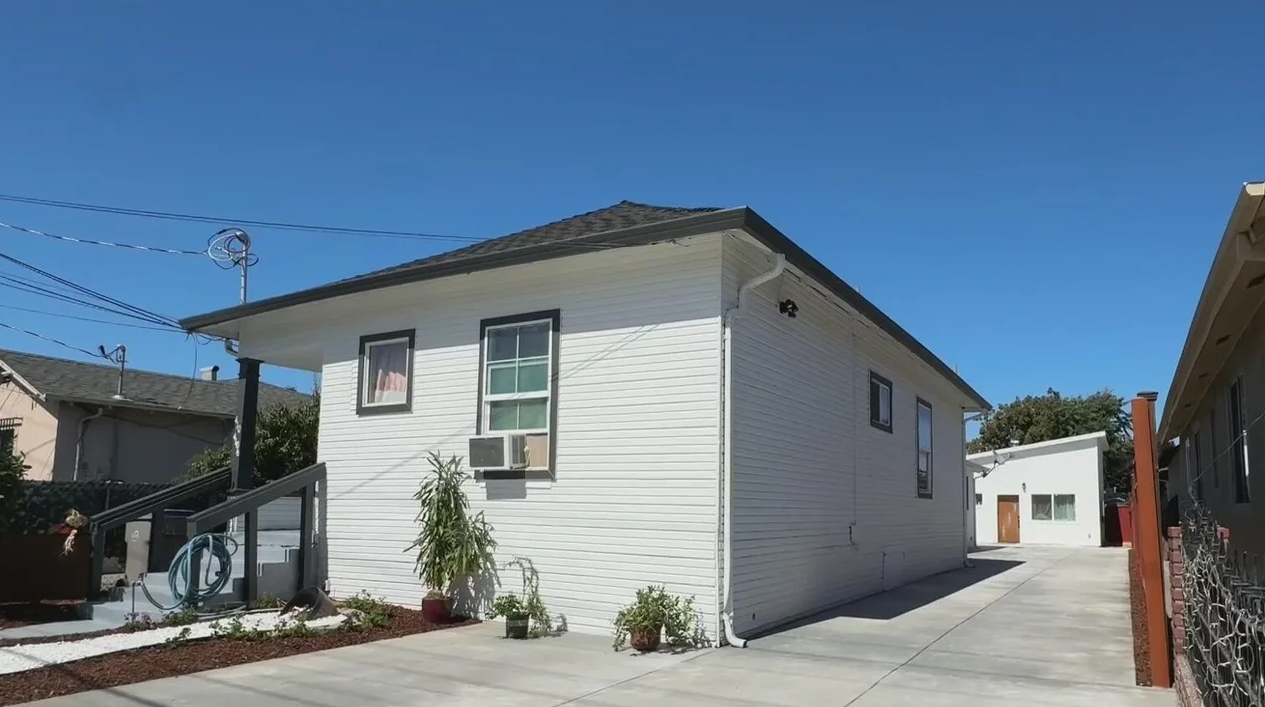
A backyard in San Jose just became its own home, separate deed, separate owner, and it sold for $530,000.
It's California's first Accessory Dwelling Unit ever sold as a standalone condo, thanks to a new city policy that lets ADUs be split off and sold apart from the main house. This one is 749 square feet, two bedrooms, no HOA, its own entry and parking, and it moved through permitting in just 60 days.
As a San Jose realtor, I'm excited about what this could mean for buyers priced out of everything else here. As a Seattle ADU investor, I'm a little more cautious about how fast this scales. Here's why both reactions make sense.
Why this is a big deal
San Jose was the first city in California to allow ADU sales at all, back in July 2024, after the state passed AB 1033 giving cities the option to let homeowners sell an ADU separately from the main house on the lot. This closing is the first time anyone has actually done it. Mayor Matt Mahan called it proof the city isn't "waiting for costs to come down." It's manufacturing affordability through policy instead.
And the math backs that up. Condo-ized ADUs are reportedly closing at 40-60% of typical neighborhood home prices. In a metro where the median single-family home is well north of $1.3 million, a $530,000 two-bedroom with no shared walls and no HOA is a legitimate starter-home alternative, something this market hasn't had in a long time. The city has also built real infrastructure around this: an ADU Condominium Checklist, a universal permitting checklist spanning Planning, Building, Fire, and Public Works, and two dedicated "ADU Ally" staff positions to walk homeowners through it.
For my clients, especially multigenerational families and first-time buyers priced out of everything else in San Jose, this is a door that didn't exist a year ago.
Why I'm hearing pushback too
Not everyone is celebrating, and I don't think the skepticism is unreasonable.
The concern I hear most from other locals is density and neighborhood character, what happens to a block of single-family homes once every lot has the option to become two separately-owned units. There's also a real worry about who actually buys these ADUs at scale. Todd Langton of Agape Silicon Valley, a local homelessness nonprofit, has voiced support for the policy while flagging the same risk I'd flag: institutional buyers scooping up ADU condos the way corporate investors scooped up single-family homes over the last decade, which would defeat the whole purpose of creating affordable entry points for actual residents.
Then there's the practical stuff. Financing is still new territory for lenders, appraisers don't have much comp data yet, and it's genuinely unclear how quickly other cities will adopt condoization even though the state law allows it. San Jose moved first. Most cities haven't moved at all.
Where the Seattle side of my brain comes in
Seattle went a different direction with ADUs years ago. No condo-ization, but aggressive zoning reform that made it much easier to build ADUs and DADUs (detached units) for rental income rather than for sale. Building and holding ADUs up there has taught me how much execution risk sits underneath a policy headline like this one: permitting timelines that look great on paper rarely stay that way at scale, construction costs eat margin fast on small-footprint builds, and the first project in any new program is almost never representative of the tenth or the hundredth.
So when I see "60-day permitting" and "first-of-its-kind," my investor instinct is the same as my realtor instinct: this is a genuinely good proof of concept, and it's still one data point. AlphaX said it themselves. They're hoping to repeat the process and bring costs down after lessons learned on this first unit. That's an honest admission that the model isn't fully de-risked yet.
My take
I think this is one of the more meaningful housing policy wins the Bay Area has produced in years, and I also think the people raising concerns about density, corporate buyers, and financing gaps are asking the right questions. Those two things aren't in conflict. They're exactly what should be happening at the start of a new asset class.
If you're a San Jose homeowner wondering whether your property could qualify for a condo-ized ADU, or you're an investor curious how this compares to what's happening in other ADU-forward markets like Seattle, I'm happy to talk through it. This is genuinely one of the more interesting things happening in California real estate right now, and it's happening in our backyard.