Why DADU Permits Take So Long (And How to Speed Them Up)
Here's the truth nobody tells you: that "6-8 week" DADU permit timeline your contractor promised? It's a lie.
Most Detached Accessory Dwelling Unit (DADU) permits take 4-6 months minimum—sometimes stretching past a year. And every month you're stuck in permit purgatory is another month you're bleeding holding costs while your investment property sits there doing absolutely nothing.
I've helped dozens of real estate investors navigate DADU projects, and the permit process is where dreams go to die. But it doesn't have to be that way. Let's break down exactly why these permits crawl at a snail's pace and what you can do to cut that timeline in half.
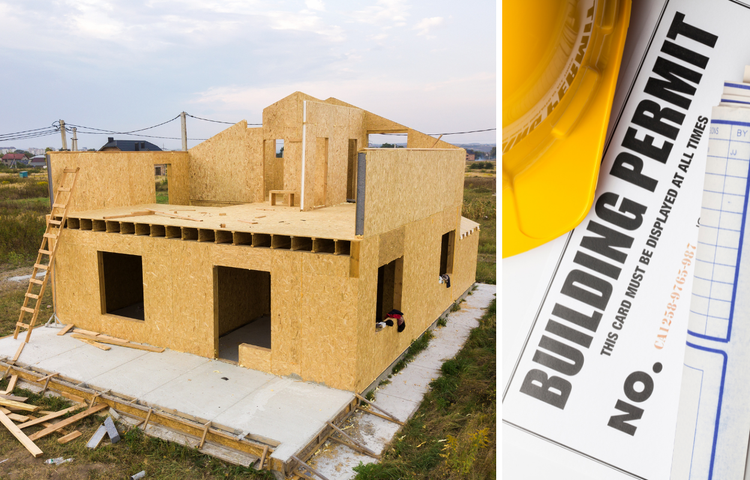


The DADU boom isn't just in your neighborhood, it's everywhere. Cities like Seattle, Portland, and San Diego have seen DADU applications spike 300-400% in the last five years. Planning departments that were built to handle 20 applications per month are now drowning in 200.
Do the math, same number of plan reviewers. Ten times the workload. Your permit is slow because you're in line behind 150 other investors who all had the same "passive income" idea.

This is the killer. About 60% of DADU applications get kicked back for corrections on the first review. Each correction cycle adds 3-6 weeks to your timeline.
Common mistakes that trigger rejections:
Missing utility connection details
Incomplete drainage plans
Setback violations (even by inches)
Fire separation requirements not clearly shown
Tree preservation plans that don't match current site conditions
Parking calculations that don't account for existing structures
One missing dimension on your site plan? That's another month. A drainage detail that's "close enough"? Two months. This isn't bureaucracy being difficult- this is building code being precise.

DADUs seem simple, but they often trigger hidden review requirements that add weeks to your timeline:
Historic district reviews: If your property is anywhere near a historic designation, add 2-3 months
Environmental reviews: Steep slopes, wetlands, or critical areas can add 3-6 months
Design review boards: Some neighborhoods require architectural approval beyond basic code compliance
HOA approvals: Not technically part of the city permit, but many investors forget this step entirely
Each additional layer means another department, another reviewer, another queue.


This isn't the place to save money. A DADU-specialized architect knows every quirk of your local code, has relationships with plan reviewers, and gets plans approved on the first submission.
I've seen investors save $3,000 on design only to lose $15,000 in extended holding costs because their plans got rejected three times. Penny-wise, pound-foolish.
Look for architects with at least 10 completed DADU projects in your specific city. Ask for their average permit timeline and first-submission approval rate.

Seattle, Portland, Vancouver, and several other cities now offer pre-approved DADU designs. These plans have already been through the meat grinder of code review.
The catch? They're standardized designs with limited customization. But if your goal is cash flow (not architectural awards), a pre-approved plan can cut your permit time from 5 months to 6 weeks.
That's $15,000-$25,000 in saved holding costs right there.

Before you submit, verify you have:
Complete architectural plans (floor plans, elevations, sections)
Detailed site plan with all setbacks clearly marked
Structural calculations stamped by a licensed engineer
Energy code compliance documentation
Utility connection plans (water, sewer, electric, gas)
Drainage and stormwater management plan
Landscaping plan including tree preservation
Title report showing legal property description
Parking calculations and documentation
Any required neighborhood or HOA approvals
Missing even one item? Your application gets rejected and goes to the back of the line.

Most cities offer expedited permit review for an additional fee - usually $1,000-$3,000. This can cut your timeline by 50% or more.
Real estate investors obsess over saving $2,000 on fees while losing $20,000 in delayed rental income. It's backwards thinking.
Run the numbers: If expedited review saves you two months, and your DADU will rent for $2,000/month, you just made $4,000 minus the $2,000 fee. That's a 100% ROI on the expedite fee in the first month alone.

This is the single most underutilized strategy. Most planning departments offer pre-application consultations where you can walk through your plans with actual reviewers before submitting.
They'll flag issues on the spot. You fix them before submission. Your application sails through on the first review.
A one-hour pre-app meeting can save you 2-3 months of correction cycles. Yet 80% of investors skip this step because they're "in a hurry."

Permit applications spike in spring and summer. Everyone wants to build during good weather.
Submit in November or December, and you'll face 50% less competition for reviewer time. Your permit that would normally take 5 months in June? It might clear in 10 weeks in January.
Yes, you might start construction in winter. But you're also collecting rent 3-4 months earlier than the investor who "waited for good weather" to submit permits.
The Hidden Cost Nobody Talks About
Every month your DADU permit is delayed costs you money. Real money.
Let's say you're holding a property worth $600,000 at 7% interest. That's $3,500 per month in interest costs alone. Add property taxes ($500/month), insurance ($150/month), and utilities ($100/month), and you're bleeding $4,250 every single month you're not collecting rent.
A six-month delay? That's $25,500 straight out of your profit.
This is why smart investors obsess over permit timelines. This is why cutting your permit process from 6 months to 3 months can be the difference between a deal that crushes it and a deal that barely breaks even.