Episode 12 - Beyond Boundaries: Crafting Your Real Estate Destiny with Hilary Saunders
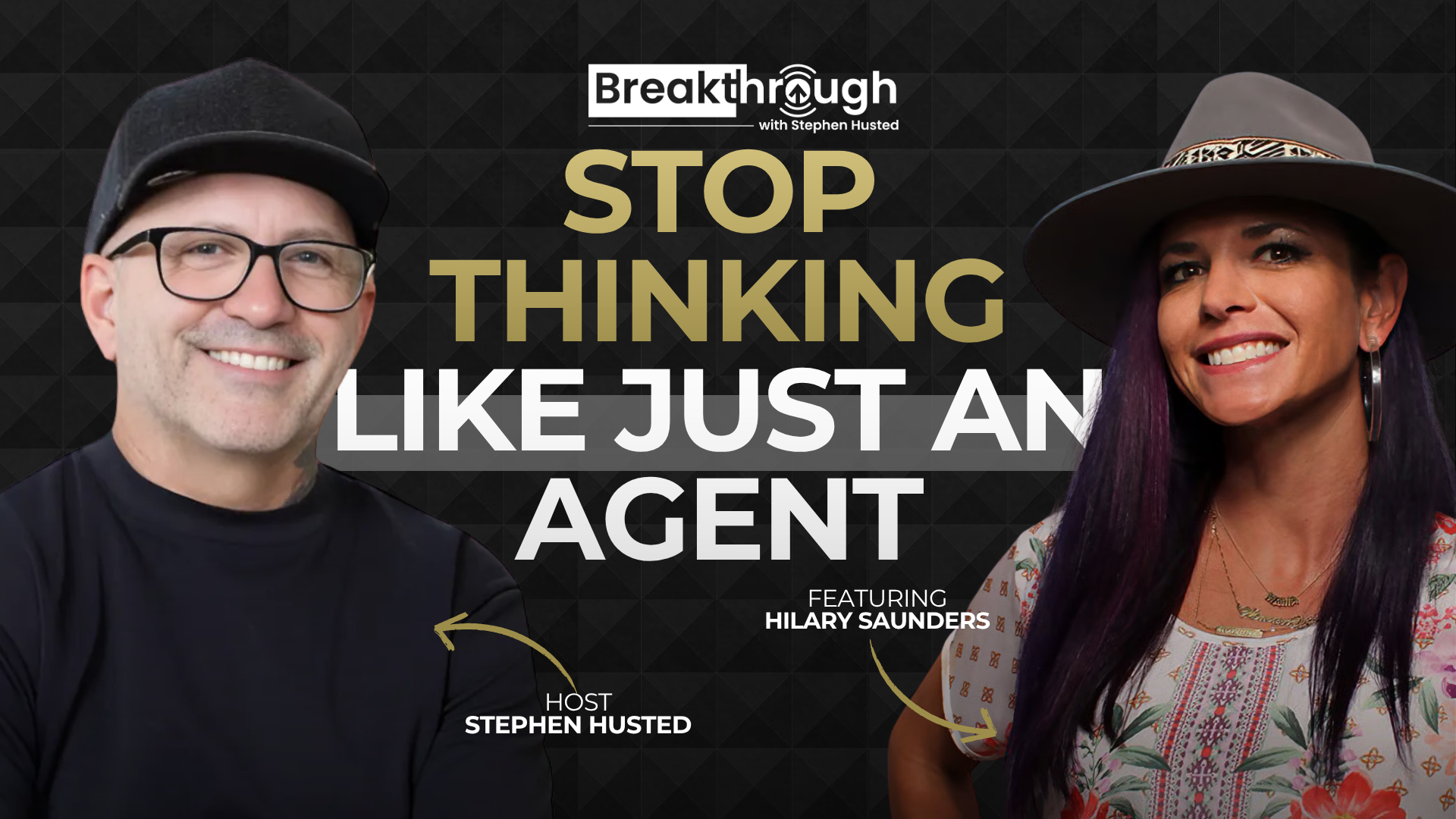
Hey, it's Stephen Husted, and I'm stoked to welcome you back to another awesome episode of The BreakThrough podcast! Join me as I chat with Hilary Saunders, a rockstar in the real estate world. We'll dive into our journeys and spill the beans on how technology changes the real estate game. In this episode, you will learn:
Takeaway 01: The Birth of Side Hilary unveils the genesis of Side, an innovative real estate platform born from a casual coffee meet-up. Side is a real estate brokerage platform that supports agents and brokers in building their own companies without the burdens of time, cost, or risk associated with running a brokerage.
Takeaway 02: Navigating the Real Estate Market Hilary and I share some moves on riding the waves, even when markets get crazy. How to understand the real estate cycle.
Takeaway 03: The Role of Investing in Real Estate Hilary and share how thinking like an investor can be a game-changer. Plus, we'll dish out how creativity and thinking outside the box make our real estate game strong.
Takeaway 04: Innovation and Creativity in Real Estate Ever wondered how to stand out in the real estate crowd? Get ready for some practical tips to up your game in this ever-competitive industry.
TRANSCRIPT
∎ Teaser / Highlighted Clip
[Hilary Saunders] (0:00 - 0:38)
Another reason why, you know, starting site is really to allow traditionally underserved, call it women and minorities and all facets to be able to run their businesses the way they want to, and not feel like they have to be in the box, in the corporate box. So yes, I have very colorful hair. My nails are hot colors.
I have tattoos. Um, and I just want people to be their authentic self, whatever it is. And be supported and, you know, like thrown out to the world and just say, you know what you are, you be, you don't be someone else.
∎ Podcast Intro:
[Stephen Husted] (0:39 - 2:53)
Welcome to the breakthrough with Stephen Husted, the show that takes you behind the scenes with successful entrepreneurs, real estate investors, and other movers and shakers in the business world. In each episode, we'll sit down with our guests to explore their personal and professional journeys, including the challenges they faced, the breakthrough moments that propelled them to success and the strategies and the tactics they use to get there, get inspired by new ideas and strategies, and get to know our guests on a deeper level. Join us for candid conversations, powerful insights, and plenty of breakthrough moments.
Please help us grow by subscribing and sharing the podcast and welcome to the show.
∎ Guest Introduction:
Hey there, welcome to another electrifying episode of the breakthrough. I'm your host, Stephen Husted.
Buckle up because today's guest is Hillary Saunders. Hillary's journey is a ride you don't want to miss from co-hosting a podcast with Spencer Kroll to conquering the entrepreneurial challenges in the heart of San Francisco. In this episode, we're exploring the real estate industry, sharing success stories, and shedding light on the hurdles entrepreneurs face.
Hillary and I are about to dive head first into the transformative impact of technology on customer experiences. And yes, we're not shying away from the controversial topics. We're dissecting the issues surrounding real estate regulations.
Hillary also shares golden nuggets on strategic adaptability in a dynamic market. We're talking about how real estate agents can not only survive, but thrive amidst market shifts, serving clients with efficiency and effectiveness. So find your comfortable spot and hit play.
This is the breakthrough. Let's dive in.
∎ Podcast Proper:
All right, we're live.
Awesome. Love it. You know what I've found out recently is every time that I've, the guest has come on, the first five minutes of like, Hey, this is how it's going to run.
It's like, it starts, sometimes they start off so good. I'm like, okay, we just have to start recording because it's already like, I can already get a good vibe about things. Yes.
You know, I don't know. Have you, have you been on a lot of podcasts before?
[Hilary Saunders] (2:53 - 3:24)
Yeah, we, well, I mean, I've been a guest on a handful and then we just launched Own It and that's kind of my, I'm hosting along with my co-host, Spencer Kroll. And it's, it's really cool. I mean, similar to yours, right?
We're trying to elevate the real estate industry and give people action items that they can take in their own business and tell stories of entrepreneurship across the board. So yeah, I, I personally love podcasts. I'm a podcast fan girl.
I listen to all sorts.
[Stephen Husted] (3:24 - 3:30)
What do you listen to? What are your go-tos? So I'm all over the place.
[Hilary Saunders] (3:31 - 3:44)
I love, I love world news stories. I love human interest. I love health, sports, the good crime story always.
And then, you know, real estate is, you know, in my blood.
[Stephen Husted] (3:45 - 4:04)
So yeah, they're cool. You know, it's so, we live in a wild time with information and like how we can get it. You know, it's really crazy.
Like, but the podcast, you know, you could be at the grocery store checking out and be on a podcast learning as you're going through the grocery store.
[Hilary Saunders] (4:04 - 4:37)
It's just, that is legitimately, legitimately me. I wear my AirPods almost everywhere. I mean, I engage with people, but usually at least one's in.
Cause I'm like, Oh yeah, I got, I got to get my, my information about, you know, the Huberman lab podcast. Have you listened to that one? Love him.
Love all the guests. I mean, but those are beefy. So you need to actually be able to listen to them.
So it's usually at an extended, I'm out at Costco shopping or something, and I just walk around. Yes.
[Stephen Husted] (4:38 - 4:39)
Have you listened to Rich Roll?
[Hilary Saunders] (4:40 - 4:43)
No, I'm writing a list. I'm getting, I'm getting a pen right now.
[Stephen Husted] (4:43 - 6:14)
Rich Roll is, he's my, he's my go-to. You know, it's interesting. I've compared myself recently to the, the podcast that I listened to.
Rich Roll is one of them. Huberman lab is another one. Uh, Joe Rogan, there's a, there's a bunch.
And I was like, God, these guys, they're so good. They're so good at talking. I mean, Rich Roll, listen to him.
I just start to hyper-focus on how he words things. But then I go back and I go, dude, this guy's been running a podcast for like four years. He, you know, he should be good.
You know, he should be at this point. And he's got a good, used to be an alcoholic, got clean. He got, he's clean and sober, athletic guy, endurance athlete runs, has a lot of interesting guests.
You know, he articulates the conversations really well. And it's funny because I listened to him. I, one, I get a lot of information from him.
Two, it helps me become a better podcaster myself. Um, you know, and how do I talk to guests and stuff and how to, how to listen and, you know, communicate. It turns into a whole nother, it's almost like learning to become an agent or anything else.
It, you have to put some work in, right? Do you, do you agree? Do you feel like there's, I listened to something that you had on a podcast and you had mentioned that you start, you think about the podcast maybe the day before, like, okay, I wonder how it's going to go.
And I totally resonated with that. Is that, do you, do you do that every time?
[Hilary Saunders] (6:14 - 7:02)
I do. I, I have a sense in my head of what direction I want it to go in or at least what I want to get out of it, right? When we interview guests, um, I tend to know ahead of time what their sweet spot is, like whether they're, you know, the queen of farming, Meredith Vogel, or if they are, you know, it's Glenda Baker and her origin story.
Um, but I, as a, as a lawyer, I get so excited because I get to ask questions and it depends on what people's answers are and where I go with them. I just, Oh God, that like gets me so excited. I'm like, Ooh, you said this now let's go that way.
You know, you opened the door for me. Um, so I get, I get super excited about it.
[Stephen Husted] (7:02 - 7:20)
I almost get too excited. Like the dopamine, I have the worst ADHD that my dopamine kicks in so hard with some of my guests in the very beginning that I start to kind of go, okay, I gotta stay focused here, like pay attention to what they're saying because I'm so stimulated by what they're saying that it's, it's, I don't know, it's pretty wild.
[Hilary Saunders] (7:21 - 7:32)
So yeah, I mean, we take notes, right? Like I've, I've even on this one, I've got my notepad and my pen out and like, Ooh, if something, you know, I got to jot something down. So you got it too.
Totally. Yeah.
[Stephen Husted] (7:32 - 7:43)
Same. These are, these are my prep questions. Do you write out questions that you want to ask the guests or are you doing, so how do you tell me what you're doing before your guest gets on?
[Hilary Saunders] (7:43 - 8:24)
You know, we used to write out questions and then I felt it was a little not, um, organic enough for me. And so rather than having the question fully out there, I've got like bullet points of topics that I want to go over. And Spencer and I are pretty good at this point where we kind of go off each other.
So, um, if, if I'm going down this direction, he can bring it back. If he knows that we're trying to tackle one particular topic or if, um, somebody says something and you're like, Oh my gosh, I never knew that story about you. Then that opens it up and you forget all the pre-done questions go out the window.
[Stephen Husted] (8:26 - 8:57)
Yes. I feel like the questions have been a, a crutch that I keep to the side. And then I usually see how I'm going with, you know, my guests and go, you know, sometimes it just flows enough.
I don't, I don't even, never even asked one question on there and they're usually, you know, getting down to the topics. But I've had some guests that I've even told my assistant, this one's going to be dry. I'm I already know where this is going, but I think they have really good information, but they're, you know, they have an engineer brain, so I'm going to have to really extract.
[Hilary Saunders] (8:58 - 8:58)
Yeah.
[Stephen Husted] (8:58 - 9:07)
Do you know what I mean? And I get it done. And she's like, I know what you were saying.
I listened to it. I'm like, I know I had to struggle, but he gave out good information. We're going to keep moving.
[Hilary Saunders] (9:08 - 9:30)
Right, right. And that is, that is all about knowing the, you mentioned before communication, right? Like you act, being an active listener and needing to adapt.
I think that's key. And I love it. I mean, communication was my, my forte and my degree in school.
So for me, it's all about how can I get the information that I need out of this person?
[Stephen Husted] (9:31 - 9:51)
Yes. Yeah. So give me a little background.
So you've got a, I've never really seen somebody that's the attorney and that was an agent. You got a lot of different things that you were, which is super cool because it feels like that you've just have a lot of different passions that were all firing all cylinders. And then now you're here.
[Hilary Saunders] (9:52 - 9:52)
I do.
[Stephen Husted] (9:53 - 9:57)
Where, where did you start? Where did you start? Like college and how did you end up where you are now?
[Hilary Saunders] (9:57 - 10:51)
Oh my Lord. My, the story, the stories. No, you know, it's funny is that I went to undergrad thinking that I would go into accounting because I was good at it.
And I took a handful of accounting classes, got a minor enough to have a minor. And I was like, this, this is so not me. Like I am not behind a desk person.
I like being out with people. I'm super fascinated with people's stories. And so I switched and went into communications and loved, absolutely loved it.
I I'm a news junkie. I love world news. I grew up with a dad who's a commercial airline pilot.
I grew up all over the place and I love just what is going on and the why behind things. And so after undergrad, it was not a great time to find a job. There weren't many really good jobs out there.
[Stephen Husted] (10:51 - 10:53)
So I, what year was this? What year was that?
[Hilary Saunders] (10:54 - 10:58)
Oh Lord. You want me to date myself? I mean, I'm working really hard on the Botox here.
[Stephen Husted] (10:58 - 11:01)
You're looking great. Everything's good.
[Hilary Saunders] (11:02 - 13:28)
Um, this was 2004, three. Yeah. And I decided, uh, I would go to law school because I, I love to talk and find out and push buttons and I figured a law degree is super versatile and you can morph it into almost anything.
And it gave me this crazy way of thinking and really being able to figure out the issues super fast. Like I don't have time for all this extraneous stuff. I'm like, get to the bottom of it and let's solve the problem or figure out a solution.
And in law school, I found my two passions. One was real estate and the other is estate planning. And they both stem from this desire to help people, real estate being, and in the Bay area, so I went to law school in the Bay area, you've got landlord, tenant and stuff.
That's crazy. You have people who are living in Magillian sized mansions and you have people who are barely scraping by and like, you know, little tiny apartments. So the ability to help people in all facets of life was just so compelling.
And the estate planning and probate piece of it was that there is at the hardest point in someone's life, usually when the loss of a loved one, whether it's, you know, foreseen or not can be so tragic and detrimental to an entire family, an entire ecosystem and is so prone to having financial loss to the government, which is unnecessary. I mean, don't, don't put words in my mouth and don't say I'm anti-government, but it's written in a way, the tax rules are written in a way to take advantage of people who don't know them and that sucks. And I'm very anti that.
So for me, it was like, how do I meld the two? I go into estate planning and probate and help people and real estate is great because you're buying traditionally your largest asset and the way that the, in California, the statutes are written is that basically if you own something over $150,000 at that time and you pass away and it's not in a trust, your whole estate gets to go to probate. So anyone who owns any property in the Bay area is screwed if they don't plan.
[Stephen Husted] (13:29 - 13:32)
So that was a long, lengthy process and it can be.
[Hilary Saunders] (13:33 - 13:39)
Yes. So that was where my passions came from and I intersected the two and had a law firm and a real estate firm at the same time.
[Stephen Husted] (13:39 - 13:42)
But then you were an agent too. Yes. At some point.
[Hilary Saunders] (13:42 - 14:20)
Yes. So I, yes, I love real estate, all parts of it. And I went out and was an agent with a big box brokerage, wasn't getting the support and things that I wanted out of it.
And I was paying them a lot of money in a split and I didn't understand why because they weren't really doing anything for me. And then agents in that office were actually coming to me for legal advice rather than going to the broker. So I was like, well, he's out golfing and not answering my calls.
So forget this. So I left and I opened my own boutique brokerage in San Francisco. So ran that with top five agents and then the law firm.
[Stephen Husted] (14:21 - 14:26)
How was that setting up? What were the pain points on getting your first brokerage up and running?
[Hilary Saunders] (14:27 - 15:31)
Um, well, it was an adventure. Um, it is, I think the biggest barrier to going out on your own than any other, I would say, uh, industry out there because so many realtors are true entrepreneurs, right? They run their own business the way they want to run it.
But the, the leap to being their own brokerage owner is so hard because you have the backend legal, you know, you have to know all the forms updates. You have to be able to build your website. You have to do your accounting.
You have to do your media marketing. There's so many facets and the traditional realtor, the good ones are really good at selling and relationships. They don't, they, they're not good at building websites and the backend and the compliance.
So I luckily had that legal background. So I was able to bridge that gap. I was not good at web design, not good at accounting.
I learned real fast that QuickBooks and I are not friends.
[Stephen Husted] (15:32 - 15:35)
Um, I learned, I'm still not friends with them.
[Hilary Saunders] (15:35 - 15:46)
No, no, it's awful. And I have an accounting degree. Like it is not meant for normal people.
God bless everyone that works in QuickBooks and I will gladly pay them because I'm not doing it.
[Stephen Husted] (15:47 - 15:59)
Even having QuickBooks, it's, it's, it's complicated. I still, at the end of the year, my, my CPA goes, what's this? This, I don't know.
It's through QuickBooks. Like, let's, I have no idea. Let me, it's crazy.
No.
[Hilary Saunders] (15:59 - 16:18)
And so that, that was it. It's like, I learned what the pain points were. I learned really quick who to outsource things to and where my time was much more valuable, which was putting deals together, saving people from, you know, financial ruin, not the other things that I wasn't that good at.
[Stephen Husted] (16:18 - 16:35)
Yeah. And that, I think once you start spreading yourself across everything, you're doing exactly that, taking away from what you're really good at, that you could be spending time on what you're truly good at and let someone else take care of that part, like that is, that's a hard thing to learn over the years in real estate.
[Hilary Saunders] (16:35 - 17:12)
Oh, it's, it starts with being a new agent, new licensees. They're getting bombarded every day with this, use this software, use this program, put your money here, do it this way, do this type of marketing. It's, and it's too much.
They, the ones that are successful. I've found hone in really early, are mentored by someone who says, okay, try this avenue, give it three to six months, only focus on this piece. And if it's working and returning great, you found your little niche.
If not, then you shift and try something else. Don't try 10 things at once.
[Stephen Husted] (17:13 - 17:49)
Right. It's totally true. Especially when it comes to marketing, you know, there's, everybody has a, a different way to do it.
Some are great at cold calling. Some are good at door knocking. Some are doing mailers that are, you know, like everybody has their thing.
And what happens, I think with newer agents that they think they have to do every single part of that. And that requires a big budget and it deflates them. And so you're right.
Pick something and go down that path. See if it works. If you've got a proof of concept, then keep leaning into it and move it forward.
Then add things down the road when you have that, that cashflow coming in.
[Hilary Saunders] (17:50 - 18:28)
Totally. And you don't, and you don't realize that each market is different slightly, right? What might work in say San Jose doesn't necessarily go work in Arcada.
You know what I mean? Like people's perception of I'm going to be a realtor. I should do everything.
Let's just say social media. All my clients are going to come from social. Well, not if you live in like a retirement town that that's not where the buyers are coming from or the sellers, you know, there's nobody is taking the time to really educate agents on best practices and I think it's because they're scared of competition.
[Stephen Husted] (18:29 - 19:20)
Yeah. And I think that's starting to change a little bit lately. I mean, I think people are putting more information out there.
I think agents are that abundance mindset. If you just put information out there, I have agents reach out all the time about small things. But those little small things could push their business in a, in a whole different direction.
It could be a simple, like, how do you upload a video? Right. How do you get your video uploaded and into an editor?
Now that thing, that sounds like a very simple task to me, but to an agent that's just starting off, that's a big deal. Oh, and I think that we're, you know, we're getting to that point where it's good that people are sharing here. Everything was so, you know, no one shared information.
You're a competition all the time.
[Hilary Saunders] (19:20 - 20:20)
Well, that's another reason why I didn't like being at the big box brokers that I was at was that I literally sat in a massive room with like these top producers who had these offices along the wall with the windows and you would go, remember when did you start in this business? And they were like, well, you should go read this book or do this training or whatever it was. It wasn't really practical advice.
I also have the abundance mindset, which I want to elevate the real estate industry. I want to make everyone better. I want the people who are doing two or three deals a year in the industry to not be in the industry because they're not in it enough to give the best in class service to the buyers and sellers.
And they tend to drag down the rest of the industry. They should just put their license and referral status, let the other people take the client and they just count the dollars when they come in.
[Stephen Husted] (20:23 - 20:31)
Yeah, it's definitely changing. What do you think about right now through this market? How's Seidman doing?
[Hilary Saunders] (20:32 - 21:28)
We, along with everyone else, are seeing the impact of high interest rates, low inventory, but here's the thing is that this market, similar to 08, 09, I'm not saying it's going to crash like then. That was a unique situation, but similar to a, a quote unquote down market or a slower market is when you see the top people really excel because they spend time on their business and figuring out, okay, how do I need to shift to be more productive? How can I take advantage of this time to really hone my craft, build my team like I need to, or make cuts to my team or really analyze how I'm attacking the market in a way that once the pendulum swings, I can just put gas on the fire.
[Stephen Husted] (21:29 - 22:02)
It's absolutely huge. I think the problem is back in COVID, everyone's getting their license and jumping in the market. Oh, it's easy.
And it's so, but the problem was none of them treated it as a business. And this is a business. You are a brand, it's a business, and there's a lot of parts to it.
And so they were just rocking it out. And then all of a sudden that market shifts and they have no clue because they've never been through a market shift before. And then all of a sudden it's like, okay, that's it.
They're done. And they shake out, they're gone. They usually just give up because it's now they don't know what to do.
[Hilary Saunders] (22:03 - 23:30)
And you look back, I mean, you look back at markets historically. It's like any market, right? There it's, it's, um, sick, secular, God, I can't even speak.
You know what I mean? It's like the wave goes up and down and you can count the point. You count the years between the points.
And, you know, it's pretty much on a 15, 20 year cycle, historically barring the outliers and COVID is an outlier and it's not a normal market. And I think that the industry and the general population just considered it to be a normal market. That time was a complete outlier.
So if you take it out of the equation, you're back on the cycle. So I don't, I don't even necessarily think that this should be called a down market. I think, you know, the, the people, the talking heads are doing it a disservice by saying it's a down market.
It is almost like a normal market. You've got way more ability to negotiate at this time. Sellers aren't holding the buyers hostage.
Buyers can negotiate. And you're seeing more of an even playing field as inventory is creeping up, which it is, there's more options and now buyers can say, Hmm, you know, this house is a little overinflated in price, or I have to pay more dear seller. Let's figure this out.
You pay down my rate or let's lower the price. So I think it's more balanced.
[Stephen Husted] (23:31 - 24:08)
Yes. Well, it's definitely more balanced than it was during COVID. I mean, COVID, it was crazy.
I mean, you know, that was, you had low interest rates, but the prices are flying off the handle. People are buying houses and a lot of people that did buy during COVID wish they didn't, you know, those, those stories are coming out right now. You know, like I think COVID was just a whole, it was, at the very beginning, you thought that the market was just going to crash and there was a quick little, like one month window in there where people were a little, you know, concerned, but then it just changed in some direction that I think changed not only the housing market, but all, a lot of things in general, you know, how people move forward.
[Hilary Saunders] (24:08 - 25:13)
Well, it's interesting how we're seeing it now also in the, in the cities, right, the metros that were affected greatly between, during that COVID time where people left, you saw the mass exodus, and now you've got different types of migrations. You've got the migrations out of states that have anti-LGBTQ plus bills on, on, or have passed them. You have migrations out of anti, you know, abortion bans, people are moving out of those states
o it's, it's almost like the big metros on the East and West coast saw the outgoing and the condos dumped because people were, I'm out of the city, I want land, whatever. And now that the legislation is affecting different parts of the country where maybe those people did move to, you're seeing them move out again. Yeah.
It's, it's a fascinating, fascinating time. So I don't, you know, I don't consider it bad. I just think that the smart and the good people are going to rock it.
[Stephen Husted] (25:14 - 25:42)
Absolutely. And it comes back to, you're saying about, we have, we have a ton of information at our disposal now, which we didn't have 15 years ago. As far, you know what I mean?
Like you can really get an understanding of housing markets by TikTok, by hearing a bunch of people, a bunch of agents in different markets talking about their markets. You can now make it, you can hear that story, what you just said now, and somebody could be on the East coast listening to this, do you know what I mean?
[Hilary Saunders] (25:42 - 26:10)
So that's, that's a big difference. We didn't have 20 years ago when I was a baby realtor, you know, we didn't have all the data points either. You know, you can see the market reports across the country so much more transparently now.
And you can see the data off the MLSs. And I mean, it's up to you to interpret the data and do with it what you will or share it, however you're going to share it, but it's there at your disposal.
[Stephen Husted] (26:11 - 26:32)
Absolutely. So with, how did this whole scenario with grabbing a 20 minute coffee with a guy in ed turn into two hours and did you, and did you know, who did you know before that coffee conversation? Did you know both of them?
No. How did that all play out?
[Hilary Saunders] (26:32 - 28:40)
So this is interesting because I was at the time running my law firm, my real estate firm in downtown San Francisco. And I happened to be consulting with a startup that was trying to create software that would make it easier for attorneys to redline like settlement agreements, going back and forth and track changes better than the old style way of using word and track changes. So I got this LinkedIn message from guy that was like, Hey, we're, you know, we'd love to pick your brain about this real estate, you know, real estate.
We're trying to create some software that will help realtors. And in California at the time, the transaction management process, there was none. Like the, it, you know, it's like a stack of documents.
It's like two inches thick that you need to get your client to sign and track. And it was just a nightmare, not total nightmare. And just because I had my mind open to that space of, Oh, we could use and utilize technology.
Let's have a conversation. So they came and it started with them saying, okay, we imagine that you can have engineers build anything you want. I was like, Oh, okay.
Well, what if you, yeah, I did. And they're like, Oh, we didn't think of that. And then it was like the ownership piece, because I had just, you know, branded myself, but, you know, created my own company because that is clients.
At the end of the day, hire you for you. They don't hire you for your label. They don't hire you for the brand on your business card
They don't hire you for the company. They work, you know, you work for it. They hire you for your experience and what you bring to the table.
So that's the piece that, you know, when we started talking, literally we didn't stop talking. It was, it was quite fascinating that just the stars aligned because, you know, Guy and Ed come out of tech and entrepreneurship, and I come out of the real estate and the legal and entrepreneurship. So we had that passion for really helping people.
And then that just snowballed.
[Stephen Husted] (28:41 - 28:58)
Real quick. So what happened? So Guy didn't have any type of real estate background, either that they just, they just were wanting to figure out some type of tech stack that could be the backend.
They had an idea. Well, where'd t
[Hilary Saunders] (28:58 - 30:45)
So they had, so Ed and Guy had both created and sold companies and they were in a space where they were trying to find what is going to be their life's work. Like they created companies, but they weren't, you know, invested fully in them, so passionate where they were just stoked every day, right? So they ended up selling them and they were in a good spot where they could create the next thing that they wanted to dedicate the majority of their working life to and Guy's friend, Phil, who was a top producing agent up in Toronto for Sotheby's at the time was a big inspiration because he was, he created his own like brand under Sotheby's, but he couldn't leave Sotheby's because they were the brokerage. And it was a question to him, well, why not?
Like, why not? And the answer so frequently is because, well, it's the lift is really hard. Like my business is really good.
I don't want to rock the boat, you know, to go create my own company, even though financially at the end of the day, you would have an asset that is transferable, that's sellable, that you can hand down generationally that you wouldn't have otherwise. So Phil was a big inspiration for Guy personally. And Guy had a bad, a negative experience with a particular agent when he bought or sold a house.
And it was the misconception that it was not just the agent, it was the whole brokerage. And so you turn it on a TED and it's like, oh, the good ones, the really good professional agents out there are their own experience. It's not the experience of the company.
They work for
[Stephen Husted] (30:46 - 30:58)
Yes. And those good ones had to really figure out a lot of different of those steps too, to, you know, like you just said, transaction coordination and marketing. That's a lot of, those are businesses in themselves.
[Hilary Saunders] (30:58 - 31:12)
They are. And they have complete businesses. Like there are transaction coordination companies, there's, you know, dock management, there's CRM, there's this, that, and the other.
And all that stuff wasn't a thing, you know, 20 years ago.
[Stephen Husted] (31:12 - 31:18)
No, we were still caring. Remember when DocuSign came out? That was like, that was like, oh my gosh.
[Hilary Saunders] (31:18 - 31:37)
You know, what's funny about DocuSign is that my ex-husband was a original UI person that worked on DocuSign. And so I actually got an original test account, like an original, original one. And I think they just figured out that I still had it like a year ago.
[Stephen Husted] (31:38 - 31:39)
Really?
[Hilary Saunders] (31:39 - 31:40)
It finally cut me off.
[Stephen Husted] (31:40 - 31:47)
I like that. It's kind of like the movie, The Office, when the gentleman's lost his job, but he keeps, he's been in the basement.
[Hilary Saunders] (31:47 - 31:52)
That was my DocuSign account. I wasn't telling anyone. I liked the red stapler.
[Stephen Husted] (31:54 - 31:56)
That was the greatest movie ever.
[Hilary Saunders] (31:56 - 31:57)
I love it.
[Stephen Husted] (31:58 - 32:09)
So you had the coffee, the long coffee meeting. Then what happened? Did you, did you drive away?
Go think about this? Like what happened after the fact?
[Hilary Saunders] (32:10 - 32:17)
You know, I think that original, original meeting was, I want to say in October.
[Stephen Husted] (32:18 - 32:20)
And what year is this?
[Hilary Saunders] (32:20 - 32:22)
Uh, 2015.
[Stephen Husted] (32:23 - 32:23)
Okay.
[Hilary Saunders] (32:23 - 33:03)
Yeah. 2015. Like I, I literally, this is the one conversation that I have like archived in LinkedIn, just someday I'm going to print it out and be like, here you go.
Um, I think it was October, 2015. And we ended up deciding to create a prototype of our concept, um, in January of 2016, and we hired our first, um, team of couple engineers in April of 2016. And then we officially launched with our first cohort of seven partners in September of that year.
[Stephen Husted] (33:04 - 33:06)
Wow. Who were the first?
[Hilary Saunders] (33:06 - 33:07)
Oh gosh.
[Stephen Husted] (33:08 - 33:10)
We had all San Francisco based or?
[Hilary Saunders] (33:11 - 33:31)
Well, they were mostly San Francisco based. Mike Ramos was in San Jose. Michelle Kim was San Francisco.
Kelly Griggs was out in Eldorado Hills. Um, we had a couple of partners that were out that direction. And, uh, Val Vandervoort was San Carlos.
So Bay area.
[Stephen Husted] (33:31 - 33:32)
He's awesome.
[Hilary Saunders] (33:32 - 33:45)
Yeah, they all are. They're also with us. I love them all.
Yeah. To take a leap of faith on an unknown, an unknown startup. Um, it was really cool.
[Stephen Husted] (33:46 - 34:39)
Yeah. I was hearing about SIDE even before I joined SIDE, even for Rainmaker and Alex and Nancy, you know, doing their thing. I had known that I was going to jump ship.
And honestly, I, my experience leaving my brokerage had nothing to do with them in my eyes, honestly. Cause at the end of the day, I thought about it, you know, it's all about me and it's, it's me, it's me, me, me, me. They can't control.
They're not here to make my growth and, you know, sales and all that. I mean, they can support me, but you know, I think my big thing was even before when I was at my old brokerage was I was always branding myself, you know, like made a different type of, uh, business card, you know, I went to my broker and I'm like, Hey, yeah, I want to, I like your, I like your brandy. It's cool.
But, um, yeah, I want to switch it up a little bit.
[Hilary Saunders] (34:39 - 34:40)
And they let you, that's impressive.
[Stephen Husted] (34:41 - 35:13)
He did. And I thought that was surprising too, but funny enough, uh, with Alex up in the Palo Alto, Los Altos area and me down where I'm at, we were doing things that we were getting kind of in trouble about, you know, like I changed my, uh, when email signatures became a thing when you could, you know what I mean? Like when you had clickable links and stuff, I remember emailing somebody within our brokerage and he's like, you got to change that.
Like it doesn't have your, doesn't have the logo of the brokerage in there.
[Hilary Saunders] (35:13 - 36:10)
I'm like, you know, it's the name. It's so funny because you, you don't want to stifle creativity. You don't want to have people out of compliance, legal compliance, right?
The departments of real estate and all the different states are different. They are ultimately the authority. But the rules that they have created are, are there to ultimately try and prevent consumer confusion, but they were written so long ago.
They haven't taken into account the new technology, how we communicate today, you know, and they haven't updated them, which is so frustrating because technically, you know, I could be a competitor of yours and say, gosh, you know, Stephen just made me mad. So I'm going to turn them into the department of real estate and they have to go investigate and they're going to come at you with whatever fine because you're not compliant. The system needs to be changed.
I don't know how, but it does.
[Stephen Husted] (36:11 - 36:14)
What are the bigger things that you see that need to be changed?
[Hilary Saunders] (36:15 - 36:46)
Well, a couple of things. I think ultimately if the, if the ultimate goal is to prevent consumer confusion, let's adapt to the current ways of communicating, make sure that there is a very clear way for the consumer to, you know, either complain about their agent or find out who their agent works for, whatever it is that we're trying to accomplish and let's stop wasting our time on, you know, the font size or whatever else is, you know, in the rules that really we shouldn't be thinking about.
[Stephen Husted] (36:48 - 36:58)
Yeah. Yeah. There's definitely, there's definitely lots of room for improvement.
I've been saying this for years, but I just keep moving forward.
[Hilary Saunders] (36:58 - 37:21)
I know. The problem is that like, you know, realtors, good ones are in a good business and unless you are either passionate about changing the rules and regs, you got to take a step away from, you know, your money-making activity to go and pursue changing something. So this, you know, I don't know the answer, but it's frustrating.
[Stephen Husted] (37:22 - 37:35)
Yeah. Give me your, a day, a day in life of Hillary. Day in my life?
Cause I know you have twins. I know you got twins. You're super busy.
What is a day? What is, what time do you start at? Let's get there.
[Hilary Saunders] (37:35 - 38:25)
You know, I'm a, usually people are going to laugh. I don't get up till like 6 45. I'm not the 5 AM type.
I, and this is why is I used to be a competitive swimmer and I used to have to do daily doubles and I would have to get up at five, be at the pool in the cold water at 6 AM. So I don't want to do that anymore. So, um, get the kids ready for school.
Yeah. We have, um, three and a half year old, uh, identical twin girls and they are usually out the door at their Montessori around eight and I try and do my workout. My workout sometime between seven and nine, seven and 10, depending.
Um, I try and get a workout in every day. That's my happy place. If I could work out all day, I would.
I love it.
[Stephen Husted] (38:26 - 38:33)
It's oh gosh. I, yeah. This podcast could be the next 30 minutes of us talking about this.
I, I am 100% agree with you.
[Hilary Saunders] (38:33 - 38:36)
We could take the podcast on the treadmill. I could like carry you. We could go on the treadmill.
[Stephen Husted] (38:38 - 38:43)
I'm actually looking into getting a standing desk with a treadmill below so that I can walk while I work.
[Hilary Saunders] (38:43 - 38:44)
I love it.
[Stephen Husted] (38:44 - 38:45)
Trust me. I'm not even kidding.
[Hilary Saunders] (38:45 - 39:05)
No, I'm not. I believe you because I literally have a stand on my treadmill that I take my, a lot of my meetings from. So people see my little head bobbing up and down, but my other happy place is outside.
Like I live in the mountains in the winter time. A lot of people know that I will take meetings up at the mountain and then go ski for my mental health break or my lunch break.
[Stephen Husted] (39:05 - 39:33)
Are you in Oregon? Yes. So I guess I'll back this up to when we were not even recording this and I was telling you, like, I don't know, I, I was scared to have you on because I didn't know anything about Hillary.
And then Saturday I started deep diving and I was like, Oh, she, she likes the outdoors, she likes to have fun with her hair, like, okay, I'm going through this list. Okay, cool. We, I got this one.
This one's going to be good. Like I, and I saw the outdoor, so that is another happy place.
[Hilary Saunders] (39:33 - 40:33)
Yeah. So this is another, another reason why, you know, starting site is really to allow traditionally underserved, call it women in minorities and all facets to be able to run their businesses the way they want to and not feel like they have to be in the box in the corporate box. So yes, I have very colorful hair.
My nails are hot colors. I have tattoos. Um, and I just want people to be their authentic self, whatever it is.
And be supported and, you know, like thrown out to the world and just say, you know what you are, you be, you don't be someone else. And for that, for that reason, also, we did move back up to Oregon 2020 when we had our twins, because I wanted them to be outside nature. I love it.
It's my mental health. It's, it's quite frankly, my church is outside. Um, it is my spiritual center.
[Stephen Husted] (40:33 - 40:34)
Yes.
[Hilary Saunders] (40:34 - 40:46)
So I, we live in the mountains in central Oregon. We have the four seasons, so it's the sports come and go and it's just a magical place for me. So, yeah.
[Stephen Husted] (40:47 - 41:11)
Yeah. I'm with you. I mountain bike and road bike and I'm in the mountains.
Um, and that's to me helps with my ADHD, my mental health. It gets me clarity. Helps me get through what I'm going to get going in my weeks, or if I got something really, you know, something serious going on, I get on my bike and I usually can have it figured out.
So, and the mountains are just, yeah.
[Hilary Saunders] (41:11 - 41:59)
I do it in the morning, just in the morning, like when I'm either lifting around the treadmill or outside walking the dog, whatever it is, I come back to whatever work I'm working on. And I'm like, Ooh, I had the best idea. You know, that's where my juices start flowing.
So my day is usually, it involves, you know, working with our internal side teams on whatever projects are working on, whether it's helping people, you know, build out different brands in different States, whether it's internal, how do we do, you know, promote this or that I love speaking at different, um, I love doing podcasts or presenting at different, um, uh, organizations, affinity groups across the real estate industry, and really just wanting to elevate the industry. And how do I, through side, make that happen?
[Stephen Husted] (42:01 - 42:05)
And there's, it's great. It's good that you, we need that.
[Hilary Saunders] (42:06 - 42:07)
I like to push buttons too.
[Stephen Husted] (42:08 - 42:09)
You do?
[Hilary Saunders] (42:09 - 42:09)
I do.
[Stephen Husted] (42:09 - 42:10)
You like to push the buttons?
[Hilary Saunders] (42:10 - 42:31)
I do. I like to push the buttons. I like to challenge people.
It was a more PC way of saying it is like, why, why do you think we have to do it this way? Why has it been this done this way for, you know, umpteen years? That doesn't mean it's not broke.
Don't fix it. You still need to innovate. Like, let's make it better.
[Stephen Husted] (42:31 - 42:34)
In what aspects? So give me an example.
[Hilary Saunders] (42:34 - 42:45)
Yeah. All sorts of ways. Like for example, you know, best practices and listings.
I'm going to get on my soapbox now and then I'll get off of it in a minute.
[Stephen Husted] (42:45 - 42:46)
Um, you can go for it.
[Hilary Saunders] (42:46 - 44:09)
So in, in a traditional listing, it is a best practice to say, for example, have a home inspection, a pest inspection to see what the house is potentially facing. It helps you with marketing. It also helps you educate the seller on, oh, this is what the potential buyers are going to say about the house that needs fixing.
And they're probably going to negotiate on these terms, or it gives you an opportunity to make the house better when you bring it to market, which ultimately. You know, gets you more money at the end staging. For example, that's I don't, it, you always have to have staging in my opinion.
Like it just presents better. My job as a fiduciary, as a listing agent is to get my client top dollar. So how do I do that?
I do everything at my disposal to make them have the most beautiful product that I bring to market. And then I help them negotiate the best I can. That is not standard practice everywhere.
Surprise, surprise. It's not, you go down to Southern California and they don't do inspections mostly until you're in contract. I'm like, well, how can I know what to offer on this house?
If I don't know if there's a foundation issue, I'm off my soapbox now. But that is one way, is trying to encourage all of our community to push forward best practices.
[Stephen Husted] (44:10 - 44:49)
Hmm. Well, yeah. I've known some very successful agents that do the most craziest ways of marketing, whether it's leaving, you know, having three listings, but 200 signs out over the weekend from five miles away kind of thing that are discount brokers that don't help get the property prepped whatsoever.
You know, doesn't talk to the seller about painting the maroon walls. You know, and get it neutral and get it so that most buyers that are looking online can envision themselves living in that house and not focusing on your custom paint colors.
[Hilary Saunders] (44:50 - 45:49)
Well, and I think here's the problem too, is that without having the abundance mindset, you go to a scarcity mindset. So then when you're going to a listing presentation, you're like, oh, how do I compete against the discount people? I better knock down my commission rate too.
It's like, no, let's shift mindset and explain to the seller that my job is to do the best marketing and presentation of your biggest asset. You don't want to just have me do nothing like legitimately fine. If I do it for 1%, I, all I'm going to do is put it on the MLS.
I'm going to take my iPhone pictures, insert, throw up emoji here. And then it's going to go on Zillow's Gone Wild as a horrible, horrible listing. That is not how you sell, you know, something that is at least a hundred thousand dollars, talk about like $20 million, drives me nuts.
[Stephen Husted] (45:50 - 46:07)
Oh, it's drive me nuts for years, certain things. I've seen very successful agents not having the best practices and it really and I talked to some of my close friends that, you know, loan officers or you name it, and it's always just like, I just don't get it, I don't get it sometimes.
[Hilary Saunders] (46:07 - 46:42)
It goes down to your own, call it moral compass, I guess, is that coming from my background and knowing really what fiduciary means is that, and that is a fiduciary responsibility as a realtor. You legitimately have a fiduciary duty to your client. That is meaning to do the best legally and ethically that you can for them.
And your job is to sell their house or find them a house. Well, how do you do, how can you sleep at night if you, if you do that by cutting
[Stephen Husted] (46:42 - 47:02)
corners, because they're really good at sales in one aspect of it and they know how to walk in the deal, you know, in the very beginning and that, that 1%, you know, is pitched in a way of that I'm saving you that money, I'm going to save you this money, but I'm also not going to provide the best value as far as how I present your property.
[Hilary Saunders] (47:02 - 47:28)
Best part, if you're a good, if you're a good agent, you can so easily compete with that, you just show the numbers. It's that, yeah, they can list it for, you know, 50 grand less, but if you hire me and do the math, that 50 grand commission is actually 60 grand and I will actually return you $100,000 in purchase price because I make it sell better, Mr. And Mrs. Seller.
[Stephen Husted] (47:30 - 47:34)
Absolutely. I just show them what they look like online. Like here, this is what, this is what I.
Hilary Saunders] (47:35 - 48:19)Well, and at the, at the end of the day, it's money in their pocket, right? And if you do the math, the way that our commissions are right now is the change in percentages is so small compared to change in sales price and if you are smart, you can very easily pull it off the MLS and show what happens and some of our partners actually have amazing graphics, I think Veritas in San Carlos, Val Vandervoort, she does this magnificently, which is here are all the sales in San Carlos, here are the ones that Veritas has done, there's the ones that everyone else has done. And you can see the percentage of list to sale and days on market, drastically different.
[Stephen Husted] (48:21 - 50:01)
That's a great visual for a seller too. Yeah. Great.
That's phenomenal way, phenomenal way to do it. I can tell you one thing that I thought was amazing getting onboarded by side was the support, I got my first virtual assistant through Everett and you know, it was crazy, it was during COVID, you know, I left my brokerage, jumped on the side and I felt like it was, okay, I'm going to ground zero. I'm redoing every part of my business.
And at that point too, I was also, I got the virtual assistant. I started shooting content, became a media company is really what I say that I'm doing and it was just these, all these big changes that were going on through side, but that one, one little conversation with Everett on getting a virtual assistant, now I got three. And it was such a huge change in my business because the support that I have, that I can, you know, get to the things that I truly like to focus on and my outlook of real estate has changed dramatically because of that, you know, I don't, and this might sound kind of crazy.
I love real estate, but I love all types of things in real estate. I'm a real estate investor. I want to help clients buy investment properties.
I want to, you know, have a podcast. I want to do public speaking. I want to do all the things that really have really pushed me into this zone of passion where I want to be.
And I'm not going to sit back and say, Oh, I have to just help people buy and sell real estate. I'm not doing that.
[Hilary Saunders] (50:02 - 50:25)
There's so many facets of this amazing tool that we have, right? It is, every transaction is unique and everybody's story is so individualized. I think you can help so many different people in different facets all day long.
Like you don't have to just be buying and selling or helping people buy and sell.
[Stephen Husted] (50:26 - 50:31)
Like, do you think that's changed? Like, do you think we're just at a different point now than we were 15 years ago?
[Hilary Saunders] (50:32 - 52:15)
I think that, yes. I think that there is also a spotlight on why are you in this industry? Is it because you're truly passionate about helping people at the end of the day, because then that comes up.
It's building generational wealth, helping people understand how to invest in real estate. Nobody teaches that in school. Nobody has, you know, like the average person doesn't realize how they can leverage their existing property to go get another one a generation ago.
It's my, my mother-in-law's mindset is that she wants to pay off her house. She wants to pay them off. And I am sitting here going, how about we don't do that?
How about I help you and get, you know, I, and, and I think this is where, like, I have a master's in law and taxation, and this is where my mind shift shifted was in law school, learning that was how to take advantage of the, the, the tax rules and all the obligations, all the loan obligations and the interest rates and all that stuff, if you truly can understand it, you can do so much and you can create generational wealth.
And that this is where for me, one of my passions is, which is equal housing and equal opportunities. And I want to, through you, through other people that have the same mindset is that how do we teach those who wouldn't have otherwise learned it?
[Stephen Husted] (52:16 - 52:17)
Yes.
[Hilary Saunders] (52:17 - 52:32)
It's grassroots, right? It is. You, you, it is grassroots effort.
And I think that is how we, we make a massive difference in the, in the, you know, the disparity between the haves and the have nots.
[Stephen Husted] (52:32 - 53:37)
100%. I could tell you that I invest out of state, out of California, in the Midwest, Kansas city, Michigan, Tennessee. And I have teams on the ground.
I have wholesalers. I deal with all types of people. And I'm always telling them, like, why are you not investing yourself?
Why are you sitting here helping me find a deal and doing this? Like, why aren't you investing? You guys have it all in your backyard.
I'm here coming from California into your market to build wealth, generational wealth, tax benefits, all the things that I'm getting from doing what I'm doing. Why aren't you doing it? And a lot of them just don't have the education or the, they haven't been around the right people to push them in the right direction on this.
And I get, not only in the Midwest, but I have clients, a lot of my clients that I help buy or sell, or they inherit money. Now they come to me and they're like, Hey, I got a half a million dollars. I want to invest.
I don't know what to do.
[Hilary Saunders] (53:37 - 53:37)
Yeah.
[Stephen Husted] (53:38 - 54:03)
And then I, and then I start down this path with them. And this has been something that's been going on since about 2018. And I've, that's what I've started to lean in towards now is, you know, more of the investor side of things and just helping people and trying to help everybody and it, you know, a lot of it just based on putting knowledge on Facebook and Instagram and TikTok.
It's like, right.
[Hilary Saunders] (54:03 - 54:58)
But just, isn't it amazing how like that is the passion for people, right? If it's similar, similarly, we've got, you know, partners, DJ Bryant comes to mind over at Align Real Estate out in Orlando and Fort Lauderdale, he's up in St. Pete actually, and he, same thing. Like he grew up thinking, being told his whole life that the only way out of his situation was sports.
So he played basketball and then he realized through buying property and doing flipping and investing that he actually like that was the avenue and he's focusing specifically on the black and brown community to make that a, not a stigma, right? It's, you can invest with such, you know, little, there's, there's options for everyone.
[Stephen Husted] (54:59 - 54:59)
It really is.
[Hilary Saunders] (55:01 - 55:16)
And I think that is a problem, you know, historically that way to keep certain classes down is, you know, keep that education, that information segregated. So I love that you're sharing it and that a lot of people that you know, are doing the same.
[Stephen Husted] (55:17 - 55:52)
It's just a bigger picture. I had to have a lady that was in one of my properties in Michigan and she was a nurse. She didn't need to, she was paying the rent.
She could buy the house. The house was, it was a $50,000 house. And I kept telling my, my property manager, I'm like, can we have a conversation with her?
I mean, he's like, well, you really want to find another tenant? She's a great tenant. Of course she is.
She's been a great tenant, but she's also could have been paying principal pay down this whole period of time. Is it, is it the down payment? Where are we lacking?
Heck, I'll do seller finance for her. Right.
[Hilary Saunders] (55:52 - 56:17)
It's exactly, I have those tenants too. We have rental property here in central Oregon and I, I love it because it is an opportunity. It's the, the education piece.
I'm like, you know how much rent you were paying, right? Like I can help you buy a house for that. Yes.
Yeah. It's not that I'm going to like, oh darn, you know, I have to find a new tenant. No, it's like, I got somebody into their own home.
[Stephen Husted] (56:18 - 57:10)
Yeah. I've had so many younger, I want to call them younger, but they're in the thirties, probably agents that have reached out recently especially with this shift in the market, call it whatever you want to call it, down, normal, that have seen the component of the investing part that I'm doing and gravitate towards like, dude, I don't want to be chasing commission checks all the time. Like I need to, you know, and so I, and I tell all of them two things.
When I close on a property and it's a commission check, I like to, I put money aside for taxes, I put some investing, and then I buy a piece of property because then I make that commission check live forever. That's smart. That checks, it's going to live forever.
[Hilary Saunders] (57:10 - 57:49)
How can you, okay, let's, let's make this, this little piece, like a golden nugget, because on our podcast, same thing. I love to always like give something that somebody can take, right? This is me flipping this interview on you.
So, okay. In California, right? Northern Bay area, those commission checks are sizable.
How do we, or how do you explain to someone who is say middle of the country and we're talking lower commission checks? I mean, it might take a few, but what do you, do you do the same thing? Do you split it into different accounts?
And then when the certain account hits a certain number, then you're like, great. Now I've got my down payment for the next property or how would you structure it?
[Stephen Husted] (57:49 - 59:10)
They could, it depends on where that price point, maybe they're not. And so when I break it into different buckets, I'm putting some as, you know, I buy stock, maybe they don't need to buy stock, they can just put that money towards a property. And since they're making less on commission checks, but the purchase prices are, are less.
They could also take that, their knowledge, usually, especially in the Midwest, the agents out there, they're investor agents, a lot of them. They deal with investors that are coming from California and New York. So they've learned a lot.
So they also know how to structure deals and do owner financing to partnerships. They can invest with a family member and heck, 50% of a deal is better than no, zero. So they do, I think some of them, some just lack the knowledge.
They just don't want to know how to start. And I think that it just takes, you have to kind of learn from what you're seeing other people do. But even with the slow, the lower commission checks, I've seen a lot of successful agents really build out a portfolio fast and they get partners too.
And I think that's another thing. You can get a partner if you, you know, get a, partnerships are great, you know, start off with a few of them. You know, maybe you're the one that can find a deal and maybe there's somebody else that has the equity that can bring and they bring the money to the table and now you're, you're, you're merging that together.
[Hilary Saunders] (59:11 - 59:11)
Right.
[Stephen Husted] (59:11 - 59:15)
So there's so many different ways to just get going on it.
[Hilary Saunders] (59:15 - 59:21)
I think that's it. It's like, just jump in the pool. Yes.
You just got to start somewhere.
[Stephen Husted] (59:22 - 59:23)
Yeah, you have to. Yeah.
[Hilary Saunders] (59:23 - 59:29)
I mean, it's a lot of work, but what's your favorite couple of markets that are low bar to entry?
[Stephen Husted] (59:30 - 59:31)
Kansas City.
[Hilary Saunders] (59:31 - 59:32)
Really?
[Stephen Husted] (59:32 - 1:00:06)
Interesting. Kansas City for sure. Yeah.
And it was under the radar for a long period of time. Cat's out of the bag now. I've been there on the ground.
I was just there two weeks ago. I had just bought a duplex and I wanted to walk this one. I don't typically fly out to my properties, but this one I did.
I'm taking it in a, in a different direction. So I flew out and they just have a lot of infrastructure, a lot of jobs. It's, it's firing and all cylinders out there, you know, and I really liked the growth, you go out there, you'd see the just developments everywhere.
You can see it's going on.
[Hilary Saunders] (1:00:06 - 1:00:07)
Are you sure it's not just the football team?
[Stephen Husted] (1:00:08 - 1:00:30)
Well, they got that too. They love their football team, but you know, and they have a lot of cool, there's this one little spot, they have the plaza, they have Westport. So plazas like, like Rodeo drive, I would compare it, but you know, maybe same, you know, that kind of vibe to it.
And then Westport is similar to like Melrose.
[Hilary Saunders] (1:00:30 - 1:00:31)
Oh, interesting.
[Stephen Husted] (1:00:31 - 1:00:43)
Yeah. And they're all in this one little section and then there's the universities and you've got KU Med and it's got a lot of cool stuff. And it's really close.
Everything is really close.
[Hilary Saunders] (1:00:43 - 1:00:43)
That's it.
[Stephen Husted] (1:00:44 - 1:00:45)
You can go from one good market to a bad market too.
[Hilary Saunders] (1:00:46 - 1:01:13)
That's a sleeper just conversation as far as like what to invest in is, is, and if you go into a university town, you can very well, I shouldn't say very easily, but it's a good spot to look if you're thinking of just getting a, you know, a small property or a condo because nine months out of the year, you know, you're going to get tenant plus you're going to get turnover and so you can consistently increase that rent.
[Stephen Husted] (1:01:14 - 1:01:49)
Absolutely. Or house hack. Yeah.
House hack. You know, that's a great way to, if you don't have, you know, you've want to make some cashflow and you live in that property for two years and you're younger and just, you know, house hack, get into it, have a few roommates and, you know, move on to your next property. I did that back in 2004 and didn't even realize what I was doing.
That's funny. Yeah. I just didn't want to pay the whole mortgage.
I'm like, Oh, I'll just bring my friends in and have them move in. But, so what are you, what are you, what are you watching and listening to right now? I'm going to leave this on my last question.
[Hilary Saunders] (1:01:49 - 1:01:51)
Yeah. Yeah. Yeah.
Watching. Oh my gosh.
[Stephen Husted] (1:01:51 - 1:01:52)
What are you listening to?
[Hilary Saunders] (1:01:54 - 1:02:33)
My, I have this affinity for like, I got to turn my brain off at the end of the day and so I watched like trash, well, I shouldn't say trashy, it's all those like love is blind type shows on Netflix or prime or whatever. I don't know why, but it just, I get into it and then I don't have to think about it, like it's not drawn, it's not like somebody's dying or the world is blowing up or whatever, so I like those type of shows, listening to, so, okay. Listening to amazing artist.
Her name is Chris Matthews, C-R-Y-S. Matthews.
[Stephen Husted] (1:02:33 - 1:02:34)
What's the music?
[Hilary Saunders] (1:02:35 - 1:02:56)
Yeah. We just had the Sisters Folk Festival this weekend and she is insanely amazing, talented. She is an artist that is very civil rights oriented and so a lot of her songs have some type of call to action or spotlight on some type of injustice and she's a killer, she's awesome.
[Stephen Husted] (1:02:57 - 1:03:00)
What is it? What kind of music? Is it, did you say folk?
[Hilary Saunders] (1:03:00 - 1:03:01)
It's folk. Yeah.
[Stephen Husted] (1:03:01 - 1:03:01)
Okay.
[Hilary Saunders] (1:03:04 - 1:03:10)
Folky, not necessarily country-ish, but she does, she's in Tennessee.
[Stephen Husted] (1:03:11 - 1:03:12)
Okay. Oh, cool.
[Hilary Saunders] (1:03:12 - 1:03:12)
Yeah.
[Stephen Husted] (1:03:13 - 1:03:13)
Love Tennessee.
[Hilary Saunders] (1:03:13 - 1:03:14)
Yeah.
[Stephen Husted] (1:03:14 - 1:03:14)
My favorite.
[Hilary Saunders] (1:03:15 - 1:03:20)
Podcasts. I'm a sucker for Huberman Lab podcast.
[Stephen Husted] (1:03:21 - 1:03:22)
Yep. Same with me.
[Hilary Saunders] (1:03:22 - 1:03:31)
Along with some true crime dramas and human interest stories. And then of course Own It. I love our own podcasts.
[Stephen Husted] (1:03:32 - 1:03:37)
Absolutely. Well, with that, so where could everybody, where could the audience find you?
[Hilary Saunders] (1:03:37 - 1:03:57)
We have, our podcast is on all the different channels. It's called Own It. You can also find it at Own It at side.com.
And then we, my personally, I'm on Instagram at Hill Hedemark. That's my maiden name, H-I-L Hedemark, H-E-D-E-M-A-R-K. And then Facebook is just Hillary Saunders.
[Stephen Husted] (1:03:58 - 1:04:02)
Cool. And we'll put those in the show notes too, so everybody can go find you.
[Hilary Saunders] (1:04:03 - 1:04:18)
I have yet to really activate TikTok. I am a little late to the party, but also I feel like I'm got a few plates that I'm juggling, so I don't feel too bad until my kids start like super being into it. So I've got a little bit.
[Stephen Husted] (1:04:19 - 1:04:31)
Yeah. That's another beast in itself. Just another, totally.
Yeah. It's a whole nother beast. But I really appreciate you jumping on today.
Oh, Stephen, this was awesome.
[Hilary Saunders] (1:04:32 - 1:04:32)
Thank you. Thank you.