Episode 19 - The Rise of an Investor: Anne's Journey from $5 to Property Portfolio
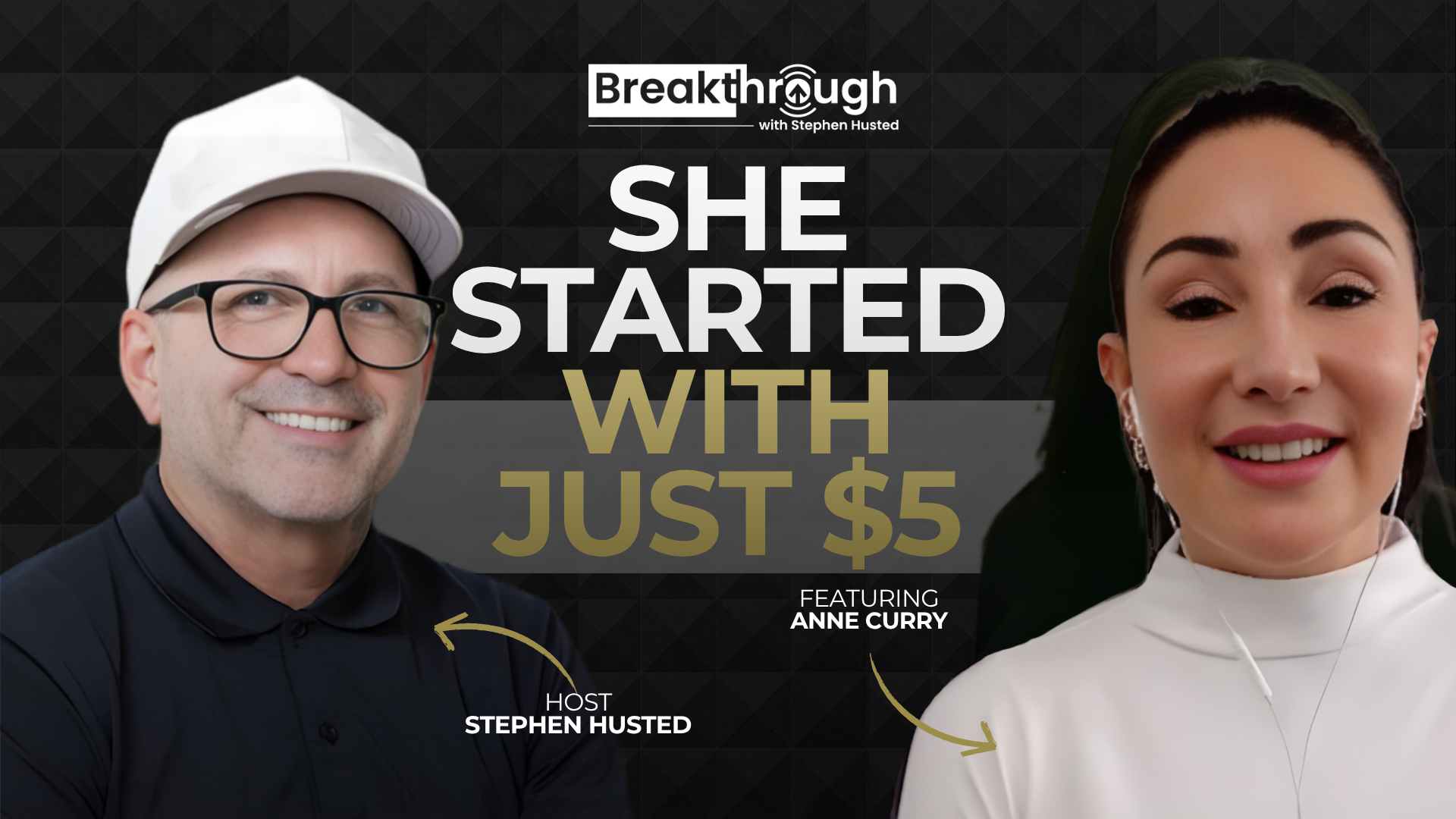
Welcome to another compelling episode of The BreakThrough! Join Stephen Husted as he sits down with Anne, a seasoned real estate investor with over 30 years of experience. Anne's journey from preschool teacher to successful investor is filled with valuable insights and lessons on navigating the dynamic world of real estate.
Takeaway 1: Leveraging Mentorship and Starting Small Anne emphasizes the pivotal role mentors have played in her real estate journey, from her modest beginnings to scaling up her investments.
Takeaway 2: Embracing Diverse Real Estate Ventures From single-family rentals to multifamily units and development projects like DADUs (Detached Accessory Dwelling Units), Anne explores the diverse avenues within real estate investment.
Takeaway 3: Seizing Opportunities and Continuous Learning Anne's shares insights on the transformative power of persistence, calculated risks, and continuous learning in achieving sustained success in real estate over three decades.
Anne's inspiring story exemplifies the rewards of persistence, mentorship, and strategic growth in the real estate industry. Whether you're a seasoned investor or just starting out, Anne's experiences offer valuable lessons on building a successful real estate portfolio through mentorship, diversification, and a commitment to lifelong learning.
TRANSCRIPT
∎ Teaser / Highlighted Clip
[ANNE] (0:00 - 1:00)
And right about when I'm getting into the hang of it, I'm thinking, okay, I did this a few times, but, you know, pastor really, I mean, he only has a few rentals. I really need somebody in my life that can show me how to kind of, you know, build this. And just then I was at a women's group and I sat next to this lady that I'd never met before.
And I said, hi, you know, like I normally do. I'm Anne, what's your name? And she said, well, my name is, you know, X.
And I said, oh, you know, tell me about your, you know, you and your family. And she said, well, you know, I just stay home with my kids and I'm, you know, a stay at home mom and happy to do that. My husband owns 50 single family rentals, five zero.
And I was like, what? Oh yeah. Oh yeah.
And I said, I want to hear about this. And she, I said, you own 50 houses. And she said, we do.
And he said, she said, that's what he does full time. And I said, the magic words, which I came to understand were magic words. And that was, would you introduce me to him?
∎ Podcast Intro:
[Stephen Husted] (1:01 - 2:55)
Welcome to the breakthrough with Stephen Husted, the show that takes you behind the scenes with successful entrepreneurs, real estate investors, and other movers and shakers in the business world. In each episode, we'll sit down with our guests to explore their personal and professional journeys, including the challenges they faced, the breakthrough moments that propelled them to success and the strategies and the tactics they used to get there. Get inspired by new ideas and strategies and get to know our guests on a deeper level.
Join us for candid conversations, powerful insights, and plenty of breakthrough moments. Please help us grow by subscribing and sharing the podcast and welcome to the show.
∎ Guest Introduction:
Welcome back to the breakthrough with Stephen Husted.
Today, we have an inspiring guest joining us, Ann Curry, a former preschool teacher turned savvy real estate investor. Ann's journey from humble beginnings to owning multiple properties is proof to the power of mentorship and seizing opportunities. In this episode, Ann shares her evolution in real estate, emphasizing the importance of patience and continuous learning.
We'll hear about how she navigated challenges like financing and market downturns, offering valuable insights for achieving personal and financial growth in the dynamic real estate world. Join us as we hear Ann's story of resilience and wealth building through real estate. Discover how she transformed her life from modest wage to expert investor status.
Together, we'll explore the different sides of real estate and why it's key to jump on opportunities, even when things get tough. Get ready for a chat full of smart advice, stories that will inspire you. Let's go.
∎ Podcast Proper:
Ann, how are you?
[ANNE] (2:55 - 2:59)
I am so good. Thanks for having me on today. Excited to talk to you, Stephen.
[Stephen Husted] (3:01 - 3:14)
Thank you for jumping on. And yeah, I apologize for being sick. But as I was telling you earlier, got sick again, you know, taking a drink off that Stanley Cup of my daughter's.
[ANNE] (3:14 - 3:16)
Stanley Cup, it does it every time.
[Stephen Husted] (3:17 - 3:25)
Stanley Cup got me. And then over the weekend, I'm stressed out going, I can't cancel. And I told you, I don't want to lose my voice.
[ANNE] (3:25 - 3:33)
I told you we're realists over here. We totally get it. Yeah.
I'm just glad you're feeling better. Yeah. Thank you.
[Stephen Husted] (3:36 - 3:53)
I'm so you know how I reached out to you. I'll tell you what I was doing. I was driving to Redwood City to meet with one of my business partners.
And I was listening to the landlord diaries.
[ANNE] (3:54 - 3:55)
Yeah. Yeah.
[Stephen Husted] (3:55 - 4:18)
Yeah. And I had two hours, essentially. So I listened to one going up and one going back, reached out to you, reached out to you.
Right when I got home, actually, which was funny. Yeah. And that's kind of how some some of my guests happen.
I just get inspired. And I go, I'm just going to reach out. Who knows?
Maybe they'll maybe they'll say yes. Maybe they'll say no.
[ANNE] (4:18 - 4:18)
I love it.
[Stephen Husted] (4:18 - 4:29)
Maybe they won't respond. But I'm going to give it I'm going to give it a try. But I did really like that conversation that you guys had and thought you had a pretty cool backstory.
[ANNE] (4:29 - 4:55)
Yeah, I've been at this for a while and, you know, we have very humble beginnings. So we've come a long way in about 30 years and love to share my story because, you know, I always say I wouldn't have I would have nothing if it hadn't been for the people that went before me and taught me what they knew. So I'm an open book and I love to chat and I'd love to inspire people as best I can and educate them on how to do real estate because it's been so great for our family.
[Stephen Husted] (4:56 - 5:17)
Yeah. And it's such a. I think one thing about real estate that's really cool, I was thinking about this recently, is you never really master it.
Oh, you know, I mean, there's always there's always something going on, whether it's like you're back in office to analyze in a deal or there's so much to it.
[ANNE] (5:17 - 5:55)
Right. Doesn't that keep you hooked in it? It does, because there's always something to learn.
And then, you know, just when you feel like you have something down, like a strategy or tactic, then either the market shifts or there's a new strategy and tactic. I mean, there's always something more to learn. And I just feel like it's this endless ocean of, you know, stuff in real estate that you can and you can go in so many directions.
I mean, sometimes people say, well, I want to get started in real estate. It's like, well, what angle do you want to start in? Do you want to be a salesperson?
Do you want to be an investor? Do you want to be in property management? I mean, there's so many different roles and hats that you can play.
[Stephen Husted] (5:56 - 6:24)
Absolutely. So what do you tell people that reach out to you, whether it's clients, friends, family? Because you help buyers and sellers buy real estate, and then you deal with investors, I would imagine.
Okay. So how do you hone them in on one? Do you tell them to kind of like hyper focus on one and get that down and then go to something else?
[ANNE] (6:24 - 7:19)
How do I guide my... Well, first I go in asking questions because I want to know what are they interested in? Because I could give them a whole spiel, but if they have no interest, then it does them no good.
So when I meet somebody for the first time, I ask them, what are your goals? What are your thoughts? What have you ever...
When you think of real estate, what do you think of? And I try to get inside their head. And then we kind of start on that path and I guide them along that path.
Having done this for 30 years and worn the investor hat and worn the sales person hat and worn the property manager hat, I understand the different roles well enough that I can just kind of help guide them to what they want to do, not what I have planned for them to do. So the conversation is very... We really kind of hone in on their own idea and then we help grow that and move that along.
[Stephen Husted] (7:20 - 7:26)
And do a lot of the clients that come to you pretty fresh in real estate or do you have a mixture of levels?
[ANNE] (7:26 - 8:14)
Yeah, we have a mixture of levels. Anywhere from I don't even own my own home, but I want to own rentals to I already own rentals and now I want to learn how to scale or I own single family and I want to learn how to buy multifamily to I have a bunch of stuff, how do I kind of work my way out of it? I mean, all the way from like beginning to growing all the way back down to scaling back down.
So I have one of my clients owns I think 30 single family houses, but she's ready to get out. She's like at the retirement age, she's like, help me go back to none. And how do I do that gracefully?
How do I do that successfully without paying too much tax? I mean, so we kind of run the whole gamut.
[Stephen Husted] (8:15 - 8:20)
Let me back up to your beginnings here. So you started in 2010?
[ANNE] (8:21 - 9:58)
Well, I got my license then, but I really started in the late 90s. It's been a long time. Yeah, so I was trained to be a teacher and I was a preschool teacher after finishing college and that was my first job.
And I was making $5 an hour. And yeah, for about five years I did that, a whopping $5 an hour. Now, that would be more like $20 an hour now, but still not.
Yeah, so it's not inflation adjusted, but it's still not going to get you to where I wanted to be. I mean, I watched my parents not be able to retire. We had a lovely, loving home, but if there was any stress, it was always around not having enough money.
So that was the constant theme. So, as I'm a preschool teacher, I'm kind of looking at my future and saying, I've got to make a shift here because I don't want to fall into that same money stress that I watched my mom and dad go through. So when I had my first baby, my son, who's 30 years old now, and the father of my grandson, he was just my little pride and joy.
But when he was a little guy, he was about eight weeks old, and I remember holding him and I was still a preschool teacher making $5 an hour. And I thought, how am I going to help this little guy through college? And how are we going to retire?
And it was interesting, Steven. It was just this thought. It was just this thing that came inside my head and it was just like real estate.
And that's all it was. It was two words, real estate. And I didn't know.
[Stephen Husted] (9:58 - 9:59)
So you just randomly thought about that?
[ANNE] (9:59 - 14:55)
I thought about it. I feel like it was a serendipitous moment. I mean, I look back at my life and I see a series of miracles that happened.
And I feel like that thought was my first miracle because it was like, I feel like I didn't come up with that. How would I have just come up with that randomly? But that was it.
There was no path attached. There was no instruction manual on how to do that. And this is back in the early nineties.
So imagine like we didn't have bigger pockets. We didn't have Steven doing podcasts and telling us all these things. All we had was human beings, you know, that we could talk to one-to-one like our friends and we had the library.
So we had free books and maybe a few like in middle of the night infomercials, you know, Carlton sheets, I think was doing something back then. So our humble beginnings, my husband is a pastor of a church and he was making $14,000 a year at the time. So it was just me making five bucks an hour, him making $14,000 a year.
And I had this dream of doing real estate, but I didn't know what that meant. And I had three very important people show up in my life. They all became mentors at different stages.
And our first mentor was the pastor of the church that we worked at. And he owned a few rental properties and thought that was kind of interesting. One day he was driving in the car with my husband and he said, you know, Dean, you should really think about buying a house.
You know, I own a house. I think you could own a house. And he looked at him.
He said, well, I don't, you know, we don't have a down payment for a house. And he said, well, you should ask a family member. So we approached, you know, our aunt Sharon and we bought our first house for $62,500.
It was a little two bedroom rambler that needed a bunch of work. And the down payment back then was $6,250. And we borrowed it from our aunt Sharon.
You know, good old FHA, they allow you to borrow the down payment funds. And, and so we bought this little house. And then a few months later, my husband was in the car with this gentleman who was our first mentor, the pastor of our church.
And he said, now I want you to think of that little house as a little box. And I want you to think of that box as a place that's holding money. So when that little box becomes worth more, you can actually take the money out of that box and you should go buy another box.
What he was talking about was doing a refinance, pulling the cash out and go buy another one. So we thought, okay, well, we fixed this little house up and then it was worth more. And so we refinanced, we did exactly what he taught, taught us to do.
It was almost kind of like a pseudo burr, although there wasn't, you know, there was not that acronym way back then, but it was like buy, you know, rehab, then refinance, and then repeat. So he basically taught us how to do that. And so we did, we refinanced, we pulled, I think it was about $60,000 out of that house.
We went and bought another house. We fixed up that house to live in because again, we bought it as an owner occupant and we turned the first house into our first rental. So now- What was the timeline?
What was the timeline? It was about eight years. Eight years.
Yeah. We lived, so I had that little thought of real estate when Drew was eight weeks old and we lived in that little tiny two-bedroom house until the kids were six and eight years old. So it took, you know, we have this saying, get rich slow, because a lot of times, you know, especially like with us, we started with nothing.
It was a slower path, but it definitely was getting rich. It just was a slow path to get there. But that was our humble beginnings.
So I say, you know, I was maybe, if you're going to have a category called least likely to succeed in real estate, I probably would have put myself in that category. I remember I was in my twenties and again, we didn't have cell phones. We didn't have the internet.
And I remember fixing up that first little house and driving to Home Depot, looking for people, usually men, because they were mostly at Home Depot back then, and tapping them on the shoulder and saying, excuse me, sir, I have this issue with my toilet and this is what it's doing. What do I do? And he would, you know, I'm in my twenties, he would walk me over to the plumbing aisle.
He'd say, see that little thing right there? Buy that. It has instructions on the back.
Just go do that and that'll fix your problem. So I drive back home and that's how I fixed up my first house. So mentor number one taught us really how to even get started.
And that was the role that he played. And then I had two more very important mentors that came into my life that helped me scale over the last, you know, 30 years.
[Stephen Husted] (14:56 - 14:59)
And how did they come into your life?
[ANNE] (14:59 - 18:30)
Yeah. So once we did that first house and we had some success at turning our original little two bedroom house into a rental and it worked and we moved into the second house and bought that as an owner occupant. It was a wreck, but we fixed that one up.
And so now I'm kind of getting the hang of it. And right about when I'm getting into the hang of it, I'm thinking, okay, I did this a few times, but, you know, pastor really, I mean, he only has a few rentals. I really need somebody in my life that could show me how to kind of, you know, build this.
And just then I was at a women's group and I sat next to this lady that I've never met before. And I said, hi, you know, like I normally do. I'm Ann.
What's your name? And she said, well, my name is, you know, X. And I said, oh, you know, tell me about your, you know, you and your family.
And she said, well, you know, I just stay home with my kids and I'm, you know, a stay at home mom and happy to do that. My husband owns 50 single family rentals, five zero. And I was like, what?
Oh yeah. Oh yeah. And I said, I want to hear about this.
And she, I said, you own 50 houses. And she said, we do. And he said, she said, that's what he does full time.
And I said, the magic words, which I came to understand were magic words. And that was, would you introduce me to him? And she said, of course I would.
So I met him for coffee. He was about 15 years older than me. And I just said, you know, would you show me how you did that?
And that started a seven year kind of mentor mentoree relationship where I just said, you know, I will show up, I'll clean your floors. I'll scrub whenever you want me to scrub all hack bushes. I'll do whatever you want me to do if you'll teach me.
And, and he did for seven years, showed me how to buy my, what would be my third house. Cause we had the one little rental and he said, well, there's this thing called hard money. If you don't have any money and you can buy a house and then they'll give you the money to fix it up.
And then once you do that, then you can put a renter in it. And once you have a renter in it, then you can refinance it and you can pull your money back out. And then we're going to go do this again, but you're going to buy the houses that I tell you to buy because I know how to buy them.
And so basically he was describing the birth strategy again, and that's how he had grown his rental portfolio from zero to 50 at that moment. Steven, when I met him and I got to know his portfolio, I wrote down on a piece of paper, I will own 50 single family houses. I will own 50 single family houses.
And I kept that little piece of paper by my bed for years. And do you know that about 16 years later, I had the opportunity to buy 50 single family houses in one transaction, one, one transaction, one transaction. It was the joy of my lifetime and showed me that we don't always know how we're going to do something, but if we put it out there and we put the goal out there, it will show up in very mysterious, miraculous ways that we just really can't understand the time that we write it down on paper.
So that was, that was cool. So he was mentor number two and really taught me.
[Stephen Husted] (18:30 - 18:31)
Are you still in contact with him?
[ANNE] (18:31 - 18:32)
Yeah, I am.
[Stephen Husted] (18:33 - 18:36)
Okay. And is he from the same area?
[ANNE] (18:37 - 19:13)
From the same area. He actually was where you live. So kind of the San Fran, San Jose area.
And when they moved, when I met his wife, they had just moved to Tacoma because he realized that Tacoma had a lot of opportunity. We're kind of middle-class, we're blue collar, we have a lot of jobs, we're surrounded by water and mountains, and we really can't grow any farther, but our price points were which you could buy a house and still get some cashflow. And we had the appreciation.
So he kind of moved up here and created his whole- Moved for the opportunity. For the opportunity. Yeah.
Yeah.
[Stephen Husted] (19:14 - 19:14)
Yeah.
[ANNE] (19:14 - 20:25)
And I am so grateful to him and him, he and his wife together for becoming such wonderful friends and wonderful, wonderful mentors. And it was neat because in time, I was able to bring him some value as well because I found this house and he always told me, he said, if you find a house and it has a big side yard, he said, I always want you to tell me about it. So I found this house, it had a big side yard, and it was a gentleman that his mother owned it.
And we went to the same gym and we got to talking and he said, my mom really needs to sell her house, but it's a wreck, but it's got a big yard. So I said, well, let me go look at it. And I brought my mentor with me and we were able to actually split it into four different lots.
We fixed up the house and that was my kind of contribution back to the partnership. And we did that together. And then I learned how to lot segregate and I learned how to, you know, we did, that was a flip and it was selling off lots.
And so therefore, you know, my education was growing. So he just, he was just such a wonderful mentor. And, and I was glad I could bring him a little value, not as much as he brought me, but.
[Stephen Husted] (20:26 - 20:39)
Which sounds like a great, I think that is a pretty awesome payback in a lot of ways, you know, that's, he asked for something and then you got it and brought it right to him. Like, Hey, is this the one? He's like, matter of fact, it is.
[ANNE] (20:39 - 20:45)
We ended up partnering on some other stuff too. And so that was, that was fun as well. Yeah.
[Stephen Husted] (20:45 - 21:13)
No, that's great. What other, so during this period of time as a mentor, can, do you remember some points that he brought up that really like were light bulb moments for you that you just went, Oh, like you brought up the hard money. And I think that the hard money part, I hear this one.
And I know you hear this one as well. People, I don't have a lot of money. I don't know where to start.
You find a good deal. There's plenty of people out there that will give you money. And he taught me that.
[ANNE] (21:13 - 24:15)
He taught me that. He said, don't worry. Just find the deals and don't worry about what you're going to do with them.
Don't worry about the money. Just find the deal. Tell you, bring them to me and I'm going to teach you what to do with the deal.
But if it's a great deal. And then he also taught me how to walk away from stuff is like, not every deal is a great deal. He taught me patience.
He taught me like, Hey, we're going to wait for the really great houses. So, I mean, you could go out any day and just, you know, spend a hundred grand on a house, but we're going to find the house that has the most opportunity. So like I would wait for the five bedroom house with two bath with a full basement that I could create more living square footage for a hundred grand, rather just buy in a three bedroom turnkey house.
So he taught me, you know, the nuts and bolts of how to look at a deal and know like what I need to buy it for what I can put into it to make it work. And he taught me section eight. So he was the one that really, which was key because we are, we own a lot of affordable housing now.
But he taught me that, you know, section eight, these are just people and they just happen to get, you know, some of their rent paid by the government. It doesn't make them a good tenant. It doesn't make them a bad tenant.
You got a screen just like you would. But he taught me the love of section eight. He taught me, he introduced me to our local housing authority.
And I remember the day he said, Hey, we're going to go on a little field trip. And I said, Oh, where are we going? He said, I don't know, just, you know, kind of don't, don't wear your work clothes, just, you know, wear normal clothes.
So usually I'm covered in paint, you know, paint works, you know, sweatshirt on and all things. And so he marched me down to the section, well, or the Tacoma housing authority. And he knew all the people there because he owns so many rentals that he was, you know, they really looked to him as one of their landlord resources and would ask him questions when they were changing their, their rules and their regulations and all that stuff.
Anyways, had a great relationship with them. And he marched me up to the director of the Tacoma housing authority and introduced me as a future, one of their preferred housing providers. He said, this is Anne.
She's going to own a bunch of rentals. He was speaking it into me and also introducing me to this, you know, what I thought was a very important person. And, and he said, just watch.
And she's going to be one of your great housing providers. And then, you know, within 15 years later, we bought a low income, affordable housing project and apartment building of 60 units. And it was actually the seller was the Tacoma housing authority and the Tacoma housing authority was the seller of the 50 single family homes that I was going to buy.
But this was years earlier. And he, he just taught me the importance of having great relationships and having a great reputation out in the, in the community as a wonder, as a very fair housing provider. And, and he's instilled all on that, of that into me.
And, and we try to, you know, be that same way today.
[Stephen Husted] (24:16 - 24:19)
So yes, some great stories.
[ANNE] (24:19 - 24:22)
It's been a great, it's been a great journey.
[Stephen Husted] (24:22 - 26:19)
Yeah. And real estate definitely is a journey. Yes.
In so many ways, you know, it's very creative. And one thing I brought up to you earlier was, I love the fact that it's, it's always different, always different, always feel like it's, it's, it's always has unique challenges. There's always something to work on.
I, I was hesitant to post this yesterday on stories. And I think the reason why I was hesitant is like, Oh, maybe I'm acting like an amateur on this thought of what I'm doing with my, my taxes. And I should have done this earlier.
And what it was is every year at the end of the year, we have a checklist. My assistant goes through it and goes, okay, we need to get, you know, all these documents prepared. We start, you know, putting everything together.
And one of the biggest things is my bookkeeper comes back and goes, Hey, I need your 12 month statements for your credit cards. And I didn't know how to execute on connecting all that to him. I didn't know, I didn't want him to have personal information, to be honest.
And then, you know, so I just reached out to all the credit card companies and said, Hey, how can I do, is there a way to do this? So that it's just you only, I just wanted to get the statements. I've had everything else pretty systemized, but that was like the last thing that I just didn't want to let go of.
And they're like, Oh yeah, we get this. We'll set them on their password. Now it's all done.
It was such a big thing, you know, and I know I was in my head going, I know there's probably other people going, well, you know, you could have used this software that's tied to this. And you know, when you start to scale in real estate, you almost have to have all your systems in place in the very beginning. But isn't it funny how you start to go through it and it's almost like whack-a-mole.
You're, Oh, here's one issue. I don't want to make that Yeah. Here's another issue.
I don't want to do that again. You try to learn. You're constantly just trying to put the puzzle together.
[ANNE] (26:19 - 27:24)
Yeah. Constantly. Yeah.
But you know, in real estate, well, really with anything, it's like, you don't know what you don't know. It's like, you don't really know the system until the system calls out and tells you it's needed. Right.
I mean, that's with everything. And, you know, as you scale and you grow and you've learned this too, because you're, you know, you've got a few virtual assistants and so, you know, you have to leverage more of your time off to other people. So, real estate is leverage heavy.
So, you're leveraging other people's money a lot of times. Banks, hard money lenders, partners, you're leveraging your time. So, you're hiring assistants and then when assistant isn't enough, so you hire another assistant.
And then another assistant isn't enough, so you hire a third assistant. And then all of a sudden, you're hiring a marketing person. And then, you know, you get so many buyers that you're working with that you hire a buyer's agent and you really don't really know what you need until you need it.
And then it's like, oh, holy moly, I need this, but I need it quick. Right. And so that's how are you with time?
How am I with time?
[Stephen Husted] (27:24 - 27:39)
How are you with your time management? Are you, I struggle with it. I make that known.
I try my best. And I don't know, it's my age, you know, because I'm in, I'm early 50s. You know, time is like everything.
[ANNE] (27:39 - 27:40)
Yeah. Yeah.
[Stephen Husted] (27:40 - 27:46)
Do you, like, do you, are you really aware? Are you always trying to improve your time? And how do you, how do you do that?
[ANNE] (27:47 - 28:55)
Yeah. Well, I would confess that I am a head down, pretty disciplined person by nature. So, I feel like that is not always a gift.
Sometimes it's a, you know, there's some downsides to that, but head down work is not an issue for me. So I have to kind of practice going the other way and taking more time off. And, but if something needs to be done, I'm going to do it.
And, um, I'm tend to be an early morning person. So I'm usually up by four 45, five. I go get my workout in, which is, um, the best day to way to start my day because it's making that promise to yourself.
It's getting up, putting your workout clothes on, getting in the car, being cold, driving to the gym, getting your workout in. And then you're on your way home and you're like, okay, I, you know, I, I'm ready for my day. And so then I pound out, but I am, I am usually by, you know, the later the day goes, the more I'm kind of my energy starts to wane.
So I'm kind of like a pumpkin, you know, Cinderella's pumpkin. It's like I expire after a certain time and then I'm out.
[Stephen Husted] (28:56 - 28:59)
But, um, so I think, what time is that for you?
[ANNE] (28:59 - 30:35)
Oh, like my brain starts to shut off around 7pm. Oh no. Well, you know, once I hit like seven or eight, I'm like, okay, I can't think anymore.
I just gotta, I gotta turn it out. But, um, I, you know what I think about real estate and we talked about it being so there's so much variety in it. I think that keeps me going.
It's like not every day is the same. So like yesterday I had a day full of appointments and then other days I'm like just head down at my computer, cranking stuff out. Um, and then, you know, the next day might be a little bit of mix and, but not one day is ever the same as the next day.
And I think that keeps me fresh. You know, I wouldn't be a guy I've always, I've always said that purgatory to me would be a desk job where I can never leave, you know? Cause like, I'll take a, I'll take a call.
I'm the master of like doing two things at once. So like, I'll take a call on a walk, you know, I'll, I'll listen to a podcast on a walk, you know, I try to kind of kill that. Um, but I love it, you know, and I think with anything, if you, if you love it, you have way more energy and grace for it.
And I have a lot of grace for real estate because I really do love it and enjoy it. Now, do we love every part of it? Absolutely not.
When you have a challenge that's really difficult to solve and you're just like, I just want this to be over. I just want a solution. Those kinds of things, you know, it doesn't always go our way, but, um, you know, the benefits of it, you know, outweigh the challenges most of the time.
[Stephen Husted] (30:36 - 31:03)
Oh yeah, absolutely. I had a job, I think it was right out of high school for Wells Fargo and it was a desk job. And I think it was something where I was taking paper and I remember I had to like use that, that sticky stuff to kind of turn the paper.
And I'm going through it. I remember it was like maybe first day, I think got to the second day. And I remember it was at lunch.
I'm like, yeah, I don't like this.
[ANNE] (31:03 - 31:03)
I can't do this.
[Stephen Husted] (31:03 - 31:10)
Yeah. I just got in my car and left. I was like, I'm done.
Goodbye. I'm out of this place. This is not it.
[ANNE] (31:10 - 31:11)
Exactly. I know.
[Stephen Husted] (31:11 - 31:42)
I was just, no. But I've had my longest career, uh, that I was doing before real estate. Um, I'm a licensed hairdresser and doing hair is very similar to real estate in a lot of ways.
It's always different. You're dealing with personalities and people, clients. So they've, they are very similar and it's kept my interest to this day and I have not quit.
[ANNE] (31:42 - 31:43)
Oh, you haven't?
[Stephen Husted] (31:43 - 31:44)
I still do.
[ANNE] (31:44 - 31:45)
I still do.
[Stephen Husted] (31:45 - 31:45)
Okay.
[ANNE] (31:45 - 31:48)
Now I know who to call when I'm down in San Jose.
[Stephen Husted] (31:48 - 32:11)
Yeah. I still do hair two days a week and everyone's like, why aren't you retiring? And I go, you know what?
I love it still. It's creative. And I have this, this clientele that I've had for 20 plus years and I just like seeing them.
Yeah.
[ANNE] (32:12 - 32:12)
Yeah.
[Stephen Husted] (32:12 - 32:14)
It's that simple. And you can, you know, it's just, it's that simple.
[ANNE] (32:14 - 32:52)
Yeah. And at some level you could probably just so automated to you for you because you've done it for so long. You in a way can kind of turn part of your brain off, you know?
And I mean, I don't know if you're like this, but there are certain parts of investing in real estate and you may have a lot of moving parts all the time and it takes a lot of brain energy, right? Cause you're thinking through and you're figuring out, you're making things happen. And it's, you know, so I think at times, you know, if you have something else that takes your attention, that's a little bit more like you can shut off that part of your brain.
I'm sure that that's probably a recharge for you.
[Stephen Husted] (32:53 - 34:05)
Yeah, absolutely. And it's also a really cool, the salon is the reason why I got into real estate in a lot of ways. A lot of my clients were, you know, tech engineers and didn't have a lot of creativity.
And a lot of them would say, Hey, I'm going to go look at this house. It's in Los Altos. I'll tell this story a lot because this is the big story that got me into doing real estate.
I had a client that was looking at a fixer-upper in Los Altos and he's like, Hey, can you come with me and check it out? I just need your creativity and tell me what I can do. So we went and I'm like, Oh, cool.
I like the neighborhood. That's first and foremost. I like the neighborhood.
I don't even know what I'm doing, but I'm just telling him my thoughts as we're going. I'm like, all right, I like the street, good street, get to the house. And I'm looking at it.
I'm like, well, you're going to have to knock that wall out. You're going to open up that space. Oh, you could do floor to ceiling windows in this because look at that's the hillside.
So bring in some more light, like put a bigger window there. And he was just like, okay, got done. And I go, I think I'm going to write an offer.
I'm like, great. I have an agent. She's my client.
[ANNE] (34:05 - 34:08)
Oh no. So you're giving away all that business.
[Stephen Husted] (34:09 - 35:19)
So I connected them and he said to me afterwards, you need to get your real estate license. He's like, you just sold me a, I think it was like 2.5, something in that range at that point. This was a long time ago.
A single tier. He's like, you just sold me a house. And I'm like, eh, I don't know.
I can't get into real estate. Nah, it sounds like being a car salesman. There's no way.
I'm an artist. He's like, no, you really should. And I helped a couple others.
And then he goes, why don't you go home and calculate what a commission would look like on this. And your friend just gave you a $700 check. Why don't you figure that out?
And I did. And at first it wasn't really about the money part of it. I really liked the creative side of it.
And then, obviously once I got my license, the market crashed in 2008. Perfect timing. Perfect timing.
It was. How was that for you? Because you were already building up your portfolio prior to 2008.
So what kind of headwinds did you have on that?
[ANNE] (35:19 - 38:43)
We actually, by the grace of God, weathered 2008 pretty good because this was coming out of the mentorship from my second mentor that taught me how to buy right. And we had tenants in all of our single family. And we didn't own nearly what we own now.
So think of what we own now. We just had a tiny little bit of that back then. So maybe 10 single family rentals.
And they were all filled with tenants and a lot of them Section 8. So we were getting checks and we were getting paid through 2008. But I was nervous.
I mean, when that went down, I remember, well, my brother is in the financial industry. And when 2008 was happening, I would call him and I'd be like, what is this? This is crazy.
I just need some feedback from you. You look at it from a different vantage point than me. And these were interesting words that I'll never forget.
But my brother said to me, in every market, there's opportunity. And I just kept repeating that instead of going into fear, I just would repeat to myself, in every market, there's opportunity. And so I started thinking, how do I leverage what's going on out there?
And it's horrible what's happening to people. I hated the suffering and the sadness of it. I really did.
But I kept thinking what John said to me was, where's the opportunity here? And that's when we started borrowing a little bit more hard money, buying little houses for 70 grand, putting 20,000 into them and selling them for 150. And that was really the beginning of a very more robust flipping business.
So under my real estate- What year was that? So that was, yeah, right in 2008, 2009. And when lenders weren't lending on investment property, so again, we go back to all the market shifts, just when you're getting your strategy and real estate kind of solid and I was buying rentals and I was refinancing and putting tenants in them, then 2008 happened.
And why did 2008 even happen? Because they were giving out bad loans. So then, do you remember, Steven, when lenders were pulling back all their investor product and they weren't giving out loans for investment property?
So there was no loan. So unless you had buckets of cash under your mattress, you were kind of dead in the water. So I thought, okay, well, how do I leverage the opportunity out there?
So we were buying little houses, dinky houses, and we were fixing them up and we were selling them. Instead of putting them in our rental portfolio, we were just flipping them. And I was making 20 or 30,000 on each house.
And I thought, well, this is good because I'll just kind of save up this money. And when lending comes back around to being able to buy more rental real estate, then I'll just put that money back into rentals. Because I'm really, you know, what my mentor, my second mentor really taught me was try to reinvest your commissions, your flip money back into owning rentals.
Really, the game is how many rentals can you own? So yeah, it's true.
[Stephen Husted] (38:44 - 38:50)
On all levels, on different equity, cash flow, taxes.
[ANNE] (38:50 - 40:00)
Exactly. I had a friend that lived in Arizona. Arizona is our second favorite place to go.
And we had a friend that lived down there and we were buying little three-bedroom, two-bath houses that were only three years old. I mean, Phoenix area got decimated. Every other house was in foreclosure, if you remember.
So we were buying these three-year-old, three-bedroom, two-bath houses at auction for 30 grand. And all we had to do is paint carpets. They're only three years old, but they got beat up.
You know, people just kind of beat them up a And so we were chugging on that. So that was an opportunity. Our own neighborhood backyard for flipping was an opportunity.
And I really learned then how to leverage more team, more contractors, more hard money. And I just kept doing that until the lending came back for investment property, which took a while. That took a long time.
I mean, I don't think we really saw investor loans come back until maybe 2017, 18-ish. There was a good solid chunk of time there where you just couldn't use, there was no product for that.
[Stephen Husted] (40:02 - 40:54)
Were you in Tacoma at that point still? Okay. And then, so I know here when we were going through that, the market was just shifting down so much month after month.
You weren't running into any problems with the properties you were flipping with appraisals and the values and the buyers getting loans? Or was it just a different type of market? Because I know here in San Jose, we'd have buyers in contract and literally they would close escrow when our house would be worth $50,000 less or $100,000.
We had a lot of problems on both sides. The sellers were going through issues with short sales or foreclosures. And then the buyers were going through these big problems because they would close and then the value would drop.
So were you guys going through that too?
[ANNE] (40:55 - 41:54)
I think our area had a little less bumps. Your area just got decimated and it went so quickly. Ours, it went down, but it was a little slower to drop.
And we weren't quite as severe as other parts of the country. I think because there really isn't anywhere else to go into coming. We definitely saw the drops, of course, but we were buying, when we were flipping, we were buying at the most bottom we could possibly get and to make sure that we got in and out so fast that the natural values weren't dropping in that I couldn't just turn around and sell it.
So we were trying to be in and out in like eight weeks. And we weren't trying to make home runs every time. We were just like, if we could make 20 to 30,000 and just be done, we're not trying to do these big, long projects.
And we just kind of want to be in and out. So we did that and that kind of started the larger flipping operation that we still are doing today.
[Stephen Husted] (41:55 - 41:56)
So natural progression.
[ANNE] (41:57 - 43:40)
And that's what I tell a lot of people that are just getting started. It's you don't have to have all the answers. Maybe you want to do all these things.
You want to be an investor in rentals. You want to flip. You want to own multifamily.
I said, don't try to do that all at once. It's like, again, get rich slow. You start on one and then you can master that.
And then you add and you master that. And then you add on and you can master that. We're not trying to a whole lifetime in three years here where we want to make educated, thoughtful decisions so that you do have a long run, that you don't make a big mistake at the beginning and then you get sour on real estate because real estate can be so good.
But having people that have been there, done that, like you, Steven and myself and others that are showing people the way is so important to have somebody that's actually done it in your world that can take you by the hand and say, this is how we start. This is how, where we're going to go. And I will help you just like the mentors helped me.
I would have nothing if it weren't. And for those people in my life that were willing to just walk along beside me and help me and answer the questions as they come up, because there's so many, it's like a, it's like a path, you know, it's like standing at the edge of a forest and all you can see is trees, but you're supposed to get to the other side somehow. And it's not like a straight line.
It's like, you got to kind of zig and zag and you just need somebody to show you through the trees to get to the other side. So that's, you know, what you and I can do for people. So that's why I'm so behind what you're doing out there and you're on your podcast, showing people the way.
[Stephen Husted] (43:41 - 46:02)
Thank you. Yeah. I it's, you know, I took on two, I mentored two students last year and it just happened organically.
I had two clients, one from the salon who I've helped sell houses, the helper sold a couple of houses. And another was a referral and I took them on for six months and took them from point A to B. Helped them get their LLC set up, bank account, you know, how to pick a market, how to put a team together.
How to find a property manager, you know, gave him the contractor talk. My really bad experience with contractors all the way down to, Hey, you're in this C neighborhood and your property's sitting vacant during the winter months. You might want to get your HVAC out and your water heater out of the property.
You might want to get that in storage. You might want to talk to your property manager about that. Well, why?
Property's going to sit vacant and you just never know. Somebody could take that opportunity to break into it and it's gone. And it's all those little things that I've learned the hard way.
So I love, I love to be able to pass it to them. And it's funny because they both closed on properties and they're like, that was really smooth. I'm like, but it was really smooth because I connected you to a really strong property manager.
You had a really good reputable contractor right off the bat. It could have went the complete opposite if you were just out there on your own. And back when you got into real estate, it was a much different period of time.
Like you said, there wasn't Bigger Pockets. There wasn't YouTube. I remember in 2004, 5, I went to a seminar.
You know, when you go and you hear somebody talk about how to flip houses and you leave the seminar and they have like a audio tape that you buy from them. And I remember getting that, nothing happened. I remember buying the book, Rich Dad, Poor Dad, reading that at the beach.
And why? Okay, this is where I got to go. And it took years from that point to finally get to that.
I didn't have a mentor. You know, I just jumped in as an agent and watched the market crash and kind of took the wave.
[ANNE] (46:03 - 48:32)
Yeah, I know. And it's just like so important to have the people that go before us. I mean, that's how it happened for me.
Everybody has their own story, but yeah, it's been the mentors. I had a third mentor that taught me how to buy multifamily. So we had, you know, had this little single family rental portfolio.
And then, you know, we were flipping during the downturn. And I, again, had this dream, like I want to own a 20 unit apartment building. That was my big dream.
You know, to me, that was scary to write down, like 20 units. Wow, that's big. And I was at a fundraiser dinner with my husband and this gentleman sat down next to me and I introduced myself like I do.
And I said, hi, I'm Anne. What's your name? He said, my name is John.
And I said, hi, John, what do you do? And he said, well, I build big apartment buildings. And I was like, oh, okay.
Can you tell me what you did to do that? And we sat at this fundraiser dinner and I think we ignored everyone else, which is embarrassing to say. And we talked for two hours during this thing.
And I was asking about syndications and this and that, you know, and he was like, syndications, you know, that word, you know, again, this is before podcasts and all the education out there. But I was when I get on a topic, I'm just like ravenous, like I want to know all about it. I want to read everything, you know, go to the library and all this stuff.
And so he introduced me. Well, he invited me to his office the following day. So just come to my office at 10 a.m. and we'll talk about multifamily. And so we sat there for in his office for two and a half hours. And I said to him, I want to own 20 unit apartment building. I know that seems really scary and really big.
And he looked at me and he goes, oh, you can do better than that. And he introduced me to his commercial agent. And within about 18 months, I closed on a 60 unit apartment building with his help.
And he became my multifamily mentor. So again, I have this theme in my life where it's all been mentors and which is, again, why we love to host free events where people can come and hear about investing different topics and where we also take people under our wing and just say, where do you want to go? Let me help you.
Let me let me guide you. Let me show you the way. And if I don't know the answer, I'll introduce you to somebody that does, you know, our network.
So yeah, so that has been just a game changer for me.
[Stephen Husted] (48:33 - 48:56)
So what was your thought once you had closed on the apartment complex and then got through it all said and done? Maybe you did a value add to it or stabilized it. And once you had it operating, what was your thought from thinking lower for like a 20 unit compared to the 60?
[ANNE] (48:56 - 53:02)
It's not any harder. No, it just is more units. But all it was was just a big fat burr, really, because I bought it low.
We did a million dollar rehab to it. Well, I would say our budget was 1.5 million, but I came in under budget and I did all the work for a million. So we automatically $500,000 you know, we already had $500,000 equity that I have to spend bank money.
So it was a lot part of our loan. And so then we refinanced it and I had a partner because I didn't have the financial backing. I didn't have the cash to buy the 60 unit by myself.
And so, you know, every every purchase has a little story and every story is a series of things that you have to overcome. So when I had the goal and I presented it to my mentor and he, you know, they brought me the 60 unit, I didn't have the money and I didn't have the personal financial statement to get a loan for 60 units. So I got the deal back to what we were talking about earlier today.
It's like you find the deal and the money will follow. Well, I heard people talk about that, but I had never really experienced that for myself. You know, it's like, I always thought you had to find the money and then go find the deal.
But the people before us really were right. It's like you have the great deal, the money will follow. So I've had this deal and my commercial agent sat down with me for an hour and a half and taught me how to present this deal to a potential partner.
So it's like, okay, this is what you say and here's all the numbers. I'm going to highlight all the stuff that I want you to talk to them about. And I really want you to emphasize this number down here.
And that was going to be our profit and our cashflow and all that. So I rehearsed it and I practiced it and I practiced it on my husband. And I just said to my husband, I said, well, who do we know that I think has some cash?
And he's like, well, I mean, I could think of maybe three people. Why don't you call this person first? So I called that person and I said, could we meet for coffee?
And I was Steven to say that I was nervous. I was driving down there. I was shaking.
I could feel in the perspiration and I could, I was all hot. And it was just like, oh my gosh, I barely slept the night before, but I had this thing rehearsed and we sat down for coffee and I went through the whole thing. I'm sure I wasn't very fluid or very graceful about it, but I got through it and I looked at him and I said, well, what do you think?
And he said, yeah, let's do it. And I was like, oh, okay, let's do it. And, um, and you know, so it felt way bigger than me, but Hey, we, we did it and it was ended up being an absolute home run.
So for my confidence, getting through that first big deal was huge for me because here I was, you know, I was going from flipping houses that were like $30,000 remodels to, um, you know, $1.5 million remodel, but it went really, really well. Of course I had my mentors to kind of lean on and they helped me divide, you know, kind of figure out the budget and then, you know, we were able to kind of get contractors to bid under budget. And, you know, we walked into our refinance with an extra $500,000 and we were able to refinance.
I paid my, my partner back his whole entire down payment. So within a year he had his whole entire down payment repaid, and then we split the equity. So the value of the building, you know, by 50% and all the cashflow by 50%.
And we were partners in that for about 10 years. And then he wanted to bow out of real estate completely because he was much older than me and I was able to buy him out. So we own that building today and it was an absolute home run and it was like the perfect burr.
Now it wasn't without hard work and effort and nervousness and all that stuff, but it was a real confidence booster. It's like, oh my goodness, if I can do that, I think I can do whatever I put my mind to. To me, that was my big kind of win.
[Stephen Husted] (53:03 - 53:28)
You have your thoughts, then you have your doubts, and then you get into the mix of this particular deal. You break friction and it's almost then gives you the confidence to just now, okay, now I can do that. And it's almost like a stepping stone because now you can think even bigger because you're like, okay, well, I did the 60, I was starting at 20, now I'm up at 60, what's next?
[ANNE] (53:28 - 54:01)
Yeah. And it was right after that. So the same seller owned the 50 single family houses that I ended up buying and I bought them with the same partner.
So they came to me about two years after buying that apartment building and they said, well, hey, we have these 50 houses and that transaction went so well with you on the 60 unit that we really don't want to take this to market. We just want to know, do you want to buy them? And I immediately said, yes.
I mean, just like, yes. And then I thought later, I'm like, how am I going to do that again? It's like the house shows up later.
[Stephen Husted] (54:02 - 54:02)
Yeah.
[ANNE] (54:02 - 57:46)
And I approached my partner. It took about 18 months to put that whole deal together because it was very complicated. I felt like I got my MBA in HUD financing because the seller was taking it out of a HUD contract.
I think at the end, the stack of papers that I filled out and prepared was about this thick, but it took about a year and a half to put that deal together. And we closed on the 50 houses. And that was, again, just one of those like, okay, here we go.
And I'm not sure how I'm going to do this, but we ended up flipping out of 50 houses in 21 months. Again, there was no financing for buy and hold. So we only, we didn't have the option to be able to hang on to them.
We only had one exit strategy and that was to sell them all. I wish I owned them today, but I don't, because we didn't have the financing for it. In fact, I had to talk to 40 banks, four zero banks, because no one wanted to do the project.
And the 40th one said, I don't know if we want to do it, but we're willing to sit our financing committee down with you and hash out. And for six hours, I sat with their loan committee and we had a big whiteboard and we figured it all out over six hours. And they said, okay, we can live with this structure.
But it meant flipping out of them. And so we flipped. I was the listing agent.
I was the designer. I was the overseer of five different general contractors and all their teams. And I was just running from house to house and we remodeled and flipped out of them in 21 months.
It was crazy, but it was crazy fun. And it was crazy fun. I've never had more fun in my career because I basically was able to transform this whole entire neighborhood because the houses were lining one really beautiful, kind of winding road and they were both on both sides.
So we started at the beginning and they were in bad shape. So I mean, you drive through that neighborhood and every single house looked horrible. So we had to kind of start like a builder would start.
We started at the beginning of the neighborhood because we didn't want people to feel like they were buying a redone house in this really poor looking neighborhood. So it started at the beginning and I will never forget my first buyer because I explained to her, I'm like, I know you're buying a remodeled house and the rest of the neighborhood looks terrible, but you just have to believe me that the rest of the neighborhood is going to look like your house. And she said, I think I do believe you.
I buy in and I'm going to buy this house, but you better make the rest of the neighborhood look good. So I kept that promise and we're still friends today. But yeah, but just to encourage all of our listeners, it's like you start with an idea, you don't really know how you're going to do it, but serendipitously, the right people come into your life, the right ideas come into your life.
And it's a, it isn't a quick thing that always happens when we want it to. Sometimes we have these ideas, but 16 years later they come into fruition. We don't think, oh, let's buy a multifamily and the next day here we're writing a contract.
And I think, you know, Instagram and social media can portray that real estate success happens really fast, you know, you know, get into real estate and the next day you're a millionaire. And I know it hasn't happened for you that way. And it certainly hasn't happened for me and many others that I know.
But the key is just get in, just say yes, write down a goal, start somewhere, find somebody that can show you the way, and then just take action and go. And it's not always going to go your way. You know, that's what makes it interesting is like the bumps and bruises.
[Stephen Husted] (57:47 - 58:34)
Absolutely. Yeah. You got to have that, you pivot, you learn, and you move on.
There's something that I wanted to chat with you about, because it's something that's going on for us now in California. You guys were a little bit more the leaders, all the dad dudes. Yes.
So California, I was on a webinar with Thatch. Oh, love Thatch, yes. Oh, he's one of my favorite people.
Yeah. And he DM'd me and he said, he's like, dude, California, they're passing that bill. He's like, you better get ready.
And so they finally passed AB 1033, which allows us to now sell off the ADU as a condo.
[ANNE] (58:35 - 58:36)
Good for you.
[Stephen Husted] (58:36 - 59:38)
So, yeah. So right now we have San Jose, Berkeley, and Santa Monica that are looking into it. So basically, they just passed the bill and they're like, hey, now you guys have to figure out who's going to allow it.
I knew San Jose would probably be the ones that would start it. But at the same time that was happening, I really wanted to get into doing some more development here in Silicon Valley and not in the Midwest. I wanted something a little closer.
And like you just said, I put that out to the universe and maybe a year later, we got a new development and we're going to start it in about a month. Nice. And that gentleman has got the same vision as me as far as ADUs and development and he's got a lot of energy.
And we just met on Instagram. I found his page. I invited him on my podcast and we got done with the podcast and I'm like, dude, we're going to do some projects.
I love it.
[ANNE] (59:39 - 59:41)
I listened to that episode yesterday, actually.
[Stephen Husted] (59:42 - 59:43)
Which one?
[ANNE] (59:43 - 59:54)
The one with the guy that talked about the development and the ADUs. Oh, really? Yeah.
I listened to it yesterday, actually. Maybe it's not the same guy, but it was a really good interview.
[Stephen Husted] (59:54 - 1:00:00)
Who was it? Well, the gentleman, I don't think his is released yet, but his name is Sergio.
[ANNE] (1:00:01 - 1:00:04)
Okay, this is a different person then. You did have a great interview yesterday.
[Stephen Husted] (1:00:05 - 1:00:40)
Yeah, because I've been going so crazy on ADUs. And the big part of it is, especially in San Jose, it's expensive. A house is well over a million dollars.
And if you can get a brand new two bedroom, two bath, thousand square foot with parking in a good school district for under a million, I think that's going to solve some of the housing issues that we are encountering. It's not solving everything. It's not going to do it all, but it's definitely going to get another product out there for people to have an option with.
[ANNE] (1:00:40 - 1:02:55)
I'm all about it. I'm looking forward to it. I think it is a new strategy that now gets us back to some cash flow.
For a while, we were watching prices go up and of course, interest rates are going up. And so, our newer investors are looking at a purchase and they're saying, how do we get this to cover itself? How does the rent cover the mortgage even?
And so, now when you can buy a little single family and rent that out, build a DADU for the fraction of what it will be worth when it's done. And now you have two single family houses on one lot. Now, you can start looking at some cash flow again.
So, I think it's solving that part of it from an investor standpoint, but it's also bringing in the much needed housing that we are going to need. We need it now, but we're definitely going to need it in the future and very exciting that they're going to allow us to condoize it and sell them separate. So, I'm talking about this to my folks as this is a new flipping strategy because again, so I'll give you an example.
One of our clients yesterday, we got them into contract on a little single family home for 350,000 and I know that's not San Jose prices, but it was a great deal here in Tacoma. And the backyard is actually going to allow two DADUs. So, imagine they already own the dirt.
You don't have to pay for a separate sewer connection. So, there's all these development costs that you don't have to pay, but you can build two more houses on that same lot, that free lot. So, I mean, they're probably going to have a good 350,000 of instant equity once those are built.
But the main thing is, is that they're going to actually be able to cash those properties. So, it's pretty exciting what's happening and Tacoma is newish to this. So, it's only been allowed here for a couple of years.
Seattle is way far ahead and which is Batch has paved the way in Seattle and he's teaching people how to do it in their own communities as it's allowed. And of course, I love Batch. I mean, he's a mentor from afar, but just love what he's doing.
But yeah, lots of exciting stuff. And I think DADUs is probably one of the most exciting things that's happened in real estate in a long time.
[Stephen Husted] (1:02:56 - 1:03:04)
I agree. I think what we're going to have to do is get you back on down the road here. We could have a whole nother episode on development.
[ANNE] (1:03:04 - 1:03:09)
Oh, can we? Let's do it. Yeah, let's do it.
We're doing... I was just thinking that. I'm like, we're already an hour in.
[Stephen Husted] (1:03:09 - 1:03:12)
I go, we can talk. This is a whole another episode.
[ANNE] (1:03:12 - 1:03:19)
This is a whole another episode. Yeah, we can talk about... We have about 100 units in development for multifamily from ground up.
[Stephen Husted] (1:03:19 - 1:03:19)
Oh, wow.
[ANNE] (1:03:19 - 1:03:51)
A little townhouse project. That's great. But the DAD...
I have to tell you, the DADUs, doing the new construction stuff and all that is fun and it's exciting. But I have not been more excited with something than the DADU strategy. And I think it's an entry in for people that are listening to this.
It's very entry level friendly. And so if you want to get back on and just talk about that and all the strategy around it, Steven, I would love to. I'm all in.
I'm here. I'm here for you. Yeah, love it.
[Stephen Husted] (1:03:51 - 1:04:02)
Let's do it. I will have Angel reach out. We'll do this sooner than later.
I'll break the way that I'm doing this because I think it's a great topic. I think we could dive into it.
[ANNE] (1:04:02 - 1:04:03)
I look forward to that.
[Stephen Husted] (1:04:04 - 1:04:06)
Sounds good. Where can people find you?
[ANNE] (1:04:06 - 1:04:30)
I'm at ancurryhomes.com, our website, and then ancurryhomes on social media. And then follow us. Go to our website.
We have great content. We have free events that we host here in Washington. And you can also watch online and lots of really good resources out there on our website as well.
Yeah. That's awesome. So love it.
[Stephen Husted] (1:04:30 - 1:04:39)
And I appreciate you coming on. And I'll link everything here in the episode too, but I really appreciate you jumping on. And I'm glad I didn't have to cancel from being sick.
[ANNE] (1:04:39 - 1:04:44)
Me too. Me too. And I look forward to our second episode.
Yeah.
[Stephen Husted] (1:04:44 - 1:04:45)
Thanks so much.
[ANNE] (1:04:45 - 1:04:46)
All right. Take care. Have a great day.
You too. Bye-bye.
∎ Podcast Outro:
[Stephen Husted] (1:04:46 - 1:05:15)
Thank you for tuning into our show where we hope you found inspiration and gained valuable insights. If you enjoyed this conversation and want to stay updated on our latest episodes, be sure to subscribe to our podcast and share it with others who might benefit from it. We appreciate your support and look forward to bringing you more candid conversations and breakthrough moments in the future.
Until next time, take care and keep exploring new ideas and strategies.