Episode 22 - Brett Jennings on Breaking Barriers and Building Success in Real Estate
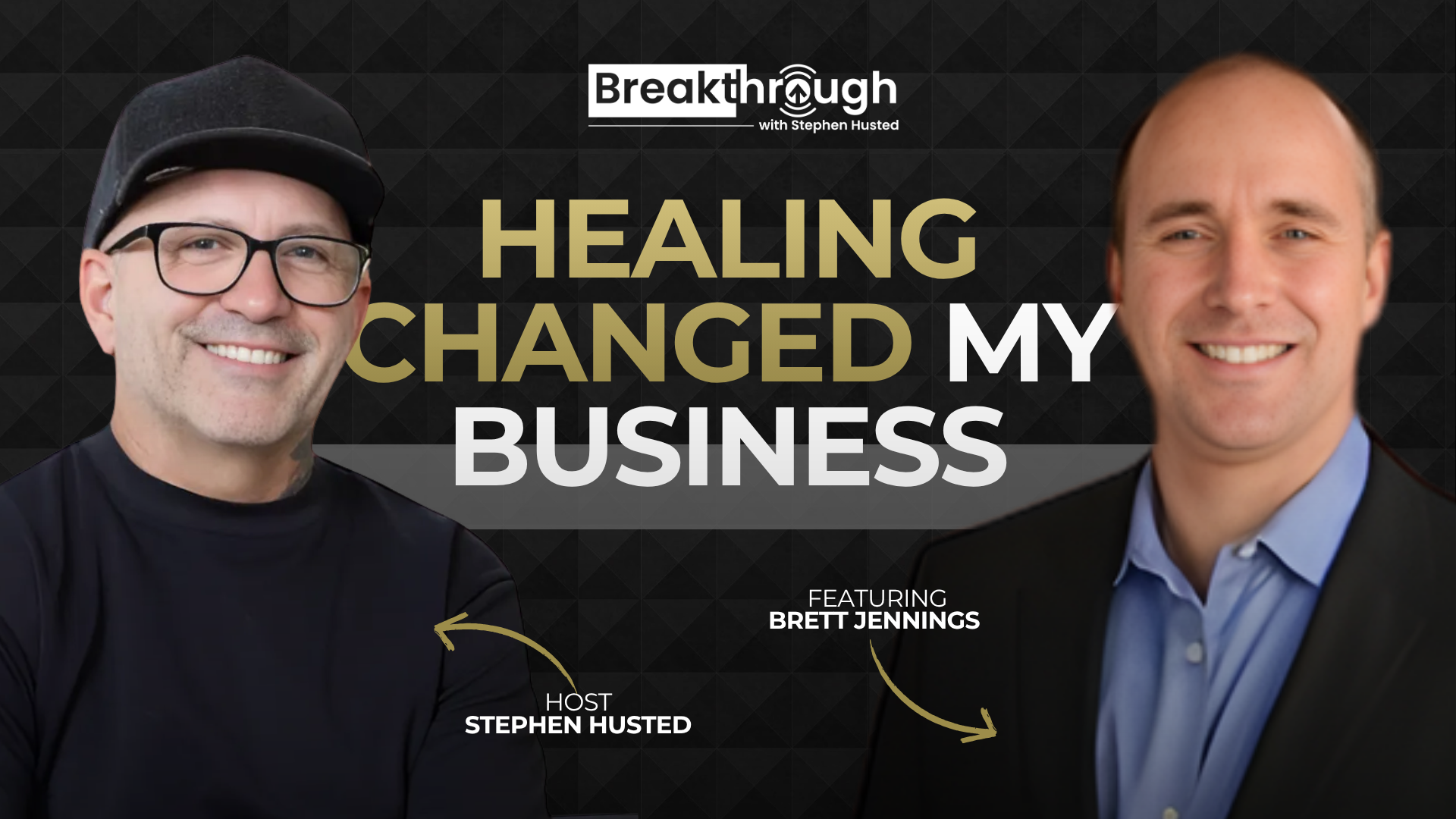
In this podcast episode of The Breakthrough, host Stephen Husted talks with Brett Jennings about his experience with plant medicine ceremonies, personal and professional growth, and the importance of working through trauma. Brett shares his journey through the ayahuasca retreat in Costa Rica, his insights from working with Tony Robbins and Deepak Chopra, and how these experiences have shaped his coaching philosophy and approach to real estate. Throughout the conversation, they discuss the power of intentional living, dealing with personal trauma, and the quest for authenticity in both personal and professional life.
Takeaways:
1. Personal Histories and Reflections - Brett discusses his background and upbringing, including some formative childhood experiences.
2. Profound Experiences and Personal Growth - Brett shares ayahuasca experience in Costa Rica. Discussion on the importance of facing and integrating one's traumas to unlock personal growth.
3. Practical Advice and Insights - How to approach personal growth and trauma work, integrating these lessons into daily life.
Practical steps for entrepreneurs to create holistic success that encompasses all areas of life. Brett Jennings is a successful real estate expert, coach, and entrepreneur. With a background that includes working with renowned figures like Tony Robbins and Deepak Chopra, Brett brings a wealth of knowledge on personal development and professional success. His insights on trauma recovery and intentional living inspire and guide both his coaching clients and podcast audiences.
TRANSCRIPT
∎ Teaser / Highlighted Clip
[Brett Jennings] (0:00 - 0:44)
What I found when I was working with these guys, trying to help them go to the next level, is they get stuck. And what would typically get them stuck is that they get triggered by someone or something, and it pulls them way back down into some, I'll call some stinking thinking, some lower energy. They get into anger, fear, and if you've got that going on, you do not have the most available for the task at hand.
And so I'm like, what is the practice or process to move past trauma? And you can look at all the different modalities that are out there, starting with talk therapy, EMDR, which is eye movement desensitization.
∎ Podcast Intro:
[Stephen Husted] (0:44 - 2:39)
Welcome to The Breakthrough with Stephen Husted, the show that takes you behind the scenes with successful entrepreneurs, real estate investors, and other movers and shakers in the business world. In each episode, we'll sit down with our guests to explore their personal and professional journeys, including the challenges they faced, the breakthrough moments that propelled them to success, and the strategies and the tactics they used to get there. Get inspired by new ideas and strategies, and get to know our guests on a deeper level.
Join us for candid conversations, powerful insights, and plenty of breakthrough moments. Please help us grow by subscribing and sharing the podcast, and welcome to the show.
∎ Guest Introduction:
Everyone, welcome back to The Breakthrough.
I'm your host, Stephen Husted, and today we have a fantastic episode for you. Our guest is Brett Jennings, a real estate pro with an incredible journey. Brett's story is anything but typical.
He started his real estate career just three days before Bear Searns collapsed in 2008. He's built a successful brokerage, starred in an HD TV show, and now leads a top-performing real estate team. In this episode, Brett opens up about his rocky start in real estate during the financial crisis, the wild ride of starring in a reality TV show, his recent transformative experience with plant medicine in Costa Rica.
Brett shares how these experiences shaped his career and his personal growth. His insights on success, trauma, and resilience are truly inspiring. So get ready for an episode filled with real talk and powerful stories.
Let's dive into my conversation with Brett Jennings.
∎ Podcast Proper:
All right, Brett. Thanks for jumping on today.
Appreciate it.
[Brett Jennings] (2:40 - 2:41)
Happy to be here, man.
[Stephen Husted] (2:41 - 2:51)
Yeah. Yeah, good to see you, man. It's been a while.
I think the last time that I saw you, we went mountain bike riding at Quicksilver.
[Brett Jennings] (2:52 - 2:53)
Oh, yeah.
[Stephen Husted] (2:53 - 2:55)
That was during COVID.
[Brett Jennings] (2:57 - 3:07)
It was. It had been many years since I'd seen you and I was impressed with your riding skills. I was having a hard time keeping up.
[Stephen Husted] (3:07 - 3:11)
Yeah, but you remember that I crashed really bad and you were just like, dude, are you okay?
[Brett Jennings] (3:12 - 3:28)
I did. You went down right in front of me and I was like, holy shit. Yeah, you were mentioning that one of the crashes had given you some in the past, like you got an infection or something that it was kind of hard to overcome.
So I was like, oh crap, your hurt wasn't happening again.
[Stephen Husted] (3:28 - 3:34)
Well, interesting enough that you bring that up. It actually came back after that crash.
[Brett Jennings] (3:35 - 3:35)
Yeah.
[Stephen Husted] (3:36 - 4:20)
Oh, that's a way bigger story. But yeah, it led into, yeah, I ended up in the hospital. Actually, from that one.
But finally got rid of it. And yeah, that's a hard... Mercy is a hard scenario to get rid of.
But yeah, so it's something I was telling you before we got started here. Most of my guests that I bring on, I've either met them on Instagram or at BiggerPockets conference or I've had like Hilary Saunders on from side recently. So it's always people that I never met, but you're definitely the first.
Actually, I've known since high school.
[Brett Jennings] (4:21 - 4:28)
Yeah. For what is that? I'd say like 32 years.
Something like that. 33 years.
[Stephen Husted] (4:28 - 4:48)
Yeah. Did you? I know I met you in high school, so I think we've known each other since high school.
I don't know what point in high school we connected, but did you? Did you grow up off Hamilton and Meridian? Yeah.
Is that where your parents live?
[Brett Jennings] (4:48 - 5:27)
Yeah. My parents, I grew up in the Willowblount area of San Jose on a street called Pared Reno. Kind of interesting story.
So yeah, my parents moved to San Jose from... I was born at Stanford Hospital. My parents lived in Foster City till I was five.
And then we moved to San Jose and actually it was Norman Mineta's house. But Norman Mineta, who the airport is named after, he went to Washington DC, got elected to Congress. And after he was mayor of the city of San Jose and then rented his house out.
And we rented his house. Oh, wow. Which actually became an origin story that's kind of relevant to my career in real estate.
[Stephen Husted] (5:28 - 5:30)
All right. Let's just go. Let's start there.
All right.
[Brett Jennings] (5:31 - 6:06)
Yeah. So you and I grew up together like most people in real estate, backdoor into real estate after trying your hand in craft and a number of different things. And very few things are as lucrative as real estate.
As one of my sales directors says, it's wonderful. It's a beautiful career because it's the only place where you could probably get a C average in high school or college and still make a million dollars a year. But so a number of different things led me to real estate.
And I got my license in 2008, three days before Bear Stearns collapsed.
[Stephen Husted] (6:08 - 6:12)
Wait, tell me that again. You got your license. How many days before Bear Stearns?
[Brett Jennings] (6:13 - 7:22)
Three days before Bear Stearns collapsed. So I'd come off of a business in financial services that that's what turned me to real estate. I was like, okay.
My best clients, I have 350 clients. My best clients all own lots of real estate. They're a guy in their typically late 40s to early 60s.
They own 10 to 20 rentals, anywhere from 15 to $50,000 a month in passive income, multiple seven figure net worth. They're not doctors or lawyers. They're just simple guys that buy a house a year and keep them.
I'm like, that's a good plan. So I didn't have enough money to start out as an investor. So I'm like, okay, I'll start out as an agent and then do the agent gig.
And then eventually, again, I got my license three days before Bear Stearns collapsed. So it was kind of an oh shit moment. My wife was eight and a half months pregnant and you just had to do whatever it took in that market.
But you really had to find a way to add value to people. You couldn't sell people in that market. You really had to help people.
And those were two things that were really, I think, instrumental in laying a foundation for my career. One, you really had to help people and you had to add value. And you had to hustle your ass off.
Absolutely.
[Stephen Husted] (7:22 - 7:23)
That was tough.
[Brett Jennings] (7:24 - 8:31)
Yeah, and then for me, coming into the market in a down cycle, I didn't know what it took to get a deal done. So whatever it took to get a deal done was whatever it took to get a deal done. That's the level of effort you had to put in.
But all my peers who had grown up in 2003, 4, 5, 6, went with the heyday like we had in 2021. They're all crying in their milk about, oh my God, it's so hard. So I think that was a blessing that helped me.
And then going through 2008, 9, 10, really focusing on short sales because that was where the market was at the time. I ended up building a company that was processing hundreds of these things. So and then all of a sudden, I had all this distressed inventory, became attractive to real estate investors, ended up partnering with a real estate investor client of mine that was an agent.
And we launched a brokerage in end of 2012, I think. And he was kind of a crazy guy, colorful dude, mid-50s, overweight, in sobriety, but lived the total crazy level, right? He didn't give up the lifestyle.
[Stephen Husted] (8:31 - 8:33)
He just gave up the- Sobriety and other avenues.
[Brett Jennings] (8:34 - 9:33)
Yeah. So I'm like, you need to be on reality TV. And he's like, I think so too.
Somebody, I'm like, I think I do. I'd gone on a casting call for one of these HGTV shows and I kept the guy's card. And I call him, I'm like, I got a guy.
And he's like, really? And I said, yeah, he's this, this, and this, this kind of overweight mobster looking guy. One day he's driving a new Cadillac Escalade, the next day he's driving a 1970 Cadillac convertible with an American flag flying back.
And they're kicking in doors in homes their squatters are in and clearing them out so we can buy them and flip them. They go, that sounds interesting. So they sent a crew and shot a pilot episode and they sent it to the network and they're like, oh, we'll pick it up.
Looks good. So we had an HGTV show for a year. I think we sold a hundred houses and did about $100 million in revenue, earned sales.
But he ran off with our 26-year-old assistant like 11 months into the deal that I had hired and blew up his marriage and it was great for reality TV, but shitty for a business partnership.
[Stephen Husted] (9:34 - 9:36)
I know exactly what you're talking about.
[Brett Jennings] (9:38 - 12:46)
Well, so that was like 20, 20 going into the end of 2013, going into 2014, I realized, you know, the short sale thing was winding down and I didn't want to just be a, just a solo agent. I'd always kind of owned, owned a business and I liked building teams. I like working with people and creating success with and through other people.
I'm like, the real estate team is where I want to go, where I want to focus. So I moved over to Keller Williams at the time and then started growing it. And then, and I really got clear, I think a couple of years there that I really enjoyed doing the coaching piece because coming out of college, I had worked for Tony Robbins for a couple of years and it was a life-changing experience, you know, as all of this stuff is, but it was freaking awesome.
I mean, living on the road three weeks a year, traveling all around the world, walk on fire more times than I could count, but really getting in with people and like digging in and going, Steve, like, what do you want to do with your life? Right? Like, let's figure it out and let's create a plan to help you do it.
And that was super fulfilling work. And somewhere about second or third year in building the real estate team, I realized if I really brought all of that to my business, that it would be something, you know, that probably could, would be a point of differentiation and really leverage. And that's really what kind of, we started to see some major success and then grew it from a team into a team, I'll call it team ridge, a hybrid between a team and a brokerage.
And that's what we built today. But the hindsight of the coming back all the way to the Norman Mineta store, moving into the mayor's house. So, it wasn't until an interview I did in a format somewhat like this.
Someone was asking me, why do you do what you do? And, you know, was there any formative experiences that really challenged you to push to the next levels of success? And I look back on it, I'm like, you know what?
Like it was growing up in that neighborhood. Like we grew up in this really nice affluent neighborhood. And we were the only people on the block that rented a house.
And it was second grade. And I remember like, I remember the moment exactly. Second grade, going to go to school, standing outside in the classroom, waiting for the teacher to open the door.
And Michelle Guerrero, who's my next door neighbor, walks up to me. She's kind of a cute girl. I liked her.
And she rolls up on me. She pokes me in the chest and says, my mom says you rent your house. And I was like, I didn't know what renting, I didn't know any difference, right?
But whatever it was, some kind of stigma and it wasn't good. And from that point on, as a kid, you notice these things. And that like some people in the neighborhood kind of went out of their way to make it feel like we didn't belong.
And growing up, that put a chip on my shoulder, you know? And there was part of me that was like, you know what? Fuck you.
I'll show you. I didn't have to live here. And through my teenage years, early 20s and even into my 30s, I realized that success for me was about proving something that I was worth it, that I wasn't nerfed.
And it wasn't until I did that interview that I went, holy shit, you know?
[Stephen Husted] (12:48 - 12:50)
That all came back. It all came back.
[Brett Jennings] (12:50 - 13:02)
Yeah, but here was this girl who shamed me for not owning a home. And I end up in a business and become very successful in a business that's blessing people with home ownership.
[Stephen Husted] (13:02 - 13:02)
Yeah.
[Brett Jennings] (13:03 - 13:41)
And I was like, wow, like, is there something to that? And I started to look at the stories of successful people who have taken some challenge, crisis, trauma, whatever you want to call it, that was a mess for them and then turned it into their message. And I think that was kind of an insight for me that just let me know.
You know, there's a big plan and a design. Sometimes we don't see it. But like Steve Jobs said in his commencement speech at Stanford before he died, you can see the dots when you're looking backwards in your life and how everything lines up.
That was a big one, man. That was a big one.
[Stephen Husted] (13:41 - 13:53)
It's interesting you bring that up. Yeah, that's stuff that happens in our childhood definitely is what, you know, it shapes us good or bad. And then we carry through and either we're working through it as time goes on or we're not.
[Brett Jennings] (13:54 - 13:54)
Yeah.
[Stephen Husted] (13:54 - 14:02)
You know what I'm saying? It sits in the background. But so are we able to talk about the ayahuasca scenario?
[Brett Jennings] (14:02 - 14:06)
Well, we can talk about trauma and psychedelic therapy.
[Stephen Husted] (14:06 - 14:07)
And sure. Yeah, yeah, yeah.
[Brett Jennings] (14:08 - 14:12)
And I think what's interesting is, yeah, so.
[Stephen Husted] (14:13 - 15:03)
Well, let's back it up. Let's back it up real quick, because I know that you and I, well, so I was messaging individuals. You weren't the only one that I put that out.
Why I put it out to you and why I even brought, I don't know, maybe because of your mindset and like where you are and just maybe you'd be open to it. But you were one of plenty, like four other guys that I put it out. The reason why I never went and did one of those ceremonies is, as you know, I'm clean and my wife had a problem with that.
She thinks that it's a relapse could lead back to addiction again. And, you know, she doesn't want to see that. And I'm looking at it a whole different way.
So now that I know that you went and did it, I'm curious to understand what you what came of that, if you're willing to share.
[Brett Jennings] (15:04 - 23:02)
Yeah, yeah. And so let me let me set some additional context. So what I what I just the story that I just shared, right, was that as a business owner, entrepreneur.
Recognize that it was something that shaped me and that it was. I mean, that was a traumatic experience, man. Like that chip on my shoulder was something that that drove me in an unconscious way.
For a long, long time. And in this process that I've had of now coaching a lot of people to different levels of success, what you'll find and what I find is that really successful people. I learned this from a guy in my entrepreneur's group.
I'm part of this entrepreneur's group and it's guys from net worth from a million to a billion. And there's like 300 guys in the group now, 400 guys. One of the guys that came into the group was a chief learning officer for a fortune retired chief learning officer for Fortune 100 company.
When he comes into the group, this guy's just innately curious. And he's like, hey, he wants to meet with everybody. Hey, Steve, tell me your life story.
You know what got you to where you were. So after 100 interviews, he comes back and he's like, hey, guys, I got something interesting to share. He's like, here's what I what I've gleaned is that the average population indexes to trauma, meaning that like they have some life experience, some event that shaped them or fucked them up to that they have some awareness of that makes them, quote, the way they are.
And he's like with entrepreneurs, it's like 90, like with high performing entrepreneurs, it's like 95 percent. And so I'm like, wow, this is really interesting because I started seeing it show up in my coaching. Right.
I got people, I could get them to a certain level of production, success or income, and then they would top out. And ultimately, you know, your level of success will never exceed your level of growth. Your.
We'll call it personal or spiritual growth or development. Right. It's just that's the way the universe works.
Right. The results that you create in your life through business or otherwise are just an expression of how big your universe is in your mind. And I noticed that it was, you know, the people, the hardship features of Taipei's man figures and and having had the experience, I worked for Tony Robbins for two years after I worked for Robbins.
I went to work for another guy by a series of crazy coincidences by the name of Deepak Chopra. And Chopra was more than just the mindset guy. He was originally started out as a medical doctor.
Pretty, pretty remarkable guy. Time magazine named him one of the man of the millennium, really connected well with, you know, world leaders and spiritual leaders. And and his body.
What's that? How'd you meet him? How the hell?
No, I'm actually. We'll do a two minute. Yeah, we'll do a two minute segue into the story of how I met him.
But literally, I'm working for Tony Robbins for two years. Right. And done hundreds of events, been on the road.
I 200 days clock one one year with him on the road. And I'm just like, I've learned what I needed to learn here. It's been awesome.
It's been fun, but I'm done. Right. And so Pasadena was the last event that I like in my mind.
I'm like after this event, I'm turning in my credentials. I'm done. So the Pasadena event where we come in, we're typically a crew.
We were called the the Master University, the Mustang. We were we would we were a sales team that would do one on one coaching sessions after an event and create a plan for a guy like you. Like, hey, Steve, what are your top three goals?
Create a plan for you. And if there was one of the other programs he offered that was going to help you, we'd upsell you. And so we'd come into a city a couple of days before.
And the day of the event that we meet with Tony, we do some training and we do literally a role play. So I'd sit with one of my guys and you and I would be like, OK, Steve, and we'd role play the scenario. So I'm sitting across from my co-worker and he's like, all right, Greg, what do you want to do with your life?
I'm like, you know, I'm in a crossroads. I'm changing my job and I'm literally kind of role playing. What do you want to do?
I'm like, actually, I want to teach meditation, which was true. I had my personal growth journey and loved the practice of meditation. Learned it in college and it was a game changer for me.
And it was something that I did want to learn and how to teach. And he's like, OK, well, what's in the way? What do you need?
I'm like, well, I'm not an expert. I've been meditating for five years, been to India, been to Japan. I know how to meditate, but I'm not a teacher.
I don't have a curriculum. What do you need? I'm like, well, I probably got to find some kind of teacher training program, blah, blah, blah.
Literally, shit you not, we walk out of this room to go to the registration area. People are starting to register for the event. And I'm standing by our booth.
I hear this India, India, this woman saying the word India. And I'm like, I just come back from India. And we start talking like, you know, her name was Jennifer.
Are we connected? And she's like, yeah, I've been to India. And I'm like, oh, I just came back from India.
What do you do? She's like, oh, I live in San Diego and I teach yoga and meditation. I'm like, really, where?
She's like, well, I work for Deepak Chopra. And later in that event, my co-workers were like, hey, the girl from the Chopra Center keeps coming by the booth looking for you. She says to find her.
So I find her on the last day. She grabs me by the arm and says, you have to come to San Diego. I'm like, whoa, okay.
She's like, what are you doing after? I'm like, well, I'm heading back. I live in the Bay Area.
But I'm like, actually, I have to turn in my credentials. Robin's office is in San Diego. I do have to make a trip down there.
I'll come by and see you. At any rate, I come by, see her. She gives me my mantra.
I meet Deepak. We talk the next morning. She's like, what do you really want to do?
I said, I want to teach. And she's like, we don't have a teacher training program yet, but we're putting it together. One of the courses that's going to be a prerequisite starts next week.
Come down, stay with me. We got into a relationship and God's hand was in all of it. It just required a pretty woman to be in the right place at the right time.
Yeah, but that is the power of synchronicity when you're on purpose. And so, that what I would describe as synchronicity and flow. And so, I got glimpses in working with Robin's of clearly how to set goals, make it happen, go out there with your force and willpower and mind and intention and set big goals, take massive action and do that.
That's one what I'll call order of creation. There's a second order of creation that I saw when I worked with this guy Chopra because he was operating on a whole fucking other level. This guy walks into rooms and environments, places, and he just has the thought.
His thing is have the intention with detachment held in the energy of love. And then the whole field just orchestrates to create what you want. And I watched this shit, dude.
And so, it was super cool to be in the energy field and proximity of two of these really powerful icons, if you will, of personal and spiritual development. And so, I'm just going to share something here because it's relevant to what we're talking about. So, at any rate, that's how I ended up with working with Chopra.
And I'm trying to rewind to go back to the track that we were on. Oh, so coaching these entrepreneurs, right? Like I'm seeing these guys that can get to a certain level of success.
In my universe and world, it's like they create a million dollar net worth or a million dollars a year in income. And then they get stuck because what got you to where you are won't get you to where you want to go. And so, having personally referenced an experience like these places of creating from what I'll call force and willpower, hustle and grind versus creating from a place of alignment and having intention and creating more with less effort.
It's a different vibe where you're creating from. And so, I'm like, what is that gap that holds people back? And so, let me share this one framework here.
[Stephen Husted] (23:04 - 23:05)
I was going to say, give me an example.
[Brett Jennings] (23:05 - 25:02)
What I found when I was working with these guys, trying to help them go to the next level is they get stuck. And what would typically get them stuck is that they get triggered by someone or something, and it pulls them way back down into some, I'll call some stinking thinking, some lower energy. They get into anger, fear.
And if you've got that going on, you do not have the most available for the task at hand. And so, I'm like, what is the practice or process to move past trauma? And you can look at all the different modalities that are out there, starting with talk therapy, EMDR, which is eye movement desensitization.
And now, you and I, I think one of the interesting things about our shared paths coming out of college or high school was some of the recreational psychedelic use that we did way in the early 90s. And for me, I had some major shit open up for me there where I felt this self-discovery, this expanded states of awareness, this insight, intuition, just creativity, all of that stuff opening up. And so, at the same time, recreational drug use from the cultural perspective is kind of shunned upon.
And so, it's like this, you can't kind of put it out there. But what's brilliant is what's happened in the last 20 or 30 years since you and I've had those experiences is that a lot of certain psychedelics like MDMA, psilocybin, have now come into the research through the National Institutes of Health in treating veterans for PTSD. Yeah.
And it's not like a pill like Zoloft that somebody's got to take for the rest of their life. We're talking about like one-time experiences, 80% efficacy of reducing or eliminating anxiety and depression from one experience.
[Stephen Husted] (25:03 - 25:03)
Yes.
[Brett Jennings] (25:03 - 27:37)
So, we know like, okay, there's something powerful happening there that is enabling someone to move beyond their trauma. And I think Joe Dispenza, his body of work is brilliant. If you haven't or the listeners haven't checked it out, Joe Dispenza was a doctor.
And he's probably one of the best people in the realm of, quote, spiritual science, really understanding how the mind breaks, works, and how the body holds energy. But his comment is, wisdom is the memory of the experience without the emotional charge. What's a trigger?
You got a memory with an emotional charge. And it pulls you out of the game, Fs you up and takes you somewhere you don't want to be. And so, my question and curiosity was always like, okay, well, what is, how do we discharge this?
And here's all kinds, there's different modalities going from some of those substances, breathworks, another powerful modality that's now coming into the common conversation, right? About like people think it's just, who are these hippie yoga people doing breathwork? They're doing powerful work.
It enables the body. It causes the, in fact, from a scientific perspective, the exact same thing that happens in the psychedelic experience, which is the prefrontal lobes get muted or modulated. It's called prefrontal hypofrontality.
So basically the prefrontal lobes get quieted down. That's where the voice of your ego is. And when that quiets down, guess what?
Wisdom, intuition, insight wakes up and the capacity to look at or feel or experience some of these memories that you've had from a different perspective, right? To see what I saw, a girl poking me in the chest going like, hey, you're a piece of shit. And shaming me for homeowner, for not having a home, but now being able to see, wow, this is something that really put me in a position where I get to bless people with homeownership.
People can recontextualize those traumas and create meaning for them in a different way. At any rate, there's this whole body of work, right? How do we do that?
There's these different modalities and the one end of the spectrum is talk therapy, breath work. Then there's mild psychedelics like MDMA or psilocybin, which is mushrooms. And at the other end of the spectrum is some of the more extreme, deeper plant medicines that are also totally organic, which is like ayahuasca.
And so really, I recently had an experience and what put me in that place of curiosity to experience it.
[Stephen Husted] (27:37 - 27:39)
How long ago was that, Fred? How long ago was it?
[Brett Jennings] (27:39 - 27:41)
That was the beginning of January.
[Stephen Husted] (27:41 - 27:42)
Okay. And where'd you go?
[Brett Jennings] (27:43 - 28:54)
I ended up going to Costa Rica, but what landed me there was I had a buddy, you may have known him. We went to high school with him. This guy, Ed Hertzog, that we graduated with, he ended up going to Navy SEALs after high school.
He's always a little bit of a crazy guy, but he goes in Navy SEALs, gets on SEAL Team Six, which is like their elite special forces team, 20 years in SEAL Team Six. He ends up retiring Navy SEAL Master Chief, four tours, right? Wow.
And the interesting thing about all those guys that go in and see combat, they all come out effed up, right? They all come out with massive trauma. Yeah, they see crazy shit, they do bad things to bad people, and they come out with trauma, and they usually self-medicate, right?
Whatever it is, they blow up their marriages, and he was not exempt from that. But he's on this downward trajectory. A couple of years back, he goes down to South America and has some experience with the shamans in the jungle, comes back, and the dude's different.
So he's rewired, so to speak. Rewired. He ends up going and getting a degree in traditional Chinese medicine, says, I don't want anything to do with guns.
I don't want to kill people. I just want to heal people. Wow.
That's a pretty profound turnaround.
[Stephen Husted] (28:54 - 28:55)
Yeah.
[Brett Jennings] (28:55 - 29:27)
And then I had another friend of mine, same thing a couple of years ago in my entrepreneur's group, type A, hard-charging guy, always wanting to put his family first, but never could. And it was kind of the thing where the business gets the best of him and the family gets the rest of him. He goes and some South America experience, shamans, plant medicine, comes back, moves his family to Australia for two years.
And the guy's just lit up with joy, like, hey, dude, I always thought that if I put my family first, my business would implode. He's like, exactly the opposite happened. My business is amazing.
My family loves me. Like, dude, that's pretty cool.
[Stephen Husted] (29:27 - 29:34)
Off, let's stop there. Off going to one ceremony or what?
[Brett Jennings] (29:34 - 29:47)
Going to one plant medicine ceremony. And it was supposed to be a multi-day ceremony. He said in the first day, he said Mother Earth came up inside him and embraced him and some crazy stuff.
And he said the shaman told him, you're good, dude, go home.
[Stephen Husted] (29:48 - 30:17)
And so he went out. That's what the shaman said. Yeah.
Do you think you have to like anything else? Do you think you have to go into these types of ceremonies? Or let's say you're leading up to go do a ceremony.
Do you have to start to kind of surrender? Like, you have to go in there in a way that. That you're going to let go of the trauma, the demons or whatever it's going to pull from you.
Do you think you have to?
[Brett Jennings] (30:17 - 30:22)
Yeah, I think the more intentional one is about it, the more you will get out of it.
[Stephen Husted] (30:22 - 30:22)
Yeah.
[Brett Jennings] (30:23 - 32:36)
In the particular place that I went to, they told the story. They said, you know, it was one person that come through their program, which is a it's a seven day, very artfully curated experience and very intentional with both the intentions you go in with some integrative work that happens while you're there. And then post post post experience integration as well.
It said there was a guy who had come through, had done a couple hundred ceremonies in different parts of South America, you know, a lot of stuff, you know, in the jungle on yoga mats with mosquito biting. That's what a lot of us think when you just go in the jungle art. And and he said that this this experience, because it was so intentional, was one of the most profound, powerful experiences out of the several hundred journeys that he had done.
But coming back to kind of what that what led me there was, OK, I have these two kind of curious experiences, you know, and then this summer I'm in a real estate deal with a girl that I know, a woman real estate leader. And I'm trying to reach her because with the deals, something's going sideways on the deal. And, you know, when you try to call somebody out of the country and you get their phone, the ringtone is different when you call somebody.
Yeah, yeah. Yes. So, I'm trying to reach her.
I'm emailing her, texting her, nothing, right? It's crickets. Finally, we get back in touch the week later.
And I'm like, where the hell were you? Were you like in South America, some freaking ayahuasca ceremony or something? She's like, how did you know?
And she was and she was like, actually, I was there with so-and-so and so-and-so. And I'm like, these are a couple of other real estate leaders on the national level that I respect pretty well. And I was an amazing experience.
And I was like, OK, shit, I guess I'm I'm being called to check this out. So, I put it on my goals to do it this year. And I called the place and I just started looking at their calendar.
And then I found out that Michael Beckwith was going to be there. He's actually one that curated their curriculum for the integration. And if you are familiar with Beckwith, he was in the original movie, The Secret, runs a non-denominational church in Southern California called Agape.
He's a spiritual heavyweight. He sits on the World Economic Forum with the Dalai Lama trying to find like world solutions to spiritual problems. I'm sorry, spiritual solutions to worldly problems.
I'm like, OK, I'm there. And so this experience was freaking mind blowing.
[Stephen Husted] (32:37 - 32:55)
Wait, stop there for a second. When you decided to do that, did you how did you run this past your your wife? Like, let me know.
Come on, man. You just heard what I just told you. Yeah, I remember to my wife and you're going to talk to my wife so that I can go.
[Brett Jennings] (32:56 - 36:58)
Yeah, I told her, I said, hey, I said, you know, she knows that a large part of my personal and spiritual evolution, I can attribute to some some of the psychedelic openings that some of let's see some, I'll call it some of the openings that were co-facilitated, I'll call it by the psychedelics. And so she has some respect for that. Right.
You know, we're not out on the weekend getting high. We got every week. You know, but I have had those experiences and shared some of those things.
So she has some respect for that. And then I let her know, you know, hey, this is. These are the things that kind of pointed me in this direction.
And I don't you know, I don't feel like I need to go. I feel like I'm kind of curious and I feel called to go, especially with the nature of the work that I want to do, because what I want to do is I want to help entrepreneurs and high achievers move from, you know, hustle and grind to get into these states of flow and so they can do bigger and better work in the world. And I think there's something with this trauma thing and being able to do that.
And she's like, OK, you know, so I go not knowing what to expect. And I land in this place and it's frickin amazing. It's like.
You remember Cirque du Soleil show? Yeah. Yeah.
So it is like a four seasons level experience. I think there's like 150 staff for like 70 guests. The music and magic of Cirque du Soleil, like farm to table food.
They have their own farm there. And in this very intentionally curated week long experience, you know, you've got hot and cold plunges and massages and colonics. If you want it, you get stem cell therapy.
If you like, it's frickin amazing. And then four nights of ceremony with three days, bookended with three days of yoga and breath work. And and then through the course of the week, you know, you're going through this, this experience.
And man, it's pretty, pretty amazing. So and for me specifically, I did have a pretty profound, at least what feels like in my nervous system, some rewiring that occurred. And even though I knew kind of one of my core things that was driving me with this experience I shared with you, I still I was always just go, go, go, go, do, do, do.
My toes always tapping under the table. You know, people would say, oh, the guy's driven, driven by what? Right.
I wasn't always able to move at the pace of my choice. And so that was one of my intentions. I want to go.
I'm like, I want to see and potentially let go of whatever is that's driving me so I can move at the pace of my choice. And what I got was so much, I got that and so much more. But the work really is about this integration, you know, and what, what, what trauma does or somewhere that the general premise is somewhere between the ages of two and seven years old, like you come in as Steve, authentically Steve.
And what's great and how you show up most powerfully is when you are just authentically Steve. And I do want to kind of acknowledge you for how you have always expressed your uniqueness and individuality because you are, that is a gift of yours and you're brave in that area. And, and I acknowledge you for that.
So, so, so most people come into the world somewhere between two and seven, this is the real them. And then the world, either some experience that happens, trauma or an environment starts to call them to show up differently than they really are to get their needs met. You know, and if it's a trauma, you got to show up in some freaking different way.
You got some protective strategy. And if you're lucky, like an entrepreneur, you learn how to leverage that shit and get really good at it and harness it so that it becomes a superpower for you. But if the bigger that the gap is between who you really are and how you're showing up is like how functional your life is and probably how much you're called to addiction.
Because addiction is just a second class substitute for a connection to source.
[Stephen Husted] (36:58 - 36:58)
Yeah.
[Brett Jennings] (37:00 - 37:16)
And so the work is really, you hold three intentions throughout the course of the week. One is the first intention is show me who I become. Like who is this person I become that's not really me.
And when you ingest the plant medicine, it's freaking crazy. It goes into your system and you can feel it.
[Stephen Husted] (37:17 - 37:31)
And it's in most cases, generally, but sometimes you remember, Brett, what this can you give me a little bit of like you said you feel it go through your body. But do you remember, like you recall the whole experience? Yeah.
[Brett Jennings] (37:31 - 40:09)
OK, vividly, vividly. OK, although you're, you know, you're you, you are under the influence there. They say like one of the properties of plant medicine or ayahuasca specifically, it's an anti amnesia, right?
It basically is is pulling up and calling up any undigested emotions, memories, experiences that that are in your system. And, you know, the first thing that happens is you could purge like you're puking your guts. Yeah, the intent.
And and then the other thing that you can have is some tremors in the body. They said shamans explain it is like, hey, look, you know, when you watch birds or ducks on a lake or pond, if they get into a fight and then they break up, they swim away and then they they kind of like shake it out. It's like we as humans, we we get all of those experiences all the time that are jacking our nervous system and we never shake it out.
So it's it's percolating and bringing to the surface all of that. And so that's one thing. The second experience you might have is what they call Pinta, which is in Spanish is like it's the paintings.
It's it's it's it's visuals. It's literally sacred geometry. If you've ever been to South America, Mexico, and you see what the Aztecs and their art and stuff, you see all that stuff and really vivid and colored freaking amazing or visions, you know, like you'll have.
I didn't per se, but, you know, you can have visions of of animals and things and boa constrictors or tigers and stuff that come into your serpents that come into your experience. And and then the third experience you can have is what's called consulta, which is literally consulted consultation or conversation with this. The essence of what is in this plant medicine is the spirit of Mother Earth.
You can ask it questions and she reveals herself to you and talks to you. And it's like crazy. And then the last thing is nada, meaning nothing.
So you might drink the medicine and then go to sleep. And what the shamans say about that is the medicines going in and it is working on your consciousness, but typically it's working up your ancestral line because there's some trauma or some things that have happened there. That's so significant, like so big that like you can't handle it.
So it just puts you to sleep. And for most people who have that experience, when they come to either an hour later or a day later or a week later, boom, they'll have some epiphany about how, what the deeper meaning is that something that occurred or didn't occur. So the journey is like really this integration is what the plant medicine does.
It pulls you back together. It's like breaks you into Humpty Dumpty and pulls you back together again. That's what my interpretation of it is.
And in such a beautiful, amazing way. Were you scared?
[Stephen Husted] (40:09 - 40:11)
Were you scared or nervous at all?
[Brett Jennings] (40:12 - 40:45)
It was one point in my journey. There's four nights of ceremony in this particular place. And there was one night where I did get a little scared, not by anything that had come up in my awareness, but I felt dehydrated and I was like, oh shit, am I okay?
And then I kind of, they have support and help. There's like 20 people, but I kind of was walking in the wrong direction. And then it was like, okay.
And then I came back and I ended up being fine. There was a little period for a short period of time where I was like, hey, am I going to be okay here?
[Stephen Husted] (40:45 - 40:53)
Yeah. And you knew it too. You knew you were going through something too that was scaring you, but they were- Yeah, yeah, yeah.
[Brett Jennings] (40:53 - 42:17)
I mean, it definitely, most of the entire journey was this to this, to this. And I mean, there was some really intense emotional heartbreak that I'll share with you. Because you hold three intentions.
The first one is like, show me who I've become. The second intention is merge me with my soul at all costs. And that's fricking intense.
If you hold that attention, you'll pull stuff up. And then the third one is heal my heart. And so I'll kind of share one segment of my experience that reflected that.
It was the first night of the journey and we do the ceremony, shamans bless the medicine and the music playing. An hour and a half into this is about when it takes to hit. You lay down for an hour and a half.
Finally get up, music's playing, kind of getting my bearings, put my hand on my chest and on my stomach. And I'm like, man, I'm feeling some congested energy around my heart. And they said, you can ask a question.
So I'm like, okay, I heal my heart. And the first thing that happens, just as soon as the question comes to my mind, the answer is there. And it says, well, you know, your dad died of a heart attack at 68.
Your brother died of a heart attack at 58. And your mom died of congestive heart failure. And then she said, you want to heal your heart, heal your mother's heart.
Well, okay. So nothing really else comes through about that, that night. Second night, we go into ceremony.
[Stephen Husted] (42:19 - 42:47)
And I didn't know any of this. So this is kind of deep, which I expected you to. Okay.
Yeah, this, this is. I knew this was coming this way. I think everything happens for a reason, Brad.
There's a reason why I actually reached out to you to get you on the podcast. But you know what? It's bringing some, it's triggering so much in me that I'm sitting here just listening to you.
Because I know my time's coming.
[Brett Jennings] (42:48 - 44:30)
Okay. Well, that's what they say. If you're, if you're like, I'm not here to be an evangelist or, you know, for, for an advocate for plant medicine per se.
But what I can say is it is one, was one of the most profound, was one of the hardest things I've ever done. And one of the most profound things I've ever done. I've got a lot of stuff under the realm of personal and spiritual growth and development.
But it was life-changing. So, so I have this experience. I ask, you know, heal my heart says, go heal your mother's heart.
And I was like, okay. Second night, we go into ceremony. You know, we do the same thing and take the medicine and purge again.
And then like, all of a sudden I'm there and I'm connecting with my mom's energy. And my mom passed away like 15 years ago. And I flashed back with my mom and it's Christmas Eve, 1932.
And my mom's getting dropped off at an orphanage with her two-year-old sister. My mom's seven at the time. Getting dropped off at an orphanage on Christmas Eve.
And her fricking heart just breaks, you know? And it was, it was post-depression and her mom literally could not afford to keep her. And I, she just showed me that like, I grew up in this loving household.
Like overall loving, pretty functional family. Nobody was ever beating me, abusing me. I wasn't sexually abused or told I was a piece of shit.
But really abandonment was my thing. Because my parents were both working when I was growing up. I was a latchkey kid.
You know, I had to figure it out all on my own, hoping that, you know, my brother, my brother was the major influence in my life that I looked up to, you know? And I realized in hindsight, you know, I was doing a lot to seek his approval. But abandonment was my thing.
[Stephen Husted] (44:31 - 44:43)
And, um, so I'm feeling trauma, which is a part of, yeah, it's a phase of your, it's part of the trauma on top of that other story. It's just another layer that you were, yeah.
[Brett Jennings] (44:43 - 47:08)
Here's the thing that you recognize when you go through trauma, most trauma gets passed down from parent to child. Because whatever happened to them, they end up doing usually unconsciously and inadvertently to their own kids. Right?
And so I'm, I'm, I say, mom, you know, I'm with my mom and her heart shatters and it's frozen. And I realized I grew up in this loving family, but my, my, my mom could never really feel feelings because her heart was frozen. So like, as a kid growing up, if I was ever sad, it was always like, turn that frown upside down.
Like you got nothing to be sad about, which from where she came from was absolutely true. But it put me in a place where I really didn't know. Like, dude, I was always been a really positive guy, but it limited me in some capacity because I couldn't, you know, I can't, couldn't go there with, with people, all people in all situations.
And a life man is this journey up and down unless you can go, unless you can be fully authentically you and ride that journey with people. And you're not, you're not you fully you. So at any rate, like my mom's heart shattered and frozen and I go, mom, give me your heart.
And she gave me her heart. And I, and, and I took it in and I felt all the brokenness, dude. And it was just, it was so, um, but I just allowed myself to be with it and, and, and feel and heal.
That is one of the things they say, like in, in the feeling is the healing that happens. So just going with it. And I, I got a riff of this quote from Rumi that I landed on when I started getting into this trauma stuff and Rumi was this 14th century brilliant poet, right?
And he says, the wound is where the light enters you. The wound is where the light. So I'm like, okay, I'm just going to go there.
Like just boom, go deep with it and feel it. And then I got catapulted. It was an hour later, two hours later, time did not exist into some celestial realm of like just the most intense, unconditional love with my mom.
That was just like, so, um, anyway, that was, that was, that was one of the, one of the very profound healing moments. And my experience was not unique, man. It was, I sat in this room with people, 60 people age 19 to 92 and a whole range of spectrum from, you know, a teenage kid to a grandma.
My guy next to me is a 10 time world jujitsu champion. My guy on the other side is like this reality TV star that's trying to figure himself out. So it was, it was a diverse crew, but super cool.
[Stephen Husted] (47:09 - 47:28)
Um, so man, that was, um, how did you feel when you were coming? I saw your post on Facebook, so I kind of got an understanding what you were doing. Um, yeah.
So how, when you flew home, did you kind of start thinking about the whole experience and, and did it stay with you?
[Brett Jennings] (47:30 - 48:44)
Well, they say the experience itself is about 30% of it. And then 70% of it is your integration that will happen in the weeks and months after. And so I'm, I'm when I'm a little over a month, I'm literally, it was a month ago that I arrived there.
So I'm three weeks on the other side of this experience and, um, and I'm, I'm, I'm integrating and, and what I, you know, I saw some other really profound stuff that, um, just about what, what's happening on our planet, you know, and, um, and the polarization that's occurring is, you know, it's, it's, it's not pretty, but it's necessary and it, and it will draw forward. You know, um, there was something MLK Martin Luther King said, right. And one of his speeches is always darkest before the dawn.
And, um, you know, yeah, we got, we got some not great stuff that's happening on the planet, but there is, there is, uh, there is a bigger plan, um, and that we're all a part of it. And those people that I think choose to get in front of it, align with, with the energy that's coming through, show up for it can be, um, advocates for it. And it's not, it's not about plant medicine per se, right.
It's just about being, being a point of emanation, uh, of positivity, uh, and grace and inspiration and love authenticity, you know, being uniquely you.
[Stephen Husted] (48:44 - 53:06)
That, you know, in that authenticity, you know, that word gets thrown around a lot. I, you know, I see it a lot on social media and I see people posting like, you know, this year I'm going to try to be more of my authentic self. And, you know, as, as a human, I think we evolve and that is our journey.
We're all, we're constantly working on that. It's just like you said, you go out to do the ceremony. We're always just trying to get a different, a look inside to, to find the truth of really who we are as a human.
Yeah. Do you know what I mean? Like, and, and either you either can go down that route and take the uncomfortable part because a lot of it's very uncomfortable to do.
That's why a lot of people suppress that for so long. Um, and then others will just engage in it and just keep going and going and going and going through it. Um, so I want to tell you something.
Um, I thought that for years I had ADHD. Um, okay. And last year, end of the year, one of my, my goals was I'm going to actually go to a quote unquote ADHD doctor.
I'm going to get diagnosed. I'm going to go through that whole route because the times that I got diagnosed was when I went to rehabs and, you know, got a medication with the medication never really lasted more than a couple months. But do remember when I first started on the medication that it really did help like, Oh, I'm calm.
Oh, I can relax. Well, I can read a book or I can focus on this. This is great.
But then it would wear off. So I go to this doctor and we fill, I fill out all this intake paperwork. It's very lengthy.
My wife has to fill it out as well. Um, and we go through it and then we finally get to meet to kind of go over it. And he's like, okay, so, you know, um, I don't think you're trying to get medication for ADHD, um, to abuse it.
Um, I don't think you are bipolar, you know, he's going through this and this, and then he's like, um, but I don't think you have ADHD. And I'm like, really? And he's like, Nope, I don't think you do.
He's like, I think you have severe anxiety. And I'm like, okay. And he's like, how does that make you feel?
I'm like, well, it's just the way he was like saying, I'm like, well, it doesn't make me feel bad. I go, I think it's funny that I had been talking to people about having ADHD and who knows, maybe he diagnosed me wrong, but let's just go on what he had said. Um, she says that anxiety is very similar to ADHD.
And he did an analogy that was really interesting. He said, you could, it usually happens between the age of two and seven. Zoom and brought up the, you know, here you are as a human, and then you go through this trauma.
And when you hit, when you get this trauma in your brain, your fight or flight connects into it. And then basically says, this is the way your brain is going to be wired moving forward and locks you in to this high level of, of thinking and how you move through life, which to me, I thought it was always normal. I thought being wound up, uh, with anxiety, nervousness, the whole thing was just normal to me.
And I'm coming to find out that it, I'm clearly that that's not, you know, normal. I took medication about a year ago this time, and it worked brilliantly for about a month and then it wore off. But I just realized when it, when I got on it, that I was really screwed up, you know, and I'm still certain.
Look, I'm like very similar to you. I like going through the journey and trying to be a better version of myself, whatever that means. And now this anxiety thing is in the mix.
I did go on medication and one moment, I think a couple of days into it, you know, I was going to go pick up my daughter from, uh, from cheer. And I'm sitting at the light. I'm like, I think I want to kill myself.
Just like that. So I picked up my daughter. I come home and I go, yeah, Jennifer, I think it's time to get off this one.
This ain't working. She's like, why am I like, I feel like I'm going to kill myself. She's like, okay, let's, let's get off that.
Tell the doctor. So this, here's where I, here's where I am in my part of this journey journey.
[Brett Jennings] (53:08 - 54:45)
So, so what's interesting, then you described that experience, right? And what the doctors is striving is, is this, this is the split that I, that I shared, which is the body of this work. Um, and that is like somewhere between two and seven, we show up different than the way we are.
Your neurology, your, you know, your psycho neurology gets wired that this is the way you need to be, but it's not authentically who you are. And when you're, guess what? When you're not being who you are, you're fucking anxious.
Yeah. Duh, but here's, here's the other thing, which, which, which oftentimes, you know, in, in states where we modulate the prefrontal cortex, whether it's through breath, whether it's through a drink, whether through it's a smoke. Right.
And, and the monkey mind calms down. And this person you've been, been the world's trained you to be falls back into here. You feel a sense of peace because you're lying.
You know, you're, you're at at atonement is the word at one you're at one. And, and I think, you know, for me personally, the personal growth journey is about that. And I'm, I'm not a for, you know, I'm not, I'm willing to explore modalities and practices and things that are maybe outside the cultural norms that like, Hey man, what, whatever it takes to get me back to here, because here I'm good here.
I can show up for my family here. I'll do whatever to be a better business person. Now, granted, that's not the path for everyone.
And they do say like in the plant medicine circle that circles that if you, if you feel a calling in your soul to do this, like it'll be a stirring and you'll be like, okay, I just feel like I need to do this. Um, and that's not true for everybody.
[Stephen Husted] (54:45 - 54:56)
And, you know, I reached out to, you know, like why I don't even know why I'm like, well, maybe Brent would be trying to bring somebody on and then you go and do it. I'm like, ah, I gotta go.
[Brett Jennings] (54:56 - 55:23)
Like, yeah. Well, I'll share with you the details of the place that I went, um, yeah. And, um, it's an amazing place.
Um, and I'm actually going to be leading a, uh, a group of entrepreneurs and business owners, uh, in July, I think July eight. Um, where to, to Costa Rica, to the, to this place.
[Stephen Husted] (55:23 - 55:25)
Um, you're, you're, you're going back.
[Brett Jennings] (55:26 - 56:13)
And I'm going to go, I'm going to go back. I'm hosting a group of, of, of a small group. I don't know, probably somewhere between 10 and 20 people.
Um, and yeah, because it was so, it was so profound. And for the people who are called to do the work, there's a context. And as I'm sharing about personal growth and development, like this is just, this is just part of the journey, right.
Of becoming, um, and it's not, you know, certainly this is not something that everybody should do or needs to do at all. Sure. But for those that are, that are called to do it, um, I, you know, the vision I, I, I'm, I'm working towards is just helping, you know, entrepreneurs operate at a higher level and be more intentional and purposeful because I have more impact in the world.
And, uh, that's, that's the conversation that I'm, uh, curating both before and after the experience.
[Stephen Husted] (56:13 - 56:25)
Um, so let me ask you a question. So I know that you're over at side now. Um, what is that role that you're doing at side?
The coaching.
[Brett Jennings] (56:26 - 57:26)
Yeah. Oh, the coaching part. Yeah.
So the side, side is a brokerage platform, um, a tech based brokerage platform, uh, in Seattle, San Francisco, they have 600 teams on the platform. They're a top 10 brokerage by sales volume nationally. Now, um, they have only 4,000 agents with under 600 teams
And so they've, uh, they've asked me and a handful of other partners to, um, launch their coaching program. So we'll have people that are specializing in coaching in different areas. My particular niche is helping people who want to run a real estate team kind of achieve, uh, if they haven't yet hit the first million in GCI, hit the first million in GCI.
If you've done that, then net a million out of your business. And if you've done that, if you choose to, and you want to get out of production and just really lead and manage a team, how to lead, how to grow your business to the point where people and systems so that you can net a million plus out of production. And so that's the journey I've been helping people do both inside my company and now outside my company on the side platform.
And we're launching that coaching April 1st.
[Stephen Husted] (57:27 - 57:34)
Yeah, that's great. It's exciting. I'm glad you're over at side.
Now on the same brokerage first. Yeah, it's great.
[Brett Jennings] (57:35 - 57:36)
It's great.
[Stephen Husted] (57:36 - 57:45)
So what made you switch? Um, I mean, you like, you like to switch it. I mean, not saying that you'd like to switch it up, but you're always evolving.
[Brett Jennings] (57:46 - 59:10)
Yeah, always evolving. Um, yeah, I mean, I've, in my 15 year career, I think I moved three or four times. Um, I've been, I've been an independent broker.
I've been, um, at a regional brokerage, which was in Tarov and Keller. I did go to ESP for a short minute, about six months at the time they were going through crazy growth and the operation where they were not great. So it didn't work for us at the time, but it led us to side.
And the reason I went to side was because I was at Keller Williams and we were, once I got clear that coaching was my purpose, like, and that I wanted to do that for people in my business, my business started to grow and grow. And I'm like, well, if it keeps growing, uh, this may have a value as a business at some point, rather than just me having a, you know, being a real estate sales guy or having a team and the value of a standalone brokerage is more valuable than a real estate team at a Coldwell Banker or a Keller Williams. So I'm like, okay, I want to make that move.
Um, and that was why it would ultimately led us to EXP, but then that didn't work and side came along and said, Hey, we'll help you launch your own brand. We'll be your back office. We'll do your marketing.
We'll provide all your legal support, you know, um, for a cost that was equivalent or less of what it cost me when I was an independent. So I'm like, that's a no brainer. And, um, so they gave us the ability to, to launch our own brand and fly our own flag, but really have the resources of the big box behind us.
So that's, uh, that's what's enabled us to get the growth, support the growth that we've had.
[Stephen Husted] (59:11 - 59:16)
And you've been, you know, you've had a, you have had a pretty amazing career in real estate so far, right?
[Brett Jennings] (59:16 - 59:27)
I mean, I got lucky and I surrounded myself. I got, and I luckily attracted some really great people that believed in me at least as much, or maybe more than I believe in myself.
[Stephen Husted] (59:27 - 59:41)
Where do you feel like you're, so I know you bring up a lot about coaching. Is that what really gets you up in the morning? Do you feel like that's really your zone now?
Like, what are you doing for, as far as real estate's concerned, are you dealing with buyers and sellers and clients or is it your time?
[ett Jennings] (59:42 - 1:00:59)
Yeah, I, no, I have a team. So I have a team of eight and then under the real estate experts brand, we have another 85 agents that they're organized mostly as independent. So of the 90 agents, uh, 50 of them are independent and 40 are on teams.
There's like four teams here. Mine is one of them. So in my team, yeah, I do, I'll go on appointments, listing appointments with some of my clients.
I like doing the training for them. And that, that's kind of, I'm not doing a lot of one-to-one client work. Okay.
Okay. I'll do some personal investing, but that's not really part of the real estate business. Where I want to go from here, I'm going to take the coaching messaging.
So I have a whole framework on how to scale a business to go from an individual agent to a team doing 150 plus transactions a year, netting a couple million bucks. I have a whole kind of roadmap and framework that takes people along that path. And then, um, through this body of work that we've been talking about over the last hour, not so much about the psychedelics, but this spectrum of emotions and energy and, and, um, and awareness, uh, how to scale your personal growth as you scale the business.
Because the business only grows to the extent that you do.
[Stephen Husted] (1:00:59 - 1:01:00)
I agree with you.
[Brett Jennings] (1:01:01 - 1:01:42)
That's 100%. Yeah. So, so I, I came, I came across and I have a whole 45 minute talk that I've been giving in different circles about how the two of these correlate.
And there's this brilliant, beautiful, uh, correlation between the different stages of the growth of a business and how you grow as a person. So sharing that roadmap of people starting in real estate, going to share it outside of real estate, um, and with the intention to, to, uh, you know, elevate the vibe of business because business is the OS for our world. And if we upgrade the OS, then we got a better chance of keeping the thing on track.
At least that's my, my, you know, aspirational donkey hoodie, uh, dream.
[Stephen Husted] (1:01:43 - 1:02:29)
Well, we can leave it at that because I know we've, we've gone a long time on this one and we can, you and I probably could talk for another two hours on this. Sure. I had a, I, I had a feeling I'm like, okay, hopefully we can get, yeah, we touched on some, you had my brain going.
I had to like sit here and just sit back and listen to you because it was just one of those episodes where I think, I think sometimes things are just put in place at the right time in a lot of ways. Yeah. Like you having that conversation.
I don't, I mean, why I reached out and said, Hey Brett, I want you on the podcast. Um, was when you were at that, uh, ceremony, that's what I messaged you. I saw what you're at, but I had a feeling I knew where you're at, but yeah.
[Brett Jennings] (1:02:29 - 1:02:30)
Interesting.
[Stephen Husted] (1:02:30 - 1:02:31)
Yeah, it is.
[Brett Jennings] (1:02:31 - 1:02:46)
Yeah. Well, uh, everything happens for a reason. So, you know, um, but yeah, if, if people have, you know, have any, um, want to reach out to me on social, um, where can the audience find you?
Yeah.
[Stephen Husted] (1:02:47 - 1:02:49)
Um, cause I'll put it in the sharing notes too.
[Brett Jennings] (1:02:49 - 1:03:10)
Yeah. Be a real expert.com is our main blog site for our real estate training stuff. Um, we have a lot of free content and resources there.
People can check that out. Um, you know, and you can find me on Facebook and Instagram. My Instagram is really needs to be built out this year.
So that's, that's a project. Um, but yeah.
[Stephen Husted] (1:03:11 - 1:03:14)
I appreciate you jumping on Brett seriously.
[Brett Jennings] (1:03:14 - 1:03:14)
Sure, man.
[Stephen Husted] (1:03:14 - 1:03:36)
Yeah, this was a, this was a great, um, episode. It was good. It was good talking to you.
Um, I don't know. We just on the same wave with a lot of things too. And it's always these moments when I get around somebody that, you know, I admire and I just feel like they're working on this.
So they're doing things and I just, it's just a, it's an energy you get. And so I appreciate you taking time out of your busy day to jump on.
[Brett Jennings] (1:03:37 - 1:03:39)
Awesome, man. I appreciate the opportunity to share.
[Stephen Husted] (1:03:40 - 1:04:13)
Yeah. Talk to you soon, man. Yeah.
All right. Have a good day. You too.
∎ Podcast Outro:
Thank you for tuning into our show where we hope you found inspiration and gain valuable insights. If you enjoyed this conversation and want to stay updated on our latest episodes, be sure to subscribe to our podcast and share it with others who might benefit from it. We appreciate your support and look forward to bringing you more candid conversations and breakthrough moments in the future.
Until next time, take care and keep exploring new ideas and strategies.