Episode 57 - The Truth About DADUs, ADUs, and What Actually Sells in 2025 with Michael Haas
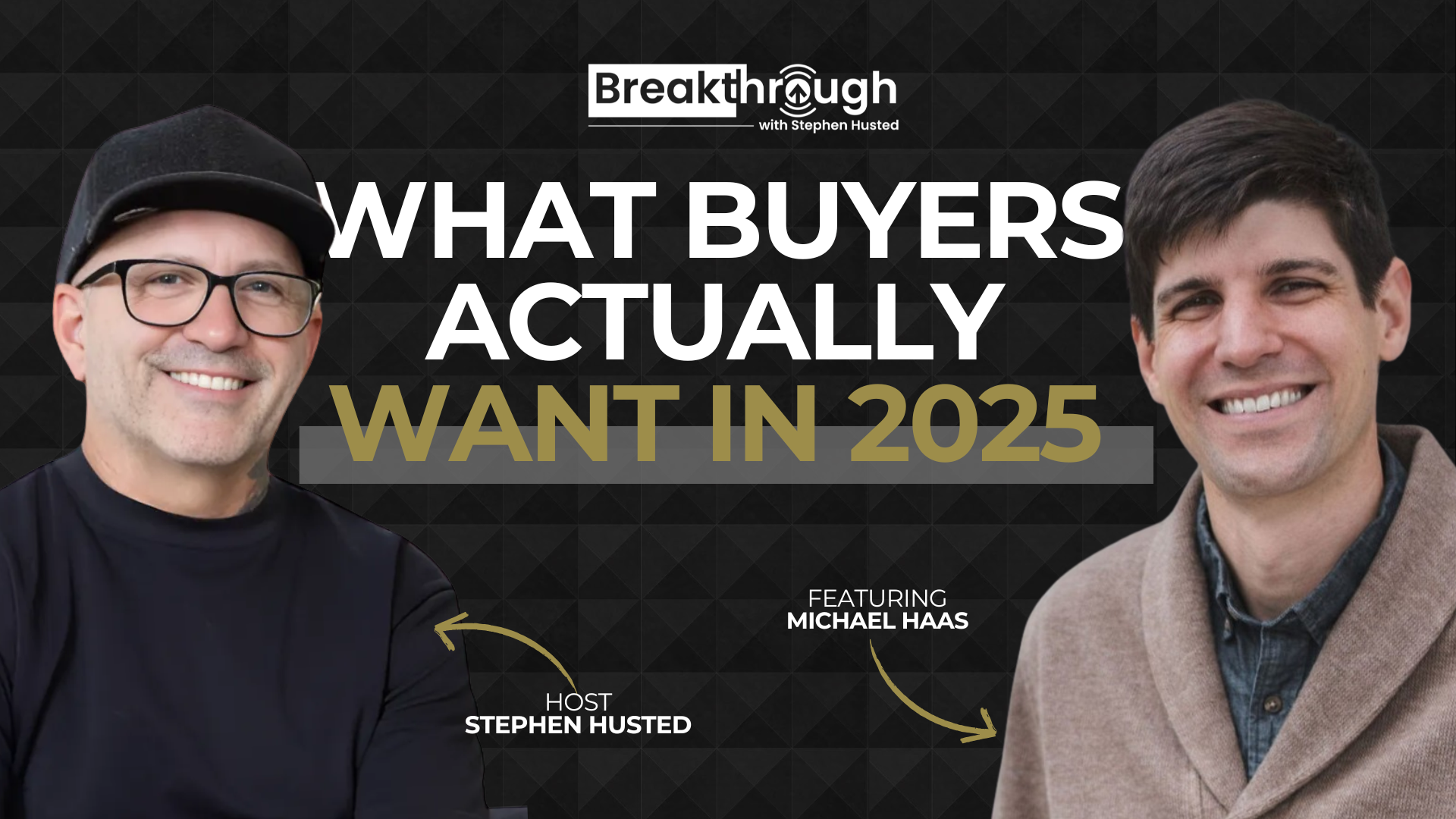
What makes a real estate market “normal” again, and how can investors and builders adapt to the shift? In this episode, Stephen reconnects with Seattle-based investor and broker Michael Haas to talk about the current state of the real estate market, the rise of DADUs and ADUs, and how smart developers can build homes that actually sell. From construction strategy to market psychology, this conversation dives deep into what’s working (and what’s not) for investors navigating today’s housing landscape.
Stephen and Michael talked about:
00:00 Introduction
03:51 Real Estate Market Insights
05:26 Investor Strategies and Market Trends
09:06 Building and Development Considerations
13:07 Parking and Livability in Developments
19:55 Family-Friendly Housing and Market Adaptations
23:34 Navigating New Housing Laws and Regulations
24:39 Managing Multiple Projects
25:04 Seattle's Supportive Investment Community
27:22 Balancing Family and Real Estate
28:57 Exploring Local Adventures
32:49 Future Goals and Ambitions
38:50 Sharing Knowledge and Mentoring
43:52 Conclusion and Michael’s contact
TRANSCRIPT
∎ Teaser / Highlighted Clip
[MICHAEL HAAS] (0:00 - 0:31)
ChatGPT doesn't know what we're doing in the real world, just knows what we're doing on the internet. Yeah. I noticed that right away.
Thankfully we're doing both. We're out there in the real world too, but not everyone is. Yeah.
The brokerage is something I'm super excited about. Truthfully, like working with new agents, helping them get into investing. I could do 10 more projects, but the reality is like at some point it starts to be a little bit of funny money where it's like, yes, more projects, more success would be good, but you've already reached a level where it's like, my needs are met.
I'm happy. I got what I need here.
∎ Podcast Intro:
[Stephen Husted] (0:32 - 2:45)
Brace yourself for a wild ride into the unexpected. This ain't your typical success show. I'm here talking to real folks who've been through it all.
Skipping the fancy business talk for authentic stories. We're diving into childhood dreams, teenage escapades and everything in between, no scripts, just the stories that truly mold success. Each episode takes you on a journey through those breakthrough moments that paved their way.
No fluff, just genuine stories. So whether you're chasing dreams or just love a good story, buckle up for wisdom, laughs, and the unexpected. This is the Breakthrough Podcast, where success is a journey, not just some fancy destination.
Don't miss out. Hit the subscribe button now and join our Breakthrough crew. I got some incredible stories to share and you won't want to miss a single one.
∎ Guest Introduction:
Hello everybody. Today, I have a great guest joining me, Michael Haas. Michael is a real estate agent out of Seattle.
What's great about Michael is that he's always looking for a way to get people into real estate, and he's not just teaching from the sidelines. He and his wife actually own and live in their own ADU, which is a great way to generate income and a perfect example of what he teaches. His story is about how he transitioned from a struggling artist to a successful real estate professional.
He wasn't sure how to get his foot in the door, so he started getting his hands dirty. He bought properties that he could afford, and he figured out how to make money with them through a lot of hard work. He's an artist, and he even used his artistic skillset to figure out real estate.
He didn't just walk into a cushy job. He created his own destiny. What really stands out to me is how much he loves helping newbies.
He's passionate about helping people get started in real estate, and he doesn't want anyone to feel like they're bothering him when they reach out for help. He's created a company and a community around his mission to help others. He even has a meetup where people can come and talk to him and learn from him and his company, House Hacks Seattle.
With that, let's dive in.
∎ Podcast Proper:
Right on, buddy. We are live.
Cool. After doing some technical difficulty changes and audio and lighting and all that, we're on, which is typical. Do you do a lot of podcasts?
[MICHAEL HAAS] (2:46 - 3:07)
I used to do quite a few. And it's such a mixed bag. Like sometimes people are just listening to the audio and it doesn't matter.
And then sometimes I see stuff get clipped up on YouTube afterwards. And I go, Oh shoot. I should have done a better job.
You hear yourself, right? And you're like, Oh yeah, it sounds pretty clear. And then they put it up on YouTube and you realize that you screwed the pooch a little bit.
[Stephen Husted] (3:07 - 3:29)
Yeah. It's an evolving art, I would say, in a lot of ways. I was seeing a clip last week and I was like, Oh, the lights look off and the background's off.
And so I just sent the clip to my videographer and she's like, it is. Yes. You got too much light on your face.
And the background is too lit up. I'm like, okay, let's make some adjustments. So, you know, just some, so much to it.
[MICHAEL HAAS] (3:30 - 3:59)
Is off going to be the new in though, Stephen, because we've got a couple of agents in our office doing the like AI content production thing where they create an AI avatar and they're pumping out this like fake talking head style content. It's not even them. They're just feeding AI scripts.
And it's too clean, right? It's like clearly, clearly too clean. The lighting is too good.
Their face is too smooth. I feel like some of the imperfections as we get more AI out there, the imperfection will let people know, Oh yeah, that's real Stephen, not fake Stephen.
[Stephen Husted] (3:59 - 4:58)
Yeah. You know what? That's a really good point.
And I, we, I was watching a clip on YouTube. It was a music producer and he was with another gentleman setting up a fake AI indie singer and he gave the AI a little bit of a backstory on this, who this person was going to be and a little background on just a little bit of like lyrics and it created the person and the song and then they press click and like within four seconds, it had this person singing the song and they're just like, Whoa, this is really good. She sounds good. You know what I mean?
Like the vocal, like, you know, that's some really interesting things that are Like, I don't know if it's good or bad. I think we're just going to be at awe for a little bit on what it does and somehow it's going to revert back to how it incorporates with humans because we'll just get to get, nobody's going to want to listen to AI bands all the time. I don't know.
I, maybe I'm totally wrong.
[MICHAEL HAAS] (4:59 - 5:02)
Yeah. No, I don't think you're wrong.
[Stephen Husted] (5:03 - 5:12)
So I was at a open house a few weekends ago and I don't know how your open houses are recently, but it's been pretty slow. Yeah.
[MICHAEL HAAS] (5:13 - 5:15)
Over in California or out here in Seattle?
[Stephen Husted] (5:16 - 6:08)
Yeah, in California. And I was sitting on the couch and I fell asleep at the open house. It's the first time I ever fall asleep at an open house.
And it was like, the windows were open. It was like this slight breeze coming through and I just took a nap and I felt great, but I got up and I randomly got onto Chad TBT and created a, an AI, I did a video on Sora and it was a AI robot showing properties to a buyer and I gave it the script, it was the most hilarious thing. And the scene was the door opening up and there's the robot with the family.
And I told the AI to make a point to spank the kid that's getting on the bed and messing up the bed and at the house. And it did, it did, it's so great. I was just laughing.
I'm going, Oh my gosh, look where we're at. And they called the robot showy. It's your personal assistant showy.
[MICHAEL HAAS] (6:09 - 6:10)
You're making me nervous now, Stephen.
[Stephen Husted] (6:10 - 6:18)
I don't know. It's all funny. How have you been?
I'm liking that shirt too, by the way. That's the best shirt that's been on this podcast by far.
[MICHAEL HAAS] (6:18 - 6:27)
Thank you. Yeah. We we've got about to have sunlight in Seattle where I can wear this shirt.
It's not technically today. I'm expanding the window a tiny bit.
[Stephen Husted] (6:27 - 6:28)
Literally six hours.
[MICHAEL HAAS] (6:29 - 7:04)
Yeah. Yeah. Yeah.
We're doing good, man. It's funny. It's we're keeping busy.
We're doing a big remodel at our house. Oh, then Sammamish got a couple of client projects going and the market feels the real estate market feels reasonable. I think all the buyers that we're working with think that this is a buyer's market and they can throw their weight around and get crazy offers accepted.
And in reality, it's just normal and normal has been gone for so long that it doesn't feel normal anymore. That's a good way to put it. And normal is not a bad thing.
[Stephen Husted] (7:05 - 7:33)
Yeah, that's true. Yeah. And I don't think, I think buyers are on that.
They think there's so to speak blood in the water and they want to get a deal because they've, they've been bending over backwards for sellers for so long. But I don't think a lot of sellers are at that point yet from what experienced like at all, like they're still like, I'm going to entrench here. I got a lot of different options.
I'll rent it. I was already making money. If I can't get 2022 pricing, I'm not selling.
[MICHAEL HAAS] (7:34 - 7:43)
Yeah. Yeah. Almost everyone.
Right. They, there's a couple of quick turns where people bought in 2021, 2022. And now for whatever reason, need to sell again.
Those are rough.
[Stephen Husted] (7:43 - 7:44)
Yeah.
[MICHAEL HAAS] (7:44 - 8:00)
Townhomes, condos are rough right now, at least where I'm at, but the regular single family home, the sellers have a point and it's like, Hey, there's not a lot of these out there. I'm going to sit tight and see what happens eventually. Someone's going to give me what I want.
And I think they're right more often than they're wrong.
[Stephen Husted] (8:01 - 9:12)
That is true. And if they have exit strategies, like they really don't need to sell, they have more leverage than buyers think. We wrote an offer on a property a lot of weeks ago.
It's an investor and they're flipping like a few houses in this one little pocket of San Jose, like close to downtown. And they listed at one four and 30 days on the market. Then they did a price reduction down to one, one got into contract.
Then it fell out of contract. Then we came to the table and we wrote it like one three. And then they countered us at like over list the first time.
And we're like, I called up the agent. I was like, really? Like you guys, she's like, this is what the seller needs.
I'm like, okay, cool. If we're still around, we'll just wait till your seller comes to terms with where the market is. And then she randomly called me like three days later and says, Hey, I got to talk to you about something.
I thought she's coming back to the table. She goes, Hey, my investor has another property, same area. Once you guys can look at it in your price point.
I'm like, okay. So we go look at it. I'm like, no, I wouldn't put my client in this property and no, you're not going to sell it at that price.
You guys are just absolutely off base here.
[MICHAEL HAAS] (9:12 - 9:16)
So also overpriced, but just overpriced in a different price point.
[Stephen Husted] (9:16 - 9:29)
Yeah. Just all the way across the board and bad. And you know what?
They probably purchased beginning of the year, December-ish before things started really shifting. And now they're in hard money. They're going to have to do something unless they're flush with cash and they can wait.
I don't know, but.
[MICHAEL HAAS] (9:30 - 9:41)
Yeah. There's some backwards math that flippers use sometimes around what they need to sell it at. Yeah.
To get the profit margin that they targeted, which may be completely disconnected from the reality.
[Stephen Husted] (9:41 - 9:43)
Yeah. What a twerk. Yeah.
[MICHAEL HAAS] (9:43 - 9:44)
Some people give it a shot.
[Stephen Husted] (9:45 - 10:05)
Yeah. And it's crazy because yeah, good for them that they can, and I guess they can play hard ball until they can't. Yeah.
If most flippers are on some type of hard money and that burns up towards the end too, because you've already drawn all that money for your construction and you're just like, I gotta get out of this and yeah, you can't control the market in a lot of ways.
[MICHAEL HAAS] (10:05 - 10:17)
Yeah. It's not a 50-50 chance on whether things are going to get better or worse for you as you hit that 30, 40, 50 days on market, chances are they're getting worse, right? Yeah.
Yeah. Yeah. Not always, but chances are.
[Stephen Husted] (10:17 - 10:32)
Definitely. How, how about your investors? Have you guys been running into problems with your listings that are like daddo plays or flips that were, they're selling off the main house and then working on their, their planning for the daddo?
Is that, has that been a problem?
[MICHAEL HAAS] (10:33 - 11:58)
Yeah. Not too bad. We definitely have some investors that have been selling off single family rentals that aren't really development plays and those have done pretty well because the home buyer market's still strong.
Most of the daddo plays we've listed have done decently well. I try to coach people towards under building a little bit because so many people just want to put as much house in these lots as you possibly can. And you stack three units and there's no yard space.
I think the reality is that it's not a low inventory market, particularly for these like small condo townhome style units, there's a lot of options. So it may actually be a better investment to under build and have yard space, especially if everyone else does not have yard space and to stand out. Cause same thing with condos and townhomes.
It's not that people aren't buying them. It's that there's so many of them that the buyer can just doodle around and keep looking and throw a couple of low balls out there and then keep looking. And they're commodities, right?
They're interchangeable. So if you can bump into a, your own bracket where you don't feel the same as everyone else, even if you leave some money on the table, square footage wise, it can turn out pretty well for you. And then I'm always into holding real estate when you can.
It's a little harder now than it used to be. But we have a lot of investors that are refinancing out of these projects and trying to hold them as rentals. And the appraisals are coming in great.
So that works out for them.
[Stephen Husted] (11:59 - 12:09)
How are the appraisals coming in for the ones that have done, that have already condoized? Are they seeing like a, what is the percentage you see that they're getting a cut on that main house, like 10%?
[MICHAEL HAAS] (12:10 - 13:04)
Usually it's about 10%. And then also I've found that both the main house raised value and the dadu appraised value tends to be a little higher than true market value. Which I think has to do with just inventory, right?
There's just a lot of these condoize properties in Seattle. It's been popular for long enough. And there's enough investors building them that there's more supply than, than there are buyers that want them right now.
Not that it's a bloodbath and prices are dropping like crazy, but it's just not as balanced as it could be. So we're still pulling good appraised values, but especially for people in hard money, right? A lot of people are selling for under that appraised value because they're sitting 60 days on market and then they just need to take something to get out of their loan.
And thankfully, usually the margins are thick enough that you're talking about making great money or good money, not ending up underwater.
[Stephen Husted] (13:04 - 14:36)
Yeah. You might weren't, you were maybe not getting the glory days when you're really peaking it out. But yeah, I feel like I'm going to turn this into a podcast all about what I want to hear from you because I got so many questions when you, you came up with some things because we bought, so we've bought five houses in Seattle in about a year and three months.
And we have 11 daddos in planning. One is getting built. And now with all these new laws that have changed, we're working with this architect firm that is really on top of what's been going on.
And I try to tell some of my partners just because the architects say, Hey, we can do X, Y, and Z, and we can do this big and that big and all these different things that doesn't equate to a good return for us. It's like hiring a designer. The designer will design a property out.
They'll make it look great. But is those finishes going to translate to a return? The road, right?
Like, because once they're done, they're out just like the architects out, but we then have to turn around and pass it on and sell it or whatever we got to do. And so now I'm really getting confused or I'm treading lightly on the size to build. Parking is really a big one that I'm, I really focus on the project as where are the people that are going to buy going to park and where are friends and family going to park if people are over, like how, what kind of ease when they walk up to this mini development, what does that look like?
[MICHAEL HAAS] (14:36 - 14:46)
And the door dash going to be able to even find the front door, let alone find a place, idle the car and not block traffic. Like this livability stuff is big.
[Stephen Husted] (14:46 - 15:57)
It is, it is. And you see so much different, like in Seattle, especially like I was blown away. And when I first flew out there, I was like, I think like right around the time that we went to your meetup, we would draw neighbors.
I'm like, look at what they packed on that lot. And I'm like, Oh my God, there's five units. But then I looked them up and they're like under 800 square feet.
Those ones are not even selling. Yeah. And so that was a bet.
So I'm like, okay, I got to pay attention to that. And yeah, I like to understand from you, what do you think those sweet spots are? Like when you want to, okay, we got a project right now.
They came back. We're building two units. I would call it the middle housing.
One was at 1800 square feet. The other was 22. And I looked at them, they fit.
There's some adjustments we need to do about parking. And I said, personally, I think that this one, the 18 should be 15. And if you, if we want to roll the dice on this other one as more of a bigger one, let's go down to 19.
And I feel like that's still pushing it. The other ones I'm doing, they're like around 1400 square feet. In that range, because I know that if I ran into trouble, I could probably break even and rent it out or some kind of play in that on that way.
So what do you, I guess it really depends on where you're building, right?
[MICHAEL HAAS] (15:57 - 18:50)
Yeah. It depends on where you're building. There's a lot of investors out there that aren't actively brokering for regular buyers and sellers.
And I think although that's more sane way to run your business, because working with clients is exhausting and stressful and messes up your schedule, it does get you a little bit out of touch with what people are actually looking for in a home. Our team is all investors, but we all also like broker, regular real estate transactions, and it is helpful to walk through houses with buyers and see what they call out, because it might not be exactly what we're calling out as investors, as issues. Parking is huge, right?
What we saw in Seattle is essentially the city lifted parking restrictions. All the developers said, that's great. Let's sell these parking spots.
And then all the buyers came out and said, we don't want this. No one wants this. I don't care that you can remove the parking.
I wanted the parking. Yeah. Yes.
So that's, I mean, things like that are big. And then also to the point of kind of supply and demand, like it's pretty interesting with One Seattle, this new bill, we're able to do larger housing. And it does seem like that's what people want more than anything else.
And there's a couple of reasons. And that I think one of the reasons is we've been pumping out a thousand to 1300 square foot mini houses for a long time. And there's a lot of them.
And then also they're also comparable to say condos and townhomes, which we also have a lot of in Seattle. And we have a lot fewer single family-ish homes, which your 1800, 2200, 1500 square foot home that you're talking about is even though there's less yard space, it is a single family home size. And then I think the other thing is just on the landlord side, right?
Like rents are not that high right now compared to purchase prices, especially when you factor in interest rates, right? So when we're in one of those historical windows where it's actually cheaper for a lot of people in the short term, at least, to rent than buy. So the idea of making affordable small houses for kind of the demographics that might otherwise be renting is a good idea.
But if it's cheaper to rent, there are a lot of people in that buyer group that are going to say, Hey, ownership sounds great, but just legitimately, it would be better for me to rent this exact same dadu from someone than buy it at 7.1% interest. So there's a couple of tailwinds and headwinds I think right now, and I'm seeing more headwinds for dadus than tailwinds in this short term specifically the small ones. But I think the larger builds should do well.
I don't know if you've been tracking old three-packs, right? Where people scrape the lot, they build 1,800 square foot front home, then 1,000 square foot dadu, 1,000 square foot ADU. I don't have the data, but just looking at these listings, it seems like the single family always sells first.
Nine times out of the 10, the single family's gone in four days, and then the other stuff slowly goes pending. So it does seem like people want the single family size more than anything.
[Stephen Husted] (18:50 - 19:00)
So a little bit more bigger, a little more space, a little bit more amenities in the house, meaning like a mudroom or a small little office that you would not see in a dadu play type scenario.
[MICHAEL HAAS] (19:01 - 19:01)
Yeah. Decks.
[Stephen Husted] (19:02 - 19:02)
Yeah.
[MICHAEL HAAS] (19:02 - 19:09)
Like a lot of these single families have decks, which I think is a nice little hack to get around the small yard space. They'll have some, some outdoor.
[Stephen Husted] (19:09 - 20:22)
Yeah. Okay. We can go on to this one.
So we had our meeting with the architect yesterday and we were debating this, the bigger unit, it was a 2,200 square feet. And I told him to get it down to about 19. I thought that was probably a smarter scenario and that wouldn't really cause that much, wouldn't change that much.
It's what do you think about a mudroom? We're like, yeah, we'd like a mudroom and a small little office space. That's besides the bedrooms.
Like those are the things this one has a backyard. It's going to have a nice size backyard. And I go, and I want slider.
I want some type of bifolds on the main floor from the living room to the backyard. I don't care. I'm going to spend that money on that scenario.
Do I have data to back up? That's a good idea. No, I don't.
But I've done it here and people love it in California because it just, especially on a beautiful day in Seattle, which are very rare on a very few months out of the year, they can open that up, go in the backyard and really take it in. And so I'm going to gamble a little bit on that, on that scenario and see where that goes and the parking like, and the parking is Paramount and anything, you know, a lot of them, they're always saying to where, Oh, we put it one car. I'm like, are you telling me that families in Seattle only have one car?
Is that a thing? Cause it's not how it is here.
[MICHAEL HAAS] (20:23 - 20:28)
Yeah. It's, I think city of Seattle would love to think that people bike and take transit everywhere, but they just don't.
[Stephen Husted] (20:29 - 20:30)
They have cars.
[MICHAEL HAAS] (20:30 - 20:55)
They don't. I don't think it's quite as bad as San Francisco is different than the rest of California, but having lived in California, transit is not great in California either. Right.
But Seattle, unless you're on a couple of stops, not super easy to get around without two cars and even for tenants, I have a couple of daddies that we've rented out and we people seriously interested that would have signed a lease if there was two parking spots, but there was only one and decided not to move forward.
[Stephen Husted] (20:56 - 20:56)
Okay.
[MICHAEL HAAS] (20:56 - 20:57)
Yeah. Do you have kids, Stephen
[Stephen Husted] (20:58 - 21:02)
Yeah. Yeah. I have a daughter.
She's 19. Nice.
[MICHAEL HAAS] (21:02 - 21:55)
Yeah. So, I mean, you're, you're getting to the point where they're getting out of the house, not in the house, but I think that's the big opportunity too, is I know a lot of these developers have families and stuff, so it's just think about what you need because once you're building these larger houses, that's one of the bigger opportunities, right? Is, can you make it a family house?
And that's even the wording that city of Seattle is using in a lot of these zoning changes. They want more like family size housing. Townhouse was great for that, right?
Like as a father of young kids, like hardwood floor stairs everywhere in the house is pretty much my nightmare. Townhouses aren't great. Ondos aren't great either with having to take elevators up through.
So I think there's a unique opportunity to, to hit identity housing for families that isn't like currently served very well by the other high density housing asset classes with daddies and avias and single families.
[Stephen Husted] (21:56 - 22:19)
So just be a little bit more thoughtful on the unit that, you know, you're putting on there, try to get more parking and give them a backyard. Yeah. Because I think probably one of the problems that a lot of developers, builders, flippers, or all anybody was falling into is maybe they had a much smaller lot and really didn't have that kind of room to do all of it.
And so they're like, they're going to park in the alley or they can park in front of the whatever.
[MICHAEL HAAS] (22:20 - 22:47)
It's all trade-offs, right? I make it sound like, Oh, you just need to have everything, right? So even though it'll sell if you put everything in it, why aren't you putting everything in it?
But it's all trade-offs, but, but I think a lot of times developers when choosing between square footage and amenities, they'll choose the square footage because everyone wants to hit that. Oh, I want to build my max because I'm thinking in terms of dollar per square foot sale cost. But if everyone does that, you end up, if you zig while everyone else is zacking, you end up getting a better result.
[Stephen Husted] (22:48 - 23:31)
Yeah. And you really have to pay attention to really, you can build these and I understand what you're saying that that can serve that need, but you got to figure out that sweet spot too, that you don't hit that wall in that location as well. We got in a contract on a property.
We just closed in Maple Leaf. I was in another location South from there, Ravenna, and there was two, there was a corner lot, single family, and they built an ADU and the next it was a, a dadu, two of them. And they were like almost at a million and they were just standard thousand square feet.
It was a beautiful street. So I could see where that number could come in cause it seemed really private. And then we got in a contract on one in Maple Leaf, which was not far away from And it was a, to street lot.
[MICHAEL HAAS] (23:31 - 23:31)
Yeah.
[Stephen Husted] (23:32 - 24:06)
And I saw it. I'm like, okay. They're like, you don't need to have parking because it's, it's within a half mile from transit.
And I'm like, the main house is going to be a duplex. The, we're going to do a middle housing at 1400 square feet. I want a garage.
I want another parking spot next to the house. And then to the right of that, that street to street lot, I want to be able to park two cars, like guaranteed. I don't care what else has to happen.
We have to make, this is what I think is needed in that location. And they're like, okay, you don't have to do. I'm like, I know.
But I just think that people are going to want to know where I'm going to park. Where am I parking?
[MICHAEL HAAS] (24:07 - 24:34)
And it's not even just the parking. It's like, ask, ask any parent of younger kids, how many wheeled vehicles they have. Right.
They've got their two cars, but they also probably have six scooters. One of those RC things, three bikes, some of which their kids have already grown out of, but they have it on the list to drop them off at Goodwill and they haven't done it yet. Right.
Like half of these garages aren't even being used for cars. So even if you have street parking, I think the garage is still a good amenity. Even if you're a one car household, I think the garage is still a good amenity.
[Stephen Husted] (24:35 - 24:38)
Yeah. Are you having people turn the garage into a room?
[MICHAEL HAAS] (24:39 - 25:15)
A lot more people were doing that for rentals specifically, I feel like under the old code than are under the new code. I noticed one change in one Seattle that kind of made me smile. They're max, they're limiting the square footage of the garage.
Whereas previously you could have a thousand square feet of living space over a thousand square foot of garage. Garage. Yes.
That just so happens to have a lot of receptacles and plumbing wrapped in. Nice window. Yeah.
The city is busy, but they're not stupid. Like they're letting this stuff fly because they have a lot of fish to fry and a million projects, but it's not like they don't understand what's happening when they review these plans.
[Stephen Husted] (25:15 - 25:15)
Yeah.
[MICHAEL HAAS] (25:15 - 25:19)
So that felt like a targeted attack on that loophole that was being used.
[Stephen Husted] (25:19 - 26:04)
Yeah. We're giving you guys a lot of leeway. We're going to rope you back in on this one.
Well, and two, they just, who knows what that causes down the road. The fact that they're able to put all this, these new laws and all the things that go along with it, it's a lot of information. It's, it blows me away.
The amount of things that we go through and I guess for what we're doing, I'm like, okay, I think we need to slow down. I got too many. I'm dropping the ball on trying to systemize the approach to condoizing and all these different things.
We're like putting these systems in place. I'm like, oh my God, we got so much stuff going on here. This is, it's, well, you said how many houses in a year and four months, five houses and 11 and 11 in planning.
Yeah.
[MICHAEL HAAS] (26:04 - 26:13)
Yeah. Yeah. So I don't think you're doing anything wrong, man.
I think it would be pretty tough to run that and not have it feel like an absolute zoo, but yeah, it's crazy.
[Stephen Husted] (26:13 - 26:48)
It's like the school of hard knocks. Yeah. It's been great to be really honest.
You have met up in Seattle. You guys are all bad-ass. Really just good people.
It's a breath of fresh air to get into a market where everybody just wants everybody to succeed and do good. And everybody's willing to share advice. And I think that's a big key to just overall investing and serving the community too.
That's a big part of it because at the end of the day, building properties for people to live into, you know what I mean? And they spend a lot of money. It's so much.
[MICHAEL HAAS] (26:48 - 27:24)
Yeah. I think a lot of the earlier investors set a really good. I've said in, in culture around here, even when we look at like bigger pockets, which is how a lot of investors got their start was reading those bigger pockets, forum posts from other investors and just being, Oh, I would love to do that.
Like even bigger pockets. A lot of the original folks were from Washington. Yeah.
And then it's true. I just think a lot as new investors get started, a lot of the people they idolize are good people. So there's not like this culture of like, Oh, if I want to be successful, I need to be like, so it'd be cutthroat and leave a trail of bodies behind me.
Yeah. It's not that vibe.
[Stephen Husted] (27:24 - 28:25)
It's totally true. And I think in the very beginning, when I was deep diving Seattle, like I was all over your YouTube videos and that's how I found out about your meetup. And so I flew out one of my, I had a lady here who was, she's a designer.
She did one of my projects and she kept, she's like, Hey, let's go have coffee. I want to start to invest and I want to shadow you. I'm like, it's too, that's way too complicated to do.
And she's like, yeah, I want to build it up. She's all over the place. She's new.
You know, when they, they have a million ideas and you have to like rope them into one and then go, look, I am going to Seattle and I'm building out there. This is what I'm doing. You can come with me and check it out.
See what you think. And I brought her out to your meetup. Then she met, you know, went to that meetup.
Yeah. We hung out for a few days there and she came back. She's like, yeah, I'm all in.
I'm like, cool. Good. Cause you need that.
You want to be hyper-focused on one thing and one thing only because there's a lot to do when you're in different markets. So right now, as far as, are you serving more investors than buyer and sellers?
[MICHAEL HAAS] (28:26 - 29:47)
We're about 50, 50, maybe 60, 70% investors, depending on what kind of market we're in. My life stage as a father of a six-year-old, a three-year-old, a one-year-old, I lead the Cub Scout troop. Like I'm in a lot of circles and I do enjoy to the earlier point of, I think having boots on the ground with like real people buying real houses is helpful.
As a developer, I do enjoy just working with regular families or individuals trying to buy a house. And I think that although I don't want to spend a hundred percent of my time doing that, that is a tough job and I have a lot of respect for realtors that don't invest in real estate, I think they're wrong. I think it's pretty hard to earn all your income just by your 1099 job.
I enjoy working with regular buyers and sellers. I enjoy working with some developers and investors. One of the reasons I have such a big team is that we want to be able to work with more than I could possibly handle on my own.
So we have the team of 10 and everybody's got their own investments and development projects. So we're pretty deep in that niche, but I focus a lot of attention there. I actually am not building that much right now.
I have a couple of projects in permitting and then I'm working on our primary residence here, but compared to past years where I'd buy three houses in three months and be like running in a million different directions, we're pretty slow right now on our own development projects by design.
[Stephen Husted] (29:48 - 29:52)
That's okay. You can put the gas on and slow it down. That's a good approach.
Else you kind of burn out too.
[MICHAEL HAAS] (29:53 - 30:04)
Yeah. One Seattle is, I feel like I'm sitting on the bench here and I'm looking at one Seattle and being like, maybe I'll get back in the game here with some of these projects, because it is kind of fun to be able to do new things and mix it up a little bit.
[Stephen Husted] (30:04 - 30:18)
Yeah. That new, that middle housing scenario is like, just it's so crazy. What do you like to do on the weekends?
What do you like to do in Washington? What if you were going on like weekend little trips in Washington, where would you go?
[MICHAEL HAAS] (30:18 - 31:48)
Yeah. Good question. We have a travel trailer and I have a good buddy who's a pilot and has a float plane.
Cool. He just came back to the area and we've been trying to figure out like what places can we go? You take the plane.
I take the travel trailer. We camp out. We've only done a couple so far, but they've been a blast.
So we've been trying to explore. California is the same way. It's like everybody wants to go to Italy and go on these big trips.
And then you drive two and a half hours. Sausalito, like some of the stuff just outside of San Francisco, some of the most beautiful places I've ever been in the world, but we're trying to do a lot of local stuff right now, both because it's kind of expensive and difficult to fly with five kids. And just because I think there's a lot here we haven't explored.
And then we, we live on the South side of Pine Lake in Sammamish and I love Sammamish. I'd probably get pretty bored out here if I was in the suburbs, suburbs, but we're on the water. So we've got a lot of crafts, half of which take on water and half of which float, which is another fun kind of weekend project is getting the ones that don't float to float a little better.
And then when the weather turns, one of the nice things about being off I-90 here in, in King County is it's just like a hop, skip and a jump to Snoqualmie Pass and a little bit of snowboarding. And anyone who actually snowboards and skis will tell you that the snow is garbage, but there's something special about, there's something special about being able to drive 40 minutes and hit a couple of rounds and then be back and not have it be a whole day. So we do a lot of that.
Me and my oldest do a lot of that in the winter.
[Stephen Husted] (31:49 - 31:49)
Yeah, that's cool.
[MICHAEL HAAS] (31:49 - 31:51)
And I think Washington- It's a special place to live, man.
[Stephen Husted] (31:52 - 32:13)
Yeah. Oh, believe me. I love California.
I'm not going to say I don't, it's pretty expensive. And I could see out in Seattle, just getting so further ahead quick, you know, like it's just, you can't do a basement build out with a dad who's like on a corner lot with an LA, they just don't, they're not here in San Jose. You grew up in the Bay area, right?
[MICHAEL HAAS] (32:14 - 32:15)
I grew up in Cupertino.
[Stephen Husted] (32:15 - 33:10)
Cupertino. Yeah. Yeah.
Like those bedroom communities, they might have a 6,000, 7,000 square foot lot, or maybe it's on a corner, but that house sits like right in the middle of the lot, so you can't really, you could put an RV on the side of your house and that's about it. So we don't have those type of opportunities. And I just, what I've done out in Seattle, I'm like, I tell my wife, I just bought that house for $830, I'm going to build out the basement, increase the value overall, and now I can lot split it, sell off that middle housing, that unit, get my whole down payment on the main house back, and then some, in my bank account, and then have a unit below me making $3,500.
What? What? That's so crazy to me.
I don't know. Like, I scratch my head every time when I'm out there, I'm like, this is such a, it's such a great, it's a great opportunity. I don't know if the weather could, I'm too much of a baby.
I don't think the weather could, I could stand it out there.
[MICHAEL HAAS] (33:11 - 33:17)
You still think that? Cause we have a lot of propaganda around weather to keep Californians like you and me from moving up here. Yeah.
[Stephen Husted] (33:17 - 33:57)
It's a coordinated campaign. I bet, I know. I've only, I've been in Seattle mostly through the summer months and one time, like two days before Thanksgiving, and it was bone chilling cold.
It, it was so cold and we're out in front of the house trying to shoot content and like, we're walking through the house and I got theme coming out and like, you're kind of off today. I'm like, dude, I can't think straight. My brain's frozen.
I'm freezing. It's like, and the guy that was shooting it was in this like lightweight little like hoodie or the people running around in the weather with like shorts on their white legs and they got like a parka on. I'm like, what is going on here?
[MICHAEL HAAS] (33:58 - 33:58)
Oh yeah.
[Stephen Husted] (33:59 - 34:11)
Yeah. It's pretty crazy. What do you, you got any big plans?
Do you have any future goals that you're trying to hit five years from now? Can you see where you're going with your small business or is there anything you haven't achieved that you want to?
[MICHAEL HAAS] (34:11 - 34:42)
Yeah. Good question. I mean, our team, the house back Seattle team, we're like pretty deep in this investor niche.
We have the meetup. That you mentioned. We have the YouTube channel.
We're pretty easy to find. Probably my, my fatal flaw would be pride. I keep it in check as best I can.
I kind of cultivate a humble personality as best I can, but man, I'm prone to a little bit of pride here. And then one of the fun things that a team member showed me is that if you ask AI about DADUs in Seattle, it'll tell you to talk to our team.
[Stephen Husted] (34:42 - 34:43)
Oh, there's one of them.
[MICHAEL HAAS] (34:43 - 34:43)
Yeah.
[Stephen Husted] (34:44 - 35:05)
Hey, I, and you know, what's funny, I actually told, who was I talking to? I think I was talking to either Ian or somebody. And I go, Hey, guess what?
When I asked ChatGPT about DADUs and ADUs, guess who came up? And I'm like, Michael, this was the first one you and one other, one other brokerage that came up, like all over it.
[MICHAEL HAAS] (35:05 - 35:10)
Yeah. Who else? There's another, I'm blanking on the name.
There's another company that does a lot of DADU builds.
[Stephen Husted] (35:10 - 35:31)
I think the guy that got pulled up, they don't even do them. I pulled it from the internet too. They had a very robust, like serious breakdown of like everything you have to do to build a DADU.
Yeah. It was like this really like cool, like workbook thing. But then when I got to their website, they weren't doing the level of like what you're doing.
[MICHAEL HAAS] (35:31 - 35:36)
Yeah. Yeah. ChatGPT doesn't know what we're doing in the real world.
Just knows what we're doing on the internet.
[Stephen Husted] (35:37 - 35:37)
Yeah.
[MICHAEL HAAS] (35:37 - 37:36)
I noticed that right away. Thankfully we're doing both. We're out there in the real world too, but not everyone is.
Yeah. The brokerage is something I'm super excited about. Truthfully, like working with new agents, helping them get into investing.
I could do 10 more projects, but the reality is like at some point it starts to be a little bit of funny money where it's like, yes, more projects, more success would be good, but you've already reached a level where it's like, yeah, my needs are met. I'm happy. I got what I need here.
So I do get pretty excited about the brand spanking new investor that wants to buy their first property or a new broker that has done 12 deals and wants to buy their first rental property. Like that to me is exciting. Cause it wasn't that long ago that I was there and me and my wife, Jess had been fortunate that because a couple of smart decisions and a very favorable market, it didn't take us very long to get from no idea what I'm doing to chat GPT, telling people to talk to me about things, right?
Like it was a pretty quick turnaround and I get pretty excited about helping other people that similar trajectory. As far as our personal portfolio goes, I always tell people this. We're not super actively looking for deals for our own personal portfolio, but I'm a deal dog.
If something comes across my desk that I really want, I'm prone to in a 12 hour span, go from not looking to their contracts, it won't be the first time. Threw that right out the window. And that's part of being a wise investor too, right?
It's like, even when you're not looking, like I always have the ability to buy real estate, right? I've got, I've got the lines of credit. I've got the setup.
I'm ready to roll if something came up, but mostly working with the team and working with other investors. I'm pretty excited about the fact that I'm able to do a lot of that here at home. I'm at home right now.
I've got a couple of young kids also just trying to cultivate that availability. Cause I know this window is pretty short while they're home more often than not. And pretty soon they won't want to spend time with me.
And that's okay. That's true. I'll maximize this time that I have.
[Stephen Husted] (37:36 - 37:37)
Yeah.
[MICHAEL HAAS] (37:37 - 38:26)
And growth wise, like realistically, like I think the big opportunities out there that I see are in continuing what we started years and years ago with the house hack, the true house hack, where you're just buying like a seven bedroom property and you're learning how to paint and do basic electrical and you've got five roommates and you put a second kitchen in the basement and you're just like hacking it out and all of a sudden you're living for free and now you can buy another property in 18 months. Like this scrappy house hack, I think for a long time people have thought that the DADU play doesn't work for that type of investor because it's so capital intensive, but some of the projects we have in the works are like figuring out ways to make these development opportunities available, not just to establish folks like you and I, Stephen, but people who are just getting started. Cause I think it can be wealth building even more so.
[Stephen Husted] (38:27 - 39:03)
That first one, the light bulb goes off, like you just said, the house hack. But it's funny that you could do a house hack, go FHA 5% down, get in where you fit in, and once you start that process, but it's funny, you hear things online and then people like, Oh yeah, like I'm going to have to have a bunch of room. Okay.
If you can't buy right now or you don't think you can down the road, but you could, if you do this, would you sacrifice a little being discomfort with having some, some friends and family or whatever in your house that are paying your mortgage? Sometimes a lot of things are short-sighted.
[MICHAEL HAAS] (39:04 - 39:13)
Yeah. And I think that's key, right? Like, I think there's some people that want there to be these amazing opportunities and they want it to be easy.
And that's just not how the world works.
[Stephen Husted] (39:14 - 39:14)
Right?
[MICHAEL HAAS] (39:14 - 39:32)
Like I want there to be amazing opportunities for everyone, regardless of background, socioeconomic background, how much money you have, what family you came from, whether you speak good English or whether you're just learning language for the first time. I want there to be opportunities, but I don't think they have to be easy. Like, I think they should be hard.
Like it is hard. It's very hard.
[Stephen Husted] (39:33 - 39:47)
Sometimes I'm on the same boat as them, but I'm like, you can't complain. We just got to fall out. Like, it's up to us.
Nobody's holding our hand. Yeah. Yeah.
It's real estate's an interesting game in itself. It's a big puzzle.
[MICHAEL HAAS] (39:47 - 40:02)
Yeah. And once you learn how it works, you have a fork in the road where you can just kind of keep it to yourself or you can share it with others. And I'm excited about people like you that have podcasts like this and have chosen to share it with others because I know there's a lot rattling around in your head that other people could probably get some value out of.
[Stephen Husted] (40:03 - 41:39)
Yeah. And it's funny. I don't know when you started shooting content.
I've been an agent for a very long time, but I never just couldn't get behind marketing the traditional way. It just felt very unauthentic to me. And once videos started coming out where I started watching people like this, doing basic teaching one minute video, like it could be like how to buy your first investment property by doing this.
I was like, Oh, this is the way this is. I'm just sharing my experiences, whether they're good or bad. I just share what I go through.
And it's such an opportunity to pass information around. And like you said, teaching others. I have a mentee who got in a contract on his first investment property in Tacoma.
And I hooked them up with Ann Curry and they got in a contract. But six months prior, we were looking in Kansas city. That's another market that I'm in.
And we were writing offers and I was like, you know what? I think he could do better. And in Washington, but I knew where his price point was and what he had for down payment.
I go, I'm going to get him into Tacoma. I hooked him up with Israel Lopez for financing. Got him in the end and he got a contract and I got the text like Friday night.
He's like, I'm in contract, dude. Like you could just tell like the energy was there. Like wanted to keep writing.
I'm like, right on man. Like welcome. And it is funny.
Yesterday he texted me back. He goes, I sent the wire. That's done.
Now I'm working on this. I'm like, cool. He's like, I screwed up the wire.
It was like four hours later. I screwed up the wire. I'm going to go to the bank.
And he's like doing the emoji hand and I'm like, welcome to investing. There's going to be a lot of mistakes.
[MICHAEL HAAS] (41:40 - 41:41)
Oh yeah.
[Stephen Husted] (41:41 - 41:52)
So many mistakes. That's a good thing, right? That's you make them and then you figure out how to systemize them and not make them again.
And then teach others how to not make that mistake.
[MICHAEL HAAS] (41:52 - 42:27)
Yeah. I think that's one of the reasons why investors are so generous with their I'm an expertise is that the people that actually have made it to a high level have had so many mistakes and I've just cultivated this personality of, Oh, I'll do it better next time. This like self-improvement not beating themselves up, but I'll do it better next time, what I learned from this and that comes through as like a, as someone that's willing to share and someone that's willing to teach and the people that, you know, are through this, I hate it.
Why did this happen to me? What was me? They drop out after property number two anyway, and then they sell their stuff at fire sale to you and me.
Is there sick of being a landlord?
[Stephen Husted] (42:28 - 43:14)
Yeah. And I, and you know what? And I, I totally understand that too.
there's properties we have in the Midwest and I'm just like, Oh God, I want to get out of this stuff so bad. You know what I mean? There's just so many, but I really, I'm very grateful for the Midwest and being out there before going into Seattle.
I think it was all a storyline leading up to Seattle. Yeah. You know, like it was, it's a very.
I don't know. The whole Seattle scenario is it's such, it's way more meaningful to me than just buying investment properties. Go out to Seattle in the nineties as a DJ, go to underground raves in Seattle where these warehouses over by the stadiums were just cold warehouses where you're just like, how do people survive out here?
And like, I'm setting a theme on the cold here, Stephen.
[MICHAEL HAAS] (43:14 - 43:14)
Cold.
[Stephen Husted] (43:14 - 44:00)
Yes. But yeah, not to go deep, but I had some very dark times out in Seattle when I first went out there. And then full circle it back into Seattle's market, like with a clear mind and doing this, it's such a, it's cool.
And then, like I said, everybody that I've met personally have been just very generous, just overall good people. We went to your meetup. Our property manager is a lady, Brittany.
Yeah. Yeah. And we left that meeting and looked at Alicia.
I'm like, there's our proper manager. Cool. I think they got it going on.
Let's hire them. You know what I mean? It was like, boom, putting things in place.
So yeah, I appreciate, I appreciate all the videos you've put out over the years. You taught me the whole loom strategy. Oh yeah.
You were doing loom, right?
[MICHAEL HAAS] (44:00 - 44:19)
If you've ever done something twice, you're an agent, right? It's, man, if I get asked the same question twice, I'm just going to shoot a loom video. And then, and then it's just a link.
I have to be careful what I send. Cause I send ones from 2021 and it's like, look how we made 350 grand on this daddy project. I'm like, everything is still true except for the 350 grand.
That doesn't happen anymore.
[Stephen Husted] (44:19 - 44:32)
True. The rates are a little bit higher. Yeah.
So yeah, you loom. I'm like, Michael's using loom. Let's try loom.
So I'm trying to shoot those videos, but it took me some time to do good at shooting the looms with those things. It was a little tricky.
[MICHAEL HAAS] (44:33 - 44:47)
Yeah. Yeah. It's definitely a different audience, right?
Like the quick hitter, like here's three reasons why so-and-so are a little bit more casual, but the people that'll actually watch an 18 minute loom video of you in front of Microsoft Excel, Google Sheets, that's what you would do, dude.
[Stephen Husted] (44:47 - 44:53)
You would be breaking down a deal. I was like, I don't know. Michael's doing this over here, but I don't think I can pull it off.
[MICHAEL HAAS] (44:53 - 44:58)
Thousands of people are watching me just kind of think around on Google Sheets.
[Stephen Husted] (44:59 - 45:00)
Yeah. Yeah. It's rad.
[MICHAEL HAAS] (45:00 - 45:03)
Our people are out there. There's a lot of people like you and I.
[Stephen Husted] (45:03 - 45:11)
Yeah, it's cool, man. Thank you so much for jumping on today. I appreciate it.
You're on the list, so I'm glad that we got it together and got you on.
[MICHAEL HAAS] (45:11 - 45:50)
And I'm always willing to talk to people about pretty much anything and all this stuff is right in my wheelhouse, so I'm excited we got to do this. Where can the audience find you? The name of the real estate team is House Hack Seattle.
If you ask anyone, robots included, they'll point you towards our meetup website, househackseattle.com. We're pretty active on Instagram. If you go to my Instagram, just Michael J-O-H-A-A-S, Michael Johas, you'll see my contact info pretty much everywhere.
Always feel free to reach out to me. I'm always happy to give a second opinion on projects. And like I mentioned, I'm pretty passionate about helping newbies get started.
So if that's, you're not a bother, feel free to say hello. I'll help you if I can.
[Stephen Husted] (45:51 - 45:57)
Awesome. Appreciate you jumping on today. And thank you for wearing the colorful shirt today.
That, you won the, you won it.
[MICHAEL HAAS] (45:58 - 46:00)
I'm me again, Stephen. I'll show you my whole collection. I got a lot of these.
[Stephen Husted] (46:01 - 46:36)
You got it. All right, buddy. You have a great day.
I'll talk to you soon. You too, Stephen. Thanks.
Bye.
∎ Podcast Outro:
Thank you for tuning into our show, where we hope you found inspiration and gain valuable insights. If you enjoyed this conversation and want to stay updated on our latest episodes, be sure to subscribe to our podcast and share it with others who might benefit from it.
We appreciate your support and look forward to bringing you more candid conversations and breakthrough moments in the future. Until next time, take care and keep exploring new ideas and strategies.