Episode 58 - Inside the Mind of an Investor: How Discipline Shapes Success with Michal Palczewski
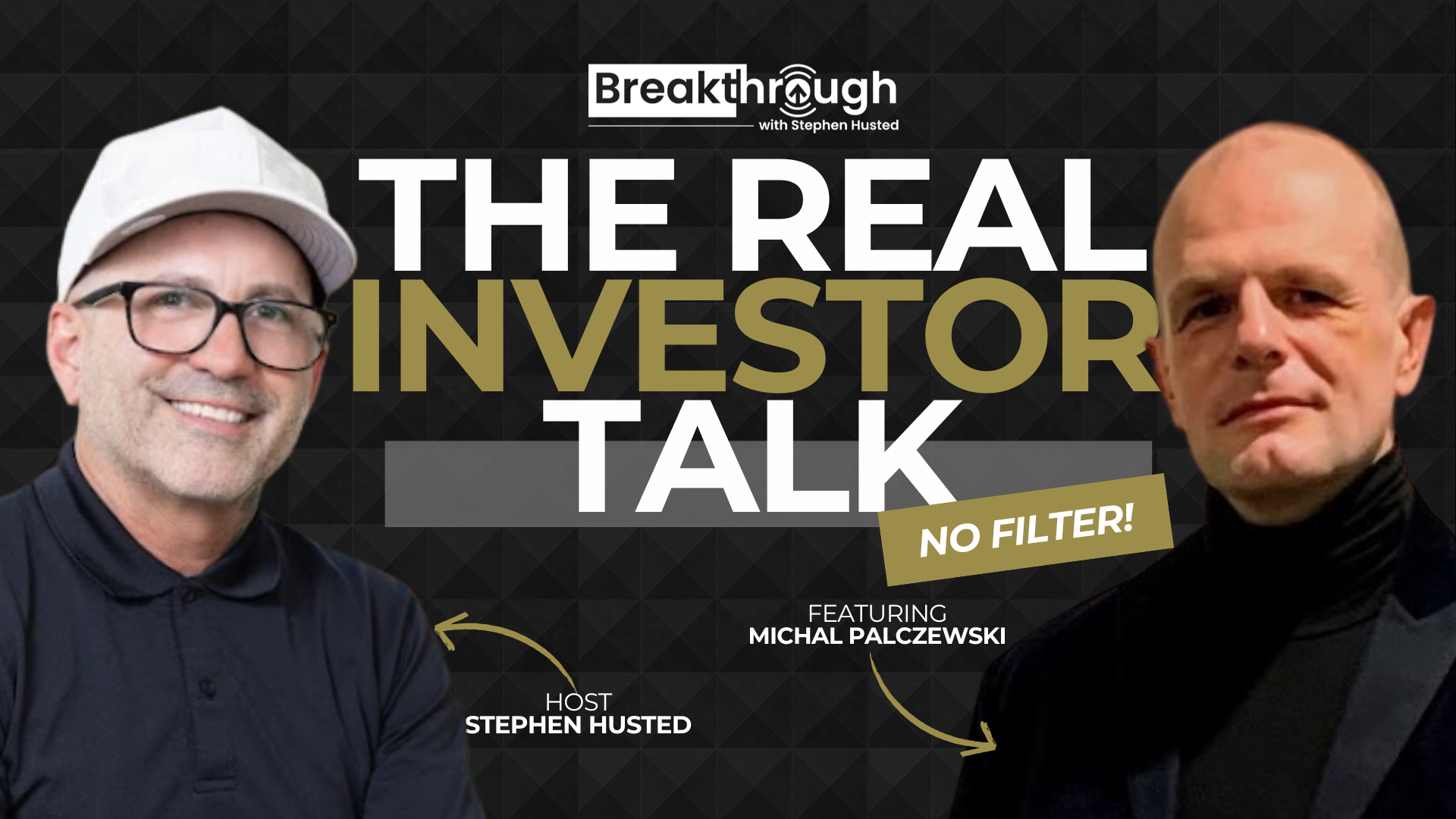
This episode brings a full-circle conversation between Stephen and his first-ever business partner, Michal. From a chance encounter as a hairstylist-client duo to building a thriving real estate portfolio together, their partnership tells a story of trust, risk-taking, and growth across industries.
Stephen and Michal talked about:
00:00 Introduction and Instagram Live Experience
03:44 First Business Partner on the Podcast
04:22 Client Stories and Real Estate Success
09:47 Investment Strategies and Stock Market Insights
16:51 Challenges in Real Estate Investments
28:30 Fitness, Discipline, and Professional Growth
35:26 Transitioning from Google to Instacart
36:53 Switching from Biking to Running
37:08 Preparing for the First Endurance Race
39:49 Marathon Experience in Tallahassee
41:36 Real Estate Projects in Seattle
42:24 Navigating New Housing Laws
46:34 Learning from Development Challenges
59:54 The Importance of Teaching and Mentoring
01:04:54 Conclusion and Future Plans
This conversation dives deep into business, mindset, and the realities of building wealth through real estate and self-improvement. It’s a mix of strategy, humility, and humor that will resonate with anyone navigating growth in business or life.
TRANSCRIPT
∎ Teaser / Highlighted Clip
[MICHAL PALCZWESKI] (0:00 - 0:45)
People just want predictability. They want that you go to school, you do your homework assignment. And if you did a good job, you get an A at business, just like reality just doesn't work that way.
You get a lot of this in tech, you go and you built this awesome feature in your product and then nobody uses it, I just spent three years of my life building this thing. Doesn't matter who was going to cancel it. No one cares, no one cares.
None of this is foreign to me that this can, some of the stuff can happen. And if you're not a figure like investing is risk-taking and yes, that's why not everybody does it. It's not for everybody.
∎ Podcast Intro:
[Stephen Husted] (0:46 - 2:55)
Brace yourself for a wild ride into the unexpected. This ain't your typical success show. I'm here talking to real folks who've been through it all.
Skipping the fancy business talk for authentic stories. We're diving into childhood dreams, teenage escapades and everything in between, no scripts, just the stories that truly mold success. Each episode takes you on a journey through those breakthrough moments that paved their way.
No fluff, just genuine stories. So whether you're chasing dreams or just love a good story, buckle up for wisdom, laughs and the unexpected. This is the breakthrough podcast where success is a journey, not just some fancy destination.
Don't miss out. Hit the subscribe button now and join our breakthrough crew. I got some incredible stories to share and you won't want to miss a single one.
∎ Guest Introduction:
Hey everyone. Today, I'm here with a really special guest, Michael Polchowski. Michael is a software engineer.
Who's worked for some of the biggest names in tech, like Google, Amazon, and Microsoft. And he's an expert in his field. I've known him for a while.
And what's really cool is how he's been able to take his knowledge as a software engineer and apply it to real estate. He's been using that analytical and problem-solving mindset to find some really interesting opportunities here in Seattle. His journey started with a simple goal to own a home in a competitive market.
He and his wife ended up finding a home with a detached garage that they've been able to convert into an ADU. He's taking his expertise in software engineering, where he breaks down complex problems into smaller, manageable pieces and using that same approach in real estate, it's a great example of a side hustle that can completely transform your financial future. What I love about Michael is that he's always looking for a new challenge and that's what makes him so good at what he does.
He's all about finding different and creative ways to get ahead. And he's not afraid to share what he's learned along the way. That's what we're going to dive into today.
How he's using his unique skillset to build a real estate portfolio and how you can do the same. So let's jump into it.
∎ Podcast Proper:
[MICHAL PALCZWESKI] (2:56 - 2:58)
All right, buddy. Hey, Stephen.
[Stephen Husted] (2:58 - 2:59)
We're live.
[MICHAL PALCZWESKI] (3:00 - 3:00)
Cool.
[Stephen Husted] (3:00 - 3:01)
How about it?
[MICHAL PALCZWESKI] (3:01 - 3:02)
Let's go.
[Stephen Husted] (3:02 - 3:11)
Let's go. So we did our little first Instagram live together, kind of test the waters out of what's to come.
[MICHAL PALCZWESKI] (3:11 - 3:40)
That's right. How did you feel about that? I've done Instagram lives myself already.
And this one was different because you were there. So it's a little different when you're just kind of talking to you, the camera, and maybe you have a couple of guests on there, a couple of people watching. It's actually easier when nobody's watching.
You're just kind of, I'm just here by myself, listening to my own voice, but now it's, oh, people are jumping on. So yeah, yeah, it was cool.
[Stephen Husted] (3:41 - 4:09)
So well, let's, might as well dive into who the heck you are and what we're doing on here today, because I usually don't introduce guests. We kind of just get going on things, but you're a little different guest than most, and you're actually the very first business partner to jump on the podcast. So I think there's just going to be some interesting perspectives going on, on what we've gone through so far in about a year and a few months out in Seattle.
[MICHAL PALCZWESKI] (4:10 - 4:10)
Yeah.
[Stephen Husted] (4:10 - 4:32)
The good and the bad, the ugly, because it's never perfect. I guess some funny ones to talk to you about today, because I don't even know. So for the audience, let's just start with, I've met Michael a while back by doing his hair, because I was a hairdresser for a very long time.
He was my client. And then I helped him.
[MICHAL PALCZWESKI] (4:32 - 4:34)
I had a very difficult haircut to do.
[Stephen Husted] (4:36 - 4:53)
I wasn't doing a good job. Now he's bald. But I helped him buy his first condo and then years down the road, sold that condo and he moved on to Houston, Texas.
[MICHAL PALCZWESKI] (4:53 - 6:04)
Stephen, you selling that condo is like the most impressive thing you've ever, like I've ever seen a realtor do. I'm going to just fluff you a little bit because literally, I was a little worried about selling that condo. So it was in downtown San Jose.
There were still boarded up buildings just around the block from where we live. Before we moved out, there was a machete wielding man at the 7-Eleven. And as a result, like when we moved in, there was a Safeway across the street.
You could go get your groceries done just in five minutes while across the street. And so, so the neighborhood had gone downhill. And so because of COVID, because of COVID.
Yeah, absolutely. And so condos just were not selling at that. I've seen condos on sale for like 60 days and then they just get pulled off the market because they didn't sold.
And that same complex, literally very similar, sometimes better units than what I had were not selling at all. And you came, you're like, we need to fix this and this and this. That took some time.
And then it was sold within a week of going on the market. It's like, so yeah.
[Stephen Husted] (6:05 - 6:06)
I know you're a little shocked.
[MICHAL PALCZWESKI] (6:06 - 6:09)
Yeah. I was like, okay, this is awesome. Yeah.
[Stephen Husted] (6:10 - 6:33)
You know, it was funny, came up in my timeline on Facebook. We made those videos when you were like stressed out that you didn't want to pack up some of the stuff and you were just asking about what you could leave behind. Oh, right.
That video came up and you brought the dog into the videos. Oh my God. It was, I think I had told you that was the best run of content, like the mural in the mural.
[MICHAL PALCZWESKI] (6:34 - 6:48)
That was a nice piece. That was awesome. He came into our house and just took a few days and put up a mural of Queen.
It was very distinctive. You know what kind of sucked though? We put that mural there.
We couldn't do anything with that space anymore.
[Stephen Husted] (6:49 - 6:50)
Right. You couldn't put shelves or anything.
[MICHAL PALCZWESKI] (6:51 - 6:54)
You couldn't put shelves. It's like I had a dedicated mural space after that.
[Stephen Husted] (6:55 - 7:37)
So for what we're talking about here, Michael in his kitchen from a very, I painter, right? That was murals. He came in and did a mural of Freddie Mercury and it was pretty badass.
And as much as we loved it, we just didn't know if buyers would, but it was funny because I made content on it and put it out on Instagram. Should we keep it? And people were just keep Freddie, keep Freddie.
No, you got to change. It was like this big debate. We had some other funny videos too, that you left behind that, you know, I wanted to bring into the open house, but we'll leave that one out.
But it was good. We had some good content on that property.
[MICHAL PALCZWESKI] (7:38 - 8:10)
Well, you know, I remember we were, I was moving, right? And you brought up that video of me wanting to, cause I thought I was going to have to take everything or deal with everything. And you're like, nah, whatever.
You just leave, just leave and we'll pay somebody to take it. I was like, oh, thank God. Like I didn't want to do all that shit.
So that's kind of a nice business strategy in general though, just like if you don't want to focus on the stuff where you add value, as opposed to totally, if you can.
[Stephen Husted] (8:11 - 8:57)
That's true. It's all. And you know what, honestly, what I've found with buyers and sellers, but let's just talk about sellers, there could be one thing on their brain that's really stressing them out.
It could just be one small thing. And the minute you can solve that for them, you make the whole process so much easier. And sometimes it's really, it could be one, it could be several, but you know, for you on that instance was, you were under the gun.
You had to leave. You're like, I'm stressed out. I don't want to pack all this stuff up.
I'm like, just take what you need. Leave everything else, leave it, leave it exactly where it's at. And it was funny because the unit was cleaned out in an hour and a half, like done, emptied.
Remember I said the video too, you're like, gosh, dang, that's it.
[MICHAL PALCZWESKI] (8:57 - 9:04)
But I had to ask, I left my, behind my cigar ashtray. Do you remember sending that to me?
[Stephen Husted] (9:04 - 9:06)
Yes. That's right. I mailed it to you, didn't I?
[MICHAL PALCZWESKI] (9:06 - 9:36)
Yeah. So there were a few things that got left behind. One of my favorite kitchen knives, but I had a spare, so that was okay.
But I had this beautiful Limoges France antique cigar ashtray I bought on Etsy. And it's funny because I left it behind and I was already starting to look to see if I could replace it, see what else is available. And it just was, it's unique.
There was nothing like it. I looked, I scoured the internet. And so when you were like, oh yeah, here it is, I'm mailing it to you.
I was like, oh my God.
[Stephen Husted] (9:37 - 9:39)
Yes. Totally forgot about that.
[MICHAL PALCZWESKI] (9:39 - 9:39)
Yeah.
[Stephen Husted] (9:42 - 9:59)
That was a crazy time. Let's go. I want to go into that story about when we first started looking for the condo.
And so we went out and we were looking at condos, townhouses, talking. And randomly we got on the topic of investing in stocks.
[MICHAL PALCZWESKI] (10:00 - 10:01)
Oh yeah. Yeah.
[Stephen Husted] (10:01 - 10:31)
And then you kind of piqued my interest and somehow, I don't know how we got in that conversation of, oh, you should go out to this guy that I took a course with and I can get you in there. Why don't you go fly out and check it out? I'm like, sure.
All right. And then probably about a month later, I was on a plane to Atlanta, Georgia to go see this guy speak about, well, a lot of it was on options, but yeah, I was on options, option trading, but then it was also about how to analyze a company.
[MICHAL PALCZWESKI] (10:31 - 10:31)
Right.
[Stephen Husted] (10:31 - 11:44)
That was the big takeaway for me. The options thing just went right over my head. But the funny thing was for the audience, why the story matters is it was a full circle story that came back years later.
I go to this conference. I don't know how many people there was, but it was in a big auditorium and there was a lot of people in there. And we had to do a challenge and we had to break up into groups of three or four people, and then we had to pick a company, analyze the company, and then pitch this company to Phil and his team.
And whoever at the very end wins, Phil and his fund would actually invest in this company. So that was kind of the starting point of it. And so somehow I get in this circle with the people next to me, we're like looking at each other and it was kind of like a huddle and they looked at me and they're like, you're our speaker.
And I'm like, me? And they're like, yeah, I'll do this. You do that, but you're the speaker.
I'm like, okay. So I wanted to go in and do tech. So I wanted to underwrite Facebook at the time.
And then they told us we couldn't, which I didn't understand why, because they let other companies that were in tech.
[MICHAL PALCZWESKI] (11:44 - 11:45)
They let other tech companies?
[Stephen Husted] (11:45 - 14:12)
They let other tech companies set for Facebook. I don't know what that was all about. But that gets to the story point of the Indianos as well.
So we ended up with a company called Hormel, like Hormel Chili, but Hormel does all kinds of different types of like ketchups and things like that from what I remember. But it was a pretty boring company. And so we went through the whole scenario and the day ended.
And then the following day in the morning, we're starting to do this pitch. And so I get out of the hotel room. I'm going in the elevator and all of a sudden I'm getting kind of like nervous, like, oh, shit, I got to speak in front of all these people.
And I'm walking down the hall and I can hear all these people in that room. And I'm going, what in the hell am I doing? What am I doing?
I should not be speaking. And I just remember going in there and we had to speak in front of all these people. And I don't know what the hell I said.
Honestly, I don't know. I don't remember what it was, but I remember getting done and saying, what happened? But we ended up, I swear to God, it was crazy.
I was so stressed out. It was really bad. But we won that first day and we kept going to the very end.
And it was against another group. And that guy goes out, he goes first and he starts pitching Google. Oh, and I was going, why in the hell does this dude get to pitch Google?
And he's talking about Google. And I'm getting upset because I know Google better than this guy does. From my background with all you guys that worked at Google, I hear everything.
And I just I knew that nuance better about understanding that company. I could have talked about it better. So I got pretty bent out of shape.
And then it was my turn. And once again, I remember just looking into the audience and just getting lost in translation. Like I didn't know what I was saying, if I was saying things correctly.
I just didn't know. But that was it. We lost.
But I got to that round. But it was interesting because that public speaking moment fast forward into recently when we started to invest out in Seattle. Now I'm speaking out in Seattle and it's kind of like this whole full circle.
And you're the one involved. But you're the one that got me to go out to Phil's investing thing and I got to speak in front of it. So it's like this weird full circle moments.
And there's been so many of them in the last year and a half. So that was long. I'm sorry.
[MICHAL PALCZWESKI] (14:14 - 14:45)
But it's the truth. Yeah, well, there's so much in that, like for one, whenever like now both you and I are on social media, some of us more than others. But every time I record a video, there's more views than there are on a public speaking in front of that seminar room.
That's a good point. And so, so I think it was paving the way. So that was Phil Town.
Yeah, Phil Town. And he took us to his mansion. He took us, he had that barbecue.
[Stephen Husted] (14:46 - 14:47)
Yeah, with the horses and everything.
[MICHAL PALCZWESKI] (14:47 - 15:13)
With the horses, everything. So like he doesn't do that anymore. I think he stopped at COVID and now it's all remote.
And so that was just a great opportunity that we presented itself to us. There is something to that of understanding business, how it runs, how cash flow works, how you make money and by being able to evaluate another business, you're definitely, you can run your own better. I still use the options trading, but I'm a math guy.
[Stephen Husted] (15:13 - 15:30)
So that's. Yeah, you got that brain. I don't have that one.
That's what I was thinking. When, remember when I got back, I'm like, dude, do you do option trading? And you're like, yeah, I do it on a daily basis.
Or like you had, I'm like, yeah, that's, this is not going to be for me. I know that, but.
[MICHAL PALCZWESKI] (15:31 - 15:44)
Yeah, well, at that time I should go back and take further education there because that is definitely, I like the diversified of the income streams and that is definitely a viable one. I was getting like 30% returns for a couple of years after that.
[Stephen Husted] (15:44 - 15:46)
So really from going and seeing Phil.
[MICHAL PALCZWESKI] (15:46 - 15:48)
From going and seeing Phil. Yeah, absolutely.
[Stephen Husted] (15:49 - 15:57)
Yeah. That was a good starting point. Honestly, going to that seminar is what got me to hit my first 10 X on a tech company.
[MICHAL PALCZWESKI] (15:58 - 16:26)
Oh, nice. But it's not even that different from the real estate that we're doing right now. You take a look at how your costs, your outlays, how long is it going to take you to realize what your expected return is?
How long is that going to take? We're always doing the idea of a margin of safety. We're not like, okay, like we're only going to make a little bit of here.
And if we mess up, we're going to go under like, no, like all those concepts. There's a lot of cross application.
[Stephen Husted] (16:26 - 16:46)
There is. And there's also, especially with investing in real estate and development and all that, it's a long-term play, unless you're going out there and flipping a property and getting it done a few months and then selling it, that makes sense. But it's a long-term game.
[MICHAL PALCZWESKI] (16:46 - 16:47)
Yeah.
[Stephen Husted] (16:47 - 17:49)
Long-term. And that's kind of why when I, well, we'll get into how we all kind of connected on that, this other aspect, but that is part of the reason why when I'm talking to partners that we kind of like zoom out five years to kind of like fill, fill out where we want to be and then work backwards instead of just kind of going with the flow, because I've learned over time now that putting somewhat of a vision together, a plan and working towards it, it's much easier than just kind of like aimlessly working through buying properties, if I had to look back at buying out in the Midwest, I don't think I would have scaled so quick. I don't know if I, you know what I mean? Because what really happened was we needed so many properties out there that you're constantly having issues.
There's constantly issues. There's constantly, if you get a turn, like a vacancy, like we just had three in a row. So now you got three properties that need work.
[MICHAL PALCZWESKI] (17:49 - 17:50)
Do they all know each other? Was that?
[Stephen Husted] (17:50 - 18:35)
No, I don't know. It just all happened that way, but it was crazy. And it makes me nervous, especially in the Midwest.
Anytime a property goes vacant, I have PTSD from when these properties go vacant. They're more prone to break-ins. They're more prone to squatters.
They're more prone to items getting stolen because I've gone through it so many times. And so then the name of the game is to get out there, get things situated and get it back rented as fast as possible. That is like the thing.
But when you have so many properties, if you have one or two and you have a few issues per year, it's okay. But when you have a lot, those issues are every day, that's my opinion. So I don't know.
It's all, you live and learn.
[MICHAL PALCZWESKI] (18:35 - 19:27)
Well, it's sort of, for me, some of it like takes it back to that whole idea of investing because you get stuff messing up. So your contractor is a month late now on your project. I had a garage door that I need to replace at my house.
And then I need to go through the HOA and the HOA was dragging its feet and it was no big deal. It just meant that my garage door didn't get replaced as soon as it otherwise would have. And maybe I got a little extra wear and tear on my garage door motor for a couple of days.
But when you're doing this kind of stuff and you're like, okay, so this delays until you can sell the property or delays until you get renters in. And then there's carrying costs because you've got a mortgage, you got a loan loan, hard money, whatever. And you don't have renters and you have insurance and you have property taxes.
And so all this stuff, just a lot less patience for delays.
[Stephen Husted] (19:29 - 20:21)
It does. And it's really hard on one minute videos on Instagram to really tell like the behind the scenes of owning investment properties. At the end of the day, you really need to be well capitalized and you have to be well organized.
And depending on how many properties you have, you really do have to have a team behind you. And even with a team behind you, meaning even with a virtual assistant, property management, really good people on the ground, you are solving problems on a daily basis. Whether it's on your rental properties, dealing with taxes, dealing with whatever, there's a lot of moving parts.
And I try to tell that to new investors that reach out that want to be mentored that understand that this is not a set and forget it and you're just going to collect cashflow. Doesn't happen that way whatsoever.
[MICHAL PALCZWESKI] (20:22 - 20:32)
Well, we bought those properties and before we even got a renter in, it was what, like six, nine months, something like that. Yeah.
[Stephen Husted] (20:32 - 20:36)
Yeah. On a couple of them. Yeah.
I got a question for you.
[MICHAL PALCZWESKI] (20:36 - 20:37)
Yeah.
[Stephen Husted] (20:37 - 20:57)
Do you even know what happened at 1 17th around July 4th? Uh, no. It's so funny.
Well, I was saving this for the podcast cause I haven't heard you even say anything, so I'm like, well, if he's not reading that email, let's back up before they tell the story. Let's get into how we came.
[MICHAL PALCZWESKI] (20:57 - 20:58)
What are our partners? What's going on with those properties?
[Stephen Husted] (20:59 - 24:33)
You're like, no, tell me now. So we're going to, we're going to back it up. We'll tell the, I'll tell that story a little bit here.
So when Michael moved away to Houston, Texas, he then reached out to me and wanted to invest in some properties. And I told him, Hey, I could mentor him and I can help him find properties. And instead we developed a business partnership and Michael works at W2 and tech and I'm the day to day operations.
And so what I did was I put together the strategy and it was perfect timing for when Michael reached out to me because I just had Seattle on the radar. I just had a couple of people on the podcast. It was intriguing to me.
It was close to my house, closer than the Midwest. And I told Michael, Hey, I think we have an opportunity here. I flew out there and we just got going.
But at the end of the day, I am working through everything that's going on a daily basis. Some things Michael knows about some things he doesn't know about if he's not checking his email or whatever, because Michael is busy with his W2. And, but Michael and I do talk on a weekly basis, a couple of times a week.
Usually we're always talking about what's going on in the business. What are our goals? What we're doing in the future.
Some of it's related to the properties. Some is related to what we want. Just our big vision.
There's a lot of moving parts. However, I try not to, because my role in the business is kind of the day to day. I try not to bother business partners with shit that they don't need to have on their brain.
There's only one of us that needs it. Unless it's so serious that I need to bring them in the mix. I'm not going to bore them with little things.
That's how I run with all my business partners. Some of them start to find out things and they're like, Oh my gosh, you didn't even tell me about them. I'm like, well, why?
I'm just going to handle it. It's not, there's no use for both of us to stress out. But Evanston, or well, 117th, we had the tenants move in, a group of girls, college grads, and they basically split up the house.
We have a basement that has a bedroom, living area, washer and dryer. Second floor is the living area, two bedrooms, bathroom and half bathroom, and then two bedrooms on the third floor. And I think there's four girls and they all spread out through there.
Anyways, we had a leak on the washing machine. It got into the wall, then it created a black mold. Black mold got in the walls.
They contacted us. So talk about timing when owning investment properties. Here's another thing for anybody who's going to buy their first investment property, understand you might get bothered on a holiday, on your birthday.
Things happen and you're going to be addressing things and it is what it is. So I flew into the Bahamas that July 4th and first message when I got my phone back on was, Hey, you got a problem at 117th. There's black mold.
We're basically opening up the walls. We're trying to dry it out with fans, blah, blah, blah. That carried on for two weeks.
They removed all the sheet rock, treated the baseboards, got everything situated, and then the leak came back from something else in the same area. Oh yeah. So we had a double whammy and I think it just got resolved a week ago.
[MICHAL PALCZWESKI] (24:33 - 24:35)
Was the leak from the new work that was done on that place?
[Stephen Husted] (24:36 - 24:43)
No, it was from the existing sink down in the basement. It was something that connected to that part.
[MICHAL PALCZWESKI] (24:44 - 24:57)
That's like a hundred year old house, right? Like it had that old wiring. What was that called?
Oh, the Noventube. Noventube. I had to look that up.
When you look, I look up pictures of Noventube. You're like, Oh yeah, this looks old.
[Stephen Husted] (24:57 - 25:02)
You wonder how you've actually worked. It's really crazy. We got all that replaced by the way.
[MICHAL PALCZWESKI] (25:02 - 25:03)
Yeah.
[Stephen Husted] (25:05 - 25:08)
But yeah, that was going on for a month.
[MICHAL PALCZWESKI] (25:09 - 25:09)
Oh wow.
[Stephen Husted] (25:10 - 25:24)
Yeah. That's a long time, but it's like, why bother you with things like that? I don't think it's necessary.
I do the same thing with Laura sometimes. And then finally I go, Hey, I just cleared up like five different issues. Just wanted to tell you what I did.
[MICHAL PALCZWESKI] (25:25 - 25:28)
Oh, I appreciate all the work you've been doing, Stephen. I didn't even know about it.
[Stephen Husted] (25:30 - 25:36)
Well, we can get into what we're doing out in Seattle. What is your thought so far? Do you think about the portfolio?
[MICHAL PALCZWESKI] (25:36 - 25:39)
I do. I think about it constantly. I think about it all the time.
Yeah.
[Stephen Husted] (25:39 - 25:52)
Yeah. Okay. That was a question I wanted to ask some of the business partners individually is I know you work in 95, but do you think about what's going on behind the scenes?
Cause me, I'm completely like locked in on a daily, but you do.
[MICHAL PALCZWESKI] (25:52 - 26:07)
At some point in time, I'd like to stop working nine to five. And I actually, I'd like to appraise myself of everything that's going on. And rather than leave it all to you and see, and the assistants like, but yeah, I do work nine to five is a very optimistic.
[Stephen Husted] (26:07 - 26:17)
Yeah, let's, let's correct that. Michael's a tech engineer, but you kind of grind it out in different moments for whatever reason. Like you're trying to catch up on something, right?
[MICHAL PALCZWESKI] (26:17 - 27:07)
Yeah. Well, I think going that full tilt all the time is not sustainable. There's kind of like different modes of operating.
I really like what I do. And so I had a mentor at Google and he always, his whole strategy was, okay, we're going to find out what everybody's made of. We're going to push them until they break.
And so he pushed me and I just kept getting, I'm like, ah, this is fun. Let's keep going. I just feed on that adrenaline.
My last weightlifting coaches. So he, we always had some three really intense weeks of weightlifting and then a week off and then three really intense weeks of weightlifting and then a week off, and it kind of taught me that sometimes you get more done if you can. So recently, like at work, I just was like, okay, we have some really intense week.
Okay. This next day I'm chilling. Maybe I won't take it completely off, but I'm not going to go full tilt.
[Stephen Husted] (27:08 - 27:26)
I think that's interesting. You bring that up. It's good timing for you to bring that up to me as well.
But I feel like that's the case for me too. Like I have to step away from the business at points. Instead of being so locked in all the time and going through things to kind of get better perspective and get recharged as a big one too, you know what I mean?
[MICHAL PALCZWESKI] (27:27 - 27:48)
Well, sometimes if I don't do that, I just go one thing to the next thing to the next thing and it builds momentum and that part's great, you get all this stuff done and then you take a step back and you're like, what the hell was I thinking working on this thing? And it's like, you're getting all this stuff done, but without that perspective or even working on the right stuff, which is even more important. Like working on the right thing is more important than working well.
[Stephen Husted] (27:48 - 27:49)
It's a delicate balance.
[MICHAL PALCZWESKI] (27:50 - 27:50)
Yeah.
[Stephen Husted] (27:51 - 28:08)
It's a delicate balance. I try to explain it to my wife sometimes when she doesn't get it. Cause she's, she's got her job where she gets nine to five and then she clocks out and everybody else gets to worry about things, but it seems like when you're an entrepreneur or if you've got investment properties or you're doing content, you just got so many balls are juggling at times.
[MICHAL PALCZWESKI] (28:08 - 28:09)
Beats the alternative.
[Stephen Husted] (28:10 - 28:10)
True.
[MICHAL PALCZWESKI] (28:11 - 28:18)
I'd rather have a little bit too much to do than not enough. And then wondering what to do with yourself. Such a weird concept.
[Stephen Husted] (28:20 - 28:30)
Don't leave me out with my thoughts too long. How does your fitness correlate with how you work?
[MICHAL PALCZWESKI] (28:30 - 28:52)
I think half the reason I do all of my fitness stuff is because it makes, like, I think of my, my, I think of myself like an athlete. So LeBron James trains his LeBron James. I'm old now.
Like, how old is LeBron James? Pretty sure we've moved on. He's a legend.
[Stephen Husted] (28:52 - 28:52)
He's still a legend.
[MICHAL PALCZWESKI] (28:52 - 28:54)
He's still playing somehow. I don't know.
[Stephen Husted] (28:54 - 28:54)
Yeah.
[MICHAL PALCZWESKI] (28:55 - 29:43)
How, but so he takes care of his body, but I work with my mind. So I got to take care of my mind, but your mind is in your body. One time I was eating a big lunch and I'd eat that big lunch and I'd get drowsy in the afternoon.
And so, okay. No, I got to adjust that. I, so I started eating a smaller lunch.
Hey, guess what? I got, I didn't get drowsy in the afternoon. I ate a bigger dinner and I got drowsy after dinner, like you're supposed to.
But yeah, the workouts are the same thing. I get energy from it. It helps clear my mind.
And I like weightlifting when you've got that big weight over your head and you're just like fighting it. You're not thinking about anything else. You're not thinking about all that stuff that's going on at work.
You're like, you're thinking this shit's heavy. Yeah.
[Stephen Husted] (29:43 - 29:44)
It keeps you in the moment.
[MICHAL PALCZWESKI] (29:44 - 30:12)
Yeah. Same thing with the, so I also do judo. I think that's kind of serves two purposes.
So fighting is exhausting. After sparring, like I come home and it's a great stress relief because you're, you're not even going to be capable of mounting a stress response. But he's just done, but it's also like, there's a camaraderie aspect to it.
There's a social aspect. So it's good to be with your boys, even if you're beating each other up.
[Stephen Husted] (30:12 - 30:13)
Is there a strategy to it?
[MICHAL PALCZWESKI] (30:13 - 30:29)
Is there a strategy to it? I mean, is there a strategy to basketball? Like it's get the ball in the hoop, maybe pass the ball around a little bit.
So there's some strategy to it, but I'm a brown belt. I'm still learning all the skills that I need to learn.
[Stephen Husted] (30:29 - 30:34)
Do you think fitness and like judo helps you build consistency and other things?
[MICHAL PALCZWESKI] (30:36 - 32:34)
Maybe. I know that I got fit before I got my job at Google. And so I used to be a bit overweight.
When I lost weight, people told me I used to be fat, but they never told it to my face before. So you track your calories. If you're really serious, and I was, I got down to really super lean, got strong.
Never missed a workout, tracked my calories. Although sometimes I probably should have missed a workout because I did eventually end up getting hurt. Then I started tracking my money too, just as much as I started tracking my calories and it was kind of like the same thing, money in, money out, always pay yourself first, always make sure you got a little something saved at the end of the month or pay down the debt.
So I paid down my student loans very quickly and then it was okay. Google reached out to me. It was like, Hey, do you want a job here?
And then it was kind of like, I had that discipline of like, I was already reading. I was reading like on a schedule too. I've read 52 books a year for the past 15 years or so.
This year I'm having that it's going to be about half, but yeah, until this year it was 52 books a year. I kind of didn't see it at first. I knew I should be doing this because every time I read a book, I was like applying something from it.
And I don't think you write a book when you're like, people are in their highest state when they're writing a book, they feel like they have something contribute and they want to pass down some knowledge. I feel like you're getting the best of someone when you're reading that long form book. And so even the vibe from reading a book, you're not going to remember everything, but you're going to, you're probably going to find something useful and you're going to get that mindset and vibe that they had when they tackled a hard project, something I haven't even tried tackling yet.
I had a hard enough time in my PhD dissertation, that was 70 pages. And that was short, by the way. Really?
[Stephen Husted] (32:35 - 32:35)
Yeah.
[MICHAL PALCZWESKI] (32:36 - 33:12)
Yeah. And so when Google called, I had all these disciplines and so I was reading all the time. So I had that first interview, didn't do so well on it, hit the books.
I was like, okay, I, now I know what I don't know and what I need to know. Next one did much better. And also again, even though I was successful, I do think you learn more from your failures than your successes, by the way, I agree with you on that.
They flew me out and the rest is, then they hired me and I was able to wow them because I had read this book called Programming Pearls. I recommend it for everybody. It's super dense, but if you're into programming, it's kind of like the joy of cooking for programmers.
[Stephen Husted] (33:12 - 33:14)
Really? Yeah. That's a perfect example.
[MICHAL PALCZWESKI] (33:14 - 33:34)
Yeah, absolutely. And it's old school and it's fun, but it's also dense. It is dense.
And I literally came up with a solution from it on one of my interview answers. If you can come up with anything from that book on an interview answer, you'll impress the crap out of the interviewer. So it worked out well for me.
[Stephen Husted] (33:35 - 33:36)
How long were you at Google for?
[MICHAL PALCZWESKI] (33:37 - 33:53)
Five and a half years. So the reading practice was nice because at first, when I was going to Google, they had these buses, the buses, they'd drive you, we had one car at the time. And the buses would take me from my apartment.
They'd take me from, was that River Oaks? You know where that was?
[Stephen Husted] (33:53 - 33:53)
In Santa Clara?
[MICHAL PALCZWESKI] (33:54 - 34:13)
No, it was in North San Jose. Anyway, they'd take me from there to San Jose. It was like literally within the apartment complex.
It was a little bit of a walk because the apartment complex was like one of those gigantic apartment complexes. And I lived on the outskirts of it and I had to find my way. It took me like 15 minutes to walk halfway across this apartment complex.
[Stephen Husted] (34:14 - 34:15)
That's crazy. Yeah.
[MICHAL PALCZWESKI] (34:15 - 34:43)
I did my reading on the bus. And here's the other thing, like I got the worst motion sickness trying to read on the bus. And you know what I did is the first day I could read for five minutes, got motion sick and just kind of laid back.
And the next day I did six minutes and by the end of the month, I could read the whole time, was no big deal. One thing I never got over is when people would be like on a phone conversation right next to me. I'd be trying to read and then, oh my God, have you seen what, I'm like, trying to get my thing done.
[Stephen Husted] (34:44 - 34:47)
And then after Google, you went straight to Instacart?
[MICHAL PALCZWESKI] (34:48 - 35:21)
Yeah. So that was maybe one of those things that I shouldn't have done or maybe it was fine. I don't know, but I rarely took vacation at Google and they let it accumulate.
And then eventually it got to the max. So I started taking just enough vacation days so I wouldn't lose any. And when I, I got the job offer from Instacart, I didn't take a day off.
Instead I cashed out all my vacation days. How much time was that? I want to say it was eight weeks or so, something like that.
Yeah. I don't remember exactly now, but. However much time to let you save up.
That was it.
[Stephen Husted] (35:21 - 35:26)
That's crazy. And so then what did you do during that time period? Is that how you got, explain that?
[MICHAL PALCZWESKI] (35:27 - 35:28)
During that time period?
[Stephen Husted] (35:28 - 35:28)
Yeah.
[MICHAL PALCZWESKI] (35:28 - 35:29)
What do you mean?
[Stephen Husted] (35:29 - 35:32)
In that eight weeks, you weren't working with Instacart at that point.
[MICHAL PALCZWESKI] (35:32 - 35:53)
No, I was, I was, I quit Google, cashed out my vacation and started Instacart. Friday was my last day at Google. Monday was my first day at Instacart.
Like I wanted to hit the ground running. Part of me was just, I was excited about the new position. Like I've been at this place for five and a half years.
And so it was like, okay, what's in store for me? I didn't want to wait. It would have been torturous.
[Stephen Husted] (35:54 - 35:59)
Do you feed off like new endeavors and starting something new and going in a different direction?
[MICHAL PALCZWESKI] (35:59 - 36:35)
Yeah. It's, it's a bit of a double-edged sword because the answer is yes, absolutely. Like novelty is, is absolutely fuel.
And I think in some ways that is for a lot of us, novelty is like, so we view it with apprehension. But that same adrenaline that you view as anxiety is also excitement. And physiologically, it's just about how you interpret it.
So you can definitely work to change that. But for me, I need that. So if I don't get enough adrenaline in me, I'm kind of, I don't focus well enough.
I don't, yeah.
[Stephen Husted] (36:36 - 37:41)
I agree with you. I agree with you on that. I mean, just, I think what we're doing out in Seattle, like that's just like chasing a shiny object, so to speak, but I'm so locked in on like, this is it.
Like, no, I'm not doing anything else. This is where I'm at. It's very similar to, to, you know, I kind of put mountain biking on the back burner for now, got into running.
I like that. I can just get up in the morning and do a quick 20, 30 minute run and be ready to go resets my brain. But now I'm going to do my first endurance race.
And it's funny because people come in like, dude, what happened about, why aren't you mountain biking? I'm like, I'm dude, I'm just taking a break. I'm going to go test myself on this.
Is this some, just trying something new? It's no big deal. But I think that what happens is I think sometimes people have a hard time trying something new.
You know what I mean? At the end of the day. And so it throws them off when you go different paths, but it's like, you know, I'm not getting any younger.
I want to do cool things. I want to try other things. No, I have not.
Why not? You got to do a marathon. Well, do you know what this, my first trail race is going to be?
[MICHAL PALCZWESKI] (37:42 - 37:51)
What is it? It's a 50 K a 50 K. Oh, so you're, you're not even, you're like screw marathon.
That's short shit. I'm going all out.
[Stephen Husted] (37:52 - 39:38)
Yeah. And you know what? And I had to step back for a minute.
And of course I thought about it like, okay, I haven't even done a marathon. I haven't even done a half marathon. I mean, I've, I've ran a half marathon.
I've done 13. My furthest run is 13 miles. And I did that on the actual trail that this race is on.
So this race is at Sanborn over in Saratoga. So it's Sanborn County park to John Nicholas to Saratoga gap. So highway nine and skyline, you know, that area people, it's just this ridge that you can just hike mountain bike run, it's really cool.
And they had three options, 10 K half marathon, 50 K. And I signed up for the half marathon. I'm currently signed up for the half marathon, but then I was like, I'm going to be out there all, why not just go out there all day?
What could be the issue? I have something go on and I have to stop at mile 15, 20, 25. What's that going to look like?
And to me, it's like, I don't really care how far I go. If I make it to the 33 miles, if I don't, I'm going to learn a ton of stuff along the way. Big time.
So we've reached out to them to see if I can pay the difference and do the 50 K. And now I'm going there and I'm pre-running the course into three parts. So Sunday I did the beginning part of it, and now I'm going to go do the second part and then the third part.
And then I'm just going to go back to the areas that were, because this race is kind of in my backyard. So I'm going to go there and test little sections, but the beginning of the race is literally up the ridge. It's like a 15% grade in the beginning.
[MICHAL PALCZWESKI] (39:38 - 41:20)
So it's going to be a pretty, I was just like, we're just going to try you out at the beginning and the rest is endurance. So you just got to make it. I will tell you, I did run a marathon once.
You did? Yeah. It was in Tallahassee, Florida.
It was the Tallahassee marathon. And Tallahassee does not have very many Hills. It was a very flat marathon.
And before that I did like you, I worked my way up to about a half marathon and I figured if I can do, cause that's what they tell you that you can do about double what you train at. So I was like, oh, so well, wait till you're the rest of us. So I'd be running about half marathons and it's Tallahassee is warm and the marathons in February.
It's not too warm, but it was a warm day in February. And I'm running and you get your little, they tell you to take those little glucose packs. I've got those like glucose packs.
I'm sure they got them on the side of the road. They're giving them out. They're giving you water.
They're giving you Gatorade. But I was like, nah, water. I took the Gatorade.
I was like, nah, I don't need Gatorade. Whatever that stuff's crap. So I'm running, I get to like the getting pretty, doing pretty good at the half marathon mark.
I'm like, okay, yeah, still going. So that's about like about mile 13 or so. And then I get to about mile 15 and that's when all hell breaks this.
I can't barely go on. And I'm just kind of dragging, I'm walking, jogging, walking, jogging. I'm, I was like, let me try this Gatorade stuff.
As soon as I took it, I started like jogging again and got back into the, to the groove of it and ended up finishing that marathon there. Crazy thing, I was doing it when those toe shoes, those vibrams where everybody was doing it. So I ran the whole marathon in my vibrams.
[Stephen Husted] (41:20 - 41:26)
Oh my God, that's wild. That's a good story. That's cool.
Good. All right
[MICHAL PALCZWESKI] (41:26 - 41:31)
Well, I get to tell you mine. I'm done.
[Stephen Husted] (41:31 - 41:36)
Yeah. What has you been your thought process right now on everything out in Seattle?
[MICHAL PALCZWESKI] (41:37 - 41:50)
My thought process on everything out in Seattle is like, okay, we've got this stuff going on. Let's well, especially with the new architects. Like I thought we'd need another project, but they're the same.
We can build like six units on, we don't need another project. We've got enough.
[Stephen Husted] (41:50 - 41:56)
Well, hey, that's good. We can talk about this right now in the podcast, cause I've been meaning to talk to you about this. All right.
All right.
[MICHAL PALCZWESKI] (41:57 - 41:59)
How many units are we building?
[Stephen Husted] (41:59 - 45:23)
Yeah. So currently Michael and I have three, three properties and all of them are getting development done at one form or another, some are getting, well, one is getting one, well, now we're going to call them middle housing. So out in Seattle, first people were building ADUs and DADUs.
That was the thing. And now the laws have changed and you can build what they are calling middle housing. So middle housing, it could be a unit that's 1400 square feet, 1700 square feet, 1900 square feet.
Uh, it's all brand new. Even the architects, the one that we're currently using is really on top of everything. There is a lot of different moving parts to it.
And we're kind of in the very beginning. So we're like testing out different sizes of units that we're going to build. And I guess the parts that right now that I'm kind of stumped on is you have to understand that just because an architect says you can build something doesn't mean it's feasible.
Once you figure out how much it's going to cost compared to what it's going to be worth to sell. You got to find that balance based on the location that you have this project at. There's just a lot of different variables to it.
Where before you knew that you were building a DADU at three bedroom, 1000 square feet, 1200 square feet in that range. And you knew you're in it for X amount of dollars. And you knew you were kind of going to sell it around this thing.
But now with these new laws, we have a little bit more flexibility on what we can build. How many we can build on these lots too. Seattle's very pro development right now.
They want housing. They want it now. And so they're just being really pro everything.
But with all these new laws coming into play, there's going to be hiccups. So we're kind of going to be in the mix to that. So, well, we took one project and went almost the whole way through with an architect, didn't have a very good experience and got it to the end and then realized that we now can build something bigger with a garage.
And we literally let go of that architect, hired a new architect, lost $10,000, lost time because we've obviously been sitting on this property, but now we can build something that probably will make us more money down the road. And I think more better use case for that location, especially because that first rendering that we had for that property was going to be a two bedroom. Now we're building a three, two and a half with a garage.
It's going to be a much better product, but I think in the grand scheme of things of what we've been doing, this has all been a lot of learning. It's a learning process all the way across the board on it. And some of it, we just have to take calculated risks on some of it to see where, where it's going to go.
But the good news, I think for what's going on in Seattle is that I think when you develop and you have a single family home that you can turn the basement into a unit, now you've got two units and then you put somebody in place and then you can build in the backyard. We have lots of different exit strategies, but also we have a lot of options, you know, like what we're doing on one 25th building there is being able to build two to, Hey, we can, you can build five. You can go to, okay.
But does that make sense for that location?
[MICHAL PALCZWESKI] (45:26 - 45:29)
Yeah, it's crazy. So how many are we building?
[Stephen Husted] (45:30 - 45:39)
Oh, okay. Yeah. Well, how many did we trip?
So I think we're going to have, well, it will be a total of five units once it's all said and done.
[MICHAL PALCZWESKI] (45:39 - 45:49)
This, this, I think it was like options, right? They give us options between five total or like up to, to give us more if we wanted them, sure.
[Stephen Husted] (45:49 - 45:51)
If we would have removed the main house.
[MICHAL PALCZWESKI] (45:51 - 45:54)
Oh, is that what that was? Oh yeah. Well, we don't want to do that.
That seems no.
[Stephen Husted] (45:55 - 47:10)
We've already rehabbed at the main house. So the main house, we bought it for around seven and we put 200,000 into it. We rehabbed the main house.
It's a two bedroom, one bath, opened up the kitchen to the living room, gave it a good open space. And then we built out the basement to a two, two. We got tenants in place.
Everything is good there. And we went through planning on that one. And now we're at the building phase.
We finally started that and it took us about nine months, which is a long time. And this was back to another learning lesson from the beginning is you're only going to be as good as your team when doing development or rehab or owning investment properties, if you have any bad apples, so to speak on your team, it's going to just reflect throughout your business, whether it costs you time or money or both, it's going to happen. And so we went through that learning lesson, but from what, when you and I were talking, I kind of told you in the beginning, set those expectations, expect the unexpected, there's going to be problems, there's going to be timelines, delays, and we've kind of excelled in some areas.
And in some areas we've had to pivot and learn from it, but.
[MICHAL PALCZWESKI] (47:11 - 47:58)
Well, it's kind of, it's kind of funny because I can understand why that's kind of like your spiel that you give to people. That you go, Hey, things might go wrong and things might, but when you're dealing with, I know that I deal with this a lot of people just want predictability. They want that you go to school, you do your homework assignment.
And if you did a good job, you get an A at business, just like reality just doesn't work that way. You get a lot of this in tech. You go and you built this awesome feature in your product and then nobody uses it.
And I just spent three years of my life building this thing. It doesn't matter who was going to cancel it.
[Stephen Husted] (47:58 - 47:59)
No one cares.
[MICHAL PALCZWESKI] (48:00 - 48:14)
No one cares. None of this is foreign to me that this can, some of the stuff can happen. And if you're not a figure like investing is risk-taking and yes, that's why not everybody does it.
It's not for everybody.
[Stephen Husted] (48:14 - 49:04)
Well, you just brought up a really good point. And I heard this on a video recently, and there was this guy talking to this gentleman that could help him on his photography coaching type scenario. And he wanted a guarantee that it was going to work.
And the guy's like, look, I can put the roadmap in place. That doesn't mean you're going to be successful. There's no guarantees.
And I think that with investing, you're going to have your wins and you're going to have your losses. And you have to understand that going into it. And that, and I think that's from years of experience.
That's why I kind of vet business partners in the beginning to understand that from them. Are you going to freak out when shit ain't going right? Or is this happening?
What are you going to do? Like, how are you going to react to that? Cause it's easy to react the wrong way, but investing and doing what we're doing is a lot of problem solving.
[MICHAL PALCZWESKI] (49:05 - 49:07)
It is big time. Yeah.
[Stephen Husted] (49:08 - 49:32)
There's so much to like, you see the problem coming or you go through the problem and you're like, how can I systemize this and never do it again? And when it keeps coming up, that's when I get super pressuring. Anytime I see something, that's why the, all the Angel and Jackie and everybody to Raina, they're systemize this.
We do not want to go through this again. There's so many moving parts.
[MICHAL PALCZWESKI] (49:32 - 50:54)
I always think about it's funny with like, with options trading too, is in 2020, I had a lot of, 2020 didn't start out as a great year before COVID hit in the stock market, it wasn't terrible. And I, I went through a bad month, not terrible, but I was still getting great returns overall. And then COVID started to hit
And immediately before it got bad, I took out options on that whole market. Like I took out SMP options and you can imagine that those just shot through the roof as the market tanked. And then when I felt like a bottom, I sold them all and went all the way back in this kind of thing, like you can have, you need to sort of have an appetite for it because if the second that something like we lost that $10,000, we did by starting over and you sort of need that short memory that there's like the idea of the sunk cost fallacy of like, Hey, we spent that $10,000 it's lost.
Whether we use this plan or we don't. And so you don't need to lose any more. And you just, here we are, we're $10,000 less and we have a plan that we can proceed along or we could invest more money and get a better plan going.
[Stephen Husted] (50:55 - 51:26)
Yes. And in that picture too, I think one thing you have to be really good at as an investor is be really good and intrigued and curious and ask a lot of questions. If you can ask a lot of questions and gather information from experts on things, if I didn't ask more questions to the new architect than to the contractor, you know what I mean?
If I didn't go that little distance to change the project, we would have been building a two, two right now.
[MICHAL PALCZWESKI] (51:26 - 51:27)
Right.
[Stephen Husted] (51:27 - 51:29)
We were at the finish line.
[MICHAL PALCZWESKI] (51:29 - 51:29)
It wouldn't have been the end of the world though.
[Stephen Husted] (51:30 - 52:01)
It wouldn't have been the end of the world, but the new architect opened our eyes to the possibilities and what could be done. And so I try to tell new investors that there's no dumb questions. Ask every question that can come to mind to your team, to your lender, to your contractor, to your architect, whoever you have, don't feel that you have to hold back to like, you're going to sound silly.
I asked so many questions, random stuff too.
[MICHAL PALCZWESKI] (52:01 - 52:28)
You're really good at that. You know what my favorite part of that was? We had that power line that we wanted to move and we had already gotten our answer for that and it was going to be a pain in the butt, but you asked these new guys about that thing anyway, and I was kind of like, I don't know why he knows the story on this, why bother them?
And they're like, Oh, we know a guy. We'll get it done. I was like, what?
Okay. That's how it's done. Cool.
[Stephen Husted] (52:28 - 52:29)
Yeah. And they figured it out.
[MICHAL PALCZWESKI] (52:29 - 52:30)
Yeah.
[Stephen Husted] (52:31 - 52:51)
Well, two, they figured it out, but once again, back to your team, like your architects, they'll draw up everything you want to the highest and best use. But at the end of the day, you have to figure out how to fund it. Is what you're going to do going to be a good return?
Because that's not really the architect's job to just tell you the possibility.
[MICHAL PALCZWESKI] (52:51 - 52:52)
They get paid either way.
[Stephen Husted] (52:52 - 55:28)
They get paid. Yeah. That's a, they get paid either way.
And you as an investor have to understand like, is that cost feasible? Is it going to, is it going to pay off at the end of the day? These projects out in Seattle, especially what we're trying to achieve is we're just basically, we're buying houses that need to be rehabbed that have basements that we can lot split and build more units.
Typically we want to sell off the main house because it's carrying the most debt and then keeping the new units in the back because essentially to build them, we're in them for about 400 to 500,000 give or take, and those could rent good in Seattle with that loan amount and how much the mortgage would be. And two, those are the easier ones that cover compared to the main house. When you have that $700,000 loan.
We've done it a little bit backwards right now, but that's okay because we're filling out when we have all these properties, what we're going to do with them, we'll start to sell some off. We'll keep some and we'll go from there. But really right now it's figuring out better how the pro like, I'll give you example, the one that we were just talking about that we could build five, seven units, we've already taken this lot and essentially subdivided it.
So it's subdivided into three right now. However, now that Seattle changed those laws, we're going to have to go back to the condo attorney and I think lot split it again. So I'm just thinking this through as of a couple of days ago.
So what's happening in my brain, I'm going, Oh, okay. I know what I have to do here, but Oh, now this causes an issue with the loan. We're lot splitting the lot up again.
So now I have to call the lender and find out like, Hey, what does this mean? I have to work through those questions because you're taking away land from that single family once again. So there's something there.
You're taking away land when a lender did a loan based on the lot size praise value and all that. So that just came up to my head just recently. Okay.
Something new I got to work through. All right. I'm going to figure this out and then I'll go to Michael.
Tell them, let me get the answers first, where we're at and two on that project because we're building a lot are with the architect, the bill is expensive because we're doing more, they're essentially helping us build three more
[MICHAL PALCZWESKI] (55:28 - 55:33)
units, I think, I feel like we're helping out the housing situation at the end of
[Stephen Husted] (55:33 - 56:03)
the day, I think that's a really cool thing about development and building new housing is once it's all said and done, there's somebody that's moving in and living there because they liked the location and they liked the feel of the property and essentially it's there, you know, for a very, very, very long time. And that's kind of a cool little like legacy to kind of have is like we helped build housing in Seattle. I think that's, it's super cool.
Yeah. It's a lot of work, but it's super cool.
[MICHAL PALCZWESKI] (56:03 - 56:10)
Is it like, yeah, this property is very, very durable, lasts a while.
[Stephen Husted] (56:10 - 56:44)
It lasts a long time too. Has anything, not, I don't know how to use the word shock you, but has anything kind of popped up when I told you stuff that you're like, what the hell? Because let me just say, cause Laura, Laura is very similar.
She's very calm, cool, and collected. And even when I come to some things and then finally afterwards I tell her, you're like, so what do you think in the background? She's sometimes I kind of freak out, but she's also has that same mentality that this is what I signed up for.
There's no time to whine about shit. You know, we just keep figuring out things.
[MICHAL PALCZWESKI] (56:45 - 57:23)
I think I did enough of my homework up front that not too much shocks me, but the, this was, you remember Finney when we first bought that and there was a chance that we were going to turn it into an apartment complex, I was like, damn. It's like, I didn't know I'm going to buy a part of all this, but I'm down. Yeah, let's do it.
But then we didn't do it. Well, I think it was, we couldn't do it. Right.
And so we're building five units on this property. That's practically an apartment. It's like a little condo complex of itself.
Yeah.
[Stephen Husted] (57:23 - 58:18)
It's a starting point on something like that. Yeah. I can see at the end of this, having some trophy properties in an apartment complex and kind of condensing it down.
I think that something I've learned in definitely in the Midwest is like, you don't need to have a million properties. You just need to have several really good performing properties to get to that number that you want to basically be financially free, whatever that looks like to you, because everybody has a different outlook on what financial freedom looks like, depending on where you live. It's different for somebody like me compared to like where you live or somebody in the Midwest, you know what I mean?
We, I live in California. I'm screwed. Everything's so fucking screwed.
You call, I call my team in the mail and say, you guys make all kinds of money in California. Like, yeah, we have to. There's, we're forced into it.
[MICHAL PALCZWESKI] (58:19 - 58:28)
I always joke around and it's true that the house I live in, a very nice house in the suburb of Houston is the cheapest house that I own.
[Stephen Husted] (58:30 - 58:38)
Yeah. That's crazy. Yeah.
And the biggest and the biggest. Yeah. Your condo was smaller and your condo was more expensive.
[MICHAL PALCZWESKI] (58:39 - 59:10)
Yeah. Yeah. That was crazy.
That condo went for 825 at 1500 square feet. Beautiful place. Yeah.
And then move here and it's like, I got, I got the outdoors right there. And a pool. There's a, and a pool.
There's like a park. I know the lighting isn't the best, but yeah, you don't get that in California unfortunately for, unless you really, well, you're not going to find a 3,000 square foot, one story anywhere in California. I looked.
[Stephen Husted] (59:12 - 59:51)
I know it's crazy. So our next little endeavor is going to be once we finished a couple of these DADU and these units is that we're going to kind of start teaching people and kind of come at it in a way that I think is a very interesting approach to have two business partners, but one's working in tech W2 and then the investor and how we see our perspectives on the business and what's been going on, because there's a lot of things that of course, there's things that you see that you don't tell me about, which I think is going to be great for teaching others down the road here, which we're planning to do, which I'm pretty excited about.
[MICHAL PALCZWESKI] (59:51 - 1:02:00)
Yeah. Teaching, teaching is definitely getting me getting back to my roots. I did it all throughout grad school and I did it because I was lazy.
So really? Yeah, absolutely. Well, so, so I had a great professor that I was helping TA for.
And so we got all got brought on. We're about to TA and he says, so you can spend all your time holding office hours, talking to students and grading their papers and exams, or you can get up in front of the class and lecture twice a week. And I was like, well, one is going to take me all this time and the other one is going to teach me public speaking.
It's going to get me in front of the class and it's going to take me so much less time than grading papers and holding office hours. So absolutely. I was like, this is going to be so much easier.
So I picked it. It was, it took me less time. I had more time to goof off.
You get a lot out of teaching? Teaching is great. Teaching is awesome.
Like when you have, especially in computer science. So I don't know if you've heard of the sort of double bell curve phenomenon that happens in computer science. In a lot of classes, there's people who there is a bell curve, like everybody's sort of in the middle.
And there's a few people that are good and a few people that are bad. And even fewer people that are really good and fewer people that are really bad at the topic. In computer science, it's, there's two groups of people.
There's a people that sort of get computer science and then there's the people that don't get computer science and the people that get it. There's not much you can do. Like they're going to get it.
You're going to teach them the stuff in front of the classroom, and then they're going to sit at the computer, see what you taught them, get creative with it, build their own thing, expand on it, play with it, experiment with it. And then there's going to be the people that aren't getting it. And then at they're just like, I don't get it.
I don't, I see what you're doing. They're looking at the code and they're like, it doesn't make any sense to me. And the best, the best feeling in the world is when you can get one of those people that's not getting it and you can move them to the group that's getting it.
[Stephen Husted] (1:02:00 - 1:02:01)
Yeah.
[MICHAL PALCZWESKI] (1:02:01 - 1:02:05)
Yeah. So that's the satisfaction. That was the satisfaction.
[Stephen Husted] (1:02:05 - 1:02:35)
Absolutely. I agree with you that it's interesting. You bring that up because I've go, I go through the same thing with, I have a gentleman, David, who I mentored and he's now in his own, he's in a contract on a property in Tacoma and it's cool to watch him go through his little moments when you teach him something and then he learns that and he goes and applies it
It's like, there's nothing that I would have never thought in a million years, I would teach people. But it is the most rewarding aspect for sure.
[MICHAL PALCZWESKI] (1:02:36 - 1:02:36)
Yeah, absolutely
[Stephen Husted] (1:02:36 - 1:02:39)
I mean, it is, there's just something about it.
[MICHAL PALCZWESKI] (1:02:39 - 1:02:44)
I know things and people also, other people want to know what I know.
[Stephen Husted] (1:02:44 - 1:03:20)
Yeah, that's true. And you know what? I've heard this from other coaches too, that when you start to coach or mentor, if you get somebody that is like really smart or really well off and whatever the case may, and they come to you and you're like, well, why do they want to come to me, what do I have to offer?
Like you have that imposter syndrome at points too, but it's interesting because people see other things in you or they think they, you have different perspectives they want to tap into. That's something that I've learned. And it's been really interesting to kind of, because I think we all have our own little imposter syndrome scenarios when you're doing certain stuff.
I mean, that's just a real big part of things when you're putting yourself out there.
[MICHAL PALCZWESKI] (1:03:21 - 1:03:22)
You learn so much by teaching too.
[Stephen Husted] (1:03:23 - 1:03:24)
Yeah, yes.
[MICHAL PALCZWESKI] (1:03:24 - 1:03:48)
And like, I think like teaching is absolutely a way, so I learned from my clients as I teach them, like I become a better coach for the next guy too. And a lot of, I used to, it's crazy. I used to do a lot of interviews when I was at Google.
I would interview somebody for, who wanted to work at Google twice a week. And even that I would learn from my interviewees sometimes. Those are the ones we hired.
[Stephen Husted] (1:03:49 - 1:03:57)
Yeah, that's good. Yes. I know what you're talking about.
Yeah. We go through it here too. That's what the podcast has done.
Ah, yeah.
[MICHAL PALCZWESKI] (1:03:57 - 1:03:58)
You need to learn from your guests.
[Stephen Husted] (1:03:58 - 1:04:16)
Yeah. Yes. It'd be like 30 minutes in, I'm going, keep on talking.
Keep on talking. Then I get done and I'll reach out to somebody and go, I learned this today. Yeah.
So great. It was free. It was free information for 30 minutes and it's really the truth.
Right.
[MICHAL PALCZWESKI] (1:04:16 - 1:04:26)
Yeah. Yeah. Well, uh, it's definitely engaging too, as opposed to, cause you can listen to this stuff, but when you talk to someone, you get to ask your questions.
[Stephen Husted] (1:04:26 - 1:04:44)
Yeah, that's true. Well, I'm glad you've said yes to the whole content thing and this vision thing that I keep putting in front of you and you keep just going, yeah, let's fucking do it. Let's do this.
You want to jump in the pocket? Sure. Let's go on.
So I appreciate that. I think we'll do this more often.
[MICHAL PALCZWESKI] (1:04:45 - 1:04:45)
All right.
[Stephen Husted] (1:04:45 - 1:04:46)
Yeah, I think, I think we should.
[MICHAL PALCZWESKI] (1:04:47 - 1:04:48)
Yeah, we've got quite a while.
[Stephen Husted] (1:04:49 - 1:05:13)
Yeah, we went a long time. That's good. Oh, this, I think this one was more of a, the intro, but I think moving forward, what we'll do is we'll go deep onto certain aspects of what we're doing out in Seattle.
We told people a little taste of it, but next time what we'll do is we'll just pick topics and we'll go deep on that topic that we're going through. Teach, educate, tell them what we learned from it. Good and bad and move on.
[MICHAL PALCZWESKI] (1:05:14 - 1:05:15)
Yeah. Yeah. Awesome.
[Stephen Husted] (1:05:15 - 1:05:17)
Cool. Where can the audience find you?
[MICHAL PALCZWESKI] (1:05:18 - 1:05:41)
So I'm on LinkedIn. I post a lot of content, especially with the software engineering. And if you want to learn more about the field or get into the field, definitely there's a book account link and I will be happy to chat with you.
If you just want to have fun, some personal stuff, I'm also on Instagram. The gram posting, posting cool stuff on there too.
[Stephen Husted] (1:05:41 - 1:05:43)
Yeah. And going to be doing real estate content too.
[MICHAL PALCZWESKI] (1:05:44 - 1:05:47)
And yes, sometimes I do real estate content too.
[Stephen Husted] (1:05:49 - 1:06:03)
We're getting you in there. Well, I appreciate you jumping on buddy. I'm not going to say that you're going to be the guest
I think you're the first guest that when we hang up, I'm actually going to be probably talking to you next hour. We're hanging out, but I'll be calling you up.
[MICHAL PALCZWESKI] (1:06:04 - 1:06:05)
Hey, how's it going?
[Stephen Husted] (1:06:09 - 1:06:13)
We're right on buddy. All right. Well, thanks for jumping on today.
I'll talk to you real soon.
[MICHAL PALCZWESKI] (1:06:14 - 1:06:15)
Talk to you later.
[Stephen Husted] (1:06:15 - 1:06:45)
All right, man. Bye.
∎ Podcast Outro:
Thank you for tuning into our show where we hope you found inspiration and gain valuable insights.
If you enjoyed this conversation and want to stay updated on our latest episodes, be sure to subscribe to our podcast and share it with others who might benefit from it. We appreciate your support and look forward to bringing you more candid conversations and breakthrough moments in the future. Until next time, take care and keep exploring new ideas and strategies.