Episode 59 - He Quit Amazon to Start Investing… Here’s What Happened with William Thing
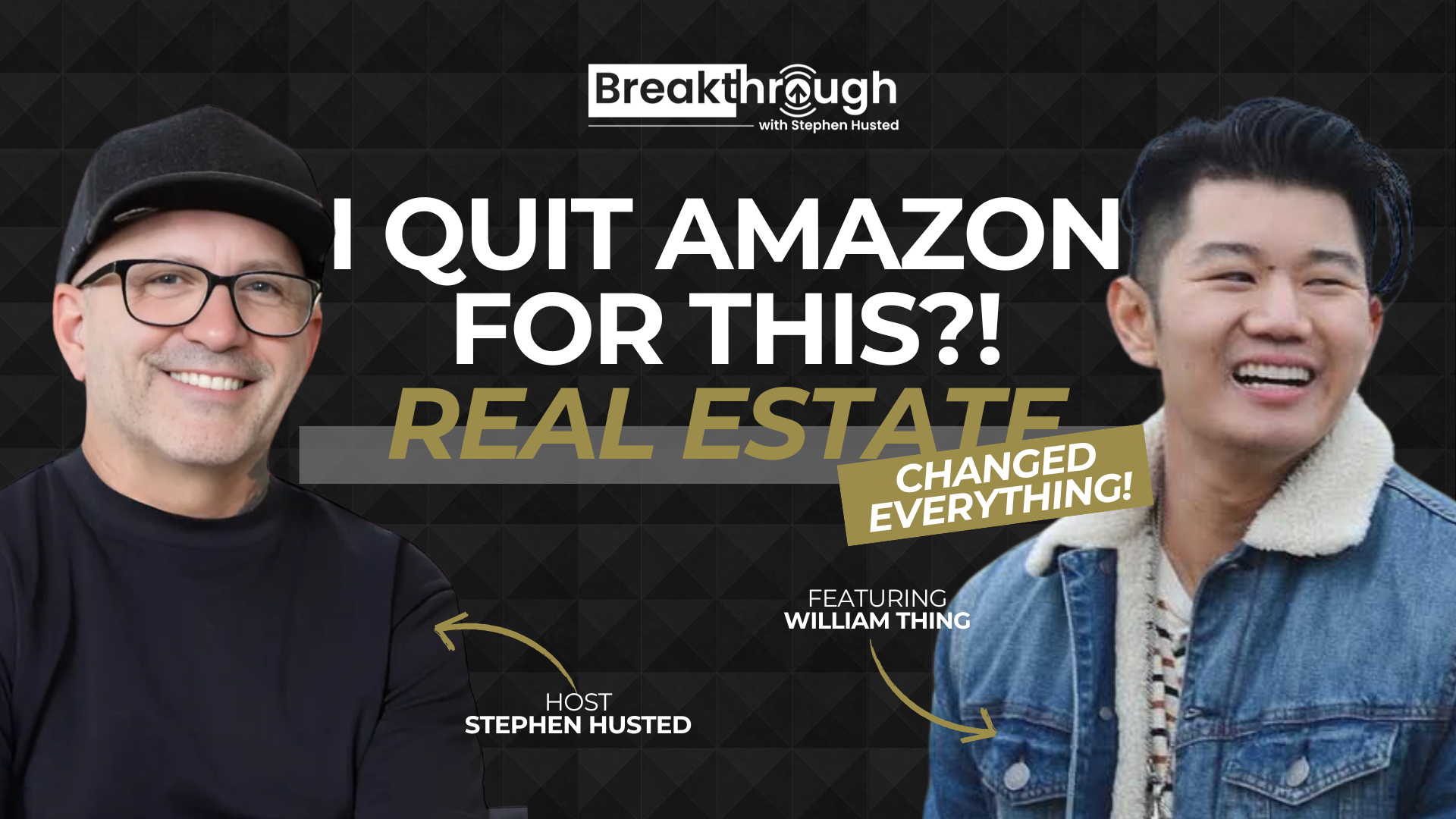
Ever wonder how someone goes from writing code to flipping homes and building a real estate career from scratch? In this episode, Stephen sits down with Seattle-based investor and agent William Thing, who went from a full-stack software engineer working at Amazon and Twitch to building a real estate business through pure action, curiosity, and consistency. William shares how learning construction by doing, partnering with the right people, and staying disciplined allowed him to grow even when he didn’t feel “ready.” This conversation goes deep into what it really takes to start investing — not with perfect knowledge, but with a willingness to learn, ask questions, and keep showing up even when you feel like a beginner.
Stephen and William talked about:
00:00 Introduction
02:39 Challenges with Contractors and Architects
04:34 Navigating Property Development
09:23 Seattle's Unique Real Estate Market
22:08 Parking and Privacy in Property Development
27:30 Exploring Property Investments Near Freeways
28:25 Challenges of Funding Large Lot Developments
28:39 Designing and Building Multi-Unit Properties
31:12 Navigating Competitive Real Estate Markets
32:01 Missed Opportunities and Real Estate Stories
35:21 Real Estate Trends in San Diego and LA
36:44 Venturing into Assisted Living Projects
38:42 Developing Property Management Software
43:54 Balancing Real Estate and Personal Projects
55:49 Connecting and Collaborating with Peers
TRANSCRIPT
∎ Teaser / Highlighted Clip
[WILLIAM THING] (0:00 - 0:35)
Strategy I've been thinking about is just doing more interest only. So how I think about it is like some of these properties, you might not cash flow as much. So maybe like one out of four properties, you might have to do interest only.
And maybe that's going to be like, I don't want to say the sacrificial lamb, but maybe you're losing 500 here, maybe you gain 1000 here. And then you do interest only on one of the properties that you might sell or don't plan to hold. And then maybe you can get the rents up and you can get $1000 cash flows and it pays kind of for the others
It kind of feed the other properties. So I don't know if you look into something like that. Something I've been thinking about.
[Stephen Husted] (0:35 - 2:34)
We are. We're kind of playing that game too.
∎ Podcast Intro:
Brace yourself for a wild ride into the unexpected. This ain't your typical success show. I'm here talking to real folks who've been through it all. Skipping the fancy business talk for authentic stories.
We're diving into childhood dreams, teenage escapades and everything in between. No scripts, just the stories that truly mold success. Each episode takes you on a journey through those breakthrough moments that paved their way.
No fluff, just genuine stories. So whether you're chasing dreams or just love a good story, buckle up for wisdom, laughs and the unexpected. This is The Breakthrough Podcast, where success is a journey, not just some fancy destination.
Don't miss out. Hit the subscribe button now and join our breakthrough crew. I got some incredible stories to share and you won't want to miss a single one.
∎ Guest Introduction:
Today's guest is someone whose journey really shows what it looks like to bet on yourself. William Thing is a full stack software engineer who walked away from Amazon and Twitch to build a career in real estate, even though he didn't grow up around investing, didn't have construction experience and definitely didn't feel ready. What I appreciate about William is the way he learns.
He's the type of guy who will show up on a job site, ask questions, get his hands dirty and figure it out along the way. And that mindset, that willingness to be a beginner is exactly what helped him go from analyzing deals to actually closing them. In this conversation, we get into how he built confidence, how he started partnering on flips, the habits that keep him consistent and the moments that pushed him to take real risks.
If you've ever wondered whether you need to have everything figured out before you start, this episode is going to hit hard. Let's get into it.
∎ Podcast Proper:
Cool. We are live.
[WILLIAM THING] (2:36 - 2:38)
All right. I'm excited today. Let's do it.
[Stephen Husted] (2:38 - 3:03)
Yeah. What I was telling you earlier before we got on, I was like, I'm tired of this blue light that I've been using in the background. I'm like, I'm over it.
I want to change it up. So I come, all right, well, I'm going to put it on for this last one. I go to turn it on, thing doesn't even work.
I'm like, okay, whatever. So that thing doesn't work. And then my assistant, she's like, I can't jump on.
I'm like, all right, that's cool. And then I get on, I can hear that there's nothing coming out of the, out of my headphones and the microphone.
[WILLIAM THING] (3:03 - 3:03)
Oh yeah.
[Stephen Husted] (3:04 - 3:15)
We're on, we're going to start off rough. That's a good day to start. We got to work through things.
Something that we were talking about before we got on was the whole live streaming.
[WILLIAM THING] (3:16 - 3:16)
Yeah.
[Stephen Husted] (3:17 - 3:22)
What's your thoughts on that with like real estate and like how to integrate that into our businesses?
[WILLIAM THING] (3:23 - 4:05)
Yeah. So what I've been doing is I bought an Osmo 3 and I just been live stream, well, not live streaming yet, but I just been creating short snippets of me walking my properties and like the before and afters. I definitely need to do a better job of it, but people love that stuff in my opinion.
So the next step would be like get some metaglasses or bring a semi-professional film crew, just like, you know, get out there. But I think live streaming for real estate, I think would be really cool because right now I'm building a six unit and I'm in the design schematics phase. And I think it's really interesting if I could create a series out of that because this is my first time doing a six unit.
I'm a pretty young guy. Like people can learn a lot from it. And it's like, dude, if he's doing it, I could do it.
[Stephen Husted] (4:05 - 4:33)
Absolutely. And it's cool. Some things that I find, like I want to tell it all.
I think sometimes the problem is how to tell it all online, how to put it all up. You know what I mean? We just want to, we could have people following us around all day, getting the day to day, and they'd really get a good understanding if you had them there.
Yeah, the more you can record and try to like just paint that picture, the more helpful it is. And it's sometimes interesting what people gravitate towards.
[WILLIAM THING] (4:34 - 4:35)
Yeah, I agree with that.
[Stephen Husted] (4:35 - 4:41)
It could be something very basic and it's, oh, that's cool. And it goes into the thought bank for later when they're doing something.
[WILLIAM THING] (4:42 - 5:00)
Yeah, I totally agree with that. That's been challenging for me in short form. Just like what you're saying, it's like we want to share it all.
But short form is just like a minute or less. Right. So you really have to condense things into like one very narrow thing.
And then you have so many thoughts. Right. So you just have to start shipping things like very narrow focused.
[Stephen Husted] (5:00 - 5:10)
And how you get your point across and to getting that point across. There could be five other things that could be talked about in that. And that's where people get you on the comment section.
[WILLIAM THING] (5:10 - 5:21)
Yeah, 100 percent. I think I saw recently your video on the contractors. And I'm like, oh, man, I like that one.
And I was like, there's five other things I would, you know, like totally like talk about, too. I'm like, that's a good one.
[Stephen Husted] (5:22 - 6:27)
Yeah, yeah, yeah. You should do one. Do a reaction to it.
And we'll piggyback off it. Like everybody, we have the same contractor. Well, honestly, you're right on that.
And it's not a story that he's not aware of, honestly. But it's also that is a story that I brought that up directly to Ian when we first met. And we're going, oh, yeah.
Well, because I've already experienced that in my other projects. And I know that it's a big thing. And I've gone through with a lot of not only contractors, property management, architects, you name it.
The minute that they end up in some type of mastermind group speaking event, everybody just flocks. And if those individuals don't have a really good team behind them and systems in place, they don't want to say no because it comes from somebody who's well-known usually. So it snowballs really quick.
And I've watched it happen. And that's why I've been really transparent to some people. Our architect in Seattle, she went off.
She got way too busy.
[WILLIAM THING] (6:27 - 6:31)
And are you using like Jacqueline Jay designs or who you guys using right now?
[Stephen Husted] (6:32 - 6:36)
We used to. Yeah, we used to. Now we use JW.
[WILLIAM THING] (6:37 - 6:38)
Oh, Julian Weber.
[Stephen Husted] (6:38 - 6:41)
Yeah, yeah. Have you used them before?
[WILLIAM THING] (6:41 - 7:05)
No, I don't use JW. I used to use Jay designs too. Her designs are beautiful.
It's just the timelines don't fit. It's always that trade off. Right now we use Vanderbilt.
They're like the top three firms in Seattle. Vanderbilt, I'm trying to figure out the last two. I'll send it to you.
I'll send it to you. Yeah, it's hard to get on their schedule. And they usually are like double the price of like Jacqueline or JW.
But like for the service you get, it's worth every penny.
[Stephen Husted] (7:06 - 7:11)
In what way? What have you found that it's helped your business move faster?
[WILLIAM THING] (7:12 - 8:09)
Yeah, I think there's a lot of more like white glove service. These bigger firms are like they can only take X amount of, you know, like clients per quarter, it seems like. I referred some people and like one of my architects was like, hey, I can't take anyone on.
And then another one, they're another big firm. And I think they're like Cone. And we messaged them a few times and they just denied us until we got like a backdoor connection.
And then even then it was very hard to like get on their schedule. But, you know, like on top of that, the moment you're in, like it's totally white glove, like they would meet you like literally the next week. They'll jump on any calls with the city.
I had one of my architects jump with me on a really big sewer issue I'm running into that's going to cost a couple hundred thousand dollars. And he and me worked on an appeal, went to the city, talked to them, things like that. And then everything's really on a timely fashion.
I feel like it's now on me more than them, like just getting things through.
[Stephen Husted] (8:09 - 8:13)
Ooh, that's a point right there. When you feel like you're on defense, things are moving good.
[WILLIAM THING] (8:13 - 8:32)
Yes, exactly. Yeah. And with Jacqueline, like I have an assistant and me and my assistant would always just we have to hound her down, you know what I mean?
And there's nothing wrong with that. It just doesn't fit our timeline. I know she's super busy.
I think she just is taking too many clients, things like that. But for us, we like to move fast.
[Stephen Husted] (8:32 - 8:33)
Well, time is money.
[WILLIAM THING] (8:33 - 8:34)
Yeah, time is money.
[Stephen Husted] (8:34 - 9:24)
And I think another thing too, like with JW, the minute I have something I'm looking at, property, feasibility, within less than 24 hours, I'm already on a Zoom call. They're walking me through. They got a team around them.
It seems like it moves a lot quicker. And it also makes me make better decisions faster. Do you know what I mean?
And there's a lot of decisions, especially now with all the new laws changing. It's hard. You got to figure out like all these.
I don't know about your architects, but JW will come back and say, oh, you could put eight units here and these could be 1,900 square feet a piece. And I'm like, at first you're like, oh, that's cool. But then you start running numbers and you're like, how much is that going to cost to build?
What's the ARV? What am I going to sell it for? I can't rent it if I build a $900,000 middle housing unit.
[WILLIAM THING] (9:25 - 9:58)
Yeah, yeah. Like they're throwing like low income too. Like you make a couple of low income and then this doesn't make sense.
I had this property I bought in the beginning of the year and I got very lucky with the upzoning that's happening in Seattle. And it got upzoned from like a three packer, which is like three units on a property to six units. But then it also got upzoned to like another zoning where you can do a four-story flat.
So I could build like 16 units. And I did the numbers for it. And it's just like, I wouldn't make 50 grand.
More. No, no, not 50 grand more.
[Stephen Husted] (9:59 - 10:01)
Oh, 50 grand, that's it. Oh my God.
[WILLIAM THING] (10:01 - 10:08)
And I was like running the numbers. Like, how does this make sense? I was like, okay, it doesn't.
And bigger is not always better. That was a fun run around.
[Stephen Husted] (10:08 - 10:08)
Totally true.
[WILLIAM THING] (10:08 - 10:09)
Yeah.
[Stephen Husted] (10:10 - 11:05)
Yeah, that's a big thing that we've been going through. Because when the whole DADU thing, you kind of knew here's what you're going to build at. Here's your cost.
Here's what, you know, your after repair value would be. And what you could possibly sell it for. Or if you didn't sell it, you're going to rent it out.
It was a pretty streamlined approach. Basically, you have to understand location and price points. But it was straightforward.
That middle housing is a little bit trickier to kind of put around. And one thing that I've done on some of our projects is I'm okay going bigger on square footage on corner lots. Or we have one on a street-to-street lot that we're working on.
And that one's going to face a neighborhood. It's going to feel like another house. So, you know, that one I'm like, okay, we can go bigger and I can take that risk.
Because I think it's going to hit a better price point.
[WILLIAM THING] (11:05 - 11:13)
Yeah, that makes sense. Are you selling a lot of your properties? Or are you developing to sell?
Or long-term rental? Like, what's the strategy right now? Or the main bulkhead?
[Stephen Husted] (11:14 - 11:20)
Yeah, what is it? That's a good question. Good question, man.
I get it. We'll keep half and probably sell half.
[WILLIAM THING] (11:21 - 11:53)
Yeah, that sounds about right for us. I think we had a team I've been building. Like in the beginning, I just wanted to keep it all.
But now as I get a little more seasoned, I'm like understanding, oh, we can't keep it all. And then some of the areas we're in, it's not like the most ideal areas. And I'm all about now, like peace of mind, simplicity.
Like keeping it like a good property in a good A neighborhood or B neighborhood. And it keeps everything really clean and simple. And just move on to the next project, right?
And sell whatever doesn't work out. And then just either reinvest that or use that to travel and enjoy life a little more.
[Stephen Husted] (11:54 - 12:02)
So I agree with you. So for people just joining that, what are we talking about here in Seattle? What are we doing?
Walk the audience through what we do.
[WILLIAM THING] (12:02 - 13:13)
Yeah, so what we do is we go find ugly houses, single family lots, where we can either keep it and fix it up and do a burr. And then what happens is we get the backyard for free or for a very low cost. And it has all the utilities, all the infrastructure already there.
So we would just go get permits to build. Now in Seattle, we're allowed to build six units or even more instead of the three units. Because we have such a big housing crisis right now.
And this is happening all over the US. But Seattle is very special because you can do something where you can condoize a lot. And what does that mean?
It just allows you to kind of do a lot split. And each one of your lots where you can build a new unit, a new ADU, could basically be sold because it has its own tax ID. And it's its own individual tax parcel.
o it's really amazing because like you could build something for $300,000 to $400,000. Like that's your bill cost. And then Seattle is like one of the, I think it's like top five in home prices and having expensive homes.So you get a really high selling point where you can sell these ADUs for like $700,000. So you basically kind of like double your investment.
[Stephen Husted] (13:13 - 14:21)
With multiple exit strategies, which is a really a big plus. And two, the big key why it works better, I think in Seattle and the neighbor and the other little cities around is the way that the lots, these properties sit on the lot and having basements and alleyways and all these different things that a lot of locations really don't have. So when you think of having a single family, and let's say you're on the alley, but you're building in the backyard, but they're accessing it.
They have two ways they could access that backyard, which makes it really appealing when you want to separate that single family from the new, I call them little mini communities because that's really what it is. You know? Yeah.
You know what I mean? You're building like a little community. And a lot of people, especially here where I live, they think, no, who wants to go live in a backyard?
Understandably, that could be something that you bring up. But at the end of the day, people live in townhouse developments. People live in condo developments where you have doors everywhere
So in high density areas that need housing, this is by far the best solution I've seen. It really is pretty damn amazing.
[WILLIAM THING] (14:21 - 14:21)
Yeah.
[Stephen Husted] (14:22 - 14:24)
Honestly, it's kind of cool to be a part of it too.
[WILLIAM THING] (14:25 - 14:45)
Yeah, it is. Right? And I think it's going to be happening for like at least the next 10 years because like in 08, 09, we had a real estate crash and everything went down where like people, builders didn't start developing until like 2017 or 2016 or something.
So there's a huge gap in this demand of like building middle housing and things like that.
[Stephen Husted] (14:46 - 14:50)
Yeah. And it's kind of up to a handful of investors to kind of lead the charge.
[WILLIAM THING] (14:50 - 14:52)
Yeah. A hundred percent.
[Stephen Husted] (14:52 - 15:00)
You know what I mean? It's kind of interesting, especially this day and age with social media, we kind of are all tied to projects. We know what's going on.
[WILLIAM THING] (15:01 - 15:26)
Isn't that funny? I think it's really interesting to see what's happening on social media where like everyone has different strategies. Everyone's doing something different.
And I don't know about you, but it sounds like you also are honed in on the ADU game in Seattle. And I feel like it's the best investment you can make in real estate for anybody who's just like a beginning investor or even a seasoned investor. Like I would say it's easy to get in.
You know what I mean?
[Stephen Husted] (15:26 - 15:30)
For a newer investor, did you feel like it was an easy strategy? Tell me your background and your first property you bought.
[WILLIAM THING] (15:30 - 16:55)
Yeah. So just FYI, I went to school at University of Washington. I'm actually born and raised in Seattle.
So this is kind of like my backyard, literally, right? So I went to school and then went to work at Amazon and Twitch, good salary. And then I bought my first property, 5% down.
I put in like 30 grand. My rehab was about, I was pretty cheap with it. I think I was like 70, 80 grand in.
So I'm all in like about a hundred grand. And then I put the permits and the architect fees and all that on a credit card because at the time I wasn't sure. So I was like, all right, I'll just use a credit card that has 0% balance or something.
And then like in Seattle, if you go to the right lender and they understand what you're doing, once you condoize the lot, which is like maybe you go to a real estate attorney and they'll split it up, it'll cost you a couple grand. And once you have permits and you have the lots all split up and condoized, they'll give you a hundred percent finance loan. You don't have to bring any money in and you're building a, like a new ADU for 300 grand.
And I'm conservative with my numbers, but if even if it's 600 grand or 700 grand, like I just doubled up on my money. I can either pull out that equity, I can sell it, or I can just rent it out. And definitely in Seattle, we get high rents.
I'm already making the 1% rule where I'll be making $3,000 on a $300,000 investment or house.
[Stephen Husted] (16:56 - 17:12)
And to add on to your, the 1% rule, that's great. Especially in a high cost area like Seattle and California, if you can get those 1% rule, which is very rare, you also get the icing on the cake with the appreciation play as well.
[WILLIAM THING] (17:13 - 17:13)
Yeah.
[Stephen Husted] (17:13 - 17:16)
Which is kind of hard to do both.
[WILLIAM THING] (17:16 - 17:17)
It is.
[Stephen Husted] (17:17 - 17:47)
Yeah. You know what I mean? Like there's a trade-off, like you can go to the Midwest and go to Detroit or Kansas City, Ohio, those markets, and you can really, cashflow is king.
It's not that the properties won't appreciate the same. You'll get that first bump of equity when you, if you buy a property that you have to rehab. So you make some money there.
It's just, it's different, but it's, I think Seattle's got a very unique situation where you could potentially on a project, get both. Yeah. And we haven't even talked about basements.
[WILLIAM THING] (17:48 - 18:03)
I know. Like the biggest park in Seattle and you'll get that in a lot of areas with high density. I know you're doing a project right now.
I think you have a basement, right? Or have you seen like a couple? I think Ian has one, things like that.
What do you do when you have a basement in Seattle?
[Stephen Husted] (18:04 - 18:38)
So typically we first look at the basement and try to understand the height is the big key right off the bat. What can we really put down there? Does it flow correctly?
What are the things that we're going to have to run into? Is it above ground, underground? There's a lot of, are we putting in a French drain?
We've figured that out, but typically if we're buying these small little two ones and we got a footprint of 800, 900 on the main floor, we're going to have that in the basement. So if we can go three, two upstairs, then typically we're building at least a two, two, but our newest ones, we're going three, two in the basements.
[WILLIAM THING] (18:38 - 18:39)
Oh, that's nice.
[Stephen Husted] (18:39 - 18:48)
Yeah. It's been cool. So we've done so far two, two basements and then we have, we're working on two of them right now as well.
That's nice.
[WILLIAM THING] (18:49 - 18:53)
Then you just rent it out to each separately and it's allowed in shadow. Yeah.
[Stephen Husted] (18:54 - 19:29)
That part's interesting too, because you're not splitting up all the utilities. And so that's where your property management, who's well-versed on these situations, understands how to build that in to the gross rents and explaining it to tenants. Like here, we're putting this much towards utilities here and that works out good.
At first I was a little apprehensive about that. Hey, how are you going to separate these utilities and are people complaining? But so far it's, that's worked out good.
We have one basement that we got this one project that Ian helped us get.
[WILLIAM THING] (19:29 - 19:30)
Yeah.
[Stephen Husted] (19:30 - 19:31)
Is on a reverse lot.
[WILLIAM THING] (19:32 - 19:33)
Reverse lot.
[Stephen Husted] (19:33 - 20:00)
Yeah. So it's a corner lot, but it's defined as a reverse lot. So there's some- I've never heard of that.
Yeah. Yeah. So understand that with corner lots.
That's something that you have to understand from the architect. But I guess it's different requirements on setbacks. And we built out the main house.
We were going to flip it. Had a basement. We ended up just putting a bedroom and a laundry room down there.
And then the market started shifting back in like March.
[WILLIAM THING] (20:01 - 20:01)
Oh yeah.
[Stephen Husted] (20:01 - 20:48)
We couldn't sell it. And we didn't really want to take a loss either. We're like, why are we going to take a loss?
I'm like, I don't want to take a loss. I know everybody does that on the main house just to get the backyard. But then in the backyard, we were only going to be building a 2-2 because we had this one tree that is 80% on our lot, 20% on the neighbor's.
And the neighbor, she's giving us grief. And I'm like, okay, we'll keep the tree. So we had to set the house closer to the main house.
And then the reverse lot came in the mix. And so we had to- So it was like a 2-2. And I'm like, I don't want to even sell it.
Forget it. So I called Israel up and I said, what can you do? What kind of financing can you get in to just kick the can down the road?
Get the financing dialed in, put tenants in there. It's like four girls and they took up every floor.
[WILLIAM THING] (20:48 - 20:49)
No kidding. Yeah.
[Stephen Husted] (20:50 - 20:55)
And they're all college grads. And they really love the space that they got car. They can park everywhere.
[WILLIAM THING] (20:56 - 20:57)
Yeah. Corner lot's nice.
[Stephen Husted] (20:58 - 21:07)
Yeah. I love how that's kind of dialed in that way. But then I changed my mind.
I talked to JW and I told them, hey, I want to do a legal basement now.
[WILLIAM THING] (21:07 - 21:07)
Oh, yeah.
[Stephen Husted] (21:07 - 21:18)
Just to go through the process because I have time and- Yeah. And then I went to JW for, I switched gears. I was one week away from getting permits issued.
[WILLIAM THING] (21:19 - 21:23)
For the 2-1? For the 2-2. Yes.
Oh, 2-2. Yeah, yeah.
[Stephen Husted] (21:23 - 21:44)
Yeah. And the new laws were coming into play and I was talking to JW. And so I talked to Roman.
I'm like, I'm going to call JW. So I said, hey, here's this address. Tell me what you can build.
They came back like, oh, we could build two units. They could be 1,700 square feet, blah, blah, blah. Okay, just give me one house.
I just want one house. Just give me one.
[WILLIAM THING] (21:45 - 22:05)
That's funny because I'm in a very similar situation as you. I have also a potential 2-2. But with the new zoning, we're on like correction one right now.
And I'm thinking of just like redoing the permits and just doing what you did where I'm like, okay, maybe I can just go three stories instead of two. And then getting more bedrooms and getting more parking because parking is kind of like butt in that area.
[Stephen Husted] (22:06 - 22:07)
Exactly what I did.
[WILLIAM THING] (22:07 - 22:07)
Yeah.
[Stephen Husted] (22:07 - 22:11)
Exactly what I did. Yeah. Except that I did it at the very end after six months.
[WILLIAM THING] (22:11 - 22:15)
Oh, yeah, yeah. I mean, I totally did that.
[Stephen Husted] (22:16 - 22:25)
Declan's all, are you sure? You just went, you know, this amount, you paid all this money. I'm like, okay, so I'm going to lose 10 grand and some time.
But I'm going to make more when I build it.
[WILLIAM THING] (22:26 - 22:28)
And yeah, that's going to be way more than 10 grand.
[Stephen Husted] (22:28 - 22:29)
And it's going to be a lot nicer.
[WILLIAM THING] (22:30 - 23:08)
I don't know if the neighbor is going to be happy. But you know what? You just changed my mind.
I'm going to, we're on correction one. We're like, we're pretty deep in it right now. Like we're- Hopefully I made you feel better.
Yeah. I was like, actually like two nights ago, I was like thinking about it because the parking is tight, man. The alley is about 12 feet and then my driveway is 12 feet.
So you can't even do a full like turn. You need about 16 feet radius. So someone who is living there has to do like a three-point turn or a three-point going in, out, like turning three times just to get out of the alley.
I would look into it. Yeah. It's pretty tight.
So I was like, okay.
[Stephen Husted] (23:09 - 23:17)
But you brought up parking. That was another like rabbit hole for the last year, I would say. Yeah.
And I'm out in Seattle now every other month, typically.
[WILLIAM THING] (23:17 - 23:18)
Oh, nice. Yeah.
[Stephen Husted] (23:18 - 23:22)
Next time we should meet up. I think that'd be cool. Yeah, we should.
I feel like I'm a local from before now.
[WILLIAM THING] (23:23 - 23:27)
Yeah, I was going to say you're a local, man. Like Ian, you know, Roman, you know, everybody in Seattle, man.
[Stephen Husted] (23:28 - 23:36)
I like it there. I really do. I've been investing for a very long time now.
And I will say that the community in Seattle is like top notch.
[WILLIAM THING] (23:36 - 23:46)
I like that. Good to hear. I'm a Seattle born, so I'm like, I'm glad to hear that because we get some other things like the Seattle freeze.
So people have an interesting take on Seattle, right?
[Stephen Husted] (23:47 - 23:55)
Oh, it rivals California. It rivals California on pretty much every aspect except for we just absolutely beat you guys in weather.
[WILLIAM THING] (23:55 - 24:07)
Yes, 100%, man. That's why I like going back and forth in LA and stuff, man. The weather and the food is great there.
Seattle has great food too. But you can't beat the weather.
[Stephen Husted] (24:07 - 24:10)
You can't beat the weather. And we got better Mexican food. Sorry.
[WILLIAM THING] (24:11 - 24:12)
Hey, man, you guys are closer.
[Stephen Husted] (24:13 - 24:39)
I know. So yeah, it's about parking. Every time I'd go out there and in the beginning was like, oh, you don't need parking for this and parking for that.
And I go, so if I moved out to Seattle with my family and we had three cars, like where the heck are we parking? Like you have to come to these times. Well, you park down the street.
I'm like, it's cold in the winter. They're like, yeah, you just deal with that. Some people ride their bikes in the cold.
[WILLIAM THING] (24:39 - 24:40)
I'm like, yeah, OK.
[Stephen Husted] (24:40 - 24:47)
And I really made up with all the projects, big focus on privacy and parking.
[WILLIAM THING] (24:47 - 25:09)
I like that. Yeah, those two. Yeah, I think parking is huge.
So I like that philosophy of privacy and parking. For same as us, like every property, we have to at least have one parking per unit, even if it's not required. Yes.
Yeah. Or unless there's just a ton of street parking where we're like, OK, that's fine. But I agree on the private parking.
[Stephen Husted] (25:10 - 25:18)
Yeah. And I think one thing, these projects, and I know that you go through this, too. Every project has its unique pros and cons.
[WILLIAM THING] (25:19 - 25:19)
Yes.
[Stephen Husted] (25:20 - 25:29)
They all have different things that you have to look at and you have to look at it in all kinds of different angles. It's not just about what can you build? It's what do I got to worry about here?
What about this?
[WILLIAM THING] (25:30 - 25:30)
Yeah.
[Stephen Husted] (25:30 - 26:11)
Who's moving over here? What are they going to feel about that? You really have to do the best you possibly can.
And the parking thing is, we got this one on an alley that we closed on. It's on a cool alley because it's paved and it's next to this really cool brick building by Green Lake. And they did a design.
First, they did a DADU. So it was only like $1,200. It had one car garage, just pretty standard
And he showed it to me and I'm looking at it. And this is a different architect. This came from David Weiser.
Peter, really cool guy. He's an architect.
[WILLIAM THING] (26:12 - 26:17)
Oh, okay. Peter, he's like Southside, South Seattle. Is that his office?
[Stephen Husted] (26:18 - 26:18)
I don't know.
[WILLIAM THING] (26:19 - 26:19)
Okay. Okay.
[Stephen Husted] (26:19 - 27:08)
But he showed this design and I saw it. And then I, okay. And we get back and I'm looking around and then I go to Pinterest and I find this.
I go, no, you know what I want? You know, I'm back and I go, I want a two-car garage side by side. And since you told me that I could build like a mini apartment complex, give me a three-story, like 1,500 to 1,700 square foot home.
But I want a two-car garage side by side. So I showed him this photo. He's like, awesome.
So he came back and I got the two-car garage and the second floor, you know. One thing I can tell you, what I noticed, I don't know how big the units you've been building. But this one fits in that middle housing.
So it's, it's about 1,500 square feet total. And what a difference.
[WILLIAM THING] (27:08 - 27:09)
1,500 square feet.
[Stephen Husted] (27:09 - 27:12)
The main level looks crazy. It's like.
[WILLIAM THING] (27:12 - 27:17)
What's your footprint look like? 500 or something, right?
[Stephen Husted] (27:17 - 27:25)
Yeah. Yeah. And it's tiny.
It's a 3,100 square foot lot. I'll show you, I'll send you a photo of it and I'll show you what I'm building there. It's cool.
[WILLIAM THING] (27:26 - 27:30)
That's probably the same thing I would have to do. Cause I have the redo line. We talked about it earlier, right?
[Stephen Husted] (27:30 - 27:33)
So on that location, what was the square footage of the one you were going to build?
[WILLIAM THING] (27:34 - 27:48)
The square footage was a thousand cause it was using the old law. But now like we're in the new zoning. So the new zoning allows you to build up to like, I think 2,000 square feet.
Actually, it's like single family zoning. You can build more than like close to 3,000 depending on how much far you have.
[Stephen Husted] (27:49 - 27:53)
You get triggered some energy credit scenarios after 1,500 square feet.
[WILLIAM THING] (27:53 - 27:54)
Oh really? Okay.
[Stephen Husted] (27:54 - 27:58)
Yeah. I'm trying to digest all these different things that get thrown at you.
[WILLIAM THING] (27:59 - 28:00)
What's it doing?
[Stephen Husted] (28:00 - 28:08)
What's happening here? Yeah. You know what you should do?
Try to look into, let's say you go to 1,400, 1,500 square feet in that location. Find out what the comps look like.
[WILLIAM THING] (28:08 - 28:20)
Yeah. Good. Yeah.
You think so? Yeah. It's in a really good area.
Like a lot of my properties are in like the Greenwood, the North Seattle area. They're all maybe like 10 minutes away from each other.
[Stephen Husted] (28:21 - 28:22)
Same with us. Yeah.
[WILLIAM THING] (28:22 - 28:22)
Yeah.
[Stephen Husted] (28:23 - 28:23)
Yeah.
[WILLIAM THING] (28:24 - 28:26)
Yeah. I like it that way.
[Stephen Husted] (28:26 - 28:27)
Cause you understand things.
[WILLIAM THING] (28:27 - 29:27)
Yeah. A hundred percent. We're working on the sixth unit.
It's really tight. It's like a 7,000 square foot lot and we're trying to get parking to everybody. And it gets really tight.
And they're like townhouses basically, like three stories. And we're always battling on either keeping them in the area. There's a lot of two bedrooms, two baths or two threes.
But we're making them a little bit more fancier and doing like three threes. We're going to probably sell like maybe two to three of them and then rent out the rest. And then we're dealing with situations where do we want the living room, living and kitchen on the first floor or the second floor?
Because there's a lot of foot traffic that goes with six units. And what's really common now is having it on the second floor. But because we have these nice patios, it's really nice to have the living and dining on the first floor.
Cause you can just walk out to your patio, like barbecue, things like that. And then you also have the challenges of like rooftop decks, things like that. And then like, if you want to sell, you want more square footage because you get more bang for your buck.
But if it's a rental, you got to hit like another different sweet spot.
[Stephen Husted] (29:28 - 29:36)
So it's not refinancing. Israel and those people can only do so much with their trickery.
[WILLIAM THING] (29:37 - 30:13)
Yeah. A strategy I've been thinking about is just doing more interest only. So how I think about it is like some of these properties, you might not cashflow as much.
So maybe like one out of four properties, you might have to do interest only. And maybe that's going to be like, I don't want to say the sacrificial lamb. But maybe you're losing $500 here.
Maybe you gain $1,000 here. And then you do interest only on one of the properties that you might sell or don't plan to hold. And then maybe you can get the rents up and you can get $1,000 cash flows and it pays kind of for the others.
It kind of feeds the other properties. So I don't know if you look into something like that. Something I've been thinking about.
[Stephen Husted] (30:13 - 30:39)
We are. We're kind of playing that game too. And I'm just trying to understand the A, B neighborhood properties, how they will appreciate differently than something that's like, we have one project that's close to the freeway and it's on a dead end.
It's not my favorite location, but it was a massive 12,500 square foot lot, 110 feet wide. So we're just packing it in there. It's in Seattle?
Yeah, it's in Seattle.
[WILLIAM THING] (30:39 - 30:45)
Oh, wow, dude. I have a similar property near the freeway, but it's not that big. Really?
It's something I've done a lot, man.
[Stephen Husted] (30:45 - 30:46)
Yeah, it's crazy.
[WILLIAM THING] (30:46 - 30:47)
It's been crazy.
[Stephen Husted] (30:48 - 30:57)
And that one, I'm just like, let's just build this out and just sell it all. I don't even know. I don't even want to keep it.
I don't like the freeway. I don't like being by the freeway, but we got a good deal on it.
[WILLIAM THING] (30:57 - 31:07)
Yeah, I guess the biggest thing is like funding these deals, man. If it's 12,000 square foot lot, it's like, you're probably at least building like six to 12 units. You know what I mean?
[Stephen Husted] (31:07 - 31:32)
I think we're in it. So the main house is a duplex now. Okay, nice.
So we built out that and it's rented. So both of them are rented out, year leases. We gave them a little bit of a break on rent during construction.
And then one is getting built right now currently. And then the other ones are in planning. And I think we're going to do four.
So wait, four or five. So it'll be seven units total.
[WILLIAM THING] (31:32 - 31:34)
That's awesome. I like that.
[Stephen Husted] (31:34 - 31:40)
Yeah. And I think between 14 and 1600 square feet on the units.
[WILLIAM THING] (31:41 - 31:44)
Okay, that's those are nice. They're like three threes, I'm assuming.
[Stephen Husted] (31:45 - 32:18)
Yeah, I've been keeping them at three, two and a half. Yeah, like three, two and a half on the half. But you brought up something about outdoor space.
So that one that we just closed on by a green lake on the alley. That I wanted the two car garage side. So basically it's two car garage side by side.
Access to the stairs go to the entry on the side of the house. Goes up to the second floor. Second floor is kitchen, living room, half bath.
And then a eight feet wide by 25 feet wide covered deck.
[WILLIAM THING] (32:19 - 32:26)
Eight feet wide. Eight by what? Eight by 25.
Oh, that's pretty big. Big.
[Stephen Husted] (32:26 - 32:33)
Yeah. So that's going to be that's your outdoor space. Because we went on the second floor.
There's no backyard. They have that.
[WILLIAM THING] (32:33 - 32:38)
Yeah. And that's above the garage. Can people park underneath the deck or is it just like.
[Stephen Husted] (32:39 - 32:49)
Yeah, they'll be. You could probably butt up against it. And you'll be sticking a teeny bit out into the alleyway.
But then to the right of it, there'll be a little space that somebody else could park there too.
[WILLIAM THING] (32:50 - 32:50)
OK, gotcha.
[Stephen Husted] (32:50 - 32:58)
You get three. And then the third floor is three bedrooms, two bathrooms and laundry room. That's nice.
[WILLIAM THING] (32:58 - 32:58)
Yeah.
[Stephen Husted] (32:59 - 33:13)
So I think that's how I solved the no outdoor space. Because I was juggling around with the rooftop decks and then cost. And just playing around with this middle housing of.
Trying to understand the square footage and stuff. Because we hear all different things.
[WILLIAM THING] (33:13 - 33:13)
Yeah.
[Stephen Husted] (33:13 - 33:22)
Everybody's throwing these numbers out. So I'm just trying to find these sweet spots in these locations. Some of it's just going to be a.
We're testing out things for the next couple of years, right?
[WILLIAM THING] (33:23 - 34:00)
That's what it seems like. Something I realized, I'm interested to seeing how the other cities, LA, San Diego, even San Jose, the Bay Area and other areas are going to figure out how to do the condoization. Because I think it's going to take a lot of time to figure that out for them.
And then the appraisers and people have to get accustomed to it. So I think Seattle would be the play for. I would say the next foreseeable two, three years.
But it's getting competitive as well, you know what I mean? So how are you thinking in the future about that? Are you kind of committed to Seattle?
Or you're just like anything that kind of gives the best return for your money?
[Stephen Husted] (34:01 - 35:40)
That's a good question. I think I will stay really hyper focused in Seattle and the surrounding areas. And just entrench in those markets.
Because it's working. And at some point you just have to, you just know when it's not working anymore. For whatever reason that is, you start getting the signals.
Whether it's the prices are going up, sellers are understanding things a little differently. Running out of product. There's regulation.
There's things that push us back as investors. I think that would be the thing. I'll give you a good example.
San Jose, back in February, there was this house that was on a street that I used to work at. I used to have a business down the street from it. And it was an old like 110 year old house.
It was probably on 14,000 square foot lot in that range. And it was just raw land. A couple fruit trees.
And this old lady just lived there. And she would just sit on her porch. She'd water her little plants.
And it was really just a really cool house. Because it just was the only land that was raw sitting in this neighborhood. Anyways, the lady passed away.
And it went on the market. Had a full basement. Massive like 13 or square foot basement.
Eight feet. Little over eight feet. You know what?
I'm just so pissed off, dude. I'm stoked. I'm like, I'm going after this one.
It's mine. And it had a lot to the left of it. It had room in the back.
I could build an ADU. Just dialed in. And we went after it.
So they listed at $1,380,000. We wrote at $1,700,000. Then the agent said, you need to improve your offer.
[WILLIAM THING] (35:41 - 35:43)
Really? $300,000 over? That's crazy.
[Stephen Husted] (35:43 - 35:54)
Yeah. So like a couple hours before presenting offers to the seller, she called like a handful of agents and just said, hey, you got to improve your offer. And so then we went up another $110,000.
[WILLIAM THING] (35:55 - 35:55)
Wow. Yeah.
[Stephen Husted] (35:56 - 35:59)
And we were the highest offer. But we didn't get it.
[WILLIAM THING] (36:00 - 36:00)
What?
[Stephen Husted] (36:01 - 37:18)
Really? What happened? The neighbor got it.
And the neighbor, the story was the neighbor helped the lady that lived there. And he had some of his personal belongings in the house. And basically, they sold it to the neighbor for a lot less than our offer.
The only part that I didn't understand, I wish, I'm hoping it was one of the neighbors to the right or somebody that didn't, because the neighbor to the left owned a beautiful home. And so if he was just or he or she were buying that house just to land grab so that people because he knew that people were developing the house to the right of it, they own the land there too. And they sold off that parcel.
And so somebody was already building another home. It was the perfect textbook wedge deal where you got a beautiful two story on the left, beautiful on the right. And then you had this raw land.
Like, can it get any better? And it was, I was so invested in this one because I was like, OK, I'm going to rehab the main house. I'm going to move into it.
I'm going to build out the basement. I'm going to build out the ADU. I'm going to build out the single family.
I'm going to sell off this one. Like it was all planned out. That was February, dude.
I haven't seen and looked at a deal since.
[WILLIAM THING] (37:19 - 37:20)
Oh, man, seriously?
[Stephen Husted] (37:20 - 37:32)
Locally, because it just doesn't we have locations that have big lots. But let's just say you could have a 75,000 to 8,000 square foot lot here in San Jose corner. But the house sits in the middle.
[WILLIAM THING] (37:33 - 37:34)
Oh, gotcha.
[Stephen Husted] (37:34 - 37:35)
Yeah. And you can't tear it down.
[WILLIAM THING] (37:35 - 37:36)
The numbers don't make sense.
[Stephen Husted] (37:37 - 37:50)
Or it's a huge backyard. And the only way to access the backyard would be going through like a side gate. So what are you going to do?
You're going to put a spend $600,000, $700,000, build a house. And the people that buy it are going to park on the street in front of the neighbor's house.
[WILLIAM THING] (37:50 - 37:52)
They didn't walk to the back, right?
[Stephen Husted] (37:53 - 38:02)
Yeah. So you brought up something about L.A. and San Diego. Do you have friends down there and investors working?
And how are they building out compared to what we're doing in Seattle?
[WILLIAM THING] (38:03 - 39:43)
Yeah, I've been talking to a lot. Like San Diego is a small, I would say smaller city, right? And the investing community, I think, is a lot more like tighter knit.
And there's not a lot of big players, I would say, there. So from what I've seen is they've been building a lot of these six units or above because in certain pockets in San Diego, for example, you can just get a small piece of land and start building like six units or more. And it's extremely lucrative because like, you know, everyone wants to live in San Diego.
It's like the yuppie life, the beach life. So if you get one development deal in the right areas, like you can make a killing. Like I have a buddy who I think his name is Chris Luna.
I don't know if you... He's never met him. Ah, he's a cool guy.
And he, I think he had like a property in Little Italy and doing development there. He's going to make probably, I forgot how much he bought it for, but he bought it for maybe three mil and all in maybe he's six mil, but it's going to be worth like 12 mil by the time he's done with it. The turnaround time is a little longer.
I think it's two years because the city is not as fast as Seattle. But if you find one or two development deals, you can make a killing in San Diego. I heard LA is a lot more lax and you can make good money too.
The reason I'm looking at in those areas is because I've been thinking about assistant living. And I have a business partner who's a doctor and it's like a medical director. And we've been thinking about doing assistant living, you know, doing some rehab projects and then getting licensing and then leveraging his community, his skillset to make these assistant living.
Because assistant living, I think preventative healthcare and like the aging population is like a really good industry to be in.
[Stephen Husted] (39:43 - 39:48)
That's great. Yeah. That's a nice little like a side pivot to this.
[WILLIAM THING] (39:48 - 40:19)
Yeah, yeah. I mean, it's still real estate, but you know, you have these like subsidized programs. And if you build a really nice home where you have a lot of good caretakers, each one could rent for easily eight to 10 grand.
And your mortgage is maybe like 10 to 12 grand if it's a really nice place. You get two people who are elderly and need to be taken care of. And they don't want to go to like a bigger facility or be at the hospital or anything.
Right. You can house them there. And yeah, that's like...
How's that regulation?
[Stephen Husted] (40:20 - 40:23)
Like how is that getting licensing? And is it pretty... It's a long proces
[WILLIAM THING] (40:24 - 40:47)
And yeah, it's like I have a buddy, his name is Alvin. He's a big developer in LA and he's doing two or three right now. I think he's doing assistant living for the elderly.
He's doing sober living. And then I think he's just doing like a rent-by-the-room model. And he says licensing can take a year to two years.
But he's doing it for his mom because she's reaching that age. So it's a mission for him for sure.
[Stephen Husted] (40:47 - 40:57)
That's cool. I wonder what the difference is in cost compared to the sober living environment. Are they getting the money from the state?
Like how are the... Okay. Yeah.
[WILLIAM THING] (40:57 - 41:02)
I think both actually, both assistant living and sober living, you get money from the state.
[Stephen Husted] (41:02 - 41:03)
Oh, really?
[WILLIAM THING] (41:03 - 41:06)
Okay. It's not the whole amount, but it's a good chunk.
[Stephen Husted] (41:06 - 41:17)
Yeah. That's cool. So speaking of pivots, you got something kind of going on that you're kind of deep in it right now.
Let's hear about your side project.
[WILLIAM THING] (41:17 - 42:53)
Yeah. So my main focus is building up the real estate investing and developing business. And then my other thing is I just like doing content for just like to educate others.
I came from a software engineering background and I want to help others get financially free and just like live a more balanced and wealthy life. So I really want to build products. I just like building in general.
So one thing I really like is combining my software engineering skill set with real estate investing, right? And I thought the best thing combining those two things is building a property management like software. So I put a challenge for myself, which is really ambitious to build a software in 30 days.
And I'm going to be honest, I haven't released it yet. Right now is very overly ambitious. And I don't think we're going to be able to hit that deadline.
So I might have to push the deadline maybe another month, but it's coming along. I really like it. And the things that I usually build is to solve my own problems because I feel like I know my problem is better than anyone, right?
You know? Yes. So I just want to build a property management software that can show like an investor's portfolio.
It can automate a lot of things like rent collection, how all my leasing docs, all my loan docs. Because one of the struggles for me is just like, you know, changing insurance or someone needs something for a loan or whatever. I'm like scrambling around like Google Doc or Google Drive, Dropbox, just to like find this like one doc, like my LLC doc or something like that.
I need it somewhere, right? So yeah, that's kind of like my passion project right now.
[Stephen Husted] (42:54 - 42:59)
So do you self-manage or do you have property management?
[WILLIAM THING] (42:59 - 43:25)
Yeah. So I actually have a combination. So I have two solid property managers.
And then for the areas I think are easy to deal with, like I don't really need to have a manager, like it's A neighborhood or B neighborhood. Renters in that area, they're pretty, like they do things themselves. I think they take care of the property a lot better.
And usually if they have a issue, they end up paying it themselves because it's faster for them and it's more convenient. So I do a mix.
[Stephen Husted] (43:25 - 43:41)
Okay. So how did you, with the property management software, what holes were you running into in the software that you're getting provided from the PM? Were they using like Buildium and were you going, what is this stuff?
It's so complicated. What were you trying to solve?
[WILLIAM THING] (43:42 - 46:01)
I would say, yeah, that's a great question. They use Affolio, Buildium. And I don't know for me, like when I'm building software, I am a full stack engineer.
So I like looking at the back end and then also like the front end, which is what you see with your eyes. And I just felt like it's very clunky and just, there's just a lot of buttons going on. Like for me, I don't really care about like all the functionalities.
Maybe you can tuck it away somewhere. But like for an investor and like property manager, I only care about a few things. Like maybe what's the cashflow?
Like what's my portfolio look like? So it's really a hybrid of thing of like, I think Stessa and then like Buildium at a baby, you know what I mean? Because a lot of these things are meant for big property managers because that's how they make a lot of their money by having more units using the system, using the software.
For me, it's more about like for the smaller investors who just need something really simple, not super overloaded in features. And just like if I need to get my real estate owned like sheet, I can just like kind of print that from my software and I can give it to a lender and like I can see my portfolio at all times, see how it's doing. It's like a vanity metric sometimes to see like, oh wow, like I have a million dollars in equity, that's awesome.
So that's what I'm building it for, something super simple that I can use. The reason also is because like it's for the portion that I also self-manage. And as we scale the real estate investing business, I think of it like this, you have acquisitions, you have financing, you have like operations, construction, and then you have asset management.
And I'm always trying to figure out like to build a system in each one of these like pillars, right? And then that's how I'm kind of addressing the property management side, right? I own a VA company.
I don't know if you heard about that. So it's kind of like an extension of that where once we get enough properties that I either manage or something like that, right? Then we have this kind of system and then we have the VAs that can help us kind of fill in the pieces together, right?
There's a lot of pieces. There's a lot of pieces, yeah. I'm just building things step by step.
I'm really hoping like we launch by the end of this year and people have been DMing me and just watching the series and are really excited to use the software. So I really want to have a big impact by building something. I like building cool stuff, man.
[Stephen Husted] (46:01 - 47:09)
I think it's great. And too, you know, the thing is you can move fast, you can break things, you can get it up. And then once you have it up and running, you just fine tune.
You're just going to, over time, you're just going to keep adding different things to it or take things out that you just thought you needed. You know, I mean, there's just so much. But once you have something structurally that you can kind of work through, that's where the whole magic happens, especially for investors.
I mean, you brought up a good point. Yesterday, my assistant was, she was out, right? And we had a refrigerator go out on a property and the property manager is calling me like, hey, refrigerator is out.
It's been out three days. Your tenant's upset. We need a new refrigerator.
Here's one for $1,700. Oh, okay. Let me, of course, being an investor, I'm not going to say, yeah, sure.
Buy the $1,700. I've got to go look. I'm going down the rabbit hole.
But then I'm trying to get into Google Drive and I'm looking for like, where do we buy this from? And who was that appliance company that we used that had appliances that had like dents and scratches, but they're a good price. So I'm like going through this whole thing for an hour to figure this out.
And we, I feel like we're pretty organized.
[WILLIAM THING] (47:09 - 47:10)
Yeah.
[Stephen Husted] (47:10 - 47:33)
But then we're not. No, yeah. You can say we're in tech and you know all this stuff, but we still have these days when we just want to know where everything, I switched over at Notion lately and I'm moving every, and I love that platform.
Like I'm, there's just so much software. I know. But that's a key.
[WILLIAM THING] (47:33 - 47:50)
I love what you said because like for a seasoned investor, refrigerators are a pain in the butt guys, just so you know, because refrigerators come in different sizes as well. If you're not ordering the right one, like it might not fit through your door. It might not fit into your, the space that it's supposed to live in.
[Stephen Husted] (47:50 - 48:09)
So I totally get that. I know the pain points, bro. Dude.
And that's so funny you bring that up. You would know this as an investor, you'll know this. And that was the talking point.
They sent me and said, Hey, you need a refrigerator. Okay. What is it?
It's 36 cubic inches. I'm like, right. Okay.
No, I need the width. I need it all that. Yeah, I need the width.
[WILLIAM THING] (48:10 - 48:10)
What was in there?
[Stephen Husted] (48:11 - 48:37)
And then I'm trying to find the old one. We bought it. And so I'm going in the property because we tab everything by address and I'm looking through things and I'm panicking and that's just one thing out of a hundred.
And then I'm laughing because then I'm calling Roman and I'm going, you know what? William's got to stop posting his stuff on Instagram saying Mondays are great because Mondays aren't great. Dang it, dude.
Hey, man.
[WILLIAM THING] (48:37 - 48:38)
I'm posting Mondays.
[Stephen Husted] (48:40 - 48:50)
Oh man, dude. I love that. He was totally laughing.
William's got him. He's having great Mondays over there. It's the systems, man.
[WILLIAM THING] (48:50 - 49:54)
It's the systems. But I love what you said because like you're echoing the same experience I'm having, man. Like Mondays sometimes are shitty, man.
Like I get it. And if your assistant is gone, like you need to be able to get it resolved somehow. That's why we love building like systems or like something like a process where things will be taken care of almost automagically is how I think about it.
It's like magic and it's automatic, right? So what I'm doing in this software is let's say we want to build automations. Let's say there's a refrigerator maintenance request.
Then you can kind of wire it to, oh, this handyman usually takes care of it. This is maybe the refrigerator, maybe notes on about the depth, the length and stuff. And it makes it a lot easier because it's all in one platform.
So my ideal goal is you can kind of automate all the pieces where like, oh, refrigerator is down. That's not a big deal. These are our vendors.
This is the specs for it. You know, like maybe the budget is like $1,500 or whatever it is. Just take care of it.
So you're not scrambling on Monday and like you have a pissed off tenant three days in. What's going on? I need to store my avocados.
[Stephen Husted] (49:54 - 50:18)
Yeah, you nailed it right there about the whole, the first thing in my head was going, God, I got to solve this. I need to put this on the top of the list. I want that email to come in from the property manager for the maintenance department.
And I want my AI agent to see it, respond, pull the data, go to the place we order it, send an email, do whatever, make the call. I know that sounds kind of ambitious.
[WILLIAM THING] (50:19 - 50:22)
Yeah, it's going to happen. It's not, it's going to happen. It's getting there.
[Stephen Husted] (50:22 - 51:06)
It's going to be there. I want the business to be able to run if I step away for time periods or somebody else is not there that can also step in and understand where everything is. You think software is a beautiful thing and it's solved a lot of things, but software has been built over these decades to solve problems.
And then when they build that out, there's another problem that needs to get solved. And so now you're stacking all this software, which then turns into a very complicated web for most. I think all this is going to be solved in a big, very rapid speed, less than a few years.
And there's going to be people that understands tech and AI are going to put in the pain points to solve all these problems.
[WILLIAM THING] (51:06 - 51:40)
Yes, a hundred percent. And sell it to people. Yeah.
I think right now, the biggest thing is AI and personal brand. And I think that's what we're seeing, right? Where we're definitely doubling down on content.
And then also you can't really take real estate away. How's AI going to take real estate away? People are going to need places to live.
They're going to need communities to go throw parties or just hold events and have personal conversations and connections, right? So real estate is always going to exist in my mind. Again, if not, then we got a bigger problem, right?
[Stephen Husted] (51:42 - 52:57)
True. But I think also, I think one thing about a lot of people, when they want to get into investing, buy their first investment property, is buying your first investment property. Yes, you're building generational wealth and you're on that starting point.
But I think what people don't understand, depending on how far they take it, is you are now going into the hot seat of being an entrepreneur. You're going to look at things a lot differently in all kinds of aspects, even if you're a W-2. Even if you're a W-2, you're going to be around people that are going to be taught.
We just had this little last part of the conversation with AI. We could step away and I could fly out to Seattle and we could have coffee, right? And we could sit there and map out this AI project of how we automate the backend if an email came through and we needed to get a refrigerator ordered.
We could solve that. We'd get pretty close. But we also know how to utilize, because we're entrepreneurs and investors, we can get a and we can give them instructions, right?
So now we're doubling up our time and the speed. You know what I mean? These are all skills you learn that AI is not going to replace that part.
The creativity is always going to be there.
[WILLIAM THING] (52:57 - 54:07)
Yeah, I agree. As long as we're thinking about problem solving and there's a problem to be solved, there's always, I would say, value there. And I think money is just a store of value.
So that's what we get for solving problems. We get a store of value. And I love what you said, because I was going to add, the reason why we also are building this property management software is, again, to kind of solve our own property management, asset management issue.
And then we also have the VA arm. I have a virtual staffing company, right? So we do things like cold calling.
Small businesses can hire virtual assistants to run their front desk, do data entry, things like that, right? So we already built this arm. Maybe we have property management software, and then we can have VAs as an upsell or something, right, to help you manage your property or something like that.
And then we take all that training data, and then it's going to also feel that AI agent that you were talking about, where on a Monday, as a shitty Monday, I'm like, hey, I need this toilet fixed. You know what I mean? And then AI agents are like, hey, cute boys, I can take care of this.
I know all of this. Do you want to order it? And I'll just say yes.
And then it just gets taken care of in the back end. Yeah, a couple of years.
[Stephen Husted] (54:08 - 54:15)
I think so. I think so. I think the fact that we're already talking about it because we use software.
Yeah. That is going to happen.
[WILLIAM THING] (54:16 - 54:31)
And it's going to be awesome. And I think all these tools, again, a lot of people are scared that it's going to take all our jobs. I think if we do it well and we make a great product, it's going to make our lives easier.
Because at the end of the day, we just are doing this to have more time, have more freedom.
[Stephen Husted] (54:31 - 54:48)
Yeah, I want to get to that point. That's my biggest goal for I just want to buy a really nice sprinter van and cruise up to Seattle and go to the mountains and go to the lakes and mountain bike and run. And yeah, that's it's all getting your it's and that's a that's a whole nother podcast in itself.
[WILLIAM THING] (54:48 - 54:55)
Yeah, I know you've been running a bit. I've been seeing some of your stories, man. Like what?
But you're running a marathon, right?
[Stephen Husted] (54:56 - 55:21)
So there's this trail race that's kind of in my backyard. And I know these trails really well. It's where I would mountain bike for the last over a decade.
And the race came up and I'm like, oh, I think I want to go do this. It's cool. I know this area.
And they had 5k, 10k, half marathon and a 50k. So I signed up for the half marathon.
[WILLIAM THING] (55:21 - 55:22)
Yeah.
[Stephen Husted] (55:22 - 55:25)
But then I was like, well, I go out there and do half marathons all the time.
[WILLIAM THING] (55:25 - 55:25)
Yeah.
[Stephen Husted] (55:26 - 55:42)
What am I doing? What's that? It's just a race, a half marathon.
I'm already doing those. And so I'm like, I screwed. I changed it to 50k.
So I'm going to go do a 50k out there. Oh dang, man. I don't know, man.
I don't know how it's going to go. I'm nervous about just my legs giving me some issues.
[WILLIAM THING] (55:43 - 55:53)
Yeah, I get you. How old are you now? You look young in my eyes, like early 40s.
I'm not sure. 56. You're 56.
Wow. Yeah.
[Stephen Husted] (55:53 - 56:07)
Okay. So yeah, so I've gone out there and done like 13 miles and I'll have my left leg. I think I had orthotics when I was in high school when I played football
[WILLIAM THING] (56:07 - 56:08)
Okay. Yeah.
[Stephen Husted] (56:08 - 56:19)
So I know there's something going on there. And so I bought inserts. I'm going to tape up.
I'm going to do whatever I can. And you know what? Just like anything else.
What if I don't make it? What if I go 20 miles?
[WILLIAM THING] (56:19 - 56:19)
I know.
[Stephen Husted] (56:20 - 56:31)
Whatever. What's, what is that outcome? Like I'm just going to go out there and have a good day and just hang out and go through some pain and battle some demons and be out in nature, I guess.
Yeah.
[WILLIAM THING] (56:31 - 56:52)
I love that. I love that because it shows like also like an entrepreneurial spirit of you. Like you're doing something kind of big that you've never done before.
And that's what being an entrepreneur is, right? True. Doing stuff that you've never done.
And you're just like pushing yourself and you just got to deal with unknown. And it's going to be painful sometimes. You're not going to know if you're going to make it, but you just got to keep pushing.
[Stephen Husted] (56:53 - 57:11)
That's awesome. Yeah. You get that.
That's well said. I feel like endurance sports correlate really well with being an entrepreneur. Yeah
You got to go for the distance. It's not a sprint. You have to endure a lot of pain.
They're very similar.
[WILLIAM THING] (57:11 - 57:38)
Yeah, they are. I forget where I was reading this, but there's a really interesting statistic that if you are a gym rat where you go to the gym a lot and you're used to weight training and things, it translates a lot into being an entrepreneur. So some of the most successful entrepreneurs are usually gym owners or athletes or people who do weight training often.
So there's definitely a direct correlation.
[Stephen Husted] (57:38 - 58:00)
Yes, absolutely. Discipline, a lot of discipline, consistency, a lot of different moving parts to it all, and a lot of being unsure. And critique.
You're critiquing yourself, your body. Yeah. Oh, that guy's got a better chest or that, you know what I mean?
There's so much to it. But those things make you stronger.
[WILLIAM THING] (58:00 - 58:26)
Yes, absolutely. To go through battle. Yeah, to go through battle.
I think of it like hunting for deals and looking for opportunities. I think of it like being a modern day hunter, man. I love that.
Where can the audience find you? They can find me on, I think, Instagram, TikTok. My handle is William underscore thing, T-H-I-N-G.
And yeah, super happy to be here. And thanks for the conversation, man. I love it.
[Stephen Husted] (58:26 - 58:43)
Yeah, it was great. I'm so glad. You know how I've just been snipering through everybody on Instagram?
I'll just straight DM for the, hey, I want to get you on. So I appreciate you saying yes and jumping on. I really appreciate that.
And I'd love to get together with you when I'm in town and grab coffee or whatever.
[WILLIAM THING] (58:43 - 58:57)
I would. Yeah, let's grab coffee and see some of your projects. I can show you mine.
Let's do a content day. Yeah, that would be awesome, man. I've been trying to make more content.
So, you know, like this podcast, I think we got a lot of really good talking points. And if you can send me the videos, that'd be awesome.
[Stephen Husted] (58:57 - 59:25)
Oh, yeah, I'll give you everything. And interesting enough, I have a gentleman that lives in Oregon. And he has a property in San Jose.
He's owned it for a long time. He's got a ton of equity. And he's like, look, I think I want to buy something in Oregon and just make it a normal rental.
And then it'd be my retirement home. When are you retiring? It's like 10 years.
I'm like, let's invest. Yeah, right. Let's get you a property.
Let's develop, you know, and let's get out there. And so, yeah, I think what you guys got going in your backyard, so to speak, is very special.
[WILLIAM THING] (59:25 - 59:26)
Literally backyard, man.
[Stephen Husted] (59:26 - 59:39)
That's crazy. Yeah. So like I say, he's like, where should I go to get the content?
I'm like, yeah, we're making as much as we possibly can. This podcast will help you tremendously, I think, in a lot of different ways.
[WILLIAM THING] (59:39 - 59:40)
Yeah.
[Stephen Husted] (59:40 - 59:44)
But we should talk about another time, a live streaming.
[WILLIAM THING] (59:44 - 59:45)
Yeah.
[Stephen Husted] (59:45 - 59:48)
I'm curious to do that through YouTube. I think that'd be really a cool scenario.
[WILLIAM THING] (59:49 - 59:50)
Yeah, let's do that.
[Stephen Husted] (59:50 - 1:00:28)
Yeah, let's do that. Cool. Well, hey, thanks a lot, man.
I really appreciate you jumping on today. Thanks again for joining. I'll talk to you soon, buddy.
Yep. Okay. Sounds good
∎ Podcast Outro:
Thank you for tuning into our show, where we hope you found inspiration and gained valuable insights. If you enjoyed this conversation and want to stay updated on our latest episodes, be sure to subscribe to our podcast and share it with others who might benefit from it. We appreciate your support and look forward to bringing you more candid conversations and breakthrough moments in the future
Until next time, take care and keep exploring new ideas and strategies.