Episode 61 - Why Success Without Identity Will Eventually Break You with Trevor Mauch
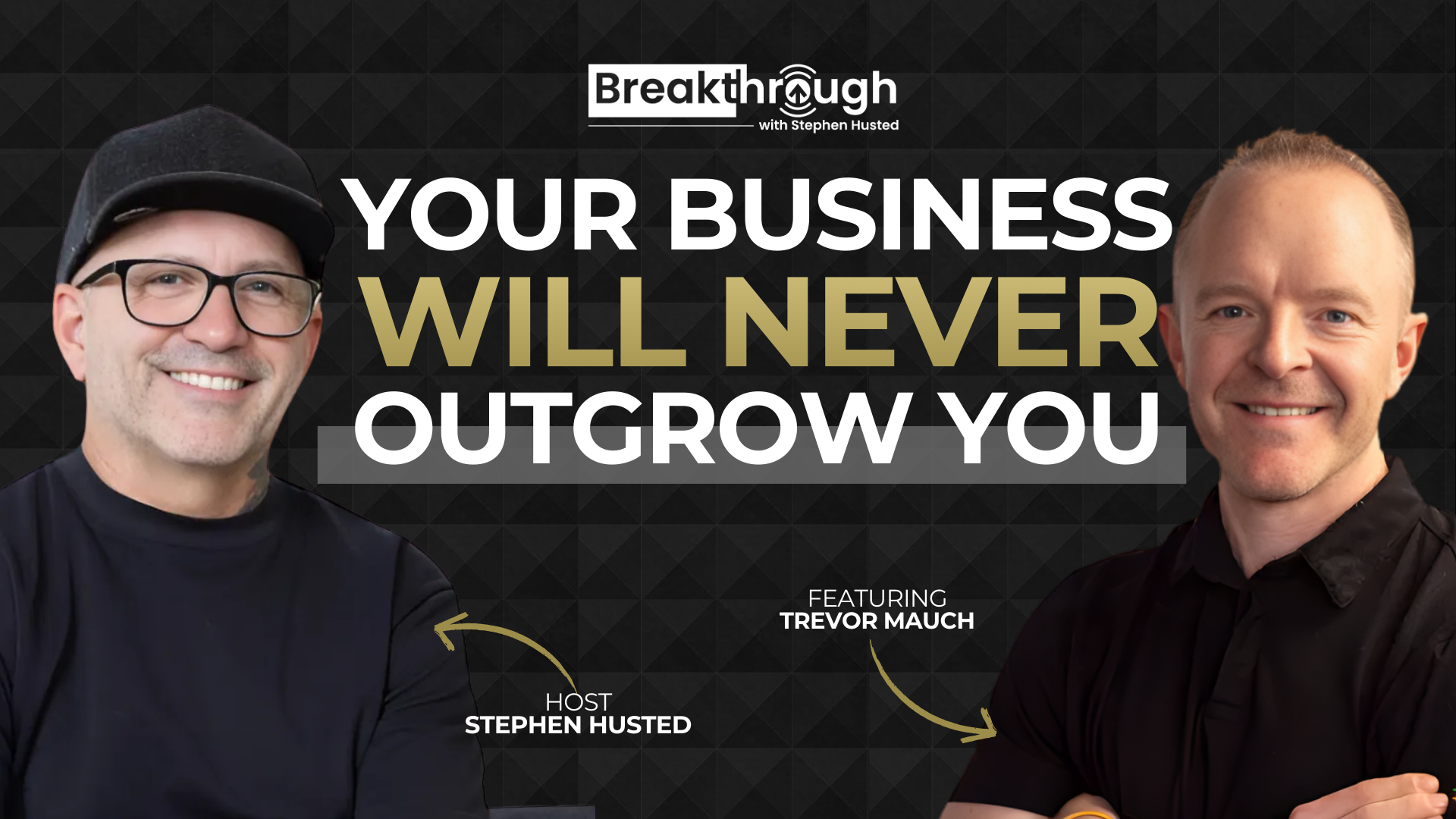
What happens when your identity is no longer tied to your achievements, revenue, or titles? In this episode, Stephen sits down with Trevor Mauch, founder of Carrot, to talk about entrepreneurship beyond the numbers. Trevor shares his journey from buying his first rental property as a college student to building an eight-figure, bootstrapped software company, and the internal shifts that mattered more than any milestone. This conversation goes deep into energy, vision, discipline, and why timelines, mentorship, and action beat endless learning. Trevor breaks down how he stopped chasing validation through growth and started building businesses that support freedom, impact, and alignment.
Stephen and Trevor talked about:
00:00– Why staying comfortable is often the biggest risk
06:12– Trevor’s early burnout and redefining success
12:05– Energy management vs time management
14:10– Dreamers vs doers and taking real action
18:02–Revenue ceilings and growth pain points
21:20– Why money alone never brings fulfillment
24:05– Shifting from achievement to alignment
27:18– Designing a business around real life
30:30– Trevor’s perspective on entrepreneurship and freedom
36:55– Systems, delegation, and founder bottlenecks
43:05– Long-term thinking and sustainable success
46:30– Leadership lessons learned the hard way
49:30– Final reflections on purpose, business, and impact
TRANSCRIPT
∎ Teaser / Highlighted Clip
[Stephen Husted] (0:00 - 0:06)
I want to ask you a question because you brought up something. What do you think separates the dreamers from the doers?
[TREVOR MAUCH] (0:06 - 0:58)
Dude, it's a good question. So let's take it all the way back to people who are dreaming of starting a company or buying the first rental property or whatever it's going to be. The biggest thing for me, dude, is once again that I genuinely feel that people have to remove plan B.
People that have a dream, meaning they're wishing about something, I wish this could happen in the future. They're sitting on their plan A, that thing their wish is plan B, C, or D. I think we have to want that dream and then go, there's no other option other than getting it.
And so once again, they have plan A, which is their job, but then they're going to dabble over here with learning about all this stuff. They're going to be the forum master where they can answer every single question anybody has, but they've never done the thing that they're answering the question about. I was that guy.
I was that guy for probably six to eight months before I had the courage to buy my first rental property. But I think a timeline is key.
∎ Podcast Intro:
[Stephen Husted] (0:59 - 2:32)
I'm Stephen Husted, and you're listening to The Breakthrough Podcast, a space designed for clarity, curiosity, and the stories that move us. Here, we step away from the noise and into the moments that define us, the early influences, the hidden struggles, and the breakthroughs that reshape our lives. From personal reinvention to building a life through real estate and entrepreneurship, these conversations remind us that success isn't a straight line.
It's a series of honest decisions, brave actions, and small shifts that change everything. This is where those stories live. Let's begin.
∎ Guest Introduction:
In this episode, I sit down with someone who completely reframes what the entrepreneurial journey actually looks like. Trevor Mauck, founder of Carrot.com. He has built an eight-figure business by prioritizing energy, identity, and vision over hustle and burnout.
What stood out most in our conversation is Trevor's clarity around the real pain lines entrepreneurs hit, the burnout cycles, the threes and tens, the identity ceilings, and the trap of learning instead of doing. He breaks down how to remove plan B, why delegation fails for most founders, and how to build a business that supports your life instead of consuming it. If you're ready to sharpen your mindset, refresh your vision, and create a business that energizes you, this episode will shift something in you.
Let's get into it.
∎ Podcast Proper:
Trevor, how's it going, buddy?
[TREVOR MAUCH] (2:33 - 2:34)
Stephen, good to see you, man.
[Stephen Husted] (2:35 - 2:38)
Thanks for jumping on. I appreciate it.
[TREVOR MAUCH] (2:38 - 2:53)
Dude, stuff like this, I'm big on energy. I adjust my calendar by energy. I adjust my flow by energy.
And these are some of my favorite days where I get a chance to hop on and chat with guys like you. It just gives you a lot of energy. So thanks for giving me the opportunity to come on here, man.
[Stephen Husted] (2:54 - 3:02)
I saw that on one of your posts on Instagram that you were talking about, do you have some type of, you check your energy levels on a daily basis? Did I see that correct or read that?
[TREVOR MAUCH] (3:02 - 4:06)
Kind of, not really. So it's not as scientific to that. This would have been, let's say 2011-12, I was going through a big transition in my business.
I was really burnt out. And maybe we'll dive into this in deeper detail later, but I was really burnt out because I was always trying to optimize for productivity and optimize my time for revenue. And the cliff notes version of it is I got burnt out and I'm like, dude, I just need to try something that works better.
And what if I only optimize for energy? What could happen? The majority of my days or weeks are things that give me more energy when I'm done doing them than when I started.
And so I have something I call the energy audit. And so that's something, it's more of a once a quarter or whenever I'm kind of at that spot where you do feel like the energy is getting sucked out of you, I'll do this 10 minute audit. And it gives me the clarity I need to yank the stuff that's the drains, add the stuff back in that it gives.
Buteah, there's not like an official measure or anything like that I'll do on a daily basis other than check the temperature. Do I feel like my day gave me more energy than it took? Or do I feel like this day or this week, I was busy, man, it just sucked the energy out of me.
If it sucked the energy out of me, got to change, got to do something.
[Stephen Husted] (4:07 - 4:15)
Yeah. The busy part and just things that give you energy are two different things completely. The energy ones are the things that really light you up.
[TREVOR MAUCH] (4:15 - 4:43)
It's the stuff that lights you up. And I mean, both on the work side of things like this right here, having conversations like this lights me up, right? Gives me energy.
The problem is a lot of the things that give us energy as entrepreneurs are things that we can't directly correlate to revenue right out of the gate. And oftentimes the stuff that drains our energy is stuff we got to go execute. And oftentimes as entrepreneurs like, Oh shoot, I want to think of the idea and the strategy, but the execution drains my energy.
So there's this kind of dichotomy that we've got to fight through in the early days.
[Stephen Husted] (4:43 - 4:45)
Oh yeah. You're talking to my language.
[TREVOR MAUCH] (4:47 - 4:48)
Oh yeah.
[Stephen Husted] (4:48 - 5:13)
I love the creative side of things too, but I'm like, Oh, I got to get down on this part, you know, what's going to generate revenue. But I'm thinking that these other levels of things, the creativity stuff is going to be the thing that pays off. And they sometimes actually do.
But there's a lot of moving parts being an entrepreneur, a ton of moving parts, but the good thing is you just have to be really good at figuring things out and being okay with being in the uneasiness of things.
[TREVOR MAUCH] (5:13 - 6:53)
Yeah, dude, the big thing for me, so I would say as an actual entrepreneur, I started probably in 2008. So I'm going on, what is this? 15, 17 years, something like that.
But I bought my first rental property when I was in college as a four unit in 2004. Four. So I've been doing some level of business since then, but really full time since 2008 and did the biggest thing.
It's mindset is the first challenge because we have to turn into a dreamer first, right? There's got to be something where we're usually running away from something we don't want a job, an income ceiling, someone saying we can't accomplish something, whatever it is. And what makes us an entrepreneur is we get a vision, right?
We have a dream like, shoot, I want to earn some more money or I want to have freedom or whatever the heck it is. And in order to get there, we've got to work hard on this kind of first pain line that we as entrepreneurs have to learn how to master. In my eyes, remove plan B and do what I call flipping the risk profile, right?
It's like oftentimes we think the riskiest thing is to go do the thing, to go take the leap into the business when I actually work with people and say, well, let's flip the risk profile and get people to think about what is the worst case scenario if they do take the leap? What is the likely scenario? And then go back to the other side.
What if they don't take the leap? What is the best case scenario if they don't take the leap? And what is the likely case if they don't take the leap?
And what usually happens is I'm more scared of the life or whatever I'm going to have if I don't take the leap than if I give myself a shot. So it's like you flip that risk profile. So it's actually riskier to not take the chance because you're 100% guaranteed to be in this position that you're still in right now if you don't take the leap.
[Stephen Husted] (6:53 - 7:01)
Because then you dwell on that part. Yeah. You're going to dwell on not doing it.
And it's just going to sit there and sit there until you finally do take that step. Yeah.
[TREVOR MAUCH] (7:01 - 7:21)
Exactly. Yeah. Mindset's that first one.
Then there's a whole series of other ones, Stephen. I've mapped them out for myself over the years, literally threes and tens, things break in the business at threes and tens, a hundred thousand, 300,000, million, 3 million, 10 million, 30 million. Things break.
And at every one of those levels, it's a different thing we as entrepreneurs have to learn. So it's a continual journey.
[Stephen Husted] (7:22 - 8:10)
Yeah. And there's no playbook, rule book for being an entrepreneur either. We'll all go through, that's what's interesting about it.
We can all be in different types of industries and we're going to go through so many different things on a daily basis. And it's just a ton of just ups and downs and you have to be great at problem solving. It's such a huge part.
And the vision is the glue to it all. You know what I mean? Because you're going, I see this vision.
One day I'm going to wake up super confident. Following day, I'm going to go like, what am I doing? I'm going to work through a bunch of problems.
And then I might even go a few weeks going through the shit, but then all of a sudden I see a movement. Like, okay, I've kind of went up a little bit more. I'm still going towards that vision.
And you get to that vision at some points and different things, but then there's another vision behind it.
[TREVOR MAUCH] (8:10 - 10:14)
There has to be. Let's go back to that initial thing. You're a dreamer.
You start the thing. You figure out some of the basic skill sets that you've got to do. You got to have a product.
You got to have a market. As a real estate investor, I'm a wholesaler. I'm going to flip or I'm going to do short term rentals.
And it's this market I'm going to do it in. You choose those things. You figure out a marketing strategy that works, a sales strategy.
And then you just do that one thing. That'll get you to a hundred to 300,000. You got to nail those things.
But then what happens as we grow, then more and more opportunity comes our way. And then we hit the next pain line. I've got a map out and something I call my business growth levels, but that next pain line is delegation, right?
It's like, Oh shoot. Now I have too many things going on and now I need to learn how to get tasks done through other people. And then there's the next one, but usually about, I find it, Stephen, I call it the three-year turn and burn cycle.
Usually about three years in, if you've got a business working at a basic level, you've probably escaped that original pain, right? That, Hey, I'm doing my job anymore. I'm full time in this thing.
I'm making a few hundred grand a year, half a million a year, whatever it is. But around there is when I start to see a lot of entrepreneurs kind of get burnt out. They start to get distracted by new opportunities.
They start to get bored on the business that they've got now because they're like, Oh shoot, I don't want to run the business. I just liked the challenge of starting it. And so they get distracted by new business.
They think, man, I'm the best thing since sliced bread with entrepreneurship because I made this work. I'm going to start another one. And the reason I call it the three-year turn and burn cycle is because usually we don't do what I call refresh the vision.
We had the original vision that powered us through to get over that hump and to get through those challenges and those problems in that first hundred thousand, 300,000. But if we don't now look forward towards a new vision, then we get in distraction mode. We get bored, we get restless, we get stressed out, we get whatever it is, burnout.
And that's where I see the most people have a big challenge, man, is right there between two to four years. They don't know how to refresh the vision to a new one.
[Stephen Husted] (10:14 - 11:42)
I would say the refinement of the vision, that vision could still be very clear, but maybe you're just adding something else that kind of coincides with it in different ways. I give an example. I first and foremost was a realtor.
Then I became a real estate investor and started having people come to me that wanted to invest, wanted to learn how to invest. And then I took on a couple of partnerships and then I'm like, okay, I don't want 30 partnerships. Or then I'm like, okay, I'll just help these individuals buy their first investment property.
And then all of a sudden more people started coming, whether it's through social media. But then I'm having this issue with, okay, do I start coaching people and mentoring people or a cohort? Do I do that for more people?
Because I'm getting good feedback from the ones that I have been coaching or mentoring, whatever you want to call it. And, but then I'll have this, okay, I don't want to be called a guru. And I'm worried about that.
It's a crazy journey. And some of these things get thrown in front of you and it's either you're going to lean in or you're not. Is that going to be part of your entrepreneurial journey?
So that refinement part, you know, it, for me, it started at, okay, I have investment properties, but now it's like, no, I'm being selfish if I don't teach others. I was told that from a coach. He got on a podcast and he clearly just said, you're selfish.
If you can do this, why aren't you doing it? Why aren't you helping other people? You're helping these few right here that come to you.
Why aren't you helping more?
[TREVOR MAUCH] (11:42 - 13:37)
That's where it shifts into service over significance, right? I think in the early days, a lot of us entrepreneurs, and once we're trying to solve a problem for ourselves and probably seeking out some level of significance too. But for me, where it really started to unlock years and years ago was as I would pile up those goals and you've got all the 500 or 5,000 awards and, and all those things, the significance is piling up and you start to realize, oh my gosh, significance doesn't make me happier.
It doesn't make me fulfilled. I thought when I hit this revenue level, you know, a hundred thousand a year and then a hundred thousand a month, and then dude, maybe the clouds will part, the angels will sing when I hit a million a month. And then you hit your first million dollar a month and you hit your first million dollar net month and those types of things you, oh shoot.
Yeah. It's cool having some more money in the bank, but it doesn't fill in any void of fulfillment. And at those points, that's when it really started to shift in to go, okay, if that doesn't hit it, very likely no revenue level ahead of me is going to fill that void and make me finally feel like I'd arrived.
Money's cool, but after a certain point, it kind of has diminishing returns and then you have a job to manage money. Then you're going, what do I do with this money? I got to make the money work for me now.
So now I got another job to manage that. But then it started to shift into service, right? It's like, how do I just show up every day?
It's even for me, any of those moments where I get sucked into a little bit of a stressful day or a couple of days or whatever, usually when I introspect, I go, man, most of the time it's because there's some sort of dark fuel, dirty fuel, I call it. It's seeking significance. It's there's a goal that I had set for myself that I feel like I'm behind.
It's something related to ego where I'm like, oh man, I'm not going to hit that thing that I had set. Dude, when I really pull back and stop focusing on myself and what I do not have and what I'm not moving towards and what I'm lacking in that moment and go, you know what? I'm going to serve a couple of people right now.
I'm just going to go serve. The energy changes.
[Stephen Husted] (13:37 - 13:38)
Completely.
[TREVOR MAUCH] (13:38 - 14:04)
Then I'll think of a few people. I'm like, who on my team can I just love on right now and encourage? I'm just going to think of a couple of people.
I'm going to reach out to them, shoot them a quick little Slack voice and like, dude, I'm going to serve, serve. What about my wife? Where have I not served her lately?
So I'm going to spend half an hour, two hours just serving and the energy just gets back up for the whole rest of the day, just serving. I got that reset. It's not about me.
It's about what I can do with the gifts I've been given to serve other people.
[Stephen Husted] (14:04 - 14:06)
Yeah. It takes you out of the equation.
[TREVOR MAUCH] (14:06 - 14:06)
Yeah.
[Stephen Husted] (14:07 - 15:20)
Yeah. It's 100% one of the best feelings too, honestly. Because then it almost pushes people, whether it's just making their day or pushes them on a different direction.
I love to kind of give out that energy throughout my day to certain people. Some days I don't have it. I don't even have it for myself.
But the point is, it really takes you out of your equation and it's just good to see somebody else light up. I think that's because you brought up happiness and fulfillment. And personally, I would take the fulfillment over the happiness.
Happiness comes and goes. I could be happy. I could wake up in the morning and be happy, go through the day and all of a sudden, a couple of things go wrong.
And then by the end of the day, I'm not happy. But fulfillment, on the other hand, you could have something you're working towards and you've been working through it for months and months and months. And you're going up and down through the thick of it.
But then a year goes by and now you're not thinking about it. But then you look back and you go, oh, wow. I remember when I started that.
And now look at where I'm at. That gives me fulfillment. And that could go in any part of my life.
I think that's really a big thing. But I want to ask you a question because you brought up something. What do you think separates the dreamers from the doers?
[TREVOR MAUCH] (15:21 - 16:06)
Dude, it's a good question. Let's take it all the way back to people who are dreaming of starting a company or buying the first rental property or whatever it's going to be. The biggest thing for me, dude, is once again that I genuinely feel that people have to remove plan B.
People that have a dream, meaning they're wishing about something. I wish this could happen in the future. They're sitting on their plan A.
That thing, their wish is plan B, C, or D. I think we have to want that dream and then go, there's no other option other than getting it. And this is what happened with me in 2007, 2008, Stephen.
In that first year, I graduated college. My wife and I, we got married right after college. We moved up to Portland, Oregon.
And I had bought my first fourplex, no money down, literal Carlton sheet stuff. I still own that property today. Cashflow is amazing.
[Stephen Husted] (16:06 - 16:08)
Oh, wow. We kept it.
[TREVOR MAUCH] (16:08 - 17:58)
It did from day one. Cashflow from day one. Never put any money in that property of my own.
It's paid for itself since I was a college junior. But then we moved up to Portland. I said, you know what?
I don't want to get a job. And I'm going to try to give this entrepreneurship thing a shot. And I'm going to give myself 12 months.
So I think one of the things, the dreamers versus the doers, is I think oftentimes just the dreamers, they don't actually give themselves a timeline to make it happen where they're going to go all in. They don't go all in. And so once again, they have plan A, which is their job, but then they're going to dabble over here with learning about all this stuff.
They're going to be the forum master where they can answer every single question anybody has, but they've never done the thing that they're answering the question about. I was that guy. I was that guy for probably six to eight months before I had the courage to buy my first rental property.
But I think a timeline is key. So going back to that first rental property, I didn't have the courage to do it until I was given a timeline. And that timeline for me was my dad.
He and I were talking about real estate. And he owned a real estate investor. And he had the old Carlton Sheets course.
I've literally got it on my shelf over there in front of me, the no money down. And he had it there. He didn't do anything with it.
And we were talking real estate. And he goes, you know what, Trev? He goes, if you use that course to buy a property by the end of the year, I'll give you the course.
You won't have to pay me for it. But if you choose to take this challenge and you don't buy a property by the end of the year, you got to pay me 500 bucks. I was a college kid, played baseball.
I didn't have 500 bucks. But I did have the dream. And that now created a timeline for me.
So I did it and I bought the property before the end of the year. I went out there and went to public records and wrote handwritten letters to owners that owned some small multifamily properties, talked to people and found a guy. He was retired and he saw himself in me.
And he's like, hey, owner carry for 30 year no. He's like, wow.
[Stephen Husted] (17:58 - 17:59)
Yeah, it's the old school way here.
[TREVOR MAUCH] (17:59 - 19:44)
Owner carry 30 year no, 6%. I was able to renegotiate down to 4.5% later when interest rates are crazy low. I still have that note today, right over 20 years later.
And so once I left college and went up to Portland, I did the same thing. I go, I've got a dream, but I need a timeline. And so my timeline was 12 months.
I not going to consider getting a job for 12 months. I won't even think about it. I mean, I thought about it when things were getting really hard, but I'm not actually going to act on it.
And I did everything I could do just to pay my bills. I went in $16,000 in credit card debt that year. I paid my taxes on my credit card, which I don't suggest you do.
It was the only way I could do it. I wasn't going to go back to my parents and ask for anything. I'm like, I want to make this work.
And I hacked through and it was about month 11. I finally found something that kind of worked. And so what I did the next year, and I'll toss it back to you, Stephen, this is kind of the doers versus the dreamers is I found a kernel of something that was showing that my dream was possible at like month 10, 11.
And ever since then, I've still done 12 month contracts with myself, even today, as the time we're recording this, we're heading into a new year, not too long. As I think I always have a long-term vision, but I always ask myself, am I ready to sign up for another 12 months of going all in on this thing? And if the answer is no, I need to really wrestle with that to go, why?
And there's been a couple of times in my life where I got to that period. I saw a vision for where the company could go. I just didn't see me in it.
And so I made big changes. I wasn't willing to commit for another 12 month contract. So that's something that people need to have, a timeline, an agreement, a 12 month contract.
And I think the last thing that's dreamers versus doers is I think a lot of the doers learn by doing a lot more and a lot of the dreamers learn by reading and not the doing.
[Stephen Husted] (19:45 - 20:21)
That's a big part of it. And I try to tell new investors this all the time. I look back now, I'm so glad I didn't know the things that I was going to go through as my journey was going.
And I try to tell people like, oh, I don't know how to analyze a deal. I'm like, I knew just a little bit. I used bigger pockets calculator looking into rehabs and long-term rentals and had to research markets.
And I just learned as I went. I'm still not an expert. And that's what I really love about it
I love the fact that every day is a different day. Two, being an entrepreneur, real estate investor, you're not going to have it always figured out, but that's the beauty of it. That's what keeps you in it.
[TREVOR MAUCH] (20:22 - 22:19)
Dude, it is. And what you're talking about there, Stephen, I ran across this way early in my journey. I wish I could claim that I made it up, but I didn't.
I learned it from somebody, but just in time learning versus just in case learning. So I think that's another part of the dreamers versus the doers. The ones who make it work versus the ones who think about making it work and never do is the ones who think about making it work and never do are always learning just in case they might need that.
And then once they learn that thing, they're like, Oh shoot. Well, I don't know this thing now because I just learned this. And that last thing I learned, I need to learn the next thing.
Every new thing you learn, there's always the next thing to learn because now the world got bigger for you. If we never take action until we learned all those things, you'll never take action. You'll never take action.
Every new book you read, every new concept, let's say you learn how to master comping a property or analyzing a deal. As soon as you master that or you think you mastered it as good as you can without actually doing the work, then it's going to open up 10 more questions for you. Well, to do this, then I need to really learn how to comp really well
So I'm going to go learn how to comp. You learn how to comp, you're like, Oh shoot. To do this, I really need to learn how to network with agents, or I need to really learn how to analyze a market now, whatever it is, but instead shift to just in time learning, just like what you talked about.
You go, okay, what's my next step? I don't have any properties to analyze. You don't need to learn that right now.
What's your next thing? I need to get properties to analyze. So you go learn how to find properties.
That's it. You'll learn how to find properties. You reach out to them with a bunch of lumps in your throat and pit in your gut because you don't know what's going to come next.
Then you start to have conversations. You don't know what you're going to say, but you have a conversation. You'll figure it out.
Then you go, Oh shoot, I don't know if there's going to be a deal. I need to figure out how to analyze this now. Then you reach out to people.
You go to BiggerPockets, reach out to Stephen, go to your coach. That's the value of having a coach. It's like you dive in and you go, I've got this thing now
What do I do with it? That's the best time to learn, guys. So try to learn things just in time to use it, not just in case you're going to need it someday.
[Stephen Husted] (22:20 - 23:19)
It's so true. Another big part to all this is you brought up delegation. I think that's as you start really getting into the thick of it, you start to understand, okay, I'm really good at these few things, but I'm not good at all this rest of the stuff.
That's where that delegation comes into play. That's where you hire VAs and other people that can support your vision. Because what happens is you start going to, Oh gosh, I got to work on this and this and this.
You're just bouncing around. That's when you start to realize that you need to stay in your pocket and lean on other experts. You're not going to see me in spreadsheets.
I'm going to tell you that right. And I tell all my partners, look, I'm not doing QuickBooks. I'm not writing spreadsheets.
Okay. I'm a visionary guy. I'm going to stick on this.
I'm going to put teams together. I'm going to lead, but I'm not going to do X, Y, and Z. These things I'm not going to do because I understand that it's not good for my timing.
So you have to learn that.
[TREVOR MAUCH] (23:19 - 23:26)
We were talking before, it's recognizing what gives you energy. And then if you kind of put on a quadrant, there's a guy, have you ever read Buy Back Your Time by Dan Martell?
[Stephen Husted] (23:26 - 23:27)
Yes. Yeah.
[EVOR MAUCH] (23:28 - 23:32)
So I've known Dan for years. I'm in the book. So I'm the example in the book.
[Stephen Husted] (23:32 - 23:32)
Are you?
[TREVOR MAUCH] (23:32 - 24:47)
Yeah. He didn't use my name. He texted me when he was writing the book.
He's like, dude, can I use this example? So I was working with Dan from 2018 through, I think, 2023, 2024. And the whole journey, I saw him writing the book.
He was coming for things. And I'm the example in the book of the guy who came to Dan and said, Hey dude, I'm going to take a month off. Take a month off of work.
And he advised me against it. And I did it anyway. And then at the end of it, he gives a lesson on why you shouldn't just full blown, take a full month off at work.
And I did that with carrot when I was growing carrot. But one thing in the book that I love is Dan's drip matrix. And so this would have been 2018, 2019, when I first met Dan up in Canada, we were at an event is me and six or seven other people at an event with him.
And we had to go teach something. And it was something he calls 10 minute tactics. And so we were given 10 minutes to make a mindset model.
And I taught him my energy audit that I had made in 2012. And my energy audit is that thing that I mentioned earlier in the call that I do every quarter for sure to always prune the things that drain my energy. But then anytime I kind of get into a spot where I literally was coming to the office this morning, you're going, Oh, I need to take an energy out at Friday with my assistant before I leave, because I kind of got too many things this season again on accident, right?
[Stephen Husted] (24:47 - 24:48)
Always happens.
[TREVOR MAUCH] (24:48 - 31:05)
Yeah. So I did the energy audit. And then what Dan did was he took that energy audit and started to use it.
Then he's like a stroke of genius. Let's take the energy stuff and now apply revenue to it. Right.
So that's where the drip matrix comes from. And so on one part of it, one of those lines is energy. Does this give me energy or take energy away?
And then the other line, let's say the up and down line is, does this drive revenue? Does it drive value? And what I was doing for years, Stephen was, I was mostly just doing the energy audit and I'm gone.
I'm just chasing energy. I'm just going to adjust my calendar based on what gives me energy. And I'm going to have a leap of faith that if I do things that give me more energy, 80% of the time I'll probably earn a good income.
And even if I don't, I'm lit up. Life is great, right? I'd much rather be high energy almost all the time and make an okay income than make an amazing income and be drained all the time.
Okay. That was the trade. But with that, you want to be in the upper right quadrant with your work as much possible in that drip matrix, which is stuff that gives energy and drives value and revenue.
And that's our job is every quarter doing an energy audit. And I usually pick one thing, Stephen up in the upper left bucket, which is the replacement bucket, meaning you're going to replace yourself in an area of your business that drives revenue, but drains energy. So if that's all people do is once a month, the bottom left bucket is all the stuff that drains your energy and doesn't really drive revenue forward.
That's calling and getting the water switched over on a property. That's the bookkeeping. That doesn't drive revenue.
It captures what you did, but the bookkeeping, that spreadsheet, someone's got to do it, right? That's where you delegate that to an assistant or something. Those are the first things.
I'm going to look at those every month. What do I got to get off my plate? And then once a quarter, I'm going to pick that one replacement thing.
What's the one thing that's like, man, I got to do it. It drives revenue for the business and it's working, but man, I don't want to do it. It's just, I don't love it.
And then we do a process I created that I call the repeatable process builder. Next challenge I had, Stephen, on delegation. I think a lot of people might relate to it as well.
Well, there's the hiring part of delegation, which is a whole nother call. I've got my high confidence hiring process I built for my businesses and with my clients that eliminates all that challenge that I had. But the first thing is I don't want to write processes.
I'm not a process guy, but my coach tells me I've got to make processes and then I've got to delegate those. And I did that. I can make a good process, but it drains the crap out of me.
So I go, well, what if I only had to make one process? And that one process was how to make a good process. And I just put some focus on that.
And I create a short training, a 15 minute training on how to make a good process. This is my standard. And then I just need to hire people who can make my processes for me.
And so if I want to delegate something, my repeatable process builder, imagine it's a square. I could draw it in my iPad if you wanted it, if you wanted me to do visual, but imagine it's a square at the top of that square is you own the thing, right? Whatever that is, you still own it.
You're doing it. It's got to get done by somebody. You're doing it.
Okay. You then have that person's shadow you just do what you're already doing. Just have that person watch you, but with your process now with the intent to say, Hey Johnny, I want you to watch me and I want you to pull up this process builder.
I want you to now create a document because you're going to create the process and how I'm doing what I'm doing. And what I want you to do is I just want you to ask questions. So if it's physical in person, they're taking their phone and maybe recording you and it'll do to ask every question, like ask, why did you do that?
Why did you say that? Not this, ask all those questions. Cause I probably wouldn't think to put that in a process because I just do it.
So then the person, Johnny makes the process after watching you do it three, four times. Great. Johnny, let's look at the process you've made.
You're going to immediately see gaps in his process because things that you know, Hey Johnny, add this in, add this in, add this in. Great. So awesome process.
Pretty decent now, right? Most of the 80% of the stuff taken care of. Now you go, Johnny, why don't you do some of this stuff?
Now you've got a process for it, right? I'm going to kind of shadow you doing some of this stuff. So now maybe Johnny takes a part of that and does a part of it.
And you shadow him and you kind of coach him and you look at it and you adjust, you pull back that process back up. Hey Johnny, all right, I just suggest this. However many reps it takes, then as long as you're 80% confident that Johnny's doing 80% as good as you could have done it.
Then you go, great, Johnny, you've kind of got this thing nailed. So now I'm going to step back. That process is yours to own.
Now, Johnny, your name is in the top. You own it. I don't, but now let's measure.
Now you, now you lead from one level deeper. You don't micromanage any lead from one level deeper. You go, okay, great.
How do I know if I'm not monitoring Johnny doing this every time, if I'm not shadowing him doing every time, how would I know whether it's being done well? And just literally ask that question or go to GPT and it'll tell you. And you go, well, if Johnny's doing this well, he's probably going to have a seller appointment to contract ratio of 70% because I'm getting 80% and maybe I don't expect him to get 80, but if he gets 70, he's probably doing it well or whatever that thing is.
Then you have Johnny report that. And then you just do a weekly sync with him now and you lead by metrics now at that point. So if we do that, that for me started to make delegation way easier.
Cause what I would do, Stephen, I'll toss over to you is I would imagine you got that square. The top of it is you own it. And then the side of it is you guys are kind of doing it together as you're learning it.
The bottom of it is you top is you want it. They shadow the right side is you guys are kind of doing it together with a better process. Now the bottom of it is they're doing the work you shadow and you're coaching, coaching, coaching.
You still adjust the process. You lock in the process. Now the playbook, now the left side of it is they own it.
You cheer, right? So let's say that happened. Okay.
So now we go, okay, great. That happened. That'll work.
The way that I was doing before when it wasn't working is I would go straight from the top of that square. And instead of going clockwise around the corner, actually doing a real good handoff, I would jump straight to the left side and go, awesome. Johnny came in the company.
Great. Hey, here's a quick thing, how to do it. Watch me do it once you got it.
I'm not going to micromanage. I may be back here if you need any help. They don't come to you when they have problems.
Cause they're like, shoot, I don't want to go to the boss with all these questions and problems and make it seem like I don't know what I'm doing. You see one or two little indications that they're not doing it right. You fly in, you start to micromanage the crap out of them.
Your confidence goes down that they can do it. Their confidence goes down that they can do it. And then you go out, man, this person is not working out.
Employees are hard.
[Stephen Husted] (31:05 - 31:06)
Yeah.
[TREVOR MAUCH] (31:06 - 31:06)
You know?
[Stephen Husted] (31:06 - 31:21)
Well, the whole scenario you just brought up about processes over the years, now I just realized that this is something I've been doing, not even knowing what I'm doing, but putting people in place. And a good example is we hired an automation expert for Notion.
[TREVOR MAUCH] (31:21 - 31:22)
Oh, cool. Yeah.
[Stephen Husted] (31:23 - 32:54)
And I'd liked the software. I dived into it. We wanted to use it for content creation and just keeping everybody in one centralized place.
We were getting kind of fragmented around on different things and I just wanted a hub. So I understood the brain dump. There was a section you could have that says Stephen's brain dump and I'll put content ideas, YouTube videos, whatever.
It could be anything that's coming in my brain, but there's so much, there's so many ways to customize Notion. And so we hired an expert, brought her in and she's with the team and they're building out. And I kind of, we had meetings, but then I stepped back and let them do it.
And I talked to some of our other team members, our partners that are going to start to use it. They're going to get brought in. Everybody's going to have their own channel.
It's kind of like Slack in a way. And they're like, when am I going to get brought on? And I'm all, when they have it at 80%.
And then when they have the 80%, we're going to jump in and then we're going to see it and we're going to use it and it's going to be messy and we're going to improve it over time. And we'll look back a year, two years, and we're going to have this thing dialed in. It's not going to start off perfect and it doesn't need to start off perfect.
You have to see it in motion. And once you see it in motion, things start coming into place, but it starts off kind of messy. And that's, that's the beauty of it.
So, but your processes are, there's a lot, you really do need to put processes in place, especially if we're running multiple different kinds of businesses, you have to have something that if you had to step away or you had to bring somebody in that you knew how to plug and play them.
[TREVOR MAUCH] (32:54 - 33:17)
Yeah. And dude, the types of processes you need changes as the company grows. I've got that thing I referred to before in my company is called the business growth levels, right?
It's from zero to 10 million. And in the business growth levels, there's these three core chunks that build what I call a business of freedom and impact. Like the, am I able to show this on the screen or not?
It'll be way more valuable if I just show you this thing that I use in my company.
[Stephen Husted] (33:17 - 33:18)
Go for it.
[TREVOR MAUCH] (33:19 - 36:12)
So, and anyone who's listened to the audio version of this, you guys are going to want to go to the YouTube version because you're going to see the visuals of this. Or you can go to just my personal site, Trevor Mock, that's T-R-E-V-O-R M-A-U-C-H, trevormock.com forward slash freedom. No opt-in.
I just posted this stuff on that page. You guys can go grab my models that I call the entrepreneur freedom formula and my business growth model, which is literally zero to 10 million, exactly how you do that. So, so Stephen, the way I think about business, and I did this at a coffee shop, literally across the street about seven, eight years ago is with Carrot, my primary company, we're a software company.
We hit the 500, 5,000 list five years in a row, eight figure company, bootstrapped dozens and dozens of full-time employees. Dude, I never thought that I could build a million dollar business. I never thought that I could have more than a couple employees and be sane.
I had all these massive limiting beliefs because I thought that these things would mean me being trapped in a business. And so one day I was sitting down at the coffee shop. Let me try to find this one slide, but this one day I was sitting out at the coffee shop and asking myself this question when it was getting really hard that day, that the whole season was really hard in business.
And I remember I'm starting to hire some people and hiring consultants and things like that. What happens if the business doesn't do what we want or if that consultant doesn't do what we want to do? Well, we got to make a change.
If it's not working, you got to make a change. And so some of the business wasn't working. It was a season where I was letting myself get sucked into the business and I was getting drained during that season.
I'm like, dude, what did I hire this darn business to do for me? And is it doing it? And I think we all forget that these businesses are tools.
It's not something that we just sign up for this perpetual pain train of 40 hours a week or 80 hours a week for some people. The business should be a tool. What is the tool for?
And with tools, we intentionally use tools, right? A tool is an intentional thing that you actually take out that tool. You can't take a wrench out and there's a nail over there and expect the wrench to work very well.
A business is a tool. Well, what is it a tool to do? And I sat there and go, what's this business a tool to do for me?
Well, for me, this business is a tool to, I'll write these out here, but I'll verbalize it. It's to give me work that energizes, right? That energizes and interests me.
My work should give me energy and it should provide things I'm interested about. I put some pressure myself in that season ahead before that, Stephen thinking I had to build a business around my passion. So let's say that you love mountain bike riding or whatever, or golfing.
I used to think, man, it's not going to work unless I can build a business around my passion. But I started to go, no, well, the business should fuel my passion for sure. It should fuel it, which means it shouldn't get in the way.
It should actually amplify it and make it so I can do those things more, not less. And it should enable me to do work that gives me energy and work that interests me. I want to solve that problem most every day.
[Stephen Husted] (36:12 - 36:15)
Can you give me an example of that, Trevor? What gives you energy right now in your business?
[TREVOR MAUCH] (36:16 - 37:00)
An example. I'll give you a couple things that give and didn't. And I think as seasons grow.
So what gives me energy, which has always given me energy is vision. I want to be able to pull up and go, what's the big macro problem here? And let me find out a way that I can align people and make products to solve that important problem.
That's exciting to me. I love connecting with people. You're the fourth person, first podcast of the day, but fourth person I've connected with today outside of my company to talk vision and talk about the product and where I'm going.
And I'm like, I literally sent a, I found a big YouTube influencer a week ago that is marketing to the market that I want to go into. And I had a call with him yesterday and I shot him a loom video of my product roadmap. I'm like, I want you to tear this thing apart.
Tell me where it's going. It's going to solve the problems you want to solve.
[Stephen Husted] (37:00 - 37:01)
That's great.
[TREVOR MAUCH] (37:01 - 38:50)
Like that stuff I'm pumped about. The things that don't energize me is sitting at my desk too much, is a bunch of meetings, is being in Slack, being in Confluence, like having to actually take and organize things. It doesn't energize me to be in meetings that are meaningless.
So for me, I've got a saying in the company that no agenda, no agenda. It's like, if there's no agenda on that thing, I'm not going to end that thing because I want to make sure that the meeting is useful for all of us. So those things drain my energy.
Okay. But work that interests me, it interests me a lot to be able to find a market like real estate investors is how we mainly grew Carrot, right? We solved that problem of helping them get motivated seller leads and more motivated seller leads come, online motivated seller leads come through the Carrot.com platform than any other single platform in the world for motivated house sellers. It took three years to solve that problem. Then we scaled it. And now we're going, we dominated that one.
Let's move to the next markets. Where can we solve that problem? That interests me.
How do I help that homeowner that needs a new roof or needs to sell their house or needs to do one of these things needs a new HVAC? How do I help that homeowner have less resistance and more confidence to find the actual person to solve their problem? The best that's our job is to connect it to that interests me.
Another thing that interests me actually, Stephen, is it interests me on how can I build a business where this business is a place for my employees to grow? It's my ministry and that interests me. I'm like, oh shoot, there was a whole season, Stephen, for about a year and a half.
I got off track. I got looped into the goals and I got looped into hitting the numbers. I took us away from having this be a place where people could come and just do the best work of their life and be fed into the most.
I got trapped by the world and I re-found my interest in it to go, oh no, my job is to show up every day. And yeah, I'm a coach, but I should be coaching my team members more than I'm coaching my clients.
[Stephen Husted] (38:50 - 39:06)
I got a question regarding Carrot. So you mentioned that you took a few years to scale it and you got to where you need to go. Are you at that point now where you do kind of step away?
Can it run on its own? And are you onto that next refinement of your vision?
[TREVOR MAUCH] (39:06 - 39:17)
Yeah. Okay. Yeah.
So I hired a COO. There's a couple attempts that were failed attempts to hire an operator. And so I learned a lot there about what an actual operator is and what he should do.
[Stephen Husted] (39:17 - 39:17)
How so?
[TREVOR MAUCH] (39:18 - 40:24)
Yeah. So the first thing is there's no roadmap on what a COO is. Literally a COO is anything that you don't want to do as the CEO.
So when you go out there and look at what should a COO do, it's all over the map. It's literally, you go, what does the CEO want to do? What do they not want to do?
And then the COO pretty much is everything else. And so then you've got to go find that person that can do that very defined set of things. It's unique to how you want to run that business.
I misfired that the first time. I hired a COO, an operator, but then after the fact I realized, oh shoot, I wasn't clear that I didn't want to do these five things anymore and they're not good at those five things. And so that I had to get really clear there.
The second thing on the misfires was I brought a COO in, my current COO, and she's great, but we're two and a half, three years in. The first eight months was hard because I abdicated more than delegated and partnered. Brought her in, hey, I'm going to get out of your way, go do, and I'm going to be over here, but I'm going to get out of your way.
It created a lot of tension because I didn't give her clear guidance on the outcomes that I was going to be grading her against and I wanted her to drive.
[Stephen Husted] (40:25 - 40:25)
I gave outcomes.
[TREVOR MAUCH] (40:26 - 41:54)
We had goals on the wall, but there were certain things that I had not communicated that I was still processing internally that created me to communicate with her in ways that made her feel micromanaged or undermined. And that's one of the hardest things I think as a founder, when you know every part of your business, you know how everything works. And so I had to give up and she challenged me one day, she said, Trevor, you can tell me what to do.
You can tell me how to do it, but you can't tell me both. And so we're going to go here and let me go solve the problem or tell me exactly how to solve the problem, right? But then I need to take this in the direction I want to go with that.
You can't do both. Otherwise I'm not your CEO, I'm checking out. So that was a biggie right there.
But yeah, for a period of a year and a half after we got that solved, I was more or less out of the business. And I started my coaching program that took all my business learnings and I built them into the models that I've been using with my clients. Now I'm back in it because in that reprieve, even what I thought I was doing was kind of stepping out and moving on to the next thing.
My vision got bigger and more exciting with Carrot because I had a little bit of space now. And so I go back in, I'm like, shoot, this is even more exciting than before. The fear is gone.
The cap is gone. I'm just going to go in and we're just going to move to the next vision. And that's where she needed the help.
She's a big thinker, but she needed me to come in and go, let's drive that next decade now, the next decade vision. So she knows where to go for that next phase.
[Stephen Husted] (41:55 - 42:24)
Trevor, I got a question for you about vision. Do you go through little moments where let's say it could be periodic through the weeks, maybe you went on a hike and you get that vision and it lights up and all of a sudden your mind starts just going and you're ready to kind of just communicate that vision. It could be the refinement of let's say Carrot.
Because you've stepped away, you start to process things different because you're kind of in the business, kind of in the thick of it. But once you're kind of away and kind of you start to get a little more, you get a better vision, you get more brighter ideas. Do you go through that?
[TREVOR MAUCH] (42:25 - 43:55)
Yeah, for sure. The one thing that I've had to challenge myself on again, Stephen, is especially when you have a team and they're already moving towards where you sent them. We have to be really careful as the founder with that team to not change direction on them every two weeks.
We went to an event, like the famous thing is the entrepreneur goes to an event and you'll hear this over and over again. The team goes, oh my gosh, we hate it when XYZ CEO comes back because he gives us 10 new ideas and we already have a full plate. And we're not sure if he wants us to do these or if they're just ideas.
So that is something that I've had to work on hard is going, okay, let me capture that. Let me get it down in my little box. Let me let it marinate.
Because sometimes my ideas, I'm pumped about it in the moment, but give me a week and I'll get over it. And that one, I'm not that pumped about anymore. But some of them stick.
And so that's what I've learned to recognize more, Stephen, is like capturing them, let them marinate. The ones that aren't all that great are going to slip to the side. But the ones that stick, I go, why is that sticking?
Let me press into it more. When I have the conviction that I'm ready to move 45 plus employees, multiple seven figures a year and investment in my staff into this direction, then I will bring that to the team and say, Hey, here's something I think is really interesting. What do you guys think about this?
If I can get their commitment and their excitement, like I did two weeks ago with the new vision, we're moving so fast making changes now because everyone's yes. But I sat on that for about three months to be able to work it and tweak it to make sure I was committed to move that forward.
[Stephen Husted] (43:55 - 43:59)
Yeah, that's great. And I can see that. Fantastic.
[TREVOR MAUCH] (43:59 - 46:06)
For sure. Now I'll kind of wrap this part up and toss it back over to you, but the three things our businesses should do, give us work that energizes and interests us. The second thing is it should fund the vision, right?
So we talked vision. What is our personal vision? Personal vision always has to come first.
That's one of the things I got wrong in the early days. Stephens, my vision was I'm going to build this business and hit this revenue and all those things that come with that. And I did that.
But the problem was we can easily build a business that we end up presenting. We can easily build a business that doesn't give us what we actually want in our heart from a personal perspective, and we can chase what the world wants to celebrate. We can chase the awards, the revenue, the next revenue line.
We go into the mastermind and we see that person's got a bigger number and I'm going to come back next time and have a bigger number than them, right? All this dirty fuel. And what I learned to do was go, you know what?
If I'm really clear on my personal vision, I call it my ideal average day and I map it out in the same detail. I go like, how much is that life going to cost? And just get real with it.
How much is that life going to cost? And get down to literally the life, the lifestyle, your giving, philanthropy, how much do you need there? There's literally every part about it.
How much is that going to cost? And I think that life vision is going to be very dictated and driven by the identity that you are, because your business will never outgrow your identity. So if you are a person who, I've got a buddy named Toby here locally in Roseburg and he runs a $300 million a year company.
Toby has an identity of a guy who thinks really big and can run that company. If he were to come into my company, the business would have no choice but to grow because that company has to catch up to that leader's identity. If I today were to go in to run his company, eventually after all the things he did that worked really good, the company would have no choice but to shrink unless I grew massively and removed my limiting beliefs, holding me back from being the person who could run that and stepped in and got the right people and the right skills.
Your company will never outgrow your identity and your vision is always going to match your identity.
[Stephen Husted] (46:06 - 46:10)
Wow. That's good. That's deep right there.
I love that.
[TREVOR MAUCH] (46:10 - 47:49)
And the last part is make an impact. The third thing that our business should do for us is it should make an impact that you're proud of. So number one, guys, look at your company.
Is it giving me work that energizes and interests me? Use the energy audit, carrot.com forward slash energy. I literally just give you guys the energy audit there.
I've got a video there to walk you through how to do that once a quarter. Okay. Carrot.com forward slash energy. Is it giving me energy? That's a continual pruning process because you're always going to add back in things that you don't like, but we always have to prune things away to keep the energy high. I try to use an 80 20.
Stephen, if I'm 80% of my work week is things that give me energy. You're on fire. When I started the energy audit, it was 80% of my work week drained my energy when I created that process.
Okay. Number two, it's got to fund to the vision, meaning we got to have a vision, personal vision. And then you got to know about how much that's going to cost.
Because I see people hitting the next revenue level when actuality, their vision would be funded by a million dollar a year company, but they're shooting for 30 million and they're just grinding and grinding and looking for significance. It's like, dude, either your personal vision needs to get bigger. So that business has to grow, or maybe you'd be much happier just being content with dialing that business in to be the size that it needs to be to have the life that you want.
And number three, to make an impact that you're genuinely proud of. Those are the three things, man, that I want people to focus in on. And I was going to show one other thing.
I know we're at time, but the business growth levels that I had mentioned before, I'm just showing on the screen here, but you guys can go find this. It's free. No opt-in required.
TrevorMock.com. M-A-U-C-H forward slash freedom. No opt-in guys.
I just want everyone to get this. This is amazing.
[Stephen Husted] (47:50 - 47:51)
Yeah, dude.
[TREVOR MAUCH] (47:52 - 50:55)
From that zero to 10 to 30 million, those three things I talked about, a work that interests and energizes us, that's the purpose bucket over here. There's three things that are in that, your identity, purpose, vision, and the part that funds the vision. You got to build a business that has consistent profits, right?
So there's a few things in there. It's having a clear strategy, good marketing and leverage. So that's profits
And then the last part is, well, I've also got to make sure it gives me good energy and work that interests me. That's the energy and time portion of it. And so as you're growing, dude, you have a different pain line that you come up against.
Every one of these that you've got to work through and grow, that's where the identity part comes in. Okay? Our identity has to peel back to those layers that are holding us back.
We got to step in and solve that next pain line. We've got to step into that next layer of our identity. And then same thing, everything changes as you continue to grow, but if your ears were all finished and tossed over, yeah.
I was reading Proverbs the other day with some of our clients and there's a proverb in there that a lot of people have heard. There's two that I'm going to talk about right here that are applicable there. Anybody, I don't care what your faith stance is.
These are applicable to anybody and really good wisdom. And one of the Proverbs talks about silver and gold, right? So if you think about silver or gold in their raw form, it's dirty, right?
You pull out of the earth, it's got dirt and rocks and crap all over in it and it's not useful. It's not valuable. Like they can't take that and put it onto a ring or put it into a microprocessor or whatever the thing is.
It's not useful. It's got potential, but it's not useful. So what do they do with that?
Well, they take it and they put it in a crucible or put it in a furnace and then they put a lot of heat to it, right? The only way to remove the impurities and make that thing valuable is to put heat to it. And so the fire's burning, the fire's burning it so much it melts and then all the impurities start to come up to the top and it's called dross.
Like they take the dross, they scoop the dross off the top and they toss it away. It's the garbage, it's junk. It's the impurities, the stuff that's holding it back from being its full potential.
So eventually they got all the impurities out of it, let it dry, it's gold. You let it cool, it's gold. It's useful now.
It's valuable now. So when we think about the entrepreneur journey and those pain lines I talked about or some of the challenges we talked about, I think especially as we're in the throes of those challenges, it can be really hard because we're like, I don't want to go through this challenge right now. I'm going to get distracted.
I'm going to get frustrated. I'm going to sink into my vices and I'm just going to distract myself all day and get a temporary reprieve from this pain that I put myself into in my business. Temporary.
Temporary. But the vice sucks us down further and further unless we eliminate the vice, right? Sure.
Which is the first thing I have people do if they're burned out. Every time I can go, there's a vice I guarantee you're stepping into. We got to find that vice.
We got to root it out. Once that vice is gone, then we can get our brains clear again. Then we can think of vision.
Then we can make decisions because we've got a vision. Now we can go. But with the gold analogy, it's as we're going through business, guys, business is among the best personal growth tools I've ever experienced in my life.
[Stephen Husted] (50:56 - 50:56)
100%.
[TREVOR MAUCH] (50:56 - 53:05)
Why? Because we're put through the fire constantly because we have this raw material in us that you have so much potential in you, Stephen, and whoever else is listening to this. In life, the reason trials are given to us, they're not done to us, they're given to us- They're lessons.
Is because those are the thing that refines us. They test us. They put the fire to us.
They remove the impurities. It makes us trust in something other than ourselves and we step into that. The other proverb that I was talking to my guys about was one that everybody listening to this has heard, iron sharpens iron.
That's what we're doing here, iron sharpening iron. If you think of the look here and what this is, and this is why it's so important to hire a coach, Stephen, or to dive in and get to be a part of a group or listen to a podcast like this, is I think a lot of people take that iron sharpens iron thought and they don't really ask the question, why did that analogy actually get used? There's a purpose behind that analogy.
If you think of iron sharpening iron, number one, how can you have two pieces of iron sharpening each other? Well, they got to get really close. The first thing with iron sharpening iron is proximity.
You've got to get close to the people, like close to the people to be able to have you improve each other. The next thing to make it sharpen, you can't just get close. You've got to put pressure.
You cannot sharpen that thing if there's not pressure. You can get close and you can move it, but it's not going to sharpen anything if there's no pressure, meaning get close to people and then press into each other. Be vulnerable.
Call them out lovingly. Serve them. Press into it
Don't just lightly be with your coach. When you're in the hardest challenge, you press into that relationship with your coach. You don't draw away.
Last thing is there's got to be movement. You get proximity, pressure, movement, dude, that thing's going to sharpen. As people are leaving this podcast and they're thinking about it, number one, the pressure and the fire is for you.
It's going to help remove the impurities. Just have a process, a plan, and a coach to help you through it. Number two is get the people around you that are going to help and sharpen you.
You've got to get close to them. You've got to step into it and you've got to be active moving. You've got to be active pressing into that.
People do that, man. The entrepreneurship journey is a joy through those challenges.
[Stephen Husted] (53:06 - 55:06)
I love this conversation and I'd love to just sit here and listen to you talk. I want to leave on this. When I started this podcast, I had no idea the direction it was really going to go.
People ask me, do you make money on your podcast? I make money in so many different ways. This conversation right here just solidified my direction, my vision, and exactly where I'm going right now.
It's crazy because it starts to build in an hour I'm sitting here listening. You're talking, you're giving out your energy, and I've already taken your energy and already implemented it into my business. If you're out there and you've been thinking about starting a podcast or anything, this is your moment to do that.
Because what I just got from Trevor in this hour is just completely putting me into a more focused path. It's solidifying the path that I'm on right now. I think Trevor understands this when I'm telling him like this because I mentioned something.
I'm starting a cohort. I'm going to be mentoring. I started off that I didn't want to do it because I didn't want to be called a guru online.
I got past that. Then someone told me, you're being selfish. You need to.
But then we talked about through this podcast about energy. The one problem that I had about mentorship is I can't be drained on a daily basis from people. Then what happened?
Well, I'm just going to be starting a cohort of another gentleman soon. He does his in eight-week cycles once a quarter. What he does is he gives his all during that eight weeks.
Then he takes time off. Then he goes back to the drawing board with his COO, and they refine the program. Then they just refine it, and then they launch again.
They do it, and they just over and over. Refinement, teaching, learning, going. That is my direction.
[TREVOR MAUCH] (55:07 - 55:14)
He gives you seasons because you can step into that season and then step right back out of it. You've got the rest. You've got the work.
Yes.
[Stephen Husted] (55:14 - 55:37)
You got the energy, and you're refreshed because it's very easy to get really sucked dry. Those are some valid points what you brought up. Those days when I do stay in that zone where I feel like I got what I needed out that made my day instead of doing all the smaller things.
You just put all that in perspective today. It's been such a great episode.
[TREVOR MAUCH] (55:38 - 58:04)
Drive the energy, y'all. That's the biggie. I don't want to take away, just like you mentioned there at the end, Stephen, I don't want to take away the fact that there's still stuff that we got to get done that we don't like.
That's just the nature of it. I think the biggie is whether you're brand new as an entrepreneur, and you're wanting to get going, or you've been in this for 10, 20 years, as long as we're aware of what gives us energy and what drains it, and then as long as we're continually on the act of pruning. Picture that.
You're growing this beautiful plant or whatever it's going to be. You always got to prune it to make it amazing. I think that's what we don't do too often.
What we do is we are the dumping ground of all the things. We gladly accept them all because we think we can do them all until we get to the spot where we're drained, burnout for that season, and then you reset. How do you reset?
When we reset, Stephen, usually it's oh, I can't do any of this. You just do a massive hack. You take that bush and just hack it in half.
I'm going to start from scratch. That's hard because what if you don't have to get to that spot? What if you don't have to get to that spot where it's an insanely hard season of months of just hitting that, and you're not making a change?
What if you just prune all the time? Just in general, okay, there's some challenge, but we got that a little bit better. That for me is how I found true joy in entrepreneurship.
It wasn't around the goals. It wasn't around hitting the next revenue level, around all those awards that are on the wall that at one period of my life, I literally did hang my identity on those until you don't hit your sixth or your seventh thing, 5,000 award, and you go, shoot, who am I if I'm not the fast-growing company guy? I had to wrestle through that about five, six years ago and just really placed my identity on the core that God gave me in the assignments I've been given to go steward, and then the fruit is the achievements.
If I do my core well in the assignments I've been given, and if I do those well, achievements will happen. But I put so much of my worth on the achievement for a long time, so I just encourage people as you're starting, don't do that. It's tempting.
It's hard because those achievements feel good when you have them, but the identity can't be rooted there. It's fruit of you living your core, not the root of who you are. But if you think about that and you're just continually pruning, optimizing for energy, in my experience, you'll be fine in the income-wise.
You'll be living a good life because it's high energy, and you're going to attract those people that can become your iron sharpening iron because energy begets energy.
[Stephen Husted] (58:05 - 58:07)
And you'll get your fulfillment.
[TREVOR MAUCH] (58:07 - 58:08)
Yep, exactly.
[Stephen Husted] (58:09 - 58:31)
So that's great. Well, I really appreciate you jumping on. I got to thank Brady for connecting with me because we had a meeting, and so I was like, okay, well, explain.
He said, do you know who Trevor is? I'm like, I don't. Tell me a little bit about him.
And so I'm just, I'm thankful that he connected and it's been amazing. So where can the audience find you?
[TREVOR MAUCH] (58:32 - 59:00)
Yeah, my personal website, trevormach, M-A-U-C-H dot com. There's not a lot there. I would say go to dot com forward slash freedom.
That's where I put the entrepreneur freedom formula and my business growth levels graphic podcast. I've got a podcast called Entrepreneur Freedom Formula. Let's go find that.
And then on the Carrot side of things. So we primarily work with real estate investors and agents, but we're heading deep into other home services and we help you get more leads online. So you want to get the best performance online.
That's what we help people do. That's just carrot.com.
[Stephen Husted] (59:01 - 59:05)
That's great. Well, I think I'm going to have to have you on again. Yeah, let's do it.
[TREVOR MAUCH] (59:05 - 59:10)
If you don't mind, this has been a great conversation. We can dive deep and that's the thing. We can dive deep.
[Stephen Husted] (59:10 - 59:11)
We didn't even talk about AI.
[TREVOR MAUCH] (59:13 - 59:17)
Yeah. No, we're good, man. I was just grateful to be on here with you.
[Stephen Husted] (59:17 - 59:22)
Right on. Well, thanks a lot, Trevor. Appreciate it.
Hope you have a good rest of your day.
[TREVOR MAUCH] (59:22 - 59:23)
Awesome. You too. Thank you.
[Stephen Husted] (59:23 - 59:53)
All right. Take care.
∎ Podcast Outro:
Thank you for tuning into our show, where we hope you found inspiration and gained valuable insights.
If you enjoyed this conversation and want to stay updated on our latest episodes, be sure to subscribe to our podcast and share it with others who might benefit from it. We appreciate your support and look forward to bringing you more candid conversations and breakthrough moments in the future. Until next time, take care and keep exploring new ideas and strategies.