Episode 73 - Building a Private Lending Business with Keleisha Carter
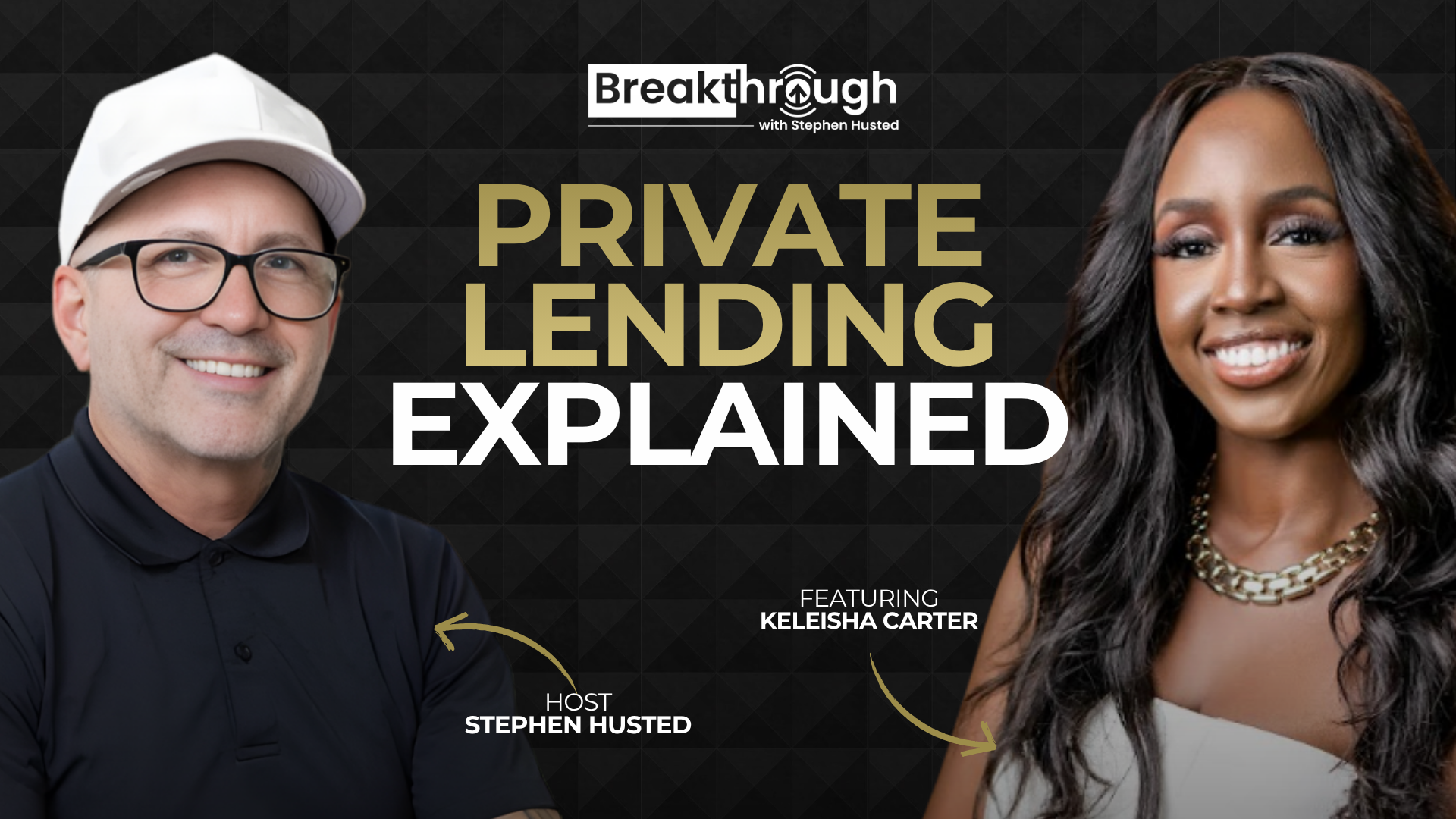
In this episode, I sit down with Keleisha to talk about entrepreneurship, private lending, mindset, and what it really takes to build a business from the ground up. Keleisha shares her story of leaving Jamaica, quitting her corporate marketing job, and moving to the United States with no guarantees, only $1,000 in savings, and a willingness to take a risk. We talk about the uncomfortable realities of growth, navigating uncertainty, and why entrepreneurship often feels lonely even when things look successful online. We also dive deep into private money lending, raising investor capital, structuring real estate deals, gap funding, and how Keleisha built a lending business by combining marketing, storytelling, and relationship building. She explains how managing investor expectations, setting boundaries, and creating systems became the foundation of her business.
Stephen and Keleisha also talked about:
00:00 Podcast Kickoff
05:13 Marketing to Real Estate
11:20 Sink or Swim Hustle
17:45 Boundaries and Expectations
22:44 Entrepreneur Mindset
28:44 Private Money Origin Story
31:03 Systemizing Investor Capital
35:15 Private Money Basics
36:35 Setting Deal Expectations
44:18 Gap Lending Explained
47:32 Underwriting and Partner Lenders
01:01:51 Mindset and Self Development
TRANSCRIPT
∎ Teaser / Highlighted Clip
00:00 Keleisha Carter: There was no security of anything. So I was like, all right, you don't have a choice. It's sink or swim. Pick one.
00:06 Stephen Husted: Let me ask you a question. Did you have an exit strategy in your head?
00:11 Keleisha Carter: No. Go back home.
00:14 Stephen Husted: Like, no, like, did you think in your head? Because that's a big thing. If you had that in your head, like, hey, I could go home.
00:20 Keleisha Carter: No. So I mean, like, I know, like, worst case scenario, I would go back home, but it wasn't like, oh, if this doesn't work. In about a month, I'm going home. No, it was literally, there's no turning back.
∎ Podcast Intro:
00:32 Stephen Husted: I'm Stephen Husted, and you're listening to The Breakthrough Podcast, a space designed for clarity, curiosity, and the stories that move us. Here, we step away from the noise and into the moments that define us, the early influences, the hidden struggles, and the breakthroughs that reshape our lives. From personal reinvention to building a life through real estate and entrepreneurship, these conversations remind us that success isn't a straight line. It's a series of honest decisions, brave actions, and small shifts that change everything. This is where those stories live. Let's begin.
∎ Guest Introduction:
01:10 Stephen Husted: In today's episode, we're joined by Kalisha Carter, a private lender and real estate entrepreneur who took a bold leap from corporate life in Jamaica to building her own path in the U.S. What started as uncertainty quickly turned into opportunity as she learned to navigate real estate. raise private capital, and create her own systems after being turned away by traditional banks. We talk about risk, resilience, and what it really looks like to figure things out in the moment, especially when things don't go as planned. She also breaks down private money, gap funding, and why success in this space is less about having all the answers and more about taking action and adapting along the way. If you've been waiting for the right time to start, this episode might
∎ Podcast Proper:
02:01 Stephen Husted: Kalisha. Hello. Thank you for jumping on the Breakthrough Podcast today with me. I appreciate it.
02:07 Keleisha Carter: Love it. I'm excited to be here. Like, let's go.
02:12 Stephen Husted: We had a little bit of a beginning conversation before going live. And something I told you that I go through a lot on this podcast is sometimes before we record, we get a lot of gems out of it, a lot of cool information. And also when we end it, I start talking with my guests. And there's another 20 minutes of really good gems in it. So it's really interesting. And I love to kind of frame things out in a way with guests that they are open to go wherever we want to go. Because we can talk about private money and lending and all that for an hour. Sure. I know you've done it before. And I know that's one little component of the big picture of what you're up to and what you're doing.
03:00 Keleisha Carter: Yes. Oh, my God. And I love the direction that you're taking because I was sharing with you earlier, like I talk about private money all the time and people think there's a secret sauce. But I was like, the more I get into business, I realize there's more to it than just private money. There's a lot of other components connected to it that people would never think. help you to get to where you want to be yeah i'm like i love that you're like yeah we can go any direction i was like yes and it's also going to be more authentic too you
03:29 Stephen Husted: know what i have in front of me right now i have an ipad and we will take information because you had a pretty thorough bio and everything you have with which was amazing you were the first guest i've had that actually put one got that in front of us like that i was like oh wow this is cool yes so i ended up copying, pasting it and throwing it into ChatGPT and said, frame out some questions. And that's cool. Like, I think it came up with some good questions. And I've never ended up ever asking the questions that I have down. I usually start just getting into it. And then I don't know if that's the right or wrong approach to it all. But I kind of like to see where the guests open up to and where they go. So I do know that. You were born and raised in Jamaica?
04:18 Keleisha Carter: Yes, it's the beautiful island in the Caribbean. I would say the best. I'm biased, but of course I am.
04:27 Stephen Husted: How long did you live there?
04:29 Keleisha Carter: All my life. Went to high school, college, everything. Worked there after college. I think I left Jamaica in 2018 and moved to the U.S. So I've spent my entire life back home.
04:43 Stephen Husted: Wow. What got you intrigued to move to the United States? That's a big jump.
04:48 Keleisha Carter: It's a huge jump. But I think for me, I love marketing. That's what I went to school for. I have a bachelor's degree in marketing. But I was in corporate Jamaica, that you call it. People call it here corporate America. And for me... I lost my passion for marketing. I was also surrounded by people who just kept complaining over and over. And I was like, you're complaining about the same thing and you've been at this job for 20 years. So that moment kind of went off and I was like, oh,
05:17 Keleisha Carter: I don't want this to be me. Like, I don't want to be in this in a job where all I'm doing is just complaining and not doing anything about it. And I felt stuck. And I usually every year I have a word of the year. That year, my word was risk. And I was like, I need to take a risk. I don't want to get too comfortable. And I feel like I'm getting comfortable. And this opportunity presented itself where someone, a girlfriend of mine, wanted someone to work for the summer. And I was like, you know what? Let's do it. And I think the biggest thing I did was maybe handing my resignation letter. Because that was so scary. I'm like, there is no turning back here.
06:02 Keleisha Carter: At all. If you hand in this resignation letter, that is it. And for me, once I hand that resignation in, I was like, there's no turning back. Let's go all in. Let's go all in. It's going to be scary. I have no clue. But I wanted to take a risk with something in my life at that point.
06:19 Stephen Husted: And the minute you did that, the minds shift.
06:22 Keleisha Carter: oh my god it's like a whole weight was just lifted off my shoulder and i'm like i remember walking to my manager's office and my hands were just shaking and this voice in my head is like don't do it don't do it you're making a bad decision don't do it but another you know like you have those the good and evil on your shoulder and another voice is like do it this is what you ask for this is what you pray for do it and i'm right handed it in and i was like
06:48 Keleisha Carter: And they took it well. They're like, I saw this coming. I never thought you would have sat here. You have so much ambition. Like, I didn't think you would stay at this company forever. And I was like, really? They're like, yep.
06:59 Stephen Husted: Oh, that's great. Yeah. That's really cool. That kind of solidified the path.
07:04 Keleisha Carter: There you go. There you go. And I was like, all right, let's do this. And I was like, oh, my God. But I felt like a whole weight was lifted off my shoulder once I gave that resignation letter in.
07:14 Stephen Husted: What type of marketing were you doing?
07:16 Keleisha Carter: I was doing digital marketing. I was doing event coordination as well. And this was for an insurance company back home. It's one of the biggest insurance company back home. And insurance isn't sexy. It's hard to sell. And there are certain things that you can and cannot say. But a lot of it was just trying to coming up with different campaigns of how to communicate the company's product and services to the market and in a very competitive market as well. And I was like, oh, I love this because it's so challenging. But I did a lot of digital. marketing. From there, I would do like events as well, making sure that whenever we sponsor events, choosing the events that we sponsor. And when we sponsor those events, what does the branding look like at those events, depending on the target audience as well, because every event is going to require a different setup. So that for me was so exciting. I was like, yes, I learned the perfect job after college. It's like everything that I wanted to do.
08:08 Stephen Husted: It's interesting because that role really kind of helped in the role you're in right now. And I don't know much about it. I know we're going to get into it. I know you do private. money and your private lender, but that probably helped a lot.
08:22 Keleisha Carter: So, you know, it's crazy when I got here, because when I got here, I launched, I opened a digital marketing company because I was offering my services, a consultation service for my previous employer. And when I got into real estate, I told myself, I'm not touching anything with marketing. I'm done with marketing. I'm not taking on any more clients. I hate it. I don't love it anymore. And then after a year of being in real estate, it slowly started, like all the different things that I've learned start coming back in.
08:50 Keleisha Carter: I was like, huh, it's needed. The marketing is needed to raise money. And I was like, you know what? Now I appreciate that skill that I have. And now I just want to get better at it. And now it is my superpower as well with marketing because so many things people would outsource. Now I'm like, I know exactly what I want. I can design it myself.
09:13 Stephen Husted: That's amazing. Yeah, and that's cool. And isn't it interesting, entrepreneurship, running different types of real estate, is you have these little moments throughout your year of little things that go, you're just like, oh, that's happening now, right? And you do things for a long period of time, and maybe you take it for granted, but you do things for a while, and then all of a sudden, it kind of comes full circle in a moment, and you're like, oh wow this is working perfectly for what yes because
09:43 Keleisha Carter: the skill which sometimes people will see my graphics my emails my website they're like oh my god this is so good who did you hire i was like oh i did it and they're like Really? I'm like, yeah. But those things I would take for granted where I can create a website in a day. I can create a graphic in like less than 30 minutes because I know what exactly I want. The attention to detail, the storytelling, the communication, all those things. And that was something I used to take for granted. Sometimes I still do. But as you said, it is such a good skill to have because a lot of persons wish they could do the things that I can do when it comes on to marketing. But I learned to appreciate it. and the more I get into the business as well.
10:24 Stephen Husted: Yeah, that's great. That's fantastic. So good. I love that. So walk me through. You put your resignation in. How long until you moved to the United States?
10:39 Keleisha Carter: Two weeks. Wow. Yeah, I had a whole. So when the opportunity presented itself, it was like months in advance. So I had some time to really ponder and think about it. So when I made the decision, I put a whole plan in place of how everything will work, how I would want it to work out. But actually, the plan, it didn't go according to plan of what I wanted. It was the opposite. When I gave in my resignation, I had to leave two weeks.
11:08 Keleisha Carter: Like it just so popped up. They're like, hey, you got to come now. I was like, oops. That time the job wasn't even confirmed. It was just an idea. of what it was, how I'm going to, with my whole status and everything wasn't confirmed. It was just there in writing, like, this is the plan. Let's see how it goes and how you work. So nothing was sure. I think I only had, I wiped out my, it was crazy. I wiped out my bank account back home, converted that in US. I think I came here with only a thousand dollars.
11:42 Keleisha Carter: That $1,000 was to cover the rent and a little pocket money for a little while and food until I got a job. And again, as I said, the job was not even sure when I even got to the US. I was paying 500 bucks for a box spring and this box spring was in a closet. So my room was a closet. That's what my room was. And I was like, where'd you move to? Martha's Vineyard in Massachusetts.
12:16 Stephen Husted: Okay.
12:17 Keleisha Carter: And I was like, oh my God, did I really do this? Like, got to a point where I started questioning things. Like, I think I made a bad decision because the job isn't confirmed as yet. Now I'm like freaking out about my status because I don't want to overstay on my visa and all these thoughts. And my back was killing me because that box spring was torture. And I was like. I was comfortable back home. Like, why did I do this? And still going out there and hunting and looking for a job because this other job wasn't secured. So I'm like, I can't just sit and wait. for them to say yes I had to go out there and still get up and go walk around and hey are you hiring and all that stuff and it even got to a point where I got a job from another company doing barista services before this other person who was I was supposed to get the first job told me yes so I couldn't even sit around and wait I was like man imagine if I sat around and wait a whole month would pass me hoping that you get the job and I had to go and find another job in the meantime.
13:21 Stephen Husted: It seems like it was pretty uncomfortable, but exciting at the same time.
13:25 Keleisha Carter: It was. More of being uncomfortable and also scary because I'm navigating a whole new country. I don't know what it's like looking for that type of job in the restaurant space. I'm more used to corporate. I have a degree. Here's my qualifications. It didn't matter. It didn't care if you have a bachelor's in this and all that. No, it was you're applying to work in a restaurant or a coffee shop. Have you ever worked in one of these before? And everything was no, no, no. And I was like,
13:59 Keleisha Carter: yeah, I don't have any experience in this, you know. And I remember when I got the first job, I think they gave me the job because they were desperate for that 5.30 shift. And I was like, come on, I got to get up. And be here at 530. And this place was like 30 minutes from my house. Now I don't have a car and all those things. And it's cold. And I was like, all right, we're going to figure this out. I don't know how the bus system works. A taxi was expensive. But I figured it out.
14:32 Keleisha Carter: I figured it out. And I just didn't have a choice. I had to do what I had to do.
14:36 Stephen Husted: You were forced into it.
14:37 Keleisha Carter: There you go.
14:39 Stephen Husted: Yeah. There you go. Which then set the stage.
14:41 Keleisha Carter: Yes.
14:42 Stephen Husted: You got to do hard things. Being uncomfortable. said this recently. I feel like I'm uncomfortable every day. Every day. And I try to convey that to people online on Instagram stories and people that follow me a lot. And because I talk about investing and what we're doing, but there's so much to the behind that that people miss because it's really hard to convey it in a one minute video. You have to go deeper somewhere else to really get the gist of it. But like you were saying,
15:15 Stephen Husted: you had a lot of uncomfortable moments. But if you didn't have those uncomfortable moments, if you would have just been in a safe zone, you never would have grown. You never would have been doing what you're doing right now. And that's a hard thing for people to take on is because when you get uncomfortable or you have fear kind of lock in, it's like, I'm going to stick to what I know. I'm good. Like, I don't want to take on this feeling. Yeah,
15:43 Keleisha Carter: yeah. But and also when whatever, like everything that is around you, that is comfortable, that you're used to, when that disappears, now you don't, there's no safety net. And I think a lot of times we are scared and want to do the thing, but we still have a safety net around us. So we don't even want to go all in. For me, there was nothing. There was no security of anything. So I was like, all right. you don't have a choice it's sink or swim pick one let
16:13 Stephen Husted: me ask you a question did you have an exit strategy in your head
16:17 Keleisha Carter: no go back home like
16:21 Stephen Husted: no like did you think in your head because that's a big thing if you had that in your head like hey i could go home
16:26 Keleisha Carter: no so i mean like good i know like worst case scenario i would go back home but it wasn't like oh if this doesn't work In about a month, I'm going home. No, it was literally there's no turning back. Because then I thought about it where I'm like, imagine I made this bold move, gave up the perfect job. resign for me to go back and now try to get a job, try to get back my apartment. And then I'm like, what are people going to think about me and all that stuff? I'm like, no, girlfriend, you're going to figure this out. There's no going back.
16:59 Keleisha Carter: We ain't playing this. No, no. You're going to do your thing. You made your bed. Now you got to lay in it.
17:06 Stephen Husted: Cool. That's great. And so how long do you think you went just really in the trenches? I'm sure you're still in the trenches, but there's different levels of trenches.
17:15 Keleisha Carter: You took that out of my mouth.
17:16 Keleisha Carter: I was about to say that. I'm always in the trenches. It's so funny. I started looking at life as a product life cycle where it's like this, right? So for me, it's like always when I'm at the top. I'm like, all right, there's going to be a time where I'm going to go down, but it's not a bad thing. It's because it's going to prepare me for what's next. So even when I got the job, I was like, all right, good. I got the job that I initially wanted. Everything was good. But then working in a restaurant space is a lot of pressure, especially when a restaurant that is very crazy and working with different individuals as well. It's very high pressure. So it got to a point where I'm like, uh-uh, I can't handle this. at all I don't know what is it that I'm navigating and then I figure that whole system out Right. But then now I got promoted to something else. So I'm like, oh, come on. I love the promotion because the money is good. But then now I'm navigating a whole different space within the restaurant. That's even more high pressure. Think about it. You're working in a kitchen when you have to make sure that when the chefs prepare the food, the right thing is going on each plate. Oh, this is no lettuce. Oh, this is no tomato. No capers here. The food needs to go out hot. Everything needs to go at the same time. And it's so much food and paper and ticket and servers are in your ears. Hey, where's my food? My table's been wet. And I was like, oh my gosh. So then you figure that portion of it out. So I think like every different stage, like you get somewhere and like, yes, but then that space or position that you're in is always going to challenge you because you've never been there before. But now you have to decide, do I want to figure it out or just cuddle up and cry? That's it. But that being in the restaurant space, I mean, I love it. And when I say I love it, meaning it taught me so much about myself. Like certain things that I did, I never thought I was capable of doing. I ended up managing that restaurant.
19:16 Keleisha Carter: And I was like, whoa, I don't have any experience managing a restaurant. And when I was promoted to that, like for me, it felt amazing. But it also felt scary because I've never done that before. But also I saw a different side of Kalisha and who she was and who she's capable of and navigating the challenges as they come along. I was like, whoa. And everything that I've learned in that space is helping me right now in the private lending in real estate space as well, which is crazy.
19:47 Stephen Husted: Explain that. Give me an example. Give me one that pops out.
19:52 Keleisha Carter: I would say managing teams with the high pressure and staff. Right. And the bickering and trying to make everyone happy and also making sure you're doing your part and making sure that you're also setting boundaries. Right. When you're managing investor capital, investors who are very needy, who needs your attention all the time, managing that when projects are late at the same time and they need their capital back, what's going on, navigating all of that. Then when your team as well is not performing, managing all of that at the same time. But also learning, hey, you got to set boundaries for yourself. In order for you to perform at your best, you need to set boundaries. Because if you don't up here, like you can perform how you would like to perform. Yes, everyone may not appreciate or like the way how you do things at the moment. But as long as you get it done, that is all that matters. Because I remember being in the space with a restaurant. It was so high pressure and persons was like, well, my food is waiting. I was like, listen, this is my system.
21:05 Keleisha Carter: I created a system. This is how it works. It's going to work. Let me do my thing. And guess what? It always works out. I don't listen to the outside noise because everyone is all for themselves. But I am in control of this space right now. Let me do my thing. Same thing when it comes on to the private lending space. Every investor is like, I need you right now. Get on the phone now.
21:26 Keleisha Carter: I need an update. No. Are you an expert in real estate? Have you ever flipped before? No. I am. in control. This is all process. So you work with it or you go handle it yourself and you're going to have to figure it out. So pick one. So I think a lot of times we have to set boundaries and we're afraid of setting boundaries for people as well because we're like, well, they're not going to want to work with me anymore. They don't want to invest with me anymore. So be it. Maybe they weren't a good fit.
21:53 Stephen Husted: Yeah. Yeah. Managing expectations is massive.
21:57 Keleisha Carter: Yes. Listen, and I'm a strong believer is you have a phone conversations, right? Put it in writing as well. Because people can say, well, you didn't say this, right? And I was like, well, here's it in writing. I always have things in writing. And again, I think corporate kind of taught me this back home because you have the bickering as per our conversation. And you go put that in writing all the time. But managing expectation is very important, even when it comes on to things going south in whatever it is that you're doing. I find if you keep telling people all the good things that can happen, you're not preparing them mentally for things to go wrong. And it will go wrong.
22:45 Stephen Husted: Absolutely. That's a huge one is setting up expectations. I do that up front with business partners. And I walk them through some scenarios. How would you react to this? How are you going to react with it? I lay it out because you want to understand because people think that they can get into some type of deal. And everything's just going to go smooth. Sometimes your first deal could go completely sideways and you could lose money. And are you prepared for that?
23:17 Stephen Husted: Yeah. Are you prepared for that mentally? Yeah. Can you take that?
23:20 Keleisha Carter: I love how you take that. The next one, maybe not be that way.
23:23 Stephen Husted: The next one, you might make all your money back and then some.
23:29 Keleisha Carter: Oh, yes. I love how you say, are you prepared for that mentally? Because if you're not. You can like throw in the towel right there and then be like this deal went south. I am I'm not going to I don't want to keep doing this. And I think that is one of the toughest things as entrepreneurs we face. Well, I can only talk for myself when things are not going according to plan. And I'm like, oh, my God, I don't want to do this. Do I want to keep doing this? This is not good. And all those words in your head. But I realize I have to take a step back.
24:06 Keleisha Carter: I've got to take a step back and be like, all right, if I was the situation, did you do everything that you could possibly can to fix this? Yes. And sometimes I just maybe simply go for a walk, Stephen. That's it. Just to clear my head. That does something, no phone, no screen time, no nothing. Just a disconnect, go to a drive. And then after I do that, the solution comes, which is crazy all the time. The solution comes. And then I get a reminder of my why.
24:35 Keleisha Carter: I'm like, this is what I'm doing in. This is just a part of the process and it's teaching me for something else that's going to come. Or it's preparing me rather.
24:44 Stephen Husted: You're absolutely, it's so true. And you can go, I just posted something on stories yesterday. Saying I feel like I've been going backwards the last couple of weeks. Just backward. Everything is friction. Everything is this. And doing, working in the business.
25:02 Keleisha Carter: Not on the business. Oh my gosh, yes.
25:05 Stephen Husted: And sometimes when you're scaling or you're adding new systems into some type of process that you're doing, it takes time. Yeah. And there's a lot of moving parts and you have to kind of put those pieces together to finish that puzzle. Yeah. And that might require your attention going away from the things that are super important that you think you should be spending on. You're doing other things. Yeah. And it's so frustrating. It gets in. But then I just have to step back and just go like, this is what it's at right now. Okay. Be grateful. Yeah. That I can have these types of problems.
25:42 Keleisha Carter: Yeah. It's so crazy because they always say like, be careful what you ask for or be careful what you pray for. We ask for growth. This is what it looks like. These are the things that comes with it. So every time I find myself complaining, I'm like, you asked for this, remember? So suck it up because you asked for it.
25:59 Stephen Husted: And don't you think it's so interesting? I have new investors that come to me and I have to forget about the deal, the money, the transaction. This is a mindset game. It is. You better know that you're, you better correlate some fitness, some endurance sports and correlate them together because you're about to jump into the arena. And I think you're not going to understand because it's all going to start kind of unraveling in different points and you're going to have to learn. So you've got to have that right mindset and you've got to have that endurance for the long term vision of where you're going.
26:43 Keleisha Carter: oh my gosh yes and having i think one of the things that's very valuable to me is having such a group of people or individuals that whenever i'm going through those tough times when i go to them it's not me complaining It's just me letting it out because sometimes we're so all up in our head. But just having that one or two person that you can always talk to who understand what is it that you're going through. And that person for me is usually in the same space. They're running their own business as well. And just to let it out, they're like, man, we're all going through it. But at least you're letting it out. And the moment you let it out, you're like, oh, I feel better. Thank you for listening. Sometimes that's all
27:24 Stephen Husted: you need. It's so true. I'll speak for myself being an entrepreneur, an investor. Sometimes it's really lonely. I'm so deep in the trenches on things. But like yesterday, I did. I put it out right on stories. I mean, I didn't tell some friends, but I put it there and I know that the people that follow me, you know, I can tell that some of them want to get into investing and I just tell them I'm going backwards right now. This is what I feel like. It's crazy
27:47 Keleisha Carter: and navigating it too. And as you mentioned, like you said something earlier where you talk about systems and scaling. And I think that is where I can relate to you there because I feel like the more I'm improving and focusing on the systems, it's like, oh my God, this is a lot. And it's now you got to figure out, should I do it myself or should I go find the who? And sometimes you're like, is this cost effective or is it time consuming? Like it's navigating all of those things and there's no blueprint to whatever it is that you're building. It's like you're trying to figure everything out as you go along. And that's the tough part. But we're crazy enough to still push through and do it. That's
28:28 Stephen Husted: the part of it too. Yes, because you can have some of these little breakthroughs in the business where it ties it all together and you're like, okay, cool. Let's keep
28:36 Keleisha Carter: going. All right. And then you seem
28:39 Stephen Husted: to forget how long it took you to get to that point.
28:42 Keleisha Carter: Yeah. And you're like, a win. Yes. And then everything, you forget all the problems. You're like, nope, I had a win.
28:48 Stephen Husted: Yeah. And then money comes and you get punched in the face and got a bunch of different things going on. And then I'm just, I'm like driving home and I get home and I looked at my wife and I'm like, oh,
29:00 Keleisha Carter: what a day.
29:03 Stephen Husted: And then it's the thought of, would a W2 be
29:06 Keleisha Carter: better?
29:08 Stephen Husted: Oh, my gosh. Would a W-2 be better? I would even last a day in a W-2.
29:15 Keleisha Carter: Someone asked me that question recently, too. They're like, if you're going through the trenches and no income for a good amount, for a few months, would you consider going to a W-2? I was like, the thought may come across my mind, but I don't think I would do it. I'm like, no, I'm going to figure it out.
29:32 Stephen Husted: Yeah, well, it's really hard. Once you're an entrepreneur and you run your own business, there's really no going back. I mean, because you can live through your dreams and not someone else's. W2, you're working for a company that's not your company. I hate to say it. You can go up the ranks and that's cool, but you don't get to set your destiny as much as you can being a business owner. And I think this day and age, it's like, this is really the golden age. In a lot of ways, I think for starting a business or being an entrepreneur, you got media, you got social, you got all these different things moving.
30:08 Stephen Husted: You got AI. There's so many ways to connect and build faster. You could just jump on AI and voice memo an hour of your deepest thoughts on some type of dream you have in business that you want to start and let it go and then press send and you could have a blueprint. which is pretty crazy. You know what I mean? It's crazy. It's really, really crazy. And I think for people like us, we get it because we've seen the phases. Maybe people that aren't there yet don't see it, but they will when they get into it. All right, I want to ask you a question. So I want to understand when the whole private money scenario came to play. Walk me through how this all came about.
30:57 Keleisha Carter: Okay. I would say when I got into private lending, let me try the whole backstory. I'm going to try to keep it very short.
31:07 Keleisha Carter: So when I was working in the restaurant space, I was also fix and flipping, doing out-of-state fix and flip. But I got into real estate to do the berm method because it sounds fancy. And I was like, yes, rentals, this is the way to go. I don't want to just... play renovate and sell so i was doing two projects at the time and i learned that you should always get a pre-approval for whoever is going to do a refinance get a pre-approval in place i did that i followed the steps all of that we're in the process of refi the bank said hey you're good to go okay let's go one week before we close they're like we can't do it again I was like, are you serious? Like you told me before that this is the way to go. I had two projects I was working on and I had a hard money loan that was due as well. That was even late. So I decided, okay, let's just sell that, those two properties. But the reason they had was I wasn't a U.S. citizen, so they could not give me a loan at the time. So I'm like, all right, my strategy will not work. It doesn't make sense for me to continue buying and refiing because I won't be able to refi. So I'm like, need to figure out another way to buy properties, but I'm going to need capital. And I shared my story to friends and family.
32:25 Keleisha Carter: I also shared it on the Internet. Person saw that and they're like, you know what? I trust you. I know you enough. I know you're just getting on this journey. Here's $25,000. Here's another $25,000. Here's $50,000. I took that capital and now I bought a short-term rental. At that point, I had no clue I was using private money or what persons call it as OPM, other people's money.
32:51 Keleisha Carter: I was like, all right, people gave me their money. I'm going to buy more properties. But I think, one, when the bank left me at the closing table, I made a promise to myself, I will never depend on the bank again for private capital. Right. And even when I shared my story as well and getting investors, it got to a point, Stephen, where I had more private capital than I had deals of my own, which was a good problem to have. And I was like, OK, hold on. I have all this money. I don't know what to do with it. So then I just reach out to other operators within my network.
33:26 Keleisha Carter: I was like, hey, I have an investor who have this amount of money. Do you have a project? Do you want money? Of course, everyone wants money. But then when I did that, I was like, all right, if I'm going to connect Stephen with my investor who is $100,000, my investor doesn't know Stephen. They're doing it because they trust me. They don't know much about real estate. So I want to make sure that they understood what their money will be used for. It was a solid deal that they were putting their money in. And I wanted to be in the transaction until they got their money back. So from there, I kept doing that and built out a whole system as I went along. And I was like, oh. This is a thing. And I built a whole business of doing that, of connecting other real estate operators with private investors and managing investor capital, managing the deal, making sure that the deals are going to be repaid on time. So all of that was how I got into private lending. Like I didn't know that was a whole thing. I just know it as traditionally or hard money lenders or the bank.
34:29 Stephen Husted: Yeah. You were just going through it. Once again, things that you go through as time goes on. That's the really cool thing about being an investor. As you start learning these little things as time goes on, you brought up something about private money and just hard money. When I bought my first couple investment properties, I didn't know about hard money.
34:48 Stephen Husted: And then when I learned about, wait a minute, you'll give me a hundred percent. of the construction money wait what i have to all i have to do is bring the down payment and carrying costs and that's it but you're going to give me a hundred grand to rehab that that blew my mind yeah but you learn those over time but it's interesting about what you just said you really didn't know that much but you just started putting the pieces together having little light bulb moments and then systemizing it in a way And it came really organic.
35:21 Keleisha Carter: Just from there, every time I would do a deal, I would send out an email. So now this is how my marketing skills
35:29 Stephen Husted: came in. Oh, wow.
35:32 Keleisha Carter: The email marketing, starting from the hook with the subject line, the preview, how the message, the email was written, the marketing pitch deck. Like for one of the big thing for me, I think with pitch decks, investors tend to put all the technical stuff. And most of my investors were not in real estate. So it could be very overwhelming. So from my marketing background, I'm always thinking, okay, I don't know anything about real estate. If I look in this pitch deck. What am I looking for? And I try to put myself in the investor's shoe. And in thinking that way, I created pitch decks where an investor who is not familiar with real estate could understand and review that and make a decision to say, you know what? I don't know much, but I'm interested. I just need you to review that to say you're interested. If you say that, I can get you on the phone and walk you through everything else. So I tied all of my marketing background from designing, creating emails, and raising capital every time I get in. new deal pass underwrite like good let me go i have a list of people most of them they are just person that i've met and it's like i'm just going to share this opportunity with you i don't know if you have money but people will just respond i remember this A lady responded to my email on a Friday evening. And I was like, I don't know this name. Like, how did you get on my email list? And it's a Friday, maybe around seven. And they were like, hey, I want that deal that was sent out today. I can fund $80,000 for this project. And I was like, all right, would you love to get on a phone call? She was like, nope. And I thought it was a scam. I was like, you don't want to get on a phone call? She's like, everything is clear. I did my research on you, all that, yada. And I was like, all right. And she's like, when do you need the funds? But I was like, this time. And then we coordinated paperwork. And she's been investing with me ever since.
37:15 Stephen Husted: Yeah. Let me ask you a question. So you had to learn a bunch of steps through this process. Somebody gave you some money. Well, they were giving you money. How did you... understand like were they collateralizing a property promissory notes like was these private investors the ones that were calling the shots and so you were kind of learning from them like oh this
37:36 Keleisha Carter: is how it's done oh so yeah so i did a course i did a mastermind on private money and structuring stuff and it covered the basics but a lot of my first deals did not touch on anything that i went through at all so it was me navigating having the foundation yes but i knew the standard promissory note and mortgage but i learned one every state is different when it comes on to mortgages and promissory note i was like oh i did not know that i thought you could get like a regular template off google i did that for my first deal crazy i do not recommend that but even going through it too i think because a lot of things i didn't know I was able to have conversation with that investor and truly listen. Okay, what concerns do you have? Like, if you think about it, forget your real estate background. What are your concerns? And you think, how can I address that concern to make sure my investor feels comfortable, right? That was one of the main thing. When it comes on to investor calling the shots, no, I decided I wanted to be in control. Meaning?
38:44 Keleisha Carter: The investor knew, hey, this is my role. We're managing the transaction. You're finding a deal. That's it. These are the terms. Because I underwrote the deal to make sure the deal can pay the return if worst case scenario. It's not like, yeah, I want 10%. Yeah, can the deal pay 10%, right? So I would structure it that way. This is the amount of money you're investing. This is your return. This is how long, right? Take it or leave it. The operator as well, I would tell them what the terms are and what my role is. My role is managing this entire transaction. You do not go to my investor at all. You give us an update. If you think your project is going to be late, tell me. Don't hide. I'm an investor myself. That way I can have that conversation with my investor as well. And then the coordinating paperwork, if I mention that both sides, the investor, the operator, they're like, thank God, I don't want to deal with that.
39:44 Keleisha Carter: They're like, you manage the paperwork? I'm like, yes. And I said, also my team, you don't have to be running around and talking to investors about updates. Send us the updates. Every month, this is our process. Every month, we're going to send you an automated email. To give us an update on a project, videos and pictures, right? If you think there's going to be a delay, the project is behind, give us that in a report. We'll handle that communication with the investor and we'll keep track of everything. So you don't have to worry about that. So I set the expectations with both sides. And I think that is what made it move smoothly as well.
40:19 Stephen Husted: There you go. That was like your restaurant scenario 2.0.
40:28 Keleisha Carter: Exactly. This is my show. I'm running my show. You're not going to tell me how to run it. Because really, you know what I find too, is like a lot of investors say they want to be passive, right? And they get into it and they want to control stuff, but they don't have no, they don't have a clue how it works. And then they start realizing the nitty gritty that goes into managing a project as well. They're like, oh, I would rather be hands off. You do your thing. They
40:56 Stephen Husted: can cause harm.
40:58 Keleisha Carter: They can cause harm. I mean, to be really honest. Yes. Oh, yes. I've seen that. They can cause too much harm. Just stay away. Just stay away. But I think I've learned a lot throughout that process. Still learning to this day. And because I teach these to the persons in my community as well. I was like, guys, like. Think about it. You can learn so much things in the books, the podcast, everything.
41:24 Keleisha Carter: But it's going through every single deal. Sometimes when people hear how I structure deals, they're like, where did you learn that? I'm like, in the situation, the deal. In the moment. In the moment. In the moment. Listen to what makes people happy. That's it. And just come up with a solution.
41:43 Stephen Husted: It's so true. Yeah. It's in the moment. Yeah. That is a huge, that is such a big, you have to, you have to understand how to, in the moment, put things together
41:56 Keleisha Carter: that
41:58 Stephen Husted: makes sense for everybody involved. Yeah. And you have to tweak things out in a way that just, you hit it right there. It's such a huge part of this.
42:07 Keleisha Carter: It's in the moment.
42:08 Stephen Husted: You got me just going on that. And I have a lot of, I have a lot of investors and contractors are like, how did you structure that deal? I'm like, well, I look where we're at. I look at the big picture and how is everybody, how are all these parts going to go together? Yeah. Who are the players? And let's see, does this all make sense? And once I put it all together, then I bring it to everybody.
42:29 Keleisha Carter: Yes. Because then the thing is too, when you're able to put it together and present it, you are not waiting for everyone else to figure things out. Too many opinions. Okay, you have a plan. Yeah, too many opinions. They're like, all right, you have a plan. This makes sense. I'm in. But the moment you try to pitch ideas and then leaving everyone to figure it out, it's so much more chaos. It is.
42:54 Keleisha Carter: I was like, no. This is, I assess the entire situation. I have two solutions. This is solution A. Here are the risks. This is solution B. Here are the risks. Which one? Think about it. You have 24 hours. Let's go. Let's go. You
43:10 Stephen Husted: don't need that much more time than that to figure this
43:13 Keleisha Carter: out. Come on. Whoever you want to talk to, you have 24 hours. If not, sometimes we have to make decisions on the fly with my investors. And it's like, I remember we had a deal and we had to make a decision in an hour or the deal will fall apart and we'll lose all of our money. And they were bickering about the smallest thing. And I was like, listen. We got one hour. This is a situation. Here are two options.
43:42 Keleisha Carter: Option A, option B. Pick one. And they were bickering about the small stuff. I was like, listen, no disrespect. We don't have time. I don't have time to bicker. Pick one of these or else this is what's going to happen. Like I couldn't sugarcoat the risk enough. And they're like, let's go with this option. I was like, good. Here's the next step. Make sure you're around your computer to sign this document ASAP. And they were just sitting, waiting, signed. Kalisha, we signed. Thank you very much. Done. Made in an hour. And then after everything, they're like, oh, I'm so sorry. Thank you for pushing us and handling all of that. I know that was stressful. I'm like, that's what I'm here for.
44:20 Stephen Husted: Yeah, that's what you do. So where are you guys going now?
44:24 Keleisha Carter: Now we just launched our debt fund. We were doing everything on a deal by deal basis, meaning one investor was tied to one project. And for us, we keep running into roadblock where we would have project and not, and we don't have enough capital or we'll have enough capital and not enough deals. So we're like, let's do the fund that way. If a situation arises where we need additional capital, it's readily available. And also, if something goes wrong, we also have enough capital to fix that problem, of course. So we launched that fund. We're doing the same thing, which is private lending on real estate projects. But here's the kicker. And I can say this legally because we are a 506C. So I can share this details with you guys as well. So we are funding mainly gap funding, subordinate debt, which means a lot of times a hard money lender will fund, let's say, 80% of the purchase price and 100% of the rehab. developer needs to find the remaining 20 that's where we come in with the 20 it's our niche it's something that has worked for us and of course yes it is high risk we tell our investors that but it's also what makes us win because everyone else will run away from it everyone else is running towards a fix and flip loan a construction loan and that's where now they have to compete on rates i don't need to compete on rates i have a product that is in demand and i can structure it how i want to structure it and the person The person who sees the value in it will take it. We do have our operators who love it. They come to us all the time and everyone's like, don't do this because it's such a high risk. I'm like, imagine if I listened to you three years ago.
46:10 Stephen Husted: There you go. No,
46:14 Keleisha Carter: no. There's a need for something. For me, I always, I don't want to do the same thing everyone else is doing.
46:20 Stephen Husted: Explain gap lending.
46:21 Keleisha Carter: So gap lending is the shortage of a total project cost. So let's say, for example, your project costs $200,000, the entire project, and you only have $150,000. There is a shortage of $50,000. The question is, where is that $50,000 coming from? You can go to a private investor, you can come to us, or you can use your own $50,000 to fill that gap or that shortage.
46:48 Stephen Husted: And what do terms typically look like?
46:51 Keleisha Carter: For us, there is no set terms. We just look on the risk. Every deal for us is very different. So I will never tell you it's 10%, 12%. We have to look on the risk of the deal. Is it like we have metrics in place? Is this low risk, high risk? Because it's risk in general. So we're looking at different things. And from that, we will now price it based on the risk, based on your experience. Because for us, one of the big things that I wanted was I didn't want to put everyone in a box. The bank put me in a box. And I was like, I'm different.
47:23 Keleisha Carter: I like creative structuring. I've done some of the best deals because of so many unique opportunities that doesn't fit in traditional financing because it's not in the box. But if you can listen to that operator, what their problem or that need is, you now think, how can I solve this, but also protect my investor's capital to create a win-win situation. And that's how we approach every single deal that comes. or we just look on how can we help.
47:52 Stephen Husted: It's interesting where I've had several people right now going through gap financing. I had my contractor in Seattle who he's got a couple properties. He's in the middle of a fix and flip with us, but he came across this six unit and wanted to buy it. Has the down payment, but needed some extra cash just for the carrying costs section of it. And so he went through a gap lender and they collateralized one of his investment properties that had equity in there that supported the amount that he was gonna get he took 100 grand they wanted 10 grand for it and that was that seriously he closed in literally a week later and i and it's funny i met the guy at a conference i was speaking at and he came up to me and goes hey i'm a gap lender i didn't know at that point what a gap lender was i've been hearing it online And then I started thinking about, I'm like, oh, having a gap lender in your back pocket is just another tool in the toolbox to help you on something that maybe you got a couple projects, you're low in cash, but you got an amazing deal and you want to take it down. And there you go. That gap lender will, and especially if you've done several of them, you got a relationship and I know I can call on you. Kalisha, this is the deal. Let me give you, here's the address. Here's what I'm getting, buying it for. This is my time, like whatever it is. And you're going to say, okay, let's get this together. And there you go.
49:13 Keleisha Carter: There you go. Like I have an operator, I have a repeat operator who's just like that. He knows what our basic criteria is and he knows everything that we need before we can give in terms. So whenever it comes to us for a deal, he's like, check email. Or I send this to your underwriter. I'm like, good. And so I also needed this time. I was like, don't worry, we can get it done.
49:33 Stephen Husted: Walk us through what that looks like. When you're saying I'm an investor, I'm coming with a deal. I'm sending you what address, purchase price. What am I doing?
49:44 Keleisha Carter: So one of the main key for us is. If you're coming us for gap funding, you have to have a first lien holder in place. You need their term sheet because we're evaluating the deal completely different than your traditional hard money lender. We are looking on the debt. We're looking on the risk. So if we don't have the terms from your first lien holder, we can't tell you if we can fund that deal or not. So a lot of people will come to us and they don't have that. And we're like, we can't do anything about it because we need the terms for your first mortgage. If they don't have it, this is where I believe in this business relationship is so crucial. If they don't have a first lien holder to work with, then we refer them to one of our partners. So we're feeding our partners for hard money business, right? Hey, we're thinking of funding this deal. Can you give us terms? for if you should do first mortgage. And then they would give us the terms. Then we can properly underwrite. Here's the thing too. A lot of hard money lenders do not like having a second mortgage behind them. That's our unique thing. We have hard money lenders who know we're coming in second. So we are partners. So we are sending them all our business. And if they have an operator who needs to close and don't have additional funds, guess what? They're coming to us and we are working together to close deals.
51:07 Stephen Husted: And the big part of this is to the deal that's getting presented to that hard money lender. They're underwriting it themselves. And then you guys are too, because you guys have the hard money lender and the gap. You guys all have to manage risk. Yes,
51:23 Keleisha Carter: that's it. That's it. Everything I tell people in real estate, it doesn't matter your lean position. It's the risk of this deal. How can I protect, if I lend money with this investor's capital, how can I ensure I get it back? Worst case scenario. That is what it comes down to, as you said, is managing the deal and mitigating risk. That's it. But that's all you can do. I mean, other things play a factor, but it's always the big thing. It's risk management.
51:52 Stephen Husted: How has that been for you guys going through this kind of turmoil we've had of a market?
51:58 Keleisha Carter: It's been interesting. That is a word. That was a
52:04 Stephen Husted: very safe word. That was a very safe
52:07 Keleisha Carter: word. You know what? It's been very interesting, navigating so many things, learning so many things. And this is a part like I don't like sugarcoating people. always hate asking me this when they do ask and i give them the response they're like you're so open i was like why should i lie yes
52:23 Stephen Husted: because guess what if you're staying this business long enough you're gonna have so many cycles under your belt
52:28 Keleisha Carter: oh my gosh listen i think one of the biggest thing that i'm realizing is also one projects are just taken longer than anticipated. And you realize that macro plays a huge factor on a lot of these local fix and flippers, right? I had a refinance as a perfect example. It's just a single family home with an ADU. It took six months to do a refi because there was so much politics and macro stuff happening that you would think, how would that affect us? It did. Right. One of the big thing as well, I think when the whole ICE thing was going on, a lot of my builders, flippers, their project was just stagnant. Why? Because they didn't have any workers and people could not understand that. I was like, let's take a step back. Let's think about it. A lot of these contractors, they do a lot of their workers are immigrants. When immigrants are scared to go out, no one else is going to work on the project. What do you think is going to happen? It is going to sit.
53:32 Keleisha Carter: Absolutely. They can do anything. All of that was affecting stuff and also managing these communication with your investors as well. Hey, the project, there's a delay. And don't be afraid to say why the delay is. Like, this is exactly why the delay is happening. Here is the plan to move forward as soon as they come back around. We'll definitely keep the project going. However, we're also doing everything that we can to find more workers.
54:05 Keleisha Carter: developer have really good workers they've been working well on a project now for you to go find new persons you're like i don't know their work as well i'm taking a risk too and then they start and then they mess up everything you're like i don't know if this is good or bad to say sometimes you just it's a waiting game because you're gonna do so much things that you can do it's out of your control you have to sit and wait because you can't do anything about it and that sucks like it really does but you just can't yeah
54:34 Stephen Husted: and That's being a developer, a flipper, an investor. Sometimes you can go in the thick of a project and like you said, there's outside forces that can derail your project. And you have to understand flexibility and figuring out a new direction and trying not to make quick decisions without thoroughly thinking them through. Yes.
54:57 Keleisha Carter: Yes. Because sometimes... I've seen not in for us, but like I've seen other persons where the investor are just telling them, do this, go do that, go do this. And then they dig themselves in a deeper hole. Because I'm like, why would you listen to your investor? Your investor, they have all right to be pressuring you because they want their capital back. But you're the expert in your field, right? You can't just jump and make a decision without evaluating. the con of doing that or the risk of doing that. Like this person put themselves in deeper debt. Like it didn't make, I was like, that didn't make any sense. Like if you would just wait at a month, you would be fine. You could have just asked for an extra month. Why did you go and start this whole process over? Like just wait a whole month and you could be done. Now you're going to have to, you're in debt of deeper debt. I don't know how you're going to get out of it. And now you can't even pay your investor back. No, but the biggest thing that I've learned is just being upfront with what's happening and also saying, I'm doing everything that I can and accepting that sometimes. Like if you know deep down within yourself that you're doing every single thing that you can and only your best is good enough, let your investor know, right? And then also, hey, this plays a huge factor in what happens next. I can just hope that we get an offer. It's like you waiting for a permit and you can't do nothing until you get the permit. What you got to do, sit and wait? You got to go and renovate without the permit?
56:33 Stephen Husted: Yeah, and that transparency will go a long way, not only on the deal that you're currently in and that it could be a bad deal or a good deal. That transparency, they're going to remember that. And they'll be better prepared for that next deal, that next transaction. And it really bonds you with trust, too. And you need it on both avenues, not just the investor. It's like the investor, the operator, they both have to have that same feeling.
57:00 Stephen Husted: Yes. Yeah. It's important.
57:01 Keleisha Carter: It's very important. It's very important. Yeah. Yeah. I agree. Because we've
57:05 Stephen Husted: definitely had times. Where maybe things are delayed or there's, there's just things. And I put all that weight on myself. Like I got to keep, I'm the operator. I want to perform. I want to get them the return. And I want to, I want this bigger picture, but it's interesting. I think I've pre-screened my partnerships so heavily in the last 10 years that we're just in it together. Like we just, it's like we just managed through a shit. Yeah. The good and the bad. Yeah.
57:33 Stephen Husted: The good and the bad. Yeah.
57:34 Keleisha Carter: It's like sticking it through. Yeah.
57:37 Stephen Husted: So what do you like to do for fun?
57:41 Keleisha Carter: Before I answer that question, I used to get asked that and I couldn't answer.
57:47 Keleisha Carter: Because I got so consumed in work where I didn't know what fun was. I didn't know what hobby was at all. And I kept being asked that question. I was like, I am losing myself. My life is not real estate. It's just what I do. But now I found those things and I'm able to answer those. I love watching the sunset. I think because in my line of work, there's so much chaos going on up here. And I'm always coming up with new ideas. Being able to see a sunset, it does something to my brain. It grounds me. in that stillness where i'm being reminded like there can be so much problems going on but there's also beauty in it and i can just sit and then i was like oh my god this is so beautiful look at the birds it makes me be present in all the chaos that is happening that's my kind of fun i do enjoy uh i would say volunteering i did that a lot back home like key club with kiwanis club similar to like rotary rotary clubs and all that stuff i love giving back and i wanted to when i moved to the u.s i kind of lost that because it was all work hustle and About two years ago through my church, I started volunteering a lot more. And I think a lot of people always think like giving back means giving money. It could also mean giving back your time. And it reminds me a lot of times too, where I can be like, focus on, I don't have this. I don't have that. I'm not where I want to be. And someone out there, Stephen, someone wish they were in your position and someone out there is going through way worse than you are. And they're grateful for the little that they have. So just seeing that so many times, like every time I volunteer, it could be we do this thing like grocery deliveries. We just walk up to different apartment complexes. We just knock on people's door. Hey, here's grocery. No strings attached. And the stories.
59:50 Keleisha Carter: Oh, my. It gives me goosebumps. Because I'm like, whoa, they were not expecting that. And there's just so much gratitude for a bag of groceries. And you have options. And you're complaining you don't have something to eat. And you have options. You can pick, choose, and refuse.
01:00:14 Stephen Husted: The giving back part of it is like probably you can't even put no money can fill that void. It won't.
01:00:24 Keleisha Carter: Nothing. I make time now at least once a month, just as how I prioritize meetings, podcasts, everything as business wise. I prioritize volunteering. Even if it's just an hour, I need to get back somewhere. Just showing up and just giving my time. That's it. What does it do for you?
01:00:43 Stephen Husted: I know what it does for me. So that's why I'm out. I'm just, I'm like.
01:00:46 Keleisha Carter: Yeah. Oh my God. It does so much. And the first thing I would say is. I want to use this word. It grounds me. Here's the thing. We're taught that we need to be grateful. Yes. And if you're a high performer, if you just always want to achieve more and more, it's so easy to get lost in. I want this thing. I'm not grateful for what you have. It could simply be the nice house that you have, the comfortable sofa, the nice bed. If you have a Tempur-Pedic, all those things. It puts me back in an element to be like, hey, you're not appreciating. What you currently have, the life that you have now, it's a luxury.
01:01:23 Keleisha Carter: What you've never imagined you be where you are 10 years ago. If you had told me when I was this little girl in the ghettoist neighborhood in Jamaica, that I would be here today. No, I'll be like, no. So it reminds you to be grateful for the little thing. Like I can get up. And it's like, God, thank you. I can breathe on my own. There's no machine at all. I can get up and I can walk. I can take care of myself. I can move my hands. I can move my feet. I can see like those simple things. And when I volunteer and I see certain person's conditions, I'm like, whoa, you don't want to stare. But you're like, whoa, I am. blessed beyond measure and I don't realize that so it makes me it reminds me of what where I am what I have and the thought of me complaining or saying I don't have this and focusing on what I don't have so like your life is a luxury and someone wants to be in your position right now
01:02:35 Stephen Husted: absolutely yeah it's so true
01:02:39 Keleisha Carter: you're
01:02:40 Stephen Husted: right it we all have past And it's interesting when you go and put yourself in it. Like I volunteer at rehab centers. I'm an ex-drug addict. Yeah. And I know what it was, how I was. I didn't know that. 20 years ago. I know where I was at and what I was going through. And it really is more of like an energy shift
01:03:00 Keleisha Carter: to
01:03:01 Stephen Husted: them.
01:03:02 Keleisha Carter: Oh, yeah. And they can relate to it.
01:03:04 Stephen Husted: Like, can I give them something that could give them a trigger to go like, oh, wow. Well, he was an addict. look at where he's at today.
01:03:13 Keleisha Carter: There you go.
01:03:14 Stephen Husted: I can do it too. Yes. I got that vision. Let me focus in. I learned that. I didn't realize what that really meant. It could be, and that comes with, I got people that reach out, I'm sure you do too, that maybe you're in a tough spot or want to shift and they come to you seeking advice
01:03:33 Keleisha Carter: and
01:03:34 Stephen Husted: you have an opportunity to put them in a direction. I can't tell you anything that's felt so rewarding than that it just it is
01:03:45 Keleisha Carter: yeah I agree I agree oh
01:03:48 Stephen Husted: I agree maybe it's deep but I don't know that's
01:03:50 Keleisha Carter: just kind of see no I love this because it's like the more I get into business and the more I learn about myself there was a time where all I listened to was business books business podcasts And when you become so focused and in tune with yourself and who you are and whatever source that you believe in, right? It's like now you want to go deeper and you become aware of certain things, the simplest thoughts and the things that are in front of you. Like I am in this whole journey now. Like I go deeper into self-development, right? I'm reading this book called Untethered Soul. And it's just what's it about? It's about the mind and the voices in our head.
01:04:37 Keleisha Carter: And when it's saying you're walking and you're having a conversation in your head. And I was like, oh, I didn't even realize that. And it's like you're doing like in the book because I'm listening to it. It's like you're having a conversation in your head now while you're listening to this book or you're reading this book. And I was like, oh, I am. And then it would tell you, like, would you say those thoughts out loud? And there are certain thoughts I would not say out loud. And so sometimes when you get those thoughts or conversation in your head, ask yourself, one, would you say it out loud? Two, sometimes acknowledge that, hey, I know you were there, but you're not real. Let it go.
01:05:16 Stephen Husted: Yeah, because your brain can do some self-talk stuff that you're just like, sometimes I'm like, where the hell did you come with that one? What the hell is that one about? How could you have that crazy thought, but then three hours after, it's some straight up really cool thoughts? Like, where the hell? Why'd you have to go there?
01:05:34 Keleisha Carter: Exactly. It's crazy because I'm learning about the mind, the brain, and also paying more attention to my health and how the food, like we always hear about eating healthy is good and all that stuff. But now I'm so much more intentional instead of just taking what someone says about what you should eat and why you should eat it. Now I'm like, I want to learn this for myself.
01:05:57 Keleisha Carter: I want to understand it before I just take it from whatever an influencer says. So my health, I mean, the whole thing now, just trying to navigate that and learning and learn about my mind and just going deeper into that too.
01:06:10 Stephen Husted: Can I ask how old you are?
01:06:12 Keleisha Carter: I'm 32. Oh, wow. Listen.
01:06:20 Stephen Husted: So you're really ahead of the game. Yeah. You are. Thank you. I appreciate that. I mean, you just are. I mean, 35, I got clean. So 35 was like, I call it the great reset. But it's a long, everything's a long process. I don't know how else to put it. I don't care if it's investing or personal development. Everybody's going through shit. Yeah. And everybody's growing or not growing.
01:06:47 Keleisha Carter: But that right there, you said it. It's a process. I have to remind myself, hey. We're going through it. It's a process. You're learning about these things. You've never navigated it before. Like it's a process.
01:06:59 Stephen Husted: It is a process, but you also have to understand like when you evolve, you're really shedding a lot of things off your past, your childhood, like all these different things. It's like you're peeling things away as time goes on and things can then get put into place and then you learn from that. But evolving comes with a lot of deep work. A lot. And it's the stuff that you probably wouldn't tell your best friend. And if you can really hit that head on, it makes you more present, more available for others to get the true person inside that you're trying to be.
01:07:32 Keleisha Carter: There you go. And being honest with yourself.
01:07:35 Stephen Husted: Yeah. And that's a hard thing to do. That's why a lot of people don't. And it's not even, you can't even blame people. It's a lot. We're going way,
01:07:41 Keleisha Carter: we're going on a whole other thing. You need a part two.
01:07:46 Stephen Husted: Yes, folks, this is a real estate podcast. But these are things that you'd probably going to go through as an investor. So it's a good topic. But I am so happy to have you on today.
01:07:59 Keleisha Carter: I appreciate it so much. I enjoy having these conversations. So thank you so much for having me.
01:08:04 Stephen Husted: I say the same thing in the beginning to every guest. We can go wherever you want. And it's funny because you just lit up. And I'm like, oh, okay, cool. This is going to go away from just business. And I knew it.
01:08:18 Keleisha Carter: I appreciate that. I love these conversations. It's more than business. Once you get deeper into stuff, it's more than business. It's more than the strategy that they don't talk about. Yeah. It's a lot.
01:08:30 Stephen Husted: Great. Well, I appreciate it. I would love to have you on another time. But until then, I hope you have an amazing day. And thank you for all your insights today.
01:08:38 Keleisha Carter: No, thank you for having me.
∎ Podcast Outro:
01:08:40 Stephen Husted: All right. Take care. Thank you for tuning into our show where we hope you found inspiration and gained valuable insights. If you enjoyed this conversation and want to stay updated on our latest episodes, be sure to subscribe to our podcast and share it with others who might benefit from it. We appreciate your support and look forward to bringing you more candid conversations and breakthrough moments in the future. Until next time, take care. and keep exploring new ideas and strategies.