Episode 69 - How to Build a Rental Property Portfolio in Your 20s (12 Units!) with Rachel Morrow
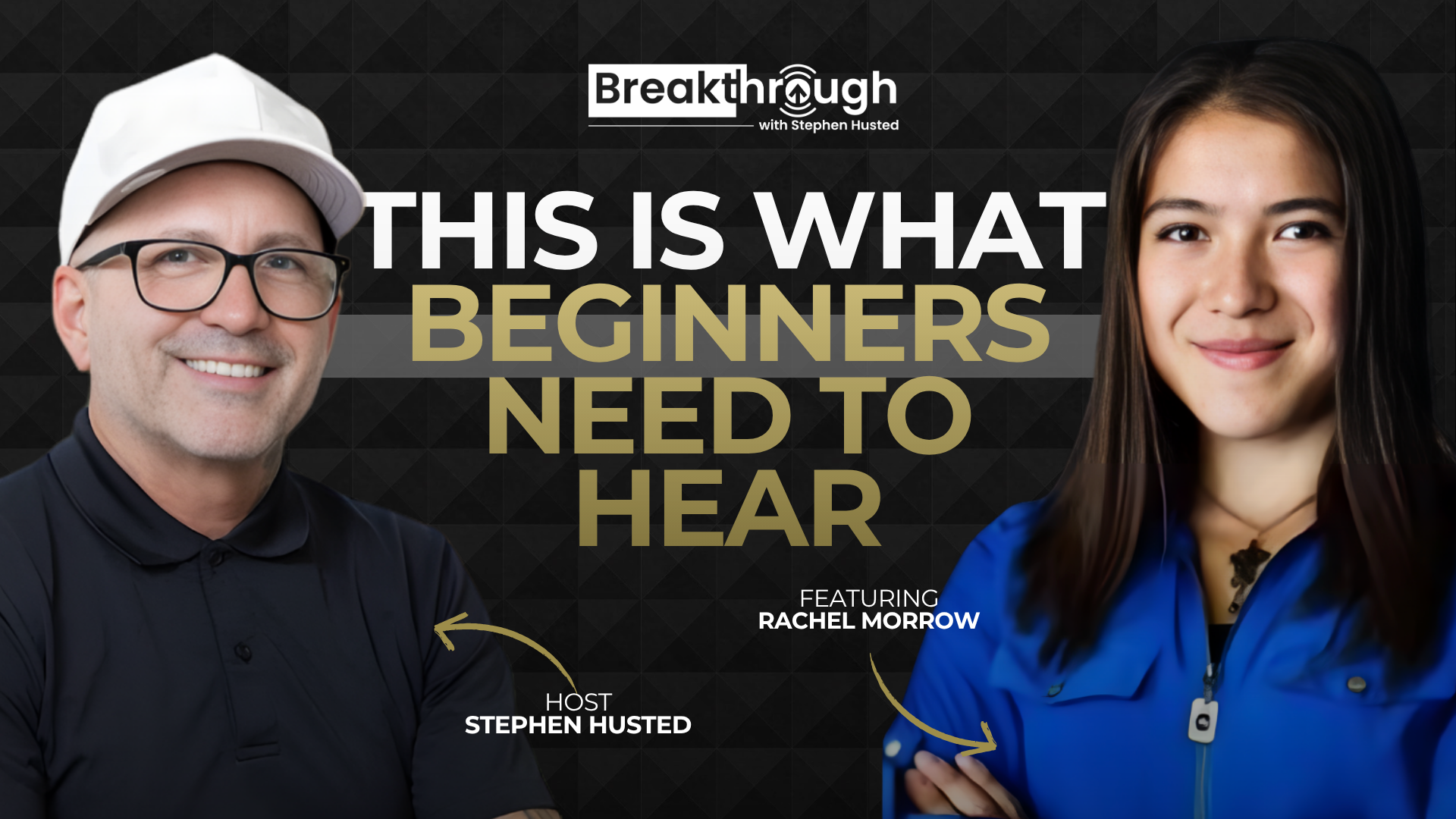
She went from studying for her real estate license in an Amazon warehouse break room… to owning 12 rental units by 24 and reaching financial independence through real estate. Starting in real estate can feel overwhelming, intimidating, and honestly… out of reach. In this episode, I sit down with Rachel Morrow, a real estate investor and agent who proves that you don’t need to have everything figured out to get started. From studying for her license while working at Amazon to building a portfolio of 12 units, Rachel shares what it actually looks like to learn through doing. We talk about the fear that stops most people from making their first move, the mistakes that cost her early on, and why real estate becomes simpler once you take action. Rachel also breaks down house hacking, tenant challenges, and how tools like ChatGPT are changing how investors analyze deals today. This is a real, honest conversation about starting before you feel ready, learning through experience, and building confidence along the way.
Stephen and Rachel talked about:
00:00 From Amazon warehouse to real estate
15:54 How she got started in investing
21:14 The fear of buying the first property
24:06 Costly mistakes with tenants
29:00 Why doing beats overthinking
35:29 Building a team the right way
37:17 Growing to 12 rental units
41:30 Using ChatGPT for deal analysis
47:39 Long-term vision in real estateIf you’re thinking about getting into real estate but feel stuck or unsure where to start, this episode will shift your perspective.
TRANSCRIPT
∎ Teaser / Highlighted Clip
[Rachel Morrow] (0:00 - 0:26)
Connecting people, no matter what, connecting people who can work together and build each other up is always going to be the right choice. Even if somehow the person is a competitor, having that abundance mindset will pay you dividends in the end. And it's just a way of life.
It's a way of life that's, I think it's the best way to live. And I think that's the only way you can actually be free is if you carry that abundance in all your business dealings.
[Stephen Husted] (0:26 - 1:01)
You are putting the effort in, but you're not getting the results. That's a big one. That's a huge one.
I think that you're always depositing the fitness in the fitness bank when you stay consistent to it. And I think some years it's going to pay off more so than others. But when you look at it over a decade, two decades, three decades, like you put in the work and then it's such a habit that you'll never break it.
You just won't. The reason why you won't break it is because you'll feel like shit.
[Rachel Morrow] (1:02 - 1:32)
So true. Honestly, I would have not been able to believe that I would have reached this level. If you told me like four years ago at Amazon that I would at least be financially independent, like my income from those rentals, it covers my basic necessities.
Like work is an optional for me. And I never would have dreamed that would happen in a short time. And some people can amass a hundred plus units in a few years.
But then again, some people don't even start in real estate.
∎ Podcast Intro:
[Stephen Husted] (1:32 - 3:05)
I'm Stephen Husted, and you're listening to The Breakthrough Podcast, a space designed for clarity, curiosity, and the stories that move us. Here, we step away from the noise and into the moments that define us, the early influences, the hidden struggles, and the breakthroughs that reshape our lives. From personal reinvention to building a life through real estate and entrepreneurship, these conversations remind us that success isn't a straight line.
It's a series of honest decisions, brave actions, and small shifts that change everything. This is where those stories live. Let's begin.
∎ Guest Introduction:
One thing I love about real estate is that the people who go the furthest are often the ones who just decide to start before they feel ready. Today's guest is Rachel Morrow, a real estate investor and agent based in Kansas City. Rachel began her journey studying for her real estate exam while working shifts at an Amazon warehouse, trying to figure out how to break into investing.
Just a few years later, she's built a portfolio of 12 rental units made up of duplexes and fourplexes. In this episode, we talk about how she got started with house hacking, the lessons she learned managing her first rentals, and the mistakes that shaped how she invests today. So if you're thinking about starting in real estate, this conversation is packed with real and practical insights.
Let's get into it.
∎ Podcast Proper:
We lost. Yes.
We made it happen.
[Rachel Morrow] (3:05 - 3:06)
Second time's the charm.
[Stephen Husted] (3:06 - 3:18)
Yes. Right. I know we almost hung up because a little bit of technical difficulties, which is, it happens.
It happens on podcasts. It's no big deal.
[Rachel Morrow] (3:19 - 3:24)
Yeah, I didn't want to hang up because I knew I used this laptop for a podcast before, so at least it's functional.
[Stephen Husted] (3:26 - 3:33)
Yeah, so you've told me you were on two different podcasts back in the past, right? Who did you go on to?
[Rachel Morrow] (3:34 - 3:59)
Bigger Pockets Rookie, and that was with Tony and Ashley. And I was on the podcast of a local investor here in Kansas City. His name is Dan Cohan, and he's kind of a big deal in the Kansas City area.
It's a small world when it comes to Kansas City real estate investors. So he's a wholesaler, investor, and he's actually super young. I think he's about my age.
[Stephen Husted] (3:59 - 4:03)
Really? You're in your 20s, right?
[Rachel Morrow] (4:03 - 4:05)
Yes, I am 24.
[Stephen Husted] (4:07 - 4:41)
Wow. Oh my God. I've had a couple of people on my podcast that are around that age.
And it's interesting listening to them talk about real estate or feeling like they're behind the eight ball. I go, you guys, at 24, I was parting hard. There was no such thing as investing or saving money.
None of that. You guys are so far ahead that you don't even realize it. Do you think that way?
Or do you feel like you're just on this path, and you're just starting off, and it seems like there's just a lot to it?
[Rachel Morrow] (4:42 - 5:51)
Well, see, I sometimes get into the cycle of comparing myself to other people. And there's always going to be someone more successful than you. And I guess my whole thing is, how do you compare to your previous self, like yesterday's self?
Are you getting better every day? Or are you stagnating? Or are you regressing?
Which is something that I definitely don't want to do. So I always look at it in terms of just being the best version I can be today, hopefully better than yesterday. And that's what I think is great about real estate and entrepreneurship, is you don't really have to start off super young, or you don't have to start off at a certain age, because you get what you put in.
And everyone is at a different point in their investing or business journey. You really can't get stuck into comparing yourself to others. So yeah, that's kind of my mindset when it comes to age and investing.
[Stephen Husted] (5:52 - 6:44)
I will tell you right now, you're off to a really great start, just in everything in general, from what I see. I know that you're a realtor, right? Correct?
Yes. And you help clients buy investment properties, or first-time homeowners, and then you own investment properties yourself. I know you're into fitness.
So that fitness component at your age is going to be such an anchor on how you go about your life, if you stay with that. Because that consistency of being in the gym will translate into your business. They run together.
And I always love that when I'd watch you post your workouts. It's just so great. And I love that you're consistent about it.
And all those will stack up over time. Do you feel that way? How'd you get into fitness in the first place?
Where did that all start?
[Rachel Morrow] (6:45 - 8:39)
Yeah. I always loved pushing my limits and seeing how far my body could go. And I guess it kind of goes back to when I was in college, I was running track.
I was a walk-on athlete because I was homeschooled before that. I didn't do any sports in high school, and I always wanted to, but I didn't. So I was a walk-on athlete.
And I remember the first training session when I was running with all the other teammates. I was shocked by how athletic they were and how unathletic I was. And I knew that if I just stuck to it, if I maybe trained twice as hard as they did, I can at least have hope of catching up to them.
And that's something that I really, that was a big goal for me in my freshman year of college, is to at least get to the point where I can keep up with them. And sure enough, after my sophomore year, I got to the point where I was keeping up with my teammates. And it just kind of taught me that if I set my mind to something, nothing is impossible.
And fitness just kind of, I continued on that journey after I left college, just because I know that success in any area of life is, it's not going to be complete if you're not taking care of your body. So it's kind of transitioned from extreme fitness and athleticism to how do I build a body that will support me in my business and will support my mentality and learning to work out for mental health instead of just for aesthetics or performance. And it's still a learning journey, but I know you are into fitness as well.
So if you could give me some tips, I would love to hear any of your words of wisdom.
[Stephen Husted] (8:40 - 11:40)
I think just the biggest one, I'll give a couple. Stay consistent. I know that's a word that just gets overplayed over and over and over, but it's really true.
Stay consistent. And even during times, a period where you feel like maybe you're not growing, maybe the fitness journey is not where you want it to be. There's something that's pending that you still could put some more effort into or you are putting the effort in, but you're not getting the results.
That's a big one. That's a huge one. I think that you're always depositing the fitness in the fitness bank when you stay consistent to it.
And I think some years it's going to pay off more so than others. But when you look at it over a decade, two decades, three decades, you put in the work. And then it's such a habit that you'll never break it.
You just won't. The reason why you won't break it is because you'll feel like shit. So true.
Period. It's in a story. You're going to have a mental health breakdown if you don't stay with it.
So there's a doublehead store to that. And honestly, I was in a BMX scene as a kid, and then I played baseball and I played football in high school. Then I broke my arm in high school.
I didn't play football after that. And then I didn't really do anything for a couple of years during that time. And that was a period of time that I got into drugs, that I wasn't doing fitness.
I wasn't working out. And then once I got clean for my first try of getting clean, I got into the gym. And then I had something else to channel my energy and my mental health was going to the gym.
So I started working out. And I've never broke that habit from working out. Even at my worst times in my life, I never quit working out.
And then it got into cycling and then running. And it just kept compounding over time. And I'm 56.
And I'm constantly trying to like, I'm 56. So I'm always trying to figure out like, all right, shit, what couple exercises this year? What can I put in this routine?
What can I do this year? What are those things that I can do to kind of switch it up? What kind of food can I look into?
Should I be taking these kinds of vitamins or the creatine scenario? That was new. I took that back in the 90s.
But it made you kind of puffy. And it was kind of a bodybuilder thing back then. And now I'm on it again.
And it's like the cognitive benefits to it and how I feel throughout the day mentally. And I'll tell you one thing. I want to talk more about what you got going on, but I'll tell you this.
I started noticing around like between five and seven that I was still mentally sharp. Where typically from about four on, I'm pretty much done. I've had enough things go on in my day that I'm not going to make these big, I won't work on content or writing or anything like that because I'm just tired.
[Rachel Morrow] (11:40 - 11:41)
My brain's tired.
[Stephen Husted] (11:41 - 11:54)
I started noticing after like a month of being on the creatine that it just, I was like, wait a minute, I could keep going. So that was one big thing right there. I don't know.
Do you take creatine?
[Rachel Morrow] (11:54 - 12:33)
Well, yes. First of all, I did not guess you were 57. I thought you were 40, honestly.
I'm turning 56. Yeah. I do take creatine and I've kind of discovered the same thing that you have is when I started taking creatine, I was able to lift more.
I felt sharper throughout the day and I didn't crash. True. Yeah.
Usually in the afternoon, I start crashing and I just, I need my nap, but I started taking creatine and I didn't need that anymore. This is not an ad for creatine, by the way.
[Stephen Husted] (12:34 - 12:44)
I know, but here's the thing. When we talk about these things as an entrepreneur, an investor, you need endurance.
[Rachel Morrow] (12:44 - 12:45)
Yes.
[Stephen Husted] (12:45 - 13:26)
And grit. Okay. And if you can't have these types of skills, that's why I try not to tell people, hey, you should work out or you should run or you should cycle.
You should do some kinds of cardio if you want to become an entrepreneur or an investor. I'm not saying that for them to get in better shape. I'm saying that because when you do these types of things, it's going to make you weather the storm on the shit you're going to go through as a business owner.
That's it right there. And you just nailed something. And I can't believe you just said it about the crashing in the midday.
You're totally right. I have not taken a nap. And I usually take these little five minute power naps.
I haven't taken one in forever now since I've taken it.
[Rachel Morrow] (13:27 - 13:27)
Right.
[Stephen Husted] (13:27 - 13:31)
You just jogged my mind. I was like, shit, that is true. Oh my gosh.
That's so crazy.
[Rachel Morrow] (13:31 - 14:23)
That is one of the biggest things that I've noticed because I would always need a little nap. And it's because I usually wake up super early and I used to always need my nap, but now I can't. I don't feel the need to fall asleep.
And I like what you said that when you talk to entrepreneurs, you're not going to tell them to work out, but that grit that you get with when you do what you say you're going to do, you do what you promise yourself that you're going to do. Keep those promises to yourself. It just naturally builds that confidence.
You can't manufacture that confidence. You have to build it by your daily habits. There's really not a straightforward way to do it than to just start working out and staying consistent at something like that.
[Stephen Husted] (14:24 - 14:40)
Yeah. I like to talk about it. I want to talk about it, but then I talk about it here and there, but I just feel like it's such a foundational thing for me and my business.
I mean, this morning, before every podcast that I do, I run a 5K. I have to.
[Rachel Morrow] (14:41 - 14:43)
Oh, wow.
[Stephen Husted] (14:43 - 15:22)
I have to run a 5K. I have to run a 5K. And that's not that far, all things considered, but you know what it's doing for me?
It calms me down and it gets me in the zone to be present for my guests that's going to come on the podcast. Because I know for me, I'm a wound up bunny. Anxiety, all those good stuff.
And I'm not going to let those little things stop me from being the best I can. So I'll put in these natural medicines in my body, in my brain, and then I can get on here and be present with you and get to hear your story and channel this out.
[Rachel Morrow] (15:22 - 15:49)
I so appreciate that. Thank you for doing that and for doing that to be present for us and your viewers. Because a 5K is no joke.
I am not the biggest runner, I will say. I usually run a mile a day. If I'm being good for a whole week, I'll run a mile a day.
But a 5K, I don't remember the last time I ran. Well, I guess the last time I actually ran a 5K was when I officially ran the 5K. But three miles, it's pretty good.
[Stephen Husted] (15:51 - 16:01)
Thank you. Yeah. Thank you, man.
So let's jump into some real estate stuff here. Yes. Let's get into it.
I forgot, how did I meet you?
[Rachel Morrow] (16:01 - 16:06)
I think- On Instagram? So do you know Steven Fernando?
[Stephen Husted] (16:07 - 16:07)
Yes.
[Rachel Morrow] (16:07 - 16:08)
I think he got us connected.
[Stephen Husted] (16:08 - 16:14)
And then we went down that rabbit hole during COVID time period, I would say.
[Rachel Morrow] (16:14 - 16:14)
Yes.
[Stephen Husted] (16:14 - 16:16)
And you were just, were you just getting your license?
[Rachel Morrow] (16:16 - 16:24)
I was just getting my license. I remember our first call together. I was sitting at the break room of Amazon warehouse.
[Stephen Husted] (16:26 - 16:35)
I love this story. Let's go. Let's go.
Let's talk about this. This is crazy. This is so great.
Tell the story. Tell them what you were doing.
[Rachel Morrow] (16:35 - 18:58)
I got a call from you. You mentioned my friend Steven Fernando because I met him because I was calling every listing agent that had a multifamily property on Zillow. So I was looking at all these multifamily properties.
I found Steven Fernando and he ended up talking to me because he was like, oh, wow, you were wanting to get into investing. You're a smart kid. I'll teach you.
And then he knew that I was trying to get a license. So he wanted to help me with that. And I think he just really wanted to help me because he saw that I was in a place of, I didn't know what I was doing.
And he wanted me to make the right decision for my first investment. So became friends with him. I don't know how he got connected with you, but somehow he sent you my way.
And I got a call from you when I was on break at Amazon. And at the time I was still, I think I was still studying for my real estate exam. But you talked to me and you said that you were thinking about getting into Kansas City real estate.
He connected us because he saw that we were both motivated and we were trying to start investing in Kansas City. And that's the thing I love about Steven. He has an abundance mindset.
He knew that I was going to be an agent, but he wasn't like, Oh, my client is going to call this lady and he's going to end up working with her. That's not how he thinks. He wanted us to get connected so we can learn from each other.
And that's something that I really tried to bring in my business is connecting people, no matter what connected people who can work together and build each other up is always going to be the right choice. Even if somehow the person is a competitor, having that abundance mindset will pay you dividends in the end. It is.
And it's just a way of life. It's a way of life. That's I think it's the best way to live.
And I think that's the only way you can actually be free is if you carry that abundance in all your business dealings. So that was something that I learned from Steven. We got connected.
We talked about fitness and real estate. I remember you were talking about your long bike rides and I was so impressed because I liked running, but I only did like short sprints every now and then. And that kind of got me thinking maybe I should get into more endurance training, but yeah.
Wow. That was what? Four years ago?
Four or five?
[Stephen Husted] (18:58 - 19:06)
It was. Yeah. It was like five years ago.
Yeah. Five. It was a long time ago.
Do you still talk to Steven?
[Rachel Morrow] (19:06 - 19:48)
Yes, I do. Every now and then. He phased out of the small multifamily space.
He still sells multifamily, but he does a lot of commercial deals now, so we don't really work together as much. But yeah, he'll sometimes call me and he'll talk to me about random things in life and about his business. And yeah, we're still friends.
We chat, but usually it's not about a deal. It's more about him giving me advice on dating and whatnot and me not taking the advice because I don't really date. So yeah, it's just we have a good relationship and I'm happy for him.
And are you still connected with him?
[Stephen Husted] (19:49 - 20:06)
I haven't talked to him in a while. I haven't. Yeah.
It's like went right into Kansas City, did our thing and then now we're out and we're in Seattle and we're doing development there. So we kind of switched gears, so I haven't really talked to anybody, honestly, at all, except for my property managers.
[Rachel Morrow] (20:06 - 20:11)
Oh, okay. So when you say you're in Seattle, are you investing over there?
[Stephen Husted] (20:12 - 21:15)
Yes. That's our main market now. That's where all the focus has been.
In the beginning, as we were growing and scaling, we were buying long-term rentals, rehabbing, doing all that. And I really was getting to a point to my app, what my true passions are. And it's mostly building, designing, that whole part of it is where I'm at.
And Seattle allows me to do that. I do it here locally too, but the two of them, it's where we're at now. So we put the whole Kansas City portfolio, it's just on idle.
We got our property management. We haven't bought anything in a very long time, but that's where we are. That's how investing is.
The journey changes sometimes and that's okay. As long as you're not jumping around into a million different things, getting the shiny object syndrome, which is how that can go. But I got a question for you.
From when you started to now, what are some of the biggest learning lessons you've come across so far?
[Rachel Morrow] (21:16 - 23:30)
Oh, gosh. Biggest learning lessons. I guess one of the biggest things that I've learned from getting into real estate is you don't know how easy it is until you try it.
And when I say easy, I'm not trying to make real estate investing sound easy because the barrier to entry is still kind of high. I remember when I bought my first rental, I was so afraid of getting started. I was intimidated.
I was like, how do I tell these people that I'm their new landlord? And I was just intimidated by the whole process and property management. What if everything breaks down?
I was so scared of the worst case scenario. And I remember when I got started, I bought a house hack as my first property. So I had to live in one unit, rent out all the other units.
But the thing about that fourplex was I had to move into one unit and they were all occupied. So I had to tell this guy to leave, to move out because I'm not going to live there. And I felt so bad about the whole situation.
And turns out he didn't make a big deal about it. He understood the whole process. And once I got that out of the way, I took over property management and I did my first little renovation in one of the units.
I realized this is not that scary. This is not that hard. And I worked with a lot of first-time homebuyers and first-time investors and house hackers who asked me the same thing like, what do I do?
I'm just, I don't know if I'll be able to do this. But once you get that first few under your belt, it just becomes you laugh at why you were intimidated in the first place. And I think that can be looked at from a larger scale too, because like you said, in real estate, you progress.
I can't imagine owning any commercial buildings or doing any triple net leases, but in the future, even though it's a new thing to me, I know that I'm going to learn the process and it's not going to be scary. Once I learn it, it will be simple. It will be kind of an everyday thing for me.
So I think that was a big life lesson. What intimidates you right now is it's not going to be scary once you get into it.
[Stephen Husted] (23:31 - 24:08)
You learn as you go through it. It's the doing that teaches you everything, because you can look at short form, long form content, go to a seminar, nothing's going to prepare you. You're going to have some knowledge, which is good, but everyone's situation is different.
Even though it could be the same asset class, your long-term rental, but you go through different things on the property. You go through different things with the tenant and taxes and all these different little things that pop up. And as you go through a couple of them, you start to learn and then you kind of go from there.
But what are some of the pitfalls you did run into?
[Rachel Morrow] (24:09 - 25:17)
Oh gosh. I made some mistakes in terms of property management because I'm the type of person who I want to figure everything out on my own. I don't really reach out to people for help.
I think if I can figure it out myself, why should I bother someone? So my first few rentals, I made some mistakes with finding good tenants. I found some pretty problematic tenants and that definitely set me back a little bit.
It cost me a lot of money because I had to evict someone. I had to do a lot of renovations for destroyed units. And I think if I had a good property management team or at least a good leasing agent to talk to and actually get advice from, I wouldn't have made those mistakes, but it's a learning experience.
And that's something I learned about real estate is you just got to look at your mistakes and be happy that you made them early. And do your best. So true.
Yes. I'm sure you can relate. And just do your best to make sure whoever you care about doesn't make the same mistakes as you did.
[Stephen Husted] (25:18 - 25:41)
Absolutely. And I think that's a big, sharing the mistakes is like the crucial part to a new investor. You're going to talk about wins all day long, but you want to prepare them for the things that could go wrong or my experience of things that did go wrong because I've gone through the same thing with property management.
I've made those mistakes. I've made all the mistakes, honestly. If I look back now, I made them all.
[Rachel Morrow] (25:42 - 25:47)
So remind me, how many years have you been doing real estate or investing and selling?
[Stephen Husted] (25:49 - 29:03)
I got my real estate license in 2008 when the market crashed. I literally got my license in the mail the day the stock market crashed and Bear Stearns went under. And I remember I'd gone to the mall and I'm like, yeah, I got my license.
When I make all this money, I'm going to go buy some new clothes and a computer bag. So I went to the mall, I did all this stuff, and I show up to this mom and pop mortgage and real estate office where I'm going to hang my license. And I walk in and I've said this before on the podcast, I walk in and they used to have these people that come around and tell you about the different loan programs.
And they were in my broker's office and they're just like paper in the air and they're freaking out. And I'm like walking in there like I'm ready to make a million dollars. And they looked at me and they're like, you better lock any loans you have, you better lock them in today.
I'm like, why? And I just remember looking down and he was on his computer and he had a TV screen and they were showing Bear Stearns and the people coming out of the building that lost their job. And shit, that was the starting point.
All of a sudden, everything was going downhill. It was the craziest market to get your real estate license in, but one of the best too, because it was so hard. And you were dealing with asset managers through banks.
They're not your typical sellers. You were running numbers and doing transactions like short sales. And you do a short sale and it was nothing short about a short sale.
Let me just tell you that. It could be 10 months. And you get it to the closing table and the lenders call in all the shots.
They're like, yeah, we're going to give you a one and a half percent commission. And you can split that between you and the other buyer agent. This is what we want in our net proceeds.
It was absolutely insane. So then that was 2008. 2015, I bought my first investment property.
But let me just tell you this. Back in 2006, I read Rich Dad, Poor Dad on the beach. And I'm like, oh, this seems like something I want to do.
And I went to a conference. But back then, there wasn't YouTube conferences. You'd go and listen to someone speak and then they would sell a CD out in the lobby.
And you'd go home and listen. There wasn't a podcast like this where somebody can get on and listen and get information. There was none of that.
And so it took a lot longer. But I never gave up on that dream and that goal to invest. But it took forever to get there.
And it's always constantly moving in that direction. And I try to tell new investors, friends and family, this. Because sometimes people will come to me and they're like, oh, you got all these investment properties and you're doing a lot of stuff.
I'm like, yeah. And I started 2006 thinking about it. It took that long.
[Rachel Morrow] (29:04 - 29:13)
Hey, I mean, nine years from the first time you read Rich Dad, Poor Dad, that's not that bad. Some people, they let decades go by.
[Stephen Husted] (29:14 - 30:48)
That's totally, you're right. You're totally right. And I think now, I guess one of the things that I can say is now you could stumble across bigger pockets or YouTube and find how to buy your first investment property, how to do a short term rental, a midterm rental, how to develop.
You can take all that content in and you can get ahead pretty quick. You could even finish, you could even figure out financing and hard money just right on YouTube. And you're off for the races.
Before, I didn't even know what hard money was. We did a conventional on our first property, but did something similar to you. You bought your first property, which you house hacked, right?
You moved into it. That's funny. That's what I did with my first property.
I house hacked the same thing. But the second one, we were going to do a short term rental, but they didn't allow short term rentals in this complex anymore. And so we're like, oh my gosh, we got this fully furnished rental now.
What do we do now? And so we're like, oh, we could do corporate housing. We can rent it out to traveling doctors and nurses.
And okay, so we did that. There was no term called midterm rentals at that point. It was corporate housing.
That was the name of it. It was corporate housing. I'm like, oh, good.
Okay. Somebody rented it out for six months. Cool.
They're covering our mortgage. And so we learned from that. So real estate's always that one of those things that always evolves, just like you as a human evolve.
Investing is just one other thing to it, right?
[Rachel Morrow] (30:48 - 31:11)
Yeah. And the different strategies that you can use evolves too. So let me ask you, when you turned it from what was supposed to be a short term rental into a midterm rental or corporate housing, did you have a mentor to help you through that or did you just decide that you want to...
No. Oh, so you coined the first term, corporate housing, yourself.
[Stephen Husted] (31:11 - 31:15)
Yeah. I think there is still a website called corporate housing.
[Rachel Morrow] (31:15 - 31:16)
Wow.
[Stephen Husted] (31:16 - 31:16)
Yeah.
[Rachel Morrow] (31:17 - 31:17)
Man.
[Stephen Husted] (31:18 - 31:48)
Yeah. And that property broke even and had a little bit of cashflow, but it was five minutes from my house. It was a newer development.
So you didn't really have to worry about a lot of different repairs and things like that. We paid for all the furniture up front and we started getting these people that would stay in, like traveling nurses, doctors, dentists, just all kinds of interesting tech people. And they would stay six months to a year.
And so I'm like, all right, this is cool. We can do it.
[Rachel Morrow] (31:48 - 31:55)
So let me guess, there was no mainstream information on what you were doing at the time?
[Stephen Husted] (31:56 - 31:56)
No.
[Rachel Morrow] (31:56 - 31:57)
Yeah.
[Stephen Husted] (31:57 - 33:31)
No. And I'll tell you, here's a good example. We know I have plenty of friends that do midterm rentals, Jesse Vasquez, Vivian, like all of them.
And I could be at Target in line watching one of their videos and learn about how to walk through a property and have a list to understand when that guest moves out. Did they take three towels away? What's missing as far as like utensils?
I didn't know any of that. People would move out. At one point I'm like, and I had a business, I have a business partner and we're still investing together, but I'd call him.
I'm like, Bill, dude, we got like 20 cutting boards now. What are these people doing? Or there'd be things like all these leftover items, but then we would have things missing.
So we're constant. So then we're like, oh, well, you know what we need? We need an inventory list.
We should have an inventory list, inventory the whole house, and then make the guests sign that. Like, hey, this is the inventory. Here's what's here.
So when you move out, if you took all the towels and you took this, that, the other, then we have to talk about that. So there's all these constant things that we had to learn about, but we didn't have Airbnb. We weren't using Airbnb.
We used corporate housing website. Yeah. Because I don't think they were doing long-term, like midterm rentals from what I remember.
We couldn't even put it on their website because if we did put it on, the HOA would call us. We'd get in trouble. We'd get a fine.
[Rachel Morrow] (33:32 - 34:05)
Oh, gosh. Yeah. Wow.
And the fact that you had to learn all this on your own, whereas, I mean, everyone talks about the good old days, but let's be honest. Nowadays, there are so many resources. If you want to be an investor, there's YouTube, there's the podcasts, there's Spotify.
You can listen to any podcast you want all day long. And I feel like there are a lot more local real estate events, networking events now as opposed to back in the day.
[Stephen Husted] (34:07 - 35:23)
Oh, 100%. 100%. That's absolutely true.
I mean, I think people have a better runway, but what you had said about the people that get in front of you, and I go through the same thing is they take in a lot of content, but there's still that unknown. What if this happens? What if this happens?
And I try to tell people to don't take on too much. It's okay to start small and figure it out. Gain some confidence.
Learn as you go. Make sure you put an amazing team around you. If you can get an amazing team around you of people that are super smart and make sure they're different than yourself, meaning if you're good at numbers, find that agent that's better at other things.
If you're not good at numbers, find the agent that knows how to run numbers really good. Just put a team that is amazing around you so that you can succeed. Because if one of those team members go sideways, your whole business is going to go sideways quick.
And you have to understand how to cut them out quick and hire somebody new to plug that hole.
[Rachel Morrow] (35:23 - 37:07)
Yeah. I feel like that applies to real estate investing and any business. True.
That's true. Because I started off kind of backwards, went straight into real estate investing, didn't really have mentors around me other than, I guess, Stephen Fernando is someone I would consider a real estate sales side. Other than that, I didn't really have any resources or anyone to give me advice on what I should do with my first rental.
I started backwards. And I think that if people start with the end in mind, you know that saying, they'll have a lot more success. So have a vision in your mind of what you want your business to look like in, you could say, one year, five years, 10 years or all three.
Just think about what you want it to look like at that time and decide what you will need when your business looks like that. And start building that. Start building that.
So when you get there, there will be no surprises. You are already prepared for that. And for example, when I started, I didn't really have a team of contractors to help me.
I didn't have a property manager to give me advice. I didn't have someone who knew real estate has been through the whole leasing process and all that to give me advice. And if I had that, I would have made a lot less mistakes, but it's good.
I learned and it's a painful lesson that I really am excited to teach my new clients. Once you learn this, you will come across roadblocks, but not in the same way that I did.
[Stephen Husted] (37:08 - 37:10)
You'll be prepared for them.
[Rachel Morrow] (37:10 - 37:11)
Yes.
[Stephen Husted] (37:12 - 37:18)
Yeah. You'll be prepared for them. So how many investment properties do you own now?
[Rachel Morrow] (37:19 - 38:27)
So I have two four-plexes and two duplexes, 12 units total. And they're pretty much all stabilized for the most part. I bought them, I usually buy properties that need a little update so I can buy it under market value and add that value as I go in and fix it up.
So yeah, they're all going well so far and just super grateful for where I am. Honestly, I would have not been able to believe that I would have reached this level. If you told me like four years ago at Amazon that I would at least be financially independent, like my income from those rentals, it covers my basic necessities.
Like work is optional for me and I never would have dreamed that would happen in a short time. And some people can amass a hundred plus units in a few years, but then again, some people don't even start in real estate and I'm just grateful to have what I have right now and to be where I'm at. And yeah, I have 12 units right now.
They're going great. Looking to buy more.
[Stephen Husted] (38:30 - 39:08)
The investor addiction, it's real. Yes, it is. It is real.
Sometimes I go, I don't know, having all these doors, sometimes it's a pain in the ass. I have to agree. And that's have a full team and property managers and all these different things.
And sometimes I'm just like, I love the development side of things and building. I like that because I know there's like a, I'm dealing with a very small team and these are the things I have to solve. And at the end of it, it's just, it's done.
Like I'm not dealing with crazy things that I hear all the time from tenants and scenarios, but it goes with the business. You have to take the good with the bad.
[Rachel Morrow] (39:09 - 39:16)
So tell me more. I want to hear more about your development, the development side. Are you building to rent or are you building to sell?
[Stephen Husted] (39:18 - 41:48)
Building to, we're doing both. We're trying to keep 80% of what we build, which is this ongoing puzzle of what we're doing out in Seattle. What we're doing, we buy a single family home that has a basement.
We rehab the house. We build another unit in the basement. We immediately then put tenants in place.
And then during that time period, we're condoizing, doing permits and planning for the back lot. So then we just condoize and depending on the lot, where it's located, we're either building one to three units. It just really depends.
We're building one that's got five units on it right now. And so there's a lot of different moving parts, but the key to it is you can condoize the land and let's say you built a thousand square foot house. All in, you actually can cash flow in Seattle, which is hard to do in California and areas of Washington that are so expensive.
But because the land is free and clear and then the debt you're putting onto it as far as the construction's concerned and permits and all that factored in, you can rent it out for that. So it turns into this great little asset. It's the only strategy that I've noticed on the West Coast that actually works as far as getting cash flow and breaking...
People buy investment properties all the time that don't cash flow. They're just banking on appreciation and other things, tax advantages, whatever the case may be. But the thing about Seattle's market is one, they need housing.
So they're adding all that density because they got water and hills and they just need to build. They don't want it to get to a point where housing is super expensive, which it is, but it's more affordable than California and the rents. And so this is what they're doing.
They're pro all of this type of development. And so we're out there doing our share and there's a bunch of other investors that are doing it too. I really like the people that are on the ground so far that we have as far as our team's concerned.
That's, once again, I say this all the time, your team is going to make you or break you and out there they've been amazing. So that's what we're doing. But I love the development part.
I like watching the house get built and picking out paint colors and finishes and flooring. Like that's what I like. That's really what I like the most.
That sounds exciting.
[Rachel Morrow] (41:49 - 41:55)
So I'm guessing you're here on Pinterest scrolling through all these beautiful finishes and that's your job. That's what you're doing.
[Stephen Husted] (41:56 - 42:38)
Yeah. Pinterest and then I don't chat. GPT has just up the game.
I'll take photos. I'll take photos from our projects, upload them into chat and say, Hey, I need landscaping. I want native plants.
I want a pathway this way with pavers, this, that, oh, here's the colors I want for the exterior of the house. Here's the, here's the brand. Here's the skew numbers.
And then does it. And I'm like, cool. I could give it to my contractor or I talked to my designer and that tool is just changed the game in so many ways or just tile layouts for the bathrooms.
Yeah. Have you used it at all in any projects?
[Rachel Morrow] (42:39 - 43:05)
I use chat GPT to come up with the number breakdowns for my clients. I actually learned it from a fellow real estate investor and agent. He showed me how he has, he plugs in the numbers and then it spits out a whole number breakdown for your clients.
So they think you're a genius, but it's like, well, chat GPT is pretty smart. Yeah. So wow.
[Stephen Husted] (43:05 - 43:55)
That's so cool that you bring this up. I'm so glad you brought this part up because this is another part of the puzzle for a new investor is chat GPT. And I'm going to talk about it over and over, especially with, because I met, I mentor new investors and I've told them like, I don't know how to analyze a deal.
I'm like, I got a GPT for you. All you got to do is put the address in, tell chat the purchase price, how much you're going to put in rehab and let it go to town. It's going to create a performer right there for you.
I've even got it to that. These are the tools and you just brought that up that you can share that with your client, but they also can do the same thing. And they're now smart investors just by using chat GPT.
[Rachel Morrow] (43:55 - 43:57)
It's amazing. It's a miracle.
[Stephen Husted] (43:57 - 44:18)
It really is. Really is. When you started using chat GPT to analyze deals, were you fact checking it in the very beginning too?
Did, Hey, wow, this spit it out so quick, gave me all these different data points, like better than I could ever do. Did you then go like, shit, is this correct? Do I need to, yeah, I would do that too.
[Rachel Morrow] (44:18 - 45:05)
I looked at the math and I just did the math on my calculator and whatnot and everything just panned out. It's amazing. People talk about how chat GPT can lead you to not use your brain or you rely on it too much.
Well, if you're asking it like one plus one or two plus two, maybe, but it's such a great way to find information fast to find necessary information fast. And I would argue that you can get smarter by learning all this information super fast. But of course you have to think critically and think independently.
It's not like you're going to completely rely on chat GPT. It's such a great tool. Like anything tools can be abused, but I think it's just, it's very useful for investors and business owners.
[Stephen Husted] (45:06 - 45:30)
I think it's one big part of a new investor that's going to start that journey would be building the team using chat GPT. Yeah. You could learn like have a website for like renometer to analyze rents and things like that.
But even chat GPT is crushing that at this point. So I really don't know what types of things you really need.
[Rachel Morrow] (45:30 - 46:05)
Yeah. Like all these paid subscription services that you can use to analyze deals. Like you really don't need it at this point.
Also another quick tip I have renometer, I usually call it rentometer, but Zillow price by rental does a great job at showing you listings in the area. Sure. It doesn't show you all the information that rentometer has, but I use Zillow price my rentals to figure out, okay, what are things going for in the area?
They even have what properties leased for. So they have pretty much all the information you need.
[Stephen Husted] (46:08 - 46:14)
Yes. That's actually my three sites. Honestly.
It's Zillow, renometer, and chat GPT.
[Rachel Morrow] (46:14 - 46:16)
Yes. That's it.
[Stephen Husted] (46:16 - 46:18)
And I just balanced between the three of them.
[Rachel Morrow] (46:19 - 46:42)
Wow. That's so cool. I did not know that you were finding a market like Seattle.
I did not know that you're making that cashflow. And would you say that the all-in cost for these renovations or new builds, would you say that the all-in cost is lower than a comparable on the market deal?
[Stephen Husted] (46:44 - 46:44)
Yeah.
[Rachel Morrow] (46:45 - 46:45)
Wow.
[Stephen Husted] (46:46 - 47:31)
Yes. Okay. That's awesome.
Yeah. It's a big deal out there right now. And there's probably got 10-year runway and it's going to spread like California's big on ADUs.
You can condoize here in California now as well. It's going to spread out to all the different states at some point. It's already Texas.
But I mean, a good example, we're all in on one for 400K. That's everything. Permits, you name it, all in.
And we're refinancing as we speak. And PITI all out the door, I think it was at 2,900. And we can rent out this new house for 35 to 37 in that range.
[Rachel Morrow] (47:32 - 47:32)
Wow.
[Stephen Husted] (47:33 - 48:54)
Yeah. And this lot was 12,000. The lot's 12,110 wide.
And then the single family sits really close to the street. So it's all this lot to the left. And then where we just built this unit, it's in the very right corner because the right corner of the lot was where the garage was.
And so we worked off the footprint of the garage. And so then they passed all these new laws, these different laws in Seattle of what you could highest and best and density and all this stuff. So then we went back to our architect and said, what can we do now?
And they just came back and it's one, two, three, four more units, four more. And they're three stories. And they just pack it in the density, but it fits.
It's got a little outdoor space. And there's a park that backs up to this particular project that we're going to have gates and you can go out to the park. The only downside to it, honestly, is it's at the dead end of a street.
The street's nice, but it's dead end. And the freeway is close by, which bothers me, but you know, it is what it is.
[Rachel Morrow] (48:54 - 49:14)
It's a rental. So it's not for home buyers. It's not like you're going to build to sell.
So that's the difference about rentals and building to sell is tenants don't really care that much because in their mind, they're not going to live there forever. Yeah. Wow.
Those are some good numbers for an appreciating market like that.
[Stephen Husted] (49:14 - 52:00)
Yes, we got back. They hit us. So the market has been cooling out in Seattle, kind of going through a little moment, which is fine for us because we're going to hold onto them.
But the after repair value for these units that we were going to build have dropped down tremendously. We were paying more around 750 that we would be the property would be worth. And this appraiser, I think came back at like 650 on us.
But you know what? We're not selling them. So we're going to keep them.
And sometimes, yeah, just keep it. And that's another really big key point of real estate and market cycles. Unless you're flipping, where you rehab it, you put it on the market, you sell it, you got that instant payday.
Long-term rentals, you really don't start to see the growth of it after like five years. Get into eight to 12, and then it really starts to kick in. Like you really start to see what's going on because you've gone through a market cycle.
You got principal pay down. Rents have been increasing. There's just all this different little moving parts that happen.
And sometimes I think in the beginning, that first five years, it doesn't feel like it's doing that much for the most part. It just depends on what your strategy is. But I just noticed that we're just going to hold tight on these developments out there.
And we're already doing what you said, where we work from what we're going to go in our vision backwards. Because I'm turning 56. Some of my partners are late 50s, ones in the 60s.
So what we're doing now is figuring out our exit strategy, our 10-year exit strategy. And I think that's a big thing, what you said. No matter what age you're at, you have to put some type of long-term vision together, paint that picture so that you have it in place.
You might deviate from it a little bit, but you got to put it in place and then go towards it. And then as you get to that point, you reassess, and then you can look at another goal or another vision of what you got going on. But you got time, girl.
Yeah, well. 24, you got 12 doors. You know what's funny?
I bought my first house at 34, and I should have even been buying a house at 34. I wasn't in the right frame of mind, didn't know anything. Heck, I didn't even know when I went to go sign docs what closing costs were.
I was so, just had no clue, no clue.
[Rachel Morrow] (52:01 - 52:07)
Well, look at where you're at right now. That's the thing. You started.
But that's, yeah.
[Stephen Husted] (52:07 - 52:14)
And that's the point to it all. I think it gives permission to everybody that everybody can do this.
[Rachel Morrow] (52:14 - 53:06)
Yes, yes. Yeah, because a lot of people, they don't know how to get started. They're scared of getting started, so they just never get started.
But you got started, and now you're developing in some of the hottest markets. Like Seattle, even though you say that the ARV came in a little bit lower than what you were expecting, it's still a hot market. And building to rent, building to sell, just developing in those types of areas, it's going to set you up for, set you and your family up for the rest of their lives.
All that wealth, it's building a legacy. And you started when you were 34. Here you are.
Time is going to pass anyways, and now I'm sure you don't regret ever making the entrepreneurship leap.
[Stephen Husted] (53:08 - 54:02)
Yes. And I think for, and when I say that people should, they can start anywhere on any type of property. Meaning, if you're going to start in the Midwest or somewhere, and it's a $50,000 house, and that's all you can afford, buy that property and start that journey.
Because that journey, you never know where that journey will go. And I think that sometimes people want to be prepared. They don't think they have enough money.
There's a lot of things that holds them back without just starting. And you can start anywhere. And everybody in California, from my brokerage, especially when I said I was going to invest in the Midwest, I'm buying this property in Detroit
They're like, dude, you're crazy. Don't do that. That's a bad decision.
Some of those decisions were bad, but some of those led to good things.
[Rachel Morrow] (54:03 - 54:10)
Exactly. We all make them. Let me ask you this.
Are those California brokers, what are they doing right now? Are they investing?
[Stephen Husted] (54:10 - 54:11)
No.
[Rachel Morrow] (54:11 - 54:15)
Here's the thing. Don't take advice from people you don't want to be like.
[Stephen Husted] (54:17 - 54:39)
Never. It's so true. Well, I am so glad I finally got you on, and I'm glad that we got to talk about the fitness stuff.
And I can't believe you just had that light bulb moment about the creatine without the napping during the day. I can't believe you shot. That just blew my mind.
It's so true.
[Rachel Morrow] (54:39 - 54:40)
Would you say it's a breakthrough moment?
[Stephen Husted] (54:41 - 54:44)
I would say that was a breakthrough moment. You got it, Rachel.
[Rachel Morrow] (54:46 - 54:57)
Yeah. I love creatine. Whenever I forget to take it, I'm just like, oh no.
And right when I get home, I just quickly scoop my creatine. I just do dry scoop and yeah, it's pretty good.
[Stephen Husted] (54:57 - 55:22)
Not that I want to jump back on the creatine, but I just listened to the Stephen Barnett podcast. He had this doctor on and she was saying, get your parents on it. She was even saying, get up to 20 grams per day, but break it up throughout your day.
Not do all of it at one time, but five in the morning, maybe five after breakfast and then some during the day, but she was doing up to 20.
[Rachel Morrow] (55:23 - 55:29)
Wow. Oh, okay. That's an idea.
I only do five grams. What do you do?
[Stephen Husted] (55:30 - 55:30)
10.
[Rachel Morrow] (55:31 - 56:14)
10. See, that's the thing. You were talking about being an energizer bunny and how just lifting has really helped you in your business.
I think for people like us who are entrepreneurial, we're always chasing that next goal. We're chasing that next thing. I find that sometimes I feel like I'm chasing a high and when it comes to lifting and working out, I feel like that is such a good way to channel that energy because sometimes we can have more energy than we can handle.
Just keeping fitness in your routine is so important, especially for entrepreneurial people like us.
[Stephen Husted] (56:14 - 56:37)
Love it. Love it. Love it.
Thank you so much for joining. I'm glad that you pushed my assistant to like, no, give it one more try so that we can get on this podcast. I really appreciated that you did that.
I wanted to get you on no matter what. I know the last time we had issues and this time we did, but I'm really glad that it finally all worked out and that I got to spend some time with you and chat.
[Rachel Morrow] (56:37 - 56:40)
Wow. That hour just flew by. It was so much fun.
[Stephen Husted] (56:41 - 56:50)
I know. Yeah, it was so good. It was good.
Well, Rachel, keep rocking it. Keep going on your journey. Keep doing what you're doing, okay?
[Rachel Morrow] (56:50 - 56:58)
You too, Steven. I'm going to be looking at your motivational posts on Instagram and it's going to just make me want to go harder even more. Keep up what you're doing.
[Stephen Husted] (56:59 - 57:33)
Good. Thank you. I'll do it.
All right. Have a great day. Talk to you later.
You too.
∎ Podcast Outro:
Thank you for tuning into our show where we hope you found inspiration and gained valuable insights. If you enjoyed this conversation and want to stay updated on our latest episodes, be sure to subscribe to our podcast and share it with others who might benefit from it.
We appreciate your support and look forward to bringing you more candid conversations and breakthrough moments in the future. Until next time, take care and keep exploring new ideas and strategies.