Episode 75 - The Truth About House Flipping After 2,000 Deals | Sam Primm
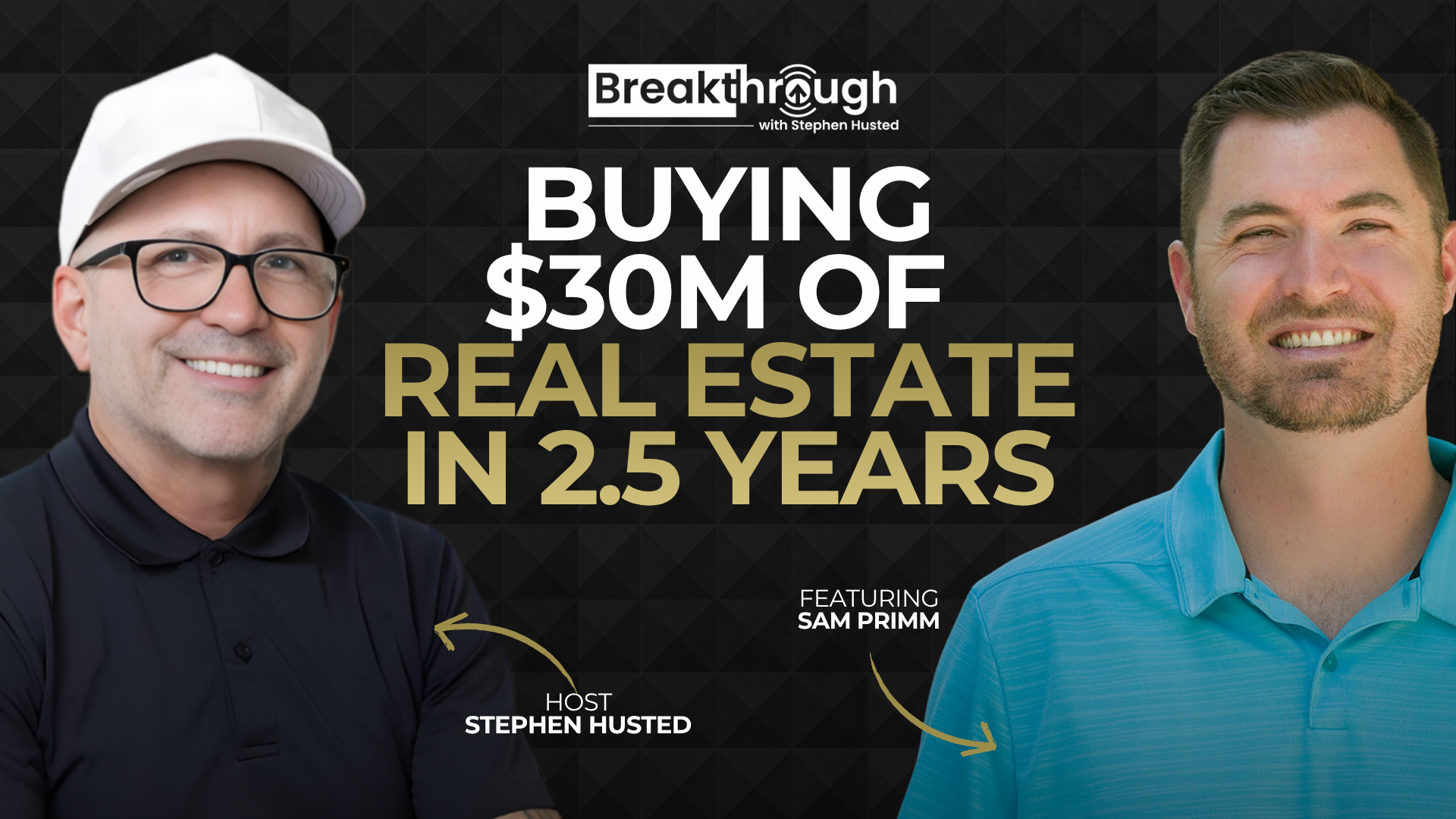
In this episode, I sit down with Sam Primm to talk about the realities of scaling a real estate business, managing rapid growth, and what happens when success comes faster than expected. Sam shares how he built multiple companies, flipped thousands of properties, acquired millions of dollars in real estate, and scaled aggressively during the post-COVID boom. But he also opens up about the challenges that came with that growth, including operational issues, underperforming investments, and the lessons learned from building the plane while flying it. We discuss why many entrepreneurs constantly push for more, the hidden dangers of chasing growth without the right systems, and how today's market is forcing investors to simplify, become more efficient, and focus on what they do best. Sam also shares insights from running a property management company, education business, renovation company, and real estate investment operation all at the same time.
Stephen and Sam talked about:
00:00 – Why entrepreneurs are obsessed with growth
03:32 – Buying $30M of real estate in 2.5 years
07:03 – The motel investment that lost money
12:52 – Building a property management company to 700 units
15:05 – Why Sam loves the education business
23:12 – The reality of today's investing market
25:04 – What 2008 taught Stephen about investing
29:51 – Why now is a great time for new investors
32:00 – The danger of chasing too many strategies
35:07 – Losing $700K and moving forward
42:21 – Sam's advice for new investors
TRANSCRIPT
∎ Teaser / Highlighted Clip
00:00 Sam Primm: Growth may be not monetary. It may be the systems we're putting in place. It may be pruning some employees that aren't all in. It may be learning that we have to do things a certain way and we can't just all be happy-go-lucky. Unlimited PTO is something we've had, right? So it's just maybe growth isn't monetary for us. And we're trying to turn this kind of wild train into a little more systemized process. And we're just crazy enough that I think it took getting kicked in the nuts for a year and a half or two years to actually make the changes because we're entrepreneurs. can also be stubborn. So I don't know about you, but finally, I think we're like, all right, we got to make the changes. The universe is telling us you're the horse. Let's make some changes.
00:37 Stephen Husted: Well, interestingly enough, I was talking to my assistant as I was driving over here and we were talking about you and she was giving some of your bio and it was something like you flip a thousand houses in this certain period of time. And I thought about it. I'm like, God, I would never do that. I just was like, I wouldn't do that. I mean. For me, because I know what I went through on my journey in the last four years and all those ups and downs that I just, I don't know how I would handle that. As much as you can systemize things, you're still running the show.
∎ Podcast Intro:
01:08 Stephen Husted: I'm Stephen Husted and you're listening to The Breakthrough Podcast, a space designed for clarity, curiosity, and the stories that move us. Here, we step away from the noise and into the moments that define us. the early influences, the hidden struggles, and the breakthroughs that reshape our lives. From personal reinvention to building a life through real estate and entrepreneurship, these conversations remind us that success isn't a straight line. It's a series of honest decisions, brave actions, and small shifts that change everything. This is where those stories live. Let's begin.
∎ Guest Introduction:
01:47 Stephen Husted: Today's guest is Sam Prim, a real estate investor and entrepreneur who scaled aggressively, building a multi-million dollar portfolio and multiple businesses in just a few short years. But behind the rapid growth is a real story of what happens when scaling outpaces systems. Sam opens up about the highs of buying millions in real estate and the challenges that come with it when the market shifts. We talk about cycles, tough lessons, and why not every opportunity is worth chasing, especially when you're trying to do too many things at once. Sam also shares why focusing on the fundamentals, embracing failure, and simplifying your strategy might be the key to long-term success. If you're in a season of growth, or even a season of setbacks, this episode will give you a grounded perspective on what it really takes to build something that lasts.
∎ Podcast Proper:
02:45 Stephen Husted: All right, Sam, we are live.
02:48 Sam Primm: Let's do it. Let's do it.
02:52 Stephen Husted: I'm so glad to get you on. I was diving into your backstory and I'm like, wow, Sam has pulled off a lot in a very short period of time. And I think that I've done a lot in a short period of time, but you've definitely, you've taken the prize on that.
03:07 Sam Primm: Yeah, we've scaled very aggressively. I mean, our goal is just growth. Don't really look at the numbers. Don't really look at the income. Just keep growing for a while. And that definitely has its advantages, but it also has its disadvantages. So yeah, we've stepped on the gas a little bit. The only gear we knew was growth gear. So we're kind of picking up the pieces now and trying to figure some things out. So it's kept it interesting, that's for sure.
03:30 Stephen Husted: Why do you think we do that? Because we were doing the same thing. What is it the excitement of starting to invest and you start to see that big picture? So you just start to go all in and you grow, but then you start to understand, do I have the right systems in place? All of a sudden you start to understand the problems of growth too.
03:52 Sam Primm: Yeah, I think we grow for a lot of different reasons. I think it's innate in us as competitive people and entrepreneurs. It's like you're always wanting to push the limits, whether you're playing a sport or starting a business or even at a job. Competitive people like to push the limits. It's exciting. It's a dopamine hit. Usually also, I think a lot of people are always trying to prove themselves to a certain degree, right? There's a level of insecurity, I think, in a lot of successful people that they're maybe insecure with their place in the universe or insecure in their place compared to their peers. So I think it's a whole soup of reasons why people drive and push themselves and push themselves to the brink when honestly, you don't always have to do that, right? There was a time a long time ago for me and probably for you where your needs were met, your income. covered your expenses. Everything was going pretty good and you had more than you needed, but that didn't mean you stopped, right? If anything, that means, hey, my bases are covered. I'm going to get even crazier and do dumber stuff to try and grow and scale. So I think there's a lot of reasons because I think about that a lot.
04:55 Sam Primm: When I had 20 million in real estate, why did I want 50 million? And when I had 50 million in real estate, why did I want an own MBA team? And when I made this much money, why did I want to make that much money? What's the reason for it? And I think, again, it's within us. It's innate, and then there's also the insecurity. Look what he's doing on social media. I need to beat what he's doing, and she just did that. I need to do what she's doing. So I think there's a lot that goes into us because as entrepreneurs, we're a couple cars short of a full deck. We're kind of crazy.
05:24 Stephen Husted: It's so true. But you know what? You brought up a really good point about just feeling insecure or something to prove. You actually really nailed it right there. Because, I mean, when I first got into investing, I got my real estate license in 2008. But I was starting over in 2005 from getting clean. And so I was building up. And a lot of people said, he won't make it. He's going to continue to do drugs. And everything is stacked against him, blah, blah, blah. And so I felt like, yes, I think I did have a lot to prove. You're absolutely right.
05:57 Stephen Husted: teetering on the complete opposite. Like you, you go full bore on anything you do because you do, you think you have something to prove to not only others, but yourself. And so you just go deeper and then throw in the mix that we're crazy entrepreneurs and it can be a recipe for disaster. You have to rope it in at some point, but it definitely keeps things interesting too.
06:18 Sam Primm: Oh yeah. I mean, like you said, we grew so fast. There was a period when I bought about About $30 million in real estate in about two and a half years. So almost a million a month in real estate, whether that be a 40-pack of houses, whether that be apartment complexes, self-storage, a hotel. We were just going all in, and it was the time where everyone had those tailwinds, right? After COVID, money was cheap, deals were flowing, everybody was buying real estate. It seems like your neighbor's friend's cousin, everybody was in real estate, right? They could overbuy, overrehab, and still make a... profit. We definitely did that and really went all in. So I think part of it was the timing of our business. I've been doing this full time since 2018. I started on the side 2014, but 2018 is when we really just, I mean, 95% when I've done spent 2018 on. So that was right. 2018, 2020, some years to gain some confidence, to make some mistakes. And then 2020 hit, nobody knew what's happening. And we just went all in and then just rode that wave up and seemed like everything we touched turned to gold. I don't think we were cocky but it just we the proof was in the pudding right everything we did work and then a couple years later 2024 comes knocking and you're like well hold on that thing actually loses money every single month. And, oh, we have this going on and this happening. Nothing actually is what it seems when you grow that quickly. Because, you know, we had private money lender going in, money going in and out of the account. So you don't know actually what your retained earnings is, right? Because you just got so much crap going on. And yeah, we've got ourselves in quite a bit of a mess. Right now we can get into specific deals. But yeah, we are in that phase of simplifying, systemizing, and trying to grow with more like consistent reoccurring type revenue. create a business around singles and doubles, not around inside the park home runs or grain slams, right? So just trying to simplify things and get to that baseline and grow the right way. We were growing so fast, we were building the plane on the way down. So now we're learning and growing and I guess it's necessary. It kind of sucks, but it's just part of it.
08:18 Stephen Husted: Well, you're not alone. Honestly, I've had so many people on the podcast recently with the same talking points because I think The investors that went all in, especially during COVID, when things were shutting down and there was just a lot of uncertainty, but the ones who actually started to go for it, they had those light bulb moments. And it was just, you're right. You could make mistakes, but everything would even out at that time period. At the same time, you're growing so quick. Maybe you're thinking you're putting in the best systems, but they're not the best systems in hindsight when you look back. And then once the whole interest rates went up and all things started adjusting and the market cooled down, everything started to unwind at that point. And everybody had little different scenarios. And at that point, you had to sit back and kind of reevaluate the business. Okay, where are we going from here? But that's the cycle of being an investor. You're going to have those points where it's flat and you feel like you're not growing or you're in years of absolute shit and you really can't get out of it because you have these assets you're sitting on and you're figuring a way to exit them. Like we have an Airbnb in the Smoky Mountains and I absolutely love it, but I'm kind of done doing short-term rentals. I've been doing short-term and midterm since 2015. It's just not where my heart's at,
09:38 Stephen Husted: but we have it. The market changed. We can't sell it. We'd lose pretty much all the equity and all the money we put into it. So we're sitting on it. We can't do anything. We're stuck, but that's investing.
09:49 Sam Primm: It is. I don't want to be a story topper, but this is like the negative story top. We have a little motel we bought down in Branson, Missouri, 20 units. It's a really good spot. A ton of tourists go there. It's a lower price point, little motel, one bedroom, two bedrooms, three bedrooms, a little pool, a little play area. And we bought that thing thinking with 50% occupancy and all of these things. that we were gonna make 40 grand a month. Well, we're 18 months in and we're losing 15 to 20 grand a month. So I'm upping you on the dumb ass mistakes being made. So it sounds like yours is just more of a timing thing. Ours was just a bad investment. But anyways, no,
10:25 Sam Primm: I think a lot of things you just said, I agree. We're selling our short-term, we have a few short-term rentals, some apartments, some self-storage. We're just focusing on single families to grow and rebuild. And then the other point you hit on, I know. business has a straight line trajectory up to the right, right? That's not realistic unless you're like Amazon or Tesla or these unicorns. Even them have some variability to them, but it's a cycle and it's a season. And that's what we've been saying around the office because we got 50 team members.
10:51 Sam Primm: So we got a decent sized team out there. It's that growth is just looking different. Growth may be not monetary. It may be the systems we're putting in place. It may be pruning some employees that aren't all in. It may be learning that we have to do things a certain way and we can't just all be happy-go-lucky. unlimited PTO is something we've had, right? So it's just maybe growth isn't monetary for us. And we're trying to turn this kind of wild train into a little more systemized process. And we're just crazy enough that I think it took getting kicked in the nuts for a year and a half or two years to actually make the changes because we're entrepreneurs can also be stubborn. So I don't know about you, but finally, I think we're like, all right, we got to make the changes. The universe is telling us you're the horse. Let's make some changes.
11:32 Stephen Husted: Interesting enough, I was talking to my assistant as I was driving over here and we were talking about you and she was giving some of your bio. And it was something like you flip a thousand houses in this certain period of time. And I thought about it. I'm like, God, I would never do that. I just was like, I wouldn't do that. I mean, for me, because I know what I went through on my journey in the last four years and all those ups and downs that I just. I don't know how I would handle that. As much as you can systemize things, you're still running the show.
12:06 Stephen Husted: You're still running the show. I don't have as many team members, assistants. You know how it is. You probably get up on a day and you don't know what that day is going to unfold. And it could be code red for the whole day. Things left and right. Do you go through that?
12:23 Sam Primm: Yeah, no, for sure. Every day we have. some systemization to it, which may be good, bad, or indifferent. So I have, for the listeners, I have four main companies. I have a flipping company that we flip in wholesale, like you said. We've done about 2,000 deals in the past 10-ish years. We do a couple hundred a year. And then I have my property management company and then a... renovation company and then an education company and they've all got leaders over all of them so fortunately the kind of coos of those companies usually deal with the fires but like you said some days there's just it's just fire after fire and just trying to figure out things and grow and we got the flipping company flipping companies are a crock i think looking into other businesses some of the businesses i own the risk versus reward the margin versus the how much money you have to have the team you have to have it's just there's a reason i think
13:13 Sam Primm: I think not that many people flip at scale. When I say flip, I mean wholesale lane flip. There's a reason not that many people do that at scale because we got five, six million bucks out in loans, a couple, probably three, $400,000 of my cash in deals that go over on rehab budget or that we want to close quick, whatever it is. And then you got a whole team of 18 people that are all making good income. And then, okay, hopefully I can get paid at the end of the day. know the exact number i probably should but buying 265 houses last year didn't make much money but everybody else did on the team right that's kind of one of the dual-edged swords of being an owner when things are great you can take home the pie but when things aren't everybody makes money and what trickles down to you sometimes isn't very much especially for the risk stress and lack of really high side of some types of businesses so i love the people that are on sass in the tech space they're smart there's issues there i know but man it's usually higher recurring revenue, usually higher EBITDA to sell and get more multiples and all the things. So anyways, I digress, but the flipping companies is an interesting beast,
14:15 Stephen Husted: that's for sure. And they all go through different cycles.
14:21 Sam Primm: Yeah. It's like spinning a plate, which one's happening because they're for a while, like the education company, I just started it because my social media grew pretty... quickly and then people wanted it so i was like okay i'll create a mentorship right that was it was never my intention but i started posting on social media and we actually do it and we don't just talk about it and i'm transparent on there and People liked that, especially when things were blown up on social media. And that company went from year one doing $500,000 in gross, not net, but gross profit, to $4.5 million the next year, right? And that's just astronomical growth. And that was tailwinds, that was everything, and then now that company for the past couple years has struggled. So we got the flipping company that's done decent the last couple years, and it's had a really bad quarter. But then the property management company, we've grown that to over 700 units under management. So as you can see, we still grow things pretty aggressively. But yeah, like you said, they all have cycles. I have yet to have all four of them hit at the same time. It's a mythical thing. I don't think it's a real place, kind of like Narnia where the unicorns come from. I don't think there's a real place where all four of my businesses hit at the same time. I don't know if that's me or the universe or what, but yeah, as long as one or two are hitting, at least my needs are met, right? And we're financially able to just get by, but I would like for two or three of them to hit and maybe just for one month, all four and see what can happen.
15:38 Stephen Husted: I got a question for you. Walk me through, let's say, when you wanted to start the property management company. How did you go about putting your team together? Did you start with one business, putting the team together so that you could step away and figure out what you wanted to do on the next move? And then you kind of rinse and repeat it once you knew that you had something that had a system that could run itself and you could go focus on other things. How did you build that up?
16:03 Sam Primm: You got way more faith in me than you should have. No, it wasn't quite that systemized or organized. In general, for the property management company, for example, I mean, we started that. When I say we have a business partner, Lucas, he's been my friend since middle school. We went to high school together, college together, all of those fun things, got in bar fights, all that fun stuff. So we had started buying rentals and we had a property management company that managed our four or five rentals.
16:27 Sam Primm: We each had jobs and we're like, they suck. So we hired somebody part-time that was in property management that just had a kiddo and was looking for some part-time work. And she just grew with us. She had some experience. We paid a percentage of rent and then that grew. And then we needed an office person. And then that grew.
16:41 Sam Primm: We needed a leasing agent. So it's just for. organically grew, and it was always just to manage our rentals. And I was up to 315 rentals, so that was enough for a good-sized company, right? But then we started to get systems and processes, like you said, hire a COO that is someone that can do the actual management. Good, bad, or indifferent, I haven't been to a property management monthly or weekly meeting in two years. So I am truly removed from that company, but that company is still growing because we have that leader and then those systems and processes. is in place, and then we thought, hey, we can manage for other people. I have students. We have connections of the people we buy houses from and that we sell houses to that are potential landlords. So that's when we opened it up. We don't do any advertising. That's when we opened it up to the public, to anybody that has, we meet with them and chat with them, but anybody that has rentals that they want us to manage, we will because we got pretty good at it. So all the companies have kind of... helped each other out or led to that company or kind of created some type of synergy that we've been able to tap into. My property manager has been the fastest growing one by far. Recently, again, we're right at about 700 doors, so a pretty good size. And now more than half of them aren't mine, which is a cool place to be.
17:51 Stephen Husted: What is your favorite thing to do?
17:53 Sam Primm: My favorite thing to do is hang out with my three daughters and my wife. But my favorite business thing to do, I like the education side. It's just my baby. I mean, I have those four companies, but 90% of my time is spent in education. I haven't been to a flipping company meeting in a year probably. So 90% of my time is focused on education. The other 10% is on like asset and asset management and deciding which properties to sell or acquire, that kind of thing. So the education is truly where I... enjoy. It hasn't been as enjoyable the past year or two, but I still enjoy the process. It's just such a cool thing. It's great potential income. Margins are good. Risk is relatively low. You can help people, but then also it touches all the points. You get the immediate feedback that dopamine hits from social media, right? Views, likes, comments. That's cool to see that impact. And then you get people in the funnel and then you deal with trying to get them inside. Then you get them inside and then helping a ton of people. So it kind of helps obviously income wise, but we're not. It's not a charity, but it also does help people, too.
18:50 Stephen Husted: Yes, I got into mentorship a couple years back, and it happened really organically. business partners and had people that reached out to me that I've known for years that work in tech and the company goes public and they got money, they want to invest. And so we became partnerships, but I didn't want to continue to have partnerships. And I had other people come to me. So I'm like, look, I can mentor you for six months and help you pick a market, identify, put a team together, walk you through all the steps.
19:22 Stephen Husted: That happened very organically, and it was like, whoa, okay, I can get paid to do this. It's cool to watch them grow, and not only as an investor, but I think once you jump in the arena of being an investor, it opens up the doors for a lot of other things too, I think, from what I've experienced. But one thing I noticed from teaching is I felt a little stressed. If they had any issues and then they didn't know how to deal with them and they're going through it or they're having problems with the property and I hear from them and some of them are good friends. We talk all the time. So that part made me a little uneasy and I'm just trying to deal with that. And I've had to talk to some people about like, how do you look? It's their investment. You've educated them as much as you can and now they have to take over and they have to learn and they're going to have their issues. I mean, that's just a part of it. So did you go through that as well?
20:15 Sam Primm: Yeah, no, it's tough because it's that not a lack of self-confidence, but it's you really just want the best for them and you want them to perform and not everybody's going to listen to your advice. Even if people do, that doesn't mean they're going to be successful.
20:26 Sam Primm: I mean, it's a lot of work to get a deal done. That's why it's hard to have a weight loss guarantee when you're telling people to invest in real estate, whether it be multifamily or like single family, right? So many things have to go right. They have to find it. They have to fund it. They have to get on a contract with their contingent. There's just so much work that goes into every single deal that, yeah, I definitely have had that. I think the thing that's helped me is I have a really cool team of coaches. So it's one of those things where I do one call a week and then there's other coaches. that do the other calls, the one-on-one. So I'm somewhat removed from the actual deliverability of it. I'm more on the front end and then the higher side of it. But I think just seeing the success of people. in it and seeing multiple people be successful. It's like, okay, this is really helping people. You're going to have the people that buy and sign in once and want their money back. Or you're going to have the people that were six months in, they've tried really hard and haven't got a deal, but the system works and it's just part of, it's got to be timing. So I definitely have that, not imposter syndrome, but definitely have that same kind of feeling that you've had as far as just feeling bad if they don't get the results and really want them to win. But I think it's just part of it.
21:28 Stephen Husted: Yeah. It's pretty interesting, especially if you can share your journey. Even right up front, I usually are dumping everything bad that I've gone through in front of them because I'm helping them understand what you see on social media. It's just a little part of it. And there's a lot of things that go on behind the scenes. And a lot of people do discuss the good and the bad. I do all the time. But until you're actually really in it,
21:55 Sam Primm: you
21:56 Stephen Husted: just don't know. You just see that people make money. And it's true. We do make money. Sometimes we don't make money and it takes 10 years to make money. Can you wait that long as a so-called investor, as somebody that's new?
22:09 Sam Primm: Yeah. Setting that expectation and that delayed gratification is a tough pill to swallow.
22:14 Stephen Husted: That's a hard one. Are you going through that right now with part of your portfolio? It's just things, you know, where some of it's sitting at a place that you're like, okay, this is going to pay off. I got to sit still. give it five years 10 years do you plan out that far
22:29 Sam Primm: yeah i mean we have and we do but again like i said we grew so quickly that we have that that hotel little boutique motel whatever boutique's definitely a stretch but that little hotel down there in brainson that we you know expected to perform and it's just we went over budget the debt on is nasty the private lender debt's gross the fixed rate bank loan it's like 875 it was when things were crazy high so it's just one of those things where Yes, trying to wait it out, but also it's an income-producing asset, so it's valued on the income. And when your income's not there, it loses value. So you have to wait something like that out, right? We're losing a little bit of money every month on it, and luckily we have a portfolio to absorb it, but then the value's not there. So we've had a couple smaller examples of some apartments we bought that just the apartment... Rates didn't quite grow as quickly as we thought. And the occupancy is not quite what we thought. And they'll sound small, but they're not.
23:29 Sam Primm: I mean, that could be several hundred thousand dollars swinging the value of a 34 unit. If your rent's 5% less than you thought and your occupancy's 3% less than you thought, it's wild how quickly that adds up. So yes and no, the delayed gratification of we're delaying this, we're trying to get things right to just sell this thing and make a little money, not trying to hit a home run on this thing. But then we have the tried and true, which is our specialty that we're good at is our single family game. And that's where I just know that over time they're going to go up. I don't control the value, but I know they're going to go up. And I know that they're liquid, you can sell them quickly. And we have a machine that buys 200, 250 of them. year, so might as well pick off 10, 20, 30, 40 of them as rentals. So yes and no. The delayed gratification to lose money is different than the delayed gratification to make money, but regardless, you can get both of them.
24:15 Stephen Husted: Yeah.
24:16 Stephen Husted: I mean, ours is not a boutique hotel, but the cabin we have in the Smokies, it's ironic that this old man that we bought it from, he owned three on the same street, and he was just cranking in the money. He didn't do a damn thing to these cabins, and he had the same price every day, $150 a night, didn't change anything, and just was... bringing in the dough, sold them all during COVID. And so we go in, we have experience. We're like, okay, we're going to refresh the whole interior. We got better photos. We got software. We do it. We're going to add a hot tub. We're doing X, Y, and Z. And it's so funny that in the very beginning, it was doing good. But then once the market shifted, we make the same amount of money as he did back then. He wasn't doing anything. In some weeks, I have a business partner on that one. We both go through different stresses regarding it. Some week he's just like, I don't want to deal with it.
25:12 Stephen Husted: I mean we just – this last Sunday, we had some kids stay there, and they were backing up their car to load their luggage and accidentally went in reverse and pretty much went down the ravine and took out our deck on Sunday, on a Sunday. So I call him and he doesn't even call me back. He says, you're going to deal with this one. I did not get that phone call. It's all you, buddy. And it's on a Sunday and we're dealing with that. And it's like, this is not what I want to deal with. But hey,
25:41 Stephen Husted: that's what it is when you are running businesses and a mini hotel.
25:47 Sam Primm: Yeah, that one's a nightmare deal. But yeah, it's just part of it. It's definitely not all sunshine and rainbows, but I think that's a good thing. That's what helps. keep a lot of people out, you know what I mean? So that helps provide a little more opportunity. But yeah, it's not a smooth ride all the time. That's part of it. I've definitely noticed, like you said, on podcasts and chatting with people and different masterminds I'm in, man, these past 12, 18 months have been tough on most people. Some people have dropped out. Some people are way down. Some people are whole treading water. I'm sure there's a unicorn or two that are crushing it. But it's been an interesting time the last couple of years. And you've been in the game longer than me, it sounds. I'm assuming some of this is cyclical. But I also think there's some permanent things like social media and everybody hopping on that train the past seven, eight years has been really where that's taken off. That wasn't like that 20 years ago. Technology and being able to get information as a utility with AI, that wasn't around. So I think it's going to lean more towards the community. opportunities and the events in person and those kinds of things for a lot of businesses, especially in the education space. But yeah, interested in your take on just the different phases of what we're in right now, because most of these things you're in them and you're like, it's going to last forever. And it obviously never does. But then I know there's been cycles of education and all those things in the past, but we do have a few different permanent things. But I'm also one of those guys where recency bias is a strong thing and things always use it tend to work themselves out.
27:08 Stephen Husted: They do. But I think when you're in it, It doesn't feel like that, especially for a newer investor, maybe one or two years in, or maybe they jumped in right when the market shifted and now they got this asset that's underperforming. They're bleeding money. They can't sell it. Those people are really stressed out. They're going through a moment. But it's interesting you brought that up. Yesterday, I was on Claude. and I wanted to dive into this whole Substack scenario and get more deeper on writing some articles. And so I did a voice memo, and we started to strategize my first couple articles. And this one was what 2008 taught me.
27:49 Sam Primm: I like that.
27:51 Stephen Husted: So 2005, I got clean and sober. 2008, I got my real estate license. 2008, when I got my real estate license, I thought, okay, this is it. I'm going to be making a ton of money. I've solved this. Here we are. And all of a sudden, the market crashes. Bear Stearns goes under. And here I got this license. And now I'm negotiating with asset managers at banks and doing short sales and watching people lose their houses. And it was pretty much chaos. But I had no other financial education. I didn't understand stock market. I didn't understand real estate. I really didn't. I just got my license. So my job was to help sellers get out of their houses because they're losing it,
28:33 Stephen Husted: and they couldn't qualify for their loans, all this stuff. But I remember this one day, these buyers that were jumping in at that time were doing FHA, and they're making $40,000, $50,000, $60,000 a year, but the market has shifted so low here in San Jose that they could afford to buy. So we would go out and look at houses, and this one day I show up. And this dude pulls up in a Porsche. And I'm waiting for my client. I go, hey, what are you doing? And he's like, looking to buy this house. I'm like, oh, really? And he's like, yeah, I'm going to flip it. I'm like, oh, cool. And then I started hearing other investors talking about things. I would see some of them at listings.
29:16 Stephen Husted: All those people saw that the market was in turmoil. And a lot of them knew that they're going to buy houses depending on the dollar and sit on them. and became very wealthy. And then all of a sudden, 2012 came around, 2013, and the market started going up and going up, rates were low, and the supply started to shrink, demand was up, and here we are. So everybody that was buying in that 2010 up to 2022 crushed it. And then we had this big shift. So everything is in a cycle. Now, are we going to have a 2008 again? I don't know. But the point is, Things go up and down. They stay flat and you have to kind of play it out. But you also have to understand the signals of the market and not be afraid of what the news and everybody else is saying. Because if you think about it, Sam, look back during COVID.
30:10 Stephen Husted: The world was ending. Don't buy anything. But then you know that there's investors that completely blocked that out and went all in. They hit that. They had that moment. They built a bunch of equity. Now, we're kind of all in the same things right now. We're kind of from the scaling and interest rates and just whatever has gone on. But the point is these market shifts. You have to identify them and put the blinders up and go all in on one strategy.
30:42 Sam Primm: Yeah, I think that's key because you made an interesting point I was going to mention. You were in it in 08. I was not. I was in college. A lot of people that I know that talked to were like, there were smart people that thought real estate was never going to come back. They thought real estate in the United States had run its course. And that's wild to look back at, right? It's doubled in value since 2008.
31:06 Sam Primm: which is just a while to think about how much real estate there is. So just the trillions of dollars of equity and net worth has been created in investors and homeowners since then. But one of my mentors was like, legitimately, people were like bailing on real estate in the US, which is my opinion, owning soil and property in the United States. It's going to have its cycles, but it's one of the safest things to own. It's liquid. It's solid. You can touch. You can feel it. It's a necessity.
31:30 Sam Primm: You know what I mean? So it's just the mindset of a lot of people, which again, I think I'm parlaying to a little bit of not necessarily a mindset, but a lot of mindset of people I know right now is just the info space is over. You can't sell courses anymore. You can't do that. You know what I mean? So that's why I do think it's cyclical. So I do think I know a lot of people that have had decent businesses that have just dropped out and they're just going to flip or they're just going to go do something else. So I think that's a somewhat of a space we're in. I don't know that. The real estate values, I think, have we've been in a silent freeze the past few years, as you probably know, looking around the country. And I don't see any 08 happening. I think that we've just had that potential happening. Just the supply is too low. A crash happens when the floor is really low. The supply is so low that the floor just isn't, they just can't really go that low because there's always somebody that needs to buy. There's a baked in demand in real estate. People have to move. They want to move. Downsizing, upsizing, job relocation. So there's this built in demand with real estate.
32:25 Sam Primm: low still, as my opinion, is why we didn't see another way, why we just saw a flat line. So anyways, I think that's holding serve. But I think we're in the 08 of the info space and I haven't been in that long, but the mentors and education space. Yeah, that's
32:38 Stephen Husted: interesting you bring that up. And I just, when you were talking, I was thinking about something. It's almost like right now, if you're still teaching new investors, really what I would tell newer investors is you might not be jumping in the best time. But I would actually want to jump in a market that's a little tougher because you learn more during that time period. Do you have to jump in and scale and buy 50 houses?
33:03 Stephen Husted: No, you don't. But you could be patient and find one good deal, go through that process, de-risk, and then as you learn more, that's going to start your cycle. But I think that a lot of people, when they see big investors online, they already want that. And they don't realize that took years to do with a lot of moving parts. And quite frankly, not everybody wants that. They think they do, but they don't.
33:29 Sam Primm: No, I agree. And I think now is a good time to actually – I don't know if it's financially the best time, but I do think it's a good time to get in the game like you said because if you can make it work now, when things take off, I think you're going to have a huge advantage. And I'm not saying they're going to skyrocket off, but when things – The house fires are going to go up again, I promise. So it's one of those things where I use the analogy of you do it now, you learn how to get in the car, close the door, pull it on your seatbelt, put it in gear and go. So when things take off, you're on the highway. When everybody else, when things take off, they're going to be lagging behind. They're still going to be getting in the car and you're already on the highway. So I think now is a good time to just learn the ropes because guess what? When things take off and everybody's trying to do deals, people are going to do deals with people they've sold to recently. People are going to lend money to people they've lent to recently. So if you're doing it and you're just getting by and squeezing out 20, 30 grand on a flip and having a rental make 50 bucks, whatever you're doing, you're probably not going to just hit home run after home run. But when things do take up, you're going to have such an advantage over the people that are just getting in the game.
34:32 Stephen Husted: I absolutely agree. Back to that 2008, that really is what taught me what we're going through today. What we're going through today, I'm like, well, this is real estate. I'm not freaking out. Okay, this is how it's going to be for the next five years. Okay, what do we have to do to stay afloat, keep things moving? How can we better the portfolio itself? But I definitely have learned one of the biggest things I could tell investors, new investors, is to not chase a bunch of different strategies. I think what happens is, and I'm only speaking for myself, you really got to get your heart and soul into something.
35:10 Stephen Husted: Because that's how you're going to really succeed at whatever that strategy is. But when you're half-assing several, you're getting those kind of results.
35:19 Sam Primm: You're speaking to me, okay? My apartments, my single families. I'm talking to me too. No, you're talking to me. Just say it. Just admit it, okay? You're basically like, you dumbass, you did single families, you did multi-families, you did self-storage, you did a hotel. No, but you're exactly right. Had we just stuck with even single families and small multis or something, right? I don't think there's a massive difference between a 16 unit and a one unit. I know they are, but when you get into hundreds of units, that's a different whole class. But had we just stuck with that, I think I'd be doing a lot better. You know what I mean? Like I think my net worth's gone down the last two years for the first time ever. You know what I mean? It's still obviously I'm happy with it, but it's gone down as when it had 12 years of just absolute skyrocketing just because we were in all these things and we're not doing any of them well.
36:04 Stephen Husted: Yeah, we're going through that. And it's interesting right now. A few of my business partners, we are actively having the exit strategies talks. Like where we have a big portfolio out in the Midwest. We have short-term rentals. We have some mid-term rentals. And now we're doing full-on development out in Seattle, which is exactly where I want to be. That's all I want to do. I just like building houses. Because the problems are between me, my business partners. The contractors, the city, there's things that it's controlled in there. When I have to deal with guests and things like that, it's like a whole nother thing. So I'm getting things thrown at me in both levels. But we are, we are. And so we will divest over time.
36:53 Stephen Husted: But I also think too, real estate's a journey. Investing's a journey, man. I don't care what... So what? I made some mistakes. Okay. I make mistakes in a lot of things and it's not just real estate. So I'm not going to sit here and beat myself up over it. All I can do is share my experiences with others so that they can make decisions on hopefully going down the right path, whatever that path is.
37:19 Sam Primm: You're a dangerous man. The most dangerous people in the world have the attitude of it is what it is,
37:24 Stephen Husted: right? Yeah.
37:26 Sam Primm: People that are just can remove their emotion to a certain degree. Obviously, I'm sure we all get worked out. But if you can remove the emotion and be like, it is what it is. I wish I didn't buy that hotel. I wish I didn't buy that smoky mountain house. But whatever, I did. So now we've got to deal with it and just move on. That's a powerful skill set that I don't think that many people have. So good for you.
37:45 Stephen Husted: Yeah, it was interesting. Lately, I was... I've been sitting on the fence to post this, but I guess I get weird. Post. Well, I'll tell you what it is. I just want to post that I lost $700,000 in the stock market, and I'm still moving on.
38:00 Sam Primm: Post that. I like that. I want to
38:03 Stephen Husted: post it that way because that's the truth, but then it's like. I don't even want to say I have $700,000 in stock that I lost. Way more than
38:11 Sam Primm: that. That's what you lost because it didn't go to zero. But, no, I know what you mean. Yeah, you know what I'm saying. I mean, the other day, I was – on what was, somebody was messaging me and they wanted something and they were like, you're crushing. I'm like, yeah, I'm doing okay. I've been better, but they're like, they thought literally that I make $10 million a year in my pocket. That's like, I don't want people to have that perspective of me online, right? You talk about people, obviously if you had 700 great, if you lost 700K, you probably had a few million in there. But again, it is what it is. There's people out there that think I make $10 million in my pocket a year. My goodness, my businesses do revenue-wise, but what trickles down to me is sometimes a little bitty trickle. So yeah, anyways, it's just people have this perception, I guess, where I was going with just some people think you make a ton, some people don't make any, and they're going to judge you either way, and it is what it is. So I say post the damn thing.
39:00 Stephen Husted: Yeah, and it's more about goes right back to 2008. okay, so we have a war going on and these are the things that are going on in the market, right? We got AI, some of my stocks are doing this and the market, okay, so I'm going to sit still. I just, maybe I'm not refreshing the app twice a day anymore because there's, it's just so red. I just don't even want to look about. And then I take my, I get off that and I focus on what matters, writing an article for my first sub stack. So that I can make this interesting article that hopefully can educate somebody, inspire somebody.
39:41 Stephen Husted: And that removes me from everything. I like it. You know what I mean? No. It's like you're helping somebody else. And I know you know this. Helping others, that is a damn drug right there.
39:57 Sam Primm: It is. Dude, it feels so.
39:59 Stephen Husted: Well, it is.
40:01 Sam Primm: It's exciting. It's fun. And the cool thing about it is it usually, if you truly are trying to help people, it usually leads to more. I remember I had a conversation a couple of years ago with two billionaires. One of them was like a hedge fund manager of a $40 billion or whatever. And another one was he invented Priceline.com. And they both said the same thing. They're just like, money is attracted. in majority to people who help other people. It will eventually come if you're really trying to help people. If you're trying to make money, it's going to be hard. But if you're trying to help people and you're patient, the money will come. And they said that in different ways. And obviously there's people that take advantage of people and make money. But in general, if you want the path of least resistance, if you want the most tried and true path to making money, just help people and the money will come after. But that's hard to do for a lot of people because of that delayed gratification we talked about and a lot of different other things. A good dopamine hit, helping someone else, and the impact and ripple effects of that in their family.
40:57 Sam Primm: But you can also, again, trying to be real, you can also make a shit ton of money helping people. So you just have to kind of know that and put the helping first, I think.
41:03 Stephen Husted: Yeah, that's an interesting thing that you just brought up. I went through an agency to build out a cohort and do the whole funnel and marketing and everything. And they're talking to me, and this guy jumps on that I guess they've helped before. And he's like, how much money do you want to make per month? 100,000, 500,000. And I said to him, I first and foremost want to be really good at helping people and build out something that really matters. I don't really need to talk about 100,000 to 500,000 a month. And he clicks the mic and he just walks off.
41:42 Stephen Husted: And so the other two stay on. And then we start going through some conversations.
41:48 Stephen Husted: That was the greatest. What you said was exactly what we wanted to hear from you, but we were just wondering because most people come on and they go, oh, I want to make $500,000 a month. Yeah, I want to get a Lamborghini. I want to do this. Yes. Not about, hey, how do I build this so that it can help change people's lives and move them in the right direction? And then I thought about it. I'm like, am I wrong? Am I bad at sales that I don't think that way? I don't know. It's a weird thing. And then this market, the way it is, is it the greatest time to help people? Should you be taking their money? Should you not? I don't know if you go through that, but I've been struggling with that one online because you hear people talking about it online. I truly think that for the right people that have reserves, they have enough cash. First and foremost, they have to have enough money to hold them through the turmoil if they go through it. First, a good W-2 would be nice. Just things that they can have in play so that they go through what we've gone through, they can handle it.
42:45 Sam Primm: I think, yeah, that's our avatar. My avatar is people with good W-2 jobs that are me, an older millennial, but someone's that 35 to 45-year-old person that's got a job, that's got a good income, that wants to dabble in real estate, that just needs the guidance and a second set of eyes and some systems. That's who we really go after, that we're not taking, well, we won't take their last paycheck. You know what I mean? We need them to be able to afford it. We don't want to take any food off their table. It needs to be something that if you... don't buy a property in a year, it's not the end of the world that you spent the money on this. Hopefully you will, right? But it needs to not, well, I want you to do this and you have to buy a deal or you're going to go under. That's not the type of person that I want to help anyway. So we usually don't help those.
43:25 Stephen Husted: That's good. That's really good. What do you do for fun? Anything that you have to do to decompress?
43:31 Sam Primm: No, I always make a joke that I'm a serial killer on the side to deal with the stress, but I'm not. It's kind of a boring answer, but it's true. It's about the most honest answer I can give. I have these businesses and I work with a lot of my friends and people that I've been friends with for years since middle school, elementary school, all these people. very involved at home with my girls.
43:50 Sam Primm: I got three daughters. I got a six month old, a four year old and a 10 year old. And the six month old was up at 1130, 130 and 230. And my other one had ear effects. So I was up with her every time. So I'm very involved there. So I guess I'm saying that to say. I don't have the energy or capacity, I don't believe, and I could be wrong, to have all these other hobbies. My hobbies and my life and my passion are my family and my businesses. And fortunately for me, those fill up my cup enough, and I'm with the people I love at both of them, that I don't need all these other hobbies. And I get the dopamine kicks, the adrenaline, the up, the downs from those two things, right? Having three girls at your house and two female dogs and a wife. Imagine what the crying and yelling and screaming goes on in my house. So I get all the excitement I need in those. things. And I feel like if I created a golfing habit or a supercar habit or any of those things, I feel like I would be doing my business and or family a disservice. So anyways, I don't really have a ton of hobbies. We'll go vacation a few times a year, but I'm all in on my business and my family. And that is more than enough to take up 24 hours a day. So I'm good with it. And I don't have any itch to pursue anything else. That makes sense.
44:57 Stephen Husted: I get you. You got your hands full. I have one daughter. And it's a lot. Three.
45:04 Sam Primm: It's a lot. Yeah, it is.
45:07 Stephen Husted: What would be the biggest piece of advice you'd give an aspiring new investor?
45:13 Sam Primm: I think the number one thing I would tell them is to... reframe their mind on the word failure. You're not going to be successful without failing. Whatever they're trying to pursue, if they're trying to do it without failing, they're just not going to be successful. It's just the matter of the fact is that part of the process of being successful is failing and learning and adjusting. So I see so many people that now it's paralysis or they're scared to make a mistake and that keeps them on the sidelines and it keeps them from actually doing it. So reframing it that failure is a part of the process It's literally one of the steps you have to take to be successful. And I think just having that expectation changes people's attitude. It changes their mindset.
45:55 Sam Primm: It changes their work ethic that, oh yeah, Sam said I was going to lose money. My third deal, my first two deals I made money, the last deal I lost 10 grand. I'm not quitting. It's part of the process. Or my first deal I broke even on and it put all this time, energy, and effort into it. It's about the process. And I think that's something that with the highlight reel of social media and everybody wanting things that... to happen quickly because they see it online. It's a lost art in embracing failure and looking at it as a learning lesson and not a failure, I think is something that if more people have that attitude, they just would be happier first off.
46:28 Sam Primm: And then I think they'd be more successful as well.
46:30 Stephen Husted: I think that failure helps you get closer to your goals.
46:35 Sam Primm: Yeah, that's a great way to put it. If you look at failure as growth, that's different. If you want to grow your bicep, you're going to have to tear it, right, and fail it and make it tear down, and then it's going to build back up. If you want to grow anything, you have to tear it down first, at least to a certain degree. So I agree with that. If you look at it as growth and, hey, you have to do it, then it's just part of the process and you move on.
46:54 Stephen Husted: Absolutely. Well, I appreciate you jumping on today. You've got a great story. Thanks. And you're not alone.
47:01 Sam Primm: Okay, good. Sometimes I feel like it.
47:04 Stephen Husted: I love it. And this is how it's been, Sam. So we've been inviting a lot of BiggerPockets guests on. Everybody, for the most part, is in the same boat. Literally, we are. That's good. At least you're not the only one. I'm not
47:23 Sam Primm: the only one. History loves company. No, I'm kidding. No, I'm not miserable. But yeah, no, I appreciate that. I could see that. When BiggerPockets podcast was blowing up, I was on it a few times and everybody just went in. And I bet, yeah, like you said, a lot of those people back when it was super popular before they sold it to private equity twice and all that, I bet a lot of those people went through similar things. So yeah, it's good to know.
47:42 Stephen Husted: Yeah. All right. Well, you have a great day. Thanks again for jumping on today.
47:47 Sam Primm: I appreciate it, man.
47:48 Stephen Husted: Talk to you later, Sam. Bye.
∎ Podcast Outro:
47:51 Stephen Husted:Thank you for tuning into our show where we hope you found inspiration and gained valuable insights. If you enjoyed this conversation and want to stay updated on our latest episodes, be sure to subscribe to our podcast and share it with others who might benefit from it. We appreciate your support and look forward to bringing you more candid conversations and breakthrough moments in the future. Until next time, take care. and keep exploring new ideas and strategies.