Episode 76 - From $90K in Student loan Debt to Financial Freedom | Craig Curelop
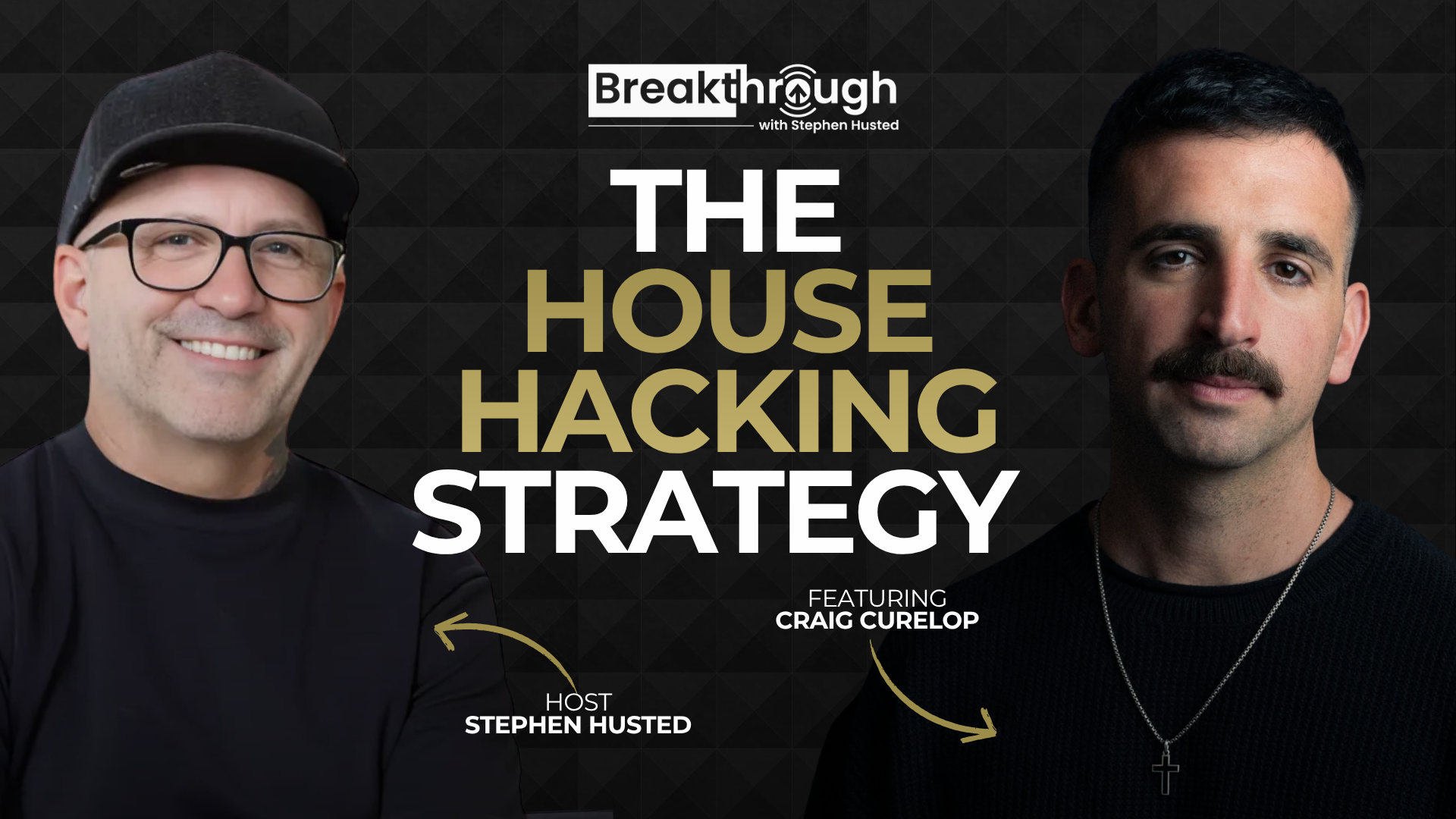
In this episode, I sit down with Craig Curelop to discuss how house hacking became the foundation of his journey to financial freedom, why he left Silicon Valley for Denver, and how real estate changed the trajectory of his life. Craig shares his path from working as an underwriter in Silicon Valley to joining BiggerPockets, writing The House Hacking Strategy, and becoming one of the most recognized voices in the house hacking space. Along the way, he reveals how he paid down debt, built rental income, became financially free, and grew a real estate business helping others achieve similar results. We also discuss why young people have a massive advantage when it comes to investing, the sacrifices required to build long-term wealth, and how real estate agents can use investing to create income beyond commissions. Craig explains why many people overcomplicate getting started and why action often matters more than perfection.
Stephen and Craig talked about:
00:00 – Introduction and Craig's BiggerPockets journey
06:27 – Leaving Silicon Valley and discovering real estate investing
11:40 – Why house hacking changed everything
14:19 – The sacrifices young investors should make
19:30 – Joining BiggerPockets and writing a book
22:19 – Becoming financially free through house hacking
23:12 – Doing 100 real estate deals in one year
31:28 – Helping agents build wealth through investing
42:12 – Co-living, entrepreneurship, and future opportunities
55:01 – Craig's advice for young investors
TRANSCRIPT
∎ Teaser / Highlighted Clip
00:00 Craig Curelop: I had, you know, $90,000 student loan debt and maybe $20,000, $30,000 in the bank, like in stocks and stuff. So how do I take that position and leverage it into something? And so once I heard about house hacking, that was the most obvious route for me to go. So that was the, that was the thing I did. I moved to Denver, guys over their pockets and started to house hack.
00:22 Stephen Husted: That was the first thing I did.
00:24 Craig Curelop: Did you? Yeah. Or did you know it?
00:27 Stephen Husted: No, I was like. bought my first place. And honestly, I bought it because it was 2004. And this is back when you just did stated income. I mean, you barely do even have to qualify to get a loan. It was really bad. I mean, it was just kind of crazy. And I remember I bought this half a million dollar townhouse and it was like in three bedrooms and three and a half baths. I'm like, okay, I'm putting all my friends in it. And they cut costs.
00:53 Craig Curelop: So that's what I did. Every older person tells you they wish they started younger. They wish they started younger. They wish they started younger. And the one thing you cannot turn back is time. So if you are young, just get started. Don't even try to get a good deal. Just get started.
01:09 Stephen Husted: Just get started.
01:10 Craig Curelop: Your first deal is not going to make you rich, but like the first deal, then the second, third, fourth, the 10th deal might, you know?
01:17 Stephen Husted: Well, it's true. Well, I got my real estate license in 2008. Everything went terrible. Then I bought my first investment property at 2015.
∎ Podcast Intro:
01:26 Stephen Husted: I'm Stephen Husted, and you're listening to The Breakthrough Podcast, a space designed for clarity, curiosity, and the stories that move us. Here, we step away from the noise and into the moments that define us. the early influences, the hidden struggles, and the breakthroughs that reshape our lives. From personal reinvention to building a life through real estate and entrepreneurship, these conversations remind us that success isn't a straight line. It's a series of honest decisions, brave actions, and small shifts that change everything. This is where those stories live. Let's begin.
∎ Guest Introduction:
02:04 Stephen Husted: In today's episode, we're joined by Craig Curelop, a real estate investor, agent, and author known for helping popularize house hacking as a path to financial freedom. From leaving a corporate job in Silicon Valley to joining bigger pockets and building a real estate business from the ground up, Craig shares how he turned a simple strategy into a powerful wealth building system. We talk about house hacking, scaling as an agent, and how taking action early, perfect systems can completely change your trajectory. Craig also breaks down the importance of sacrifice in your early years, building long-term income through real estate, and why getting started matters more than getting it perfect. If you've been waiting for the right time to invest, this episode is your reminder that the best time to start might be right now.
∎ Podcast Proper:
02:57 Stephen Husted: All right. We are live, Craig.
03:02 Craig Curelop: Good to see you, Steven.
03:03 Stephen Husted: I appreciate you jumping on today.
03:04 Craig Curelop: Yeah, man. Thanks so much for having me. It's a blessing to be here.
03:08 Stephen Husted: Yes, I was, as we were talking offline here about, you know, picking guests and getting buddy on, it's been such a cool little journey recently where my assistants pick a lot of the guests that go on to bigger pockets and I see them on my calendar and I'm like, yes, this person. All right. They're on the week. All right. This is good. So I'm really appreciate you jumping on today.
03:28 Craig Curelop: awesome man yeah of course i'm always happy to be here and heck it's always fun coming on podcasts because it's pretty rare you get to talk about yourself for like you know an hour or two you know
03:38 Stephen Husted: yeah so can you look back at your first time you went on a podcast were you nervous and like how did it go for you
03:42 Craig Curelop: so the first time i was on a podcast was actually the bigger pockets podcast believe it or not it's a big yeah yeah and so i wasn't i wasn't nervous or anything i've got a decent amount of public speaking background i used to do toastmasters and i'm gonna actually start doing it again have you heard of toastmasters no what's that no so it's a international public speaking club where they've got a curriculum designed to help you become a better public speaker and so one of the biggest fears in the world i think like studies show that people are literally more afraid of public speaking than they are of dying and so basically what toastmasters does is it helps you one prepare speeches and give good eloquent speeches but also too it helps you speak eloquently and come up with things on the fly like in a podcast interview or whatever right and so because i was so comfortable with public speaking i felt like i wasn't very nervous about it
04:36 Stephen Husted: and that's something that's been going on your whole life you would say
04:38 Craig Curelop: Uh, yeah. I mean, I started Toastmasters in college. Like I never was afraid of giving a presentation in college or like through work or anything like that. In high school, for sure I was. Right. But the more you do it, the less nervous you become. It's like anything.
04:55 Stephen Husted: Yeah. My first experience of public speaking, I had sold this guy a house. He worked in tech in Silicon Valley. And we just started talking about investing in the stock market. And he's like, oh, you got to go check out this guy named Phil Town. He's out in Atlanta. You should go to one of his weekend courses. I'm like, all right. So I go out there. And one of the parts of this whole seminar was you had to get together in groups and underwrite a company and then pitch that company to this group of people. There was about 500 people there. And so we got in this little circle and everybody's like. you're the speaker i'm like me they're like
05:33 Stephen Husted: yeah you're the speaker you're gonna be the speaker i'm like okay didn't think much of it you know we went through picking the company and that the following day in the morning i've come down the elevator and i'm walking towards the whole conference room and i can hear everybody in there and i just started panicking like i'm like what what am i doing this is crazy i just remember going on stage i don't remember what i said Like I just got up there, started talking and I made it to the very last round, but it was just the most nerve wracking scenario. And I think a lot of it too, I wasn't fully prepared. Yeah. I never had done it. And that's a big part of it. Would you agree?
06:11 Craig Curelop: 100%. Yeah. I mean, there's that old adage, right? I heard John wouldn't say it, but I'm sure someone said it before him where failure to prepare is preparing for failure. And that is so true in public speaking and really in anything.
06:24 Stephen Husted: Yeah, that was definitely a moment. So I read on your bio that you lived in Silicon Valley at some point.
06:32 Craig Curelop: Yeah, I did actually. Yep. So I lived in San Jose, Palo Alto, and San Francisco.
06:36 Stephen Husted: Really? Right out of college. In San Jose. Yeah. That's where I live.
06:40 Craig Curelop: Really? You live there now? Yeah, I do. What part of San Jose are you in?
06:43 Stephen Husted: I'm right in Willow Glynn.
06:44 Craig Curelop: Okay, cool. I was right by the university, like San Jose State, like fourth and something, I forget. yeah but yeah
06:52 Stephen Husted: and then up on palo alto
06:53 Craig Curelop: palo alto was fun i like to say that we lived in a hay in the needle stack there because we lived we lived in this really nice neighborhood just a couple blocks off of university which is like the main strip in palo alto but it was like a dump like the doors didn't lock the windows were broken there was like bloodstains in the bathroom I think the gas was always on in the kitchen. It was just like, it was like such a dump of a house, but the lot was worth like 3 million bucks and all the houses around. That's so Palo Alto. Yeah. And the house, we were two, we were two houses down from Tim Cook. So like it was really, yeah, it was really, we'd see him walking his dog, you know? That's so crazy. Yeah. So it was just so funny to be that. Now they tore down the building that we lived in and now it's like this nice house. But yeah, yeah, that was Palo Alto.
07:38 Stephen Husted: What did you do out in Silicon Valley?
07:41 Craig Curelop: So I was working at a venture debt company. So basically we gave hard money loans to startup companies is how I say that in real estate terms. And my role was to be an underwriter. So I would underwrite the companies that would come in and see if they were worthy of our loans or not. And it was a really good business model. And now that I understand…
08:06 Craig Curelop: real estate more. I can really understand the business model of that more, but also I got to understand a lot of different companies' business models as I was underwriting them. So it was really cool and really fun.
08:14 Stephen Husted: I could see that when you probably did your first hard money loan, if you've done it, I'm sure you have, that you're like, oh yeah, okay.
08:22 Craig Curelop: Yep. Really expensive, really easy to get. Yeah.
08:26 Stephen Husted: You can get it, but you're paying for it. Yep. We'll make it easy for you to get it, but you're going to pay.
08:31 Craig Curelop: You're going to pay. Exactly. Yeah. Yep.
08:34 Stephen Husted: So how long were you out in Palo Alto before you moved to Denver?
08:39 Craig Curelop: So I was in Palo Alto for like two and a half years. And ultimately, like the job itself sounds kind of cool. And when we're talking about it, it's kind of cool. But like the day to day, it was horrible. I hated it. And my biggest realization that I needed to get out of there was, you know, the people around you are a good telltale sign as to where you'll be, especially in a career. So if I did well in my career. I looked towards the promotional path and I might get a nicer office, might even, whatever, slight pay bump, whatever. But I'm still there. Those people felt pretty miserable to me. And I just didn't really, I liked them as people, but I didn't want to be. them like i didn't look up to them and so i was like man i want to like get out of here so i found real estate investing i found bigger pockets i started consuming all the books and watching the webinars and doing all the stuff to just learn as much as i could about real estate investing and within a couple months i was you know moving to i got a job at bigger pockets in denver believe it or not and
09:41 Stephen Husted: was that a planned thing so when did you start like diving into bigger pockets content what year was that
09:48 Craig Curelop: 2016 is when i would have like first learned about the podcast and that was when i was in you know when i was living in probably San Jose or San Francisco. And I was on the Caltrain listening to the podcast there and back every day, catching up, getting all the episodes in. And it was just so obvious to me that that was such a great way to financial freedom. I could just buy a few rental properties and become financially free, especially at that age, right? When I was spending a couple grand a month being a 22, 23 year old. So I was like all in on learning about real estate investing.
10:18 Craig Curelop: And I did that while at my job in Silicon Valley. And then it was totally like a God thing. I looked to see if bigger pockets was hiring. And the only position they had open was an engineer, which I have no clue how to do that stuff and dream job, which I don't know what they don't, I didn't know how to apply for that. So I was like, okay, like no, no positions open, whatever. And so I went, then I went on this trip to South America for like a month and came in on that trip.
10:49 Craig Curelop: I was like, I need to get the heck out of California. I need to do real estate. And And I was reading Grant Cardone's 10X book at the time. So I was like, you know what? I'm going to go home and I'm going to apply to 25, no, 250 10X real estate jobs in one weekend. And so I applied to 249 real estate jobs that were like $8 an hour in Florida as like a real estate agent's assistant. And I applied to one job in Denver, which was at BiggerPockets.
11:19 Craig Curelop: I got the job. I somehow made it through all the applications. Apparently there were like 30 people vying for that position. And I became the finance guy at BiggerPockets, like a finance role. That role had opened up right when I got back from South America. What year was that? That was early 2017, like January 2017.
11:38 Stephen Husted: What were you going through? Because I think that everybody I've talked to, and myself included, The minute you start reading a book or a podcast and that you start to have these like visions of where you think you want to go. Did you start noticing that? Like when you're on your Caltrain going, like where you were really starting to paint that picture, you know where you were going to go. Now you're hyper-focused. Did you kind of have an understanding of where you're going to end up? I know it's probably changed a lot compared to what you're at now.
12:10 Craig Curelop: yeah it's so hard to like remember exactly what my thoughts were i just remember being really excited about get about real estate investing and then it felt so right in that my whole life i never really cared about like what other people thought like i never really cared about like the fame i never really cared about like appearance or anything like that right so i didn't need to be like this mark zuckerberg or steve like i didn't need to be a multi-billionaire but then i went to the stats and i saw that 90 of the world's millionaires owned real estate and i was like i don't need to like reinvent the wheel here i can just do what clearly works for 90 of the people and so I just decided to go down that path. And then I also figured like I looked at my cards and my cards at the time was I was 23,
12:59 Craig Curelop: single, young. And I was living in a house with broken windows, blood on the carpet with four other roommates and doors that didn't lock. Right. So like my tolerance for where I would want it to live. My, my standards were pretty low.
13:13 Stephen Husted: So that's going up from there.
13:15 Craig Curelop: Yeah. So I was like, well, then I could, then like, how do I like take my strengths? And I didn't have much money. I had, you know, $90,000 student loan debt and maybe 20, $30,000 in the bank, like in stocks and stuff. So how do I take that position and leverage it into something? And so once I heard about house hacking, that was the most obvious route for me to go. So that was the, that was the thing I did. I moved to Denver, guys are their pockets and started to house hack.
13:44 Stephen Husted: That was the first thing I did.
13:46 Craig Curelop: Did you? Yeah.
13:48 Stephen Husted: Or did you know it was like, bought my first place. And honestly, I bought it because it was 2004. And this is back when you just did stated income. I mean, you barely even have to qualify to get a loan. It was really bad. I mean, it was just kind of crazy.
14:06 Stephen Husted: And I remember I bought this half a million dollar townhouse and it was like in three bedrooms and three and a half baths. I'm like, okay, I'm putting all my friends in it. I had to cut costs. And so that's what I did. But there was no, but it reduced at the time I was doing pretty good. But then, you know, it was one of those ARM products back in the days. And when that thing reset, it was terrible. And that's when the whole market, 2008, then the market crashed and it was a thing. But that was my first encounter of doing house hack.
14:37 Craig Curelop: Yeah. There's nothing new under the sun. Like, truly, there's nothing new under the sun. People have been house hacking for hundreds of years. And think about it just even with family members, right? It's how do you generate a little bit of income off of the place that you live? That's like house hacking in one sentence. And, you know, we've just come up with this cute term for it now.
14:58 Stephen Husted: Yeah, I mean, I did midterm rentals when it was called corporate housing. And I know you know the location, you know, right over by Deardon Station. There's a bunch of lofts right there off the Alameda. That was our first property. We bought it for an Airbnb, but then they banned all Airbnbs in that complex. And so we did corporate housing, which got coined midterm rentals.
15:20 Stephen Husted: We had to do that because we had to pivot. We couldn't do a short-term rental. So we got a place all furnished now. We got to do something with it. I'm like, well, let's put it on this corporate website. Next, you know, we're getting doctors and nurses. I'm like, oh, this is cool. Oh, and they're staying for like a year. I like this. This is good.
15:37 Craig Curelop: yeah yeah i mean it's interesting when you can become like a little bit of an early mover an early adopter you definitely get some advantages of like well one it's now that space is totally saturated right so like probably tough to get the places filled now or at least harder than it once was yeah
15:54 Stephen Husted: it's always a a strategic pivot that's real estate in itself
15:58 Craig Curelop: you know for sure yeah
16:02 Stephen Husted: becauseWell, one thing I read that you were doing your house hacking. Well, let's go back to the house hacking part, because I think in this day and age, everything's expensive and income is not keeping up with inflation and everything else that's going on. But I think that if you're willing to sacrifice at a young age and you getting started at a young age, I wasn't even thinking about real estate in my 20s. But I think the whole house hack and having to be like, live with people, which some people will say, I don't want to live with me. I want to sleep on a couch and then rent out the rooms. But if you can take that on for a few years to get ahead, you set yourself up further in the future.
16:43 Craig Curelop: Would you agree? Oh yeah.
16:45 Craig Curelop: I mean, a hundred percent. Like it's all about live like no one else now. So you can live like they dreamed later or whatever. That was also a thought that was going through my head at that time. And so when you're young, your tolerance is much higher than when you get older. Like right now, now I'm in my 30s. I'm not going to live. I'm not going to live even in a room with people these days, right? I'm married. Definitely not going to live in a room sharing with other people, you know? So as you get older, life happens. And that's what I tell a lot of our clients too, is like, you know, someone comes to me and they're young and they're single. I'm like, bro, you need to be living in the biggest house as you can with as many rooms as possible. And you need to be renting out every single one of those rooms. And maybe even you sleeping on the couch if needed. Because someday this only lasts a couple of years because you'll meet somebody and don't you want to provide for that person someday? Like, don't you want to set your future wife or future husband or wherever you're at up financially? So then you can provide the lifestyle that you've always wanted when you're not 60, but maybe when you're in your thirties. And so if you're not taking the hits now while you can, then you're going to get behind.
17:50 Stephen Husted: It's the best time to do it too. And you have the conviction because you've gone through it. So it's much easier. to paint that picture to somebody as young. Like, look, this is what I did. Rinse and repeat. You don't have to reinvent the wheel here.
18:07 Craig Curelop: You don't. You don't. And I would just keep it, like if you're young listening to this, you know, in your 20s, early 20s, think about it from like a, it's a broad perspective. Like what I did 10 years, nine, oh my gosh, nine years ago. I feel like I'm getting old. What I did nine years ago, that property wouldn't work today as I bought it nine years ago. But figure out what is the thing that you can struggle at and endure and suffer through that 99% of people are not willing to. Who's going to think you're crazy? Because one, that's going to be your inception story. So when you're on a podcast 10 years from now and you're talking about your early days, you can talk about how you slept in a bathtub with blood in it or whatever. Or you slept on a futon behind a curtain for a year. Those are the sacrifices that you make for a year. And you've got a lifetime of stories and also some financial benefit as well.
18:59 Stephen Husted: I posted about a house hack one time on Instagram and it was so wild. The comments between the ones that were pro and the gets like, I'll never live with a bunch of people. And you just understand the mindset. Like one won't do it, won't sacrifice. The other can see that vision and will. And especially if you're young, some will just stay behind. And then be upset that they couldn't get ahead down the road because of everything that's going on and just how housing is expensive. But I think you have to set somewhat of a vision together. If you can when you're younger. It's not for everybody. That's for sure. It's definitely not.
19:40 Craig Curelop: Yeah. And things get hard and they seem to only get harder. right like it was a lot easier to own a house 30 years ago than it was 20 years ago 10 years ago and certainly now and so if that trend continues i'm going to venture to bet it's not going to get easier in the next 10 20 years to own a house so what you're going to find is i think the u.s and a lot of the cities in the u.s are going to turn into like a lot of the european and japanese cities where people don't own houses right look in new york like most people don't own they rent and so these cities where most people do own the denvers and the cities that i'm familiar with at least seattle a lot of people own there like you're just there's not going to anymore and so like get in it now because i'm sure you would want to own a piece of real estate in london 50 years ago when you could buy it
20:24 Stephen Husted: whole different market yeah once you got to bigger pockets what was that stepping stone light that set you up for your next move
20:33 Craig Curelop: yeah so when i got to bigger pockets um It was great because everybody at the time there, or almost everybody was interested in real estate investing and then also did their job as well for BiggerPockets. My mentor at the time, Scott Trench, who later became the CEO, he was just coming out with his book, Set for Life. And I asked him, I want to write a book. What do I got to do to write a book? And he said, well, you can write for the BiggerPockets blog consistently. once a week, every other week for as long as you possibly can. And then maybe someday you'll have the opportunity to write a book. And so that was it. And he said, oh, by the way, you got to do it on your own time. You cannot do it while working at BiggerPocket. And so I was like, okay. So on my own time, like I did the miracle morning and I woke up early and I wrote for about 30 minutes to 45 minutes every morning. And that would come out to about a blog post a week, maybe every other week. And I wrote for the blog for two years without anything, not a dollar. And then I got the opportunity to be third in line to write the house hacking strategy book. So funny story is that Brandon Turner was number one on the list, of course. He was so busy opening up Open Door Capital, though he couldn't even fathom writing a book on house hacking. Scott was number two, but he had just taken over the CEO of BiggerPockets and couldn't think about house hacking. And then I was number three on the list for writing this book on house hacking. And so I then I stopped writing for the blog for a while and I took those 45 minutes a day and I started writing this book 45 minutes every single day. After four months, I had a book and went through the whole process, wrote the house hacking strategy. And then that was like at the end of 2019 is when the book came out. And I had got my real estate license and I had gone on a bunch of podcasts promoting the book and did this whole thing. And at that time is when my real estate agent career totally took off. And so I had people come into me.
22:36 Craig Curelop: I had to, I would say, graduate from BiggerPockets because I was doing two deals a month as a real estate agent. And I didn't know that that was good. Like I had to have David Green tell me that I would have been the best agent on his team if I was doing two deals a month. And I was like, oh, that's good. Okay. So I probably should quit. So I ended up, well, I wanted to test quitting first.
23:00 Stephen Husted: Test the waters.
23:02 Craig Curelop: Test the waters, yeah. So what I did, and I kind of forgot about this little tidbit, but as we kind of go deeper, I'm remembering it, is that time I had three rental properties. I had house hacked three times. And I thought I was financially free, but I wasn't totally sure. So I did a test where I said, well, i'll i'll max out my 401k so i'll take a zero paycheck for the next three months and put it all towards my 401k which would be like 20 grand over three months and if i have more money in my bank account at the end of that three months and i'm financially free and if i don't then well i'm pretty dang close probably right and i just maxed my 401k so so that's what i did I had more money at the end. So then I realized I was financially free. And that gave me the comfortability to take the leap. And even though I was doing two deals a month, I graduated from BiggerPockets and then went all in as a real estate agent. And I ended up doing like 100 deals my first year.
23:57 Stephen Husted: That's wild. Out in Denver?
24:00 Craig Curelop: Out in Denver, yeah.
24:01 Stephen Husted: Yeah, that's crazy. So you were like, you got forced into putting a team together, systems.
24:09 Craig Curelop: I had nothing. I had nothing fiddled. I was running around like a chick with my head cut off. I look back now. You know how I had my CRM?
24:18 Stephen Husted: Let's hear it. I called up. Just let the audience know everything you were talking about for the last 20 minutes is -AI. Pre-AI, of course. Pre-AI. You wrote everything just sitting down. You managed 100 clients. Yeah. with crm
24:38 Craig Curelop: yes i wrote every character of that with my own fingers i did type there were computers thankfully so yeah i did i did yeah i did all that and then yeah my first year as an agent did 100 deals and i had no no systems nothing like i grew so fast so quick and i loved doing the real estate agent part because i was the only really investor friendly agent around like i was the only one that was like doing it people could see themselves as me i had a couple house hacks um yes you know what i mean like they could see themselves in me i was young i was 24 25 whatever 26 and these they're literally like my friends i was like doing this with most of my friend my they became my friends and so i was so disorganized that the way that i had my crm one i didn't think i needed one two so i did 100 deals out of crm and then my crm was i literally I talked to my lender once a week and I introduced everyone to my lender and I talked to him once a week and I asked him to give me an update on everybody. That was it.
25:45 Craig Curelop: So, so crazy. Yeah, that was it.
25:47 Stephen Husted: So you had a mental brain CRM.
25:51 Craig Curelop: Yeah. I mean, yeah, I did the best I could to remember things. I'm sure lots slipped through the cracks. I'm sure I missed a lot of people for sure. Right. And also different times where the market
26:00 Stephen Husted: Did you even have a transaction coordinator?
26:02 Craig Curelop: I did get a transaction coordinator. Yeah. Okay. Pretty early on. And she was a lifesaver because yeah, but I didn't know what she did. I just sent her everything. Right. She did. I mean, I know what she did, but I wouldn't know how to do what she did.
26:13 Stephen Husted: But you showed the properties, right? You showed the properties, you negotiated the contracts, inspections, financing.
26:22 Craig Curelop: Yep. Show the properties. Luckily didn't have to go to many inspections, but yeah, show the properties, had initial consultations, ran through the numbers. Like I think I was good at. helping people buy real estate, a lot of those people are financially free now. And a lot of those people have a handful of investments and bought many with me. So I know like the act of me being a realtor for these people were good. Like the service was good, but my backend was just like, I mean,
26:46 Craig Curelop: it was cool. It was just non-existent, right?
26:49 Stephen Husted: Yeah. But there's something to be said about that, Craig. You just went for it.
26:52 Craig Curelop: Yeah.
26:53 Stephen Husted: And I think that that's a big takeaway. Just if you went all the way back to the Silicon Valley days when you were there. Just grinding it out and, you know, going for it is a huge thing. And a lot of that stops people, know, fear and different doubt, all these things. But here you're like, oh, I got a hundred deals, but I got no systems in place. It's kind of erratic, but I'm making it work. And I'm looking back to it now going, it's crazy, but I did it.
27:24 Craig Curelop: Yeah. yeah i look at first times and like the times were just so different back then too because like you know this was 2020 and so the market was just like not so right like multiple offers people like actually no 2021 was it was multiple offers big time like 2020 there was only there was a short time there where it was like it was like two or three offers per house so i was getting them 10 or 15 000 over asking nothing like too crazy and like we were just raking them in and then during covid
27:53 Craig Curelop: technically we weren't supposed to do showings but i was like yo do you want to sell your house they're like yeah like yo do you want to buy the house they're like yeah i was like well i mean i'm not afraid of this thing if you're not okay yeah let's go do it and there's no competition for like four months so we'd go into a house showings were down 88 i swear we were just a 12 like there was no one doing showings
28:14 Stephen Husted: yeah that was a interesting heck i remember being on a i think a webinar or something i think David Green was on it I think Brandon Turner I can't recall but it was like lockdown and it was like everything's going this is what we're doing it was like code red I'm like I think this is the best time to buy
28:32 Craig Curelop: oh yeah you
28:34 Stephen Husted: know what I mean but they were saying that it was because they were like contractors that had bought properties that just finished rehabbing it they were going to do airbnb they couldn't do so they're selling we're getting discounts here and discounts there but then the lending was kind of sketchy as well they didn't know what was going on but we're just kind of like pressing forward on things like just let's do this at some point this is going to end
28:58 Craig Curelop: yeah and it was like i don't have no one set the crystal ball right but no like people do tend to overreact I think I kind of realized that back then I was like, look, like most people don't die from this thing. And I've always been a little bit ignorant and just like ignorance is bliss kind of thing. Especially, especially in my younger days, I'm a little bit more cautious now, but like, I was just like, if this little, you know, one eighth of an inch thick little piece of paper is going to really stop this disease from getting to us. Sure. But yeah, we were doing showings if people preferred to stay the six feet apart or whatever.
29:30 Craig Curelop: I mean, I respected everyone's wishes as much as they wanted, but we were scooping up deals and like, march april may and probably into june of 2020 that were like unreal and the rates were at two percent
29:43 Stephen Husted: so yeah it was so crazy and how many people would you say that you helped were doing the strategies or was it a mixture between like house hackers and investors to people that were just moving in the houses just to live
29:56 Craig Curelop: mostly everybody was house hacking
30:01 Stephen Husted: so you basically started a movement give or take in your little and where you were at at that moment.
30:06 Craig Curelop: Yeah. I mean, I think like I was the first big mover that was an agent that did house hacking particularly. And again, because I was so relatable, I think people just flossed to that. And I would show the numbers too on my Instagram and the numbers didn't lie either. It's like, Hey, put $15,000 down and get $1,500 a month of cashflow. Like those numbers are unreal. So yeah. to be said yeah i can't i can't like i don't know i don't i don't feel comfortable saying that like it was i started the movement or
30:36 Stephen Husted: anything well you had a movement in your where you where you were at yeah certainly in my transactions yeah
30:41 Craig Curelop: certainly in my world yeah in my world it felt like a movement but like in the overall ecosystem i'm sure yeah you know yeah a grain of sand kind of thing yeah well
30:52 Stephen Husted: it's okay it is good i mean you you just helped a lot of people get financially secure and in a time period that was a little a little uneasy
31:02 Craig Curelop: for sure yeah yeah that i think i did okay all
31:07 Stephen Husted: right so what are your goals now like what have you been really currently focusing on
31:15 Craig Curelop: yeah so now since then it's pretty much six years since then and we've got our team of agents and now because the the markets have changed the tides have changed we're not solely focused on investors anymore we do work a lot with investors that's a big part of our business but we focus a lot on just helping real estate agents build and scale their businesses so now i do less of the transactions i'll still do a few but i do less of the client work and more of the,
31:45 Craig Curelop: hey, let's partner with agents and let's teach them how to, one, scale their career as an agent and two, how to also invest in real estate so they're not always just chasing that next commission and they've got some recurring passive income on the side that can support them and their family while they go make a bunch of commission.
32:02 Stephen Husted: It's such an important thing. You know, when I first got in real estate in 2008, really wasn't said. And it seemed like the agents... in the office that were older, that had been an agent for a very long time, had maybe a couple rental properties. One would be a second home in Tahoe. You know what I mean? Like it wasn't that really investor friendly agent type scenario. And I remember when I started to invest in the Midwest and I was telling some of the agents that I was going to do it. They're like, don't do that. You're going to lose money. That's a terrible idea. And I'm like, well, you know, I have to save up millions of dollars to buy. an investment property in San Jose and you still won't cashflow it.
32:44 Stephen Husted: Yeah. You know? So I was like, I have to, this is what I got to do. And boy, that was the best decision, not listening to others.
32:51 Craig Curelop: Yeah. So where did you end up going?
32:52 Stephen Husted: So my first property was in Detroit. Oh, okay. And I bought it during, uh, going to a bigger pockets conference. And I remember going to like a little side meeting after like a conference and met up with a bunch of people from Detroit. And we're sitting in a circle and they're talking about properties that they just bought and things. And I'm like, yeah, I just got a contract. And they're like, where is it at? And so I tell them the address. And I'm like, hey, for East Detroit by 8 Mile, you picked a good street. Because it's really street by street out in Detroit. It's like, how did you do that? I'm like, well, I'm an agent. So Google mapped it.
33:28 Stephen Husted: I looked around and tried to make sure there wasn't a lot of houses that were boarded up. And, you know, took it from there. I saw there was companies around there. But that one little $37,000 house taught me everything. I mean, it just really opened the door to
33:45 Stephen Husted: problem solving, going through. I had all the issues and I planned for it. You know, I knew that I was going to probably have issues. The first day it went on the market to rent, it got broken into twice.
33:56 Craig Curelop: Wow.
33:57 Stephen Husted: And my property management, the guy called me.
34:00 Craig Curelop: They were like, hey, don't put those up.
34:02 Stephen Husted: He's like, yeah, the minute you have it on Zillow, they're going to come. And he's like, how do you feel? I'm like, I planned for it. You know, I knew that this was something that could happen. But it helped me to put systems in place and just get in the game. It was a $37,000 house. So, I mean, it was literally a car payment. So I was okay there. But then I started buying other properties. But the bigger part for agent, the agent scenario, was I closed on a transaction in San Jose, put money towards taxes, put some in savings, took the rest, and I bought a $50,000 house.
34:42 Stephen Husted: Okay? 25% down. That house is now worth $140,000, and it pays me $450,000 a month in cash flow. That commission check. is living forever. That was the biggest thing. And that's just one. But if you put five years into it, you start to compound. You learn new strategies. You build a team. You learn financing. You get in front of like-minded investors. And then your whole business as an investor-friendly agent changes. Because now you've got buyers and sellers. When they sell, they want to invest. So it turns into a whole thing that I... I don't think they teach that much of, not at a brokerage level. Some of them are. They're starting to get onto that, but I don't know. What is your thoughts on that?
35:28 Craig Curelop: Yeah, I think that's why that was the need that also I saw when I was looking for my first house hack. I couldn't find an agent that knew anything about investing or like I could see right through them. Like I knew more than they did and I was teaching them. And so that's where I realized the need was there. And I think a lot of real estate agents.
35:46 Craig Curelop: fall for like the glitz and the glam and the Lamborghinis and the whatever kind of thing that you might see as or you might kind of like stereotype a successful real estate agent but that stuff's not really it right like it was kind of like this different approach of hey I want to be like a genuine real estate agent I don't really care about the glitz and the glam but I would love to have wealth for my family for the long term so yeah anything I make above my commission, I'm going to sock away and I'm going to buy more real estate with it. And by the way, doing a hundred real estate transactions and negotiating a hundred real estate deals, I got pretty good at negotiating and understanding how to do deals and different strategies and different levers to pull and how to make things work that were win-wins that most agents like don't think of.
36:29 Stephen Husted: You get creative.
36:30 Craig Curelop: You get creative. You get way more creative. Yeah. You get comfortable getting creative. Yeah.
36:35 Stephen Husted: That's such a good point. That's a really good point. Yeah. I think that becoming an investor-friendly agent or an investor slash agent, you're well-rounded in so many more aspects too. Like you said, you can underwrite a deal really quick. You can tell a buyer multiple exit strategies, you know, or paint this picture and there's numbers instead of like, here's the comps, here's the reports, here's how we get in contract. And then they're kind of on their own. it's just a different you know not yeah but then it's not for everybody too
37:09 Craig Curelop: let's let's no i mean it's look from the agent perspective it's great to take a consult like a consultative approach of like hey let's look at your property let's see if it makes sense to to hold it to refinance it to sell it and so like i i come off more as a coach guide and mentor towards my clients than i do as a real estate agent and if it makes sense to sell it great but if it makes sense to rent it i usually say rent it Yeah, that's a good point. Very good point. Because anyone can smell commission breath, right? Your clients know that you get paid when a property sells. So if you come in and say, you know what? It probably makes sense to rent it out for a couple of years. Let's wait for the dust to set a little bit. Or like, hey, you're cash flowing this thing. It's not killing you. Just hold on to it. Let's just check back in six months, 12 months when this lease is up and we'll just reconsider. Now you're showing up as a teammate to them and not just some snake oil salesman trying to make a quick buck.
38:02 Stephen Husted: Yeah. You're like this strategic advisor and people gravitate to those type. For sure. Because it's not just about the real estate side. They just, they start to pick your brain on all kinds of aspects.
38:14 Craig Curelop: Yep. Exactly right.
38:16 Stephen Husted: I get excited when I, I was thinking about this recently. I just made a quick video for the agents that follow me on Instagram. I want to do a little webinar for them to kind of get them inspired to take that leap. become an investor, add that to part of what they do on the day to day. And I think it's just so valuable. And it brings another level of enjoyment, helping others like on that aspect too, because those ones really in your ecosystem, even more so. Because a buyer seller, it might be a few months, you get them in a contract and it's like, you close.
38:53 Stephen Husted: They're sitting in the house for a while for the most part, right? And it's kind of like a bad breakup. But I've had so many of my clients. Heck, I have some of my business partners right now. We're my real estate clients.
39:05 Stephen Husted: Now we do development in Seattle together, you know, and they work W-2s in tech. And it's cool. We're kind of like all this like little group.
39:13 Craig Curelop: Yeah. I always do the same thing. Same thing for us. Like I'm in partnership with a couple of our clients. And some of them are growing their own brands and their own businesses and all that. And I'm just like, heck yeah, man, go for it. So many of my clients, when we partnered with Place as a team, and they asked us where most of our agents come from. And I said, well, most of them are past clients. And they were just like, what? We've never heard that before, right? Well, it's because they're interested in house hacking. They love it. They like real estate. That's why they're investing. Then they think, oh, I'll be an agent. then we get them going to becoming good agents.
39:52 Stephen Husted: Yeah, and they're probably impressed with that. Kind of sidetrack them.
39:58 Craig Curelop: Yeah, yeah. Most of the clients that we help, they're not really wanting to stay in their W-2. That's kind of the whole point of investing in real estate. And so when they see an out that's maybe even quicker and say, yeah, yeah, I could do this real estate thing. Give them a shot. And then, of course, they partner with us and we get them going.
40:14 Stephen Husted: What else has been on your brain recently? in the horizon is there something you haven't done yet but you're kind of feeling out or thinking about the entrepreneur when you get into there's always something flying around that you want to yeah maybe explore So it's a good thing or a bad thing.
40:32 Craig Curelop: Yeah. The things that we're doing a lot right now is, you know, we're building the team. So like attracting agents, trying to help them scale their businesses. And then per agent productivity is like the two main things on that side. From the real estate investing side, we do a lot of co-living investing. So renting by the room. And so partnering with somebody on that who operates and I'm more of the acquisitions guy. And then, so that's like, these are the two things that are happening now. They're in it. the thing that's kind of like out there that i'm like yeah i want to probably do some of this someday is more of the like triple net commercial type stuff so there's that like multi-family doesn't really strike me as like a thing that i'd want to do honestly but i really like the triple net lease plays and i also like potentially buying like a i don't know i do get i do get sidetracked sometimes i'm thinking about buying a business that would like supplement the real estate or like my other business could be the best doing this too yeah but i'm like i start talking about it and my wife's like shut up shut up you're doing too much but she's right that's the thing she's definitely right it's like for crow living for example we've got cleaners that come in and clean the room like someone's cleaning some of them every day we're literally their best claims like well what if we just started a cleaning company we would have direct cost savings and then of course we could clean other people's houses. So I don't know. Again, probably not going to do it, but not right now at least. But yeah, you just get all these ideas.
42:01 Stephen Husted: Yeah, it's a good and bad thing. The good thing about that is that because essentially
42:06 Stephen Husted: you've started businesses, it's a lot easier to get one off the ground because you understand, okay, I'm going to build out X, Y, and Z. I'm going to have some pain points here. I'm going to have to figure out all that. I think once you put businesses in place, I think the third and fourth are a little bit more easier to do. Not saying they're going to be easy, but you just, you're not afraid. You can jump in.
42:29 Stephen Husted: Yeah. And you'll take the risk. Yeah. Whether it's good or bad.
42:32 Craig Curelop: Yeah. And that's like the entrepreneurship. And I mean, that's why every entrepreneur needs a, like an implementer. And someone kind of just like, kind of keep you on track a little bit. Do you have that person or do you have like a.
42:44 Stephen Husted: I don't. I mean, yes, I bounce things off my wife and my business partners because I'm more the visionary. Like, you know, the last couple of years, I had a lady on my podcast that was on BiggerPox as well. She lives out in Tacoma. And we started talking about like ADUs and development. I got done with that and I called one of my partners and was like, I'm flying out to Seattle.
43:08 Stephen Husted: This is what I want to do. Got out there on the plane, came back, told them, yeah, this is the direction, painted the picture. And they listened to me and we went for it. But there is times when I bring other things up. There's other businesses I'd like to do within here within what I do as far as like coaching, mentorship. I did some already, not at scale where it was like 30 people at one time, maybe for a cohort for like a quarter type scenario. But I did do mentorship. But that one put a little bit of stress on me, you know, making sure they succeeded. And some didn't, you know, some just didn't.
43:46 Stephen Husted: have what it takes or figured out that they just didn't want to put that kind of time in it was too stressful yeah you know that yep
43:56 Craig Curelop: i did play with a little bit of coaching as well i'll be honest i didn't love it i don't think i was charging enough as crappy as it sounds like i think the caliber a couple of my clients were great but the caliber of most of my clients i was just like so drained and then i was like it's just not worth like when you when you feel like you're doing something that's not worth your time it's hard to stay excited for it so
44:21 Stephen Husted: yeah yeah it derailed well it took away from the other things that i was doing because i was concerned heck i'm dealing with one of my mentees right now because she's getting out of the market she got into and so i'm helping her you know get an agent in place, get them sold. She's got wholesalers calling her left and right, trying to lowball her. And so I'm guiding her through that. And I just want her out. She's going to lose some money. We got bigger things to do, but I'm in it. I'm helping her.
44:51 Stephen Husted: I kind of feel obligated to do it, but she bought them. She has the business. She's got a good team around her, but it's not for her. And that's okay. You kind of have to learn. So it is one of those things. And that all happened very organically. It wasn't like, oh, I want to start this so that I can make a ton of money. It was just people coming to me and they wanted a partner and I didn't want any more partnerships.
45:14 Craig Curelop: Right.
45:15 Stephen Husted: That was a big part of it.
45:16 Craig Curelop: Yeah. What's your like is your main thing? You've got like a real estate team as well.
45:21 Stephen Husted: So, well, I'm a licensed realtor in Silicon Valley. And then I have multiple LLCs that I have partnerships with and we invest throughout the United States. Different strategies. And so I'm pretty much the one who runs them.
45:34 Craig Curelop: Gotcha. Is your main thing the investing or is it the realtor side? Where do you spend most of your time?
45:38 Stephen Husted: It's both. Yeah. Because I live in Silicon Valley. You know, it's so expensive here. There was a point, I have to say, when I was going deep into investing and just rehabbing houses, burying, doing all that. I did kind of drop the ball on the realtor business because I was just finding more passion and investing. But I quickly understood that my self-employed commission income was the fuel to everything. Me and my wife works too, but I needed both. And so then recalibrated, hired another assistant, balanced it out more. But the interesting thing that happened was I started getting listings that were people my age their parents had passed away they inherited a house the house needed to be fully rehabbed and we've done strategies where we took that house instead of just selling it as is to an investor or first-time homebuyer we ended up going there and doing the full rehab making more money then they turned into investors so I built this little group of clients that were going on that direction and now they're in my group investing now so that's where we've been going
46:52 Craig Curelop: gotcha yeah
46:53 Stephen Husted: all organically too you know i mean like hey this is kind of falling in my lap this way
46:58 Craig Curelop: but yeah yeah i
47:00 Stephen Husted: do like educating people so i could see doing something that's like a cohort maybe six weeks once a quarter and then taking time off to recharge and then just to understand that i'm here to just get their mindset going put the tools in front of them my experiences help them build that team and then hopefully they succeed yeah and i think that's the best you can do
47:26 Craig Curelop: totally 100 so
47:29 Stephen Husted: yeah kind of where i'm at
47:31 Craig Curelop: yeah i think that's good i think i think that's probably the mistake i made too is i never ended it like i think i think you need something for six weeks or two months is like it's doable when there's an end and then there's like a curriculum and a program and say hey in the next two months if you're gonna have a deal like under contract like it's probably a you thing not a there's no deals there's no because there's surely people buying deals every day absolutely every market every day that's what i say yeah and
48:01 Stephen Husted: whatever the market is doing as well yeah and interesting so i've noticed on instagram especially And everybody just, anytime there's a change in the market, high interest rates and this is going, it's like, okay, this strategy sucks. This strategy sucks. This is the new one now. It's like, and it's fun. You know, it comes from big, I won't call them gurus on, maybe they don't have these big portfolios, but they've had some. And it's funny that the minute that there's some type of issue and they're going through it for a year or two. that all of a sudden that strategy no longer exists, which is crazy because all markets, they change. And you're going to go through so much shit in your decades worth of investing. And if you can't weather these small little storms, you shouldn't be an investor.
48:55 Craig Curelop: I agree. I agree. Yeah, it does. I don't love the fads. And honestly, so co-living is becoming the fad right now. I kind of actually don't like it because I've been doing co-living since 2018. And now it's becoming a thing. I'm like, once everyone starts getting like a hold of it, all the deals go away. You know, like right now I can find deals on the MLS easy. Cash flows a ton works perfect. Like I can spend $0 on, on deal acquisition to get good co-living deals.
49:29 Craig Curelop: But I don't think it'd be as crazy as Airbnb was, but if it gets to be anywhere near that, it's gonna be really hard so yeah
49:38 Stephen Husted: and people will go ship to the next one yeah
49:41 Craig Curelop: exactly and then we'll go buy their houses you know when when they don't operate them well but
49:45 Stephen Husted: in the the difference now is we live in an era where we have so much information and content at us where 20 years ago a lot of these strategies were going on but everybody was segregated because nobody could talk to each other
50:00 Craig Curelop: Yeah, that's true.
50:02 Stephen Husted: Unless you went to some conference. But you know what I mean? Like I've talked to old timers that have had, you know, 40 properties and they're getting ready. You know, they're like, OK, I'm done. I'm selling these. And I've always asked them, like, how'd you build this up? Slow, one at a time, lost money for this period of time. But I just kept them, you know, multimillionaires. And a lot of them tell the same damn stories. It went up and down, up and down, up and down. They had this, they had, you know, tenant evictions. This happened, this happened. Like they have it all. but they stayed with it. The ones who stay with it win.
50:35 Craig Curelop: For sure. That is a hundred percent true. That's my investment thesis ever since I am selling a property here. I'm like creating my portfolio here a little bit here and kind of selling ones that aren't working very well. And I think those are just like, I bought them when I was younger and didn't, I mean, just in less experience. Like I wouldn't buy those properties today if I knew what I do now. And so I'm selling one of those and. I was like, it almost hurts my soul because I was like, I just hold on to it forever. Right?
51:03 Craig Curelop: But I think in general, that's the play. Hold for as long as you can. You build your wealth in holding more so than
51:10 Stephen Husted: transactions. Well, you're going to sell it off, but you'll probably redeploy that cash to something else. There's a big difference there. There's a lot of people that would have 10 single families and they sell a couple and they buy a duplex, but they're still moving the ball down the road.
51:26 Craig Curelop: For sure.
51:27 Stephen Husted: Yeah. And that's the biggest key. Like you have to have a long-term vision. You should at least.
51:32 Craig Curelop: Yep. 100%. Especially if you're
51:34 Stephen Husted: young. Gosh, if you're in your twenties, you're dialed in. I mean, you're just, you're going to be dialed in by 40. If you put in the work from 20 to 40, you're really good to go.
51:45 Craig Curelop: Yeah. I coach baseball, like high school baseball. And it's fun because the kids are like 14, 15. They're just now starting to kind of get ideas on how to make money, start landscaping businesses, window cleaning businesses, that kind of stuff. Yeah. And I was like, dude, just, I was like, listen, like you guys are young. Like when the minute you turn 18, you should be buying a house. Like you buy a house and you buy a house every year. I'm like, you will, you will be able to retire at 25 if you do what I tell you. And they're excited. I mean, they get excited, but then they probably go home and tell their parents. The parents probably tell them full crap.
52:19 Stephen Husted: If someone told the parents that.
52:21 Craig Curelop: Yeah. Yeah. I might have to just like sit them down and teach them a lesson. But yeah. So anyway, but time is for sure on your side. It was on my side. I recognize that when I was 20. Nowadays, if you're 23, you're like, it's like, you're probably one of the later ones starting. But when I was 23, no one was doing this. And so I was like, I feel like I got such a head start. Because every older person tells you they wish they started younger. They wish they started younger. They wish they started younger. And the one thing you cannot turn back is time. So if you are young, just get started. Don't even try to get a good deal. Just get started.
52:57 Stephen Husted: Just get started.
52:58 Craig Curelop: Your first deal is not going to make you rich. But the first deal, then the second, third, fourth, the tenth deal might.
53:05 Stephen Husted: Well, it's true. I got my real estate license in 2008. Everything went terrible. Then I bought my first investment property at 2015. Still pretty good. And then had already read like rich dad, poor dad, going down like bigger pockets and not even getting a deal, but staying so focused for that whole period of time to actually do it. It's just wild when I look back. I think about it. It wasn't happening. It was happening for everybody. People else were getting deals and doing it, and I was grinding away trying to save up commission checks.
53:40 Craig Curelop: Yeah. It's nuts, man. It was crazy times for sure. Yeah, yeah.
53:45 Stephen Husted: Well, I appreciate you taking the time to jump on my podcast today.
53:49 Craig Curelop: Yeah. Thanks, Stephen, for having me, man.
53:51 Stephen Husted: Well, I appreciate you jumping on today. Thank you for all the great insights. And I wish you the best. And you're definitely on the road. And there's something to be said about getting started in your early days and making those sacrifices.
54:04 Craig Curelop: So thanks so much. Good for you, man. Yeah, I appreciate that, man. Thank you for having me on and taking the time. All right, Craig, take care. Bye now.
∎ Podcast Outro:
54:12 Stephen Husted: Thank you for tuning into our show, where we hope you found inspiration and gained valuable insights. If you enjoyed this conversation and want to stay updated on our latest episodes, be sure to subscribe to our podcast and share it with others who might benefit from it. We appreciate your support and look forward to bringing you more candid conversations and breakthrough moments in the future. Until next time, take care and keep exploring new ideas and strategies.