Episode 77 - How to Turn One House Into Multiple Streams of Income | Edmond Bondoc
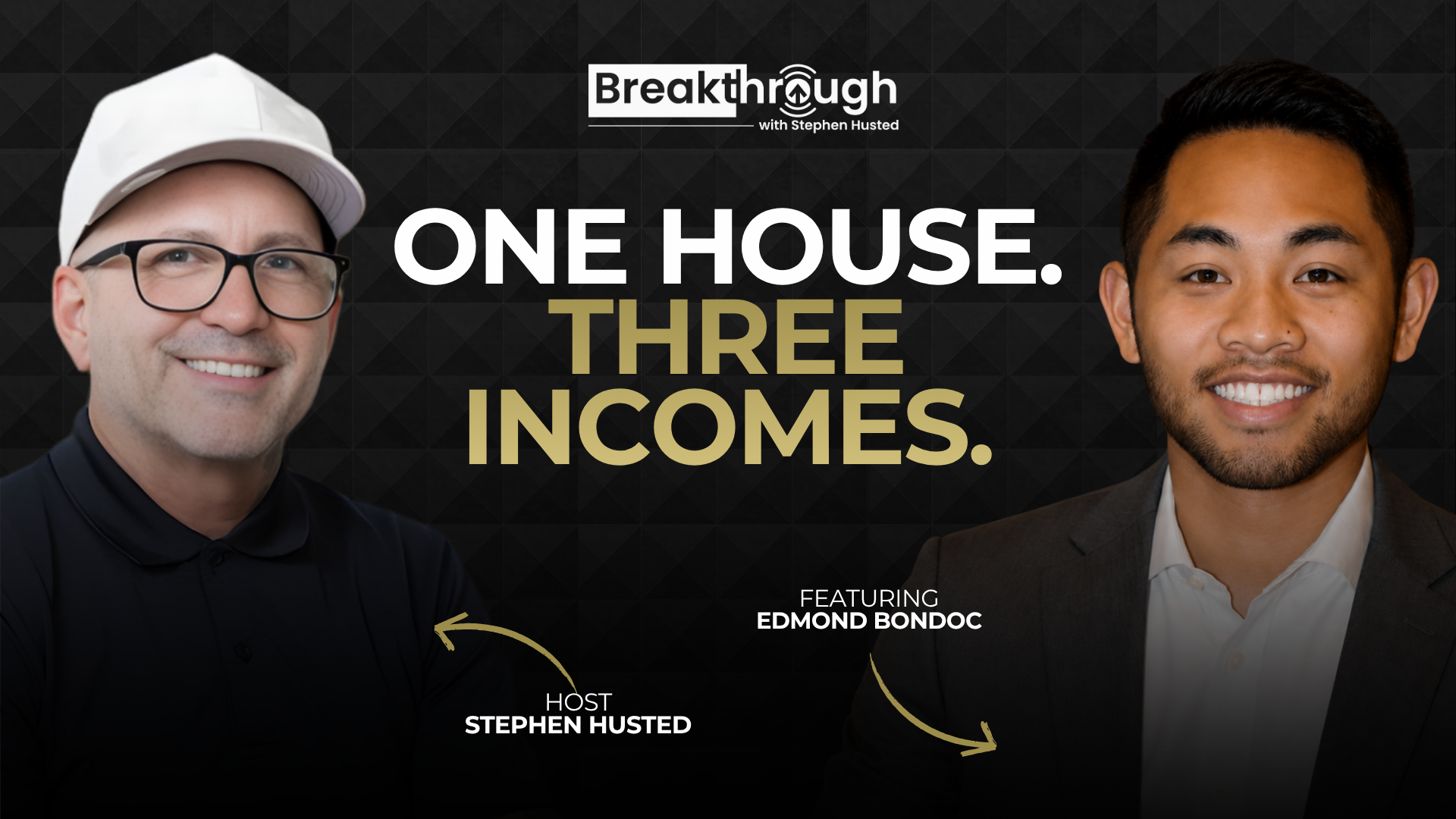
In this episode, I sit down with Edmond Bondoc to discuss how he transformed a single-family property into a multi-unit investment through ADU development and strategic planning. Edmond shares the full story of finding the property, financing the project, navigating Seattle's permitting process, and preparing the units for long-term cash flow. We also discuss the opportunities available to investors in Seattle, the realities of development, and why having the right team can dramatically impact the success of a project. Edmond breaks down condoization, construction financing, and the lessons he's learned from building while simultaneously growing his family and planning for the future.
Stephen and Edmond talked about:
00:00 – Edmond's current ADU development project
02:53 – Finding an off-market property in Seattle
04:19 – Buying, renovating, and building two ADUs
05:22 – Lessons from the permitting process
10:02 – The biggest development lessons learned
17:28 – How condoization works in Seattle
18:47 – Financing ADU development projects
22:43 – The mindset new developers need
29:47 – Unexpected challenges during construction
38:00 – Building wealth and creating a legacy for family
TRANSCRIPT
∎ Teaser / Highlighted Clip
00:00 Stephen Husted: Probably the number one thing you need to do when you think you're going to go down this route is you have to have somebody that understands it. And there's nothing against agents, other agents. There's amazing agents all over. But there's just a lot of moving parts. And you need somebody that's gone through it, that knows how to basically run some numbers and help you put a team together, a high-level team in a short period of time. And they can hold your hand through some of it. It's such important. thing to have
00:29 Edmond Bondoc: absolutely i would definitely say because even just the framework right because you understand that you've had to go through these processes yourself and also there's part of it that a lot of people forget is the feasibility of these projects you can probably get a good inkling of how it's all going to work out other than actually doing the actual tests and things from your agent or the people on your team i think you just have to understand work with numbers right because emotion is going to it's going to get you caught in some ways. And so as much as we love to keep it and it's a beautiful home now that it's put together, I think learning those things along the way, you just got to move with it, right? Because if you don't, then you're going to get stuck on, I'm going to be still in the same spot. So I know we haven't reached our next phase, but I think in the mindset of understanding where are we going next? How is it going to help us get there? And like you said, in 10 years time, is this one house going to matter? Yeah, it will make a difference, but... We have two houses that we can count on that we've now built that are going to create that financial freedom for ourselves. So I think it's the idea of being really flexible, like you said, and just having the right people along the way.
∎ Podcast Intro:
01:31 Stephen Husted: I'm Stephen Husted, and you're listening to The Breakthrough Podcast, a space designed for clarity, curiosity, and the stories that move us. Here, we step away from the noise and into the moments that define us. the early influences, the hidden struggles, and the breakthroughs that reshape our lives. From personal reinvention to building a life through real estate and entrepreneurship, these conversations remind us that success isn't a straight line. It's a series of honest decisions, brave actions, and small shifts that change everything. This is where those stories live. Let's begin.
∎ Guest Introduction:
02:09 Stephen Husted: Today's guest is Edmund Bondoc, a real estate investor, developer, and agent based in the Seattle area who specializes in helping clients identify properties with development potential and create long-term wealth through real estate. Edmund is currently navigating his own development projects, including transforming a single-family home into a multi-unit property with attached and detached dwelling units.
02:39 Stephen Husted: and the realities of building in one of the country's most competitive housing markets. In this episode, we talk about Seattle's unique development opportunities, how investors can create additional value through AD use and condoization, and why having the right team can make or break a project. We also dive into financing strategies, common mistakes new developers make, and the mindset required to take action even when you don't have all the answers. Let's get into it. Cool. We're live.
∎ Podcast Proper:
03:11 Edmond Bondoc: There we go.
03:13 Stephen Husted: Thank you, Edmund, for jumping on today. I really appreciate it.
03:16 Edmond Bondoc: Likewise. I appreciate you having me, Steven.
03:18 Stephen Husted: Yeah. We got you on quick too, right?
03:20 Edmond Bondoc: We sure did.
03:22 Stephen Husted: I was reading the email. You're like, wow, that was quick. I'm like, get Edmund on now.
03:26 Edmond Bondoc: There we go. Yeah.
03:28 Stephen Husted: So let's jump right into... how you and i met and what we do out in seattle let's go a little bit on a deep dive on what we do as far as developments i have other things i want to talk about but let's get right into this one because this is kind of fresh we're kind of both going through a lot of different projects at different points and we're learning a lot as we go along which is a huge part of doing developments out in seattle so what do you got on the plate right now what are you currently working through and What type of issues are you going through?
04:03 Edmond Bondoc: Yeah. So I'm fortunate that right now I'll give you the high level of, we have a three month old. So just a little bit over three months, she's been starting to move and groove on her own stuff. And we actually have a project that is, I think this week we're going to be in final approval of having the ADUs that we're building. So about a single family home and we have two ADUs being built. have been built now one's attached one's detached and that's going to be the coolest part is we're in on that project probably about seven months this month so having that three month old and the seven months of this project is like man there's a lot that's gone into this as you can imagine and thankfully pretty smooth i think with the building process thankfully because with Being a first time parent, it's man, I don't know what to expect, right? So, so much goes into that. I'd say the challenges of that we're kind of facing though, is that what's next, right? Because we want to look for our next home, right? Our project home. And we're in the mindset of we're in the accumulation phase right now. So if we can get those two stabilized and rented out here, right? Shortly, once they're complete. Then we're going to be looking for another home where we can move into and hopefully have some value add and then also add units in the future. Right. So that's our next step of like, how do we put all those pieces together? Like sometimes we think about going right to it, but I think this is one where we want to make sure that we do the right step. So we have our daughter with a home that we can appreciate for the next couple of years, at least.
05:25 Stephen Husted: Real estate is a very long journey and it's a puzzle and it's always changing. Yeah. Yeah. You know, if I had to look back to the early days of investing to now, it's changed so much. And it could be interesting to hear from you in 10 years on where, you know what I mean? That journey could change. You could be doing different things. The strategy changes. But as far as what the first, this deal you're talking about, walk me through what you did from acquisition, going through that whole process until you, to where you are today.
06:02 Edmond Bondoc: Yeah, so it's about probably now two, maybe three years back now, we were starting in the space of trying to find our next home. And for my wife and I now married, we decided, hey, we're going to go and... scour all the neighborhoods in seattle drive for dollars and figure out where we can find these leads that are as what everyone talks about fixtures find these with big lots find space and we were just finding them on online right mls just wasn't cutting it so as you and i both know we had to find people that had those deals in our case we were able to drive for dollars and i came across this house and It's just overgrown. Just didn't look like somebody was really doing anything with it. Cars parked out there. And so I went up there, door knocked it. No one was home. Right. So it's one of those vacant homes type thing or just someone wasn't there. And so I left a note there and tried following them up with a cold call. Nothing happened. Long story short, I started mailing a little bit here and there and they actually responded. couple months out and they said, Hey, I saw your mailer. I'm interested in selling to you guys. Love your story. And so we go out there and meet with them just to kind of get a feeler of, are they serious? So they talked to us about this property and fast forward everything. They decided they weren't going to go forward with the sale. Cause like, you know what? We've put a lot of money into this. Let's go ahead and pause this.
07:16 Edmond Bondoc: And I was like, okay, fast forward six months go by. And they're like, Hey, we really want to sell now. what changed? They're like, we're $200,000 deep in this property and our contractor is not finishing the project. So we go back and this house is still kind of an array of things like that. Some progress, obviously. And now they've extended this property, added this whole second area in the home, which turns out to be is pretty good spot. So it's a three bed, two bath now, 1100 square feet. We went in and said, okay, we're going to buy it as is. Buy it with a renovation loan, 5% down, where we bought it for 700, put in about 100 grand into it for our own work. And with our contractor, completed it probably in two or three months. And so after that, we were able to get this whole brand new-ish home, right? move into it. And we had the intention of, okay, we're going to build in the backyard eventually. So we started that process. And from probably about six to eight months going through permitting, we're eventually able to get it off the ground. And I think we started in September of last year that we broke ground to build the two ADUs. And now we're in May here to essentially look at the final products there. Now it's just landscaping. So we're right on the cusp of getting them rented is the next goal. Yeah, that's amazing.
08:32 Stephen Husted: It's so cool. It's cool to get it to this point, too, and actually see the vision come to light. What did you learn during the permitting process? If you can give me a couple examples, because I know you learned a lot. I know you learned a lot. Where do we start here? We could do a whole episode on this, but what did you really do with some things?
08:51 Edmond Bondoc: A hundred percent. So I think the first place, as you and I both know, is like having an architect that understands what you're doing, right? So for us, I think part of it was the lagging portion of, hey, we want to get the front house done properly and then go through the permitting because we didn't want them to conflict. But the design portion of it is great. Like they design really well, but the idea of actually creating what you want as a product for rental, as well as something desirable, you got to have someone that knows what they're doing. because also they're going to take time, right? It's going to take longer than you might expect. So for us, thankfully, they weren't on the busier side as they are now, as the person that we've worked with together. And I'd still work with them today. I think the process was just that in the permitting, you start to find that there's so many more details that you need to have. So I think one of the conflicts that we had, well, kind of confusions, I guess, that we went through is that the designs weren't exactly up to where sizing wise, what we wanted. So for example, If we didn't go with the builder to understand the size of the bathrooms, scapes and things like that, we would probably have custom everything, right? But bringing in our builder, they said, let's do standard size shower pans. Let's do standard size closets. If you don't have that perspective and you put your plans into the permitting phase already, you're going to have to go back and do those corrections. And we hit corrections, I think two or three times because we use the... couple of people that we first time using them right and we just had to go through whether it's structural or civil work water is a big thing here in seattle obviously so we had to figure out how to get the water draining outward so when you think about all the big picture all these little things add up right and takes time so i think our permitting process could have been three months but it ended up being closer to six or seven which is uh kind of longer phase than most people want to do.
10:37 Stephen Husted: I beat you on that. So look.
10:40 Edmond Bondoc: Yeah, I bet you did.
10:49 Stephen Husted: The one thing about development is you need to be highly organized. You have to be completely engaged with your team every week. Even when you think there isn't time to be engaging, you should be engaging. And you also, you're going to know at the very end of it that no matter how hard you try to make everything perfect, it's not going to be that way.
11:16 Edmond Bondoc: 100%. Yep.
11:17 Stephen Husted: It just, it isn't. You have to really roll the punches in a lot of ways. One that we finished, I looked at it when it was all done. And with the plans coming from the architect, I was like looking at the primary. It was so big, right? It was a good size. But then when I saw it completed and then I realized one of the bedrooms could have been a little bigger if we would have shifted everything down. The closet had enough room. We could have took a foot off and made the bedrooms bigger. And those are just things you find out at the end. And what I've always tell people is there's no perfect house. I don't care if you buy half a million, five million. You can go in there and find something that you don't like. It's just, it's the beauty of. development and building you know i mean you go through that too at the end you're like oh i wish i could have done we should have done this yeah
12:05 Edmond Bondoc: oh 100 i mean even yesterday we had our walkthrough with our builder and we just talked about the simple thing right we could have moved the closet a little bit further over in the bedroom so that the laundry closet on the other side of the wall could have more clearance because now the it's not that it's an issue but it's so close to the door handle you're like if it starts to shake a little bit it might just touch the door. So just keep that in mind of, hey, just give yourself more allowances, right? Those things that you don't know until you realize on site, things change from those
12:36 Stephen Husted: measurements and things like that. They do, yeah. And it's interesting with measurements because you can go based on the average. Oh, this is an average size bedroom or this is an average size primary, right? And you can get those, but once it's put together, you could tweak it out a little bit. Yeah, exactly. One of my business partners, Alicia, she's a designer. So it's all measurements. It's everything. And so she's really honed me in on things where I'm more of the bigger picture. But it's funny when you get done, you're like, damn. So what are some bigger learning lessons you went through?
13:10 Edmond Bondoc: Yeah, I would say, I mean, in the whole big picture, looking at, because initially our thought was we're going to have this whole project and we're going to have all three units. to be rented out afterwards, right? I think part of the development phase that you come to realize is there's a lot of cash intensity, right? So a lot of things that need capital. And I don't think we are behind the eight ball on this one, thankfully, but the concept of knowing that we have to shift on our plans, like you said, we roll the punches. So our front house, the single family home that was existing, we're planning on selling from that property, right? And so I think you just have to understand. work with numbers, right? Because emotion is going to, it's going to get you caught in some ways. And so as much as we love to keep it and it's a beautiful home now that it's put together, I think learning those things along the way, you just got to move with it, right? Because if you don't, then you're going to get stuck on, I'm going to be still in the same spot. So I know we haven't reached our next phase, but I think in the mindset of understanding where are we going next? How is it going to help us get there? And like you said, in 10 years time, is this one house going to matter? Yeah, it will mean a difference, but We have two houses that we can count on that we've now built that are going to create that financial freedom for ourselves. So I think it's the idea of being really flexible, like you said, and just having the right people along the way. I think we, other biggest lesson is we help clients as you as well go through these projects and we can only help so much, right? And sometimes they want to do their own way, which is great. They're learning for themselves too. Having the right people and your team helps so much, right? Because when you see they deviate from maybe your direction of what you suggest. there's things that cost time right and so it's not the uh hey i decided to do this and it's going to cost time here but now you're going to cost time later on, right? Like for example, being with the right builder, I think we chose really well. We paid maybe on a more premium cost, but now everything's been so smooth. Like I said, we had a three month old during the time and it's been really smooth in that side, but you see other clients where they've chosen a different builder for the lower cost. Now they're paying for it in the time that they're going to take for the permitting, the build, and so many other things. So I think the learning lesson there is that You got to pay for that, what your value that you're going to receive out of it, right? No quality matters sometimes more than the time or the cost that it looks like. So it's huge.
15:25 Stephen Husted: It's huge. Yeah, I've learned that. I've learned that lesson many of times over, over the years, for sure. And you really touched on something. I want to say that there's a couple of things.
15:38 Stephen Husted: I think a lot of people in Seattle area, I don't know if everybody understands how good of an opportunity they have when it comes to buying a house and i'll give you an example so let's say my wife got transferred to apple in seattle and so we're moving so we go out there i could go out there and literally buy a house with a basement nice size lot fix up the main house build out the basement move into it live right and then split off the lot build sell it roughly make 300k give or take depending yeah take that money that i put as the down payment on the main house put it right back in my bank account or continue to do it and do something very similar to what you're doing yeah like this strategy i you guys have something so special in front of you i and i'm always wondering does everybody really understand because i live yeah you would understand if you lived in san jose like how amazing that opportunity is and you don't need to have all the answers you need to have the will and the vision to go through it and set a long-term horizon amongst your partner or whoever whatever is involved and get that right team what you just said have that team in place because if you have a solid team The education is going to happen within one year. It's almost like you went to a university for one year. You're going to learn. You're going to learn from your architect. You're going to learn from your contractor, your property manager, your agent. All these people are going to be feeding you information. You hired them. That's your learning thing.
17:25 Stephen Husted: I think you could do this out in San Diego and LA. It's tougher where I'm at. I wish I could. I tried. Absolutely. That's why I'm still with you. That's why my wife was asking me this on Sunday. I was like, I can't believe that we got five houses out in Seattle and 13 into development, once finished in two years. But I can't find one project in Seattle.
17:52 Edmond Bondoc: So did not. Yeah. No, absolutely. I mean, to add on to that, it's that same thought, right? I know, as you mentioned, it's starting to expand everywhere else, right? possibilities of development but also separation i think the key part in seattle is that you can separate lots like that right and understanding how that works as it's condoization right we have something that's already been done many times over to other buildings to separating the usage and shared spaces but for us we can actually do that and i know that's coming for other areas but like you said may not be for san jose and the other piece that you touched on is like the people that we get to surround ourselves with right that's how we met right we got to know each other through our good friend ian and it's because of people like that we get to meet people like yourself who are doing the projects we're getting ourselves as they always talk about rubbing each other against elbows right and figuring out hey you're going through this stuff as much as i am and we can help each other figure out how can we do it better right as well as yeah how can we feed each other deals right as we talked about earlier deals are everywhere you just got to have the right mindset and also the people around you to help you get to those. So I think that's been super invaluable. The team itself is one, but also having the people that are in your ear, around you, surrounding you about what to do with this stuff is key too.
19:07 Stephen Husted: And getting the right ones around you.
19:10 Edmond Bondoc: Yeah,
19:11 Stephen Husted: absolutely. You can get around the wrong ones too. Very much. And that can derail you in all types of different ways
19:18 Edmond Bondoc: too. Yeah. I know we talked about it and we don't have to dive into it, but there's some good people out there, obviously. And likewise, no good people. Sometimes there's not good business around it. So you got to know that part too.
19:31 Stephen Husted: Yeah. And that sometimes either you connect with somebody who's been going down that route that can do a little bit of mentorship in one way or another so that they can kind of. put those signals out because i remember when i first met ian he connected me to to my contractor and i knew that he was speaking in these groups and so the first thing i went back to ian i said okay is he going to be able to take this on because i understand that once you start to speak in groups you get a lot of business a lot of people want to work with you and then and people don't want to say no and so they take it on and then things can go sideways if you don't have a good subs and whatever going on. When you get that over experience, you learn that as time goes on because you've gone through it.
20:19 Edmond Bondoc: A hundred percent. And I think that's a key part of a lot of our successes is over time, you've got to learn how to say no, right? Because otherwise you're going to say yes too much and you're going to. lose the opportunities in other ways that the quality of what, again, we talked about quality, right? You got to say no for the right reasons and keep the quality ones around.
20:37 Stephen Husted: Absolutely. So I'm going to touch on this for, we can put this out there on what we do as far as condoizing and how do we get a single family home and then get a couple units and then we're able to sell those off or keep them as rentals and how do we get financing on those? What are we doing?
20:56 Edmond Bondoc: Yeah, absolutely. So we're just talking about like a single family home. You find a lot in Seattle. Ideally, you want to have access, right? Some way to get to maybe a part of the lot. So for our properties, most of them have been, you've got a single family home on one side of the lot. And then the other side, you have a backyard or side yard that's available. For my specific property, we've got a side driveway to get to the backyard where we're able to put two units. And on the whole lot, we'll put a condominium set up. where the single family home will be one unit and the two other units in the back will be their own units, right? And they'll have a common area, which is the driveway. And so very similar is a condominium that we see in buildings and so forth. They have shared spaces. It's just whether they have common walls and things like that. But now that they're separate. they can also have their own tax ID numbers and funding, right? Mortgages, liens on the property. For my project, we have a single family home, which has a lien on itself with a normal 30 year mortgage. And on the backside, because we're building them, we have a new construction loan, right? And so as you mentioned, there's many ways to finance deals. One of the financing options that we use is essentially because they understand single family development in Seattle, Springboard Funding does this program where essentially they say, okay, well, if you have a free and clear lot, in this case, those separate two units, they're separate from the front house, their own tax ID numbers, we can put... the valuation of the land and use that as your collateral to fund the rest of the deal. So in theory, you're zeroed down using the land as collateral, and then the rest of it is funded through that. As long as your builder can provide you a detailed line item of how is this going to be built, they'll fund you based off of that and give you draws throughout the process. So you're essentially using money that you have and then build part of it. They reimburse you and you go through that until it's completed. And so we're right here on the spot of, like I said, almost completed. And essentially that whole process, just drawing through money gets you to where you can have finished product.
22:54 Stephen Husted: And how did you approach those draws when the payments started going up? Did you have that money set aside in an account and those were a part of your reserves? Because you did bring up that development is capital intensive. For a very long period of time as well.
23:12 Edmond Bondoc: Very much.
23:13 Stephen Husted: So did you underwrite the main house and the whole dadu project in the back and put all that money to the side because you knew at some point you're going to take draws, the payments were going to go up and you knew you're going to go six months. So did you calculate all that?
23:31 Edmond Bondoc: Yeah, great question. So we initially were like, okay, we know we're going to get the project of the backyard, but we didn't understand the financing. So again, learning lessons along the way, right? And so the front house, thankfully, is very much on its own island, essentially, where funded through the mortgage that we purchased it with rehab loan, and now it's a 30 year fixed. For the backyard, we essentially have other properties that we are able to have our key locks on so that we can just pull lines of credit to draw money from there to pay for these essentially invoices that we have from our contractors and then reimburse ourselves. And we've kind of been going through a cycle of that. had initial capital reserves for things, but as because of the intensity of it, you want to keep yourself also liquid on your own scale. So we've been using these lines of credit to kind of insulate ourselves from having to go into too far into reserves and just kind of cycling through that until the reimbursements will hit back so that the funding continues on everything going forward.
24:28 Stephen Husted: The lines of credit are a big scenario that most people that want to get in development should have. Just for the fact that if you can, If you can tap into an equity line at 8% instead of 11% on hard money draw, take the equity line and play that one out for a while. And then once you get your first couple draws in, you can replenish like you said. And it's just a game of numbers and interest rates and timelines. Very much.
24:59 Edmond Bondoc: 100%. And I'll even throw another tidbit out there is if people are savvy enough to go and find other ways to land the credit, because like you said, it's all numbers, right? We are fortunate to have like a insurance back line of credit on the life insurance policy. We can get multiple of those, right? But we were able to get that at a 5%, right? And it continues to be 5%, right? So if you can fund those types of things over time, you get multiple policies, obviously, depending on your funding strategy. 5% beats... almost every day, any of those other lines of credit, right? And the cool part about that is the benefit for yourself in the long run. And it's something that what they call infinite banking in some ways.
25:36 Stephen Husted: Yeah, that's pretty cool. I didn't know that one. It's a good little tip there. I like that. Look into that.
25:42 Edmond Bondoc: Do it, man. I will say, let me know if you need a guy.
25:44 Stephen Husted: Yeah, that's awesome. That's really cool. What is the mindset that a new investor that wants to get in development needs?
25:52 Edmond Bondoc: That's a good one. I'd say…
25:56 Edmond Bondoc: we kind of touched upon a couple of these things is knowing that you can do it first off, right? And you don't have to know it all is the key part, right? Is I always go back to the idea of imperfect action beats perfect planning. I myself as a analytical person always kind of go into that, oh man, I need to get this everything perfect. But realistically, if you take those actions, you'll have such something much more perfect in your actions rather than that plan because the plan will never go if you don't execute. And so I think the idea is that you got to realize that is you continue to learn and grow, be willing to learn, right? Because everything is a part of the process. It's a feedback rather than a failure, right? So if you continue to move that forward and then like we said, surround yourself with the right people, hire possibly a mentor or a course that you can learn how to do what you want to do. It's the idea of if you already know what you want to be and you see that person out there, a role model. why not take those same steps that they're doing it, right? If they're real to what they're talking about, they will teach you, right? They will, through their ways or their coursework, they'll teach you, hey, this is what you need to do. And I think very much alignment towards the program that I'm in Springboard, Thatch being one of the main leaders and Stephanie, they just have this whole program that allows for you to understand it's not about just getting real estate, right? It's the mindset. It's what do we are able to create from that? And that's how I met Ian. That's how I met you. It's like it.
27:17 Edmond Bondoc: You see this network of people that have this mindset because we all want the same thing, right? It's not because we want the money. It's because we want the freedom and option of choice to decide what we do with our time, right? Because ultimately, if you don't have that, then you're continuously working, right? Why not enjoy it to help other people while you're doing it?
27:34 Stephen Husted: Yeah, absolutely. You're so right on that. And I think that we're in an era right now when it comes to investing and just personal development, like no other. I mean, this is not what was going on 10 years ago. You wouldn't connect in groups. You go back 10, 15 years. I remember when I first wanted to invest, you had to go to conferences. They had CDs that you got and you just went home. Everybody was so, and I've said this before on podcasts in the past, everything was really siloed. There wasn't really investor groups.
28:10 Stephen Husted: You really didn't know, but it's funny because people talk about all these different strategies now. And, well, this one's hot now. This is good. And this is good. No, they've all been around for a very long time. It's just that now we have social media that we can, people can put out information, but it also creates a lot of what direction should I go?
28:32 Edmond Bondoc: A hundred percent. A lot of noise is out there. A lot of noise.
28:35 Stephen Husted: A lot of noise. And that's one thing about our little group. and everybody I've met, I don't end up going out any further. When I have the group, I just go, okay, I have all these smart people in different things, right? And they're all doing cool things. And I feel like they're good people. And I just stay in there. I just don't leave because I think that's how you grow and you get better because everybody else is doing different things or going through things, learning. I think it's a powerful thing to be able to lock into a group. pick a strategy, and learn as you go.
29:12 Edmond Bondoc: Absolutely. And I think a big thing that people don't realize is that if you dig deeper into things rather than wider, I always think about the analogy that I think Brandon Turner once said was like, well, are you going to take the one bridge that's going to get you across the island or are you going to try to take these multiple bridges that don't connect to anything, right? So if you think about that, again, that dive deeper, dig deeper, whatever you want to call it, versus many holes, you actually will get to your... goal right you've figured it out along the way maybe it's not the one that you want and you shift right you make that shift but you're not actually multitasking you're kind of separating your your mind and everything so focus in on something and like i said surround yourself to the point where you have these people that are going to the same path makes it so much easier and also enjoyable too because then you're not like hey man like i like you said siloed in on your own thing and you're like i don't know what i'm doing am i doing it right i think we a lot of as you as an agent as well I think we find ourselves in that, right? Like we were like, man, we have all these clients and people, but there's all these people we can collaborate with, right? It doesn't have to be competition. It's just a matter of how we operate and help each other. Obviously there's privacy and things for our clients, but realistically is if you can be willing to help and open to other people, solutions are all around you,
30:25 Stephen Husted: right? Absolutely. Yeah.
30:28 Edmond Bondoc: It's true.
30:29 Stephen Husted: It's true. You just have to have the will. You have to have the will. persevere through things. You're getting these finished. You're going to keep them as rentals. The reason why you're keeping those as rentals, let me just guess. The loan amounts, you can hit the 1% rule, but the main house has the higher debt on it. And so even though you're living in it, you just want to get that out of the way. Would you make money on the main house? Are you just going to break even and then all the profit is sitting in the two new ones?
30:59 Edmond Bondoc: Yeah. So I think you hit it on the head very much the plan or at least numbers wise from the beginning. And hopefully we'll see this in the appraisals refinances is that the ADUs themselves being new construction. Hopefully they won't have a lot of capital expenditures over time, but it's, Hey, they should be rent ready for a long time being ready to go. And they should have that 1% rule. And then from the front side, very much because we got into 5% down, even if we put more down for over time, I think it just be offsetting of the mortgage is not going to ever meet it unless we get a rates down in the threes and twos or whatever it is, which obviously is not going to likely happen in if not a while, if not forever. So the numbers part is the key part. And I think so far in my projections, I like to be conservative on things. I think we'll be probably right around break even. If there's a little bit of a loss, I think it's going to be a loss for the big win, right? Because like you said, we're having quite the equity on the ADUs,
31:51 Edmond Bondoc: our new builds, but also... Just the idea of we got to move forward in our path, right? It's not something that we got to get stuck by. So I'm hedging around from our appraisal previously when they were separated. It was about 820. I was saying, hey, as long as we can get close to 800, I think we're in good shape to move on and keep it going.
32:12 Stephen Husted: So for people that are listening, the play is typically break even on the main house. If you're building one or two in the backyard, you could clear in equity, depending on how you, if you keep them as a rental, if you sell it. For two, you could have essentially $550 to $600 in equity. Just, it really depends on, a lot of it comes down to location, obviously, because that built cost can be the same throughout Seattle. But location can give you a better after repair value and a better sale price.
32:50 Edmond Bondoc: A hundred percent. Yep. And then rents, of course, as well reflects directly into that. So, yep.
32:55 Stephen Husted: Yeah. It's been, so we just finished that one on this. I guess he called this good news, bad news. We finished it. And this is the one that I can tell you the story that now, why are we almost didn't even do this podcast this morning? Cause I woke up at four in the morning, freaking out on things, but the one 25th daddy was finished. It appraised for seven 50. So we got 300 K and equity. Great. There you go. Refinanced it.
33:22 Stephen Husted: But we're having problems with the city, with electrical connection. And they changed. We have to infiltrate on site.
33:34 Stephen Husted: So that happened after the fact. So we scrambled. We went back to the architect. We redesigned. We submitted. They approved it. We paid. But now we're waiting for the inspector. to issue the permit to like actually start i'm confused on that part well i'm really confused and we're just been sitting and i'll be honest it's been two months and it was at least nine months with city light on connection and then but what really happened was we started planning for the rest of the lot and so the city started seeing things like oh wait a minute here you got a single family and you build a dad in the backyard But now we see in here, you're building six more.
34:20 Stephen Husted: Oh, you need to go, you need to do everything, all the underground electricals, all underground. It just started opening up a can of worms. That was kind of, we didn't realize it, but that's what happened. And we're looking at the architect and architects, they're not losing money. They're just building long, right? That's their job, right? They're just moving through planning. But instead they're like, oh, we want you to change this. And the going underground is going to cost us 120,000. Yeah. But it's okay. 120,000.
34:48 Stephen Husted: You either do it or you don't. And you just have raw land. So you take one of those units and you just use that for like utilities and carrying costs and all those things. That's going to eat up that. And then you get your profit on the other ones. But yeah, there you go. It's been so crazy. And I woke up at four in the morning going, what the heck is going on? Where are we at on this? And so I've blown up the contractor and now I'm getting those guys' numbers. I'm going, it's funny that we had permits in place. We scrambled, we made payments and they're just taking their time.
35:24 Edmond Bondoc: We'll get to you when you get to your time. Right.
35:26 Stephen Husted: It's costing so much money. So we are losing money right now. It's sitting vacant.
35:31 Edmond Bondoc: Right. And that's the key part. Like we talked about earlier, right? You realize there's so much capital that needs to be reserved for things that you don't expect. At the same time, there's things that are out of our control completely within this permitting process. I know you touched on, for example, infiltration. Sometimes that can change your whole plans completely. And then second one is the Seattle City Light. I mean, it's just unfortunate that it seems more and more people that we talk to have run into issues with them because they just don't have, I wouldn't say the sense of urgency, but they don't have maybe a way. way to allocate where their projects are right so that people can hopefully get them in line in their queue or at the same time get more people right if you have this many projects don't you want the infrastructure to go further along don't you want all these developments to actually occur because otherwise you're not going to get the housing that you're asking for right so
36:19 Stephen Husted: because and that is so that's such the big part of it i mean it's look at we're here in your community doing what you you need You got to make it a little bit more streamlined for us as investors. Because I think the problem is they really don't realize time and money. Because they're not an investor for the most part, right? So to them, it's, oh, you're on the list. You're on the cancellation list. I'm like, we've been on the cancellation list with City Light. Come on.
36:53 Edmond Bondoc: Yeah. Oh, man.
36:56 Stephen Husted: In the beginning, I set the tone with my business partner on everything. This could happen. And we planned for it in a very strategic way on this particular project. We self-funded the data all the way to 90% so that we could absorb, because I was planning ahead on the utility connection.
37:18 Edmond Bondoc: going there you go there could be an issue here so
37:21 Stephen Husted: let's do this yeah and here we are i'm going through that issue but i like to tell people about it and i think another thing for anyone who wants to start to development do a development is when you're running when you're underwriting these deals when you're starting with because it's almost like a two it's a two to three phase approach you're approaching the main house you're approaching the backyard The basement, if you have a basement. You need to understand everything. People go, oh, it's 350 to 400, 450 square foot.
37:58 Stephen Husted: There's taxes on that. You have landscaping, you have fences, and you have appliances. And you have timelines. And you need to have all of that in your underwriting. From the beginning, day one. day one and you need to go out there and look how am i putting up a new fence am i going to be able to negotiate that with my neighbor how's that going to play out we're playing russian roulette with a neighbor right now
38:24 Edmond Bondoc: it's
38:27 Stephen Husted: falling down and i told this i told the tenant i go hey you upset there's no fence i am oh you should tell your property manager tell them yeah yeah we'll help out we'll meet you halfway and they're just kind of playing it out and every time i go out there i go are you gonna get this done and can you get a bed sure because i'm like i want to split it but you need to factor in that if you have to do three sides you could be paying 15 grand depending on the lot size
38:51 Edmond Bondoc: very much yep
38:52 Stephen Husted: yeah another five with appliances and some landscaping now you're into 50 grand so you really have to paint that picture up front not just oh this is my bid and i'm gonna build this house wait it's 350 square foot no you got taxes too oh yeah
39:11 Edmond Bondoc: exactly i think a good point of what you touched on here and the whole scope of these items is that we had a one of our rentals we had our neighbor actually was willing to share our costs on one of the fences and it was because one of the other neighbors was like planning on selling we didn't know this until they obviously sold but they asked all the neighbors hey we can go ahead and get all these fences done if you want to share in the cost bring it down type thing and so like yeah great the neighbor that was willing to do it let's do it we didn't think about it but we if again like you said if you planned ahead and knew hey let's earmark a little bit more we had another fence that was it looked fine but over time you realize it wasn't fine right so that fence fell off fell over in the windstorm that following winter And we're like, okay, we have to replace this. The neighbor didn't want to do anything with it. So I was like, great, we'll just take care of it because we've got tenants there. We're not going to deal with this. We'd rather have them happy, right? So it's like those things that you said, if you think about the big picture, plan for ways you can save your money by doing it all one way, right? And at the same time, think of these things that will need to be done, right? Because like you said, landscaping, a lot of people don't think about landscaping until it's already there. And you're like, wait, why does it look nice? Well, it's not in your bid. You didn't ask for these things, right? And the taxes, right? Taxes, you ought to always account for taxes, even if they don't have their bid. Hey, make sure you've got something in there for yourself because otherwise that number blows up a little bit for you.
40:33 Stephen Husted: And taxes, property taxes too, during your project. Let's catch that one. I haven't really heard anybody bring this up online, but once you condoize. And you're still building or you're still trying to stabilize and put a tent in. And guess what you're getting too? You're getting property tax bills. Taxes. They're not big, but I mean, a thousand bucks and you got two of them, you got 2000 right there. Yeah.
40:57 Edmond Bondoc: Right. They all add in, they sneak up on you. They do.
41:01 Stephen Husted: It's like an ongoing thing. So now that you, you got your little family going. How do you bring that into this whole equation? Because I say this all the time. I work very hard and all I'm trying to do is set up my daughter for the future.
41:21 Edmond Bondoc: I love that.
41:23 Stephen Husted: And I don't know if she really understands the level of what I do, but it is purely for her. Right. How do you bring that into your mindset of how you build this all out?
41:40 Edmond Bondoc: Yeah, I think it kind of comes back to the very beginning of everything. I was fortunate to have a family that, well, we didn't have everything. We had family, right? And people always looked after each other. I lost my mom at a young age. I think I was like five or so. And so my dad being a single parent, we had other aunts and uncles and different, like our grandparents come into the picture to help and such. But I grew really close with my siblings, right? And so I think the growing up with them, learning that we were looking after one another because dad can't always do it. And it kind of translated into this future part, right? Into, like you said, all those people that come into play of how they've helped you. My goal with all this is that we create one financial freedom for ourselves and the abundance that comes from it allows for us to then give back to those people that have been there for us, right? And also just to create that, like you said, the legacy for the future, for now our daughter. Hopefully in the future, she understands that we want to also live and enjoy our life, explore things, not have material things. It's more of like, how do we enjoy the experiences, how to be good humans, right? Because I think we all forget at the end of the day, we're all human. have goals, dreams, and things like that, why not look after one another, right? So for us, it's a matter of how do we create that for ourselves and our family? And then along the way in our journey, help others learn how to do this themselves and also help them along the way to make it happen. So for us, it's a cool kind of a synergy of a life cycle of how do we create it for ourselves to help others also do it for themselves too.
43:10 Stephen Husted: The helping others is such the, I don't think you could put a price tag on that. It's pretty rewarding.
43:18 Edmond Bondoc: 100% is. I have to say.
43:21 Stephen Husted: It's cool to watch people kind of start to take off on things.
43:25 Edmond Bondoc: Yeah, absolutely. And then you look at it too and you're like, man, even if you don't get credit for it, you're like, the cool parts of being a part of that and you're like. really cool to see where the people lead off to right like you said you're like man i knew that you had it in you you just maybe you just need a spark or a push from the right direction and we're here to help so yeah
43:43 Stephen Husted: absolutely so i talked to roman a lot like we're like in a relationship at this point we have these like yeah morning talks and these like evening talks when he's driving home from seattle he's been in these he's in a mastermind group i think through ryan pineda and even talking about things i'm like dude you need to start putting out some content and it started when i bought that first property in seattle we met and i like got him on camera at one time and then kept trying to get him go more and more and finally i was just putting he wanted to do it and he's doing it now and i'm like dude just stop putting any just record a bunch of content record your day i go you're in the greatest position you're a contractor you run around to job sites just go talk about your job sites just talk about what you do and just throw it online it's don't put too much thought into it get these mics and people want to get inspired by others and that's the way you do it you out of the equation and just understand it's for them and let other people go on that path too And that's what's so cool. There's some bad things about social media, but this is the thing that is really cool. You can get you going quick.
44:58 Edmond Bondoc: Absolutely. And I will add to that to say to me, I appreciate, obviously, you having me on this because it's that same thought, right? You don't have to invite me to this at all. And it's the cool part of we want to help enrich others, right? And show people that it's possible. And I'm speaking for myself. I think I'm an everyday guy, right? I want to help people learn a lot of this stuff so we can also do it our own. realistically it's all information that's already out there right we just are gathering it and helping people understand in our own way how can we make that happen for them right and so like you said roaming good people it's man there's so much wisdom that could be shared if you're just willing to take away the i portion of things and i know i'm trying to work my own social media to be even bigger to not just be a bigger platform but more so like how can i just be a human right again a person that's willing to help others and share this information because everyone's out there trying to reach their goals. They just need a person like you that's going to be there to help them. Right. So again, thank you for having me. That's a cool part of the whole transition of all this stuff. Oh, I appreciate you jump.
45:58 Stephen Husted: You know, it's funny because I sometimes I put it out to people and they're like, I don't know, man. I'm like, just jump on. Yeah,
46:04 Edmond Bondoc: you're great. Exactly. Let's go.
46:06 Stephen Husted: Let's do it. What is your favorite part of living in Seattle?
46:12 Edmond Bondoc: If I had to take away the first part of being family is very close. I'd say. it's probably going to be like the weather and the climate, right? And I don't know if it's maybe just because I'm biased to it, but anytime I go travel places and I enjoy the warm sunshine or I don't mind the rain here, but we have the mountains. We've got the sound, which is kind of like the sea here. And it's just one of those things we get all the elements of throughout all the seasons. And it's never all the same because every year, some years will get really hot and some years are mild. This year right now, it's pretty warm. It's 80 degrees outside. But it's the cool part of having that experience of enjoying all those things and having the people, right? We have a good mix of food cultures and all that. And I enjoy food to the point of traveling. We try different foods for that purpose. And so I think Seattle has got a good melting pot of that. I know there's other areas that have it, but man, if you come out to Seattle summertime. It's beautiful. As you've come out here many times, it's kind of hard to beat sometimes. And then you get the winters and you get to go in the snow and have fun there. So I'd say it's going to be the environment, the weather that we have here.
47:18 Stephen Husted: It's funny when you just said that, like the weather and climate. And it's like the biggest talking point that we have with everybody that I know in San Jose, just where I live. They're like, you're going to move there? And I'm like, look. If I get up in the morning and I look outside and I see gray clouds, I'm like, am I going to go out there? Such a baby. What a California. But yeah,
47:46 Stephen Husted: I'm California. I live in San Jose. The weather's great all the time. And in Seattle, you're right. The summer is, oh man, it's so amazing.
47:55 Edmond Bondoc: What's the,
47:56 Stephen Husted: I just went there on my last trip. Bainbridge? The island? Yeah. That was awesome. Ferry, took the ferry over there, went and had lunch, kicked back there. It was so cool. It was really cool to watch how people live. They live on that island. They come, sit at a light. The ferry comes. They drive their car on, they go upstairs, they read. One dude was running the upper part of the, and walking, it was funny. And then they go to do things in Seattle, and then they just take the ferry back. That's part of their life.
48:36 Stephen Husted: It was just kind of cool. It's different, because I'm not used to that. But it's so beautiful there. The mounds, and it's so green.
48:46 Edmond Bondoc: I will say there's that too, right? I guess I always forget, because you don't... see greenery everywhere but like when you realize it's not so green or not many life life like things around you you're like oh it's kind of a because a lot of people say like in the midwest for example it's flat right we have a lot of terrain right we go uphills downhills and you kind of see a lot of it from different places like you said the ferry is a really cool spot because you can see both the backdrop of the seattle skyline and the mountains sometimes you're like near man Where do you get us to see all this stuff together, right? Well,
49:19 Stephen Husted: that's why Washington is very similar to California in that way. Like where I live, we can get the ocean is 30 minutes away. We have Tahoe four hours away. So very similar vibe. They both kind of track the same. You guys have the weather that you have to get used to. But how far is it to any mounds?
49:39 Stephen Husted: Well, besides like Rainier, what's the closest from like North Seattle to go mound biking or trail running? You know, I'm asking myself here.
49:48 Edmond Bondoc: Right. A hundred percent. I would say you've got Snoqualmie and what you call Stevens are probably the closest from North Seattle. You can go to Crystal, but that's kind of goes a little further South. If you hit those two, probably about an hour, maybe an hour and a half, depending give or take on like obviously conditions and timing, but I'd say, yeah, it's not too far. It's one of those things where you can easily, whenever we go on the mountains for skiing and snowboarding, that's probably about what we do is try to get in the morning. get out there before all the traffic hits and you can be on the mountain in your case mountain bike i hear it's really cool trail so you definitely should check it out it's
50:21 Stephen Husted: gonna happen it's gonna happen i
50:24 Edmond Bondoc: mean you might have to visit a site and then just so happen to go to the mountain one of the next days
50:28 Stephen Husted: we might possibly have so we got we bought this property in west seattle it's a flip yeah but it came with two lots and So now we're in planning on the front lot. It feels like it's a city street, but it feels private. It was a dirt road, completely overgrown. We paved it.
50:52 Stephen Husted: And as you go up the street to the left, we have a 6,800 square foot lot. And so we're looking into planning. It's got some things we have to work through on feasibility. So we're kind of going through that. But if it can play out, we might be able to build. two new units, and possibly a two-bedroom, 760-square-foot unit. And if that's the case, that's the crash pad.
51:22 Stephen Husted: Let's go out there and see if we can handle it
51:24 Edmond Bondoc: kind of thing. There you go. Hey, midterm rentals and short-terms work pretty well sometimes.
51:30 Stephen Husted: Yeah, we're thinking of going that route, making it into a short-term. I don't know how it would be seasonality in that location. We'll see. I don't know. I really love this location. I would have bought the main house. The main house is amazing. It's so private and so cool. It's got trees and you can see to the Seattle skyline from it.
51:57 Edmond Bondoc: That's awesome. I was going to say. I think any pocket of that West Seattle, if you have that, like you said, if you can see the skyline or even the mountains, it's pretty good spots to have for, like you said, some type of non-long-term rental. I know I have a friend of mine that has something in that area and they've got theirs on midterm. So anything 30 days or greater, but on the summers, they have looked towards doing short-term because as like people are looking to just be in an area that's nice and it can be pretty close and frequent to the areas that they wanted to go to. So, I mean, maybe that's. part of your goal, right? Do a little mix blend of what makes sense for you guys. Yeah,
52:33 Stephen Husted: definitely. Where do you work as an agent? What office are you in?
52:36 Edmond Bondoc: Yeah. So I'm up here in the Edmonds office for Windermere. It's pretty well known in the Washington area. I'd say probably Northwest. So,
52:44 Stephen Husted: so I'm going to put all your information in the show notes
52:47 Edmond Bondoc: for,
52:48 Stephen Husted: so they can contact you and then I'll get all your socials in there too. Sounds like you can get ahold of you. Yeah. Take them out. I think, too, for anybody that wants to do this type of strategy, you really do want to work with an agent that's actually doing these types of projects.
53:09 Stephen Husted: It's actually probably the number one thing you need to do when you think you're going to go down this route is you have to have somebody that understands it. You're not looking for, and there's nothing against agents, other agents. There's amazing agents all over, but there's just a lot of moving parts and you need somebody that's gone through it that knows how to basically run some numbers and help you put a team together, a high level team in a short period of time. And they can hold your hand through some of it. It's such a important thing to have.
53:41 Edmond Bondoc: Absolutely. I would definitely say because even just the framework, right? Because you understand that you've had to go through these processes yourself. And also there's part of it that a lot of people forget is the feasibility of these projects. You can probably get a good inkling of how it's all going to work out other than actually doing the actual tests and things from your agent or the people on your team, right? You and I know now you can look for water, your sewer, your electricity. Is there any slopes? Whatever those might be. you can kind of spot those things on site without having to hire someone extra just yet. And then also the context, right? Hey, we need an arborist because there's a tree. Okay, great. We already have an arborist, right? So it already has the built-in function of the person that's going to look out for your best interest because we're fiduciaries, right? And the second part is you've got people already in line from what they've already done it, right? So they can help vet those processes well in advance so that it's much smoother and hopefully easier to get through this whole process. Yes.
54:36 Stephen Husted: Use an investor-friendly agent.
54:41 Edmond Bondoc: There you go. Someone that knows what they're doing. Exactly.
54:44 Stephen Husted: Well, I appreciate you jumping on today. Really good to hear part of your story. And I'll continue to hear your story, which is good. Yeah.
54:53 Edmond Bondoc: Looking forward to it. I appreciate it again for having me. It's really cool. Like you said, it's just a great conversation to get to know one another more and at the same time explore why is it so cool and possible, right? Because we have cool people like this in our community.
55:05 Stephen Husted: Definitely. Let's leave it at that. Edwin, you have a good day and I'll be talking to you soon.
55:11 Edmond Bondoc: Sounds great. Thanks, Steven.
∎ Podcast Outro:
55:12 Stephen Husted: Take care. You too. Thank you for tuning into our show where we hope you found inspiration and gained valuable insights. If you enjoyed this conversation and want to stay updated on our latest episodes, be sure to subscribe to our podcast and share it with others who might benefit from it. We appreciate your support and look forward to bringing you more candid conversations and breakthrough moments in the future. Until next time, take care and keep exploring new ideas and strategies.