Episode 78 - Travis Chappell on Podcasting, Relationships, and Building Wealth
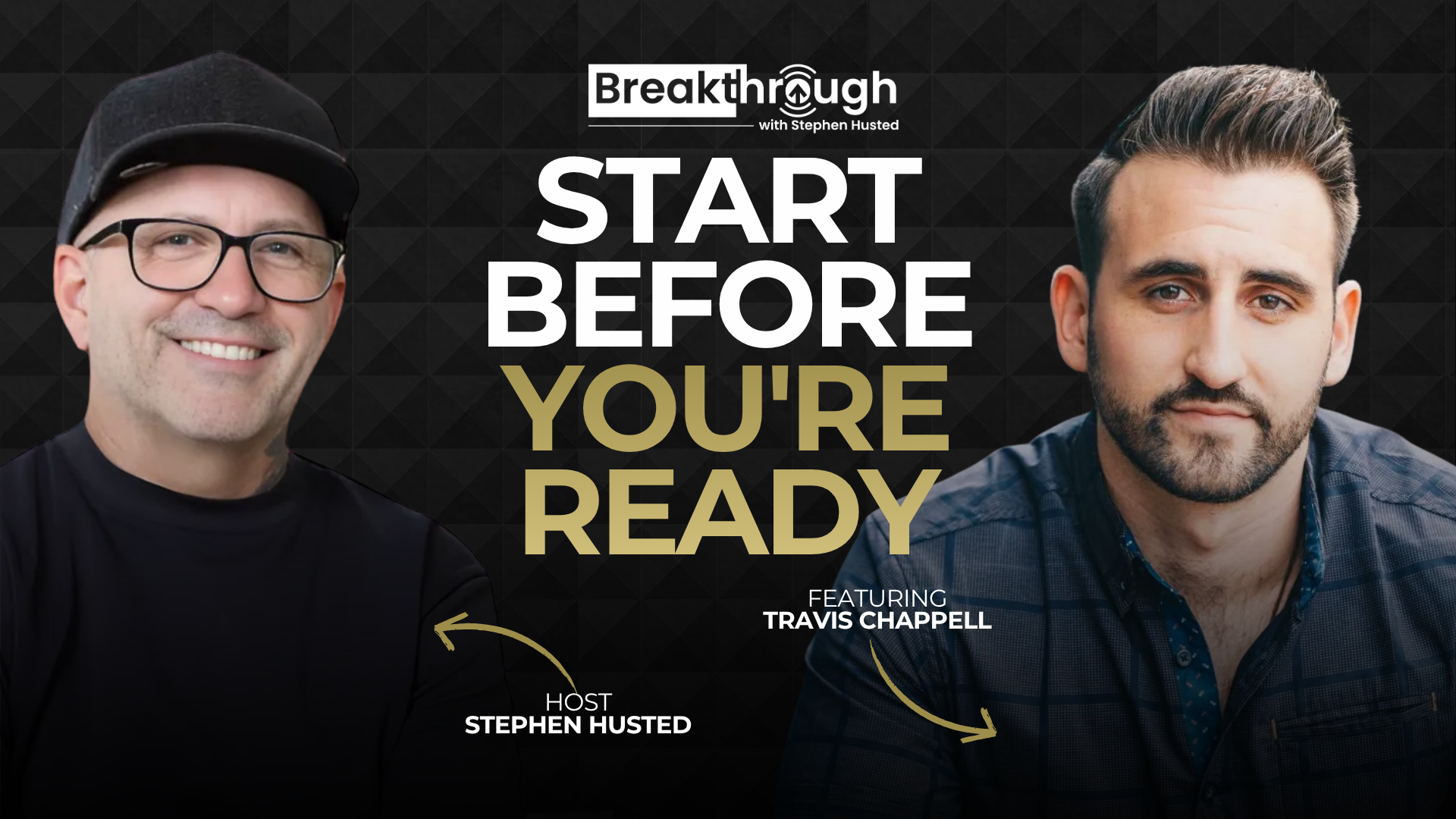
In this episode, I sit down with Travis Chappell to discuss how podcasting became the foundation for building multiple businesses, meaningful relationships, and long-term opportunities. Travis shares how he went from door-to-door sales to becoming a full-time podcaster, entrepreneur, and business owner by consistently investing in relationships and taking action before he felt ready. We talk about why so many people get stuck waiting for the perfect time, how podcasting can accelerate personal and professional growth, and why building an audience before building a product can create incredible business opportunities. Travis also shares lessons from growing multiple podcasts, coaching entrepreneurs, and leveraging conversations to create lasting partnerships.
Stephen and Travis talked about:
00:00 – Why you should always take your shot
07:02 – From door-to-door sales to podcasting
11:18 – Finding the right podcast niche
15:02 – Building businesses from a podcast
17:37 – Growing from $50K to $400K in one year
25:26 – Coaching entrepreneurs through podcasting
27:47 – Why 90% of podcasts fail
28:34 – The biggest hidden benefits of podcasting
43:44 – How BiggerPockets changed Travis' business
48:17 – Why podcasting is the ultimate relationship-building tool
TRANSCRIPT
∎ Teaser / Highlighted Clip
00:00 Travis Chappell: If you don't shoot the shot, you're just in the same position that you would be if you miss the shot. There's no downside that makes it bad. You know what I mean? There's no inherent risk in just going for the ask. Even if it seems this is impossible, it's never going to happen. Okay, fine. Well, then don't dedicate all your time to all of the impossible things, but dedicate a portion of your time to the impossible things because you just never know what's going to come from it.
00:23 Stephen Husted: I had this one gentleman who was following all the big investors. on instagram all of them liking comment doing all that and he would reach out and say yeah i'm gonna get into investing and i'm gonna start now and then a year would go by and then he'd call again or he'd say something and i finally get him on the phone and i told him i go look dude you're out here liking and commenting on everyone's posts if you're not going to jump into the game like why are you following all these people
00:51 Travis Chappell: yep just unfollow yeah
00:53 Stephen Husted: just unfollow and we hung up And the following day, he called me and he said, I'm ready. I'm ready. Signed up. Took him on his journey. He's got his first investment property out in Tacoma, Washington. Almost done.
∎ Podcast Intro:
I'm Stephen Husted, and you're listening to The Breakthrough Podcast, a space designed for clarity, curiosity, and the stories that move us. Here, we step away from the noise and into the moments that define us. The early influences, the hidden struggles, and the breakthroughs that reshape our lives. From personal reinvention to building a life through real estate and entrepreneurship, these conversations remind us that success isn't a straight line. It's a series of honest decisions, brave actions, and small shifts that change everything. This is where those stories live. Let's begin.
∎ Guest Introduction:
01:47 Stephen Husted: Today's guest is Travis Chappelle, entrepreneur, podcast host, and the creator of Travis Makes Money and Travis Makes Friends, two shows that have helped him build an incredible network of entrepreneurs, investors, athletes, entertainers, and business leaders. Travis. Didn't start with a massive audience or a clear roadmap. He started by knocking on doors in sales, searching for a better path, and taking chances before he felt ready. What began as a simple podcast eventually turned into multiple businesses, partnerships, speaking opportunities, and relationships that opened doors he never imagined possible. In this episode, we talk about why most people stay stuck in the waiting game, how podcasting can become one of the most powerful networking tools available and why building relationships often creates bigger opportunities than chasing money. We also dive into sales, entrepreneurship, personal growth, content creation, and the long-term mindset required to build something meaningful. Let's dive in.
∎ Podcast Proper:
02:57 Stephen Husted: Thank you so much for joining today.
02:59 Travis Chappell: What's up, man? How's it going, Steven?
03:01 Stephen Husted: It's going good. It's going good. I've been thinking about this podcast all week.
03:05 Travis Chappell: Sweet. All week. Good things, I hope.
03:09 Stephen Husted: Yeah, good things. I'll give you a couple different things on it, but it was interesting. My team, so everybody I've had on my podcast has been people I follow on Instagram. Okay. Who I admire, so I'd reach out. And then we got to that point where we're kind of running out of people that... We'd get on the podcast. So I said, you know what? Let's switch gears. Let's go find some of the top real estate investing podcasts. Why don't you start with BiggerPockets? Go in there, find all their guests, and just DM everybody. Find them on LinkedIn, just mass, everybody. And so for the last, I would say, six months, it's been all these people from BiggerPockets. Great. Don't really know them. They jump on. It's been great conversations.
03:53 Stephen Husted: And then…I am getting coffee and I'm looking at my calendar and you're not, your name pops up as a guest booked. I'm like, wait, is this the Travis that I know that I follow on Instagram? There's no way. He's not here. I don't even know if he's in real estate. So I called a meeting to the team. What Travis is this? And they send me to him. Do you guys, do you even know who this guy is? They're like, yeah, he's an investor. He was on BiggerPockets. I'm like, no. Well, he might be an investor, but you need to go look him up. And they didn't. Oh, wow. Well, he said yes. And I'm like, that's great. I go,
04:31 Stephen Husted: but interesting enough, I probably wouldn't have been the one that would reach out to you for whatever reason. I don't know why. And that's weird because I've been following you for four years.
04:42 Travis Chappell: That's funny, man. Well, I appreciate that. I appreciate that.
04:45 Stephen Husted: And so I was listening to one of your podcasts and it was regarding taking your shot. Take your shot. That is it right here for the audience. Just to start, take your shot in life on everything. Yeah. Because you really don't know where that outcome, what's going to happen with that outcome.
05:03 Travis Chappell: You never know what's going to happen, man. And like the logic to me has always been sound, which is that if you don't shoot the shot, you're just in the same position that you would be if you miss the shot. There's no downside that makes it bad. You know what I mean? There's no inherent risk in just going for the ask, even if it seems. this is impossible it's never going to happen okay fine well then don't dedicate all your time to the all the impossible things but dedicate a portion of your time to the impossible things because you just never know what's going to come from it and like i said if they say no or they ignore you or it doesn't work out you're in the same position that you were to start with so it doesn't absolutely there's no there's no risk in doing that
05:42 Stephen Husted: yeah and it's i think that's kind of a learned behavior too You have to go through that a few times and understand rejection or just not. And I'm totally fine with that part. But I think taking your shot, you're overcoming fear too. And I think the more you go through those motions, the better you get at taking more shots.
06:02 Travis Chappell: That's right. I think people just wait. too much everybody's playing the waiting game there's this dr seuss the wise philosopher dr seuss wrote a book called oh the places you'll go and it's one of the ones that i've read to my kids at bedtime and stuff like that it's a fantastic read it's it's more like a long form poetry book rather than the traditional dr seuss rhyming type of three names and ham and yeah But there's this whole part of it where it's talking about the waiting place where everybody's just waiting for something to happen, waiting, waiting, constantly waiting. And I talk to people about this all the time. And most of the time it's in relation to getting guests on a podcast because I do a lot of podcast coaching and stuff. And that's the one thing that I hear so often from people is just like, oh, I want to wait until I have this thing happen. I want to wait till I'm on the top charts or I want to wait till I got this other guest on or I'm going to wait until I build this incredible business and then I'll reach out. Then I'll have something to talk about. I'll be able to speak into it better. And then I check in with them. It's been four years and it's, oh, did you ever reach out? No, I never reached out because that thing never actually happened. So I was just, well, you're just, you're stuck, man. You're stuck in the waiting place, which is not a good place to be. So stop waiting for everything to line up and be perfect because it's never going to happen. You just got to shoot the shot.
07:16 Stephen Husted: Yeah. And that goes with everything. Yeah. And I think the more you go through those uncomfortable, messy moments, when you end up to the outcome of it. you go, okay, that wasn't as bad as I thought it was in the beginning before I was putting all these things in my head of where shit was going to go.
07:33 Travis Chappell: Yeah, exactly. Exactly. Never as bad as you think it's going to be.
07:38 Stephen Husted: Yeah. I remember when I first started the podcast, we first did, I would intro by talking and I would just fumble and fumble and it would happen in life. And everyone's like, take your time. I'm like, okay, we can edit this out. Or any type of little issue that come up would throw me off on trying to be present. Yeah. With my guests and having ADHD and anxiety was like, oh, it's hard to kind of stay focused. So I had to put all these things in place. So it was really messy at first. But I think that translates to any part of business or life in general.
08:09 Stephen Husted: It's very rare that everything's going to be smooth.
08:12 Travis Chappell: Yeah, that's exactly right. In fact, it's just never going to happen. Never. You can't. It's bad to make plans on the impossible at anything. So if you're only going to start a podcast because you're hoping or you're only going to start posting on Instagram or TikTok because you're hoping that your third video is going to go viral. It's like, well, look, can that happen? Sure. Has it happened to people? Sure. And the unfortunate thing is because it's so rare, we tend to hear about it when it happens. So you see these crazy examples in your face because it's all over the news and it's all over social media and you start thinking that's the norm. And then if you don't reach that. thing like ideally and realistically in the first period of time that you start doing it that you just get discouraged and you go like oh well it's just not going to work for me or you know the algorithms aren't favoring me or i'm shadow banned or whatever you're going to tell yourself as to why you're not getting the results that you want but in reality it's just well 95 percent of the successful people did not have that experience it was a slow growth grind over a period of 10 years not this magical moment where everything clicked in a second and made them famous over overnight or made them a millionaire or billionaire overnight. That's such a rare case that you can't make your plans based on those things. You have to make your plans based on epic volume and patience and consistency over time because that's ultimately going to be the thing that's guaranteed to win.
09:32 Stephen Husted: Absolutely. And I think too, just having that vision down the road. in knowing that you're going towards that vision and staying on that. And you have to have a lot of passion behind, I think, what you're doing. You really got to enjoy what you're doing. If you're into things for the wrong reason, I don't care if it's podcasting, business, and just anything. If you're in it for the wrong reasons, it will get exposed sooner or later, fast.
09:54 Travis Chappell: Yeah, that's right. I'm sure you experience that in the real estate world.
09:57 Stephen Husted: Yeah, all the time. All the time. All the time. I got a question for you. What was that moment? when you decided that you wanted to start a podcast and like what inspired you to?
10:09 Travis Chappell: This was 2016 and I was a door-to-door sales guy. I'd done that for a few years and I was... frankly just getting tired of it it was kind of counterintuitive because i came off of to me a successful year which was like when i was 22 23 i was coming out of bible college with an unaccredited bible degree figured out i didn't want to be in ministry and then at that point i was like what do i do not going to do the thing that i went to school for it's not going to bring me any other opportunities first of all because it's a bible degree but second of all because it's an unaccredited bible degree which is even more useless than a regular one And so door-to-door was the only thing that I knew how to do because I'd done some of that in college. And it made more sense to me as 100% commissioner.
10:53 Travis Chappell: I can at least make my own hours. I can make good money doing this versus getting a desk job somewhere, working for somebody that I don't respect, making 30 grand a year where they tell me when I can take time off and when I can spend time with my family or whatever. And so I just did door to door. But I came off, my first goal was like make six figures. And I don't know, probably the same. You grew up similar to how I did where in my mind was like six figures is like the goal. If you can make six figures, you're done. Like that's the pinnacle of income. And then I made six figures and then I. went,
11:21 Travis Chappell: that was not as much as I thought it was going to be. And also, I was at least smart enough to look at the people around me who had been doing this for a decade, two decades, and they were late 40s, early 50s, and they were still knocking doors. And I didn't want to be doing that. Not to say that's a bad career path. I have plenty of friends that have done very well for themselves doing that for multiple decades. I just knew that's not what I wanted to do. So I was in a position where I was good at door-to-door sales. But I didn't want to do that for the rest of my life. And then the thing that I was qualified to do with my degree, I also didn't want to do that. So I was just like, what am I going to do? I didn't know anything about the online business world for sure. And so for the first time, just started really engaging into the personal development world, mainly just as it was sort of like a back against the wall moment because I just didn't know what I wanted to do. And I looked at everything at that point. I was like a 15-year-old kid trying to decide what I want to do with my life, except for that I was 22, 23. And I had a wife and I had a mortgage payment. And so I couldn't just figure it out and sleep on my buddy's couch until I did. So I was just trying to find information, man. And I was never a big reader, even though I started reading around that time. stumbled on podcasting because i was like this is a really cool medium i like that i can press play that i can go about my day and i can just have epic consumption of fantastic content in my ears all the time and i found very early on that your inputs become your outputs and so whatever you put into you you're probably going to get more of that and so i i just started consuming a bunch of podcasts And then I came across one that was talking about, oh, take my free podcast course. If you have thought about podcasting before. And I was like, oh, that sounds interesting. So at the time I was doing sales as like a quote unquote day job. And then I was studying for my mortgage license because that sounded interesting to me. And then I was also taking a free podcast course during that time. And the more I thought about podcasting, the more I took this free podcast course and then started learning more about it. And I was like, this sounds really interesting. And I started realizing that people were making money and good money as podcasters. And I was like, that sounds cool. So let's give this thing a shot. So it was 2017. I hired a coach, which I highly recommend. Super helpful to learn at that type of a rate. So I hired a coach and then I jumped into this mastermind, like a three-day mastermind. And then I was all in at that point. So I started the podcast in August of 2017 because I had enough clarity to know that this sounds like a really cool path. No idea how exactly it's going to come together, but it seems like this would be really cool if I could potentially figure it out. So yeah, that was really the inception point.
14:08 Stephen Husted: How did you get to that point of what you thought you're going to base your podcast on? Like, where did those creative moments come? Was it inspiration from like the podcast you were actually consuming that gave you a little bit of the framework to kind of put it together?
14:21 Travis Chappell: That was something I kind of stumbled on, to be honest, because when I took that free podcast course, they talked about finding your niche and it's way better to build a niche audience than it is to go really broad. And so I was just like, okay, well, what do I know to be true? And at that time it was like, well, I could do one on sales or do one door to door because that's something that I'm actually good at.
14:40 Travis Chappell: I have some experience doing that. Like I know this world a little bit, but the problem was, is I wanted to get out of that world. So I knew that by starting a podcast in that world, I'd only get sucked further into that path. that community so i was like what is the other things that i know to be true and i looked at it from the perspective of every time that i had seen a big jump and had moved to another income level or moved to another mindset level it was always because of a relationship that i was able to develop with somebody who was doing something really well And I was just like, okay, well,
15:08 Travis Chappell: let me go to, at the time it was iTunes. Now it's Apple podcasts, but I went to iTunes and I searched for networking podcasts and there were none. I couldn't find any. And so I was like, okay, sounds like a good niche. Let's do that. I was really like the only thought that went into it. And I had no idea anything about that world, by the way, which I think is another lesson for people is you don't have to be the expert to start sharing about that. That's why the first year, maybe two years of my show, I was strictly interviewed. because I wasn't coming at it from the perspective of I'm the expert, follow me. It was more like I'm the captain of the ship and we are all gonna go on this journey to learn this thing together. So hop on board if you want to also learn this thing alongside of me. I'm just gonna be the one steering the ship. I'm gonna be the one finding the people, having the conversations, learning as much as I can. And then I'm gonna share that information with all of you type of a thing. So that's how I jumped into the networking or relationships niche back in the day.
16:05 Stephen Husted: And then you got two going now.
16:07 Travis Chappell: I have two podcasts going now, yeah. So what ended up happening over the course of time was we started multiple businesses off of the back end of that podcast, which was called Build Your Network at the time. And I got really bogged down on the podcasting side and frankly just got... got over talking about networking i think we did 100 episodes about networking and it was just like okay this conversation is beginning to feel really stale to me it's not exciting the interviews on my calendar are feel like more of a drudge on my time because now i'm running a couple different businesses and i have it was like well my time is objectively more valuable running the business because this actually makes money versus the podcast is more of a personal brand thing it's not bringing in sponsorship revenue or direct income so it just it felt heavy it felt like a negative thing for me which is the opposite of the reason that I got into podcasting. So essentially what happened was I rebranded the show from Build Your Network to Travis Makes Friends.
16:57 Travis Chappell: And then after a little bit of time, I realized that audience wasn't directly translating because I started interviewing comedians and athletes and stuff like that. And the people who were tuning in were mostly entrepreneurs trying to learn about entrepreneurial relationship building. And so basically what happened was I rebranded the show again from Travis Makes Friends to Travis Makes Money because I knew my business audience was there on that feed. And then I spun off a new show called Travis Makes Friends on a different feed. So now I have those two shows.
17:24 Travis Chappell: I have Travis Makes Money, which is daily business content. And then I have Travis makes friends, which is weekly or biweekly conversations about things that are interesting to me, like psychology or comedy or sports or all through the lens of education, self-help, self-development, of course. But, but yeah, so we have sort of like the broader education show and then we have the specific niche business show.
17:44 Stephen Husted: And then as you were going through the podcast, these other little business ventures kind of started, you started creating these little visions of new business ventures. through the podcast just over time kind of organically
17:57 Travis Chappell: Yeah, exactly. It was basically like when I started the show, I wanted to make money off of sponsorships, but then I didn't realize how difficult that was going to be and how many listeners you had to have in order to be able to do that. So the, but I was like, I know I want to be full time in this space and I want to stop going door to door as soon as I can. So it was, I think it's 13 months after I started the podcast, I went full time with the podcast, but with a massive cut and pay, it was quote unquote full time, but it wasn't enough full time to be able to sustain the lifestyle that I had when I was doing doors because. I could make six figures knocking doors in 20 hours a week and I knew that. So I broke the lease on this really beautiful home that we had when we first moved to Vegas. in a really nice part of town broke that lease moved in with my brother-in-law to a two-bedroom apartment so it was me my wife and our two big dogs in this 800 square foot two-bedroom apartment but my living expenses essentially cut in half when i did that so i didn't have to make as much money doing the podcasting thing so during that first year i basically just listened to what my audience was telling me they wanted more from me which ended up being more like group masterminds things like that ability to get other people to connect with each other and then podcast coaching what was the thing that I kind of kept putting off. I was like,
19:08 Travis Chappell: I don't want to be a podcast coach. I want to be in the networking space. But then eventually after the fifth person asked me, I was like, well, may as well. I'm not in the business of turning down money. So why don't I just listen to what people want from me?
19:18 Stephen Husted: Why didn't you want to be a coach? Because it's kind of interesting when people start coming to you for something that they feel like you could help them with and then things start getting, you get labels. Coach, mentor. Okay, what does that mean? Am I going to go into that category now? I'm a guru or what am I doing? What made you think that you didn't want to do that? Was it like you just really did not want to or was it something else?
19:42 Travis Chappell: It was just because that's not what I got into the space to do. It felt like it wasn't helping accomplish the goal or the mission of becoming the networking guy. If I was also doing podcast stuff, it felt more like I was becoming the podcast guy, which I didn't really want to do when I first started. But ultimately, like I said, it turned out to be the thing that people wanted to learn from me the most. So at that point, I was just like, okay, well, I may as well start doing this. So I think my first podcast coaching client, I think I charged $1,500 for eight weeks of coaching or 10 weeks of coaching or something like that. But over the course of the next year or two, that kept getting bigger and better. And I built a system and I started working with people.
20:21 Travis Chappell: We started getting results. And so that eventually turned into $15,000 coaching clients instead of $1,500 coaching clients and enabled me to start building the foundation of what would become the business. So the first year of podcasting, I made 50 grand. And then the second year I made 400 grand. because I opened up the coaching doors. So it was more just listening to what people want, which I think there's a lesson in there as well as sort of the ask method. Instead of building a business and then go and finding people to come into the business, it was more like I'm going to build an audience first and then just listen to what those people want from me and then I'll build whatever they say they want and then just sell it back to them. Which coming from door to door was like the opposite of difficulty on the sales part of it.
21:03 Travis Chappell: It was like this is the easiest form of sales I've ever done because people who have spent hours and hours listening to my stuff. who told me they want this thing from me. And then I built it and then I went, Hey, it's now available. And they said, okay, here's money. You know what I mean? It wasn't going from door to door where it was like, knock, knock. You're not expecting me. I'm going to sell you this thing that you didn't know you wanted today to this other version of it was like the warmest form of selling that I'd ever done. So it was more just listening to the
21:28 Stephen Husted: signals. Would you consider yourself good at sales?
21:31 Travis Chappell: Yes.
21:32 Stephen Husted: You are. Okay.
21:33 Travis Chappell: One of those things that I've always had this. aversion to proclaiming that i'm good at something for whatever reason but yeah i've put enough reps at this point where i feel comfortable saying that i'm pretty good i'm pretty good at selling yeah
21:44 Stephen Husted: it's interesting i mean i work in real estate i'm a realtor but i come from a artistic background hairdresser for 35 years and people say this all the time you've been selling your whole life but you you think that When you hear the word sales, you put a negative kind of spin to it when you're thinking about other things. A lot of it coming down to coaching and things like that. It's I don't want to feel like everybody else that's online, that's in the sales space, that you see all the responses in short form of people just ripping these people. I'm like, look, I want to make sure that I'm fully away from that. I don't feel like I'm great at sales because you naturally do it. You just do it in a way that you persuade people and they come to you organically. That makes you feel like, okay, this person needs what you have. Give it to them.
22:32 Travis Chappell: Yep. Yeah. There was a bunch of different types of selling. That's true. Try to be more clear about that these days. Because when I first was in door to door, I was just excited that I was making money. And so with my friends, I was like, you guys got to try this. This is incredible. You know what I mean? You're working this fast food job, making minimum wage. I work fewer hours than you work, and I'm making 10 times the amount of money that you're making. You've got to come try this thing. But then you start realizing really quickly, door to door is a different type of sales. It is the version of sales that you think about when you think of salespeople. And you think of that, or you think of telemarketers, or you think of used car salesmen, you go, well, I don't want to be a salesperson. Yeah, but in real estate, it's a different type of a sale. There's plenty of other fields or industries where the sale is less salesy than the type of sales that I was engaged in. in before. So don't allow the clouded judgment of the perceived annoyance of a certain type of salesperson prevent you from engaging in the much needed activity of being willing to persuade people to take a certain path that benefits both of you. And that's really the key is that I basically figured out over time the only sales job that I quit within two, three months because I was not able to make it work very well. was a sales job where i just did not fully believe in the product and yeah and as a salesperson you make the difference between a good salesperson and a great salesperson is multiple six figures You know what I'm saying? A good real estate agent can make 50, 60 grand a year. A great real estate agent can make a million. And the difference between those two is the ability to overcome rejection and overcome objections in the sales process. And that's where the gold is found. And so whenever anybody would present an objection to me in that particular sales gig, I found myself agreeing with them more than I found myself finding ways to overcome the objections. They would throw something out and be like,
24:24 Stephen Husted: yeah, yeah.
24:26 Travis Chappell: I would probably go with somebody else too, to be honest with you. I couldn't ethically do it because I did not fully believe in the product. And I think that's something that's really important is the first and most important sale is yourself. You have to believe in whatever it is that you're selling. And if you do believe in the thing that you're selling, then you have a moral obligation to present it to other people who are experiencing the problem that your solution can help solve. And it becomes this collaborative opportunity to try to remove the obstacles that that person has to solving their own problems. give them the gift of solving their problem for them. Because look, money is just a means of exchange. I mean, it has basically two uses, store value or means of exchange, but it's more useful as a means of exchange. So money sitting in a bank account doesn't do anything. Money's there to be exchanged for things that help you solve problems. And people are always going to find things to spend that money on. So why wouldn't it be with you? And if you can also benefit from their decision to spend the money with you, then it makes more sense for you. you to put effort into trying to understand how to actually get this person moving along through that thought process so that you both end up on the same page at the end of the day, and you end up with some more money in your bank account, and they end up with the solution to the problem that they were looking for. So it's a win-win if you're doing it the right way.
25:42 Stephen Husted: Yeah, and there's definitely a right way to do it. And you touched on a point of having... a coach, somebody that can help you kind of go through that process of what you're going through. And I'm at that stage too, because right now I've had people organically come to me that wanted to invest and they'd reach out, they got an inheritance and they want to invest it. And they'd come to me and they like, I'd love to, if you could help me, can you mentor me? And it felt right because they came to me. Yeah. So it was really very easy to kind of go into it. And I had this one gentleman.
26:17 Stephen Husted: who was following all the big investors on Instagram, all of them, liking, commenting, doing all that. And he would reach out and say, yeah, I'm going to get into investing and I'm going to start now. And then a year would go by and then he'd call again or he'd say something. And then finally I get him on the phone and I told him, I go, look, dude, you're out here liking and commenting on everyone's posts. If you're not going to jump into the game, like, why are you following all these people?
26:41 Travis Chappell: Yep. Just unfollow. Yeah.
26:44 Stephen Husted: Just unfollow. And we hung up. And the following day, he called me and he said, I'm ready. I'm ready. Signed up. Took him on his journey. He's got his first investment property out in Tacoma, Washington. Almost done. And that moment, it really wasn't just about buying an investment property. That was just one little part of it. It was also breaking through fear and doubt and all the other limiting beliefs that. humans like to kind of run through whatever it doesn't matter what it is he broke through that part now he's got some momentum behind it he's working his w2 he's got this little group and you know he's gone to a different level and he'll work through that and he'll go to the next one and that part was like that's the satisfying part like yeah for me because channeling that energy got him this other person moving in a different direction and that's You can't put a price tag on that.
27:44 Travis Chappell: You really can't. Yeah, that's right. That's right. That's the cool thing about selling is like you're, again, you're removing the obstacles of the path that they want to take. They wouldn't be talking to you if they didn't have some interest in taking this path. And then it's just that, like you said, there's a lot of noise that prevents them from taking the first step. So if you can be the one to help them finally realize that it's only you that's preventing you from doing this, let's remove these obstacles and get started. Then that's the path to change for that person and the path to running a successful business for you. Like I said, it's a win-win.
28:21 Stephen Husted: Walk me through the coaching now that you've been doing for people getting into podcasting.
28:26 Travis Chappell: Yeah, so we've been doing this for the past six, seven years. Basically, there was only one period of time where we were really pushing it. And then the last probably three, four years, I haven't really pushed it at all. It's just more inbound whenever anybody reaches out and they're in a good position. So we tend to work with seven or eight figure entrepreneurs who want to build a good podcast and don't want to have to figure it all out and don't have the time to make all the mistakes that somebody who doesn't have the money. would have to make so they hire me i come out typically we do what we call a vip day and we could do like a six hour eight hour whiteboard strategy session to map out the entire podcast we do a couple of follow-up calls and then so that's one structure the other structure is that we just work weekly for as many weeks as it takes for them to be able to get the result that they're looking for so it's mostly people though who are already running something successful but they feel We call it the ghost operator. Like you're operating the business and you're really good at what you do, but nobody knows who you are. And you are sick and tired of seeing people who are not as good as you getting the opportunities that you think you should be getting. They're getting the speaking gigs. They're the guests on the podcast that you want to get on. They're getting the book deals. They're getting all the things that you feel like you are actually more qualified to get. It's just that nobody knows who you are. And so we use podcasting as a way to break down those barriers and open. the door for more of those opportunities to be inbound yeah
29:50 Stephen Husted: and i'm sure that some of them get into it and realize either they really like it or they really don't like it yeah that's the case
29:55 Travis Chappell: a lot of times and it's the stats are the stats man it's 90 of podcasters never make it past episode 10 really so yeah they're i think over 5 million now indexed podcasts in existence and less than a half a million of them are actively releasing episodes so it's quite why do you think 10%. Because of that, because it's difficult, like it's more work than I think people think that it's going to be. And then getting immediate traction is almost impossible. So you're putting in all this work you're putting in, especially if you have a team working on it, you're investing real capital into this. And then it's not making you famous. It's not turning you into bigger pockets or it's not turning you into Joe Rogan. And so you view it as a failure. And after a year, they just go, ah, nevermind, that didn't work. You know what I mean? And then they just do something different. So, but there's also a portion of people who do it and then go, this is incredible. So I just try to, when I'm coaching people, I try to get them to focus on the things that are within their control rather than the things that are outside of their control. So like audience growth is largely something that's out of your control. There are some things that you can do, of course, and we have plenty of strategies for growing a podcast, but ultimately the degree to which you grow is still largely outside of your control. So you can, I've seen plenty of podcasters start a show after I started my shows and their shows are wildly. more successful than my shows but that doesn't bother me from the perspective of oh screw them they've been only doing this for three four years and they're already better than me and like that part doesn't bother me that much because I focus on all the other things that podcasting does for me which is a lot of things so much you know what I mean and things that I didn't expect at the beginning like the knowledge that you gain first of all like that's huge in fact I there was a really well-known wellness influencer who is a Johns Hopkins educated cancer doctor and started like a wellness clinic and stuff. And I read his book and at the end of his book and his acknowledgements section, he acknowledged his own podcast as his number one source of education. And that to me was really interesting to see from somebody who's like traditionally very highly educated that even he was saying, oh yeah, the volume information that I've learned by doing my podcast and having conversations with people is unmatched compared to the other things that I do to consistently learn about my field. So the knowledge that you gain from people that you're talking to, like I had a guy on the show a couple of days ago who's running a $350 million a year business. And he was talking about placing value, like placing a dollar value on your time. And he was on the show.
32:23 Travis Chappell: He was like, well, when I first started, I placed a hundred dollars an hour on my time and didn't do any tasks that were less than a hundred dollars an hour. I outsource those tasks. And now I place a value on my time that's $100,000 an hour. So when I'm working, I try to focus on the things that are going to move the needle the most of my business. And then I outsource everything else. And it dawned on me when he said that it was like, oh, well, I'm talking to this guy for a half an hour. And I'm asking him all the questions that I would ask him in like a one-on-one coaching session. And he's on my podcast for free doing something that he would charge somebody else. I mean, theoretically, $50,000 for, and I'm getting it for free just because I have a podcast. So the knowledge by itself is crazy. To me, it's a great accountability partner for continued education and knowledge. Like when I started my show, Build Your Network, I didn't know anything about that space. And so I felt this moral obligation to provide the best information to my audience that I possibly could. So I started diving into reading books about networking and relationships and connecting with people and social psychology. And I started listening to podcasts about that because I wanted to be as educated as I possibly could be. around all those topics. And now it's, you fast forward a few years, it's, oh, well, gone through probably over 200 books now, a lot of which are about that world and in that space, which makes me now actually pretty highly qualified to talk about those things. But I would not have done that had I not had a podcast that was like holding my hand along the way and saying, you owe it to your audience to continue making yourself the best that you can. So it was a great accountability partner for continued education. It's a great method to get that continued education. It helps with content. If you're an entrepreneur or real estate investor or something like that, and you know that you should be creating content online, but it feels, but you're not a creator. Like you never identified as a creator. So it feels weird for you to set up your phone on a tripod and go like, here's three things about real estate investing that you need to know. Well, you don't have to do that to fill up an entire content calendar with a hundred plus posts a month. All you gotta do is have four conversations on a podcast and then cut and clip. as many pieces of content from the podcast. Now you have a full content calendar. So you can gain a ton of content from it. You can gain the knowledge and accountability partner from it. The connections is the number one thing that I go to time after time. It's like the volume of people that I've connected with on the podcast. Over the years, like the people who've given me time that I just never thought would actually take the time to talk to me. is insane people that I can just text now and they text back I can FaceTime them and they'll answer or I can grab a coffee whenever they're in town or I'm in their town like the volume of connections and what it's done for my personal and professional relationships is unmatched compared to anything else I've ever tried including like live events and stuff like that so those are all reasons to do it that has nothing to do with gaining an audience and earning sponsorship revenue or getting leads and sales for your business so it's like even if none of those other things happened still just the things i talked about previously make it worth it for me to continue engaging in the activity
35:21 Stephen Husted: and you don't know this in the beginning that's right you don't know any of this you i mean honestly i started a podcast because i wanted the short from clips and i could fill up my content calendar and i love talking to people simple And then as things went on, it was interesting how what you just said, you just spoke. And it was exactly the things that I've gone through. So I'm sitting here listening to you going, yeah. And at the same time, I'm already thinking of my good friend who his tech company just went public. And I want to connect him, the CEO, to you. Like, that's how my brain working. Oh, Brian's friend, his company went public would be great for Travis to interview. Yeah. And those in the podcast on top of that, sometimes it doesn't bring revenue in, but it does in other ways. I built my whole business in Seattle based on the podcast, bringing people in, getting intrigued, hearing what they're doing, and then ended up out there doing what they've been doing. And it's all kind of come through the podcast. Yeah. Those are things I've never planned for. I never planned for any of that. I know that for a fact, because money's not the first talking point when it comes into things. I'm like. Yeah, this is cool. I think I want to do it. Let's go for it.
36:36 Travis Chappell: Yeah, I call it engineering serendipity. That's why you can't put a metric of success on it in a lot of ways. You're just putting yourself in positions to have more serendipitous things happen more often. And when you do that consistently over a volume of time, you can't help but for some of those things to happen. Like a couple days ago, I saw a notification on my Instagram that Jamie Foxx started following me. on instagram and i was like this is awesome this is somebody who i've touted for a long time as one of the best performers one of the greatest talents of our generation and i've told people that all the time like whenever we get into conversations about who's your favorite actor and who's your favorite performer whatever it's always like jamie foxx is always towards the top of my list It's like, that's never something that I thought would happen. That's not, and we haven't connected and it's not like I'm interviewing him anytime soon, but that's a good first step to be able to connect with them. And that would not have happened without the multiple years of work that it took to get to this point. But that's kind of my point though, man, is if you look at the end result and you look at what could potentially come from it at some point in the future, then that's again, what continued to make me consistently engage. Even when there were times where the show was going on a downward trajectory and it felt like. was a drag on my time and I thought several times about just stopping doing it over the years but the thing that kept me doing it was just like the long term of this is still something that I fully wholeheartedly believe in because at some point if my stuff takes off because I'm still like at a point my show does well and now that's basically what I do full time is just I do the podcast and then I collect sponsorship revenue.
38:12 Travis Chappell: We don't have an offer. We don't have a business on the back end. We just collect sponsorship revenue right now, which is what I wanted to do from the very beginning. And it's cool. But my point is to say that in that activity. The end goal of at some point, if the content does so well that it ends up blowing up and pulls me into this other stratosphere of name recognition and trusted brand and authority and things like that, then we can launch whatever business we want to. And we'll have some degree of success as long as we make the product really good, which is what we would focus on and obsess over at that point. But it solves the problem that most businesses have, which is leads and traffic and audience. And so if you can build that over a long period of time, that to me is like, it's the cherry on top that is. sort of like the carrot dangling that you can view as the long-term strategy to why you continue engaging in this, even when it feels like it's a lot of work and it's not giving you the results that you want. But then along the way, things like that happen where Jimmy Fox starts following you or I get to interview Shaquille O'Neal or whatever.
39:09 Travis Chappell: And it's, well, even if that's the only outcome from all of the work that I put into this, that still feels like a pretty good outcome to me.
39:15 Stephen Husted: I think you're at a really good level, by the way. It's funny. I was listening to one of your podcasts this morning because I was wanting to get inspired in a couple of things and pull some stuff out. But I think it was with you and your host. And it was about who your top four people that inspire you still. I think Gary V was on that list. And I had to think about it. So then I ended up going on a run.
39:36 Stephen Husted: And I always do a 5K before I do my podcast. Oh, great. So that I can get the anxiety down and be super present. for my guests and be able to focus and really do what i need to do yeah so i had to think about that i had to think about my own and it was interesting because in a world of short form a lot of people get lost in the shuffle these days i can tell you that i'm hyper fixated on some people mostly like tom nash would be a good example he's on youtube he talks about tesla and palantir stock Listen to him every week. Gary V of course, because I feel like he's really put in the reps and stayed really true. But a lot of people kind of come and go, or I just get uninspired and content is, it's a double-edged sword in a lot of ways, especially this day and age. And, but you are definitely one on that list that I feel good consuming your content.
40:34 Travis Chappell: I appreciate that.
40:36 Stephen Husted: That makes any sense. Especially this day and age. You go through, you just, you scroll and scroll and you're going up, down, up, down, up, down. You should be doing this. And depending on what you're going through, like right now, I'm hyper-focused on AI. I don't know how you are with it, but I'm like down the rabbit hole on it when feeling like I'm behind. But I'm not behind because I have a business partner that's in tech that has a PhD and he's like, dude, your algorithm is just giving you so much high-level stuff. You feel like you are. Yeah, that's right. You know what I mean?
41:07 Travis Chappell: More than most engineers
41:10 Stephen Husted: I hate to tell you this, but you're way ahead of people.
41:13 Travis Chappell: I saw a stat the other day that said something like only 3% of Americans pay for AI right now. That was a pretty mind-blowing stat to me. That's a really small percentage because it's so much more useful at some of the paid tiers. But it told me that... Still the vast majority of America is probably just using it as like a replacement for Google or something like that versus something that's really useful.
41:36 Stephen Husted: Yeah, I think entrepreneurs or builders, people in tech, I think are the first mover advantages right now because we are engineered in a way that what can we do to inject this into our business and make things better creatively, just how to run the business. There's just things that we do. Where others, I think, are having that moment when they're like in Yahoo and Google came out and they're like, Google's here. Mom, just Google it. Just,
42:07 Stephen Husted: but not going to break it. Put it in there. We're still at that stage, I think. Yeah. Yeah, absolutely. Absolutely. Got a question for you. You like to travel. I do. What's somewhere you've gone recently that you've just really liked that you'd go back?
42:26 Travis Chappell: recently we were just in nashville and i find i find myself constantly going back to nashville all the time for some reason like in the last couple years i've probably gone a dozen times and it keeps kind of drawing me back and calling my name so but honestly the past year or so i haven't traveled much comparatively to what i used to do so i've been to i believe like 33 countries and like 35 of the 50 states if i'm not mistaken so i really enjoy going to new places and looking at different cultures and i think it's an exercise in personal development to be honest it teaches you a lot of things i think it teaches you empathy it teaches you how to connect with people from different walks of life from different cultures to gain respect for the way that other people live and then understand that it's not just about us and i think as americans especially we can get because we are the usa we can just get wrapped up into this mindset that's we're the best and everybody else sucks and it's okay well i still think america is the best which is why i still live here but there's a lot of other things to be gained from a lot of other cultures that i think are really cool not to mention the patience that it teaches you because there's inevitably going to be obstacles when you travel especially if you go on long trips or if you go out of the country there's inevitably going to be things that go wrong or you get sick and didn't expect to get sick and you got to deal with that but you still got to make your flight and then this train gets canceled but you don't speak the language of the So you can't figure out how to get on the next train. And Google Translate's not working because you don't have internet access because your phone service didn't work there. And you got to go to this other cafe and connect to some Wi-Fi and figure out, you know what I mean? It just, it makes you be in the moment and be in the present and figure stuff out and solve problems. And I think there's a lot of value to be gained from traveling for sure.
44:04 Stephen Husted: I agree with you on all that. We travel a lot. And it's interesting you just brought up about, I was traveling in early 2000s to Europe. And we didn't have smartphones and we didn't have Airbnb. My first trip to Europe, I was going to go meet a buddy out in Italy. And then he called me and said, hey, my grandmother passed away. I'm flying home. You're on your own. So I just landed in Italy, went to a hostel, got a map, and just kind of traveled through Europe for a month. Went to internet cafes.
44:35 Stephen Husted: Hostels are where it's at, bro. Hostels, right? Hostels are where it's at.
44:41 Travis Chappell: you haven't fully experienced traveling if you haven't stayed in a hostel before yeah
44:45 Stephen Husted: you meet the coolest people too and then then you're traveling with they're like oh we're going to greece you want to go to greece yeah let's go to greece Yeah,
44:54 Travis Chappell: exactly. Yeah, it's always fun, man. That was one thing that I realized when I traveled and stayed in hostels was like, there was no other Americans. It was always like, there's Canadians, there's Australians, there's English people. There's people from all over English-speaking or Western worlds, but almost never from the States, I found, which I thought was interesting. I think you just have a tendency to stay here. And to be fair, there's so many beautiful places in... our country to go visit, and they're so much closer and easier to get to. So I sort of understand it, but also it's just, man, get out and go see places. There's so much value in that.
45:30 Stephen Husted: And what you said, we get a lot of stuff at us online, and I try to tell people, we have it better than most places. You can complain about cost of living, politics, you name it. I've been to some places that are pretty rough when people aren't living good and their government ain't taking care of them.
45:52 Travis Chappell: That's right. Yeah, that's the whole thing about life in general, man. There's always stuff to complain about. There's always stuff to whine about. There's always a bunch of negative things that are happening and persisting. And we as human beings have a tendency to... only look at we have a negativity bias it's installed into the software of our brains it's a choice though at the end of the day it's a choice to decide to focus on the good things or focus on the bad things and there's so much more value in focusing on the good true.
46:16 Stephen Husted: you'll get more fulfillment from it that's for sure i have one last thing and we're going to say this to the end because i think it's funny that we found you on bigger pockets Yeah, that's funny. Here my team was getting you on the podcast because you're a real estate investor not knowing what you do. So what has that journey been like?
46:39 Travis Chappell: Yeah, for BiggerPocket, you're saying? Yeah. So it came directly from my podcast. Basically, back in the day, I had Brandon Turner on my show. BiggerPockets is one of the shows that I listened to a lot when I first started listening to shows. because i liked that world and so my dad is a real estate agent he's been a real estate agent since i was five or whatever. So I grew up walking properties and going to open houses and going on caravans to see other people's listings and all that kind of stuff. And we bought our first property when I was 21. And since then we've probably done a dozen or so investments.
47:13 Travis Chappell: And then I put some money in some multifamily syndications and things like that. So I would say I'm a very passive real estate investor. Like I've never done it actively. I've never done it full time, but we flipped a few homes. We've rented out a few homes. We've had a couple of rental. properties. We've put some money in multifamily stuff. What happened was I had this conversation with Brandon Turner on my podcast at the time. At the end of the conversation, I brought up something about one of the flips that we had going on.
47:38 Travis Chappell: He was like, oh, I didn't realize that you were a real estate investor. do you want to come on BiggerPockets at some point? And we can talk about podcasting and relationship building and networking and stuff because that's really valuable for our audience and nobody ever talks about that. But because it's BiggerPockets, we have to mention a couple of the specific deals that you've done and work through this round where we go through a deal that you liked recently. So it was basically, it was like, I never identified myself as a real estate investor, but because I had connected with Brandon, he was like, we'll figure out an angle to make sure that we We can get you on so we can talk about all these other things, basically. But then we'll also bring up the real estate stuff at the end. So it was honestly a cool lesson in the who you know part of it being much more important because BiggerPockets is probably the biggest real estate show that's ever been created. And it was, I know for a fact that they get over a thousand applications a month to come on their podcast because it's so massive and huge and can do so much for your brand as a real estate investor. And I think I was there right, right in the heyday when it was still Brandon Turner as one of the hosts. And so, and I think they were getting a couple hundred thousand downloads an episode at the time. So that was like the single biggest jump in listenership in my podcast that I had ever had by a single show appearance to this day. Honestly, I was getting around a thousand downloads an episode or something. And then I went on bigger pockets and. As soon as the episode dropped, my downloads went to 5,000 an episode. From that point, for quite some time, we made... Easy six figures just from that one appearance on the show. But I didn't get it from applying on their website and going through the traditional hoops because I would not have reached the end of that traditional path. There's just no way. There's too many other amazing real estate investors that they talk to on that show. I would have never been in that conversation. But because I had built a relationship with one of the hosts because of my podcast and he found out about it, that was the only way that I was able to get this list. One of these spots, one of these highly coveted. appearances on that show was just by building a relationship
49:40 Stephen Husted: with the guy. Yeah. And I saw one little clip of it because when they brought it up, I was like, really? Travis was on BiggerPockets and I don't know what year it was. I went deep into BiggerPockets in the very beginning when I was starting to invest and then fell off a little bit. But I was just like, I never heard Travis talk about investing too online, but okay. And that's some people, they have businesses and they have investment properties as what they do is for their tax shelters. So yeah, I just didn't know.
50:06 Travis Chappell: I said real estate's still in my blood. You know what I mean? My dad growing up with a real estate dad was like a really good way to just understand a lot more about it than most people do.
50:15 Stephen Husted: Yeah. When I knew you were booked, I thought about that too. Okay. Travis would bring a lot to the table when it comes to doing a podcast and you're a new investor and you can interview people. Those connections are so massive to have. And fast forward to now. I'm going to start a cohort. I'm working towards starting a cohort. And all these agents that I've had on my show that are investor-friendly agents, they're basically an hour interview. So now I have them. They're going to be my circle platform. So when I get new investors and they're like, hey, look, I want to invest in Detroit.
50:49 Stephen Husted: Great. I got a connection in there. Go. You can call him. Oh, here's the episode with him if you want to get his vibe. Go listen to this. All these little things that are organically kind of happen, but you coming on today is very similar to my audience. They're probably investing, but probably thinking about starting a podcast. Yeah. And this explains it all.
51:12 Travis Chappell: It's a perfect way to do it, man. You need relationships. In a world where there's no barriers to entry, you need relationships to bring more opportunity. And the number one relationship building tool I ever use is a podcast. We started a podcast for a real estate investor friend who was doing multifamily syndications. And before the show launched, because of the strategy that we built for him in the coaching process, he had raised over $6 million in capital for his deals before the show even launched. So it wasn't even from a listener perspective. It was just from the guests that he... was bringing on and he used some of the scripts that we were telling him at the time and raised over six million dollars from the relationships that he built from having a podcast without even having a single listener so in the real estate world specifically like it's a very valuable asset to have
51:57 Stephen Husted: that's incredible is there anything in your vision right now that you want to do long term that you haven't done yet thinking about? What do you got in your brain that you haven't done yet that you're
52:08 Travis Chappell: still kind of pulling it around? We're trying to double down on content a little bit more, even though that's what we're already doing. We are launching a new show that we're calling Dinner Party.
52:19 Travis Chappell: A lot is going to have to come into place in order to be able to make that happen sustainably over a period of time. But we filmed the first episode and we're in post-production right now in that episode. We're going to try to shop it around a little bit and get it picked up somewhere. If not, we'll just release it on YouTube. And we're calling that dinner party. And it's basically I invited out five people to interview all at the same time. It's kind of different. backgrounds a little bit brought them all in the same room had a two and a half hour conversation and so we're going to be trying to do more of those in the future but the first one i'm pretty excited about we got sharon srivatsa who is the ceo of acquisition.com he was also the president of real real estate brokerage and helped them go public i think 10x to their agent force in five years doing that after selling telus or yeah tell us properties to Douglas Elliman, Beverly Hills brokerage. So he, he was there. He's CEO of acquisition.com, which is Alex Ramosi's company. And then Alex Ramosi was there and Graham Stephan, who's host of ice coffee hour, as well as a personal finance, real estate influencer on YouTube. He's got like 7 million subscribers across all of his channels or something. The dude's crazy. And then Zach justice. Yeah, he's great. Zach Justice, who's like a comedy friend of mine, crushes it in the comedy space. He was on a Netflix show recently. He's sold a couple shows and sold a movie script recently. Really interesting guy. And he's hilarious to have there, part of the conversation. And then to clean it up, our anchor guest was Shaquille O'Neal, which was the second time he's been on the show. So that episode we filmed last month, we're in post-production right now. We should be releasing in the next month or two, but that's probably the thing on the horizon that I'm most excited for.
53:53 Stephen Husted: That's really cool. I like that format. I saw a gentleman that I follow who's a ultra endurance runner that did a campfire version with a bunch of people. I thought that was interesting in all different walks of life. It could have a little bit of a friction to it, which was kind of interesting to kind of watch come through a little bit. But yeah, that's a cool, I like that concept. You're going to get a lot of different talking points and just bring out a lot of good content out of that.
54:16 Travis Chappell: Yeah, I'm pleased with the result so far. So we'll be, like I said, be on the lookout. We'll be posting that probably in the next 30 to 60 days.
54:25 Stephen Husted: Good. Well, I really appreciate you jumping on today, Travis
54:29 Travis Chappell: Yeah, happy to. Thanks for having me.
54:31 Stephen Husted: Yeah, I definitely want to reiterate the fact that shoot your shot. When I say that to the audience right now, I'm taking that advice as well, because I will tell you right now. Travis wasn't coming on to my podcast because of me. It was because of my team. My team did it. And so what that really gave me some more confidence to reach out to people, anybody. And if you admire them, reach out, reach out. You maybe get some rejections, but you maybe get one that says yes and you get them on. You got that new relationship. And I think you got to take that. You got to take that shot in life.
55:06 Travis Chappell: Absolutely.
55:07 Stephen Husted: Else you'll just sit stagnant and then you'll just be more upset down the road that you didn't. You just start.
55:13 Travis Chappell: Yep. It's never a good time to start. You just got to start. Yeah.
55:16 Stephen Husted: Great. Well, thanks a lot again, Travis. I hope you have a great day. Okay.
55:20 Travis Chappell: Appreciate it, Steven. Thanks so much for having me, man. Thank you.
∎ Podcast Outro:
55:23 Stephen Husted: Thank you for tuning into our show where we hope you found inspiration and gained valuable insights. If you enjoyed this conversation and want to stay updated on our latest episodes, Be sure to subscribe to our podcast and share it with others who might benefit from it. We appreciate your support and look forward to bringing you more candid conversations and breakthrough moments in the future. Until next time, take care and keep exploring new ideas and strategies.