Episode 84 - Why Veldin Miskic Says: “You Should Focus on One Real Estate Market”
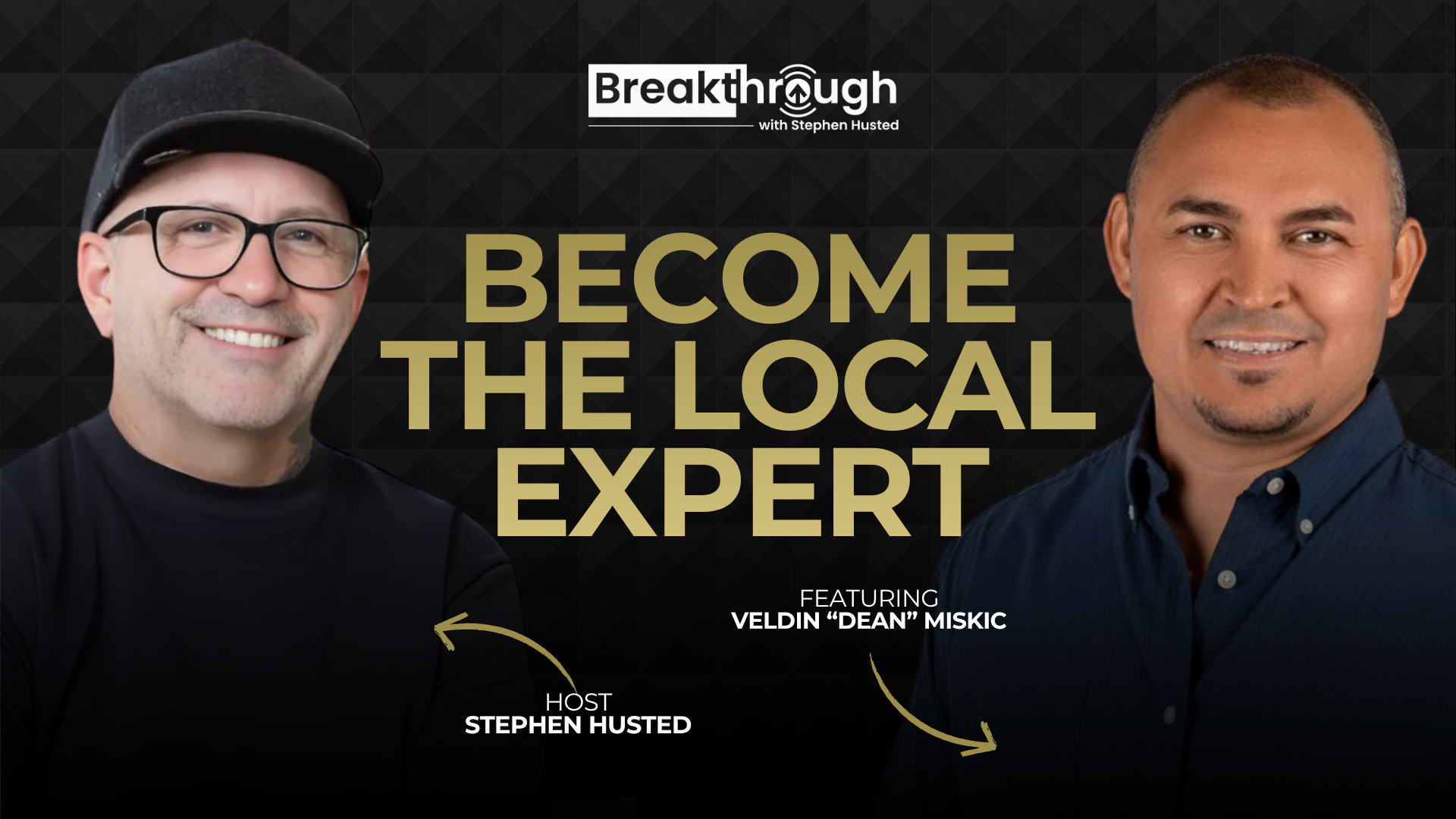
In this episode, I sit down with Veldin Miskic, a managing broker and top-producing real estate agent specializing in Cape Coral and Fort Myers, Florida. Veldin shares his journey from getting his real estate license in New York in 2015 with little mentorship to eventually moving to Southwest Florida and building a business around the Cape Coral market. Today, he's the managing broker at Pelican Vista Realty, which grew to 17 agents organically and reached the top 20 brokerages in Southwest Florida in less than a year. We talk about what makes Cape Coral such a unique market, including its canals, growing population, out-of-state buyers, second homeowners, short-term rentals, and new construction opportunities. Veldin also breaks down why he eventually stopped trying to cover such a large geographic area and focused almost entirely on Cape Coral, where 95% to 96% of his business now comes from. We also get into what separates a good agent from a great one. Veldin explains why putting the client's needs first, negotiating on their behalf, anticipating problems, and creating a smooth transaction are ultimately what create long-term trust and repeat business. For investors, we dive into Cape Coral's short-term rental market, new construction, rental demand, and the numbers buyers should understand before investing. We also discuss Florida's homeowner and flood insurance, including how costs can vary significantly depending on the property's location, age, and flood zone. If you're a real estate agent, investor, or someone interested in the Florida market, there's a lot to take away from this conversation.
Stephen and Veldin talked about:
00:00 How Stephen found Veldin using AI
03:48 Why Veldin believes hard work creates opportunity
05:17 Why Veldin moved to Cape Coral
12:25 Veldin's start in real estate and lack of mentorship
13:28 Why Veldin became a managing broker
15:38 What makes a truly valuable real estate agent
23:31 Investing in Cape Coral and short-term rentals
26:10 Why investors are looking at Cape Coral new construction
33:41 How Veldin uses YouTube to attract buyers
42:55 The truth about Florida homeowner and flood insurance
TRANSCRIPT
∎ Teaser / Highlighted Clip
00:00 Stephen Husted: I got my real estate license literally in the mail. And I remember the day I got my license and I was so excited that I got it. And in my head, I'm going, okay, I'm going to start making some real money. I literally went down to the mall, spent like $800 on clothes and a to me computer bag. Like I thought like, okay, I've made it. What was that pivot moment when you wanted to be, you wanted to become a broker? Because that's a big responsibility.
00:30 Veldin Miskic: I never wanted to be a broker, to be honest with you.
00:32 Stephen Husted: You just took it on. Okay, here we go.
00:35 Veldin Miskic: Yeah, I love being an agent. But at some point in time, I have two small kids. And I realized being an agent, I'm still working 50 hours a week or making really good money. And I really just have to take care of my clients and my needs. But as you have kids, you start taking on more responsibilities. And the big thing that you try to get back, that's the biggest value in life, is time. And so I started thinking about that more and more.
∎ Podcast Intro:
01:02 Stephen Husted: I'm Stephen Husted, and you're listening to The Breakthrough Podcast, a space designed for clarity, curiosity, and the stories that move us. Here, we step away from the noise and into the moments that define us. The early influences, the hidden struggles, and the breakthroughs that reshape our lives. From personal reinvention to building a life through real estate and entrepreneurship, these conversations remind us that success isn't a straight line. It's a series of honest decisions, brave actions, and small shifts that change everything. This is where those stories live. Let's begin.
∎ Guest Introduction:
01:41 Stephen Husted: Today's guest is Veldin Dean Miskic, a managing broker and top producing real estate agent based in Cape Coral, Florida. Dean started his real estate career in 2015 and after years of building his business, now runs Pelican Vista Realty, which has quickly grown into one of the top brokerages in Southwest Florida. He specializes in Cape Coral and Fort Myers, working with homeowners, investors, and out of state buyers looking to understand the local market. Dean shares what makes Cape Coral unique, from short-term rentals and new construction to insurance, hurricanes, and the opportunities he's seeing for investors. He's also passionate about putting people first, building strong relationships, and doing the work required to create lasting success. Tune in for an honest conversation about real estate, building a business around your strengths, and why, as Dean puts it, the harder the work, the luckier it gets. Let's get right into it.
∎ Podcast Proper:
02:40 Stephen Husted: Dean, how's it going?
02:42 Veldin Miskic: Hey, not too bad, Steven. How are you?
02:44 Stephen Husted: I'm doing good, man. Thank you for jumping on today and taking some time out to get on the podcast. I'm really interested to hear your backstory and talk about the market that you have been operating in because you seem like you have a pretty amazing story. But before we get going, I wanted to tell you something because I know you're a managing broker. Do you want to know how we found you?
03:09 Veldin Miskic: I do actually. Yeah. I mean, I think I'm going to, there's 1.3 agents in the U S how did I get so lucky?
03:17 Stephen Husted: Yeah. So this is crazy. We found you by using Claude. So what we did is we went into Claude and say, Hey, we are looking for investor friendly agents in. all the different states and we've been systematically finding investor friendly agents to bring on the podcast because we are getting ready to launch a cohort and we want to have a directory of agents that are working in markets that are investor friendly and so we're interviewing on top of contractors and handyman and all the different people investors we're now interviewing investor friendly agents and so We put for in Florida, investor-friendly agents, and your name came up.
04:07 Veldin Miskic: Awesome. Awesome. That's pretty amazing. And I am. I am an investor-friendly agent.
04:12 Stephen Husted: You are. Yeah. And then it pulled basically all the information that I have in front of me is from Claude.
04:23 Veldin Miskic: Yep. I love Claude, man. I love Claude. But the things we've been able to do with Claude and AI has been incredible. And we only started maybe experimenting and really looking into it 12 months ago. Yeah. But prior to that, I didn't do much, anything with AI. But I can see it makes you more efficient. It just makes things a little bit easier. And it helps you with business because people are finding you. And that's the whole idea, right?
04:45 Stephen Husted: It's crazy. And I think that the shift in how consumers are looking for vendors and people. They're kind of going away from going to Google and going straight into AI to asking these questions. And how it came about that we started doing this was I'm a developer out in Seattle. And so I went on to Claude and said, hey, I'm looking for investor friendly agents in Seattle, Washington. And it gave me that list. And I thought it was what was really interesting from the list. I was like, OK, why did it only pull three people? What are their backgrounds? And two of them really weren't very investor-friendly agents, to be honest. But the third had a very robust blog. And the blog was about how to build an ADU in Seattle. Everything about it, permits, how much it costs, all that thing. So it was very elaborate. And that's what it pulled the data from to give it to me. And I don't really think that those agents were very investor friendly, to be really honest. I had to kind of refine it a little bit. And then I did find an agent that was very investor friendly, had a YouTube channel, a meetup group. But it's definitely a big shift because it wrote everything. I know your origin story, the market, your business, the big picture, your famous quote. Would you agree? Yeah. Well, yeah, I do. I do. My assistant was telling me the quote as we were driving. I laughed. I was like, yeah, yeah, yeah. You got to put in hard work. It's hard to get lucky.
06:28 Veldin Miskic: You know what it is? Really, that quote, I've known that quote for years, but it didn't really resonate with me until I started working. When I started training agents and when I realized some agents were just expecting to be handed everything. I'm like, you got to put in the work. You got to put in. There's many years where I put in 60, 70, 80 hour weeks to make sure that the deal gets to the closing table or you make those calls. You do the follow ups on there. As a managing broker, I still do business myself. I'm still a top producing agent here in the area and I still train and manage the business. I'm kind of juggling four or five things in every given moment. But you just kind of get used to it and you learn to handle it over the years. But there's nothing easy about it. You got to put in the time and effort. And with the experience, it gets easier in time. But there's too many agents that they'll start off, they see it's a lifestyle that they want, but they're not willing to work for it. And I heard this, somebody said this years ago, it's like, it's hard being poor, but it's also hard being rich. Pick your battle.
07:26 Stephen Husted: Yeah. So I'd rather not. What hard do you want?
07:29 Veldin Miskic: Yeah. What hard do you work and what hard do you want? And I've been on both sides, both sides of it. I wasn't born into wealth by any means. I started from the ground up and we've had to rebuild a few times. But I feel very fortunate where I am in my life and where I am situated right now. I'm in Cape Coral, Florida. And a lot of people even know where that is, actually. But we're in southwest Florida. And when a lot of people say, where's that? I say Fort Myers. And they're immediately like, oh, OK, I know where Fort Myers is. Well, we're right across the bridge. We're actually bigger than Fort Myers. We have a bigger population, three times the population almost of Fort Myers. But we're not as known because it's more suburban. But we have over 420 miles of canals in Cape Coral, more canals in Venice, Italy, believe it or not. So it's a very interesting place to be living right now. And the crazy thing, Stephen, is I started coming down here in 2001 on vacation. We had some friends down here and we came down here on vacation. We loved it so much. And at the time there was less than a hundred thousand people living in the city. I think at the time it was like 80,000 or something. So, and we liked it so much. We started coming here year after year on vacation. Never in the middle of the years that I thought I was going to end up retiring or moving to the place that I ended up going on vacation at such a young age. And actually, so when I was, geez, I was only 30, 32 when I moved down here. and opened up the second office down here. And man, let's just knock on wood. It's been great.
08:59 Stephen Husted: What made you like it so much? Like what were the things that, because I travel a lot and I always, it's always that one game of, well, would I move here? Like, why would I move here? It's fun. It's interesting right now. And I like this and this, but what are the things I wouldn't like? I always come back going, I don't think I would leave California for this particular state. So what was it that you found that really? resonated with you with that you could pick up and then move there and then essentially be there for decades?
09:26 Veldin Miskic: It was just the feeling that you had when I came down here. You know, when you go on vacation, you have a different feeling. You're on vacation. You feel good. You feel rested on there. And I remember that feeling, come down here for two weeks at a time and go back home and I would be miserable. But what really always resonated with me was as soon as we got off the airport at Fort Myers Beach and the doors open to go outside. You felt that heat. You felt that humidity. And I love that. I hate the cold. I moved down here from New York. I just lived in New York for 20 years. And prior to that, every place that I lived had the four seasons. So I always liked the summer. And I remember telling my wife, it was like 2020. I was up in New York. I just remember telling, man, this is cold. I wish I could be my shorts all the time. And little did I know, like a week later, she calls me. She goes, I'm done with this cold. Let's go down to Florida.
10:19 Stephen Husted: You're like, yes.
10:21 Veldin Miskic: yeah because she's been down here before and i used to bring her down here as well and so but i could never get to commit to moving down here but she got sick and tired of the cold and it's a completely different lifestyle every morning i get up and it's simple i wear shorts and flip-flops and a shirt i probably got 50 of these polo shirts that i just put on it takes me two minutes to get dressed it's just so simple i got four different flip-flops and that's it yeah and i'm 50 minutes from my office It's just it's convenient. It's simple. It's a simpler life down here because you have the whole year. And then we're down here. I think certain people are just drawn to water. And we have so much water in Cape Coral. I mean, with the canals and the ocean being where everything's so close by that I think just being drawn to water. Some people have that personality. And I didn't realize that I was one of those people until I started coming down here on vacation.
11:12 Stephen Husted: Yeah. Well, it's interesting you bring up water. I think. water is a really good reflection point. I feel like every time that I've had really heavy things on my mind or just need to think, I feel like I gravitate towards the ocean. I feel like it kind of levels me out. So I can see that from what you're saying. Definitely.
11:36 Veldin Miskic: Yeah, it just puts you in a better mood just being around here. And I just don't like being cold. I just don't like being cold. I was up in New York for Thanksgiving and it was just miserable. And I remember I didn't see the sun the entire time I was up there for two weeks. It was just cloudy the whole time. And it just puts you in a mood. And when people talk about seasonal depression, it's a real thing. It really is a real thing. Down here, the majority of the people, believe it or not, that we service, that we take care of, are out-of-state buyers. And a third of the population down here is second homeowners. So they have these homes down there that they're just used as vacation homes. It's not their permanent home, but they like to be able to get away from wherever they are. But they can't leave that place for whatever reason. It could be family, could be business, could be job. Something's holding them back. But we've had actually a lot more people starting to come down here and then kind of make it their permanent home, especially with like the tax incentives that the state is trying to impose right now. That part is very... Attractive. I talk about my personal experiences all the time in comparison to New York when it comes to taxes and just the cost of living. I pay the same taxes down here on a property that's worth four times as much as it was in New York. That's a big difference. Wow. That's a big difference. And I have more value in my property down here. So one of the things that's guaranteed in life is death and taxes, right? So you're going to keep paying those taxes no matter what, but to be able to have a nicer property in a nicer area and have more value in the property, but still not have to pay those high taxes. That was a big thing for me. But like you asked me earlier, what was it about Cape Coral? But it's really the unique city. We're like perfectly positioned. really don't have our own beach. We have a small little beach on there. So if you wanted to go, it's like actually from my office, it's five minutes. I can go to the beach and be right there. But we have Fort Myers beach here. We have Captiva Island. We have Pine Island. We have Sanibel Island. Everything's kind of surrounded around Cape Coral, but there's just a lot to do. And it's over the years have become extremely family friendly. So we have this really extravagant parks all throughout Cape Coral, these beautiful parks that we always take the kids to. We're two and a half hours from Orlando. I was just in West Palm Beach visiting my sister. That was a two and a half hour drive. So everything is kind of close by, but it's just right now we are in a population of 230,000 people. And so that's grown exponentially over the last 26 years. That says a lot. It says a lot, but the crazy thing about it is if you look, actually, if you Google Cape Coral and you look at the aerial view of the way the city is structured, it's like a perfect grid. The way it was designed was actually, I'm pretty impressed by the way the city was designed. People joke saying you really need a GPS to get around the city. They're not wrong because there's so many dead ends.
14:26 Stephen Husted: Oh, really? That's interesting. Yeah. There's
14:29 Veldin Miskic: a lot of that. And there's a lot of like just U-turns that you have to make. But it's nice because for people that want privacy, that's a great thing. You don't get random traffic coming to you. So people really pay attention. And everything is structured. So it's north, south, east, or west. And so you can easily actually navigate your way anywhere you want without a GPS. But it does make it a lot easier when you just have that console on your car that you can look at as you're driving. You can see, hey, I probably shouldn't turn here. Otherwise, it's just going to take me back around.
14:58 Stephen Husted: That's interesting. Were you in real estate? Were you in real estate in New York? I was. You were? Okay.
15:05 Veldin Miskic: Yeah, I started in 2015. I got my license. And like most agents for the first couple of years, unless you have a good mentorship, it's tough. And I did not have any mentorship at the beginning. I was just kind of just trying to stay afloat, trying to figure out how to put a deal together. And I thought if I joined one of the biggest brokerages locally that I would get the most support, I would be successful like the other agents. Well, that wasn't the case. There was barely any support. There was training once a month, and the training was half-assed, to put it nicely. But everything happens for a reason. I use all my experiences to implement procedures that we put into place, like at our company now. I am the managing broker right now at Pelican Vista Realty. We just started less than a year ago, and we're already in the top 20 as far as brokerages go in Southwest Florida. And we've grown to 17 agents organically. So it's a good... feeling just being able to grow like that. And it just doesn't feel like it's forced.
16:02 Stephen Husted: What was that pivot moment when you wanted to become a broker? Because that's a big responsibility.
16:08 Veldin Miskic: I never wanted to be a broker, to be honest with you.
16:11 Stephen Husted: You just took it on. Okay, here we go.
16:13 Veldin Miskic: Yeah, I love being an agent. But at some point in time, I have two small kids. And I realized being an agent, I'm still working 50 hours a week or making really good money. And I really just have to take care of my clients and my needs. But as you have kids, you start taking on more responsibilities. And the big thing that you try to get back, that's the biggest value in life, is time. And so I started thinking about that more and more. It's like, how can I get more of my time back? I think every agent after doing this for 10 years starts to burn out. Putting in those 50, 60 hours a week, even though it doesn't feel like work, for me, I never really tracked the time. I haven't tracked how much I worked in years. I have no clue how much I worked, to be honest with you. Yeah, we're never off.
16:59 Stephen Husted: You're never off. We're never off until you go to bed.
17:02 Veldin Miskic: Exactly. It's a lifestyle job. So, you know, any given day, I can do whatever I want, really. Unless I have appointments to pre-schedule something like that or meetings like that. But, like, nobody forces you to wake up and clock in and clock out, right? You kind of make that decision. And for me... I can't wait to wake up so I can get started into my business. I look forward to it. It's exciting to me. And now it's just, I feel like as you grow as a person, you kind of reach different levels. And at some point, I got to the point where I was like, I need to figure out how to get more time back so I can spend more time with my family. And also, I want to be able to train agents on the same level as I'm performing. And being able to do that and seeing other agents feed their families and having that success, that in itself is priceless. It's a great feeling. So I feel very fortunate that I've been able to do that over the years. I've taken on agents and I've helped them train them. And I say this to the agents, look, I'm going to teach you the right way to do business. And I mean that because there's so many agents that have been doing this for so long and they're doing it the wrong way. They just don't understand the business, even though they've been doing for 20, 25 years. I'm like, how did you last so long? And you just kind of realize there's certain things that work, certain things that don't work. And there's a reason why my clients are drawn to me. The reason why I get so much repeat business. The reason why agents are drawn to me is because I do business the right way. And that way is through cooperation. People think that this business is about competition and it's really not. I think there's a surplus of this business. It's out there. There's as much business as you want. It's just a matter of you picking up the call and talking to people and not focusing on obviously the property or the price, but focusing on the people's needs. That's such a big one.
18:45 Stephen Husted: That's a big part right there, Dean. I hear you. I hear you. Like if you could put people first and just find out. what that problem is that you need to help them solve. Because sometimes they can get stuck on a scenario. I'll give you a good example. I've had a lot of sellers recently that needed to move. Maybe they had a divorce or whatever the case may be, job transfer. And their houses, they had a lot of stuff. And I don't think they understood how to take it on and how to get everything done. And I would always say to them, I go, look, you're going to move. What do you need? Why don't you pack up? what you need, and then leave anything else exactly where it's at. Go through your whole house, take everything you need, but then leave everything else. They're like, leave it right where it's at. I'm like, exactly where it's at. And that little mind shift of solving this problem, like I'm overwhelmed with all this stuff. That gets them into gear to go, okay, this is really what I need. And I don't need any of this rest of this stuff. And then it's like, okay. And they leave and the house is messy. And then it gets emptied out and they're like, oh my gosh. Yeah. Just that one little thing. Like it's just problem solving for people, helping them really getting to that core. Because yes, selling it, money, all that, you know, yes, that's important too. But it's kind of secondary to really what they're trying to, what are their goals?
20:07 Veldin Miskic: It's not everybody's motivation. I've realized that over the years. Money is not everybody's motivation. Obviously, my goal is always try to give my clients the most amount of money that I can if I'm selling their properties. And if I'm working with the buyers, I always want to try to save them as much money as I can. That becomes like a personal challenge to me. It's like, hey, I know you're willing to spend this much, but listen, let's see if we can try this route first. If I can save you an extra 10, 15 grand, would you be happy with that? Oh, absolutely. Okay, great. Let's try this route. And they'll listen to me. They trust me. And obviously, I always ask the question. I was like, look, I don't want to make this recommendation or go this route unless you're prepared to potentially lose this property over $10,000, $15,000, $20,000. Like, okay, yeah, I'm prepared. You have that discussion with them ahead of time so they understand that you are trying your best to look out for their best interest, even if it means saving a couple thousand dollars. Because in the end, that's what a true value is of a good agent. But yes, you can open doors. But can you also negotiate a good deal for them? And all too often do I hear, hey, I had this closing with this agent and how'd it go? Oh, we had some hiccups on there, but I'm very happy with the agent. It's great to hear. But it's the times where everything goes really smooth and they get to the closing table, like how'd it go? Everything was super smooth. Are you happy with agent? I am. Although I don't think like my agent earned the commission. Why do you say that? Well, everything was so smooth. Well, don't you think that's why the agent earned the commission? Don't you think they put out fires before they even happened? Don't you think an experienced agent will give you a smooth process? Isn't that the whole idea? And so that's the idea behind having an experienced agent. Somebody understands the process and can think three steps ahead. So that way, before you even think you're going to have this issue, it's already resolved. And that just comes with experience.
21:56 Stephen Husted: Yeah. And two, there is some truth behind that. There's some transactions that just go really smooth. I mean, but here I can compare it to we had to hire an attorney at one point and it went really smooth. We didn't need him that much. And he earned a lot of money. Was it super complicated? No. Very similar thing, but we got him for peace of mind and help us execute on what we need to do. And some transactions can be really smooth, but some, they can get complicated. And that's when the experience, you really do need somebody good in your corner.
22:29 Veldin Miskic: Yeah, I've had situations where I am stressing at my end, but my client has no idea that this deal is literally about to fall apart. And I'm trying to hold it together any way I can without freaking them out. And then we'll figure it out and we'll get to the closing. They'll have no idea that none of this happened. They just realized, man, that was a really smooth transaction. Then I'll tell me, by the way, in the third week, this is what happened with the buyers. This is why this almost fell apart. Like, what? Why didn't you tell me? What's the point of telling you or stressing you out over something you have no control
23:03 Stephen Husted: over? Yeah. For another two weeks of an escrow.
23:06 Veldin Miskic: Exactly. Exactly. So we take on that burden, that stress, but it's all part of the job. And sometimes we don't know. We get into a relationship with the sellers or buyers we're working with. And sometimes it lasts a month. And I've had some buyers and some sellers I've been working with two years. Either the property isn't selling or they just can't find what they're looking for. But you don't give up on them. That's the value also in the relationship you have with your agent. They're not going to give up on you because you can't find the right property or because you're becoming a little picky. Everybody has their own needs and wants, and you just got to be flexible to their needs.
23:42 Stephen Husted: Yeah, and at some point, it starts to turn into a little bit of a game. It does. You know what I'm talking about, Dean? Because you're putting that like you get this, you get it. You initially meet a buyer or seller and you're kind of putting the puzzle together. But then you're already kind of like projecting out like how you could see things going and how can I find this? And they told me all this information about where they want to be. But I think maybe this would work for them. And, you know, I mean, like it's an interesting business to be in. Let's just say that.
24:13 Veldin Miskic: So buyers always change their minds. They'll tell you one thing. And I always teach this to the agents, like, listen, whatever your buyer is telling you, write that down, set up that criteria for them, set them these properties. But always take it with a grain of salt. And this is what I mean. I've had a situation where years ago, this is just one example. I got many. A buyer tells me exactly what they want. Okay. The specific area that they want, features, details, price, everything. Great. We can't really find what they want. A couple months searching, I don't have much available. This was up in New York. There's not a lot of inventory. Whatever comes on the market is gone in a day with multiple offers. So it became difficult. So I go show this property to a client and they didn't like this property. I'm looking at this home. I'm like, man, my other client would really like this property. So I made a call. I said, hey, listen, I'm at this home right now and I think you guys would really like it. They're like, really? Why so? So I tell them why. Like, okay, send us the address. So I sent them the address. They're looking at the pictures. I was like, listen, I'm still here. Any chance you guys can come meet me here? They're like, yeah, you know what? We'll be there in 30 minutes. This is the middle of winter, by the way. I'm freezing. The house, nobody's living there. They're turning everything off. It was like 66 degrees in the house. It was cold. And they get to the property. They're like, Dean, this is not even the neighborhood we want to be. I know that. But I thought of you guys, I think you might like this house. They go in there, they're looking at the house, looking at the features to come back out there and look at the neighborhood. We ended up even walking the area. We ended up putting an offer that night, went on the contract the following day, and it closed on. So you always got to keep your clients in mind, even when you're looking at other properties. If one doesn't like it, another will potentially like it. But our job also is to keep an open mind for our client's sake. Try to find them something that, you know. that they might like. And you get to know them by working with them longer
26:02 Stephen Husted: and longer. Do you, over this, your career in real estate, are you now actively working with investors that are looking to invest in your local area?
26:11 Veldin Miskic: Absolutely. We do a lot of that, actually. Whether people are looking to invest for passive income in resale properties, multifamily homes, single homes. Big thing down here, single family homes for short-term rentals. We have a lot of people that they come down here and let's say they'll stay down here for a month at a short-term rental and they'll pay like $8,000 to $10,000 for that month for this house underwater. And they'll do that for a couple of years and they realize, wait a second, with the money I put down every month, every time I come down on vacation, that could have been a down payment on
26:43 Stephen Husted: a house that
26:44 Veldin Miskic: I could own. and then do the same exact thing and have somebody professionally managed for me. So it's a big business down here in Cape Coral. We have a lot of short-term rentals. If you go on Verbo and Airbnb, you can see a lot of different options and you have these beautiful homes you can rent right on the water. So hotels in Cape Coral, they don't do so well because of the Airbnb business with the condos and single family homes. But that's a great business for an investor who likes to be able to have a vacation home. Who doesn't mind renting the property out short term to people and be able to essentially make some income off of that and then still have a property that you can come down to anytime you want. Just book ahead of time.
27:23 Stephen Husted: How are the regulations? Actually, they're very
27:25 Veldin Miskic: loose down here. It's on single family homes. It's seven day rentals minimum. So you can rent it out 52 days, 52 times a year if you want.
27:34 Stephen Husted: Okay, that's good.
27:36 Veldin Miskic: Yeah. Condos, it's a little bit more difficult because most condos are in HOAs and HOAs have their own restrictions. The best condos I've found were like 12-month rentals were allowed for the year. And so even that becomes a little bit more difficult with short-term rentals if you're trying to do weekly or two weeks at a time. So you really then have to kind of re-strategize and maybe focus more on monthly or two-month rentals instead, which is not a bad strategy either because there's less turnover, but you make more money on the shorter-term rentals.
28:04 Stephen Husted: And you get that snowbird people that come in to Florida from colder areas that want to spend six months and they just want to fully furnish rental for like six months, right?
28:15 Veldin Miskic: Yeah. You got a lot of that. I got a friend that I've known for years and older guy. And before I even moved down here, he was coming to Fort Myers every year to come down here on vacation. And I was like, they always stay a different place. And he was telling me he pays between five, $7,000 per month. to come down here and stay at a place that's fully furnished. And he's like, I will never stay at a hotel because you get a whole place to yourself. A lot of these places have a pool already and they're close by to everything. And he's 15, 15, 20 minutes to the beach. So it's just easier that way. And the other investment opportunity down here in Cape has been in new construction. We've had a lot of people from different parts of Florida actually moving to Cape Coral, especially from like Miami, because it's just a lot more affordable. The dollar goes further down here. But we have a lot of investors and builders that are buying land down here. And then they're building these beautiful new construction homes. So we have like as of right now in Cape Coral, we have about 2,400 single family homes in the market, which is roughly about four months worth of inventory. And out of those 2,400 homes, I want to say there's probably about. 450 to 500 new construction homes. So that's a lot of options to choose from when it comes to new construction. Where I came from in New York, I was in central New York in a Syracuse area. You barely have any new construction options. So people are still spending $300,000, $400,000, $300,000 to $400,000 on homes that are 100 years old. Versus you come down here, you can buy a brand new house on a freshwater canal. Like I have this incredible listing right now. I just listed it last week. $699, right on the water. It's a brand new house. Three bedrooms with a den, three full bathrooms, two-car garage, 2,100 square feet, pool house, outdoor grill station. So people start realizing, wait a second, you're telling me that for $700,000, you can get a brand new house on the water. in Cape Coral. But if you're comparing it to like to Sarasota, Miami, there's really no comparison. The costs are so much more significant in those areas. So it's really getting a lot of attention from investors, from first time home buyers. And it's really shifted also our population because prior to 2020, Our average price point down here was closer to $200,000. Now it's closer to $400,000. But where I do most of the business down here is in the $800,000 price point and that we have a lot of luxury homes down here as well on the water. And we're known for boating. So if you enjoy boating, you can buy a house on the water, put your boat right in your backyard. And depending how far you're from the water, I have a luxury listing right now. It's a new construction home on the water. It's on a 350-foot wide canal. But you could put your boat right in the backyard, take it out to the open water. It does take about an hour to get out to the open water, but it's right from your backyard. So just the drive to the open water itself, you're passing by million-dollar homes, luxury homes in the water. The drive itself is just exciting and fun. And you can do fishing right there in those canals. You've got incredible fishing. So that's kind of what's making this area unique. Have you always been an agent in California yourself? Yes.
31:24 Stephen Husted: Yeah. Okay. Since 2008. 2008. Okay. Yeah.
31:30 Veldin Miskic: I don't know the history behind California, but you know what happened in 2008 in Florida, right?
31:35 Stephen Husted: Yeah. Yes. Yeah.
31:40 Veldin Miskic: That didn't happen in California, did it?
31:43 Stephen Husted: Oh, you mean all the short sales and the foreclosures? Yeah. Oh yeah. We're neck and neck with Florida. on that scenario okay oh yeah i guess i've never
31:52 Veldin Miskic: asked anybody and i looked into it myself but i didn't realize california was hit with that too
31:57 Stephen Husted: absolutely so i got my real estate license literally in the mail and i remember the day i got my license and i was so excited that i got it and in my head i'm going okay i'm gonna start making some real money i literally went down to the mall spent like 800 on clothes and a to me computer bag like i thought like okay i've made it and i walked in i talked to a brokerage that was like a mom and pop that did mortgages and real estate and okay i'll never forget that day i walked in and i was so excited and i could look all the way back to my broker's office and he had glass there it was kind of when i can see these two ladies in there and like he's throwing paper up in the air. And back then, with the lenders, they would bring people in there and pass out documents and talk about different loan programs, stated income, no money down, just all the stuff that was going on that essentially at some point collapsed the market. And I walked in there and he's like, if you got any loans, you better get those things in underwriting and we got to get them closed. And then it was like Bear Stearns. And I'm like, what is going on? I have no clue. I came from an artistic background of being a hairdresser and a DJ. And I'm here getting into real estate and they're talking about Bear Steering. I'm like, I just got my license. I'm about to make a bunch of money. Boy, was I prepared for it. The awakening came. I think that year I made three grand. And then after that following year, all I did. for and from that point on until 2013 i would say 2014 was short sales and foreclosures that was it wow that was it and there was nothing short about a short sale yeah you would spend 10 months doing a short sale and then at the end the bank would you'd be getting ready to close on in the bank would then give the approval and the terms of the commission and it'd be like you're gonna get one percent you're like what I was like, okay, I just spent 10 months on this. Or you have to give your commission back to make the deal because they wanted a net. They would come back. If it was Chase, they'd say, yeah, we'll prove this short sale, but we want to net this. And then you're looking at the net going, oh my gosh, well, we're going to have to put in money. So both agents are putting in their commission. It was, yeah. So yes, we went through. So I went on a tangent on that, but you just triggered me from what was going on back then. It was crazy, but Florida was pretty bad. Yeah, you know,
34:43 Veldin Miskic: I wasn't licensed then, but actually my parents took advantage of the opportunity and they bought a condo and a house down here for like next to nothing. A few years later, when the market improved, they ended up selling it for like four times what they bought it for. So it was definitely at the low. But yeah, it's interesting times, but you learn from it. It's funny, people still bring that up today. They're like, oh, it's going to happen again. I was like, what's going to happen again? Oh, the 2008 crash. Do you even understand what happened in 2008? You have to explain it to them. So they realize like right now to get a mortgage, my God, they want your firstborn's blood. It's so difficult. It's not impossible, but the guidelines they have in place is meant to protect people from that happening again. It's a good thing. It makes it more difficult for people to get mortgages. I know for every single deal that I have that's being financed, my buyer calls me and says, hey, they've asked me for the same thing three times. That's fine. Give it to them.
35:37 Stephen Husted: That's the process.
35:39 Veldin Miskic: They're verifying everything three times. They're making sure all these things. Don't be surprised if they call your employer a day before closing. Make sure that you're still employed. I don't know if you remember after COVID, it was so difficult to get a mortgage. But things are getting better. The market down here has been better. We had some setbacks back four years ago. We got hit head on with a hurricane. That kind of set us back a few years. But if you drive to the city right now, it's better than ever. You would never know that we had this hurricane. Actually, if you look at the pros from it, almost every house has a new roof now. So we don't have issues with insurance companies not approving a loan or bankers or approving a loan because of old roof. Pretty much everybody has a new roof as a result of the hurricane. So it's a good thing. But Stephen, I got to ask, I'm pretty busy with clients and the agency taking care of this. I find it. tough to even find time to do these podcasts, but I do enjoy them. I do them once a quarter. How do you find time to do this?
36:34 Stephen Husted: So when I first started, I enjoy talking to people. And so that part of it was like, okay, I'm going to start a podcast. And then the very beginning there, it, it seemed like there was a lot of different steps and it did take some time to get it all up and running. But now with technology, like using Riverside, We can literally get off this podcast, download this, and I could have it up and edited with a thumbnail in under an hour and posted to YouTube if I really wanted to do it that way. At the end of this, when we finish this, Riverside will pull up magic clips where it'll have the captions. It will tell me which part of this episode had the best talking points, and I could post that instantly. I think technology has made it so these types of doing podcasts and just content in general, it's just faster to do. I think that the only thing for somebody who's starting off new, all you have to do is really get Riverside, get a decent light, a decent microphone, and find your guests. I spend one hour a week on my podcast. Oh, really? One. One hour. All right. one hour a week on my podcast sometimes two depending if i had the guest but all i do is sit down interview do the episode and then i do have a team behind me i have a lady that's in the philippines that takes care of the podcast and getting edited and putting it on all the platforms but if i really wanted to do it just on my own it's so much faster these days it's incredible i mean it just yeah i get a lot of messages on like instagram or stuff like oh i want to start one but this and that i'm like my camera broke my professional camera i had a camcorder and then i had a camera they broke i'm using just my camera and my laptop right now today oh this is it i do have a nice light and i do have this might the sure microphone but it takes me two minutes to set this up we jump on a conversation We end it and it's off my plate. And then I move on to the other part of my day.
38:43 Veldin Miskic: Yeah. I enjoy talking to people as well. I think about a podcast as well. So we'll see. Maybe the future holds a podcast for me as well.
38:51 Stephen Husted: Yeah. I think that the bigger part is figuring out what you want to do with that podcast. Like what is your goal? Are you trying to get more business for the brokerage? Are you looking for more buyers or sell? Like you got to figure out that goal. The interesting thing, using AI now, all you have to do is put in all your information like, hey, I'm a brokerage. Here's my backstory. I'm going to give you all this. You can use Whisperflow and voice memo into Claude. Hey, I want to start a podcast. I have a brokerage. This is what I'm doing. Here's the markets I serve. Here's my background. I got a family and kids. I like to go to the beach. I play pickleball, whatever. And then let it build content. that maybe you can add these talking points when you do your podcast. So now you have kind of a framework. Like mine is the breakthrough. Well, it's people having breakthroughs when becoming an investor and their journey of becoming an investor, the highs and lows. And I've anchored that from my origin story. Because like, yes, I got my license in 2008, but I also got clean and sober in 2005. So I lost everything in 2005. had to build up. Then I got into 2008 and that was another crash. So I anchor it from that backstory and you could do the same. So yeah, you should give it a try. And it doesn't cost much. That's another thing. It's not expensive to start a podcast. I mean, if you go, yes, if you're going to go high level and you're paying guests and your job is to be a podcaster, well, yeah, there's going to be a whole team. cameras and light and there could be more but if you're just people like raw authentic talking i
40:31 Veldin Miskic: think that's they do and actually i started i've had a youtube channel called living in cape coral started four years ago And I probably dedicate about an hour a week to that video, to that channel. And I just kind of do property tours, talking about the area developments and up and coming things. And you'd be surprised how well it works. I mean, I don't get that many views. Some videos get a couple thousand views, others a couple hundred, but. The people that do watch it are like religiously watching it. I've had people come to me like, yeah, I've been watching your videos for a year and I'm ready to buy something. I was like, okay, great. Like we want you to represent me. Oh, great. Even better. But I had one client.
41:11 Stephen Husted: Isn't that cool when it sounds like that? You're like, wow.
41:14 Veldin Miskic: I had one lady a few years back. She calls me from Hawaii and she goes, I've been watching your videos. I love you videos. And she goes, I'm thinking about moving to Cape Coral. I was like, you're in Hawaii? She goes, yeah. I was like, it should be the other way around. People go from Florida to Hawaii, not from Hawaii to Florida. And she goes, no, it's too expensive over here. And it's just, I just want to be in Florida with where my family is. I was like, okay. And she came down here like a month later, we met up and we ended up doing a, she had to buy a new construction home and she loves it down here. But it's funny how people find you on that, but it's just a matter of putting yourself out there. And so the video works for me on there. Maybe podcast is next. So we'll see.
41:53 Stephen Husted: Yeah, that's good. That's cool. And so when you put out these videos, what are you showcasing? Like locations, things to do in Cape Coral? Is that what you're doing?
42:02 Veldin Miskic: Mostly houses.
42:04 Stephen Husted: Mostly just houses. Okay.
42:06 Veldin Miskic: Yeah, mostly just the listings that I have. I'll talk about the houses, but I'll do like full video tours. They'll be like 15, 20 minutes long. So it's not for somebody who wants a quick video. It's somebody actually, and I learned a statistic a few years back that really got to me. And that's why I kind of keep doing these videos on the YouTube. It said that the average out-of-state buyer, 73% of those out-of-state buyers are doing their research on YouTube. They want to know about the area. They're sort of watching all these agents that are producing these agent videos talking about the area. And then they want to know about the houses and the different options on there. So when I'm talking about these houses, I also mention different areas, what's going on in the areas, what's close by. And so I'll give them as much information as I can. And typically when they're ready, they call me. You know, and then if it's the first time coming down here, big thing is I just want people to be comfortable about where they're thinking about moving. So I really spend a lot of time with them and educating them on the area and show them all the different parts and what's to do. There's just, there's so many pros down here to the area. The biggest, our biggest con is the heat in the summer and not everybody enjoys it, but it's probably 90 degrees out there right now, but it's also July, mid-July, but I'm inside. You're going from AC to AC. If I really want to be outside, this is the time of the year to be in the pool because then you're not high. You're just very comfortable and you don't need a pool heater either. But other than that, people are still coming down here all year long. But going back to your investment question real quick, we have on and off season down here. So like the short term rentals, people that have them down here, this is now the off season. So it's slower down here. And those rentals get typically rented off for half the cost. during this year versus during the on season which is usually when the snowbirds come down here and the on season is typically from november through april so that's when we have a lot more tourists down here it's not as hot but i tell you man i enjoy the summers down here more than i do the winters i don't mind the humidity i don't mind the heat plus i set up spending more time in the beach or in the pool because you want to stay high cool and that's what the water is for right but i actually enjoy the summers down here more
44:16 Stephen Husted: So I just got back from Grand Caymans and it seemed like it was pretty hot. It was kind of muggy. Definitely felt like I was like sweating a lot when I was there. I'm like, I don't know. But, you know, we spent time at the beach, but it was a little uncomfortable. I would imagine probably the same type of vibe as in Florida for
44:36 Veldin Miskic: the time period. Probably about the same. Although this year, I'm kind of noticing the heat, not just in Florida, but like all over the world has been. Really hot. And I just keep thinking, man, we are so grateful to have AC. There's places all over Europe like they don't even have AC. Imagine.
44:54 Stephen Husted: Did you just learn about the AC in Europe? Because for some reason it's all over social media right now. Because people are coming over the World Cup.
45:03 Veldin Miskic: Yeah, you know, I think I always know about it, but I just don't think about it until you see it somewhere. It's like, wait a second, they don't have AC. But you just feel spoiled. I really do feel spoiled down here because I didn't come from a lot. And having what I have right now and being where I am, I just feel very grateful for that. And it's a good time to be alive.
45:23 Stephen Husted: That's good. I got a question for you when you're speaking about the whole hurricane scenario. What's the homeowner insurance like? How is it? Is it complicated? Is it expensive to get?
45:36 Veldin Miskic: No. So that's the most common questions I actually get from people who are considering the Florida area. Because there's so much false news or false information all over social media. And those are the people that are trying to get clickbait. They'll post something on it just to get your attention to click on it. But if you want the truth, for example, I just closed on our new construction home down here in Cape Coral. The home insurance on that came back at $1,500 for the year because this house is in a flood zone and about 40% of Cape Coral is in a flood zone. All of Florida should be in a flood zone technically, but it's not. So there's different areas that are in flood zones. Doesn't mean the house has flooded. Just means that FEMA classifies a flood zone. So if you're financing it, you got to, you got your required flood insurance. The flood insurance on that house was $750. Okay. Now I just did another deal on Friday. It was also a new construction home. It was probably a mile away from that house. It was a little bit closer to the water. That flood insurance was $2,400 for the year. The home insurance was $1,600. I have a house right now that I have listed in Fort Myers. It's literally 300 feet away from the river. The house, it was built in 1993. So it's a little bit older house. And in the entire time it's been there, it's only been flooded one time. And that was during Hurricane Ian. You got about six inches of water in there. They had flood insurance. They replaced everything. Everything's fixed up. But the homeowner decided to give her the flood insurance.
47:04 Stephen Husted: So now she
47:06 Veldin Miskic: was only paying less than $1,000 a year for flood insurance. So the nice thing about that is if somebody already has flood insurance. Okay. And they have a good rate. The new homeowner can actually assume that policy at the same rate. I mean, grandfather did. But because they canceled their policy two years ago, now anybody that's looking to get flood insurance, the best quote I got was for 6,600. So that's on the high end. That's on the high end. And that's going to happen on any property that's older and that's closer to the water. Okay. Now, if you're looking at a property built after like 1990, anywhere in Cape Coral, most of those homes are much more elevated on there. And if it's not close to the water, meaning it's at least a mile away from the water, your insurance is going to be fairly inexpensive. Like I'll give you an example. I actually live in a flood zone myself and I'm like a mile away from the water. But when my house was built 22 years ago, they elevated it pretty high. So I don't even have to carry flood insurance. And the insurance on my house is, mind you, I don't pay flood insurance. It's an older house. It's a big house. I pay like $4,000 a year for the insurance. And that's on the high end. That's not bad. And I got a lot of extras in that insurance for extra protection because one of the things we found out after Hurricane Ian is there was a lot of flood policies or not flood policies, just home insurance policies that did not cover the lanai enclosure. And the lanai enclosure is that enclosure that's around the pool. in your backyard and a lot of homes down you have it i'd say probably about half the homes in cape coral that have a pool they have a lanai enclosure actually more than that and it just prevents mosquitoes from coming inside and the little those little bugs that you can't see they're called noseeums And they can't come inside and bother you. My wife hates those. Yeah. And they don't usually bother you unless you're like out at past eight o'clock at night. That's where you can really feel them bothering you on there. So if you have the screen enclosure, that helps with that. But there was a lot of home insurance policies that did not cover the Lanai enclosure. And because of the high winds we had from Hurricane Ian, a lot of those got destroyed. They were like bent and insurance didn't cover it. So I made sure that I have it on my policy. I make sure that all my customers, my clients, when they buy a property, make sure that you add that to your policy. That way you don't run into that problem if there's a, God forbid, we get
49:22 Stephen Husted: hit by another hurricane. That's good information right there. Yeah. Yeah. You've been on the ground, so you've seen firsthand what can happen. So it's good to have it. I have. I have. That was
49:32 Veldin Miskic: the first hurricane I experienced then. Yeah, it was kind of scary. But you know what I realized is you pick your battles. When I lived in New York, we dealt with blizzards. We dealt with the cold for months on end, right? And you knew that was coming every single year. And you still stuck around. California, you got earthquakes. Hawaii, you got volcanoes. Everywhere you go, you got your battles. Pick your battle, right? For me, my battle is the hurricanes. Whether or not they're coming, we don't know. But when they do come, you're giving enough notice so you can vacate. Do what you need to do to get out of there. Plus, all the houses down here, they're built to sustain these hurricanes and these winds and everything like that. 98% of homes in Cape Coral are concrete block. They're not wood frame, but concrete block. They have hurricane shutters. They have impact windows. So you don't really have to do anything. The house that I live in right now was... Yeah. So, but if you are scared, you know, the hurricane's coming. The last hurricane we had was two years ago. I wasn't going to go anywhere. My house was secured. I was going to stick around. But my father insisted that we go on the East Coast to my sisters in West Palm. So we did. We didn't even lose power, nothing. There was, the hurricane hit us, but it was a low hurricane on there. I think I was missing two panels from my, from my fence. And I was able to put it right back in without any damage. But there was no issues.
50:48 Stephen Husted: Have you been at your, have you stayed through a hurricane at your house?
50:52 Veldin Miskic: Yeah. So actually I was here during Hurricane Ian and I was living in Northeast Cape Coral. And I, at the time I had a two story house. So I was like, I'm not going anywhere. I'm not in a flood zone. I'm not worried about any of that. And we had no flooding. It was just heavy winds. I came out, I remember during the hurricane, like it was the eye of the storm and it's super quiet. I go out there and I see. A bunch of trees down, no flooding anywhere. We lost power and water. It was back within 24 hours, believe it or not. Certain parts of Cape Coral were out for almost two weeks, actually. But it's crazy how quickly they get everything back up and running. It was insane the amount of damage that was done. I remember driving the day after and seeing all this. garbage on front yards and stuff like that. And then trying to sell those homes with 10 feet of garbage up front from the damage. And I remember within six months, you're driving through Cape Coral and you wouldn't know that anything ever happened. It was crazy how quickly they rebuilt the city. So that really impressed me. But I guess that's, they're prepared for stuff like that.
51:57 Stephen Husted: Yeah, it's just something they know. And so they have that, they have systems in place that how to handle it all.
52:03 Veldin Miskic: They sure do. They really do. So it hasn't really scared me. It just made me more aware and just prepare for the worst. That's all you can do.
52:11 Stephen Husted: Yeah, that's cool. Well, I'm super happy that I was able to get you on and I'm glad that Claude recommended you, which is pretty crazy if you think about it.
52:22 Veldin Miskic: Likewise, man. Likewise. I'm glad that you're having me on here.
52:25 Stephen Husted: Yeah. So I'm going to keep you in my directory for anyone who's looking to buy where you're at. Especially everybody has these little micro markets. And especially if you kind of been there for so long, like, you know, the ins and outs of that whole area. How far do you go, by the way? Like, what is your whole focus point?
52:45 Veldin Miskic: So typically just Cape Coral and Fort Myers. I've been kind of specialized in those two areas on there. But when I first came down here, I was going from Punta Gorda all the way down to Marco Island, which is a pretty good stretch. You do what you need to do to survive, right? And then I realized after the first year, I was like, man, Cape Coral has so many opportunities and there's so much demand for. So I just kind of started just focusing on Cape Coral. And over the last six years, 95, 96% of my business has just been in Cape Coral. So I kind of tailored the... my YouTube channel to an area where I kind of know the most about, the most comfortable about. So there isn't a single house, I don't know, that's on the market. You just kind of, you have your finger on the pulse. And so you know what's going on. And it becomes just more interesting that way too. And it becomes, your life becomes a little bit easier when you could just focus on one area instead of having to spend two, three hours driving every day down to Naples and back to Shore House. So I have agents down in Naples for that now. So if somebody wants to go to Naples, I'll just call an agent and say, hey, I got a client. for you please take on this client you're buying back your time absolutely and that's the ultimate goalier
53:47 Stephen Husted: yeah what is that famous quote you have tell me your famous quote because my assistant told me the way
53:52 Veldin Miskic: yeah the art of work the luckier again i
53:55 Stephen Husted: thought that was a good one when she told me that i was like okay i like dean that makes a lot of sense that's that's how that's my motto i don't know about getting lucky well great dean will you have a good rest of the day enjoy the weather and we'll talk again another time
54:12 Veldin Miskic: Sounds good. Thank you.
∎ Podcast Outro:
54:14 Stephen Husted: Thanks, Dean. Thank you for tuning into our show where we hope you found inspiration and gained valuable insights. If you enjoyed this conversation and want to stay updated on our latest episodes, be sure to subscribe to our podcast and share it with others who might benefit from it. We appreciate your support and look forward to bringing you more candid conversations and breakthrough moments in the future. Until next time, take care. and keep exploring new ideas and strategies.