Episode 85 - America Needs to Bring Back the Starter Home | Dr. Skylar Olsen
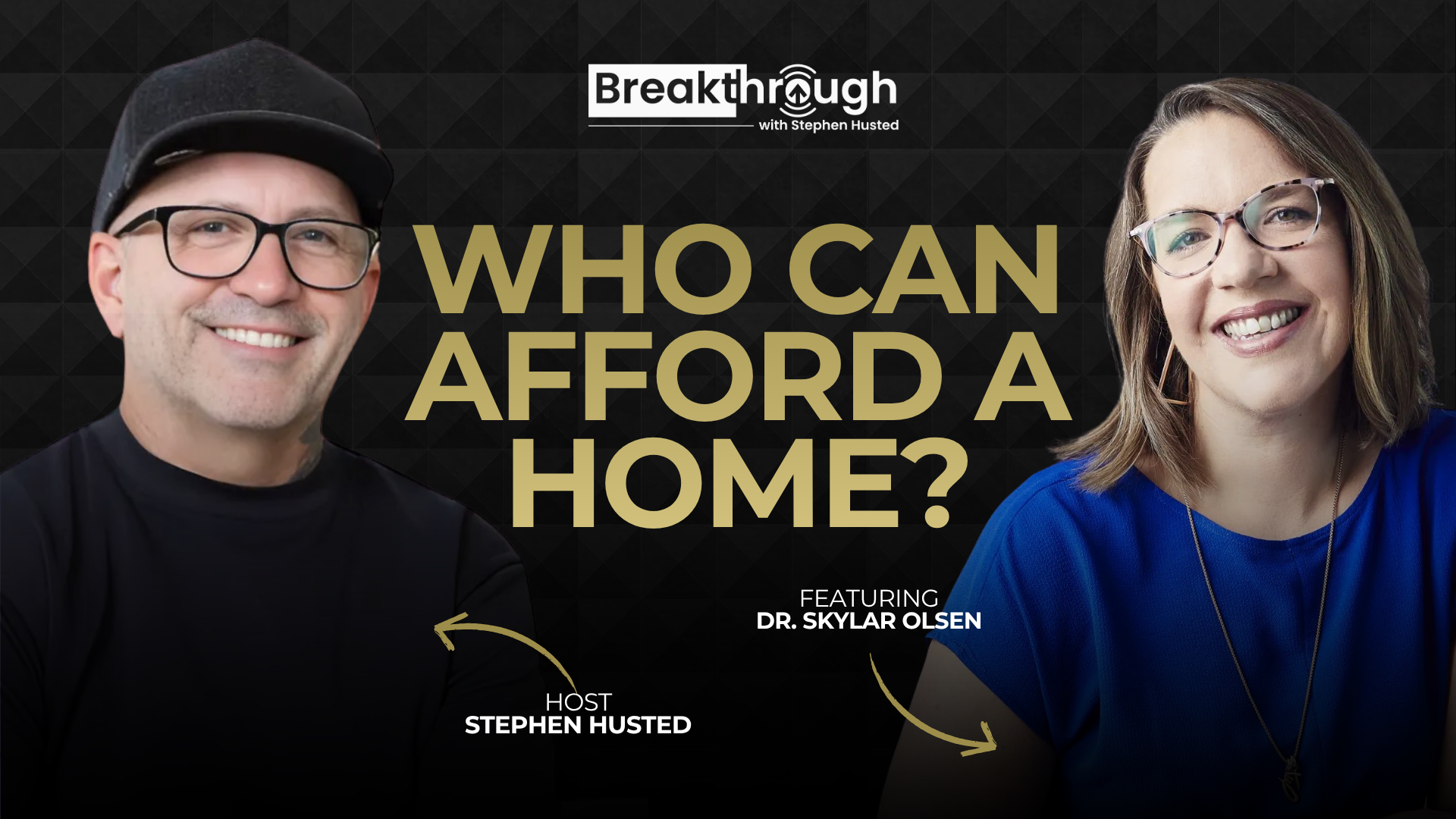
In this episode, I sit down with Dr. Skylar, a housing economist, proptech expert, educator, and entrepreneur who spent 11 years at Zillow studying housing from the customer’s perspective. She shares what she learned about the complexity of buying a home and why helping people understand the housing market is just as important as having the data itself. We also talk about the new venture she’s building, which helps landowners redevelop their lots into communities of six to 10 smaller homes. Her goal is to create more options for people who want to become homeowners but can’t afford the traditional single-family home. A major focus of our conversation is the missing middle of the housing market. Dr. Skylar explains how the current market often serves renters and existing homeowners with significant equity, while leaving many potential first-time buyers without an affordable path to ownership. We also get into the challenges of actually developing this type of housing, including zoning, parking, construction costs, finding the right lots, and getting landowners, buyers, funders, and developers aligned. Finally, we discuss housing in the Bay Area, the impact of technology wealth and mortgage rates, cooperative housing, and why the built environment may need to change if communities want to remain accessible to the next generation.
Stephen and Dr. Skylar talked about:
00:00 Dr. Skylar's journey from Zillow to housing innovation
05:35 Rethinking what homeowners can do with their land
08:37 Bringing back the starter home
19:53 The missing middle of the housing market
23:30 Who is the ideal landowner?
28:41 Why San Jose is such a unique housing market
38:49 Cooperative housing and creating more purchasing power
46:37 Why the built environment needs to change
TRANSCRIPT
∎ Teaser / Highlighted Clip
00:00 Dr. Skylar Olsen: Now there's this missing... huge segment in the middle of people who can't afford to buy the single family home or the downtown, you know, condo with the HOA and that space, they can't afford that unit. And more and more people are making, having a harder, harder time transitioning from renters to first time home buyers. So I think when we're watching a lot of this redevelopment, it absolutely is for that person in the middle who's not otherwise served by the existing market. We need to make more options, right, for someone to move into that.
00:41 Stephen Husted: People want to stay in locations that makes them feel good. Space, yeah, you can argue that having a lot of square footage is a good thing, but some people don't really need that. They want a decent amount of space and a great community and a great location, you know, whatever that is to them. And there's something to be said very similar to California and very similar in Seattle.
∎ Podcast Intro:
01:01 Stephen Husted: I'm Stephen Husted, and you're listening to The Breakthrough Podcast, a space designed for clarity, curiosity, and the stories that move us. Here, we step away from the noise and into the moments that define us, the early influences. the hidden struggles, and the breakthroughs that reshape our lives. From personal reinvention to building a life through real estate and entrepreneurship, these conversations remind us that success isn't a straight line. It's a series of honest decisions, brave actions, and small shifts that change everything. This is where those stories live. Let's begin.
∎ Guest Introduction:
01:40 Stephen Husted: With us today is Dr. Skylar Olson, a housing economist, prop tech expert, and former chief economist at Zillow, who spent 11 years studying housing markets from the consumer's perspective. After working across the prop tech industry and teaching real estate evolution and disruption at the University of Washington, Skylar is now building a new venture focused on helping landowners redevelop their lots into six to ten home communities. work is centered on creating more housing options for people who can't afford traditional single-family homes, while helping landowners take advantage of new opportunities created by upzoning. In this episode, we dive into the future of housing, missing middle development, housing affordability, and what happens when technology, data, and new development models come together. Get ready to rethink everything you know about how communities get built and who actually gets the chance to own a home. Let's get started.
∎ Podcast Proper:
02:40 Stephen Husted: Skyler, how are you?
02:42 Dr. Skylar Olsen: Hello.
02:43 Stephen Husted: Thank you for joining on today. Appreciate it. We were talking earlier before we went live here that how I typically record an intro after the fact, but then when I saw your bio, I went, okay, I think today my guest needs to give a little bit of information of your backstory because I think it's pretty robust. So if you could... Let me know your backstory. Give me a quick little bio.
03:11 Dr. Skylar Olsen: Yeah, let me give you the... Cliff notes would go far back in time. So I got my permanent head damage, which I affectionately call my PhD during the global financial crisis. So super interesting time in housing and popped out of the grad program and immediately started working at Zillow. So if you can imagine working at Zillow behind the scenes, that's the sexiest data set you've ever met. Spent 11 years at Zillow studying housing. But the important twist on that is studying housing from the customer's perspective, not, oh, what is this going to do to Zillow's revenue? But what is this going to do to a younger generation's ability to buy homes or changes and how that's working over time? I've spent my entire career in prop tech. So Zillow was the biggest. But I've also worked with a lot of smaller prop tech companies that are dreaming and making about how to fix housing or make it easier, help a customer through that journey. I even started teaching a class at the University of Washington called Real Estate Evolution and Disruption, which covers how technologies evolve housing markets and how we experience them and the different opportunities that are out there for, say, gen. AI or just more data available or different kinds of business models. And right now I popped back out into tiny tech. So a small startup and we help current. homeowners landowners that want to downsize into a community on their lot so we help landowners redevelop their lots into six to ten home communities which is now possible with a lot of up zoning across the country to help landowners really shape what the future of our neighborhoods look like so basically an egghead and housing for ebbs now forever.
05:17 Stephen Husted: It's incredible especially 11 years at zillow what did you learn over that 11 years what are the continuous markers that you kept seeing in data
05:24 Dr. Skylar Olsen: We all know that this is a crazy huge transaction that a customer will go through right one of the biggest decisions that they'll make in their lives I think when you're kind of charged working at how do I help someone understand this, like how it's changed or how their opportunities are changing, I started to realize just how hard that is, right? To kind of meet someone, give them rational tools during an incredibly emotional decision and how to balance. I think the biggest lesson has always been how to balance complexity with understanding. full truth and there's this truth that I can get you to hear and listen to to help you make better decisions and I guess the other kind of big learning is underneath all of that it's already hard but real estate is one of the last places where But it's still kind of fairly a traditional market and a traditional process. So in terms of a tech company coming in and totally radically changing the way that we buy homes, that's much slower going than Amazon push button by book. So it's hard. It's a really hard role to kind of not only help someone turn on the lights and share the data from a place like Zillow about what does Zillow know because it built this big product. that shares information and how do I help someone understand what that means can be pretty tough. I learned the classic things too about how to, what happens when a company goes from 350 employees all the way to 5,000, 7,000. How does the culture change and how does what we're doing change and how we do a change over time? Honestly, it was an incredible way to start my career and also some of the biggest challenges operating in that kind of environment of fast growth and a lot of change over time. It's probably why I'm back in tiny tech. I like the small, nimble teams where we can pivot and be creative. But
07:33 Stephen Husted: are you moving fast too on this new oh
07:36 Dr. Skylar Olsen: my gosh yeah yeah especially with ai tiny tech it's like putting on a new hat Not just every day, every three hours, you're kind of in a different role trying to figure out how to make it work. It's incredibly exciting and creative, but also a huge challenge. Where's the data going to come from? Who is my customer? How am I going to find that customer? And then behind the scenes, all the nitty gritty, just creating the financials so that they work and trying to walk through that. So right now, what
08:08 Stephen Husted: are you trying to build out with this new venture? What do you work through on a day-to-day and what does that long-term vision look like to you?
08:15 Dr. Skylar Olsen: So I mentioned what we're doing is we're helping landowners redevelop their lots. That's not... an easy thing to do that's hard. It's something like if you're a boomer right now and you're thinking about downsizing, I'm sure you're thinking about, oh, selling my home and moving somewhere else. And I think the option of redeveloping your lot, even though I think we've all seen headlines about upzoning in lots of major cities and what that does maybe to your property taxes and all that, but I don't think folks realize the incredible opportunity that actually gives a Landar, puts you in the driver's seat to capitalize on that upzoning, not waiting for a developer to come and lowball you an offer and then they put on the two townhouses squeezed on your lot. It can be different in how that goes. So I've got to get... landowners. You've got to educate them about the possibility. So that's a lot of combing data about land use and cost of development and structure design. Like how big does a lot have to be in order for us to put a beautiful set of homes instead of just the squeezed in option that I think we see so often. So that's one phase of it. But really, in order to de-risk this whole process because development is inherently risky especially if you're building something that doesn't already exist so i've got to de-risk it somehow and one of the ways to de-risk that is to get the buyers ready so i have a project that can go that already has 50 of the people who would buy it are committed and they're saying i'll put a deposit down on this building in order to help it make it happen so now i've got two people in my audience i've got the landowners i've got the buyers i've got to educate them both about this new possibility sometimes when i don't even have a building in the ground i just have the idea of a building on a lot to kind of help move that forward and get the funding so once a landowner and buyers are in place. Now I need to get the funders to walk in there, put up sometimes a million bucks. They'll get a return on that million bucks, but they got to put, generally we got to find a lot of capital, a lot of money in order to pay to actually build these things. Construction is expensive. So now I've got three groups. I've got landowners, I've got buyers, and I've got funders. When you think about funders, think both lenders and investors. And then I need to help the developers. So a developer is basically the project manager of construction. They find all the people, the architects, the general contractor. They go through all the permitting laws. So what we're doing over the long run is basically building a four-way marketplace where developers can bid on projects from landowners. They're pre-filled with buyers, and that makes funders happy, and they're willing to fund and build these projects. If you want some of the taglines, I think ultimately... we're trying to reintroduce the starter home to the U.S. housing market. And these are six to 10 homes on just one lot. So they do tend to be these smaller units. In some places, that's not an option that exists in a lot of areas. But we've got more folks who are retiring, single people households. There's, I think, a lot of need for another option besides a large four-bedroom house with a big yard. that could actually be attained by the next generation that still wants a dream of home ownership, but can't afford to save up for that down payment as they go through now. So those are the major swings that we're kind of building. So this, I guess, ultimately ends up being a licensing model where the developer licenses the land, the funding and the buyers from us in order to scale this development of the missing. middle housing have you ever heard that phrase so a missing middle is like the home or the lot that has four to six units on it because those those townhouses squeezed onto those lots don't end up being that much more more affordable after new construction so in order to do that four-way marketplace It's a bunch of working from scratch, finding the data that I need to find, building the educational resources to help someone understand it and hustling, you know, getting a software developer to build the thing, a designer to design the thing. So really starting kind of at an early days of kind of the tech company aspect of this, this company. And it's pretty exciting because I think it's, I spent a long time at. Zillow working on how to turn on the lights and explain housing's problems and potential solutions to customers and housing professionals. And now I'm at the stage of my career where I'm working on a solution, not just the education bit, but the putting the building blocks together in order to get it to happen. Are
13:27 Stephen Husted: you going to scale this across the United States?
13:29 Dr. Skylar Olsen: I mean, knock on wood, that's the hope because upzoning is happening across the U.S. I think it's a strategy that makes sense to often both sides of the aisle, people who really care about affordability and inequality, but also people who don't want as many restrictions on businesses and what we can do and build. So I think lots of sides recognize that the housing affordability crisis is a crisis. It's a real problem for the next generation and you need to make changes to make it easier. There's this new opportunity that's happening across the U.S. That's the hope. Right now, we're only operating in the Bay Area and Seattle. Oh, you're in the Bay Area. Kind of tackling. I mean, Bay Area might be one of the hardest places to develop. So tackling the really hard stuff and then tackling home base. So most of us are from Seattle. So you work in your backyard first.
14:29 Stephen Husted: I'm a newer developer in Seattle.
14:32 Dr. Skylar Olsen: So we have about
14:34 Stephen Husted: 15 active projects going on. across North Seattle down to West Seattle. And it all happened very organically. I was looking to try to do it in my own backyard. I live in San Jose, California. And the lots are just different in San Jose. You could have a 7,500 square foot lot, but it's on a corner and the house sits literally right in the middle. The only thing you really put on the side of your house is like a motor home if you really wanted to. And so these like corner lots or alley access, we just don't have them. And then with some of the bigger lots, you would have to go through someone's side gate to get to this big lot. You know what I mean? And then you're buying the front house for $1.8 million. And then you've got to build another. In my head, I'm going, no one's going to want to live in that. It's not registering correctly right now. I've had one opportunity in
15:30 Dr. Skylar Olsen: a year.
15:32 Stephen Husted: to do a development where I was actually, it was an older home, 100 years old, had a basement and a vacant lot to the left of it. It had a nice backyard. It had a 15-foot setback to the right of the house. And the vision was, okay, I'm going to rehab the main house. I'm going to put a unit in the basement. I'm going to build an ADU in the backyard. I'm going to build a new house here. I'm going to do an attachate. It was all planned out. Didn't get it, but that was like a year ago. And then you fast forward to Seattle. The way lots sit, the way the houses sit, the density in it. And honestly, it also makes sense on the way it feels in a neighborhood.
16:08 Dr. Skylar Olsen: Yeah. To me. To me. When I see it. Like in Seattle, like it doesn't seem as that warm. Yeah.
16:14 Stephen Husted: Especially like North Seattle, like Green Lake
16:16 Dr. Skylar Olsen: areas and stuff. I've even felt bad
16:19 Stephen Husted: about, we did one project and. It was close to transit. We didn't have to do parking. I'm like, who? Why do you have to not do my parking? Doesn't people have cars? Like, where are all these cars going?
16:28 Dr. Skylar Olsen: I want a parking spot. So
16:30 Stephen Husted: it's interesting that you're tacklin
16:33 Dr. Skylar Olsen: Bay Area. What are the funny issues? Funny. I don't know. Not haha funny. Not really knowing how to handle this. Because in many ways, when you're developing a lot, there is the customer that needs to have that car. And so if you're deciding to build without the car, and when you're close to transit, you can do that. You're not required to add parking spaces. And honestly, that saves so much money on construction. insane, almost a third of the cost sometimes if you don't have to add in those parking spaces. And yet you're kind of also limiting the kind of customer. And I think that's what's really interesting about development too. The customer that you see every day, because they could already afford to live there. They could already afford to buy that single family house in Seattle, which is now $1,000. And in terms of how much they can afford is not necessarily the customer that you're building for. And we're trying to build in many ways, and you might be as well, for that more hidden person that otherwise wouldn't have been able to afford a home if it wasn't an ADU in the backyard, right? If it wasn't this kind of smaller unit on this lot, shared spaces. But then how do you also design in such a way that, as you mentioned, it's not alienating to the neighborhood? It's funny how much, just imagine the exact same building. It has multi-units. One has, it's real square and it's got the flat roof. People hate that, right? They see this thing and they're, oh, it's a box. Take the exact same building and just add gabled roof on the prop. The building didn't change very much, but it just has that feel a little bit more of being in a single family neighborhood. And it changes almost everything about how someone might perceive the project. So it's such a journey in terms of all the little decisions that you need to. make or even problems that you find. It's not just the lot size and where the house sits on it. It ends up being things like, is it on a bus line? Because it's on a bus line. You got to close down that street in order to do any amount of that construction. That's expensive. Or is the electrical line across the street? So I got to now dig up the road in order to get electric to this house. So it's a tricky, it's a tricky problem to identify. lots that will work without being insane headaches and then how to identify the product that you build for a customer that might not be as easy to find. already in the neighborhood, but kind of building this opportunity for them. And what I like a lot about what we're doing is to try and marry what the landowner wants. They could want to downsize. It's kind of like the Golden Girls metaphor, right? It's like you're at the end of your lot. Now, excuse me, I don't want to say end of your life. You're at the end of your career. You're retired. You maybe don't want to keep up with these property taxes. Your original house is too big to maintain. You want to live in community. Maybe your kids moved away and they're across the country so they can redevelop their lot into that community. They take one of the units, right? And often they can set aside, oh, my sister's going to live here too. She'll buy a unit. My daughter's going to buy a unit. And then otherwise the rest of the, say, six homes are open to the community. And it's a really cool opportunity to build in a different way to live, a little bit more connected. And that's what's so cool. It's a win-win. In many ways, trying to disrupt a bit of the NIMBY narrative, like not in my backyard. It's like, well, it was a landowner's vision. It is backyard and they can shape their backyard how they want to live. That's a big,
20:22 Stephen Husted: real hot button here in San Jose. We just had our first ADU that sold as a condo. And there's been a bunch of videos made for Instagram and everybody's just chiming in. Who wants to spend $530,000 to live in someone's backyard? That's one big thing. Or, oh, now the owner has two property tax bills. People just don't understand the whole concept of it. And it was built in a neighborhood, I would
20:54 Dr. Skylar Olsen: say, that's like a C neighborhood.
20:59 Stephen Husted: what they intended to do with building that adu it did exactly what it needed to do because the new owner he
21:07 Dr. Skylar Olsen: went on camera and said this
21:10 Stephen Husted: is what i could afford and i didn't want to live in a condo and share walls and people and parking lots and spend 500 on an hoa i have this detached unit with my own parking space two bedroom one bath and to me you can argue the price all day long. It is what it is in expensive markets. We can't really say, oh, well, for 500, I could go buy a mansion and here in this place. It's like, well, that's also not California and it's not San Jose.
21:39 Dr. Skylar Olsen: You know, we're
21:40 Stephen Husted: trying to make it affordable some, but it's interesting. Seattle's definitely further ahead on this journey, I would say. Building units, I would say. And you brought up a really good point about the family scenario because I was talking to another agent who's kind of opposed to it. And a lot, I don't see going on here in this neighborhood. This wouldn't be a good idea. And I go, well, in a certain neighborhood, maybe it's going to work out. But let's say it's aging parents and they want their kid to own real estate. So they conda wise. The kid takes the back unit. They live. The parents then. pass away, the kid takes the main house, or now he has two units and he can move into one. He's paid down principal and then he puts it as a rental and he's getting turned and burned throughout his family. There's more options than what people think, but sometimes the headlines skew that.
22:33 Dr. Skylar Olsen: Yeah, yeah. I think, so I'm an economist. So often the way I think about it, you know, like who does the current market actually serve? And I think, you know, over these last 20 years, we've really become, the market serves two groups, right? You've got... A bunch of new apartments, large buildings coming out, serving renters. And a lot of what we're actually able to buy, build at scale. If you look at the graphs of multifamily housing starts in big buildings, we've built a bunch of them over the last five, seven years. And then, it's okay, you've got this renter group, and then you've got a lot of, you know... I'm going to say boomers. I don't mean to do the generational war, but you've got a lot of older folks who own homes. And that person who has, who rode the home equity growth of the last 15 years, that person has enough wealth in order to downsize and buy the next home. But now there's this missing... huge segment in the middle of people who can't afford to buy the single family home or the downtown, you know, condo with the HOA and in that space, they can't afford that unit. And more and more people are making, having a harder, harder time transitioning from renters to first time home buyers. So I think when we're watching a lot of this redevelopment, it absolutely is for that. person in the middle who's not otherwise served by the existing market. We need to make more options, right, for someone to move into that. I also, as an economist, always laugh a little bit when someone goes, oh, no one will want that at that price point. But I think it's because they don't really understand that otherwise there aren't options for that person. And this can be a great option for that person to live in. We've got some change coming. I know we've been talking about, or people have been talking about boomers and the silver tsunami for a while now, but the number of people who will be aging and... finally reaching those ages where they're just as likely to rent than buy their next home, that's still seven to 10 years out in terms of when we peak on that. So in terms of turning over the U.S. housing stock to the next generation, the next 10 years are actually pretty exciting moments of change potentially in terms of what'll happen and kind of who gets that next set of housing stock.
25:16 Stephen Husted: And it's kind of an interesting,
25:17 Dr. Skylar Olsen: too, I was
25:19 Stephen Husted: reading an article that they're also running into a dilemma with the boomers who've got just a ton of equity and appreciation. And then you've got the affordability issue that these newer buyers can't even afford to buy the boomers' houses anymore. So they're running into another issue. Like, okay. And that's been an interesting talking point. the direction you guys are going walk me through the the types of homeowners you're having conversations with and like what is that conversation Like what's happening during that conversation? Are you getting a ton of pushback or some people going, yeah, this makes sense, but who's going to take on all this? There's a lot of moving parts. As you said, you named about five different components because I know development is, it's not a straight line whatsoever.
26:08 Dr. Skylar Olsen: No, no, no, no. And a big part of the conversation is we'll do it for you. We'll take these steps. In the beginning, we'll talk to the landowner about their vision and kind of make sure there's mission alignment. Like they understand. what kind of homes we build. It's going to have six to 10 homes, smaller units. Legally, we design them as cooperatives. So we can chat a little bit about what makes that different if you'd like. But so when we talk about who is the concert, so we do the classic tech company thing where you name your customer or their type of it. So all the landowners, for example, have names to start with L. So you've got Lynn. You know, and she's the social downsizer. She's the one we kind of talked about earlier where she wants to downsize. She has a big house. She can't maintain it. She wants to downsize into a community. She wants to live there, right? She wants this vibrant community. Maybe it's mixed ages. So there's some kids in the property and there's other retirees. And she kind of wants that socially for herself. Then you've got Linda and Larry. And they're a couple that's really mission driven. Understand that there's a housing crisis. They want to be a part of the solution. Honestly, I think that customer is a little bit more rare in terms of someone who's willing to put their home equity on the line to help others that much. I think it's something that we want of people. But in general, like they're generally doing something because it'll work out for them. The home equity is like, even though maybe it's not quite hard won because it was a lot of appreciation just from market dynamics, but it feels hard won. It's their retirement savings. It's so, it matters to them so much. So we also think a lot about Leonard. And there's a wallet watcher. He's a guy who probably knows that upzoning means my lane. is worth a lot more and it's worth a lot more as not what it is right not as a single family home but as a multi-home community right what is that greater use and how do i be a part of redeveloping that and our landowners generally get a return as well that we treat them as kind of partners in development so they get a return on their home equity and that kind of thing and so the conversation honestly When you're doing something like this, and at this stage that we're doing it at, we really try and go after the early adopters. So who are the people, like I mentioned at the beginning, Lynn, this social downsizer, that's someone who really will get it. They want the product that we're making. They want to stay in it afterwards. And they're not rare. You know, like there are so many people who are retiring. Maybe they lost a partner. They want to keep this connection. they have this incredible opportunity in their land equity and the value of their land to do something about it. The buyers are similarly, we have three different kind of buyers that we think about, like who lives in a cooperative as opposed to going and buying that condo in terms of who we go and who we talk to. Kind of probably the defining moment of all these conversations is a lot of explaining an option that people don't know about. As you said, development is so hard. It's not even something that people would even consider, let alone consider that they'd be able to do it. It doesn't come to your head in terms of your kind of classic option set. And then explaining what's different about how we'll approach the situation and what that project can be.
29:51 Stephen Husted: Yeah. What, where are you? So where are you finding success on? Are you doing this by mailers? How are you finding
29:57 Dr. Skylar Olsen: these? What are we doing? Yeah. Honestly, what's funny. So Seattle, anyone who's familiar with Seattle, classic music, loving city. You walk down the street, you can be in a suburban neighborhood. As long as there's a little cluster of restaurants and businesses, there are posters taped to that telephone. You know, they're like concert. on the 19th so we put those flyers up for landowner events and it's funny as most people find us through walking by and seeing a flyer and that's a Tactiq ❤️ that actually makes sense because we are trying to target neighborhoods where it would be not just ease i mean the ease to develop is sometimes about the lot itself but it would also be like easy to market as you mentioned earlier does it fit in this space Some of these might not fit in all areas of San Jose, but maybe in East Palo Alto, that's a place that a cooperative might make a lot more sense, easier to find those buyers. And actually that would. Yeah. If you just threw that out there, that would be a good spot actually. So I wasn't just throwing some random. Yeah. Skylar knows what she's saying right there. Yeah, absolutely. Yeah.
31:18 Stephen Husted: Yeah. We should talk about San Jose next.
31:21 Dr. Skylar Olsen: Yeah. Well, San Jose is your trip. I mean, well, so studying housing in Zillow and studying so that it's from the customer's perspective. So classically, we report on the top 35 largest metro areas. So, of course, you're Chicago's, you're New York's, San Jose, San Francisco. And there's almost not a metric. that San Jose is not a crazy buyer on. Like it's always kind of a bizarre place. Now Miami actually is kind of a new, what is going on in Miami? Why is it still this way? But yeah, San Jose is a trip. I mean, all those employers, really high earning jobs, right? And San Jose definitely does something to a housing market for sure.
32:05 Stephen Husted: Yeah. I mean, it's crazy out here.
32:09 Dr. Skylar Olsen: Yeah. It's crazy. In terms of how many zeros you put on a health price, San Jose takes the cake. Lots of zeros.
32:21 Stephen Husted: Well, it's interesting. So I have a gentleman coming on the podcast too, and he does development out in San Diego. And I just saw a YouTube video of one of his latest projects, and it was a house off of a corner lot. busy street. And I think he's putting four units in there. It's straight up single family, one story residential. And I thought from the, he did like a drone shot of it. I'm like,
32:47 Dr. Skylar Olsen: yeah. Ooh.
32:50 Stephen Husted: Good. I would get, I would get lynched
32:53 Dr. Skylar Olsen: here. Yeah. Yeah. It would just not,
32:57 Stephen Husted: but somewhere like East San Jose, like
33:01 Dr. Skylar Olsen: alum rock area would work.
33:04 Stephen Husted: Some parts of downtown would work. They can get the North
33:10 Dr. Skylar Olsen: San Jose has some areas. Cambrian has a
33:14 Stephen Husted: few, but we're talking very few. We're not talking six units going on.
33:20 Dr. Skylar Olsen: I wish. Yeah. I would help. I would help. And I think in that area in particular, especially, I mean, almost anywhere in the Bay Area is really kind of the classic. nimby stronghold, right? Where you've... I certainly benefited from home price growth and keeping the density of buildings fairly low really helps continue to drive that home price growth. And a lot of people have, I mean, California is a gorgeous place. I mean, I'm up in Seattle. It's a little rainy all the time. It's very dark in the winter. It's great in the summer. It's gorgeous right now. It's such a gorgeous day and it's light out until 10 p.m. But I think when people... move to California, invest in California, live there for 20 years. A lot of people have a hard time giving that up, especially if your interest rate lock-in. You've got this really low interest rate. You're not leaving. You know you're sitting on quite a pretty penny there. It's a challenging place. Yeah, San Jose is wild. The whole Bay Area is a wild market.
34:29 Stephen Husted: It is. It is. It is funny. Some of my agent friends in Seattle, I'd bring it up and they're like, I don't know. I think you need to work on your limiting beliefs. I'm like, you guys, it's not limiting beliefs. Come on out for a weekend and let me walk you through some neighborhoods. And then we'll go look at some stuff. Come back and tell me what am I missing? If there is, I want to know. I would love to build some affordable housing here.
34:51 Dr. Skylar Olsen: Yeah, that's pretty challenging. And it's not a market that, you know, I think so. So here, I'll give this example. At Zillow, we used to produce all these metrics about the housing market, home prices by zip code and housing inventory by zip code, how many units are for sale and all these different zip codes. And when you build data off of a database, in some ways, data be dirty. You don't always know if you're getting the truth. It could just be a poor sample size, right? Or is that volatility rate real when you see a lot of those changes? So we would run these kind of screens. on it. So if you process the data and within the zip code, it jumped around a lot, you know, there was like a really fast growth in home prices or inventory dropped really low, then maybe we would say, okay, maybe that's not real, but, and then it would get suppressed. We wouldn't report numbers on that zip code, but we started to have to do that bespoke for LA and the Bay Area because Those changes might have been real. You'd look at them and it would seem like, oh my gosh, every zip code in the Bay Area is suppressed because it looks like crazy data. Surely it's not this expensive or inventory hasn't dropped that much. But no, it was likely real that it was happening. It's just a wild market in terms of how much changes in one way and how much it doesn't change in another. So not a lot of homes for sale, not a lot of homeowners changing up their situation. A lot of holding on. And that can impact Christ kind of wild. Silicon Valley is
36:33 Stephen Husted: similar, I would imagine, to Seattle too. But when you get that data from like Zillow, Zillow's not pulling what's going on outside the world.
36:42 Dr. Skylar Olsen: What is
36:43 Stephen Husted: happening with interest rates? What's happening with the stock market? Because once the stock market moves in a certain direction, I can tell you right now, if tech stocks go down, the buyers slow down. Yeah. Once they go up, it shoots back up. Like news oriented slows the market in different ways. Yeah. It just depends. But I know that I think it was last year when we had a really big shift in the stock market in tech,
37:11 Dr. Skylar Olsen: market went flat.
37:13 Stephen Husted: And then they hit away and then the war came in and a house that you could have sold for 2 million, it dropped down to about 1.8 because now you had more days on the market. And then sellers don't understand how to deal with that because they've been used to selling in seven days. And so our market moves with technology.
37:30 Dr. Skylar Olsen: Yeah. And that's more true now than like pre. Facebook IPO and pre iPhone releases. Yes. We actually captured, we did this one study at Zillow way back in the day. So all of Facebook and then I think as well that. apple campus are kind of their own zip codes so you can know who they're these tax records where you could know someone worked in that zip code so you know they work at apple or you know they work at facebook that's how big those companies were at the time right and then you could know where they lived so we would wait all the home prices to see basically what is the home value of facebook employees on average because you know where they work and then you can see oh this many live here this money so that weighted average of the facebook employees home prices jumped after the iphone release for apple employees facebook or home prices jumped after the facebook ipo and it really is like this The ability to spend kind of escalates and increases, and then people move forward with these big decisions to buy homes in these areas. And so it's a huge influx of wealth when these things happen, and it flows into the housing markets. And that dynamic isn't true for places that are not thinking about the Bay Area. Right, they're not used to that. It's a little bit true in other places, right? We've got businesses in Seattle too, but it's certainly not as much tied to that stock market. Yeah, absolutely not. And you also still also see a lot of interesting activity happen just when the mortgage rates fluctuate, which we've been stuck at around six and a half for a while. So it hasn't happened very recently. But back at the beginning or end of last year, we got all the way down to 6% mortgage rates. And you saw a lot of people kind of making moves again, didn't last very long. I think there weren't so many of them, you kind of harvested them up with that rate drop. And then of course, rates came. back up again and high gas prices not good for mortgage rates so Definitely not. You would ask me my outlook. Not so stellar on mortgage rates coming down. But those fluctuations, when they happen, you see a lot of people rush. I think that's the way to think about how much pent-up demand there is, even in expensive markets. You've got massive generations who hope to meet the same milestones as their parents. There's a way for these opportunities. Stock vesting, mortgage rates drop. These are the things that help people move forward.
40:11 Stephen Husted: San Francisco is right now just a really interesting case study when it comes to new technology.
40:18 Dr. Skylar Olsen: Their market was getting beat up
40:20 Stephen Husted: during COVID. People were moving away from San Francisco. And now all of a sudden, the AI wave hits San Francisco and the housing market's just blowing up.
40:31 Dr. Skylar Olsen: That's just right there. tells you
40:33 Stephen Husted: one minute it can be going the complete opposite direction and all of a sudden it can turn around in a few years and people are spending a million dollars over list yeah
40:43 Dr. Skylar Olsen: yeah yeah yeah housing is definitely a long game especially in places where it gets volatile like that in many ways it is more like the stock market now in places like san francisco because of that connection the stock prices and the ability to pay yeah it's not what I think classically in the 1990s or 2000s, we thought about housing as this slow-moving, safe bet. Now it's still safe to invest in stocks over the long run. Still a good idea. But it's have that, make that a long-term decision. So you're not changing that up a lot, for sure. What do you do?
41:23 Stephen Husted: So you said Bay Area that you guys are looking to do projects here. East Palo Alto.
41:28 Dr. Skylar Olsen: What parts of Bay Area? East Palo Alto. Yeah. East Palo Alto. East Palo Alto. Yeah. One of the fastest gentrifying areas in the Bay because it. Started off a lower income, started off a little bit more affordable. It's kind of funny to think about what's affordable in the Bay. It's not cheap, but it's relatively affordable and it's very close to those tech campuses. So it's kind of a rubbing areas location where you have some of the most affluent zip codes right next to more achievable zip codes. So it's also a place where there's the most displacement going on as well, where someone can't afford to stay. Because it's gentrifying, it's changing, it's becoming more expensive more quickly than other places, because it is starting off at a lower price point. And so that grow much faster, more people can move there. And so our model of higher density, smaller units, and these are cooperatives, which... Legally a cooperative, can I just do the explanation real quick? Yes, please do it. Functionally, it can feel and look like a condo, right? It's like a unit in a multi-home community, right? But what's different about a cooperative is you're buying a share in a company that owns the whole building instead of buying a whole unit outright in a simple fee. So you're buying the share in a corporation or an LLC, basically. that owns the whole building. And then that LLC can operate like a business. So it's kind of like all the residents now have this business to work through so they have a little bit more market power. That business can go out and get a loan. And what we help the cooperative do is get a loan that helps buy down those upfront costs so that the down payment is a lot lower. The residents have to pay back that loan, that blanket shared loan over time. but it doesn't have to rely on their credit in order to do that. The credit is through the business and the building itself. So all these individuals can basically attain more than access more wealth in that way. as a whole, as a part of a legal cooperative, as opposed to how much they could do as individuals. And then we have these shared spaces generally in these projects that take the edge off of living in smaller units. So there's a shared courtyard or there's an event space, like a shared kitchen, that kind of thing to kind of also change the way hopefully that we relate to our neighbors. There's a lot of studies that show. In the U.S., we've never been more lonely. And I think that has a lot to do with how we live. If I'm in an apartment building and I'm walking down the hallway in a double-sided corridor, meaning the apartment doors are on each side, there are no windows in this hallway. It's not a place to stop and chat. So I see the back of my neighbor's heads while they're going into their door. It's not a lot of interaction between neighbors. Think about when people take their car and they drive into their garage. And they just walk inside their house. Never seen anybody. We've lost the porch. We've lost the ability to wave to your neighbor because you don't have a lot of these interactions in your home. So a lot of our projects also, it's about the design. Often it's an outdoor corridor, like a shared courtyard between the units where you might want to linger. There's more porches to get that lingering going on. And people really do hang out at the edges of things. It's kind of where people interact. What studies show. How long does the project take? That's a loaded
45:17 Stephen Husted: question. You're like, what do you mean? It could be a smooth one or a long one.
45:22 Dr. Skylar Olsen: Exactly. So you've developed some projects. I know. You feel this. You can have a project where all the parties are on board. There's a shared vision somehow. That's wild when that happens. And so the decision making process ends up being a little quicker. Maybe the permitting ends up being quicker because you're doing something by right that's already stipulated in the rules of land use. And so it can go through a little faster. But I think most developers would still be. pleasantly surprised if from the very start like the very first moment where you're like this could work maybe even before that moment but can this work from can this work to people are moving in still happily surprised if it's two years not still happy if it's three years right construction for all those construction itself that's 12 to 16 months permitting on getting through all that rigmarole that can be six months and before that when you're designing and thinking about what this is remember that decision process has to keep going that could be three to six months so right there we've already done two and a half years so it can take a take a while yeah it's a massive unique puzzle absolutely yeah it's kind of fun it is i know You like a puzzle. I do. Yeah, I do really like a puzzle.
46:49 Stephen Husted: Yeah, I do. And I love starting it from the vision of some of the properties we've bought in Seattle. I look at it and I'm like analyzing the neighborhood first. Okay, well, let's see this neighborhood. What can I see going up here? Where's going to be the parking? I can kind of visualize it. And I go back to my architect and we kind of start doing that process. And then we start going through the... Some of the issues like the utilities and what do we got to do here? How are we going to get, do we have to go underground for electrical, doing new main lines? How far do we have to go down? You start going into the, I want to call it the unsexy things to be really honest. I just want to build cool stuff. They all got to go together at one point, but
47:29 Dr. Skylar Olsen: then you start going vertical and
47:33 Stephen Husted: you're like, oh, this is happening. And you know at that point that you're getting some affordable housing going in there that is land that's just sitting kind of not doing anything, honestly. Yeah. And two, this process is unique in a way that there isn't a lot of land available if you really think about it. No.
47:56 Dr. Skylar Olsen: Right? Yeah. Yeah. Absolutely. Yeah, I think it's like, oh, well, why doesn't more infill happen? It's like, well, landowners have to choose to do something because there aren't empty lots like within the city limits anymore. I mean. That's a probably I have previously. I'm sure there are a few. There are some opportunities where it's an empty lot and worth doing. But in many ways, you got to find someone willing to sell to make that development happen or partner. We're trying to do it where they don't have to sell, where they partner with us and they kind of have a bit more of their vision. They live in the community. But you still need a landlord to choose to change it. It takes a long time for someone to get ready to choose to do that. So you have all this upzoning across the country. Oh, no. more single family zoning in Washington and Minnesota and California. But are these places immediately to use, I think, the fear of a lot of NIMBYs, you know, like dystopias of duplexes and triplexes? No, because people have to choose to do that. And it is a longer process. And so I think lots of things will change over the next. 10 years but i think it'll still be really slow going and it's people i mean honestly so i'm an economist and i love markets i think they're beautiful and i think profit and developers often get vilified right for coming in and doing these projects but at the same token that profitability that's there is because people so desperately want these units at the end of the day because it's not an option otherwise and it is so hard to do to evolve these spaces I don't know it's a really cool it's a really I don't want to go so far as to call it a yeah I'll call it a service right to help the built environment change so that The community doesn't have to change, right? You don't have to go move all the way to Arizona from the Bay Area just to afford your life if the built environment can evolve with you and with our society and with our generations. So I like to tell people change will come either way. It's whether or not we let the built environment change or we force change on who can afford to live here and what our community looks like. And I rather the built environment changed. I agree.
50:21 Stephen Husted: There's something interesting about this. I have a friend who posted on Facebook that he was looking for a one bedroom or a room to rent. And I know he's been in San Jose for a very long time. And he's going to get displaced somewhat. And I just remember I was running by his house recently and I said, you know, if I had a little 600 square foot attached, it'd be perfect for him. It was a little outdoor space because people want to stay in locations. that makes them feel good. Space, yeah, you can argue that having a lot of square footage is a good thing, but some people don't really need that. They want a decent amount of space and a great community and a great location, you know, whatever that is to them. And there's something to be said very similar to California and very similar in Seattle. I could do just fine in Seattle in 900 square feet and a really cool location where I can go on a trail run or get to the water, go
51:12 Dr. Skylar Olsen: to Bainbridge Island where you're at. Yeah. Which is amazing. I went there in May. Well, that's also probably why those smaller units are working in San Diego. Part of that. Purchase is access to the beach and surfing and everything that San Diego has to offer. It's not just the house. It's like all the outside amenities that come with the fact that I live here is a big story for cool cities like Seattle and San Diego.
51:40 Stephen Husted: It's interesting that just jogged my memory about that new condo that just sold. Yes, it's not in the best neighborhood, but it's... 10 minutes from downtown or some other amenities and you can get around san jose yeah and be in all kinds of different neighborhoods so yeah yeah i think i was looking at it more
52:02 Dr. Skylar Olsen: as a
52:04 Stephen Husted: developer on the price point that they bought the main house for and then belt and then how much they spent to build i don't know if that was worth the risk honestly served the purpose. They got the housing there. But that main house, the way that one was laid out, probably going to be a rental moving forward. I mean, which is fine. But, you know, there's no backyard. Cars park right in front of the house. And then there's an easement down the driveway. A little different than what you guys got going on in Seattle. Well,
52:37 Dr. Skylar Olsen: yeah, we don't usually keep... We can sometimes keep the original house. But most of the time, that wouldn't be... the intent. Hopefully the landlord wants to themselves downsize into a smaller unit.
52:52 Stephen Husted: Yeah. I want to leave on one last thing. What are your favorite things to do where you live?
52:58 Dr. Skylar Olsen: Give me a couple. Oh my gosh. As much as I help build these multi-home communities at high density, I live out on Bainbridge Island. And one day I hope to be wise. witch in the woods. And by that, I mean, I garden very extensively. I love farm to table dinner parties. Our company just did an offsite up in Arlington, Washington, which is over into the Cascades, into the mountains. And I helped cater the whole thing over a few weeks. I like make food and freeze it, make food and freeze it. But I like to do the special stuff. I have a bunch of herbs, so I'll infuse simple syrups with different herbs. So you could make a rosemary gimlet, right, with kind of thing. It's a super bougie farm to table food and growing things in my backyard. So this morning I watered my tomatoes and my summer squash and my green beans, lots of flowers. Yeah, fruit trees. Bainbridge, have you ever been to Bainbridge? I was just there in
53:59 Stephen Husted: May because we stayed at the Citizen M in downtown
54:03 Dr. Skylar Olsen: Pioneer.
54:04 Stephen Husted: And we just, I'm like, I want to go on the ferry. And I looked, I'm like, Bainbridge, let's go there. So we went right across and had lunch and walked around the downtown and then walked back to the ferry and went back home. We got on a plane an hour later.
54:16 Dr. Skylar Olsen: Yeah, it's a beautiful place. So living over there and I've got my big garden and we remodeled a much older home. So I help host the parties. And Zach, my husband, makes our friends. He's a pickleball coach on Bainbridge Island where pickleball was. I'm wearing a pickleball shirt right now. Oh, cool. And the community over there is just. Kind of incredible in terms of how easy it is to make friends. When you run into someone at the grocery store, you're almost sure you're going to run into them again. It's a fairly small island and a smaller place. I love that place. It's so beautiful. I like to garden and make weird food. Not weird. Suji, rice. I don't think I'm going too out of, you know. Cool and different. Into the ways where I'm having food. But like it to come out of the gardens. Great.
55:03 Stephen Husted: Well, I appreciate you jumping on today. It's really great to chat with you.
55:07 Dr. Skylar Olsen: Yeah. Good to hear what you were doing. Yeah. Very fun. Yeah. Well, good luck on your Seattle developments. I'll keep my eyes open and I'll start, I'll start looking.
55:15 Stephen Husted: Definitely. I'll follow up with you. I'd like to talk to you about what's going on in some areas of San Jose. I would see, I think what you're doing would probably work in some areas. Yeah.
55:23 Dr. Skylar Olsen: I have a whole, I have data pipelines to kind of think through it too. So yeah, you let me know. Yeah, yeah, yeah.
55:29 Stephen Husted: All right. Well, thanks a lot, Skylar. You have a great day. Thanks for joining on today.
55:33 Dr. Skylar Olsen: Yeah. My pleasure.
∎ Podcast Outro:
55:35 Stephen Husted: Thank you for tuning into our show, where we hope you found inspiration and gained valuable insights. If you enjoyed this conversation and want to stay updated on our latest episodes, be sure to subscribe to our podcast and share it with others who might benefit from it. We appreciate your support and look forward to bringing you more candid conversations and breakthrough moments in the future. Until next time, take care and keep exploring new ideas and strategies.