Episode 86 - Chauncey Pham on Real Estate, Flipping, Design, and Building for Freedom
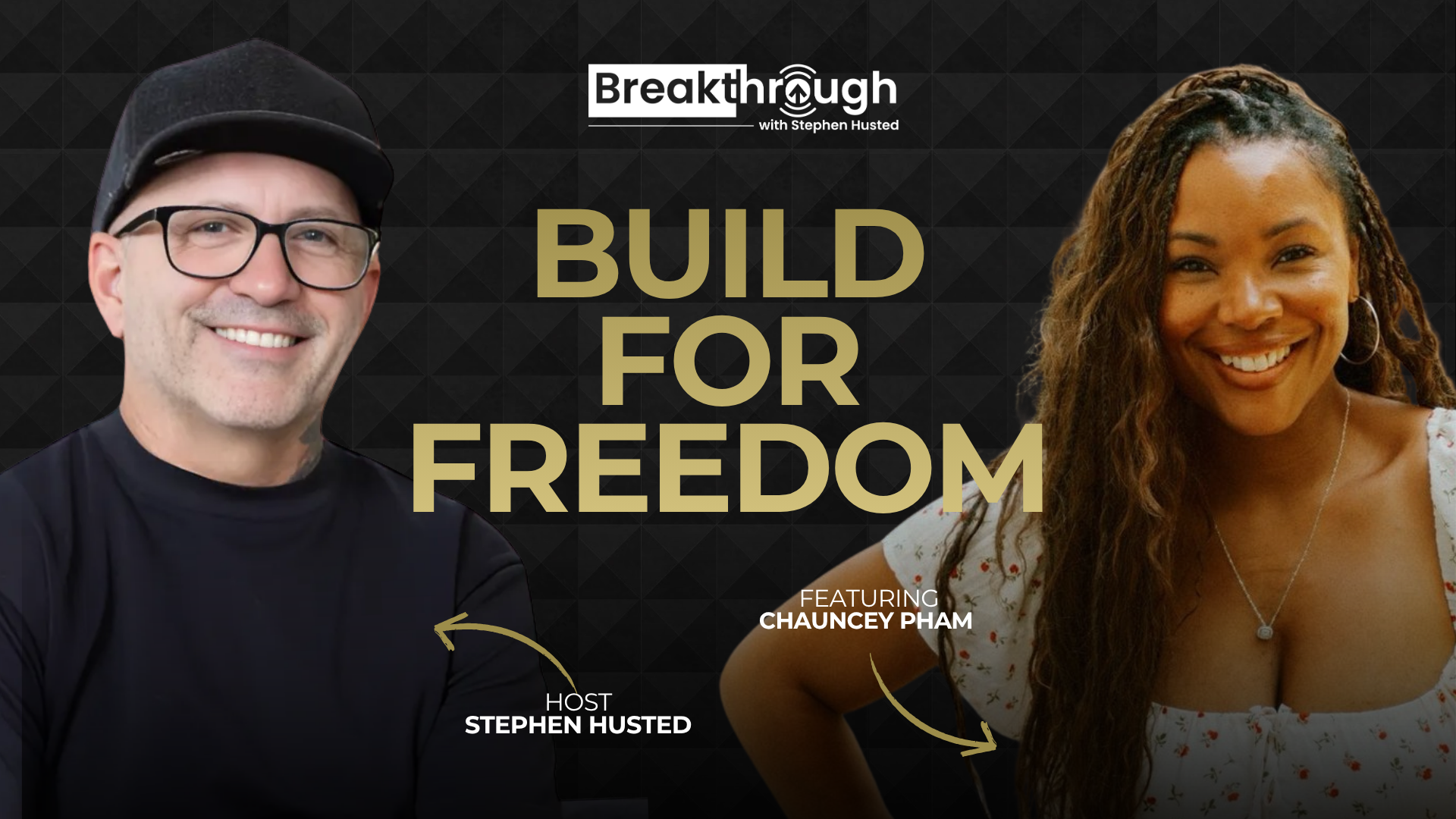
Today's guest is Chauncey, a real estate investor, interior designer, TV show host, speaker, coach, and flipper who has built her career around marketing, creativity, and real estate. Chauncey's real estate story started somewhat unexpectedly. She got her license because she wanted extra money to go to Disney World, but within three months she had closed 10 transactions and made more than her annual salary. Her marketing background quickly became one of her biggest advantages, especially as she started using video for lead generation and client communication. From there, Chauncey built a brokerage, joined a national brokerage, recruited more than 400 agents in her first year, and eventually transitioned into the investment side of real estate with her husband. We talk about how she built systems that allowed her to grow without creating a business that controlled her life. Chauncey also walks Stephen through her first flip, which she acquired for $125,000 and sold to another investor for $186,000 after doing very little to the property. That first $60,000 profit gave her the confidence to take the next step into investing. We also get into television, public speaking, social media, ADHD, creativity, and the pressure entrepreneurs can feel to constantly produce and scale. And ultimately, Chauncey shares the lesson she's carrying into this next chapter of her life: build your business for freedom, not for money.
Stephen and Chauncey talked about:
00:00 How Chauncey accidentally got into real estate
01:39 How marketing helped her stand out
02:51 Why video became her secret weapon
05:41 From real estate agent to investor
06:55 How Chauncey recruited 400+ agents
12:26 Chauncey's first flip
13:40 The $60K profit in 10 days
16:41 Why her flips had to stand out
27:02 The reality of being on a TV show
49:23 Build your business for freedom, not money
TRANSCRIPT
∎ Teaser / Highlighted Clip
00:00 Stephen Husted: Newer investors, and I'm talking young, you know, under 30 to me is young getting into real estate. And they're like, oh, how many doors and how many? I'm like, let me just tell you something. Do not, don't buy into that at all. Do what makes you happy. Find that number and live your life. What I've done means nothing to you. And what I've done might not be the right thing for a lot of people.
00:27 Chauncey Pham: Build your business for freedom, not for money. And if you carry that in every single aspect, then you'll be great. And so that's in how you market yourself so that you're attracting the right type of client. That's in how you're building out your processes and systems so that you're not building a jail cell around yourself and you are working in the business instead of on it on a daily basis. That's in how you manage your money and you don't become a slave to it. Instead, you're working toward freedom and not necessarily making more money. Then you'll always be happy with your business and you won't get burned out.
∎ Podcast Intro:
00:58 Stephen Husted: I'm Stephen Husted and you're listening to The Breakthrough Podcast, a space designed for clarity, curiosity, and the stories that move us. Here, we step away from the noise and into the moments that define us. the early influences, the hidden struggles, and the breakthroughs that reshape our lives. From personal reinvention to building a life through real estate and entrepreneurship, these conversations remind us that success isn't a straight line. It's a series of honest decisions, brave actions, and small shifts that change everything. This is where those stories live. Let's begin.
∎ Guest Introduction:
01:35 Stephen Husted: Today we're joined by Chauncey Pham, a real estate investor, designer, speaker, coach, and TV personality who built her career by combining real estate with her background in marketing and public speaking. Chauncey got her real estate license in 2016 almost as a side hustle, hoping to make extra money for Disney World. But within three months, she had closed 10 transactions and earned more than her annual corporate salary. From there, she built a brokerage. recruited more than 400 agents in her first year with a national brokerage, and eventually transitioned into real estate, investing, and flipping. Today, she's known for bringing creativity into her flips, using video and social media to build her business, and doing things on her own terms. But for Chauncey, success isn't about constantly scaling or chasing more. It's about building a business that gives you freedom. Get ready for real talk on real estate, creativity, entrepreneurship, and why building your business for freedom, not money, can change everything. Let's jump in.
∎ Podcast Proper:
04:41 Stephen Husted: Chauncey.
02:42 Chauncey Pham: Hi.
02:44 Stephen Husted: Glad you can join on today.
02:46 Chauncey Pham: Thank you so much for having me.
02:47 Stephen Husted: As we were talking about before we jumped on here, I was like, you got a list? Where are we beginning with you? That's the question here.
02:54 Chauncey Pham: Yes. Where are we going to begin?
02:57 Stephen Husted: Where are we going with this timeline here? I love it. We've got a lot of things going on. Real estate investor, interior designer, TV show host, speaker, coach, spoke on TEDx, Flipper. I mean, the list goes on. You know what I want to start at? How did you get started in real estate?
03:15 Chauncey Pham: So I got started in real estate because I wanted to go ball out at Disney World, essentially. So I had a job working in corporate America. I was in marketing and my husband and I had bought and sold a couple of different houses of our personal residences. And our loan officer each time was like, Chauncey, you're really good at this. I think that you should get into real estate. So long story short, I loved my job. I loved my life, but I decided to get my real estate license so that we could get VIP passes to every single park at Disney World when we went. my real estate money would just become vacation money. And all of the realtors that we'd worked with previously, we didn't necessarily like them. So I said, if they can do it, I definitely can. And that began kind of the origin story of me getting my license, not really caring. But within three months of getting my license, I'd sold 10 transactions and made more than my annual salary at my job. And it was off to the races.
04:07 Stephen Husted: Yeah, that's beautiful. And it's interesting, but what part of the real estate... Did you enjoy the most? Was it more the design aspect to it or the transactional or finding the deal? Because there's so many different little layers you can kind of tap into in the beginning.
04:22 Chauncey Pham: It is. Design and all of that didn't come until later. I didn't even know that I had a knack for any of that. What I was good at was marketing. My job before I got into real estate full-time is I was an account executive for a marketing firm. So I understood the psychology behind marketing. I did point of purchase marketing for companies like Guess, BCBG, Circle K. So I understood the psychology behind making people buy. And that was through digital and print media types of collateral. And so when I got into real estate, I applied a lot of the principles that I'd learned in marketing. into real estate and what other people were struggling with, it was really easy for me. So I got a lot of clients very quickly because I understood marketing. And so for me, that was the fun part. I got into it in what, 2016? And so that was when social media and video was just becoming a thing, but I already understood it. And so when I got in, I went straight to video for everything and it popped off really quickly for me. So that was my favorite part when I started.
05:24 Stephen Husted: So when you first were doing video, what were you tapping into at that moment? And you're right, 2016, you were ahead of the curve.
05:32 Chauncey Pham: Yeah, I use video for everything. So when I first got started, I was buying leads. I bought leads, I think from realtor.com or something. I don't know, it was so long ago. But I bought leads to one of those places where, you know, it's speed to lead because multiple people are getting the leads. And I noticed that people weren't responding to me. So I'm talking, this was like my first month or two in the business. And so since people wouldn't respond to me calling for my text messages, I said, well, maybe if they see a face and it's not just a text message. So then I would just pull out my phone and shoot a video and I would send it to them. And then they would respond back. And then they would let me take them out to go see the house for the lead that they went to. And then I started using video to communicate with my clients, conversations that I'd had over and over again. And then I automated that and I created jerk campaigns with video. And then I created a YouTube channel and I use video for lead generation. So it just became the cornerstone of how I built the entire business. And again, I just leveraged a lot of what I learned working in marketing and it worked like a charm.
06:28 Stephen Husted: And for you, you were the modern. So when you did that type of marketing. It wasn't like you're jumping around doing all types of real estate marketing at that time. Were you doing mailers or how were you else?.
06:41 Chauncey Pham: I did nothing. I did nothing else really. I did a couple of unconventional things. So when I first got started, I did a lot of open houses for Fizbo's and I would convert those into listings. So yes, I did open houses for Fizbo's, but most everything else that I did just all came from video. I wasn't doing any cold calling, no door knocking, no mailers, nothing like that.
07:00 Stephen Husted: I remember during COVID. I was the listing agent on this property and we got in a contract and the buyer's hat. So I live in San Jose, California, and the buyer's lender was in Oregon. And I was like, oh, I don't know. This is kind of interesting. Let's see how this goes.
07:20 Stephen Husted: This guy, every friday, would send me a video. And it wasn't a good video. He wasn't that great on camera. The lighting was bad. The audio is bad. But he would just jump in there every Friday. Hey, we are going through this process. I ordered the appraisal. The appraisers got your contact. They'll be reaching out. And he put those videos out every Friday for a month. That was 2021.
07:48 Stephen Husted: I'm still talking about that one guy, which is crazy. And I try to tell that story to. I have a lot of agents when I first started making video that would reach out like, okay, how do you break through this? I'm like, dude, you just, you're really overthinking it. You just have to just do it and get past your voice, get past like you think you're old or whatever the case may be. And just talk the way you would to anybody else on things you're doing.
08:16 Chauncey Pham: 100%. And that's exactly what I did. Yeah.
08:19 Stephen Husted: Is that exactly what you did?
08:20 Chauncey Pham: Yeah, exactly.
08:23 Stephen Husted: You were an agent for a while, but then you just got out of being an agent and got into flipping?
08:27 Chauncey Pham: So I'm still an agent. I'm still licensed. So my timeline was I became an agent. I did really well. My first year I did 35 transactions. And so then in my brain, selling houses was always the entry level position into real estate. It was never the end goal for me. And so once I got licensed, I figured out my flow in transactions. Then for me, the natural progression was to either start a team or start a brokerage. So after about a year and a half of being licensed, I started my own brokerage. In Texas, you don't have to be a broker to start a brokerage. They give broker's licenses to business entities. So I did a business entity broker's license, started bringing agents in because they were very curious about how I was able to have such quick successes. So build a brokerage, I only had like 20 agents or so. But during this time, I was still building my social media presence. I had my YouTube channel going. I had my Instagram going. And so I started getting a lot of attention from agents that weren't in my area. They weren't local. And they were saying things like, hey, I'm in California, but I would love to work with you. I wish that I could. So after having my brokerage for about a year and a half, I decided I really wanted to tap into the revenue that I felt like I was leaving on the table with agents all across the country. So I joined one of the national brokerages where folks could join up underneath me, and I became the number one recruiter within the first year of being at that brokerage. And so brought in a little over 400 agents the first year, and I was able to pull myself out of production. completely by then having the money from the revenue shares that was getting from that. And during that time was when my husband quit his job. I encouraged him to quit and let's start investing. I'd had lots of investor clients. And so then that's when I kind of transitioned over into the investment side of things.
10:09 Stephen Husted: Wow. That's an amazing pivot. And when you're going through that pivot, we already knew that your marketing was like the thing that you're just absolutely amazing about. But did you kind of learn quick? OK, now I got to manage people or did it all fall in place or did you have to start to hire to fill the void? No,
10:24 Chauncey Pham: no, it all kind of fell in place. That's amazing. You know what? I will tell you this. I am unapologetically true to myself. I am unwavering in what I want to do and how I want to build things because I'm not willing to compromise really my happiness in building a business. And so something that really stuck with me when I got started with building everything out, one of my mentors told me, he said that if what you build out, if you can't hand it to someone and it's not a duplicatable process, then you do not build a business. You built a gel cell around yourself for a job that you made for yourself. And so what I did was I built out duplicatable processes and I leveraged a lot of automation, but I never really had to hire out because I never scaled to what other people wanted me to scale to. I never just kept growing and growing, which is what we hear a lot of in real estate. And ego tells us that once you hit this benchmark, then you got to get the team and now you got to manage this many people and now you got to buy this many leads and you just got to keep going. And for me, I didn't want to do all of that. I wanted to get to a point where I was comfortable, to a point that I was happy. And in doing that, I didn't have to hire managers. I didn't have to scale in any way that I didn't want to. So no, I never really grew beyond that. And even with all the things that I do now, it's still just myself, my husband. I've got a project manager. I've got a construction manager. And I've got an assistant. That's it. That's amazing.
11:45 Stephen Husted: You're true to what you wanted to do. Yeah. Where you're right, a lot of people, especially in real estate, the shiny objects and more and more. It's so much of it. It's crazy. It's so exhausting. It's so exhausting. I talk to like newer investors and I'm talking young. Under 30 to me is young getting into real estate.
12:03 Chauncey Pham: And they're
12:05 Stephen Husted: like, oh, how many doors? And I'm like, let me just tell you something. Do not, don't buy into that at all. Do what makes you happy. Find that number. and live your life. What I've done means nothing to you. And what I've done might not be the right thing for a lot of people. You know, it's as simple as that.
12:27 Chauncey Pham: It's as simple as that. It's as simple as that. And that was so important to me. I think more people are getting it now. Let's say in like 2025, 2026, people have really pulled back from the hustle culture and just grow, scale more. People are really starting to want to value their time more and enjoy their life. So I'm happy about that. But I've been like that from the beginning.
12:47 Stephen Husted: I wish I had that. I wish I had that. I don't yet. But I strive for it. Well, here's the thing. So, I mean, I will say that my career started at 35.
12:58 Chauncey Pham: 35.
12:59 Stephen Husted: I had a good career before that. But, you know, I got clean and sober. I lost everything. I started over. So 35 is where I started. So I felt like I was behind
13:07 Chauncey Pham: the eight ball for so long. Yeah, you felt like you had to catch up.
13:10 Stephen Husted: Had to catch up. That was really tough. Plus, 2005. I got my license 2008. 2008, the market crashed.
13:18 Chauncey Pham: That's when everything crashed. It was the
13:20 Stephen Husted: worst time to get your license. But it was crazy to get your license in 2008.
13:25 Chauncey Pham: Yeah, that's insane. Yeah. Right now, I'm 42. And I would say that mine started probably around 33 or 34. Okay. So, yeah. Yeah. Same thing.
13:34 Stephen Husted: I think as you get older, too, you just get wiser on, no, I don't want to do that. No, I don't care about this. This is where I want to be. And I'm fine right there.
13:45 Chauncey Pham: Absolutely. And I think that's OK.
13:47 Stephen Husted: And you're right. I think that people are starting to catch on to that. And I try to tell that to a lot of the younger investors that I've had on the podcast because they're like, I want to. Yeah, I'm going to do an apartment complex. And I got this going. I'm like, whoo, just why? Yeah. Why? You're going to spread yourself too thin. Yeah. And they don't even know why.
14:05 Chauncey Pham: They don't even know why they want to do it beyond the fact that it's what we're told we're supposed to do.
14:10 Stephen Husted: Well, I think the problem is. Like back in the days when I first was going to get into real estate, I read Rich Dad, Poor Dad. OK, I knew it was about just buying single family homes. And so I went through that motion. But Instagram wasn't doing video yet. So it wasn't like you could jump on Instagram with an algorithm that also can feed you 10 to 15 different real estate strategies at once. Right. Right. And then you keep chasing. So it's easy in Instagram because now you get the next one, you click and next, you know. Your feed on a daily basis is 15 strategies and what you're doing wrong.
14:48 Chauncey Pham: Yeah, absolutely.
14:49 Stephen Husted: Right? I agree. And then you get done at the end of the day and you're like, oh my gosh, I'm so confused. What am I doing?
14:58 Chauncey Pham: You're confused. You don't know what to do next. You feel like everything you're doing is wrong. So yeah, I would definitely say social media has probably influenced a lot of that. Yeah. Yeah.
15:07 Stephen Husted: Talk to me about your first flip.
15:09 Chauncey Pham: Oh, okay. So fast forward, I had my husband, he quit his job. We started with the investment side of the business. So within a month or so of him quitting his job, we acquired our first flip and it was really like a wholetail deal. Essentially, he set up a carrot website for us and a lady found us from the carrot website. We were running ads on Facebook and Instagram. So she clicked on the ad. It took her over to the long form on our carrot site. And we played kind of good cop, bad cop. I would go in as the realtor. He would go in as the investor with his lowball offer. If they don't want that, then, hey, I can list your house. So that was how we kind of played things. And this particular lady had a nice three bedroom, two bathroom brick house that she tried to sell previously. And because her realtor and the title company, they weren't. I guess, privy or aware of the fact that a consumer debt can't cloud the title in the way that it did. She had her house on the market. She got an offer, went under contract. When this lien popped up, she freaked out. Can't terminated the contract and had been sitting on the house ever since. But she just wanted out. She just wanted to sell it. And she wanted enough money to move on to the next property. So long story short, she said, look, if you guys can give me a number that I can walk away with this, then you can have this house. And so we got the house for $125,000. She was as happy as a clam. We got the lien removed. We closed. And we were going to put about $30,000 into the house and turn around and sell it for about $210,000. But I told my husband, I said, this is a high rental area. I bet with the condition of this house and how good it looks, we can slap it on the market is coming soon and get some bites. So I put it on the market. It's coming soon at $196,000. And sure enough, an investor that was trying to buy up the block came to us and purchased it for $186,000. And the only thing that we did to the house was go over with our kids, sweep it, clean it. We traded the refrigerator that she left for some yard work to be done and closed on it and made $60,000 like 10 days later. That was the first deal.
17:09 Stephen Husted: And isn't it interesting about getting into real estate in itself? I think that there's a lot of friction in the beginning. Yeah. You know, you don't know all the answers, but then you do one deal, you do a second deal and you keep having these light bulb moments of things because as you're doing it, like what you just said, you had a direction, but then you started to think out of the box. You pivoted a teeny bit, you put it online, you got that and then closed quicker and reduced your risk. Now. What you just did, that scenario, you could use that again. Correct. You had to be in that situation to learn that. Yep. Yeah, that's the amazing thing about real estate.
17:47 Chauncey Pham: Yeah, that's the amazing thing about real estate. And it's this constant game of finding solutions and like putting puzzles together. And I think that's what I love about it. I'm extremely ADHD. I am a visionary, but I'm one of those people that I need the constant stimulation of solving the problem. And then once it's solved, I'm like, oh, I'm done with it. And so as a real estate professor, that's what we're doing all the time is just like solving more and more freaking problems. And so it works. And so yeah, on that one, that was the very first one. And from that moment. We were hooked. We went and took that 60 grand coupled with some savings that we had and then didn't buy one more. We bought three more. Of course. At the same time.
18:24 Stephen Husted: What we were just talking about.
18:28 Chauncey Pham: Three freaking more. And
18:30 Stephen Husted: so. You had some momentum going. Let's roll the dice.
18:33 Chauncey Pham: Let's roll the dice. And that's what got us going. And that was back in 2019.
18:37 Stephen Husted: 2019. Yeah. And at that time period, I think 20. 14-ish until 2022, you could roll the dice.
18:48 Chauncey Pham: Yeah. Yeah. I mean, the market was just steadily going up. There wasn't ever an acquisition that we would take down that the ARV would be lower by the time the house was done than it was at the point of acquisition. And now that can happen. You can buy a house now and then... Something happens weird with the market and it's actually your comps are lower. That was never the case back then. So that was always really cool. And you could roll the dice. And as long as you put out a decent product, then you were good. And that was kind of what I went into it thinking about was creating a good product. I went in with the eyeballs of being a realtor. And I would remember taking clients out to see six, seven houses in a day. And then we get to the end of all the showings. And I said, OK, which house do you like? And I kid you not. Almost every single house that was a flip, they, you know, because they all looked exactly the same. They all had same gray walls, same baseboards, same terms. There was nothing special about the houses because obviously everyone's just flipping off their spreadsheet. And so when I went in, I vowed to put special touches on the houses. And then that's kind of where everything grew into the design side and designing for other flippers and then getting the television show and all of that was this need that I had to create a product that stood out from others simply because I understood the psychology behind buyers from being realtor.
20:08 Stephen Husted: That is so true. I met one of my business partners who's a designer at one of our flip projects. And we were going through tiles and we were going, she's like, hey, well, it's time to talk about paint. And I go, all I know is don't take me outside and say you suggest pure white with black trim. Don't do it. And she just got this big smile. We became best friends right then and there. And I said, look on the market, see what the product is, and do the opposite. Correct. Do it tasteful. understand your market and what buyer you're speaking to but we don't need to do everything same you know what's interesting about your background today your color your nails okay so oh you gotta laugh you have to go look at my stories okay you gotta look at my stories you're gonna laugh this is gonna be the funniest thing but we got this project going in seattle that we're gonna break ground next week and i posted the rendering for this house right it's literally like a brown shaky tone with turquoise door and garage door
21:22 Chauncey Pham: nice and you wouldn't believe the
21:25 Stephen Husted: comet people are like doing crying faces and no not i'm like and i knew right then when i got those responses i said yep I'm on the right track. Yeah, you're on the right track. You're definitely, you're on the right track. I'm on the right track. I'm
21:38 Chauncey Pham: definitely like into dusty blue right now. So I'm into the dusty
21:41 Stephen Husted: blues and as you can see. But they go together, right? It's a good, it's a good tone together. It's just so, you popped up today and I looked, I started in my head, I'm laughing. But now that we were talking about this, I'm like, yeah. All right. That was my sign.
21:55 Chauncey Pham: It's so important. Yeah, this is your sign, man. But it's so important to create a unique product and it pisses me off to go into these houses and. I look at houses and properties as more than just a profit. It's a place to me where someone's going to have probably their worst day and their best day. They're going to get some of the worst news of their life and maybe some of the best news. They're going to bring kids home there. They're going to have family dinners there and gatherings. And I think that we owe it if we're going to go in and acquire these properties and quote unquote improve them to improve them, not just. for our profits, but for the end buyer. And obviously to do so in a way that makes sense. I'm not saying go blow your wad and spend a crazy amount of money, but put some damn thought into it. And so I think it's very important. That has always been important. And that was something that kind of set me apart as an investor from others in my market. Yeah, I love that.
22:47 Stephen Husted: I'm the same way. It's also that fine line of balance. I don't know about you. You said two things, visionary ADHD. So I'm curious about something. I'm curious about something. I want you to be really honest with me. Do you love spreadsheets?
23:02 Chauncey Pham: No, I hate spreadsheets. You're my kind of person. I don't even look at them. I don't even look at them. They don't even show me that stuff.
23:13 Stephen Husted: Like, I'll hire somebody that's an expert and let them come to me. Yeah,
23:18 Chauncey Pham: I'm not a spreadsheeter.
23:19 Stephen Husted: Yeah, and that's the thing. You have to, I think, get into investing. Becoming an investor is not just being an investor. You have multiple hats that you potentially could wear. Most of them won't serve you. They'll just bog you down and make you very upset. And spreadsheets and QuickBooks and all that stuff. If I ever make a video talking about that, you know, you should unfollow me because I'm making shit up.
23:46 Chauncey Pham: Yes. Those are not my thing. But so my husband kind of takes care of that. And then I'm the creative. Yeah.
23:53 Stephen Husted: He's the numbers guy.
23:54 Chauncey Pham: He's the numbers guy. Yeah. He's literally the money guy.
23:57 Stephen Husted: Walk me through a project. Does he give you a budget? You have to run with it. And then you're like, OK, I got this much for tiles and this. And all right, I got to be in this range.
24:06 Chauncey Pham: Yeah. So I'm typically given a budget. And then we always fix all the mechanicals first. So whatever is the whole budget, then we figure out all of the mechanicals that need to be replaced. And then whatever is left, yeah, from there, I just build my entire budget. I don't segment it based on tile and fixtures and things like that. It's kind of weird. I'm cheap. I go for affordable, creative finishes. So I normally only will have one thing that I'll splurge on in each house and I let the house tell me what that's going to be. So maybe it's a fireplace, maybe it's some ceiling treatment, but I don't. And being on a television show, I know this is hard for people to understand because being on a TV show, the way that they frame flipping on TV is that house flippers go in and they say, okay, tile, I have $2,500. This bathroom is going to be $8,000. You don't segment it that way. You have a bucket of money. And you got to make the money stretch where it's going to go. And for us and my husband, when he looks at the spreadsheet, as long as no number stands out where everything else is kind of steady, there's then just a random $20,000 on the spreadsheet. Then that's when he'll say, hey, maybe we should pull back on this particular item. But beyond that, no, I don't segment it by line item. I know what my budget is and I go for what's affordable and splurge on one item. And I typically come in somewhere around budget.
25:25 Stephen Husted: Yeah, I do the same thing. But it's funny because as how long that flip is, I'm constantly going,
25:31 Chauncey Pham: I think I can
25:34 Stephen Husted: find something really cool. I can find some faucets that are cool, but a little less because I really want to put it over here now because I'm seeing something come to life on the project that I think will bring more value.
25:49 Chauncey Pham: Yes. Yes, absolutely.
25:51 Stephen Husted: Yeah.
25:52 Chauncey Pham: So I think that building out duplicatable processes, for example, I remember back in the day with slippers, they would buy paint in batches and flooring in batches and all of that. Instead of that, what I do is I have almost templates for styles and colors. So for example, I have a modern black or modern black and chrome or a, I don't know, transitional pewter and bronze, brush gold. And so what I have with that is I have preset plumbing fixtures, typically light fixtures, hardware for my doors, door styles that I already have that I'm going to order every single time. So instead of it being the same paint color for every single house and the same floors for every house, I standardize almost like my plumbing fixtures and my light fixtures that aren't special. And that saves me a lot of time. So I kind of have been segmented how people focus on their spreadsheets and they have preset things they're going to do for every house. I do have that. I just don't do it for things that are important to me like paint. I feel like with paint, you need to go into a house and figure out where the most light is coming in. And based on the direction that light is coming in, that's what paint color that you go off of. You don't just pick the same damn white for every house just because it's
27:08 Stephen Husted: the white she's got buckets of. Yeah, it's so crazy when people do that. I hate when I see flips that I know it's two different flippers and they got, they literally painted, one house is painted, they paint the same damn color. Like this ain't a track home.
27:20 Chauncey Pham: It's not, it's not a track home. It's in a different neighborhood for a different hire.
27:26 Stephen Husted: I mean, I like to look, okay, here's what the neighbors got to the left and the right. Let's put something in there that makes it cohesive.
27:33 Chauncey Pham: Correct. I need it cohesive. Correct. I will never paint a house stark white on the outside with the brick because that's never going to typically fit in with a neighborhood that already exists. So it's definitely something, again, we're just talking about being mindful with the product that you're putting out. And I try to do that.
27:48 Stephen Husted: That's awesome. I love it. I love hearing it from somebody else. My madness in
27:53 Chauncey Pham: my own brain. Yes. Right. Right. No one understands it. No one understands it. But because of it, I mean, now I get hired to do designs for a lot of flippers.
28:03 Stephen Husted: I do too. And I've turned,
28:04 Chauncey Pham: I've turned it all down. I can't, no, I can't do it with the homeowners. I can with the flippers because they're typically coming to me because they know they don't have the creativity to, you know, kind of make some. So then they just trust me. They don't ask. any questions they don't question why they just do exactly what i tell them the homeowners because they're living there and it's their taste and they're more apprehensive about things it's a lot and they need to see it and they need renderings of everything and then it becomes like a full-blown interior design i'm not an interior designer I know. I'm a real estate investor that just knows how to make stuff look cute for cheaper than most other people. So I can't deal with homeowners, but I love to do it for other flippers. And then to even hear from them, like, girl, I got multiple offers first day on the market. I love that. So I do not work with homeowners, but I do work with investors.
28:48 Stephen Husted: I did one. It was a client
28:52 Chauncey Pham: homeowner and
28:54 Stephen Husted: helped her redo her kitchen. We show up to do tile and stuff, and she's got her mom there. And I went, oh, we're in trouble now. And we started pointing out pink tones, and the mom's like, well, I like this. And I'm just, I'm sitting there going, what do you mean? What do you, why do you, you like that? Well, you're not living here. You don't live here. What did we talk, and she kind of clouded judgment. Absolutely. To the person who lived there, like her daughter. It was like crazy to me. And I was like, oh, gosh. No, no. And I remember at the end of it, I'm like, yeah, no, not doing this.
29:26 Chauncey Pham: Never again. No, no. I've got a couple of those. Never again.
29:29 Stephen Husted: Not worth the time. So I want to hear about. So you got two other things. You got so many things here I got to talk about. Jeez. Walk me through the zombie house flipping that you were doing in Dallas. Troll behind closed doors.
29:43 Chauncey Pham: Literally. I mean, television sucks. I mean. You're out in California, so I'm not sure if you're exposed to television and production. Television is selfish, especially when it comes to reality TV. They will encourage you to ruin yourself in order to get drama for TV. And they don't care. So for us, I essentially got, as soon as I started my YouTube channel, a couple of months after I started my YouTube channel, a producer reached out to me and said, hey, I'm a television producer. I thought it was just some guy trying to hit on me. I'm like, I'm not a TV producer or whatever. But he really was. And so I end up creating the sizzle reel and they created the show concept around me and they pitched it to a couple of networks, never got picked up. So that contract expired. It happened again a second time. So then by the time the folks from the show that I actually end up on reached out to me, I was like. I'm not wasting my time on this anymore. So it was funny. They reached out to me on Instagram first. I ignored them. Then they sent me an email, ignored them for a while. They end up calling and they're like, hey, we really want to talk to you about the show. It's already in production. It's been on for four seasons, but we're wanting to expand it from just this one city that is into other cities. And we found you on Instagram and YouTube. We love your personality. So long story short, we did the sizzle reel thing. They presented us to the network and we got chosen. So all of this started in November of 21 by June of 2020. after we'd done all the background checks and everything they needed, we started filming. And what a lot of people don't know is each show is produced differently. Our show in particular was produced with us. Actually, these are houses that we are responsible for buying. We are solely responsible for the renovations. We're responsible for all of that. And yet the television production company would make promises to the network about when things would be done without consulting us. That's not how construction works. So it's not TV. This is real life. This is construction. So it was very challenging. And there are a lot of things that people don't think about when it comes to television. You tend to get flattered and you're like, oh, this is going to be great for business. And first of all, no one watches TV anymore. Everyone streams and social media has by and large replaced television. So if you can build your own audience on social media, you're going to get far more out of that than you will ever get from being on a television show. Number two, when you're on a television show, the perception around you changes. So all of the people that you work with, the partners that you've typically worked with, they now think that you have way more money. And so your prices go up. Your workers want more money. They've got cameras in their faces now. So then your turnover gets higher with your crews. Typically, a production crew is coming with 15 or 20 cars on a street. So now you've got neighbors that are pissed off because a residential street is now clogged up with tons of people. And it's for hours on end while they're filming at a house. And so now they're calling police or they're calling the city. And now you're getting additional permits or the manager that they send out is just being harder on you because they know it's a television show. comes the folks after the house is done that they bought it and they find out that the house was a part of a television show, then there's almost an extortion element to it. You don't want to mess up your reputation, do you? So I know the inspection said this item was fine, but this bathtub needs X, Y, and Z. And I'm pretty sure you don't want to get a bad review out there. So it was a lot of that even going on. So it was a very negative experience for me. If I could do it all over again, I would not do it.
33:02 Stephen Husted: That's good to know. That's like the real, that's exactly how you felt. That's good because a lot of people think differently. They think getting a show that's going to do this for them and maybe some it does, but there's also a price to pay for it. Yeah.
33:17 Chauncey Pham: No, a hundred percent. And I mean, yeah, you get paid. The show pays you, but it's the sacrifice and what you're trading off. There's no return on that, I guess.
33:25 Stephen Husted: Okay. Interesting enough. So let's talk about TEDx. How the heck did you get on that one?
33:33 Chauncey Pham: I met someone that had done a TED talk and yeah, and she just said, I think you would be great at doing a TEDx talk. And she introduced me to the place that she'd done her TEDx talk and I applied and I got in.
33:46 Stephen Husted: How did you prep for it?
33:49 Chauncey Pham: There's an entire, almost like coaching session leading up to it. A lot of people realize TEDx in and of itself is like a business. TEDx talks are held by different people that I guess hold the licensing, I guess, to be able to put on the events. And so each one of them has their own. coaching mechanism and program that you go through before you actually get to doing the talk. So, I mean, months leading up to it, you almost have a coach to help you put everything together and put your ideas together. And you're in these little communities with other people that are doing talks at the same time as your event. And it's a really cool collaborative event. And so, yeah, it was pretty cool.
34:26 Stephen Husted: And then, so they do it. Is it live? And is there an audience? And how big is the audience?
34:31 Chauncey Pham: So it just depends. Mine was not live. Mine was recorded and the audience was only the speakers and their family and friends.
34:38 Stephen Husted: Oh, cool.
34:39 Chauncey Pham: But there are some that they do actual live audiences and there could be a couple of hundred people in the audience. Did
34:45 Stephen Husted: you do any public speaking before you ever did a TEDx? Yeah.
34:49 Chauncey Pham: Yeah. I went to college. I went to college on a debate and oratory scholarship. Oh, geez.
34:53 Stephen Husted: I could just. Yeah. You're very. You talk like that, which is good. That's good.
34:59 Chauncey Pham: Yeah, I went to college. When I first went to college, I wanted to be a sports agent because back in the day, Jerry Maguire had a hold on me. And I love that movie. And I wanted to be a freaking girl sports agent. So I went to college. I was a political science, public administration, double major for pre-law. And then I decided law school would take too long. So I changed over to television, radio broadcast. And that's what I went to school for. But even just getting to school, I went on a debate and oratory scholarship. So I've been speaking since I was like 13.
35:27 Stephen Husted: So what's the best for speech and debate? What did you take from that carried on into, let's say, YouTube and do the TV show or just doing short form? Because there's some people that are just really good on camera. They know how to articulate. They tell good stories. What do you think it is?
35:43 Chauncey Pham: That's a great question. I mean, it's practice. It's confidence. I think confidence. Below the surface of everything. I could give you 15 different things, but I think below all of it, it's confidence. And I luckily got my confidence at a very young age with public speaking. So I want to tell you a quick story for you after. So when I was 13, I got caught sneaking out of the house. Snuck out of the house, along with my boyfriend. Cops caught us out. He was a little bit older, so I got taken home in the cop car, and my boyfriend went home in his car. And I yapped in the back of that cop car to that police officer the entire way home. Because I did not want him to take me actually home. I was trying to get him to just drop me off at the stop sign and then watch me go home so I wouldn't get in trouble. So I'm yapping to him, telling him all of these things. And right before we get to the stop sign that I want him to let me out, he stopped. And he looked at me in the rearview mirror. And I thought, oh, yeah, I got him. He's going to let me out. I'm not going to get in trouble. This is great. And instead, he said, you almost got me. But if you were my daughter, I would want someone to tell me. So I'm going to go and tell your parents and take you to your door. But you hang back. So I hung back at the car and I listened to this police officer blatantly lie to my parents about where he found me and who he found me with. And just so that they would like go easy on me. And when he was finished talking, he patted me on the back and he was like, be good, young lady, be good. Because I was a straight A student. I'm selling him doing all of his things. So fast forward to he gave my mom a curfew ticket for me being out past curfew. And she looked at me with a scowl for about a month or so leading up to the court date that we had to go for this ticket. Ah, you got in trouble. You're costing me money. I don't have right now. And so because I was sick of listening to her just complain about this the entire time, I put together a folder of recommendations from my teachers, from my principal past report cards. And I even went to the library and printed off some case studies about curfew ordinances from Yahoo and put them all in this folder. So when we were in front of the judge, He starts talking and I'm like, hey, excuse me, can I give you something? And I pull out of my backpack this folder and he looks at it and takes his glasses off and looks at my mom and he's like, do you know what you have here? She put together a case for herself. And this is a big deal. She's 13. So I was blessed with a gift that Judge gave me that day. And I think that has catapulted me to everywhere and everything I've done, which is. He instead of he threw the ticket out and he assigned me to something that we had called teen court where teenagers facilitated the entire trial process. And I was the prosecuting attorney. And so I got to learn. It was pretty cool. It was like all my friends that would get like minor in possessions and curfew tickets. I would be like, you better give me some fruitopia. Give me some money or else I'm getting you the max. Right. And I would give them community service. So, yeah, I was kind of a goon. But beyond that, it taught me at a really young age the power of influence, the power of selling yourself confidently. the power of saying things with confidence and being able to convince people that even if what you're saying is stupid, if I'm saying the sky is green, but I say it confidently enough, then people will believe it. And it really got me started with speaking and sales. And so I started that when I was 13 and then it turned into debate, which then turned into public speaking and debate and oratory scholarship, which then turned into everything that I've done now.
39:10 Stephen Husted: That's amazing. That's a great story. And that was like the anchor to
39:14 Chauncey Pham: it. That was the anchor. That was the anchor. Yeah. Yeah. So I sold a cop and a judge, dude.
39:19 Stephen Husted: So great. That's so good. I love it. I love it. So right now where you are in your life, what is in the back of your head that you haven't done? And it doesn't have to be business.
39:34 Chauncey Pham: Live freely. Live without expectations for myself. In being an entrepreneur, we're always creating these milestones and we're creating these KPIs and we're creating all of these things that we need to do and that we're looking to accomplish. And I've been in that grind for so long. I want to just live freely. I want to just have freedom to wake up, have slow mornings, have slow evenings, explore, have more adventure and actually live. So at 42, I think I'm kind of in this midlife crisis, but really just this hyper awareness of mortality. And I think I would just like to focus on living more and checking things off of taskless less.
40:18 Stephen Husted: That's a big one.
40:20 Chauncey Pham: Yeah. I'm not interested in it at all. I'm not interested in it at all anymore.
40:24 Stephen Husted: It's interesting you bring that up because I'm 56 and I think about this all the time. But I work myself to the ground still. I ain't even trying to get just step away like, hey, you know what? It's Monday and I'm like, I'm going and going. I'm like, why can't I just take off for eight hours and go on a hike and then go to lunch and then go by the ocean and just chill? It's still going to be there. What is going to change in my grand scheme of things in my life for me doing that for that day? Nothing.
40:56 Chauncey Pham: Absolutely nothing.
40:57 Stephen Husted: Absolutely. Nothing. I had a lady that was an astrologist, and she was wickedly accurate on a lot of different things. And this was when I was getting ready to start creating my cohort. And she told me, hey, I want to give you some advice. One, your personality is the type that you're going to go and do a ton of work in three hours, more than most people will do in a full week. But you need to walk away. You need to go in the mounds. You need to go do the things you like to do. And you got to recharge. You have to step away from devices and everything because that's how your brain works. And you're never going to get to that full potential of really what you're trying to achieve unless you figure out how to do that. Because everything else will pull your attention in and you'll just keep burning out and burning out. And you're not getting to really the highest purpose of what you should be doing.
41:56 Chauncey Pham: Absolutely. And it creeps into so many things that it shouldn't. For example, social media. I love creating content. It's been my thing for years. I actually enjoy it. But like when I say live freely, I mean, even create freely. Am I even creating content that I want to create? Or am I creating content with this purpose of I need top of funnel. I need for it to generate these leads. I need for it to do this. Instead of, and while I am showing up authentically, I'm still at some point performing to a point in order to get some sort of outcome that I need monetarily to check that task. I'm not posting today because I had something exciting or compelling or something happy that I wanted to post about. I needed to check that up because I got to post every day. I got to, I just got to get that done. And I don't want to live off checklist anymore.
42:47 Stephen Husted: Yeah, I agree with you on that. I definitely don't. I think part of it too. Only from my side of it. It's just that behind the eight ball is still apparent. And I live in San Jose, California, the most expensive area. It's expensive. You need to work your ass off. I mean, that's just the reality of it.
43:08 Chauncey Pham: Or you can do what I did. Moved to Mexico.
43:11 Stephen Husted: You live in Mexico? Okay. There you go. What part of Mexico?
43:20 Chauncey Pham: I'm back and forth. I'm back and forth to Dallas. So, I mean, I don't really talk about it openly. A lot of people know, most people know I live here, but I'm in both places almost equally. But yeah, I mean, my home base is now in Mexico. You know
43:31 Stephen Husted: what? You're not alone. I've had so many people on the podcast recently and they all have places abroad. Colombia, Costa Rica, you name it. That's been, and all of it now that, now this is all kind of coming together and it's all kind of the reasons that we just talked about. Yeah. The slowing down. I guess you just have to get to that point when you run hard. Yeah. That you need to like step back and go. Like why? What am I doing?
44:03 Chauncey Pham: You can't take it with you. What are you doing? Okay, so what? You're behind the eight ball. But like at some point you have to have enough. Like when is it enough? Like, when is it enough money? When is it enough wealth? When is it enough ego? For me, I've had enough. So I'm doing things that I enjoy.
44:21 Stephen Husted: I think you brought up something about the creativity side of things. That's been the biggest struggle, I think, with social media for me is, well, I mean, I have a creative background. I was a hairdresser for since 92. I DJed. So interior design, like, so to me. It's all about creating. The money thing comes like secondary. I remember when 2012, Instagram was mostly tattoo artists, hairdressers, photographers, models, because it was all photo. There was no video then. And I thought it was just cool to post some of my listings in black and white. And it was just posting like, yeah, that's cool. And it just made me happy because I changed the way the house looked. The house was yellow, but now it's in black and white. It looks old. As in when it was built. All right. That's cool. And. You're right now, like algorithms and you have to have hooks and all this other shit. And so it's so annoying. You know what I'd love to do now? I don't know if you are on this, but I love Substack.
45:30 Chauncey Pham: I have not really. I love it. Done a deep dive into it. You like it? Is it like old school blogging or blogging?
45:37 Stephen Husted: You can add these short notes, and it could just be anything on your mind, right? You just shoot it out, kind of like a Twitter thing. You can do long-form articles, and you can go live. You can connect a podcast, but the short form, it goes this way, horizontal. So what it does is it breaks you from the
45:59 Chauncey Pham: whole scroll thing.
46:01 Stephen Husted: Okay. And then you get to choose the things you're into. Which is really cool because let's just say you're like, I get enough shit from these other platforms. I just want to learn about creativity and art. Learn about pottery and art. You know what I mean? And so now you got that little thing. I've got a lot of people that are into AI. And so they would post something. It seemed somewhat controversial. So I go immediately, out of habit, go straight to the comment section. Oh, it's got to be crazy, right? Yeah. Nothing is crazy about the comment section. People asking questions and they're talking and it's like a normal conversation. And then I was like, okay, I like this. I like this. And so I just started doing it and it came at the right time, Substack, because I can connect Whisperflow on my computer to
46:51 Chauncey Pham: Claude
46:52 Stephen Husted: and I can come up with an article idea and I rip it for 20, 30 minutes. And then it asked me some more questions. We come up with the title. But now I got like a piece of content that I can go into a short form type scenario. And it's just been a very creative outlet for me.
47:13 Chauncey Pham: That's awesome. I may have to explore that. That's really cool. So then, yeah, you're able to just be more creative about whatever you want. And it's like your own little personal blog. It is.
47:23 Stephen Husted: Yeah. And I think it's just, yeah, it's got some. Check it out. If that's something you're interested in, you should check
47:29 Chauncey Pham: that out. Yeah, no, absolutely. I'll check that out. Well, we,
47:32 Stephen Husted: this was a great conversation. I, you know, what's interesting about having a podcast is I have guests on and there could be times throughout the year, years that, you know, I might be doing something and I'm feel like I'm the only one. Yeah. And then all of a sudden, someone will come on and validate things. And then when that gets validated, I just need forward more. You know what I mean? I'm just like, yes. Well, yes.
47:59 Chauncey Pham: Do the blue turquoise door.
48:02 Stephen Husted: Do it. You have to think about that. How did you just pop on today and you're wearing the colors of that post on stories that people are like, don't do it, and doing crying faces. Yes. And I'm in my head going, you're not. You don't know. I'm a hairdresser.
48:24 Chauncey Pham: Yeah, I'm a creative.
48:26 Stephen Husted: You can't debate me on that. I'm sorry.
48:28 Chauncey Pham: No, I'm right. You're wrong. Thanks. Same thing as me. I painted a flip. I painted the entire ceiling blue, the entire house.
48:35 Stephen Husted: Oh, that's so funny. I did this to my first townhouse. I painted the kitchen ceiling gray and my mom's frame walked in and you can't do that. I'm like, oh, I'm doing that.
48:47 Chauncey Pham: Yep. And the entire ceiling of the entire house was Sharon Williams, smoky blue. And it was great. Got more thoughts.
48:53 Stephen Husted: Why? So let me ask you a question. Why did you do that? What did you see? What was that vision like?
48:59 Chauncey Pham: I do. I just I went down an ADHD hyper fixation of the blue porches in the south and how they ward off spirits and things like that and how everyone did these blue porches. And I said. why can't, well, if the sky is blue and these people's porches are blue, how come I can't just do a blue ceiling instead of a feature wall? I'll use the fifth wall and just use the ceiling, but it won't be a feature. The whole ceiling will be this color. And so I just did the whole ceiling blue. So that's the rabbit hole in my brain right now. And it worked.
49:29 Stephen Husted: That's where the ADHD really helps. Like we are, it's like a, do you, so I got one last question. One last question on, I'm curious about this. The ADHD. How do you deal with that when it comes to public speaking and getting your thoughts across when you're doing video? Because I'll be really honest. I mean, we're having this conversation and I'm like going through my list for tomorrow and hey, this is what I'm painting. And I'm already thinking of a hundred things as we're having this. It's a gift and a curse in the same way because it kind of brings up some serious anxiety and stuff. How do you deal with that when you're... public speaking or doing content do you like do you have a way to kind of keep your brain focused on what
50:15 Chauncey Pham: you're trying to do yeah when i'm doing content definitely i outline my videos and outline kind of like what i need to be talking about and i pause so i do a lot of cuts in my videos i don't do a lot of just straight takes anymore i used to but people's attention span got shorter so i just needed to cut it down So just candidly speaking, most of my videos, I do like a word dump or brain dump on everything that I want to go in the video. Let AI kind of help me sort it out in the right order that it should be. And I typically have my computer somewhere right by me while I'm recording. And so then I'll read kind of what this thought should be. I'll say it naturally and then move to the next one and then just make the cuts with no spaces and piece it all together. And those perform incredibly. Most of them are 25,000 views a piece very quickly every time. In terms of speaking, I tend to do the same thing. I just create presentations that give me the cues on where I need to take the conversation so that I'm not jumping off to a million hosts.
51:10 Stephen Husted: I've done a couple of public speaking in the last couple of years now and no kind of format to it. And I literally will get done. And I'm like, what the hell did I just say?
51:21 Chauncey Pham: Yeah, no, you have to have something to kind of guide you there or else it will definitely kind of go off the rim. And you carry that by
51:29 Stephen Husted: you? Is that somewhere with you at the time? Is it on like a teleprompter or do you have it on an iPad?
51:34 Chauncey Pham: Yeah, I typically will have it on an iPad or something. Okay,
51:37 Stephen Husted: cool. I'm going to give that a try.
51:40 Chauncey Pham: Yeah, give that a try. It'll help you be guided.
51:42 Stephen Husted: I appreciate you jumping on today. It's been amazing to talk to you.
51:48 Chauncey Pham: I appreciate you too. Thank you for giving me my
51:50 Stephen Husted: week's worth of energy in this one hour post. Okay.
51:55 Chauncey Pham: Ain't that crazy. Well, thank you so much for having me. Thank you so much. I'm glad that there's another fellow crazy out there.
52:04 Stephen Husted: If you had to give, let's finish on this. If you had to give a inspiring entrepreneur one piece of advice, what would it be?
52:18 Chauncey Pham: build your business for freedom, not for money. Build your business for freedom, not for money. And if you carry that in every single aspect, then you'll be great. And so that's in how you market yourself so that you're attracting the right type of client. That's in how you're building out your processes and systems so that you're not building a gel cell around yourself and you are working in the business instead of on it on a daily basis. That's in how you manage your money and you don't become a slave to it. Instead, you're working toward freedom and not necessarily making more money. Then you'll always be happy with your business and you won't get burned out.
52:54 Stephen Husted: I absolutely approve that message. That's the truth right there.
52:58 Chauncey Pham: There you go.
53:00 Stephen Husted: Awesome. Well, thank you so much for joining today.
53:03 Chauncey Pham: Thank you. Thanks for having me. I appreciate it.
53:06 Stephen Husted: You're in Mexico right now, currently? Yes,
53:08 Chauncey Pham: I am at the Mexico house.
53:10 Stephen Husted: All right. You enjoy it. Thanks again for jumping on the breakthrough today.
53:14 Chauncey Pham: Thank you.
∎ Podcast Outro:
53:16 Stephen Husted: Thank you for tuning into our show, where we hope you found inspiration and gained valuable insights. If you enjoyed this conversation and want to stay updated on our latest episodes, be sure to subscribe to our podcast and share it with others who might benefit from it. We appreciate your support and look forward to bringing you more candid conversations and breakthrough moments in the future. Until next time, take care and keep exploring new ideas and strategies.