Episode 88 - How Roman Partyka Went From Mechanic to Real Estate Investor
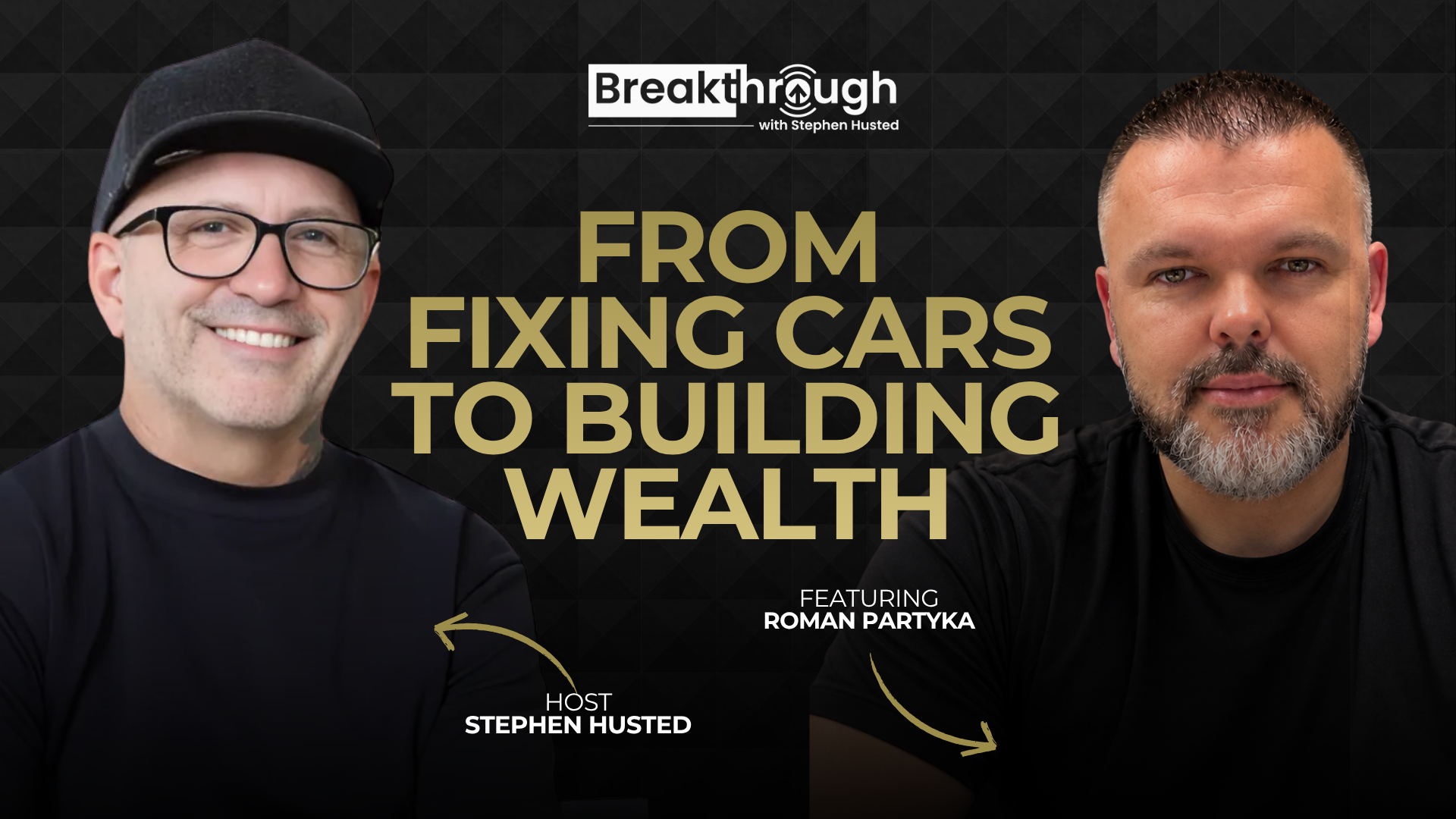
I sit down with Roman, a contractor and real estate investor who built his career from the ground up. Roman started out working on cars and eventually became a lead mechanic before moving into construction. After the 2008 crash forced him to rethink his path, he opened his own auto repair shop. Years later, that construction background and his experience working with contractors helped him make the transition into real estate. We talk about his first flip, the unexpected $30,000 setback that taught him the importance of contingencies, and how he discovered house hacking and the BRRRR strategy. Roman also shares how he has been converting single-family properties into multiple units to create additional rental income. We also get into our Seattle projects, development challenges, working with cities and utilities, why buying the right property matters, and how developers need to manage all the moving pieces of a project. Most importantly, Roman shares the mindset that helped him keep moving forward when things didn't go according to plan.
Stephen and Roman talked about:
00:00 Breaking Out of Your Comfort Zone
09:23 Roman's Story Begins
12:44 From Mechanic to Construction
18:23 Making the Jump Into Real Estate
22:30 His First Major Flip
28:56 Losing $30K and Learning From It
29:36 Discovering House Hacking
34:29 Turning One House Into Multiple Units
37:56 Building a 7-Unit Seattle Property
45:35 The Reality of Real Estate Development
TRANSCRIPT
∎ Teaser / Highlighted Clip
00:00 Roman Partyka: That was like my journey that opened up the vision of you just got to do things and you will never expect everything and things just happen. But the hardest part is not to give up, but have your mindset still straight and saying everything is going to be okay.
00:19 Stephen Husted: For anybody that wants to get into development, you have to understand that you're the CEO and you need to manage. all types of people and you need to stay on top of everything because there's a lot of moving parts there's a lot of people in the mix and it's kind of like organized chaos if you really think about it the role of the developer is to manage everything efficiently and keep the costs relatively down do the best you can on that And some of it, at some points, I know for myself, and I'm such a control freak. Seriously. And I'm so impatient that I have to realize I can only move as fast as everybody else.
∎ Podcast Intro:
01:13 Stephen Husted: I'm Stephen Husted, and you're listening to The Breakthrough Podcast, a space designed for clarity, curiosity, and the stories that move us. Here, we step away from the noise and into the moments that define us. The early influences, the hidden struggles, and the breakthroughs that reshape our lives. From personal reinvention to building a life through real estate and entrepreneurship, these conversations remind us that success isn't a straight line. It's a series of honest decisions, brave actions, and small shifts that change everything. This is where those stories live. Let's begin.
∎ Guest Introduction:
01:52 Stephen Husted: Today, I'm joined by Roman, a mechanic turned entrepreneur, real estate investor, and developer whose journey is all about taking action, learning through experience, and pushing through the setbacks that come with building something of your own. Roman started his career working with his hands, eventually building his own auto repair business before making the leap into real estate. From his first flips and losing money on unexpected problems to transforming single family homes, into multiple income-producing units, he's learned firsthand what it takes to see an opportunity and actually make it happen. In this episode, we talk about getting out of your comfort zone, dealing with failure, finding hidden value in properties, and why sometimes the biggest breakthroughs happen when you simply decide to keep going. Let's get into it.
∎ Podcast Proper:
02:42 Stephen Husted: Roman, welcome to the breakthrough, buddy.
02:47 Roman Partyka: Thanks for having me. Appreciate it. Something new for me in my line of work. I love it.
02:54 Stephen Husted: It's always good to be pushed out of your comfort zone.
02:59 Roman Partyka: 100%. Right?
03:00 Stephen Husted: Yeah. Yeah. Yeah. It's good. I know it took us a couple tries to get on here. What did you guys have to do yesterday? Did you have to do an update?
03:08 Roman Partyka: Yeah, I had to reset the whole computer to be able to do this, I guess. I don't know what that means, but…
03:15 Stephen Husted: That's good.
03:16 Roman Partyka: They were able to handle this for me.
03:20 Stephen Husted: It's all good. So how's it been, speaking of coming out of being pushed out of your comfort zone, how's it feel kind of breaking through, starting to shoot content?
03:35 Roman Partyka: Getting a lot more comfortable. I'll put it that way.
03:38 Stephen Husted: Why is that?
03:40 Roman Partyka: I don't know. I just feel more confident about myself. I think a lot of it was more mindset that, oh, what are people going to think? What do you look like? What does your voice sound like? And it's just this little thing telling you, like, what are you doing?
03:55 Stephen Husted: Isn't it crazy? It is like that in the beginning. You start seeing yourself on a video. I remember my first couple. I was like, oh, my. bottom teeth are crooked holy shit i look older my skin on my neck is starting to get loose that was a absolute mindfuck right there to be honest that could have been an easy point to not go further
04:17 Roman Partyka: right 100 especially with the cameras now they're so clear so you can start seeing all these little wrinkles yeah yeah
04:27 Stephen Husted: you get really good at figuring out better light
04:30 Roman Partyka: Yes. Yeah. You know what I mean? Back a little bit.
04:34 Stephen Husted: You shoot a video and you're like, ooh, nah, that's not good. Over time, you don't care.
04:39 Roman Partyka: Have AI smooth out the face a little bit.
04:42 Stephen Husted: Yeah. You know what? One thing I've found is it's interesting with that being said, a lot of the content that I really gravitate towards these days is the most raw, non-production, just in the moment content is really what I enjoy. It's kind of funny. I just want it like you just jumped on, you streamed a little bit of consciousness and then you're jumping off. I think that there's something to be said about that. It's fresh.
05:12 Roman Partyka: Yeah. For sure.
05:14 Stephen Husted: Yes. Speaking of mindset, I went to a, did I tell you I was going to a hypnosis like seminar? No, no. Yeah. I went to a hypnosis seminar last weekend, two days. Michael, my business partner, wanted me to go out there. And so I did. Didn't know what to expect, really. And you had to fast, couldn't drink coffee all day. And basically, in a nutshell, we all have trauma one way or another. And usually it stems from childhood. And those traumas can kind of come out in different things. It can be relationships. It can be what you think of yourself. If you start to try to do something new, like a new career, and you're like pretty excited to do it, but then all of a sudden your brain kicks in and starts putting you on a different path, that then derails you from doing it. A lot of it comes from your childhood. And so the hypnosis part is kind of like changing those highways. So you get off that highway of that thinking. That's the only way I can try to describe it. But we spent a lot of time doing, we did an exercise where we had to write down six numbers, memorize it, write down another six, memorize it, and just keep going and going. And it was all these mental exercises. But really what was happening was he was making us go through all these to break us down by the time the evening came to actually do the hypnosis part. Because now you're mentally, you're pretty much mentally fried. You haven't had food. You haven't drank coffee. And you're more susceptible to taking on the hypnosis. And then there was a stage where you kind of rewrite your story, your lifestyle. I want to live in this kind of house. I want to be doing this throughout my day. I want to be making this. You just list every single thing. He really makes you shoot for the moon. And it was crazy because they did an intake form in the beginning and they paired you up with people that had very similar intake forms, right? And I said, yeah, two plus million a year. This, I want to be speaking on stages, blah, blah, blah. And he was like, what is that? He's like, I couldn't even live on two. And it was just funny because he's like, two million, that's a month for me. Why are you shooting for that? And it really came down to maybe you don't hit that. Maybe those are not the most important things, but it's more of reshaping your mindset on the directions you're going to go. And so once we did the hypnosis on Sunday, I had to push my flight out. And because I think I had to fly at six. No, I had to fly at seven, but at six, they're even done. So got a later flight. And literally went through the hypnosis and 20 minutes later jumped on a shuttle from the hotel to LAX, which was only like a five minute shuttle. And the guy dropped me off and I get out and I'm like, literally think I'm on another planet. Dude, like in the matrix. I was talking to the shuttle guy and I was like, wait, who am I? And it kind of freaked me out at first. I got off and I was getting ready to go through security. And it was like I was in a video game. And I'm like, dude, keep it together. Keep it together. You're fine. Just going through security. And I'm just like, what? It was strange, man. It was really strange. And everything had a weird haze to it. Then I got on the plane. And so for some reason came to my head, I'm going to make $2 million plus a year. And all of a sudden this voice said, no, you're not. You're making more than that. And then all of a sudden, everything about the marketing aspects of things that we talked about started kicking in. And like I was thinking through different things. I was like, whoa, OK. Yeah, it's been a trip and it's been a good thing and a bad thing. Honestly, there's been some things have popped up recently that he told us that it does bring some of your issues to the forefront.
09:41 Roman Partyka: Wow. OK.
09:43 Stephen Husted: You know what I mean? And so it's like you're facing them. The reason why it brings it to the forefront is it's getting you to work through them because those things, whatever they are, are your blockers in life. And you always revert back to the same shit over and over. And it was a perfect theme. Everybody. There are 60 of us in this group. All their stories. were very similar, like unsure of themselves, fear, all of this stuff. And a lot of it was stemmed from childhood and the way that they talked about. And these were all entrepreneurs, wealthy doctors, attorneys, business owners, startup companies, you name it. And it just was interesting to kind of hear everybody's, there was some crazy things he did to some people, like hypnotizing them right there on the spot, like random ones. It's crazy.
10:36 Roman Partyka: Like in front of everybody? Yeah. Mm-hmm. So you had to tell them like what you went through in childhood or how did that go?
10:44 Stephen Husted: We had to do some like writing exercises. Okay. And the reason why there was writing exercises is because, and they are long, like hours worth of writing sessions and I was just like burned out. So what I would do is I would walk out of the room and go outside the hotel and I'd voice memo the whole thing. and i'd go into like chat gpt and build out a summary the vision of my life and the things that i want right so i would voice it first and then i go and then i would write it down and the reason why he was getting you to write everything down is he's clicking it in your brain
11:17 Roman Partyka: like visualizing it yeah
11:21 Stephen Husted: it's the reframe it yeah i don't know i know some people are afraid of hypnosis i can definitely see why there was like There were some interesting things about it. I could just say that. And now it's a WhatsApp group, too. So everybody in the WhatsApp. And this guy's famous, too, by the way. He's worked with all kinds of famous people, Jake Paul, athletes, all these random people. Just all kinds. He lives in L.A. Or Malibu. So, yeah, it's crazy. Anyways, let's not turn this into a hypnosis podcast.
11:58 Roman Partyka: Yeah, I don't think I'd ever do that for sure. But good for you. Good for you. You were able to do that.
12:04 Stephen Husted: Yeah. Yeah, it's kind of crazy. So I want to get into a little bit of your beginning story. I actually want to know what your first couple careers were.
12:15 Roman Partyka: Okay. Well, my first job ever was working for Chico's. That's a women's clothing store. So out of all the jobs in the world, I was working for them. So that was an experience of its own, but that was still in high school. But one of my, I think, career paths was I always was helping my dad fix cars around because I knew he was a mechanic growing up. That was his basically career. And it got to a point that every time he had to fix a car or help somebody else, I was right there with him, giving him the tools ahead of time that he even needed. And then I said to myself one day, I'm like, one day I'm just going to own my own shop. So that got me to always thinking about that, having that in the back of my mind. so a little bit of time went on a friend of mine his dad worked at a u-haul company he was a mechanic for them and they were actually looking to hire somebody who does tires and batteries i said hey can you put a good word in for me i want to go try it out so he came in there Told him, hey, I got this young kid that's ready to do the startup work. And they're all like, hey, well, does he have any experience? Does he have any degree or anything like that? And they're like, no, he just been a mechanic. I got the job, thankfully. And every day I would be changing tires and batteries. I got tired of it real quick. And I came to the manager. I'm like, hey, do you mind letting me try to do some mechanical work? Like I've been doing this. years just since I was like six or seven years old. He's all like, oh, do you know how to do stuff? I'm like, yeah, I can do anything on a car. Just give me a shot to try it out. So he's like, okay. Because he became friends kind of with me. He was an older guy. I think he was like 70.
14:09 Stephen Husted: Oh, yeah. I remember you telling me about him. Yeah. Yes. Okay, cool.
14:15 Roman Partyka: So he was like, hey, I'll give you a try. And then basically give me a chance to do like breaks. And then it went into valve covers. So within a year, I became their lead mechanic. Basically how fast I grew through the mechanic side of it. The next year after that, they had interns that graduated two years of college degree as a mechanic. And the first thing they would do is put them with me so I can teach them how to actually do stuff. And remember, I never even graduated high school. At this point, but that was always my biggest thing that becoming a mechanic. I really enjoyed it. And then I'm like, well, there's almost like a gap here that I'm like, I'm capped out. What's my next journey? And then a neighbor of mine, his best friend was in construction and they did big escalating jobs. So I said, hey, well, does he need a mechanic to work on the excavators or something like that? Okay, I'll ask him because they're always, mechanics is a dying field and I loved it. I loved doing things. So he talked to them. The guys were like, he's hired without even meeting me or anything. Take him on. And this was like in 2006. So I'm like, okay, well, I don't want to quit this job. So how about I was working from 7 to 3 at U-Haul. And then from 4 to 9, I would go to the construction company, basically grease up all the equipment and whatever machinery needed some work. I'd work on it so it'd be ready for the next day for the operators. But I started liking it more and more. I'm like, I'm tired of this U-Haul stuff. I want to see what the construction world is like. So I said, would it be okay if I come in full time? He's like, yeah, I was waiting for you to say that a long time ago. So I started doing that, became basically an operator slash mechanic for them. So our company then was doing all the groundwork for... The city hall, we would be doing schools, like big projects. So I kind of really got fascinated with the construction side and the groundwork, how the ground moves, how everything gets saturated, how the ground level of water changes. So that really opened my eyes to that world. It was just starting to get good. I was making great money, bought my first house. And then 2008 hit, all construction stopped, especially these big projects. And that was it. So I'm like, what do I do now? I just bought a house. Back then I was making, I think it was like 3,000 a week. So I was making money that I could never even imagine. In 2006, that was like killing it. And then I'm like, okay, what do I do? Luckily, I just always had some friends around that did different types of businesses. So I jumped jobs to jobs in the construction field, going like I was a plumber for a little bit. I was an electrician for a little bit. I installed carpet, flooring, tile, just to get by, just to cash jobs, whatever I needed to do to keep working at it. But then I was just like... It wasn't consistent because, okay, somebody needs some help there, I'd help. Somebody needs some time there, I would help. But then at the end of the day, I'm like, well, I just stepped away completely from my dream. Won't I start my own auto repair shop? Like everybody's still calling me to help them fix their car. So I'm like, okay, perfect. Let's do that. It's now or never. So in 2008 is when I actually opened up my auto repair shop. And that changed that first mindset to being a businessman, I guess. And you always hear people like, what are you doing? It's not easy to start a business. Where are you going to get your customers? Where are you going to do this? There's so many shops around. You're just going to waste all your money and just never succeed.
18:15 Stephen Husted: Well, wait a minute. Let's stop there. This is a perfect little point because you heard that from people. I've heard this. time and time again and usually it's coming from people and sometimes i don't think they meet harm by it i think they just have their own limiting beliefs and they project it onto you
18:35 Roman Partyka: yeah 100
18:38 Stephen Husted: so the moral to these stories is if you're thinking of starting a business going a different route whatever that is sometimes it's better to keep it to yourself or you if you're going to bring it up Bring it up to somebody who's actually doing the things that you want to do. Because I've heard it all too, right? And when that moment came, was that person had no clue really about the whole business side of things? Of course. Or did they run a business?
19:10 Roman Partyka: No. No. No. And it's like, why am I listening to it? And then the only person who actually said, you should do it. Don't listen to what others will say or think about. You know you're good at this. Do it. And that person was my dad. There you go. Yeah. There you go. He's all like, I'm not an entrepreneur. I'm not a business person, but I was a mechanic all my life. But I see how you are. And every goal that you push yourself to, you go and do it. He's like, go for it. Whatever you need that I can help out, I'll be there for you.
19:48 Stephen Husted: There you go.
19:49 Roman Partyka: And then that kind of blocked all the noise out for me.
19:53 Stephen Husted: Yeah. The permission was set, especially from somebody who you look up to, admire, love. I mean, you can't get a better person to actually get that kind of advice from.
20:02 Roman Partyka: Right, right. And that just opened that career for me. Yeah, of course it was a struggle. Of course, I was thinking, like, how am I going to find these people? We didn't have basically Facebook, Instagram. Barely phones came out back then. So what I did, I just printed out business cards and started walking to. Every company in my area, every dealership, I'm telling them, hey, I'm new to this region of mechanics. If you don't have a mechanic or if you do, if I can help out, maybe they're being behind or anything. Let me know what I can do for you. I even offered them to do like things for like pennies on the dollar just for them to try me out and see because I know once they see the work that I do, they'll stick with me. So I think that was my. First business career, and it was all word of mouth. Till today, I still own that shop.
20:58 Stephen Husted: Yeah, that's great. That's great. That's great. So how did you pivot into the construction side of things? When did that happen?
21:05 Roman Partyka: Well, in 20, I was really happy that I had to shop in 2020 when we had COVID because I was a necessity. So that was like the biggest time in career for me. like loaded with work like overwhelmed so much work coming in nobody's working but everybody wants to get their cars done because they're at home so i made a little bit of extra money and then right after that how everything like construction started blooming i'm like man maybe it's time to get back into the construction world but what do i do like well i have a little bit of extra money let's try to do a flip or something I've heard great stories of people flipping and then I've heard horror stories of people flipping. So you know how that is. So since I've had the shop for a while, I have so many different construction people coming to the shop to fix their cars. And I started calling a few of them. I'm like, hey, do you know anybody who's actually flipping or who has actually done it? They can kind of guide me or help me find the first property or something like that. A couple of the guys said, yeah, you should call this one guy. He's been doing flipping. He's still doing it. All that. He's busy, but give him a call. I call him. He didn't answer. I leave him a message. He didn't respond. I call him like the next day. The third day, he actually answers. Who are you? Out of everything, I'm like, well, I got your number from a good friend of yours who actually did some work for you. And he said he'd be a good guy to talk to about converting into being a flipper or construction side of it. And he's like, well, yeah, but I'm really busy right now. Maybe we'll chat later. I'm like, okay. I gave it a few days. I call him back. I'm like, it's later. I'm calling you again. Here I am. Yeah, so he's all still busy. Try me again later. So this went off for, I want to say, two, three weeks. Then I just kept bugging him. And then the last time I called, he's like, well, I'm actually going to look at a property right now. And it's here and here. If you want, come by. I flew right there, met him at the property. He's like, well, this one's going to be going on market. So he started explaining, or it's not going on market. This is an off market deal, actually. But we can actually close on this in about two months. And here's all the stuff that you're going to need to do. This is about roughly how much money you're going to need to spend to make this work. and i'm like man it's okay the numbers are there makes sense because have you ever done like construction or flip anything like this i'm like not really i'm not sure what to expect what am i gonna run into i don't know any electricians i don't know any plumbers that like i can count on to help out on my first one so he's all well i actually just closed on one and i'm looking for like a gc to kind of run it and do that flip for me. Like, he's like, would you want to basically do this for me and actually see if you're going to like to do this or not? Like giving me the opportunity to do that. And I told him, well, I'd love to, but I can't stop my work. I would need to get paid for it. And he's like, well, what do you need to be making for me to get you on board so you can start learning and trying it out? So I'm like, well, I need to be making at least $500 a day to make this happen. No problem. You can start tomorrow. So I actually came back to the office. I told a couple of my guys, I'm like, well, I'm going to help you on the phone, but I'm going to start this new journey. So good luck. Let's see what we can do.
24:49 Stephen Husted: I'm going to double up on this. I got career number two going.
24:53 Roman Partyka: Yeah. And I didn't even tell people about it. I was like, okay, I'm going to just. do it because i heard all the negativity from the past and i'm like i'm not gonna say anything i'm just gonna do it so i just went and did it i started doing the project for him and at that time i didn't even know what to expect the house is so bad that pretty much is considered a tear down like one of the worst ones i've ever seen he's like are you sure you can do this i'm like I'll do it regardless. I'll make it happen. I'll do it. Because I was all in on just this one project, I got it done in record time. I think within a couple months or something, I was able to build a crew, meet the right contractors, meet the right plumbers. He's worked with a bunch of electricians and plumbers. So he told me, here, use these guys. I'll pay for them and everything. Just run the crew, do whatever you need to do. So I did it in about... I want to say about two months, we had it completely done, renovated. And he would come in every once in a while and just check up on it. It didn't say anything. I'm like, man, am I doing okay? Am I not? Where am I at? And then when he posted it, two hours later, he had a hundred grand offer above asking. And then he called me back. You did good. It's closing in 30 days. And I'm actually going to give you a bonus on this to do it.
26:23 Stephen Husted: Yeah. I was going to say, especially because you had your light bulb moment too. Wait a minute. I was working for 500 a day and he just closed a hundred grand over list. Yeah. Yeah. So he made money at his price. I want a piece of that pie now.
26:36 Roman Partyka: Yeah. Yeah. That was like, oh shit. But
26:38 Stephen Husted: that's good. It's good it happened that way.
26:40 Roman Partyka: Yeah. No. And it blew my mind to see that the price that he... posted at that that was him making i want to say at least 100 grand i don't know his numbers but that's what i would be thinking and it went another 100 grand over i'm like oh shit i'm in the wrong business i need to pursue this that time was coming to close on that other house i'm like okay i got more excited but turns out we bought that house It was going great. Same thing, renovated, renovated it. And he got another house. He's like, hey, you want to do this one and that one at the same time so you can kind of make money to pay for this rehab on this? I'm like, sure, why not? Since I'm doing it already and the two houses are next to each other, I'm like, let's do it. Might as well get paid for it while I'm doing mine. So same thing. I was like two to three months into it. Got that house renovated. And then we had the city came out and they said, hey, your septic is failing. We need you to connect to the sewer because we brought the sewer to the street. Shit. Okay. Okay. So what is this going to cost now? So I got back into it. I'm like, man, what do we do? It's failing, but it's not failing because we jetted it out. So it passed the inspection. Or do we do this and just try to ask for that, put the price point a little bit higher, saying, hey, it's connected to the sewer. It's not on the septic anymore. So we're like, man, okay, let's do it. How much is it? Let's just get it done. It turned out that just the feet to connect to the sewer was 15 grand in that city. Not counting all the piping because usually the septic tanks are in the back of your property into a drain field. Yes. So now we had to kind of go all the way through the back and around all the way up to the front street, block off the street, connect to the stub out. It was just a whole new experience at that point.
28:29 Stephen Husted: And something you couldn't prepare for.
28:32 Roman Partyka: Yeah, we didn't prepare for it at all. Even on our inspections when we bought the house, they said, yeah, it seems like your drain field is failing, not your septic. That way, I'm like, okay, I've worked with ground work, so I know how that works. I can rebuild the drain field, no problem. So it never even occurred to me that they're going to say, hey, actually, because we brought the sewer in front of your house, we need you, instead of you can't really rebuild the drain field anymore, we need you. you to connect so the question to it this
29:04 Stephen Husted: is like the moral story the city has different plans yeah for your property
29:12 Roman Partyka: 100 you can
29:14 Stephen Husted: plan for everything you want and you can do everything right you can even get permits issued as we know
29:19 Roman Partyka: yes we can get permits
29:22 Stephen Husted: issued on a new build and at the end of it they're like no you need to do x y and z and Yeah, that's going to cost you extra money and three months of not being able to rent out the property.
29:37 Roman Partyka: Exactly. I've literally seen it all at this point.
29:41 Stephen Husted: I think that's a good point to bring up to people that are doing rehabs or new construction is to always run your numbers with a contingency plan as well. That's a massive thing you got to do. And all those numbers need to make sense. on that deal and on that development and if you don't need to use that contingency great but have it in place yeah
30:08 Roman Partyka: yeah i learned that real quick on this first build i did on this flip so by the time everything was done we were like i want to say it cost about an extra 30 grand to get all of that done so we were like 30 grand over budget I didn't even account for contingency. I just accounted for all the stuff that I know and have done. So that was a little bit of a drawback, but we're finally done. And it turns out that in that time when we were doing this, people that are like bums and everybody that was local started migrating to this side of the street. So as soon as we posted it, a week later, we had a break in. So they broke in and... use the shower, use the house as their own. We come there, we got them kicked out. Like luckily they were respectful enough to get out. A week later, after we got everything cleaned up again, have it still on the market. We come back, they opened up the back window, got in again. So it was just for months. I was just kicking people out, cleaning it, putting it back in the market. Finally, we just built a huge fence, put cameras up. got it sold but we lost that 30 grand would have been something that would have helped us at least break even but because of that and all the issues that i ran through we lost 30 grand on this so a lot of people would be like fuck this i'm done i don't want to deal with it at all so for me it was like okay so Let's not do that again. Let's pick better properties and better locations and have some contingencies in it. Yeah. Yes. And so I'm like, hey, let's keep doing it. Luckily, he gave me the jobs to do for him at the same time. So little by little, I was doing jobs for him and then did a flip for me. That was my basically first step into real estate. So that few years went by, I'm like, okay, I can't be renting anymore. I need to start doing something different. And I see that people are, instead of flipping, they're actually buying and holding. I'm like, how can you afford one house, two houses, three houses? Like, what is this? I'm missing something. There's some missing piece of this puzzle. So I started talking to different people and they were like, well, you can do a burr. I'm like, what is this burr? Or you can do a house hack. I'm like, what's a house hack? Okay, I'm new to the industry. Don't get me wrong. I'm eager to learn, but let me know what it is. So I'm like, okay, house hack. So you can build a house or remodel a house and then do a cash out refi. And then out of a basement or of a garage, build another unit, put somebody in there and I'll set your mortgage. Okay, that sounds actually, we got something there. So we found a house that I was able, it had a garage in the backyard. So I'm like, okay, let's renovate the house. So I started renovating the house the same time my wife was pregnant with our child. So I'm like, okay, I have enough time to renovate this and have her move into a brand new place, everything nice and clean, like what you always dream for. Things are lining up. But they did it, like always.
33:33 Stephen Husted: I didn't hear this story before.
33:36 Roman Partyka: Yeah, so basically I'm running around trying to do this while I'm working to meet the money, renovating this house. And out of the garage, also making that another unit so I can put renters in there and offset my mortgage. So I'm like, okay, so everything's aligning. So I should be done in one month. The baby's coming in two or three months. It was about three months. So I'm like, okay, everything's going to work out perfectly. I saw the vision, it's going to happen. And then it turns out that's not what happened. I forgot what the thing was called. Basically, the baby and my wife's belly stopped growing. So it was just like, okay, we need to do a C-section, but we can't do a C-section until you reach, I think it was the 32-week mark. Just to have the brain develop and everything like that before we can even do that. So in that time, it was like one of the hardest times of my life, I want to say. Hearing that and like you're in the middle of a million things. You've got jobs you're doing. You got a home that you're building because you already told your landlord you can be moving out in a month because I got a house. So like all of this feels like the whole world is collapsing on you. So they put it on bed rest right away. So I was there every single day for the whole time. Every night I would sleep there. In the morning, I would go get her some breakfast, bring some breakfast to the hospital, go to work, work for half a day, get some lunch, go drive lunch to the hospital, go back, work, work on the house, go home, take a shower, take a change of clothes, get dinner, go back to the hospital and do it all over again. A month and a half into it, we were able to reach that goal, like to do the C-section. And that was like... Once you're in that section and dressed into this blue suit and you got this baby that fits in the palm of your hand, like three pound little baby and it's alive and breathing, you know, it changes your whole life perspective on a lot of things. I'll put it that way. I remember the days I'm driving to the hospital and just bawling, like driving and like bawling out saying, how am I doing this? What's going on? What happened? But that blessing to this day was one of the best things that ever happened to me. So while I was going through that, it was still like after the baby was born, the baby had to be in the hospital for another month and a half in the cubicles because everything, the whole body still needs to be developed. While I finished the house, like it's been already like almost two and a half months into it. So I'm still sleeping at the hospital, not sleeping anywhere else. And finishing that house, moving everything to that new house before the baby comes. And the day I was moving the furniture, the next day they said, okay, you guys are ready to go home. So finish that. So that was like my journey that opened up the vision of you just got to do things and you will never expect everything and things just happen. But the hardest part is not to give up. Have your mindset still straight and saying everything is going to be okay.
36:59 Stephen Husted: There'll be some bumps in the road.
37:01 Roman Partyka: There's always bumps in the road, but continue your journey and it'll be okay.
37:07 Stephen Husted: So,
37:08 Roman Partyka: Al,
37:09 Stephen Husted: where are we at now?
37:11 Roman Partyka: The baby's now four years old, thank God. The most lively baby in the world. She is, you know how they had that Energizer bunny. All those commercials, that bunny has nothing on my little Roxy.
37:23 Stephen Husted: Yeah. I like her name.
37:25 Roman Partyka: Yeah. So it was like, it changed everything, but then it gave me so much motivation to continue doing what I do. So luckily I became friends with all the neighbors around and was able to buy the house across the street and do the same thing. So that was my journey to buy my second house. I bought a house converted into, it was a two bedroom, one bath house. I converted into a three-bedroom, two-bath. And out of a garage, I made another two-bedroom, one-bath unit. And I was like, okay, well, this is working. Then I'm able to take my deposit money back out. And then the rents that are coming in from both of these units are still covering my mortgage. I love this. So I continued just one after another. Doing it slow. I don't want to overwhelm myself, but just doing it. one after another and i really got it down to see that in this market the only way you can actually make some money or break even is to split out a single family into two units and i think that's one of my biggest things that i'm trying to do and teach others or show others the possibility that you can finish off a basement, get an extra income. You can redo a garage and get another income. So I think that was my transformation, understanding that, how it works and being able to convert. A single family into two units, calculating the rent for that area and what the mortgage is. And every time since it's worked and it actually brought more money to the table and it's actually being able to cash flow in this market with high interest rates. It's almost like unbelievable.
39:11 Stephen Husted: Yeah. And it's always something, you know, you can get online and you can follow a bunch of. investors on instagram and hear different stories and some people are saying that cash flow is dead this is this and there's always strategies out there there's always ways to get the cash flow you just have to kind of think out of the box and i think the whole seattle play when it comes to single family homes with the basements and then how you can condoize lots and add density is the version of this is a strategy that's working in today's market right And even though the rates are high, they are. This is a good solution. And even places, high cost areas like Seattle or just places like California as well. They're not really cash flow markets. They're appreciating markets over time. And so if you can just break even on a new property that's brand new, foundation, windows, plumbing, electrical, kitchen. roof you have a good 15 years of not worrying about headaches i'll tell you right now that is one of the biggest things right there because when you have a lot of properties that are older and you fix them up and if you're not changing out everything you got fixed items all the time it's just part of the the business so let's walk through the whole seattle scenario what what's been going on here so we met at one property And it was a small little two-bedroom, one-bath with a basement.
40:46 Roman Partyka: Unfinished basement.
40:47 Stephen Husted: Unfinished basement on a 12,000-square-foot lot, 100 feet wide. And we bought it. We rehabbed the whole house. We built out the basement. So we did a two-one upper. And then in the basement, we did a two-bedroom, two-bath. As that was going on, we were in planning to build. a dadu which is a just a detached accessory dwelling unit so went through the planning that took some time had some issues with our architect who was getting a little too overwhelmed and getting too busy built that but as we were building come to find out that seattle has changed the laws again when it comes to what is allowed yeah and now we're adding another four units right to the lot and that's phase two so basically taking a small single family home 900 square feet and now it's seven units yeah like a mini community right right which is pretty wild when you think about it but when we first met you're in the background with ian on the facetime Because we were doing a FaceTime walking through this property before we were going to write an offer. And you're just like, like smiling. It was like a kid in the candy starter, just like. yeah buy it well yeah
42:20 Roman Partyka: because i saw the vision right away i'm like look at this look what you have up here and this is what it's all valued at as being just up here and you have a full unit downstairs you even have a side door there it's meant to be and that was the first time i think we ever met on facetom i'm like well here look at it this way would we actually do what i've done and you can make this work and if you want to keep it a single family we were able to save the stairs in between just put a door at the top and at the bottom just yeah that was smart if you have the option then you have a huge family that wants to rent the whole house you have it so so that was like come on you saw me being excited i'm like this is something that is me that i like to present to people because a lot of people just On this day, they're like, oh, the daddy play. Okay, yeah, let's do the daddy play. But a lot of people don't realize that they're going to lose money on the front house if they don't do something different. It's true. I see that firsthand. A lot of people lost money or they're carrying costs by the time the build and everything is done. Just the numbers don't make sense anymore.
43:26 Stephen Husted: Yeah, and this is a big key to the whole thing. This equation out in Seattle. It is now essentially a duplex. So it went from a single family to two units. That is bringing in gross rents on two units, which is a key to help you survive the development part for the most part. That's just to be really honest. You're getting more cash flow. You can cover your hard money loan or whatever you got going or some of the costs when you're going through planning. Because there's a lot of money being put out in the beginning. It's a 12 to 14 month process. Maybe longer depending on how things are all getting played out. So you're really burning through cash. And I don't think a lot of people understand that from what they see online. But you burn through cash. And you have crazy issues come up too.
44:25 Roman Partyka: One of the things that I saw so many people struggling with renters that they're not going to fix the house much, but they're just going to get a renter in there right away. And then they don't realize the problems that are going to come up right off the bat that this needs to be fixed. This needs to be fixed. There's a leak here. We got to open up drywall. And that just starts draining you. I've seen this happen to a lot of investors still that are, when we're just thinking about building the daddy on the back and they just wanted somebody to live in the house. But the problems that house was accruing payment wise that the people were just losing their ass off on the main house. And I'm like, why do that? How about you? rehab it you can use the construction like a hard money lender that will pay for the rehab on it get everything done and nice and new that you don't have to worry about it for 10 15 years and then it can actually cash flow or break even and your lot will be free it's a basically a like a no-brainer but why not do it
45:33 Stephen Husted: it is a no-brainer but i think the part that people miss as well is The minute you condoize the lot, let's just say you're only putting a one DADU. So one more new house on that lot. So you got two, right? And depending on how big that lot is, you're devaluing the main house because you're taking away some of that lot. And depending on where that house. So, for example, the 117th project, that was a corner lot. Had a nice big left, the side yard to the left, side yard to the right, pretty big backyard, a lot of front yard too. But since it's a corner lot, we can fence off the backyard, build a brand new house. It'll face into the neighborhood, feel like it's already been there. And so will we devalue the main house? The same as a house where you split the backyard up and there's no backyard for basically both units. No, it's going to be a different thing. So it can range from 5% all the way up to 15% that you're going to devalue. So you're talking could be 50 to 100 grand off the main. So you gain 300 building the brand new ADU, but you lose 100 grand off the main house. So there's a delicate. tap dance when it comes to these yes you know i mean you really and then really a lot of that comes back down buying right and getting the project done in a timely manner and really understanding your numbers and making sure you have a contingency plan right big time and we did on that 120 the first project we worked with we paid cash for the house we didn't do a hard money loan we paid cash We self-funded the rehab, which was $216,000 from what I remember because we did the two units. And the reason we did that is I went, look, this is the first one we're doing in Seattle. I anticipate issues. I don't know what they are, but there's going to be some. And so now that we look back, what were the issues? We had our architect kind of drop the ball. That cost us a couple months, right? We had an inspector come out to the ADU once it was all said and done and built and say, we have other plans for you. You need to do X, Y, and Z. We're almost going on 100 days at this point. By the time you do the back, it's going to be 120 days. So that was a big cost. We're talking 20 grand right there. But since we planned it out in that beginning phase of it, we were already prepared for it. Wish I wasn't, but. Well, you were. It was the way
48:19 Roman Partyka: it went. Like the things that came out, like even the Seattle City Light
48:23 Stephen Husted: making their own. Oh, that's right. I forgot about them. Oh, my. Yeah. Got a PTSD from them.
48:29 Roman Partyka: Right. And it has nothing to do with even the architect or the contractor. Even Seattle City Light had its own epiphany.
48:40 Stephen Husted: Well, that's a good point. For anybody that wants to get into development, you have to understand that you're the CEO and you need to manage all types of people. And you need to stay on top of everything because there's a lot of moving parts. There's a lot of people in the mix. And it's kind of like organized chaos if you really think about it. And it's not black and white. And there's always... things that change there's changes there's change orders there's all kinds of scenarios and the role of the developer is to manage everything efficiently and keep the costs relatively down do the best you can on that and some of it at some points i know for myself and i'm such a control freak And seriously, and I'm so impatient that I have to realize I can only move as fast as everybody else. Sometimes. Yeah. Those are my only, those are my pieces of advice. Yeah.
49:55 Roman Partyka: Yeah. It's like a lot of times we're just waiting and then you can't even schedule the next person because you don't know when this is going to happen. If a connection, they're citizens. We had a connection scheduled, what, three months ago? And it just got connected a couple days ago. And everybody gets backed up. And they're like, man, you can't even put anybody on the schedule. Then your timing is all off. And nobody cares. The city doesn't care. And who's eating it? The developer.
50:24 Stephen Husted: Yeah, and they don't care. Their timeline doesn't change. Their timeline is not going to affect anything within their business. I think utilities. Site work, all that. Utilities are a massive thing. You really got to deep dive in the beginning on a project. You really want to understand that. The whole, in Seattle, there's protected trees and you have to understand trees on the lot. I think that's a little easier to kind of understand pretty quick. But anything to do with utilities, you really want to get the right people in your corner to understand that. Because it can add up. Big time. That 125th project could have cost us. It is costing us a lot for some utilities, but it's worth it for what we get to build on the second phase.
51:14 Roman Partyka: Right now, it's like, in a way, it's a good thing that the site was changed, the site sewer and infiltration system, just because if we would have... gone and done it the original way that it was supposed to happen i think you would run into a lot more problems redoing it later on your on that property in front of that single family and the dad you were right in front of him if you would have to do that later i think you would be in a lot more trouble and a lot more expense than doing it now so sometimes This happens, but it happens almost for a good reason, but it still is time-consuming and drains money. People don't realize that it's a really good point that people have to account for the unexpected, for the contingency money. You almost want to feel like, I don't know, a few months ahead, be prepared. At this point, I'm seeing more and more of the issues that the city has, the site inspector has, things like this that... Just out of the blue add time. And a lot of people, especially if they don't split out the main house, they're hurting. A lot of people don't realize it. Yeah, we can do it. Yeah, just find the right architect, find the right contractor. You can do it, no problem. But a lot of it is out of either person's hands that things can get changed. And even something on the main house can happen that can drain you dry real quick. It's something to be said.
52:48 Stephen Husted: it's a great wealth generator in a shorter period of time that i can say like if i have to look back at like all the properties now it's crazy looking 125th and yeah 14 and development and yeah seven houses and flip i'm like
53:06 Roman Partyka: what is it a year and a half two years now two two years two years look how much how much you were able to do in Seattle in a way right it's crazy
53:16 Stephen Husted: it has been I wish I could be pulling off what I do in Seattle more so here in my backyard I'd really would
53:24 Roman Partyka: love to be able to just hands-on and you
53:27 Stephen Husted: know what I had a couple guys on the podcast recently that are down in San Diego doing a lot of the high density 80 couple two three different units on a lot very similar to what we're doing in Seattle I got another guy coming on as well. I'm going after all the people in San Diego. And I'm going to break through my own limiting beliefs of what I think can be done here in San Jose and the surrounding areas. But I know that if I took you around where I live, you wouldn't understand. Yeah, it's a different game plan. But I got to think out of the box now. I got to find the right location, the lot, you know, where. I'm not affecting the neighborhood. It's different. Seattle, the alleyways and just the way the houses sit so close to the sidewalk and to the right of the lot. So it's all backyard. Yeah. I can't force that here where I am. It just doesn't work that way.
54:23 Roman Partyka: Well, I noticed that I just came back from San Diego too. I was like, man, like it's not that easy to do what we do here in Seattle around any of these houses. It seems like we have the opportunity. that most of the houses have unfinished basements, which is like a great value add right off the bat. 100%. Even a lot of the houses have a detached garage or even attached garage that you can also make a quick unit without getting into full structure rebuilds. So there's so many things that people don't even understand or see, but... If you do something just as simple that could change your price point real quick, they can change your income real quick. And like for me personally, I'm like, I'm in the stage of accruing property, not even building yet for myself, even though every property I'm able to build two to three to four units on. I'm seeing that it's just harder and harder to find any property now that's actually still good because. Everybody jumped on it in the last few years. Everybody's just whatever they see. It's like they jumped on it. It's a crazy train. Yeah. So I'm like, okay, once those houses are out, then I'll start building my developments on the backside. Yeah.
55:37 Stephen Husted: Well, the thing about David. So David came to me. He's in San Jose. And he was looking in the Midwest first. So, you know, I helped him look out there. And then I called them up and I said, hey, I know your price point. I think you should fly out to Tacoma. I think you need to meet and get on the ground. I think you should do a development. I go, and the reason why I think you should is, and what I teach everybody that's come to me, build a good team. That team should be so solid. If you get the right team on the ground, everything can go as planned. That doesn't mean there's not going to be bumps in the road. But having that team. And so it was cool that he connected with Ann, got that property. I think it was a foreclosure, wasn't it?
56:25 Roman Partyka: Yeah. Well, yes. Yeah, it was a foreclosure.
56:28 Stephen Husted: Foreclosure, corner lot, buildable, two more units, basement.
56:34 Roman Partyka: The huge basement. Like I think that was the
56:37 Stephen Husted: basement. So what was the upper floor?
56:39 Roman Partyka: The upper floor was a 4-1.
56:44 Stephen Husted: Okay.
56:45 Roman Partyka: We converted it into a 4-3 with a loft. So there was like an attic space that we were able to convert into like an office. And then had a, I think a thousand square foot basement that was unfinished. And it was like, the height was borderline. I'm all like, it doesn't make sense to dig it down. You'll still rent it for this height. No problem. Let's do it. And in the basement, we were able to make a three bedroom, two full bath.
57:14 Stephen Husted: it's crazy it's
57:17 Roman Partyka: crazy and everybody has their own separate points the lot is huge
57:21 Stephen Husted: lots huge yeah like over seven it's over seven and like i said it's a corner lot on an alley with the house sitting close to the sidewalk that's the key it's all backyard very different than san jose san jose said it could be a seven plus lot and the house sits right in the middle yeah
57:46 Roman Partyka: I think he got a great price on the house. I think he spent the right amount of money. We didn't do like a full rehab on the upstairs because we had to be in a budget. So we did as much as we could to it. But then some things had to be addressed that were added on like a mini split system that actually brought him more value. So some things you're okay to add to your budget because you know the return is greater. The job is done. He's in the renting process right now and it looks like he's getting a lot. foot traffic going through it which is great yeah
58:17 Stephen Husted: and he's in the middle of his refinance right now correct yeah but it's crazy because i've been talking to him for a couple years he called me up and go i really want to start investing i'm like i'm ready to help you whenever you're ready and then the year go by he's on instagram liking and commenting on people's posts and stuff and he came i'm ready to invest okay we started talking he's talking more i'm like dude you're following all these people you're liking and commenting all that if you're not going to do this why are you following them he was just quiet he was just quiet and then we just we finished our conversation and that following day he was like yeah i'm ready i'm ready it's all he needed to hear it was that part but now a whole different person he's got momentum he's gone through this process
59:09 Roman Partyka: And his wife is on board.
59:11 Stephen Husted: Yeah, his wife's on board now too. And that first one is like, it's going to school. It's your teacher, right? See if you can do it. And he's learned a lot of good things and bad things along the way too. But he's already talking about the second. So it's on. Where this goes, I don't know. But I mean, he's
59:33 Roman Partyka: doing it. One of the greatest things that I think it was like cool for him is... I helped him kind of see every single step of the process. A lot of contractors probably wouldn't even waste their time because they got better things to do, but I look at it as being able to help somebody. So every step of the process, and we actually had him fly out when we were like halfway through the process, right before we put sheetrock up, that way he can see. all the new electrical, all the new plumbing, all the new insulation. And then we talked about what do you want to do in between the floors? Like all these things that can be addressed right now versus coming up later and being an issue. And one of the coolest things he said, everybody's asking me, where have you been? Have you been off grid? And nobody's like, I didn't want to jinx it anymore. So as soon as we finished, then he's like, hey, I built a house.
01:00:27 Stephen Husted: Well, he asked me that. He asked me that because... He had started another business, I guess, that didn't do good or failed. And he was concerned that people would say something. And I told him, I go, when I got into investing, I didn't tell anybody at all. Zero. For years. I didn't say one. My mom didn't even know. Nobody knew. Because I already had learned years prior, every time I get excited about something. Somebody would jump in with their limiting beliefs and saying you can't do it and this kind of shit. And I just wasn't going to buy into it. And so I told David, don't tell anybody. Don't say anything. Just do your thing.
01:01:09 Roman Partyka: He did great. I'm surprised. I'm like, really? You haven't told nobody? He's like, nope, I'm not telling anybody. I told him no. Don't do it, dude. Yeah, good for you. It's not like holding a secret for a month or two, four or five months. Well, if he would have.
01:01:25 Stephen Husted: And let's say something did happen. Then everybody would be like, ah, to him. And I just told him, don't, it's not for, it's not for them. It's for you. This is your time right now. You should be focused on getting your mindset wrapped around. How do I invest from a thousand miles away as I work a W2 in tech? Yeah. You know what I mean? He did it. And he did it. And that's what's so cool. He's got some pretty, I do have to tell him, I'm telling him on the next one. I'm going to. We got to let him kind of grind this next one out a little bit more because I would periodically check in with him because I would know from you where he is. Okay, hey, have you talked about this? Have you done this? Hey, get ahead with your property manager. Do it now. Time is money. But the fact that he gets that information and then puts it in the action, that will carry to his next one.
01:02:14 Roman Partyka: Right. I think this was, I think, the best transition for him to see everything. on this one. I think his next work, he's just going to kill it. He's going to know what to look for, what not to look for. What does he want to do after seeing all these numbers and knowing what the value is coming in at and what the rent costs are, all of that. This is an eye opener for him. From the looks of it, he is really enjoying it. And I think his whole family is in on it now. Even when we had FaceTime calls, we'd walk and show the kids how this process is going. Now the kids are interested in it. We have a house and we're building it out of the state just for rent. I love it.
01:02:56 Stephen Husted: I love it. Yeah, I get excited. That's the cool thing. I love being able to paint that vision for people. You know?
01:03:06 Roman Partyka: Yeah, me too.
01:03:07 Stephen Husted: That's the coolest thing to finally get it, especially when he was hard to break through.
01:03:13 Roman Partyka: Yeah, well, the biggest breakthrough is when, you know how right before finishing you have everybody painted, you got the floor all taped off, it looks like crap everywhere. You got boxes and everything. I didn't want to say nothing, but I was like, man, is everything going to be okay? I'm like, just wait, just wait a couple more days. I fly out this day. He flew out. He walked in. He's like, wow. He was blown away. He's like, man, this is better than my house. All the finishes. We talked about the finishes. I'm like, what do you like? Let's put that, interpret it into your build. And we said, like cabinets. What do you want to do with cabinets? You can do whatever you want. Right now is the time to do it. So he's like, let's try two-tone cabinets. We went gray bottoms, white uppers. That's cool. What color would you like to see on your cabinets, on your doors? They're like, well, I really like gold. I'm like, let's incorporate that in there. Let's see it. This is a property you're going to keep. What would you want to see? Let's try it out. These are the things that are not going to affect your cost. This is something you, unique, and you're going to enjoy. So once we did it and he came out, one, it's complete. for that second time he was mind blown he was like his kids were jumping around running around his wife actually was like wow this is so cool that something they didn't even imagine so this whole process actually brought their home family i want to stay together to see that vision and it's possible that he took that risk and was able to do it and that he took your advice he took my advice and basically from all of us we were able to make this dream come true for him i think that's the best thing ever
01:04:54 Stephen Husted: i agree i agree and it's cool that his wife got on board and by the way the whole finishes and paints and all like that was the one thing i stayed out of Right. He asked me a couple things and I was like, nah, dude, I'm not your designer on this. I think you really do need to nail this part and really lean into it. Or my head was going, maybe the wife is going to help. And like, that would be her thing so that they have, you know what I'm saying? Set it up where David's this part of the role, but the wife is like the designer. That's what was in my head. So I was like, okay, I'm stepping away from that part. I didn't talk about nothing. No paint
01:05:31 Roman Partyka: colors. I think that's exactly what he did because I'm like, okay, we're getting close to be painting the house. So we're going to need some colors. I'm like, well, I can take some pictures of the houses that are next door so you don't paint your house exactly the same. That way you can see and then just see what you like. This is your trial and error type of place right now to do things. Go all out. Don't spend any extra money. Don't do something I wouldn't do. I'll stop you. But choose some of your colors. What would you like? What would you like to see? I gave him some pointers of the insider mod. Make it lighter. It'll make it more bigger and easier to touch up and maintain for renters. Like Backsplash, I helped him, told him which style, but picked the color. So it all kind of went together that I gave him options that he has. to choose from he's like okay let me talk to my wife and we'll get back to you here shortly so they did it seemed like they were team players on this one
01:06:29 Stephen Husted: that's good and he's got easily can build two more units it easily three bedroom two and a half bath thousand square feet to 1200 square feet all day long easily easily yeah like that's a no-brainer Right. No brainer on that. That's cool because that's his first one. It's like his trophy property. I mean, hey, let's just back it all up. Let's say he doesn't do anything else. Let's just say he just builds two more units, right? Two new houses, three bedrooms, two and a half baths, 1,000, 1,200 square feet.
01:07:08 Stephen Husted: So he's probably at 12 grand in gross rents
01:07:11 Roman Partyka: on
01:07:13 Stephen Husted: that one property.
01:07:15 Roman Partyka: And equity.
01:07:16 Stephen Husted: Yeah, and equity. We haven't even counted that part in. So he bought it for $399. What did he put into it? Like $200,000 at least? Yeah. A little bit more,
01:07:24 Roman Partyka: maybe? I think it was like a little under.
01:07:26 Stephen Husted: Oh, okay.
01:07:28 Roman Partyka: Or right at $200,000 because we had to add some things. But he didn't need to do a full renovation up top other than just what we needed to do.
01:07:37 Stephen Husted: The difference out there for him on that one is the construction costs. in Seattle going down south are relatively the same, but the cost, the ARV, which after repair value of these new units when you build them,
01:07:53 Roman Partyka: is
01:07:54 Stephen Husted: much higher out in Seattle than it is in Tacoma. But the build costs are relatively the same. I've heard Tacoma is easier to get permits.
01:08:05 Roman Partyka: It is. It is. I think they have four or five. template plans right now or something that you can just go off of them right away almost yeah that's cool but i think the greatest thing in tacoma is the prices of the house is also a lot cheaper that's so it kind of almost averages out because i have some property in tacoma and in lakewood area that i made the same amount of equity in tacoma as i did in seattle So it's okay. So there's good things and bad things about it. The area in Seattle is way better than the area in Tacoma. But for a long-term play, I think you can do it in both cities and kill it.
01:08:45 Stephen Husted: Oh, I don't even have to pull out a Performa on a property that you buy for $399 and put $200K into it. And then you can essentially, once you've all said and done, you build two more units and you've got four units. Like, that's crazy stuff.
01:09:00 Roman Partyka: Yeah, no, I think on his house, he's going to have between two and three hundred thousand of equity on the main house right off the bat. And if he builds the two units, I want to say same thing between each unit, two to three hundred thousand in equity. He's killing it. He pretty much can make a million on this one
01:09:15 Stephen Husted: property. Yeah, they might come in lower right now and the market's kind of funky out in. But that's just a short term scenario. I mean, we're talking if you hold it for five, ten years, you're in a way good place. Yeah. Cool. Hey, dude. Well, I appreciate you jumping on. We could do this again.
01:09:33 Roman Partyka: Appreciate you having me again. Thank you again. Yeah.
01:09:38 Stephen Husted: I think you need to go drive to our projects.
01:09:40 Roman Partyka: I think you need to leave. I'm running late. Give me a call back in a little bit.
01:09:45 Stephen Husted: Well, thanks a lot, Roman, for jumping on the breakthrough today. Good talking to you. But I talk to you all the time.
01:09:51 Roman Partyka: So you have a great day. You got me out of my comfort zone. So thank you. Good.
01:09:55 Stephen Husted: Yeah, that's great. All right. I'll talk to you later.
01:09:58 Roman Partyka: All right. See you.
∎ Podcast Outro:
01:09:59 Stephen Husted: Thank you for tuning into our show where we hope you found inspiration and gained valuable insights. If you enjoyed this conversation and want to stay updated on our latest episodes, be sure to subscribe to our podcast and share it with others who might benefit from it. We appreciate your support and look forward to bringing you more candid conversations and breakthrough moments in the future. Until next time, take care. and keep exploring new ideas and strategies.