Episode 51 - From Money Talk to Media with Matt Bontrager
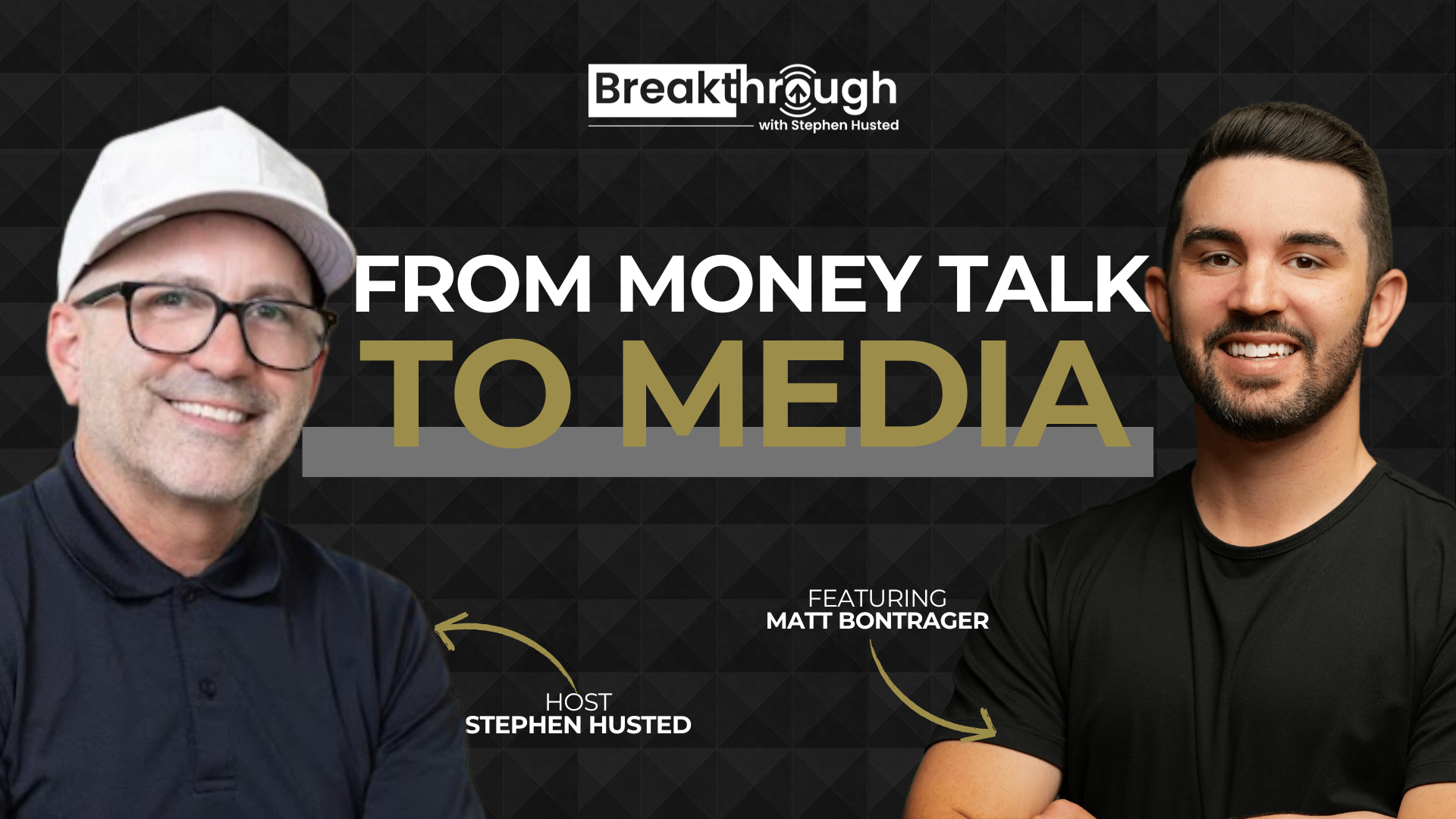
Stephen sits down with Matt, a creative entrepreneur who’s no stranger to reinvention. From battling identity crises and burnout to learning how to lead with honesty and intention, Matt opens up about the raw, behind-the-scenes journey most people won’t show you online. Two creatives talking real life, real business, and what it takes to keep showing up when nothing makes sense.
Stephen and Matt talked about:
00:00 Introduction to Podcasting
04:40 Starting a Podcast: Experiences and Learnings
08:35 The Role of Technology in Content Creation
20:57 Leveraging AI and Overseas Help
29:56 San Jose vs. Seattle Housing Dynamics
30:50 Building and Selling ADUs
34:31 Short-Term Rentals and Real Estate Strategies
36:18 Career Beginnings and Early Jobs
37:59 Transition to Accounting and Corporate Life
39:38 Starting a Business with Ryan Pineda
41:41 Challenges and Growth in Content Creation
42:13 Astrology and Personal Development
51:35 Podcasting and Authentic Conversations
TRANSCRIPT
∎ Teaser / Highlighted Clip
[MATT BONTRANGER] (0:00 - 0:27)
Every day I write a sticky note of exactly what I have to do, like a freaking meal ticket so I can throw it away when I'm done. I need to see exactly this. And so I think with content, what I've seen is that doesn't work in the content space.
Grazing with content, you can't do that. And guys like Ryan, guys like Carlton, being so close to them, what I saw was they would put a whole day aside and they were in front of the camera all day. Or if they were looking at scripts, they were in front of scripts for four to six hours that whole time.
∎ Podcast Intro:
[Stephen Husted] (0:27 - 1:59)
Brace yourself for a wild ride into the unexpected. This ain't your typical success show. I'm here talking to real folks who've been through it all, skipping the fancy business talk for authentic stories.
We're diving into childhood dreams, teenage escapades, and everything in between. No scripts, just the stories that truly mold success. Each episode takes you on a journey through those breakthrough moments that paved their way.
No fluff, just genuine stories. So whether you're chasing dreams or just love a good story, buckle up for wisdom, laughs, and the unexpected. This is The Breakthrough Podcast, where success is a journey, not just some fancy destination.
Don't miss out. Hit the subscribe button now and join our Breakthrough crew. I got some incredible stories to share and you won't want to miss a single one.
∎ Guest Introduction:
All right. Today's guest is someone who's been in the trenches, done the work, and lived to tell about it. Matt doesn't just talk about building a brand, he built one, and not in some polished highlight reel kind of way.
I'm talking messy action, mental breakdowns, rebrands, and figuring out how to stay human while running a business. What I love about this convo is how honest it gets. We went deep on the identity shifts that come with leadership, the awkward middle of personal growth, and what it really takes to trust your voice when everything feels uncertain.
If you're building something, a business, a brand, or even just yourself, this one's going to hit. Let's get into it.
∎ Podcast Proper:
[MATT BONTRANGER] (2:00 - 2:09)
Yeah, I'm down to talk about whatever. And this is my favorite way to do the content too because it's easier. You don't have to sit here and really like prefab and do a ton of scripting like you do with maybe talking head YouTube stuff.
[Stephen Husted] (2:10 - 2:18)
Yeah. And when I first started shooting the podcast, I was like, people would always want the questions in advance. I'm like, wait a minute, I don't have any questions.
[MATT BONTRANGER] (2:18 - 2:29)
Oh yeah. And they're good. And that's where, but even then I'm not writing notes thinking, okay, when he asked this question, I'm going to respond to it.
It's just, all right, this should be what I feel and what I think my brain tells me when I'm asked it, you know?
[Stephen Husted] (2:29 - 2:34)
Yes. Yeah. And I get that for people that had just maybe their first couple podcasts.
[MATT BONTRANGER] (2:34 - 2:34)
Yeah.
[Stephen Husted] (2:35 - 2:41)
It's a little stressful and you want to, you want to do your best, but you also want to be like prepared, but you shouldn't be prepared.
[MATT BONTRANGER] (2:41 - 3:23)
You should be able to answer it off the cuff. I agree 100%. We just kind of started a podcast that's this little setup here.
And I did the first episode. Cool. Really off cuff.
I knew the guy. So that went really easy. He's a client of ours.
Then I did the next one with some, so another client, big follower count. And I tried to do this, like hold it in my hand questions that I wanted to ask this person. Fucking bombed.
Just did not like the jive of it. Cause I'm trying to listen to her say shit, but then think about what I need to ask next. And it just didn't go that well.
But then the third podcast a week later, just tried to go off the cuff again. And in the background, I wrote down some stuff on the board. You can't see over here way better.
So I just feel like when it's almost too scripted or too pre-planned and it puts a lot of nerves. Cause then if you don't stick to the plan, you get kind of worried.
[Stephen Husted] (3:24 - 3:41)
Totally. And you're only going to go so far with your guests too. And you'll know it in the beginning too.
If they've only been on a couple or maybe they have bad lighting or, you know, there's all kinds of little things that kind of pop up, but I think that's what makes it raw. It does. It does.
So when did you start yours?
[MATT BONTRANGER] (3:43 - 4:04)
So the first episode that I did, which was a, he's in the office and I was like, dude, let's just sit down in front of the cameras for 25 minutes. And that's what it was. That had to have been a month ago, month and a half ago.
And since then we've done four total episodes where that one, like I said, was off the cup, but it's like, Hey, plan to come into the office. We'll be here for 90 minutes pods. Probably they've gone 40, 45 minutes, but yeah, I'd say a month and a half ago, a month ago.
[Stephen Husted] (4:05 - 4:17)
And what are you bringing people in guests into your office? Are you going to do virtual ones too? And do you have like a game plan on how you want to, the type of guests you want, or are you just going to go through the people you've been working through and kind of just take it from there?
[MATT BONTRANGER] (4:17 - 5:54)
See, it's good. Cause now you're asking me things that I'm like, never really had a chance to think through. But when I think about it, I would be down to do something like this virtual, but it's nice to have it in office.
Cause I think just camera quality looks a lot better and you're right there in person. So it makes it a little bit easier, but obviously that's hard with certain guests because you're just not in the same area. And then as far as the topic, that was one thing too, that when my buddy watched the first one that I did, which was a client of mine, Brian Davila, if you've seen him big, yeah.
So Brian's in the office, he's bitching about bookkeeping. I'm like, dude, let's just sit down now and talk about this. And my friend Tom watched it and was like, dude, cool podcast.
But like, what's the purpose of this thing? And I was like, man, there's really not one just to kind of sit there and create content. But then when I thought about it was, I like to talk about money and now I like to talk about business.
Cause I was not this like, oh, I'm going to, I was not slinging candy bars in high school thinking that I was going to be some entrepreneur. That's, I was not that kid. So now the fact that I am an entrepreneur, run a business, it's like, I really talking about business and I like talking about money.
You know, I make the joke that when I meet somebody, I'm like minutes in, I'm asking you what you do and how much money you make because I'm an accountant. So I feel like that almost gives me the, not the right, but you know, the card to do that. It'd be weird if I was a nurse asking you what you do for a living, how much money you make.
So the topic has been like, Hey, let's sit down, shoot the money and growing your finances and budgeting and how you earn your money if they're a business owner and then also segueing into like growing a business if they happen to run a business, which in these cases all four have. So, but I'm like, if I sat there and talk to a W2 earner, it'd probably just be like what their like main focus around their idea around money, growing up with money, what was money like as a kid, what was money like now? Cause I do think that there's gotta be some premise to it, right?
It's gotta make sense, but.
[Stephen Husted] (5:54 - 6:14)
Yeah. Yeah. And that journey will kind of evolve too over time with the podcast.
It's interesting. We live in an era now where we get so much information so quick. I can sit here for 30 minutes and literally learn so much about accounting, CPA tax strategies, where before you didn't, you didn't have that.
[MATT BONTRANGER] (6:15 - 6:15)
No.
[Stephen Husted] (6:15 - 6:23)
15 years ago, you had to hire somebody. You had to read a book. You couldn't get this little micro information, like waiting in line at target.
[MATT BONTRANGER] (6:24 - 6:43)
And even better, like you can get, like anytime I use something like a chat or something like a bot now, I'm always telling it to like, talk to me like a five, like, you know, like a five-year-old cause I don't want to read the 17 paragraphs that it gives out. So it's not only can you get the information so fast, you can get it in a way that's best suits you. Hey, tell me this in five bullet points.
And it is wild. It is wild to think about.
[Stephen Husted] (6:44 - 7:02)
Yeah. It's crazy. So I mentor new investors and I just kind of been casually cruising into it.
Did a few last year, mostly past real estate clients of mine who like inherited money and they were like, Hey, I want to invest out of state. I know you do it. Can you help me?
Can we partner? I'm like, well, I'm not doing any more partnerships.
[MATT BONTRANGER] (7:02 - 7:02)
Yeah.
[Stephen Husted] (7:03 - 7:35)
So, you know, well, how about this? Why don't you just hire me for six months? Let me take you from point A to B type things.
And it's interesting watching them go through dealing with how to get a bookkeeper or understanding what a real estate professional is. All those things that they don't think about being a W-2, some of them aren't even W-2s anymore, but just all that information, I can get it to them. I can research it, put them very easily for them to download or take it on and then execute before it was so long winded on things.
Yeah, for sure.
[MATT BONTRANGER] (7:35 - 8:04)
Well, I feel like now too, and now you can pivot so fast too, that if you need to remake content or remake material in a way, yeah. Do you use chat GPT a lot now? I mean, I don't, I don't use it that much.
Not as much as I think the average person that is, see, I don't know that maybe I do use it more, but no, I would say for my use case, I don't use chat a lot. We use certain tax research tools that are similar to chat, but they're tax focused and those have been really nice. But outside of that, I don't really use it that much.
[Stephen Husted] (8:05 - 8:13)
All your contents, probably all real life experiences, knowledge, what you know on your day-to-day business and how you can put that to your audience.
[MATT BONTRANGER] (8:14 - 8:28)
Yes, because it's easy. So what's funny is I've been really slacking at content and my marketer gets pissed because she's like, this is what I'm here to do. This is how we're going to grow.
And it's obviously how I've grown this business. So for example, so I just got a teleprompter. You ever use a teleprompter?
[Stephen Husted] (8:29 - 8:37)
I tried. I can't do it, man, bro. So, okay.
It would be too slow or too fast. And I'm like, wait a minute. Does this even sound like me?
[MATT BONTRANGER] (8:38 - 11:35)
So I got gnarly ADD. It's what it's got to be. So I'm just always jumping.
I'm always, I can't focus on one thing. So I get this. So when I would film short form content hour, long form content, I'd sit in front of the chair and I'd talk to the camera and I'd ramble.
And I'd have like a little computer sit in front of me with just bullet point notes, which worked great. But the problem was if I'm on like a 90 second riff and then I just like flub something, I want to fix it. I'm like, I got no clue where I left off
So I got to like think back to it. So we just tried a teleprompter and where I'm getting at this with chat is we did use chat to write up a script for us based on, so I subscribed to certain publications that I trust because I know the knowledge is right. As far as tax, my big fear is saying some shit online.
That's not right. And someone blasted me for it. I'm like, God, this is my job.
I can't say stuff that's inaccurate. So once I got the, like, we'll just call it an article from like a listed publication that we follow, we threw it in a chat to have it make a script. And this is where, when I first got an experience with a teleprompter, in my eyes were jumping a lot.
I felt like I could see it reading. The tone was off. I can't, this was not working.
But I'll say yesterday I filmed a YouTube video that I thought lasted two minutes because it went so fast. But in reality, it was like five and a half minutes raw, not that much text. As far as when I looked at the outline, I'm like, oh, I wonder how long this is going to be.
And it was about five and a half minutes. And it is going to be life changing, dude, because really, I ran through that same script four times, four or five times yesterday versus if I were to try to ramble on a YouTube video and then do it again, I'd never say the same shit twice because it's me rambling. There's no work behind.
And so we use chat to write that script and I read it and obviously tried to think of it in the way that I would want it to be read, like similar to my voice tone and the words I would say. And it's worked out really well. So I'm super pumped to say that, like, hopefully in a day that I would normally film maybe two YouTube videos, dude, maybe two, that I could probably churn four to eight now.
Whoa. And with Teleprompt, and so my first experience at a Teleprompter, I mean, we can get into it, but I was in this little venture that was very ad heavy. It was a bookkeeping business to teach people to do bookkeeping.
And I had to do a lot of media work. I filmed the course, like a 25 hour course, then they had to put me through ads and I was using a Teleprompter and I just hated it. And I feel like I could see my eyes jump and I wasn't really comfortable in doing it
Now I'm in my own office setting. It's mine. I'm like, you kind of feel a little bit more lax and dude, it was life changing.
I keep staring off camera because it's right there. It's not a big one. It's like this big.
I use my phone to pop it up underneath it and it was wild. And I think what really helps is your camera's obviously attached to the back of it and it's sitting through that glass. And I think what's really helped in this, the prior Teleprompter that I used was really big.
So if you think about it as, let's just say my hands are in this range. If my camera's right here where my head is, if I have text over here, I'm easily going to see my eyes looking here when the fucking lens is right here. Or right here.
If I'm looking here, it looks a little bit off, but this screen is so small that I felt that the text was always staying right within the camera. So when I rewatched it back to you, like, watch, I'm going to send you the link after this. And you'd be like, dang, it doesn't look like, I thought it would tremendously be like, oh dude, this guy's straight up Teleprompter him, but you can't really tell.
So I'm pumped.
[Stephen Husted] (11:36 - 11:47)
I'm always wondering about the tricks that people are doing and like how people record things and all that. But do you think a lot of people that do YouTubes are Teleprompting things? No, I don't think so.
Really?
[MATT BONTRANGER] (11:47 - 12:52)
I don't think so. For me, I'm going to sacrifice some of the off the cuffness for volume, but it's because my volume has been so bad. Like I'm very inconsistent with it.
They're like, you see, I just, I have a tough time and I always blame, like I'm working, I work in my firm. You know, I'm just not a silent partner that just shows face. I'm dealing with clients, dealing with issues, talking with them
So I've always been like, hey, content's going to fall second for me. But then when I have these lofty goals, like we're trying to do over 5 million bucks here at the firm. I'm not going to do that without new sales.
Yeah, I love this business and I have a recurring book of business that's there, but if I want to push and create new sales in my world, I would be dumb to think of scrap it all. If I look at all marketing channels, I feel like social, it's still going to point to like, dude, you need to post on social. That's a done deal
Yeah. So I'm like, okay, if I know that that's an absolute and I have to do it now, I have to back up in my head and think, okay, what's going to get Matt to do it? And it was wild for me to think that I just filmed a YouTube video four or five times yesterday and it only took me five minutes per time versus me sitting there for 30 dealing with rough bullet points.
And it was like, well, I'm really pumped. I'm super pumped to try it.
[Stephen Husted] (12:52 - 13:09)
Yeah. And that also is like, gives you a good push, you know, like you already banged it out, which is great. Like you can move on to the next one that gives you a lot of momentum.
And it's like, hey shit, if this is working and I'm getting, I'm getting the message out, I'm getting the value out, screw it. What's the matter? Exactly.
[MATT BONTRANGER] (13:09 - 14:12)
Right. And if I sacrifice some of that, hey, maybe it doesn't sound like me. I still think that will come over time, but if you want to see Carlton, Dennis is another guy in the tax space.
We're close and talking to him. He's been killing it at content. He's probably, if not already right there at a million subs and just his volume has been nuts.
He's never missing a day. And he's doing a lot of batching, which I'm sure you do. I was podcast.
Try to do some in a day. I'm not that good at that either. You maybe catch me doing three green screens with a phone and be like, all right, that's it.
I'm back to work. But I'm like, I really need to shift the mindset and say, Hey, I need to maybe have a full day a week. That's what Carlton does full day a week where I'm not doing client work.
And I am just going to film. And now when I think about it, dang, if I could do a video that quick, let's call it in 30 minutes and I can still do easily four of those in a day. That's I've never done that.
So I'm hoping that it helps the volume. But if you look at him, his latest vid, his latest videos are teleprompter for sure. And you can kind of tell, but they're clean, they're clean.
And this is where sure he's maybe sacrificing some of this candidness, but fuck his volume. And they're still really nice. I'll take that any day.
Cause I think that with the internet, we got to stay relevant. We got to keep getting online.
[Stephen Husted] (14:12 - 14:32)
Yeah. 100%. And two to your point about the whole ADHD scenario, when you, you do a couple of recordings and you screw up and you're like, oh shit, that part was really good.
But then I screwed up here and you throw it off. Then you can't recapture it. And usually it all goes downhill after like the third or fourth you're done.
It's over. You're waiting for another day.
[MATT BONTRANGER] (14:33 - 15:20)
Exactly. So my God, man, I really hope that this will be like a game changer. And that's after talking with Carlton, he came out here, he wanted some tax advice on how to run some stuff at his firm.
I purely bugged his brain about content cause he's been crushing it. And so that's why I like the tips and tricks for me where he really sets aside one day in my head, then he's probably taking a day before or, you know, two days before to read scripts. Cause that's what I did yesterday.
I read the script first, added some words where I wanted to read it out loud as if I was going to say it and it sounded good. And I was just surprised to sit in front of the camera and be like, dang, this did not take long because you're right. I had to screw with the first, I was going too fast and you use like, see yourself catching up and then you're like, fuck it's gone.
I can't turn it down a little bit. And I found a sweet spot. I'm speed 19, 19 speed keeps me going.
Gave me some breaks. And I was like, okay, good. Like I could make this work.
And so we'll see, but it's good.
[Stephen Husted] (15:20 - 15:39)
I was talking to Jason about business because he's saying that he wants to go deeper into more being a coach again, because he grew his business during COVID entrepreneur, business coach, typically people making anywhere between 300 to 500,000, but then has clients above that
[MATT BONTRANGER] (15:40 - 15:40)
Yeah.
[Stephen Husted] (15:41 - 15:44)
Reworks your mindset in 90 days kind of thing. Yeah
[MATT BONTRANGER] (15:44 - 15:44)
Yeah.
[Stephen Husted] (15:44 - 15:49)
How long have you been running your pod? A little over about a year and a half.
[MATT BONTRANGER] (15:51 - 16:02)
I don't even know, man. Do you count that? I don't even count.
I always enjoy that with podcasts where they're just like solid numbers so that you just know it's a growing quantity of, I feel like Joe Rogan does that shit. Like episode 7,400 or whatever.
[Stephen Husted] (16:03 - 17:07)
Yeah. It's cool. You know what?
Here's one thing. I have people reach out and go, do you make money from the podcast? I'm like, yeah, I develop relationships with the podcast and I get an hour of my guest time to learn about them, hear about them, what they do.
And that's the value right there. I mean, it's everything that I, a lot of my real estate ventures out in Seattle all came from the podcast. Met people at the BiggerPockets conference, had them on the podcast, realized I had a whole team out there on the ground, flew out there.
Now we're developing out in Seattle, all from the podcast. So it's good. It doesn't get a lot of traction, I would say on like Spotify, you know, on those, you know what it was is I just hyper-focus on shooting, right?
And shooting content. And then I pass everything to other people that take care of that part. You got to pay attention to every damn little aspect.
And then, you know, like time goes by and, you know, I randomly see that the cover art that we, you know, I paid for didn't get it changed up and it's the same one. And the branding doesn't, I'm like, dude.
[MATT BONTRANGER] (17:08 - 17:22)
It is a pain. Yeah. Do you have a lot of people involved?
Like I can tell you from mine, I have a marketer that is in office. She literally clicks play on the camera and she's taking SD cards out. She's moving files over.
She's sending them to the editors. Editors are doing their thing. Is that kind of your setup too?
[Stephen Husted] (17:22 - 17:22)
Oh yeah.
[MATT BONTRANGER] (17:23 - 17:23)
Yeah.
[Stephen Husted] (17:23 - 17:24)
Definitely have.
[MATT BONTRANGER] (17:24 - 17:31)
She can't do all that. Shit. I would, if my volume is bad now, I'd get one video out a year if I had to do all that myself, you know?
[Stephen Husted] (17:32 - 18:04)
It's a bigger thing, right? If you think about it like this, we're running businesses, but we're media companies too. Totally
And then that media company, there's so many different things that you have to have in place. I mean, thank God for my team and having my VAs out in the Philippines. They take care of so much.
The heavy lifting and just lets me focus on really where I need to be. I'm getting better and better at just, oh, these three things, I want to hire one VA to just do these three things.
[MATT BONTRANGER] (18:04 - 18:05)
Yeah.
[Stephen Husted] (18:05 - 18:11)
Take it off my plate. And I think that's one thing is we got a lot, a lot of things we've got to juggle in our businesses.
[MATT BONTRANGER] (18:12 - 18:15)
I mean, how long have you been using Overseas Help? Yeah. We do too.
[Stephen Husted] (18:16 - 18:38)
Probably two and a half years. Yeah. Right when I started shooting content.
So two and a half years ago, I started shooting, hired an agency in the United States. And then they're sitting there hoping I'm going to shoot videos. You're paying to do all this branding.
Are you going to shoot a video? We're waiting. And then it starts to evolve and yeah, it's pretty crazy.
[MATT BONTRANGER] (18:40 - 18:54)
Yeah. In the firm, we use Overseas Help for tax preparation is what we started with. I wanted to go into the admin space, but it was way too complex and with the legalities of it because we've got tax and socials and all the PII and all the information that we got to track.
[Stephen Husted] (18:55 - 18:55)
Yeah. Good point.
[MATT BONTRANGER] (18:56 - 19:14)
It is. It's such a huge, for those people that are like, oh, I can't do that. It's like thinking that it's harder than it is or that there's a trust component to it.
And it's yeah, those things sometimes exist, but they don't understand the ROI of that. It's just interesting to see business owners now be so hesitant to it. It's like, dang, you're really throttling yourself by doing that.
[Stephen Husted] (19:15 - 19:55)
Oh, I hear a lot about that. A lot of pushback from people that I know and then the ones who finally reach out and I just kind of put them in the right direction to us to having a VA to do certain things. And they're just mind blown.
And I'm like, look it, you shouldn't be working in your business. You shouldn't be in the business. You should be working on it.
How can you grow it? What are you trying to achieve in that? Once you take the other things off, maybe you're having a bad day
Maybe you don't really want to work that day for some reason. Your team is. And that's just powerful.
You just feel like there's multiple of you. And if you want to grow and want to make your business better, I think it's definitely valuable in my eyes.
[MATT BONTRANGER] (19:56 - 22:35)
Yeah. It's been huge for us. The interesting thing now is too, we just put some money towards a project to start getting AI really fueled in like software side.
And I was watching this video because this last year, 12 months, we took a big approach as to overseas. So we ramped up from two team members to eight team or to 16 members really fast as far as like preparing tax returns, putting together files. And it was interesting because what we noticed was, well, first my logic was great
These people are happy to do the work other than these. Like I got staff coming to me in the U S they don't know shit out of college. They want a hundred grand.
I'm like, you don't even know how to write an email, but you want a hundred thousand bucks get out of here. Right. And so like you have these people that are experienced overseas and they're literally a third of that cost.
You're getting them in the 30 to $40,000 a year for a salary. And so we really fueled that up. And it was just interesting to see that it didn't work out as we exactly planned it for a couple of reasons.
One takes a lot of training to get that big of a team when you onboard that many people so fast, absolutely up to par. So that was one thing that we just didn't budget in for, but it also was too. I feel like we just handed off, which kind of speaks to the training, handed off too much to them for what they can handle.
And so that made us think, okay, how can we rely on the tech? And I heard this statement the other day by that Nvidia CEO. Yeah.
Sharp as hell, man. That guy just seems so like, so to the point and just sharp. And I heard him say a statement the other day that was like manufacturing, which is funny because I look at my business, some components of my business, as far as doing tax returns as manufacturing, like it is an assembly line.
Someone hops in, the admin does their job, boom, pass it off to the next. Someone does their job, pass it off to the next. And he was like, manufacturing is no longer just about cheap, low cost labor.
It's about technology and like leveraging tech. And I was like, oh my God, that just hit me so hard because I think it is true now. And I think that we're already past the big phase of, you need to go overseas.
Cause I feel like if people miss that wave, idiots, they should have already, like whether it's VA work, whether it's detailed tax return work that people view as such high value, like there are so many things that offshore labor can help with. And so now I think that the next train is really like getting them, which I'm sure you do too. And we do getting to use the softwares that your business are now using.
Cause now it's like, look, now you have low cost labor and you have software to help fuel that. And so I'm excited as hell to see where that goes. It's a bit of a gamble, but yeah.
So that's where we're kind of dipping our foot into now is it's a test pilot program. It was a few thousand, you know, like pretty expensive upfront, not six figures, but, and you know, hopefully in the next six to nine months, we'll see that that has been hopefully a big change for us. But that's something that we got on the horizons too, is now not only just offshore, but also leveraging tech way more.
[Stephen Husted] (22:36 - 23:25)
I agree with you 100%. I'm, my mind's dabbling in different aspects of it right now and different tools. But one thing I've been looking on like Upwork for VAs that have like AI experience or know how to like, who knows how to, here's what I want.
I want, I want a couple of people, two or three that just know how to use all the new tech that's getting, because there's so many things changing, right? There's so many things here, so many options. There's so many options.
So I want somebody that can come to me and go, Hey, I did some research. I've been working. I've been playing around with this app or this tool, right?
I think I can integrate it into your business on this part of your business. Let's give it a try. Like I, we got to break the friction because once they all start going, they're all going to end up talking to each other in one way or another.
And then the team out that you have overseas is overseeing it.
[MATT BONTRANGER] (23:26 - 23:28)
Yep, exactly. That's what I do too.
[Stephen Husted] (23:28 - 23:40)
It's hopefully they can manage the tech. I think it's possible. It might be a different region that does it because it seems like different countries have different expertise from what we've experienced.
[MATT BONTRANGER] (23:41 - 24:18)
I have seen that too. Like, it sounds like your overseas staff is in the Philippines, Philippines, Ukraine, Brazil. I saw Russia the other day for some, they were doing like website development and they were obviously just saying, Hey, it's hard to get money into Russia right now.
And I'm like, Oh, you think it probably is hard to send money to Russia. So yeah, I've only ever used Philippines. Great.
Love them. And again, good work ethic. They're excited to help.
India, very sharp, excited to help. And I'm trying to think that might be it, but I have other firms though that like in our world and you've heard of right, like cost segregations.
[Stephen Husted] (24:18 - 24:18)
Yes.
[MATT BONTRANGER] (24:20 - 24:53)
There's a team that has a ton of people like in South America, like Columbia. And I'm like, Oh wow, that's pretty cool. I've never, that does cost tags.
Yeah. Oh really? Like breaking down the reports and the engineering studies and stuff.
So I'm like, that's just, again, a part of the world that I've never, I had one guy that was running a tax shop that had people in South America, India, Philippines. His goal was to get something working 24 hours so that someone is always cranking tax returns. I'm like, Holy shit.
That's next level for that's like a nonstop manufacturing machine. So I'm like, all right, that's killer. I like that, but that sounds like a bit of a challenge, but yeah.
[Stephen Husted] (24:53 - 25:09)
Yeah, it's cool. And this, and all these things that are converging right now, once again, we didn't have it 15 years ago at all. So now it's kind of like looking at all the tools and seeing how you can implement it and how you can put people in and streamline it so that you can just move on.
[MATT BONTRANGER] (25:10 - 25:35)
Exactly. Or just to watch it from a bird's eye, which is funny too, because I'm like, I'm in a business where we still have a ton of clients that are used to doing it the old way. Like every other week, someone's like, you know, like I'll get on a zoom call with a prospect or something.
They're like, Oh yeah, you're pretty young. Like for an accountant, I'm like, yeah, man. Like the, they say right now the average accountant or like, what was it?
70% of accountants are set to retire in the next 10 years.
[Stephen Husted] (25:36 - 25:36)
Really? That's crazy.
[MATT BONTRANGER] (25:37 - 26:35)
The age. Yeah. Oh, when you think about it, it was just like old white haired, bald guy, like, you know, just like old guys that are running tax shops.
They were the tax guy on the corner and they grow a book of business. And you go in with your documents, you sit down at their desk, they prepare your tax return right in front of you and you leave. And I'm like, dang, that is so far from what we're doing here.
We're using portals to submit documents. I got DocuSign flying to you to sign things. I'm zooming you then over necessarily meeting you in the office.
I'd love to meet you in the office, but that's if you're here in my own town, we have a lot of clients around the country. So this is a business where we deal with that all the time because they're so used to this like archaic way of doing it, which also comes with pricing. They're very used to older fees, which I'm like, like when I have to explain to somebody, why are your fees so high?
It's like, well, cost of living and just cost of service goes up here, bud. But also it's okay. We're that's why we try to niche down into the real estate space because Hey, we, there's some specialty.
So maybe it doesn't make sense for like the W2 owner at Costco. That's a manager. And then the wife maybe stays at home or wife has another W2 job.
Doesn't make sense to use someone like us.
[Stephen Husted] (26:35 - 26:44)
So that is true. I know we spoke to one of your guys on your team and it was my new partnership in Seattle. My business partner, he's W2 tech.
[MATT BONTRANGER] (26:45 - 26:45)
Yep.
[Stephen Husted] (26:45 - 27:18)
He lives in Houston. And I told him like, Hey, there's a couple of strategies we can do to offset your taxable income. It's more of the whole Airbnb play.
And then we had our consultation and they wanted to bring in, maybe we can make your wife the real estate professional scenario. And then, you know, we got done. He's like, yeah, no, we're not doing that.
Like, I want to keep the business. And I'm like, that's cool. Because all my partnerships, they're all W2.
I'm the only real estate professional.
[MATT BONTRANGER] (27:19 - 27:22)
Yeah. So it's definitely going to be a little bit harder for them to recognize the tax benefits.
[Stephen Husted] (27:23 - 27:45)
Yeah. Good for you though. I get it all, but some of them want to jump into real estate and they want to go to full time.
I'm like, dude, if you're doing W you got your tech job and you're getting your RSUs and you bought all this stuff and you got your workhorse on the side, building your wealth in real estate. Yeah. Dude, keep that day job.
Keep it rolling.
[MATT BONTRANGER] (27:46 - 28:12)
Why would you throw that away? Don't do it. Yeah, exactly.
I'm a fan of the same thing. I'm a fan of the same strategy. I mean, same thing for me.
I was making like 90 grand on a W2 and the math had to make sense when I quit. Like, right. I had to know that the supplemental income is there for real estate.
You know, that's going to be so hard for somebody to replace, especially just doing rentals. Even if you go into short term, you're going to need to start flipping or something, but I wouldn't quit a C-level exec job to go out and start flipping houses anytime soon. Unless I have some proven track record of it.
[Stephen Husted] (28:13 - 28:15)
Well, that's social media for you.
[MATT BONTRANGER] (28:15 - 28:17)
It paints the picture, dude.
[Stephen Husted] (28:17 - 28:31)
It's like crazy. It's like, come on, people, stop this. Stop the nonsense.
I don't live off cashflow. It's all tax strategy scenarios and it's wealth down the road for the most part. You can't do that.
[MATT BONTRANGER] (28:32 - 28:49)
Being up in San Jose, do you see it? So I was just talking to somebody. Do you know Shannon Nossum?
She's up in Seattle and I was just talking to a friend yesterday about like ADUs. Are ADUs big? Which I know that they're big in the Northwest, but are they big in like where you're at now in California too or no?
[Stephen Husted] (28:49 - 30:22)
They've been big for a while. So here's my only complaint about, let's just say San Jose. So San Jose, Berkeley, Santa Monica, the only three cities that now you can condoize the ADU and sell it separately from the main house.
And that's been going on in Seattle, which has been great. But the problem with San Jose is you can have these houses on like corner lots, right? Well, a corner lot in Seattle, the house will be closer to the front of the street.
It's all backyard. And then you've got the side, right? And you can just plop a new house in there.
It'll blend into the neighborhood. You're good to go. Here in San Jose, the house is in the middle of the lot
So you really don't have a ton of backyard. So these houses, we don't have alleyways. So that takes away what, like in Seattle, they have a lot of alleyways.
So you just build in the very right corner of the lot where the old garage was. And now these alleyways are transforming into like little mini neighborhoods because they got this brand new two-story. So they are popular.
People are doing them, but inventory is tight and there's just not a lot of... There is, but I'm talking houses where I can build something in the backyard, build an ADU, three bedroom, two bath, 1,200 square feet, and then turn around and sell it without the buyers going, I got two houses to the left and right of me, and I'm going to go through somebody's side gate to get to the house. But in Seattle, we design them out as like little mini communities.
[MATT BONTRANGER] (30:23 - 30:29)
Yeah, you're right with the whole alleyway that does because is that how now this new buyer would get into their house is through that alleyway?
[Stephen Husted] (30:30 - 30:37)
So potentially, well, yes, they could use the alleyway and that could be where that one ADU is at. Well, they call them DADUs in Seattle.
[MATT BONTRANGER] (30:37 - 30:38)
Yeah. What is that term too?
[Stephen Husted] (30:39 - 30:49)
What's the first D? So California's accessory dwelling unit, and then detached accessory dwelling unit.
[MATT BONTRANGER] (30:50 - 30:52)
Yeah. DADU, yeah, I forget.
[Stephen Husted] (30:52 - 31:21)
So they call ADUs attached dwelling units. So basically- Even if they're not? Well, say you bought a single family home in Seattle and you got a basement, you build out the single family, and then you build, you attach an ADU to it, right?
So there you go, you got another unit. And then you build the DADU in the backyard, wherever it can be built. So now essentially you got three units on that one lot.
[MATT BONTRANGER] (31:22 - 31:22)
Yeah.
[Stephen Husted] (31:23 - 31:23)
Potentially more.
[MATT BONTRANGER] (31:24 - 31:26)
You got to have a good size lot though.
[Stephen Husted] (31:26 - 31:54)
You don't. No, you really don't. We just closed on a property in November.
We're almost done with the rehab. It was a small little two one, 700 square feet, had an attic. We put two bedrooms upstairs.
We built out the basement, turned it into a two one. And now we're going to finish that up and they're changing the regulation and we're going to build two DADUs in the backyard, two story, three bedroom, two baths. Each?
Yes.
[MATT BONTRANGER] (31:55 - 32:06)
Okay, dude, get out of here. You're about to build a three two, two three twos on one lot in the backyard? Yes.
What does that even look? You're going to have to text me some plans after this.
[Stephen Husted] (32:06 - 32:22)
I'll send you a photo. That's wild. Yeah.
And you know what's really cool? Because the house sits really close to the street and it's offset. It's the way they put these houses on these lots.
So the house is kind of closer to the street and to the right. So then it opened up to the left.
[MATT BONTRANGER] (32:23 - 32:23)
You're leaving a lot of room.
[Stephen Husted] (32:23 - 32:51)
Plenty of room to get to the backyard. Okay. The lot to the left of us is relatively the same size, maybe a little bit bigger in the width, I think.
And they just put up seven townhouses. Yeah. Brand new.
Sitting right next to us. And then across the street at a small house, what we had, and they built a three, two DADU in the back. They sold it off because they condolized it.
So, you know, it's just...
[MATT BONTRANGER] (32:51 - 32:55)
So does that mean that you're actually parsing out part of the land too and getting rid of the land?
[Stephen Husted] (32:55 - 33:25)
Correct. Yeah. You're condolizing it.
So you separate two separate APNs, property tax bills. Yeah. Yeah.
Kind of cool for, let's say, you know, older couple, maybe they need money. Yeah. And then they just, they parcel it off.
They have it built, you know, it costs them 400,000 to build, turn around and sell it for 750 to 850, some up to a million depending on location. That's a big chunk of change if you don't need all that yard. You know what I mean?
And they had a backyard too, you know? Yeah.
[MATT BONTRANGER] (33:25 - 33:28)
It's not like you're getting rid of it, right? You're not going to be on a zero lot line once you do this.
[Stephen Husted] (33:28 - 33:29)
Yeah. No. Yeah.
[MATT BONTRANGER] (33:30 - 33:33)
It's really cool. How many short-term rentals do you got, if you don't mind me asking?
[Stephen Husted] (33:34 - 33:38)
Two. Yeah. And I want out so bad.
I don't have any. Yeah.
[MATT BONTRANGER] (33:38 - 33:39)
I don't want to do it anymore.
[Stephen Husted] (33:40 - 33:43)
I don't want to do it. I just want to build.
[MATT BONTRANGER] (33:44 - 33:45)
Build and sell?
[Stephen Husted] (33:46 - 34:00)
Build and keep them because now the thing with these DATUs, because they cost relatively around 385 to 400 to build, I could turn around and put a loan on that and rent it out for that and hit the 1% roll on that.
[MATT BONTRANGER] (34:01 - 34:04)
Do you think you'd get like 35 to four to rent one of those out?
[Stephen Husted] (34:04 - 34:05)
100%.
[MATT BONTRANGER] (34:05 - 34:15)
35. 35. Yeah.
3,500 bucks. For a three, two? Correct.
Yes. What city are we talking about? Are we talking about in San Jose or are we talking about like- Seattle.
Seattle.
[Stephen Husted] (34:16 - 34:17)
Seattle. North Seattle.
[MATT BONTRANGER] (34:17 - 34:23)
It'd be more here. That's just because they got that tech monopoly money up there, huh? It's got to be the reason that these rents are where they are at.
[Stephen Husted] (34:24 - 35:04)
Definitely because of the tech. I love Seattle. I just wish- I've never been.
I wish the weather was better. It's beautiful. It's got all the outdoor stuff that I like.
It's really clean. Well, a lot of the areas, but you got water all around it. Good economy.
They just need density. They need housing. They're short on housing.
They're not. Really, there's still not a lot of it. Oh, they're so short on housing.
And that's the reason why they keep these laws and making it easier for people to build on the lots or for investors to do what they need to do. So we're flying out there next week. We go out probably once every eight weeks, I would say.
[MATT BONTRANGER] (35:04 - 35:07)
We just check out our projects. It's going to be a short flight from where you're at. What?
So easy.
[Stephen Husted] (35:07 - 35:19)
Two hours. A little less than two hours. I go to the same rental car person.
We stay at the same hotel and it's easy, man. So yeah. What kind of jobs did you do when you first grew up?
What were your first jobs?
[MATT BONTRANGER] (35:20 - 35:24)
My first job was working at a grocery store, which I freaking love.
[Stephen Husted] (35:24 - 35:24)
Me too.
[MATT BONTRANGER] (35:25 - 35:32)
Fuck yeah, bro. Pushing carts, man. Like pushing carts and bagging groceries.
It was so good when I think about it because I'm like, you got so many people skills.
[Stephen Husted] (35:33 - 35:33)
Yes.
[MATT BONTRANGER] (35:33 - 36:38)
And I have this weird thing too of like, I hate rude people. I try to be a nice guy. I just hate people that like go out of their way to be rude.
So like when I was a bagger, if you were rude to me, dude, I was messing with your groceries while looking at you at the aisle. Eggs at the bottom. Eggs at the bottom.
I'm looking at you and I'm talking to you, but I'll just be putting my hands through your tomatoes at the same time, dude. So sorry, Smiths, if you see this, but. But it was such a good job because I thought that, yeah, first it was corporate.
I was at a big chain. Also in a good part of town. And I just liked the people skill component.
And there was some level of like work. I had to sit there and be fast. You couldn't be like a half-assed bagger because then no one, like you wouldn't fit.
But yeah, I started off there and then sold shoes in the mall. Loved that too. I would never consider myself a salesman, but even just like the pace of which I talk, you'd think I'm a freaking snake oil salesman, but I'm like, I say ADD.
So I sold shoes. And then I went to school. This is where I'm like, I was not this kid slinging candy bars.
I went to work at the bank, Wells Fargo. Love that. Dude, I worked at Wells Fargo too.
That's hilarious. As a what? Like a banker teller?
[Stephen Husted] (36:38 - 36:57)
The worst goddamn job. I lasted two days and I quit. It was like not even at the branches.
It was at this like corporate headquarters. And I literally, you know, those little things you have to like put your hand in, it'll take paper so that people aren't sick. Well, I had to do that and like put stamps on.
I don't know. It was the worst job. I'm like, isn't that corporate yet
[MATT BONTRANGER] (36:58 - 39:18)
That does sound tough. Yeah, no, but I was a teller. So that was cool because I got to start like to get a first glimpse at money.
People would walk into the teller line. I got to sit there and deal with people with money that didn't have a lot of money. And then I hated being a teller because people were rude, right?
Like they walk up, but then I became a banker and it was like, oh my God, these people are treating me as if I take their money home at night, every night and watch it. Like the dynamic there was wild. And then after Wells, I went to an internship.
So being in Vegas, a lot of gaming, a lot of casino. I went to an internship at Bally Technologies, which create like they made the manufactured slot machines. And while I was in school at UNLV, I tried to play college baseball and make that work was not, didn't make the cut kind of thing.
So, hey, I got an accounting degree. I thought that was safe. I've always, I feel like been safe, risk adverse, good, big corporate jobs.
Wells Fargo went to school, got a degree. And I was at Bally Technologies as an intern waiting to get an offer from one of the big four. When you're in school all for accounting, all they do is preach the big four.
And so I got an offer to go to the big four at Deloitte. And then that's when I left my internship, stayed at Deloitte for little under two years, liked it, world-class training. It was wild.
It was really fun. And then in accounting, you're either going to go public or private. So I could have went and been like a staff accountant at MGM or Caesars or went into public accounting and helped multiple clients.
And I always liked that aspect of helping multiple clients. So then I kind of jumped to a couple different firms. If you look at my LinkedIn, a year and a half, Matt's leaving.
Year and a half, Matt's leaving. Matt's going next. Trying to find a home.
So the longest place I've ever been is actually here. I quit my job at the last firm in December 2019 and then started this. And that's, you know, I started this with Ryan at Panetta.
And yeah, I landed him as a bookkeeping client, like 2,200 bucks a month and had like maybe 50 grand of like side work that I'd built up of like tax, you know, just like tax returns. And then wife was making a good salary. Our first son was like five, six months old.
So that kind of had me a little uneasy. And then I told Ryan, I was like, hey, dude, we should start a firm. I'll do all the work as the licensed CPA.
You get online and talk about us and we'll drive business. And that's exactly what happened. And then I got like 2022, got on Bigger Pockets.
That was like fucking taking burger orders at that point. It was so intense for us.
[Stephen Husted] (39:18 - 39:19)
Yeah, you're going for it, man.
[MATT BONTRANGER] (39:20 - 39:24)
Crushed us. It was cool, but also just really hurt us, which really good learning experience there.
[Stephen Husted] (39:24 - 39:26)
What do you mean? What happened there? What happened there?
[MATT BONTRANGER] (39:27 - 40:12)
Too much at one time? Way too much at one time. And we had a good plan of how we were to attack it, but people just fell through the cracks.
They kind of went dark and, hey, you're not, you know, I didn't hear back from you for six weeks or, hey, cool, we're going to do this. Couldn't really get to it in time. So some of those just timing delays.
Luckily, I feel like service has always been there. You're always going to get people that say something about service, but we've always taken a lot of effort to give a really high service. And that's what caused the delay.
It was like, hey, guys, I can let these go out really sloppy with high potential error, but I'd rather delay the time, which is going to piss you off. Either way, I'm going to piss you off, but then to give you something that's wrong. And so we chose to just try to stick to somewhat quality and then slowed down the production.
But, yeah, so just been riding it out since. Got good clients in the space. And then I actually bought Ryan out in 2023.
Wow. Yeah, November 2023.
[Stephen Husted] (40:13 - 40:16)
And that's how I found out about you was through Ryan, through his content.
[MATT BONTRANGER] (40:17 - 41:03)
Yeah. I learned so much from Ryan. So much from Ryan.
Good and bad, right? Like, obviously, like we did a podcast talking about it and the split and stuff. And that was a little tough at times.
But it was it was such a beautiful partnership when it started because we brought exactly what one another needed. I didn't have any business or media experience or exposure. He had it all
And he didn't know a lick about accounting. And then that's how, like maybe a year and a half in, I started to post videos online, I think in this fucking hat. And it just really took off.
I was like, oh, wow, I could do this. This isn't that bad until now. I'm like full blown doing it.
And it's like a full time job, like to really do it at a high level, which that's what I always admired from Ryan. One of the most disciplined got probably the most disciplined guy I've ever met.
[Stephen Husted] (41:03 - 41:24)
So I'm hiring a marketing. I did hire a marketing agency and they had this whole holistic approach of like how they get these entrepreneurs from point A to B. And part of it was astrology.
It started with astrology, like a reading, like what type of person you are and all these different things. And it was kind of crazy. She's like, hey, have you ever got a desk profile done?
I'm like, oh, those are good.
[MATT BONTRANGER] (41:24 - 41:25)
Yeah, I would do that.
[Stephen Husted] (41:25 - 41:49)
Yeah. I said, I got, yeah, I've got a couple of them done before for different real estate brokerages. It's like, yeah, but we found that people could lie.
And then we get this new entrepreneur and they're getting this and they unravel because the trauma from their childhood comes up and we can't get him from point A to B. So they have taken me this crazy journey when it comes to shooting content and going through this whole thing
[MATT BONTRANGER] (41:50 - 43:38)
Kind of like looking at the person and their skillset. Cause if you ask me, sometimes people ask me like, oh, what kind of routine are you in? And I'm like, I mean, I got three really young kids.
Luckily I got a wife that fucking just holds it down. Um, but she still works. And so when people ask me like what my work style is, it's very touch and go
Cause I don't have a lot of focus here. I'm like, you maybe get me for two hours and I'm starting to zone off. Cause I feel like I have a thousand other things.
So I'm much more like I explained to people like a grazer. Yeah. I have a packed calendar when I'm in the calendar for that time.
I'm doing what I'm doing. But if I have free space on the calendar, it's not that good. I'm like kind of grazing on this task, getting this done every day.
I write a sticky note of exactly what I have to do, like a freaking meal ticket. So I can throw it away when I'm done. I need to see exactly this.
And so I think with content, what I've seen is that doesn't work in the content space grazing with content. You can't do that. And guys like Ryan guys like Carlton being so close to them.
What I saw was they would put a whole day aside and they were in front of the camera all day. Or if they were looking at scripts, they were in front of scripts for four to six hours that whole time. And I feel like that is just what you need to do to get behind a good content schedule and to be ahead of content.
I'm always behind. Hey, we need this video for this. And it's just not a good place to work from.
So thinking back to your personality style of like, Hey, like astrology, like, yeah, I kind of rolled my eyes at a two, like, what the fuck is this for? But when you think about it, it's like, dang, if they might have to give somebody a different approach, given how disciplined they are, what their sign is apparently and shit like that, because I feel like Ryan, it was almost clear. You could tell him that thinking about it now, you could tell Ryan just the goal and he'd almost have a really good plan of how to get there because he'd put the discipline in to say, Hey, I'll just block out the time.
I'm like, dude, I not only need the goal, but I might need to sit down and talk about an action plan with somebody to make sure, Hey, is this going to get me there? Because you see, I'm only living day at a time. Like I'm not looking at the big picture, backing into it myself.
So I wonder if that's maybe their approach.
[Stephen Husted] (43:38 - 44:18)
Well, you know, the point that I lost in my brain, once again, because I'm depleted of dopamine at this point from doing podcasts and talking on the phone, she was very clear from the very beginning that I need to focus on the top things, do them for three hours and then walk away, you know, for a couple hours, do not like keep just working through your day and doing things like high level, the creative part, the content, and then move on, structure it, schedule it, and then just do it.
And then move on because I'm kind of similar to you. I'm always, I like shooting content, so I'll do it throughout the day. Like if I could, that's all I can do.
That was the biggest part.
[MATT BONTRANGER] (44:18 - 44:19)
Once you get in the groove, it feels great.
[Stephen Husted] (44:20 - 45:31)
It does. Yeah. And you feel really accomplished when you get it done, as long as you can get that.
And then you're, you've got enough time to do more, to like expand your business, learn about your business. You know what I mean? Like, so that you're sharp with other knowledge.
There's a lot of phases to it, but she made it very clear. And it was deep. Like this thing, it was so bad that afterwards I had like a pain in my, like a, like a pressure on my back of my throat.
And then the following day they brought in this other lady that did this other scenario with me. That was just this, it was deep. And they started by, they want to know your date of birth, the time you were born and where you were born.
All right. And so that was the starting point. This lady knew every single phase of my life since 20 years ago.
So the point where I was going, so in my head, like halfway through, I'm going, did she watch some videos? Did they record the consultations with this marketing agency? Like did, what does she know?
Because she's, but she started off first was like, Hey, what were you doing 18 years ago? That was your first rebirth was 18 years ago.
[MATT BONTRANGER] (45:31 - 45:34)
I'm like, why'd she pick 18 years ago? Is that just at a specific age for somebody?
[Stephen Husted] (45:34 - 47:24)
Yeah. It's an 18, I guess the cycle is in every 18 years. And now I'm in my next one right now, which is kind of odd that it is when I'm shifting in this whole new thing about the business.
Like, it's not just about being a real estate investor. It's 20 years ago, I got clean and sober and I've gone down this journey all the way to this point. Right.
And now I'm telling that story and public speaking, all these different little things are kind of, so like real estate is taking the second thing. It's kind of mindset with real estate because all these investors come to me and they want to invest or they want to buy properties out there, but they're like, they're afraid they're worried about this. They don't want to make a mistake.
You know, this is holding them back. So it is a lot of mindset. So now it's all come into play.
But you also have to be in the right frame of mind as the mentor to be doing that too. So you need to have to work through all your shit or at least be at peace with your shit. This is where this group came right in.
And she was like this really pretty Brazilian lady, you know, she had these big earrings and stuff. I'm like, sitting there looking at her. And she just laid it down.
She's like, what happened at this point? I'm like, that's when I got clean. She's like, yep, that was your rebirth.
That's the start of this. She's like, now you're in your next one. And then she just kind of said, like, here's where I want you.
I want you to just focus on the creative side, the big impact things, because what you can do in three hours will take people eight. So you're so intense in three hours, work three hours, walk away, go on a hike, go exercise. And she had no clue.
I worked out, but I told her, I'm like, well, yeah, I trail run and I'm a mountain biker. I go to the gym. She's like, good.
You're just going to do more of that too. It was just, it was deep. It was a little, it was deep and a little, like, take it back, like, shit.
I'm trying to get opened up here.
[MATT BONTRANGER] (47:24 - 47:37)
I think that, yeah, that, because I, like, I would say almost from a service standpoint, people lose that quickly. They're trying to churn through the next unit. So it's almost nice when you get like that level of attention when you're buying a service, because then it knows that, right, you know, that it's very catered to you.
[Stephen Husted] (47:37 - 47:52)
Yeah. I was really kind of taken back that it was the journey. And I feel it's a husband and wife and they're in Australia and we're just, I'm just starting it, but it's six months with them and yeah, we're going to, we're going to see where it goes.
It's crazy.
[MATT BONTRANGER] (47:53 - 48:32)
Yeah. And we both know that, like, I feel like it's content that could really completely change our lives in the next couple of years because of the opportunities it puts in front of us. Like you said, that's a question I would have asked 10 years.
Do you make any money from this podcast? Because it is like, even though it's an honest question and like, even from somebody that is an accountant, I'm always like, like I've legit had to ask people sometimes if I'm not clear on how they're making money, how do you earn a dollar? How do you make a dollar?
And so you're right. Like a surface level question is like, Oh, do you make money from the podcast? But in reality, yeah, you do.
But it's because that's only step one of eight. Like you're meeting these people, then you're flying out to talk with them. Then you're doing deals when something comes up in their area again, it's now we know what you can really reap from it, which is much more relationship based.
[Stephen Husted] (48:33 - 48:55)
Yeah. Well, I guess it's all relative in who you follow online, but you know, I don't even have the following that let's say somebody like Ryan or any of these people, but the interesting thing, everything in its right place, everything kind of falls into place. They're needed to, and what you're willing to allow, you know, how you grow.
But I just noticed just on doing content right now.
[MATT BONTRANGER] (48:55 - 48:56)
Yeah.
[Stephen Husted] (48:56 - 49:12)
I get people just DM me or reach out to me. And then I get them on the path and that changes their life. It's really powerful here to do this.
You know, everything that I see, like, dude, I've learned so much from you. Like, I remember you're saying like, oh, I'm, I'm kind of erratic in my content. I'm like, dude, don't give it up.
[MATT BONTRANGER] (49:12 - 50:15)
You got to have your knack, right? That's what's interesting. Like, I take a lot of pride to what I think about the podcasts is, you know, you've seen somebody sit down on camera and they're hella nervous.
Oh my God. They're just like, kind of like really tense. And what I like is that I'm honestly going to steal from you is, is you don't have an intro because I feel like that also you've sat down with podcasts where you're the guest and you're sitting there trying to watch this guy do an intro and he's kind of like botched it three or four times.
Hey, this is Matt and this is the true books podcast. And you're just like, oh, okay, cool. And then you're like, well, fuck, when are you going to pan this to me?
And so I liked it. It's just much more raw and candid. That's always been my style of like, like we have these core values at our firm.
And I say that like that. Cause I'm like, I used to think core values were the stupidest thing. So corporate and like, oh, just something that you got to like a mission statement.
And I'm like, hell no, I love them, but it took me four years to get them. And so I think now it's because those are the traits that I would look at if I'm looking for people to like, go to war, you know, like I'm going to business and like, I need a team behind me. And these are the traits that I think I need you guys to have in order to give a good client experience.
And so, yeah, I lost train of that one though, but, but that is all good.
[Stephen Husted] (50:16 - 51:59)
I lost my train of thought like three times, which I knew it was going to happen because. So this morning I always run, I go on a run before a podcast because I was diagnosed with anxiety about a year and a half ago. I thought I had ADHD for my whole life, but come find out this anyways.
So I wanted to start the podcast and I've been a hairdresser for 35 years. So I do a podcast every hour for eight hours with clients. It's very similar, very similar thing.
So I totally get this. However, the first thing I learned when I started doing the podcast, I remember I did a couple with intros and I'm like, screw them up. I'm like, fuck it.
I'm not doing, I'm not doing intros. Made me stress out. And it's a conversation.
Let's just get into it. But then it was focused because all the years of being a hairdresser, I had to learn how I would, people would be talking to me and I'd be out in space because I have anxiety and whatever, you know, I'm all over the place. The podcast taught me how to be present and actually listen to my guests.
Like I listened to everything you said today. I wouldn't have done that a long time ago, years ago, that's for sure. And it wouldn't be anything against you.
It would just be how my brain works. So it's helped me on that too, which is, it's really crazy to kind of go through that. I don't care about, I think the better, the more raw you can get on a podcast, the better.
That's like when you hear people say, you know, being authentic, I hate hearing that word because it's kind of been used too much. It's either, either are, you're not, and it is what it is.
[MATT BONTRANGER] (51:59 - 51:59)
Exactly.
[Stephen Husted] (51:59 - 52:04)
But you know, it's okay to, I love Theo Vaughn. Oh my gosh, bro.
[MATT BONTRANGER] (52:04 - 52:14)
Right? And you know why I love him? The ones that are coming out.
He's fucking drilling them right now. Oh my God. Yes.
He is the real guy.
[Stephen Husted] (52:14 - 52:15)
And I love it.
[MATT BONTRANGER] (52:15 - 52:17)
And I love it. I love it.
[Stephen Husted] (52:17 - 52:33)
I don't need a technical podcast guy. He can just talk his shit and come up with this funny things and I love it. You know what I mean?
And I think that's what it's all about. You know, we got an hour, you know, we said earlier that we're going to try to do 30 minutes, 40 minutes and just call it a day.
[MATT BONTRANGER] (52:34 - 52:36)
We're at, we're at an hour almost right now.
[Stephen Husted] (52:37 - 52:38)
So we blew through that.
[MATT BONTRANGER] (52:39 - 53:38)
And it is, you're right. Like he's so candid with it. And thinking about too, like listening into the guests, that is a nice piece of the podcast too, which is, I like the rawer feel because then the conversations seem more natural when you're trying to script things and ask certain questions.
It's not bad, but the problem is you just have to be ready for that to feel like more of an orchestrated video instead of it feeling like more natural where two people are just conversating. And I think you're right. Theo does a really good job at that.
Super good job at that. And that's also a personality of his, right. It's just to kind of be laxed and funny.
Well, let's leave it at that, man. Where can the idiots find you? And Instagram is still a big one for me.
And then obviously our firm website. So yeah. And my Instagram is just at Matt Bontrager.
First name, last name. And I appreciate all your content, man. You've taught me a lot.
Thanks man. Yeah, no, I'm trying. I got to keep ramping it up because that's the thing.
Tax is a black hole. And so it's nice to be able to post videos to try to like lay them out in easier terms so people can at least get a hint of what they need to do without having to hire somebody and pay a ton of money.
[Stephen Husted] (53:38 - 53:45)
Definitely. Or just put the thought in their head so that they can reach out to you or anybody to kind of get going. That's the big part.
That's the big part of it right there.
[MATT BONTRANGER] (53:46 - 53:47)
Yeah, exactly. Just get the wheel spinning.
[Stephen Husted] (53:47 - 54:03)
Totally. Right on, man. I appreciate you jumping on.
Yeah, we officially did an hour, but that's cool. That's the way it goes and we'll leave it at that. But thanks again.
And we'll be talking soon. I'll send you one of those properties. I want you to see what we're doing.
[MATT BONTRANGER] (54:03 - 54:09)
I do. I do. I want to see those.
Yeah, because again, we don't have any short-term rentals out here. So it'd be interesting to see what's really going on now out there.
[Stephen Husted] (54:09 - 54:43)
Yeah, sounds good. Right on, man. You take care.
Talk to you soon. You too, man. Bye.
See you.
∎ Podcast Outro:
Thank you for tuning into our show where we hope you found inspiration and gained valuable insights. If you enjoyed this conversation and want to stay updated on our latest episodes, be sure to subscribe to our podcast and share it with others who might benefit from it.
We appreciate your support and look forward to bringing you more candid conversations and breakthrough moments in the future. Until next time, take care and keep exploring new ideas and strategies.